How Big Do Yellow Perch Get in Michigan
Many anglers hitting the waters of Michigan, whether it's a sprawling Great Lake or a quiet inland pond, inevitably wonder about the true size potential of the beloved yellow perch. We often see plenty of smaller ones, perfect for a fry, but tales of "jumbo" perch can leave us dreaming of something much bigger. This comprehensive guide is here to unravel the mystery, exploring what truly influences perch growth, the typical sizes you can realistically expect to encounter, and how to chase those elusive giants that make a Michigan fishing trip truly unforgettable.
Understanding Yellow Perch Growth Factors in Michigan
Yellow perch, despite their widespread abundance, aren't just one-size-fits-all. Their growth, like any wild creature, is a delicate dance between their environment, their dinner plate, and even their DNA. Understanding these factors can help you appreciate why one lake might consistently produce bigger perch than another. It's not just luck; it's ecology at play.
The Influence of Habitat and Water Quality
The immediate surroundings of a yellow perch play an enormous role in how quickly and how large it will grow. Think of it like us; a healthy environment allows for healthy development. In Michigan, this means factors like water temperature, oxygen levels, and the presence of suitable structure are all critical. Lakes with stable, cooler water temperatures, especially in deeper sections, often provide more consistent growth conditions, as perch aren't stressed by extreme heat fluctuations.
Furthermore, water quality directly impacts the overall health of the ecosystem. Clean water supports a robust food web, which is essential for perch. Lakes that suffer from pollution or excessive nutrient runoff might see stunted fish growth due to reduced food sources or disease. Conversely, clear, well-oxygenated waters, characteristic of many of Michigan's pristine lakes and even parts of the Great Lakes, contribute to vibrant perch populations that can reach impressive sizes. The sheer vastness and diverse depths of the Great Lakes, for instance, offer a rich tapestry of habitats that can support large perch throughout their lives.
Diet and Food Availability
You are what you eat, and for yellow perch, a consistent and varied diet is absolutely crucial for reaching those desirable "jumbo" sizes. Perch are opportunistic feeders, starting their lives munching on zooplankton, then moving on to aquatic insects, small crustaceans like scuds, and eventually, small baitfish. The more protein-rich food available, the faster and bigger they tend to grow. This is why certain lakes with abundant forage, such as schools of fathead minnows or shiners, can produce exceptional perch.
Conversely, in lakes where food sources are scarce or competition is extremely high, perch may become stunted. They might mature at a smaller size, dedicating more energy to reproduction rather than growth, or simply not have enough sustenance to pack on the pounds. This is a common phenomenon in overcrowded ponds where there isn't enough food to go around for all the fish. Healthy lakes strike a balance, offering plenty of food without being overpopulated, allowing individual perch the chance to grow to a respectable size. Sometimes, simply knowing what perch are currently feeding on can drastically improve your chances of catching bigger ones, and anglers often turn to sources like Amazon for specialized bait and lure options.
Genetic Predisposition and Age
Just like people, fish have genetic variations that can influence their growth potential. Some perch might simply be predisposed to grow larger and faster than others, even under identical environmental conditions. While we can't control the genetics of wild fish, it's a contributing factor to why some individual fish within a population become true giants. A lake with a history of producing big perch likely has a healthy genetic stock that favors larger individuals.
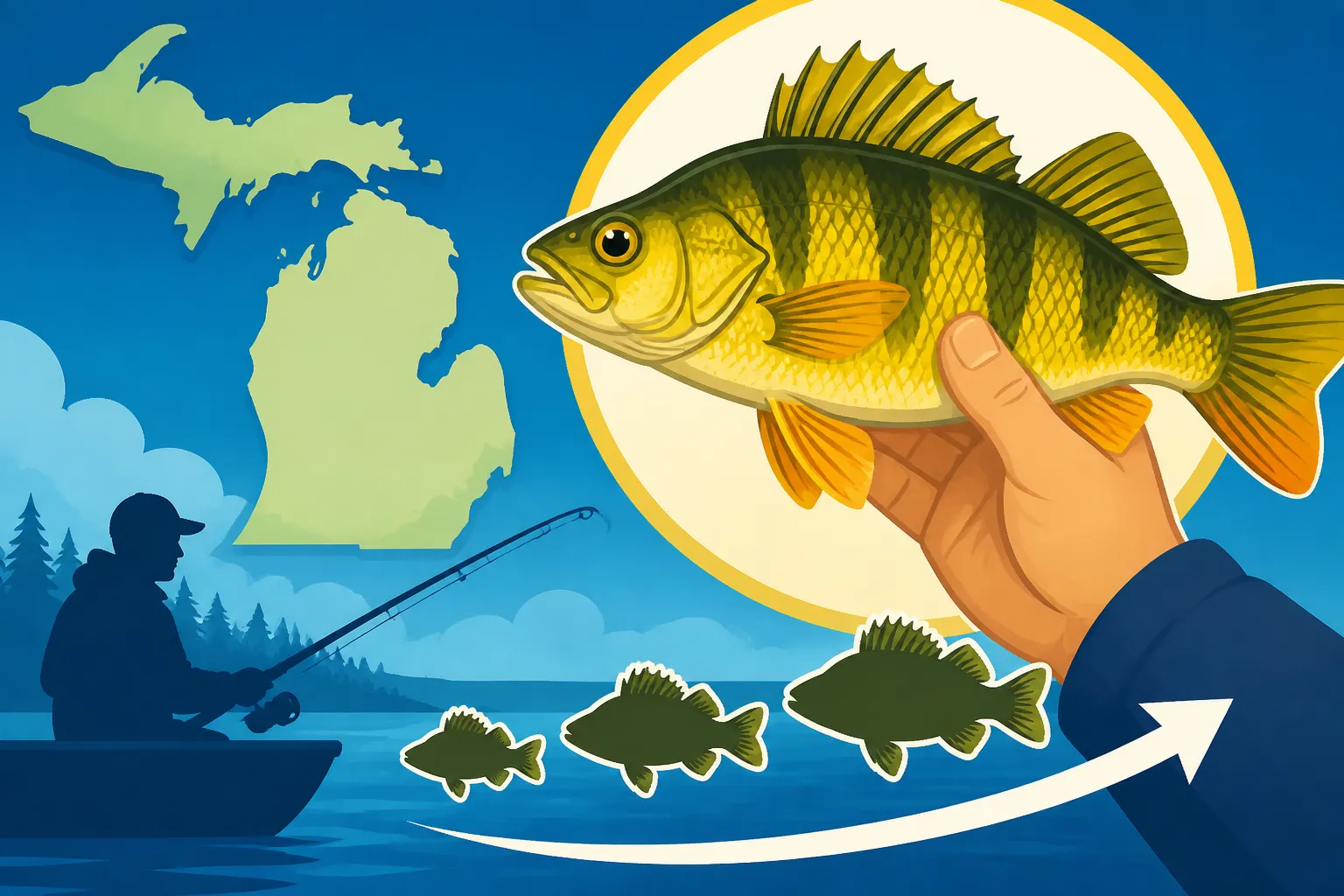
Age is, of course, a straightforward factor: the older a perch gets, the more time it has had to grow. However, growth isn't linear. Perch grow fastest in their early years, and then their growth rate slows down as they age. A perch needs to survive predation, harsh winters, and fishing pressure for many years to reach a truly impressive size. A 12-inch perch might be several years old, perhaps 6-8 years, while a state-record fish could be well over a decade old. This longevity speaks to the health and stability of the ecosystem it calls home.
Typical Yellow Perch Sizes Anglers Encounter
When you head out fishing in Michigan, it's helpful to have a realistic expectation of what you might pull in. While the dream of a record-breaker is always alive, understanding the common sizes of yellow perch will make your angling adventures more satisfying. Michigan offers a diverse range of perch fishing experiences, from plentiful panfish to the sought-after "jumbos."
Average Sizes in Michigan's Lakes and Rivers
For most Michigan anglers, a "typical" yellow perch measures anywhere from 6 to 9 inches long. These are the workhorses of the perch world, often caught in good numbers, and they make for fantastic eating. You'll find these average-sized perch abundantly in many of Michigan's inland lakes and rivers, and even in the bays and nearshore areas of the Great Lakes. They tend to school up, making for exciting action when you locate a hungry bunch. These are the ones you're likely to target during a family outing or an afternoon ice fishing trip. Many anglers use ultralight gear for these, and you can find a huge selection of appropriate rods, reels, and tackle on platforms like Amazon.
These average-sized perch are crucial to the ecosystem, serving as a primary food source for larger predatory fish like walleye, pike, and bass. Their prevalence means that the smaller ones are always available, providing consistent angling opportunities. While they might not be headline-makers, a cooler full of 7-8 inch perch is a truly rewarding catch, promising a delicious meal. Understanding Yellow Perch Identification in Michigan can help you quickly distinguish them from other panfish.
Factors Contributing to "Jumbo" Perch
Ah, the "jumbo" perch – the holy grail for many perch enthusiasts! These are the specimens that push past the 10-inch mark, often reaching 12, 13, or even 14 inches and boasting a chunky, football-like body. Several factors contribute to a lake's ability to produce these larger fish. Firstly, as discussed, ample food resources are paramount. Lakes with a rich supply of minnows, insect larvae, and crayfish provide the necessary calories for perch to grow big and fat. Secondly, a lower population density can lead to larger individual fish, as there's less competition for food. If a lake is overpopulated with perch, they often become stunted due to resource scarcity.
Thirdly, habitat diversity plays a role. Lakes with a mix of deep-water access, weed beds, and structure like fallen trees or rock piles offer perch safe havens and ambush points, allowing them to grow without constant predatory pressure. Waters like Saginaw Bay on Lake Huron or parts of Lake St. Clair are renowned for their potential to produce these larger perch, thanks to a combination of these ideal conditions. It takes a perfect storm of environmental factors and good management to consistently yield these trophy-sized perch that get anglers so excited.
Comparing Great Lakes Perch to Inland Lake Perch
Michigan offers two distinct yellow perch fishing experiences: the vastness of the Great Lakes and the intimacy of its thousands of inland lakes. There are notable differences in the perch sizes you might encounter in each.
Generally speaking, the Great Lakes (especially Erie, Huron, and parts of Michigan) are known for their potential to produce larger yellow perch. The sheer size of these water bodies provides immense habitat, vast food webs, and often deeper, cooler waters that allow perch to grow to impressive sizes. It's not uncommon to catch 10-12 inch perch in productive Great Lakes areas, and truly exceptional "jumbos" are a real possibility. The stable environment and abundant forage, including gobies in some areas, contribute to this superior growth. For example, Michigan Yellow Perch Limit on Lake St. Clair might sometimes differ due to the unique environment.
Inland lakes, on the other hand, can be a mixed bag. Many smaller, shallower inland lakes might be prone to perch overpopulation, leading to stunted fish where an 8-inch perch is considered large. However, certain larger, deeper, and well-managed inland lakes can also produce excellent numbers of quality perch, sometimes rivaling their Great Lakes cousins. These are often lakes with balanced ecosystems, good forage, and perhaps less intense fishing pressure. The key difference often boils down to the scale of the ecosystem and its ability to sustain a healthy population with room to grow.
| Perch Size Category | Typical Length Range (Inches) | Typical Weight Range (Pounds) | Common Location |
|---|---|---|---|
| Panfish | 6-9 | 0.1 – 0.3 | Most inland lakes, some Great Lakes bays |
| Good Eater | 9-11 | 0.3 – 0.6 | Productive inland lakes, Great Lakes nearshore |
| Jumbo Perch | 11-14 | 0.6 – 1.5 | Select Great Lakes areas (e.g., Saginaw Bay), some deeper inland lakes |
| State Record | 14.25 | 3.75 | Exceptional, rare catches |
Michigan's Record Yellow Perch and Notable Catches
Every angler dreams of catching a fish that breaks a record, or at least one that becomes a legendary tale among friends. While most of us will never achieve state record status, Michigan has a rich history of producing some truly massive yellow perch that inspire us to keep chasing those big ones. Understanding these benchmarks helps put the "how big" question into perspective.
The All-Time State Record
The Michigan state record yellow perch is a truly monumental fish. It weighed an astounding 3.75 pounds and measured 14.25 inches long, a true leviathan of the perch world. This magnificent specimen was caught in the waters of Lake Independence, located in Marquette County, back in 1947. This record has stood for decades, a testament to the rarity and exceptional nature of such a catch. It reminds us that while most perch are pan-sized, the potential for a genuine giant is always there in Michigan's waters.
Catching a fish of that caliber involves not just skill, but also immense luck and being in the right place at the right time. It's a combination of finding a fish that has beaten the odds, survived for many years, and had an incredible food source to grow so large. While many anglers will never see a perch even close to this size, the existence of such a record proves the genetic and environmental capacity for enormous perch within the state. It's the kind of catch that keeps anglers coming back, hoping their next bite might be the one.
Legendary Perch Waters
While Lake Independence holds the state record, several other Michigan waters are famed for consistently producing big yellow perch, earning them a legendary status among anglers. Saginaw Bay on Lake Huron is perhaps the most famous, particularly for its ice fishing opportunities for "jumbo" perch. The bay's vast, relatively shallow, and nutrient-rich waters provide an ideal environment for perch to thrive and grow large. During peak seasons, anglers flock there, hoping to fill their limits with impressive specimens.
Lake St. Clair is another phenomenal perch fishery, particularly for its clear waters and abundant forage. While more known for smallmouth bass and muskellunge, Lake St. Clair routinely gives up solid perch catches, including some nice jumbos. Other inland lakes like Houghton Lake and Higgins Lake, known for their size and depth, also have reputations for quality perch fishing. These legendary waters aren't just about size; they're also about consistent action and the thrill of knowing that a truly impressive fish could be on the other end of your line. Knowing these spots can definitely increase your odds, though they often come with more fishing pressure.
Managing Expectations: What to Realistically Catch
It's easy to get caught up in the hype of state records and "jumbo" reports, but a healthy dose of realism is essential for an enjoyable fishing trip. While those massive perch certainly exist, they are not the norm for most anglers on most days. Realistically, if you're targeting yellow perch in Michigan, a successful outing often means catching a good number of fish in the 7 to 9-inch range, with the occasional 10 or 11-inch fish mixed in. These are fantastic eating fish, and catching a limit of them is a truly rewarding experience.
Focusing on numbers and consistent action with these average-sized perch can be just as much fun, if not more, than endlessly chasing a giant that may never materialize. Learning to locate schools, understanding their feeding patterns, and adapting your techniques will lead to more catches, regardless of size. Plus, the smaller perch are incredibly delicious, perfect for a fresh fish fry. So, while you can always dream of that trophy, be prepared to enjoy the abundant, smaller but equally enjoyable, perch that Michigan waters readily provide. Checking the Michigan Fishing Regulations Every Angler Should Know is always a good idea before heading out to ensure you know the current limits.
How Perch Size Relates to Fishing Experience
The size of the yellow perch you're targeting can significantly influence your entire fishing experience, from the gear you choose to the regulations you need to heed, and even the sheer excitement of the battle. It's not just about the fish itself, but how its dimensions interact with the angler's approach.
Gear Considerations for Different Perch Sizes
When you're chasing those smaller, abundant 6-8 inch panfish, ultralight tackle is your best friend. A lightweight rod, a small spinning reel, and 2-4 pound test line make even a modest perch feel like a formidable fighter. This setup maximizes the fun and sensitivity, allowing you to detect subtle bites. Small jigs, teardrops, or tiny hooks tipped with wax worms or minnow pieces are perfect. This kind of gear is widely available and often quite affordable, with many options found on Amazon for every budget.
However, if you're specifically targeting "jumbo" perch, you might want to subtly upgrade your gear. While still on the lighter side, a medium-light action rod with a bit more backbone and 6-pound test line can help you control a larger fish, especially if you're fishing in weeds or around structure. You might also consider slightly larger baits, like a small minnow on a jig or a larger soft plastic. The additional strength helps in fighting a heavier fish and preventing break-offs if a genuine trophy bites. For ice fishing, many anglers employ specialized Ice Fishing Techniques for Michigan Walleye or perch, often using sensitive spring bobbers.
Regulations and Size Limits for Yellow Perch
Michigan, thankfully, doesn't impose statewide minimum size limits on yellow perch, which is great for anglers looking to bring home a meal of smaller fish. However, there are daily possession limits you need to be aware of, which dictate how many fish you can keep in a 24-hour period. These limits are in place to ensure sustainable populations for future generations. It's crucial to consult the current Michigan Fishing Guide (often available online from the DNR or at license dealers) before each fishing trip, as regulations can sometimes vary by water body.
While there isn't a minimum size, some specific waters might have unique regulations or special research zones, so always double-check. The general approach of having a generous daily limit but no minimum size for perch reflects their prolific nature and the fact that they are an important forage fish. It allows anglers to enjoy catching and keeping these tasty fish without undue restrictions, while still promoting responsible angling practices. Familiarizing yourself with Michigan Fishing Regulations Every Angler Should Know is always prudent.
The Thrill of Catching a Prized Jumbo
There's a distinct thrill that comes with hooking into a truly large yellow perch. Unlike the consistent, gentle tugs of a smaller panfish, a jumbo perch often delivers a more aggressive strike and a surprisingly strong fight. Its broad, flat body uses the water resistance to its advantage, making powerful runs and head shakes that can test your lighter tackle. The anticipation builds as you bring it closer, hoping it's the giant you've been dreaming of.
When that broad, golden-sided fish finally breaks the surface, revealing its impressive size and vibrant markings, it's a moment of pure satisfaction. These prized catches are often carefully photographed before being added to the cooler or, for conservation-minded anglers, gently released. The memory of landing a "football" perch, a true specimen, is what drives many anglers to endure cold weather during ice fishing season or spend hours drifting over deep humps. It's the kind of catch that makes you truly appreciate the abundance and potential of Michigan's Most Popular Fish Species.
Disclaimer
This article is for general informational purposes only and does not constitute professional advice. Laws, prices and regulations vary by location and change over time. Consult a qualified professional for guidance on your specific situation.