Best Lures for Muskellunge
If you've ever cast for muskellunge in Michigan, you know the feeling: hours of relentless casting, the perfect retrieve, and then – nothing. It's enough to make even the most seasoned angler question their choices, especially when it comes to the vast array of muskie lures out there. Finding the right lure to tempt one of Michigan's elusive "fish of 10,000 casts" can feel like a daunting quest. This comprehensive guide is here to cut through the confusion, breaking down the best muskie lures, their applications, and how to effectively use them to significantly boost your chances of success on our diverse Michigan waters.
Why Muskies Are Such a Lure-Specific Challenge
Muskies aren't your average fish; they're apex predators with a distinct personality and hunting style that demands a specialized approach. Understanding what makes them tick is the first step in choosing the right lure.
Understanding the Muskie's Apex Predator Mentality
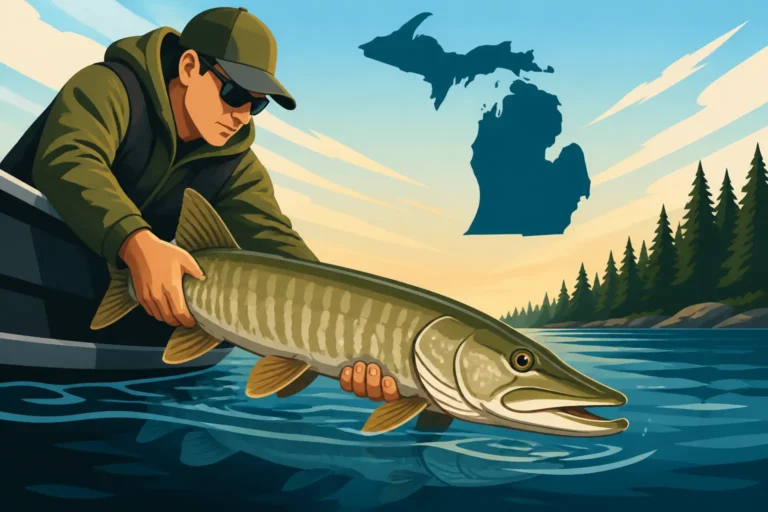
Muskellunge are the undisputed kings of their freshwater domains, whether it's the sprawling waters of Lake St. Clair or the vast inland lakes like Houghton Lake. Their diet consists primarily of larger forage fish such as suckers, ciscoes, perch, and even ducks or smaller muskie. This explains why they grow to such impressive sizes, often reaching lengths of 40-50 inches or more in Michigan. Because they are at the top of the food chain, they hunt strategically, often ambushing prey rather than expending energy chasing small morsels. This predatory instinct means they are looking for a substantial meal, something that presents a significant caloric payoff.
This mindset dictates the need for large, robust lures that accurately imitate their natural prey. A muskie isn't going to waste its energy on something too small or something that doesn't look quite right. They are notoriously finicky and intelligent. Sometimes, a subtle change in lure color, size, or action can make all the difference between a follow and a strike. Their powerful jaws and razor-sharp teeth mean that anything less than heavy-duty tackle simply won't survive an encounter. It’s why anglers invest so much in specialized gear, from rods to the lures themselves.
The Importance of Presentation and Durability
When it comes to muskie fishing, your gear isn't just about catching fish; it's about surviving the encounter. The sheer power of a muskie strike can shatter lesser lures, bend hooks, and snap lines. This is why every component of a muskie lure, from its body material to its hooks and split rings, needs to be of the highest quality and built for battle. Comparing muskie lures to those used for bass or walleye, you'll immediately notice the difference in scale and robustness. Muskie lures are designed for repeated brutal attacks.
Beyond durability, presentation is paramount. A muskie lure needs to move through the water in a way that truly mimics a distressed or fleeing baitfish. It needs to have a compelling action that captures attention from a distance, triggers their lateral line, and then convinces them to commit. This means not just casting it out, but actively working the lure with your rod and reel, making it "dance" in the water. Furthermore, the ability to withstand multiple violent strikes without breaking down is critical, ensuring your valuable fishing time isn't spent replacing damaged equipment. This focus on durability also extends to your entire setup; you wouldn't use a light spinning rod to try and land one of these giants, just as you wouldn't use flimsy hooks on your lures. For a deeper dive into the essential gear, check out our guide on the Best Rods and Reels for Michigan Fishing.
The Flash and Vibration Machines: Bucktails and Spinnerbaits
When you talk about muskie lures, bucktails and spinnerbaits are often the first things that come to mind. They are classics for a reason, excelling at attracting aggressive strikes through their combination of flash, vibration, and profile.
Decoding the Bucktail: Blades, Skirts, and Weight
Bucktails are, without a doubt, the workhorses of muskie fishing. They are incredibly versatile and effective, making them a staple in virtually every muskie angler's tackle box. The magic of a bucktail lies in its ability to create a significant disturbance in the water, mimicking a fleeing baitfish. This disturbance comes from a combination of the spinning blades, the pulsating bucktail skirt, and the overall profile as it moves through the water.
Let's break down the components:
- Blades: The most common blade types are Colorado, Willow, and Indiana.
- Colorado blades are round and wide, creating maximum thump and vibration. They are excellent for slow retrieves, especially in stained water or low light, where their strong vibration can be easily detected by a muskie's lateral line.
- Willowleaf blades are long and narrow, providing more flash and less vibration. They are ideal for faster retrieves and clear water, cutting through the water with less resistance.
- Indiana blades are a hybrid, offering a balance of flash and vibration, making them a good all-around choice.
Many bucktails feature double blades, which amplify the flash and vibration, creating an even larger presence in the water. Larger blades often mean more resistance and a slower retrieve, while smaller, multiple blades can be retrieved faster.
- Skirts: Traditionally made from deer hair (bucktail), these skirts pulsate and flare in the water, adding to the illusion of a living creature. Modern bucktails might also use synthetic materials that offer different actions and color combinations. The color of the skirt can be critical, often chosen to match local forage or stand out in specific water conditions. Popular colors include black, white, chartreuse, and perch patterns.
- Wire Construction: The entire lure is built around a heavy-gauge wire, which needs to be strong enough to withstand strikes and keep hooks properly aligned.
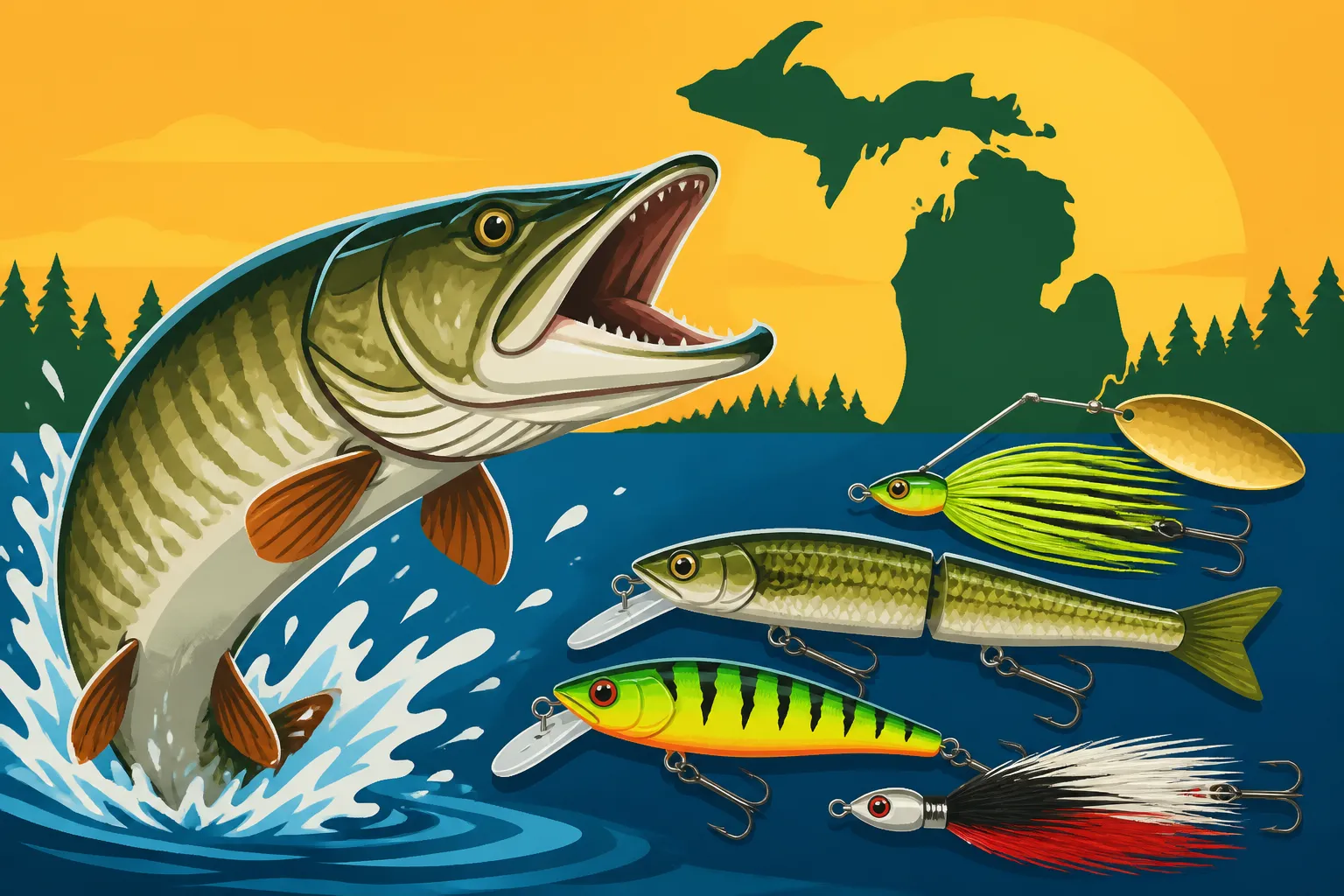
Bucktails are particularly effective when retrieved at a steady, fast pace, causing the blades to spin vigorously. This "burn" retrieve can often trigger an aggressive reaction strike from a muskie. They are incredibly effective in many Michigan waters, especially in productive muskie fisheries like Lake St. Clair, where anglers often target them with a variety of bucktails. You can find a fantastic selection of bucktails on Amazon, with popular brands like Musky Mayhem Tackle and Livingston Lures offering robust options for discerning anglers.
Spinnerbaits for Shallow Water and Weeds
While similar in concept to bucktails, muskie spinnerbaits are distinctly different from their bass-sized cousins. They are designed with a heavy wire frame, a solid lead head, and a large single or double blade setup, along with a bulky silicone or bucktail skirt. Their primary advantage lies in their incredible weed-shedding capabilities. Michigan's inland lakes and rivers often feature extensive weed beds and submerged timber, which are prime ambush points for muskies. Traditional bucktails can snag easily in such cover, but spinnerbaits are designed to deflect off obstacles, allowing you to present a lure directly into heavy cover where muskies are hiding.
Muskie spinnerbaits often feature large Colorado or Indiana blades that create a significant thumping vibration, which is excellent for penetrating dense cover and alerting nearby muskies. They can be retrieved at various speeds, from a slow roll along the bottom or through the weeds to a faster "wake" retrieve just under the surface, creating a noticeable bulge in the water. The bulky skirt provides a large profile, mimicking a substantial meal.
When working spinnerbaits, focus on keeping them just above or bumping into the cover. The deflections can often trigger a reaction strike. If you feel weeds, a quick rip of the rod tip can usually free the lure without disrupting its action too much. These lures are a must-have for exploring shallow bays, weed lines, and areas with submerged timber, providing a powerful one-two punch of flash and vibration in places other lures simply can't reach.
The Hard-Bodied Mimics: Crankbaits and Jerkbaits
When muskies are less aggressive or holding deeper, hard-bodied lures like crankbaits and jerkbaits come into their own. These lures excel at mimicking the natural swimming action of baitfish, making them incredibly effective for triggering strikes.
Crankbaits: Diving, Waking, and Rattling
Crankbaits are versatile hard-bodied lures designed to imitate baitfish with their wobbling, swimming action. For muskie fishing, these aren't your typical bass cranks; they're much larger, more robust, and often equipped with heavy-duty components. The key to a crankbait's action and depth is its lip design.
- Deep-Diving Crankbaits: These lures feature a long, prominent lip that allows them to dive quickly to specific depths when retrieved or trolled. They are indispensable for targeting muskies suspended in open water or holding near deep structure, common scenarios on Michigan's Great Lakes or deeper inland bodies like Torch Lake. Trolling is a highly effective method for covering vast expanses of water and presenting these lures to fish that might not be accessible through casting. Brands like Bagley and Bucher Tackle offer excellent deep-diving options. The consistent, rhythmic wobble and often built-in rattles create a powerful attraction.
- Shallow-Running and Waking Crankbaits: With shorter or angled lips, these crankbaits stay closer to the surface. Some are designed to "wake" or create a V-shaped ripple just under or on the surface when retrieved quickly, imitating a fleeing baitfish. These are fantastic for casting over shallower weed flats or along shorelines where muskies might be cruising. Their aggressive action and vibration can draw strikes in various conditions.
Crankbaits often come equipped with internal rattles that add an auditory element to their attraction, especially useful in stained or murky water where visibility is limited. When selecting crankbaits, consider the dive depth, the intensity of the wobble, and the color pattern. Matching the color to local forage, such as perch, cisco, or suckers, can be incredibly effective. A variety of muskie crankbaits, including those from Salmo and Drifter Tackle, are readily available on Amazon.
Jerkbaits: Subsurface Glide and Erratic Action
Jerkbaits offer a unique presentation that can be irresistible to a wary muskie. Unlike crankbaits that have a built-in wobble, jerkbaits rely almost entirely on the angler's rod work to create their action. This allows for an incredibly versatile and erratic retrieve that perfectly mimics a wounded or disoriented baitfish—a prime target for any predator.
There are generally two main types of muskie jerkbaits:
- Traditional "Glide" Baits: These are often longer, more slender baits, many made from wood, like the classic Suick or Reef Hawg. They don't have a lip and are designed to "glide" from side to side with each downward twitch of the rod, followed by a pause. The retrieve is a methodical jerk-pause-jerk rhythm, allowing the bait to suspend or slowly sink during the pause. This erratic, wounded action can be deadly, especially when muskies are following but not committing to a faster lure. It gives them time to inspect and decide.
- Suspending Jerkbaits: These are often plastic baits with a small lip, similar to minnow-style crankbaits, but designed to be worked with sharp jerks and long pauses. They typically suspend in the water column when paused, sitting enticingly in a muskie's strike zone. Brands like Rapala (larger sizes) or Chaos Tackle produce effective suspending jerkbaits. These are great for cold water or when fish are sluggish, as the extended pause can provoke a strike.
The effectiveness of jerkbaits hinges on the angler's ability to impart a varied, lifelike action. Experiment with the length of your jerks, the duration of your pauses, and the speed of your retrieve. This "stop-and-go" presentation can be a game-changer, especially after a muskie has followed a faster lure to the boat. It allows you to create that crucial, irresistible "kill shot" presentation.
Topwater Thrillers and Soft Plastic Wonders
Sometimes, muskies will only respond to the excitement of a surface commotion, while other times, a subtle, realistic presentation is needed. This is where topwater lures and soft plastics come into play.
The Explosive World of Topwater Lures
There's nothing quite like a muskie strike on a topwater lure. It's often sudden, violent, and unforgettable. Topwater lures are designed to create a disturbance on the water's surface, attracting attention from below. They are most effective during low-light conditions (dawn, dusk), on overcast days, or when the water is calm, allowing the lure's action to be clearly seen and felt.
Common types of muskie topwater lures include:
- Walk-the-Dog Baits: Lures like the Heddon Super Spook (in its larger muskie versions) are designed to be retrieved with a specific cadence of rod twitches, causing them to "walk" from side to side across the surface. This mimics a struggling baitfish and is incredibly effective. The key is to find a rhythm that makes the lure glide enticingly.
- Prop Baits: Lures such as the Whopper Plopper or similar prop-style baits feature one or more propellers that churn water, creating a gurgling, splashing sound and vibration. This commotion can call muskies from a distance. They are often retrieved steadily, letting the props do the work.
- Creepers and Wobblers: These lures have wings or cupped faces that make them wobble and splash across the surface with a unique, often loud, action. They're excellent for really drawing attention.
Topwater fishing is not just about the strike; it's about the anticipation. Watching a muskie track your lure just below the surface before exploding on it is a heart-stopping experience. When conditions are right, and muskies are willing to come up, a topwater presentation can be one of the most exciting and productive ways to catch them.
Realistic Profiles: Soft Plastics and Swimbaits
In recent years, large soft plastics and swimbaits have gained immense popularity in the muskie world. Their appeal lies in their incredibly realistic profiles and natural swimming actions, which can fool even the wariest muskie. Unlike hard baits, soft plastics offer a more subtle presentation with natural undulations and flexibility.
- Large Soft Plastics: These typically consist of bulky plastic bodies, often with paddle tails or curly tails, designed to be rigged on heavy jig heads or weighted hooks. Their soft, pliable nature allows for incredibly lifelike movement, mimicking various baitfish species. They can be worked slowly along the bottom, jigged vertically, or retrieved steadily through the water column. The flexibility of the material often means a muskie will hold onto it longer, giving you a better hook set.
- Rubber Swimbaits: These are often highly detailed, pre-rigged or readily riggable baits that have a distinct swimming action, usually created by a large paddle tail. Brands like Medussa or Bondy Baits have popularized this category. They are extremely versatile, capable of being cast and retrieved, trolled, or even jigged. Their realistic appearance and subtle movements can be deadly when muskies are pressured or less inclined to chase faster, flashier lures.
Soft plastics and swimbaits offer the angler the ability to control the retrieve speed and depth with precision. They shine in situations where a more natural, subtle presentation is required, perhaps in clear water or when fish are responding to slower movements. Their weedless rigging options (when using certain weighted hooks) also make them viable for fishing in and around heavy cover, just like spinnerbaits. Adding a touch of scent to these soft baits can sometimes provide that extra edge, making an already realistic presentation even more convincing.
The Art of the Retrieve: Making Your Lures Dance
Having the best lures means little if you don't know how to work them. Muskie fishing isn't just casting and reeling; it's an art form that involves precise retrieves and crucial follow-up maneuvers.
Speed and Cadence: Key to Triggering Strikes
Muskies are incredibly sensitive to lure speed and cadence. One day they might want a blazing fast retrieve, and the next, a slow, methodical pull-and-pause. There's no single "right" way to retrieve a muskie lure, as conditions, water temperature, fish mood, and even time of day can dictate what they're looking for. The key is experimentation and adaptability.
- Vary Your Speed: Don't just cast out and reel in at a consistent pace. Start with a medium retrieve, then speed it up or slow it down. Try short bursts of speed followed by a brief pause. When retrieving bucktails, a fast, steady "burn" often triggers aggressive reaction strikes, making the lure appear as if it's fleeing for its life. For jerkbaits, longer pauses can often be the trigger, especially in cooler water or when fish are lethargic.
- Establish a Cadence: Think about the rhythm of your retrieve. Is it a steady churn, a twitch-twitch-pause, or a slow, undulating crawl? Each lure type lends itself to certain cadences. For instance, a walk-the-dog topwater lure requires a rhythmic twitch of the rod tip to achieve its signature side-to-side glide. Practice different cadences until you find what makes the lure perform optimally and what the fish are responding to on a given day.
- React to Conditions: In clear water, a more natural, subtle retrieve might be better, while in stained water, a faster, more aggressive retrieve with lots of vibration can help muskies locate the lure. Similarly, on bright, sunny days, fish might be deeper and prefer a slower presentation, while on overcast days, they might be more active and willing to chase fast-moving baits near the surface. Being observant of the conditions and how fish are behaving is crucial for finding the winning combination of speed and cadence.
Figure-Eights and Rod Work: The Crucial Follow-Up
This is perhaps the single most important technique in muskie fishing, especially in Michigan where many waters hold pressured fish. A muskie will often follow a lure right to the boat, inspecting it before deciding whether to strike. This is where the figure-eight comes into play. If you're not doing this, you're missing out on a significant percentage of potential strikes. For more detailed insights into various fishing tactics, check out our comprehensive guide on Michigan Muskellunge Fishing Techniques.
- Executing the Figure-Eight: As your lure approaches the boat (or kayak, if you're kayak fishing in Michigan), instead of lifting it out of the water, smoothly guide your rod tip into the water, tracing a large "figure-eight" pattern beside the boat. Keep the lure moving, making wide, sweeping turns. The idea is to keep the lure in the water and presenting a "target" to any following muskie.
- Why It Works: Often, the sudden change in direction and speed during the figure-eight is what triggers the muskie to strike. It mimics a baitfish trying to escape its predator by turning sharply. The muskie, sensing its prey might get away, commits to the strike.
- Rod Work: Your rod is an extension of your arm, and good rod work is essential for giving lures their lifelike action. When casting jerkbaits, sharp downward snaps of the rod tip create the side-to-side darting motion. For bucktails, keeping the rod tip low and pointed at the lure helps maintain constant blade spin. For topwater lures, specific twitches and sweeps are needed to make them walk or gurgle. It's about feeling the lure's action and adjusting your movements to maximize its appeal. Never underestimate the importance of dedicated practice; the more you get your lures to "dance," the more likely you are to entice one of Michigan's magnificent muskies.
Comparative Lure Guide for Michigan Muskies
| Lure Type | Primary Action | Ideal Depth / Conditions | Best For | Pros | Cons | Key Brands / Notes |
|---|---|---|---|---|---|---|
| Bucktails | Flash & Vibration | Shallow to Mid-Depth (0-15 ft), all water clarities, all light | Aggressive fish, searching | High visibility, strong vibration, covers water quickly | Can get snagged in heavy weeds, sometimes too aggressive | Musky Mayhem, Mepps, Livingston Lures. Vary blade types. |
| Spinnerbaits | Flash & Vibration | Shallow (0-8 ft), heavy cover, weeds | Weedy areas, reaction strikes | Weedless, strong vibration, large profile | Less effective in open, deep water | Northland Bionic Bucktail, Terminator. Heavy-duty construction. |
| Crankbaits | Wobble, Dive, Rattle | Mid to Deep (5-30+ ft), open water, trolling, casting | Suspended fish, consistent action | Covers depths effectively, consistent action, good for trolling | Can snag easily in cover, less erratic action without angler input | Salmo, Bagley, Drifter Tackle. Match dive depth to target. |
| Jerkbaits | Glide, Erratic Dart | Mid-Depth (5-20 ft), clear to stained water, cool water | Wary fish, cold fronts, post-follows | Highly versatile, mimics wounded baitfish, long pauses | Requires active rod work, not ideal for fast searching | Suick, Reef Hawg, Rapala (larger suspending), Chaos Tackle. |
| Topwater Lures | Surface Commotion | Surface (0-2 ft), low light, calm water, aggressive fish | Explosive strikes, active fish | Visually exciting, draws fish from below, loud | Only effective in specific conditions, not for deep fish | Whopper Plopper, Heddon Super Spook, Poe's Giant. |
| Soft Plastics & Swimbaits | Realistic Swim, Subtle | All Depths, clear to stained water, slow presentation | Finicky fish, slow bite, subtle presentation | Incredibly realistic, natural movement, versatile rigging | Can be delicate, less "flash" than other lures | Medussa, Bondy Bait, Musky Innovations. Can be scented. |
Strategizing Your Lure Selection for Michigan Muskies
Beyond simply knowing the types of lures, successful muskie fishing in Michigan is about strategic selection. This means understanding how to adapt your lure choices to changing conditions and maximizing every opportunity.
Matching Lure Type to Water Conditions and Forage
The dynamic nature of Michigan's fishing environments—from the crystal-clear waters of northern inland lakes to the vast, sometimes turbid expanses of the Great Lakes like Lake Huron—means that a one-size-fits-all approach to muskie lures simply won't cut it. Effective lure selection requires you to play detective and match your offering to the current conditions and the prevailing forage.
- Water Clarity:
- Clear Water: In places where visibility is high, such as parts of Torch Lake or Higgins Lake, muskies will rely heavily on their eyesight. This calls for more realistic lure patterns, subtle actions, and natural colors that mimic the local baitfish. Jerkbaits with their lifelike glide, and highly detailed soft plastics or swimbaits, can be incredibly effective. Consider transparent or subtle metallic finishes that shimmer naturally.
- Stained or Murky Water: When the water is off-color (e.g., after heavy rains in a river or in certain shallow bays), muskies depend more on their lateral line to detect vibrations and sound. This is prime territory for high-vibration bucktails (especially those with large Colorado blades), noisy crankbaits with internal rattles, and spinnerbaits that push a lot of water. Bright, contrasting colors like chartreuse, orange, or black and white can also improve visibility.
- Light Conditions:
- Bright Sun: Muskies might hold deeper or tighter to cover to avoid harsh light. A slower retrieve with a deep-diving crankbait or a jigged swimbait can be effective. Metallic colors that reflect light can also work.
- Overcast or Low Light (Dawn/Dusk): These are often prime times for muskie activity. Topwater lures can be explosive, as muskies feel more comfortable hunting closer to the surface. Flashy bucktails or loud prop baits can capitalize on their increased aggression.
- Local Forage: "Matching the hatch" is a timeless fishing principle. Observe what baitfish are present in the waters you're fishing. If a lake is rich in perch, a perch-patterned crankbait or swimbait might be a hot ticket. If ciscoes are the primary forage, a long, slender jerkbait or a silver-colored bucktail could be more effective. Knowing the typical baitfish in your target water helps you choose not just the color, but also the size and profile of your lure. For instance, the large Great Lakes suckers often found near river mouths in the fall could suggest a larger, more realistic swimbait or a slower-moving jerkbait.
- Fish Mood: This is often the trickiest factor. If muskies are aggressively chasing, fast bucktails and topwaters are great. If they're sluggish or "following" but not striking, a slow-moving jerkbait with long pauses or a subtle soft plastic might be what's needed. Always have a variety of options ready, including some you can pick up quickly from retailers like Amazon for those last-minute additions to your tackle box.
The Importance of a Diverse Tackle Box and the Figure-Eight
No single lure is a magic bullet for muskies. The truly successful anglers are those who carry a diverse arsenal and are willing to experiment until they crack the code. This means having a range of bucktails, spinnerbaits, crankbaits, jerkbaits, and topwater options, differing in color, size, and depth capabilities. Think of your tackle box as a toolbox, each lure a specific tool for a specific job.
However, even with the perfect lure and retrieve, many muskie encounters end with a "follow"—a muskie tracking your lure right to the boat, often just inches behind it, without committing. This is where the infamous figure-eight maneuver becomes absolutely critical, especially in Michigan's highly productive but often pressured muskie waters.
- Performing the Figure-Eight: As your lure approaches the boat, instead of lifting it from the water, smoothly guide your rod tip directly into the water, sweeping it in a large, continuous figure-eight pattern alongside the boat. The lure should stay in motion, never leaving the water, mimicking a baitfish attempting to escape at the last second.
- Why It Works: This sudden, erratic change in direction and speed often triggers the muskie's predatory instinct, prompting it to strike. The fish might have been hesitant, simply inspecting the lure, but the perceived "escape" of its prey often flips a switch, leading to a violent strike right at the boat. This technique accounts for a significant percentage of muskie catches, especially for fish that would otherwise just swim away. You can learn more about how to register your catch and other crucial rules in Michigan Muskellunge Harvest Reporting Rules.
- Practice and Persistence: The figure-eight requires practice to perform smoothly and naturally. It's not just a gesture; it's an integral part of the retrieve. You must be prepared to do it after every single cast, because you never know when a muskie will appear from the depths. This dedication to the follow-up is a hallmark of successful muskie fishing and epitomizes the "fish of 10,000 casts" mentality—every cast counts, and every follow is an opportunity.
Developing a deep understanding of these lure types, how to work them, and when to deploy them will dramatically improve your muskie fishing success in Michigan. It’s a journey of continuous learning, but with the right lures and techniques, you’ll be well on your way to experiencing the unparalleled thrill of landing one of these magnificent freshwater giants.
Disclaimer
Please note that fishing regulations, including lure restrictions, size limits, and possession limits, can change. Always consult the latest Michigan Department of Natural Resources (DNR) fishing guide before heading out on the water. This information is for general guidance and educational purposes only.