How to Tell a Black Crappie From a White Crappie
Ever been out on a Michigan lake, pulling in crappie after crappie, and wondered if you're catching one type or another? It’s a common puzzler for anglers, trying to tell the difference between a black crappie and a white crappie. While they both offer fantastic sport and delicious fillets, understanding their subtle distinctions can actually make you a more successful angler, helping you fine-tune your approach for where and how you fish. This guide will walk you through all the tell-tale signs, from their appearance to their habits, so you can confidently identify which crappie is on your line.
The Tale of Two Crappies: Key Visual Differences
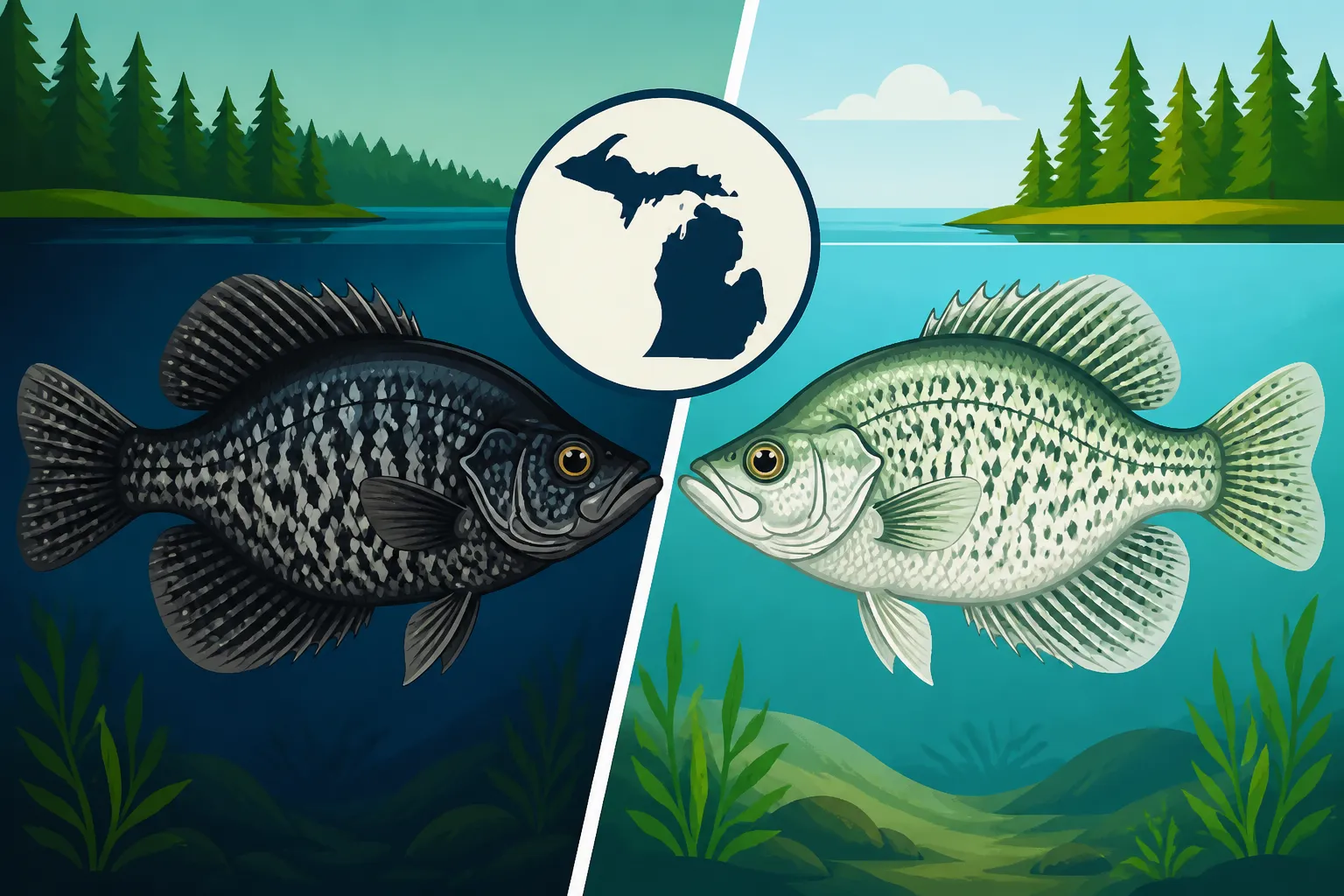
When you first land a crappie, the most immediate way to distinguish between black and white crappie lies in their overall appearance, particularly their coloration and the pattern of their markings. Many anglers mistakenly believe that the "black" crappie is always darker and the "white" crappie always lighter, but water conditions, diet, and spawning stages can significantly influence a fish's hue, making it a less reliable primary identifier than other features. Instead, we need to look for more consistent anatomical clues that don't change with the fish's mood or environment.
Spot Patterns and Coloration
Let's talk spots! This is often the first thing people notice, and it's a pretty good indicator if you know what to look for. Black crappies tend to have a more random, speckled pattern of dark spots spread across their entire body, almost as if someone took a pepper shaker and dusted them all over. These spots often coalesce into irregular blotches, creating a mottled or splotchy appearance that can range from dark olive green to silvery-gold, depending on the water clarity and vegetation of their home. If you catch one of these beauties, you'll see those spots are distinct but without any real pattern.
White crappies, on the other hand, usually sport distinct, dark vertical bars or stripes along their sides. Think of it like a subtle tiger stripe pattern, usually seven to nine of these bars, though they can sometimes be faded, especially in very clear water or during non-spawning periods. These bars are typically more pronounced on their upper flanks and may become less distinct towards their belly. Their base coloration tends to be more silvery, sometimes with a yellowish tint, and less mottled than their black crappie cousins. So, if you're wondering which you've got, count those bars!
Dorsal Fin Ray Count
Here's where we get a bit more scientific, but it’s a foolproof method once you get the hang of it. The dorsal fin is the one on the fish's back. For a black crappie, if you carefully count the spines (the sharp, bony rays) in their dorsal fin, you'll almost always find seven or eight. This is a very consistent characteristic that rarely varies. It’s like their personal ID card.
White crappies, however, are reliably identifiable by having six dorsal fin spines. This difference is one of the most accurate ways to tell them apart, even if their spot patterns are ambiguous or their coloration is skewed by environmental factors. You might need to gently extend the fin to count accurately, but it's a small effort for a definitive answer. This distinct difference in fin structure is a biological marker that helps differentiate these two very popular panfish species, and it's a key piece of information when you're trying to figure out what you've caught.
Crappie Construction: Body Shape, Mouth, and Fin Rays
Beyond the obvious spots and fin spines, there are other subtle anatomical clues that can help you distinguish between black and white crappies. These characteristics might require a closer look, but they offer additional confirmation and deepen your understanding of these fish. Remember, identifying fish isn't just about knowing what they are; it's about appreciating the nuances of their biology.
Body Shape and Depth
When you hold a crappie, pay attention to its overall body profile. Black crappies tend to have a rounder, deeper, more compressed body shape, almost like a dinner plate. They appear somewhat "taller" in relation to their length. This stocky build gives them a robust appearance. This rounder shape is often associated with their preference for thicker cover and slower currents, allowing them to maneuver easily through submerged vegetation and brush piles. If you're trying to quickly size up your catch, the black crappie will feel a bit more substantial and disk-like in your hand.
White crappies, by contrast, are generally more elongated and slender, with a body that appears noticeably longer than it is deep. They have a slightly more streamlined profile, which suits their preference for more open water and areas with moderate current. Imagine a more oval shape compared to the black crappie's roundness. While the difference isn't always extreme, if you catch both species in the same outing, you'll likely notice the white crappie looks a bit "skinnier" for its length. This body shape is a good secondary indicator when you're looking for more clues.
Mouth Position and Jaw Structure
The mouth of a crappie can also give you hints. Both species are predatory and have upturned mouths, designed to gulp down unsuspecting prey. However, there's a subtle difference in the length of their upper jaw. For a black crappie, if you draw an imaginary line vertically from the back edge of their eye, the upper jaw typically does not extend past this line. Their mouth is somewhat smaller and more contained. This smaller mouth can sometimes influence lure selection, favoring smaller jigs and presentations.
White crappies, conversely, usually have an upper jaw that extends noticeably past the back edge of their eye. Their mouth appears a bit larger and more prominent. This slightly larger mouth might be an adaptation to their often more open-water feeding habits, allowing them to engulf slightly larger prey items. While this distinction can be subtle and might require a bit of practice to spot reliably, it's another piece of the puzzle for seasoned anglers trying to make a positive identification. Examining the mouth is a good way to double-check your initial assessment based on spots and fin rays.
Anal Fin Spines
Similar to the dorsal fin, the anal fin—which is located on the underside of the fish, behind the anus—also has a characteristic number of spines that can help with identification. Black crappies usually have six anal fin spines, mirroring their dorsal fin count in consistency. This numerical detail is another reliable trait that helps distinguish them from their white crappie counterparts. Counting these spines can be a bit trickier than the dorsal fin, as the fin might be tucked more closely to the body.
White crappies will typically have an anal fin with five or six spines. While there can be some overlap here with the six spines, it's less consistently six than the black crappie. If you combine the anal fin count with the dorsal fin count (which is much more definitive), you create a very strong case for identifying the species. Think of it as supporting evidence for your primary dorsal fin count observation. For instance, if you have seven dorsal spines and six anal spines, it's almost certainly a black crappie.
Beyond the Spots: Habitat Preferences and Behavior
Knowing the physical differences is fantastic, but crappies don't just exist as museum specimens; they live and thrive in specific environments, and their behavior often reflects their species. Understanding their preferred habitats and typical behaviors can give you a significant advantage in finding and catching them, even before you see their spots. After all, fishing is about anticipating where the fish will be.
Preferred Habitats and Water Conditions
Black crappies are generally homebodies when it comes to cover. They absolutely love dense submerged vegetation, brush piles, fallen trees, and docks. They prefer clearer, cooler waters with less current, often found in smaller lakes, ponds, and slow-moving rivers. Think of them as the ambush predators of the underwater jungle, lurking in the shadows, waiting for an unsuspecting minnow or insect to pass by. If you’re fishing a lake with lots of woody debris or thick weed beds, you're more likely to encounter black crappies. Many of Michigan's inland lakes, especially those with good aquatic plant growth, are prime black crappie territory.
White crappies, conversely, are often found in larger, muddier lakes and reservoirs, and in the slower sections of larger rivers. They tolerate more turbid water and are more comfortable in open water or around less dense cover like scattered brush, stumps, or creek channels. They tend to be more nomadic than black crappies, moving in schools to follow baitfish. You might find them suspended over deeper water or along the edges of channels. If you're fishing a big body of water like the Saginaw Bay system or larger rivers, you might have more luck targeting white crappies. Knowing this distinction can help you choose your fishing spot more effectively.
Schooling Behavior and Feeding Habits
Both species of crappie are schooling fish, but there are some nuances to their behavior that can influence how and when you target them. Black crappies tend to form tighter, smaller schools, especially when they are associated with dense cover. They are often less prone to ranging widely, preferring to stay close to their chosen structure. Their feeding tends to be more localized, ambushing prey that comes close to their hiding spots. They are generally active from spring through fall, though ice fishing for them can be fantastic. When you're fishing for black crappies, often a precise cast to a specific piece of cover is key.
White crappies are known for forming larger, more nomadic schools, particularly in open water. They might roam more widely in search of baitfish, often suspending at certain depths over structure or open flats. This means they can be a bit harder to pinpoint at times, but when you find a school, the action can be fast and furious. They are particularly responsive to vertical presentations like jigging or trolling, especially when they're suspended. Both species are predatory, primarily feeding on smaller fish (like minnows and shad) and aquatic insects, but their approach to finding that food differs based on their preferred habitat. Understanding these tendencies can help you select the right Best Bait for Michigan Crappie or lure for your target species.
Why Knowing Matters: Angling Strategies for Each Crappie
So, why go through all the trouble of telling these two similar-looking fish apart? It's not just for bragging rights! Understanding the differences between black and white crappies can significantly impact your fishing success, helping you choose the right spots, techniques, and even gear. Being able to identify your target means you can adjust your approach to what they prefer, rather than fishing blindly.
Tailoring Your Approach to the Species
Since black crappies prefer dense cover and clearer water, your angling strategy might involve targeting brush piles, submerged timber, or weed lines. Techniques like pitching small jigs (like those you might find on Amazon) or live minnows into heavy cover, using a sensitive rod to feel subtle bites, are often effective. They might be less willing to chase a fast-moving lure in open water. When fishing for them, a quiet approach and precise lure placement are often rewarded. Understanding their preference for cover is key to consistently catching them, especially during the spring spawn when they move even tighter to structure.
White crappies, with their preference for more open, sometimes turbid water and schooling behavior, might require different tactics. Trolling with small crankbaits or jigs, vertical jigging over deeper channels, or using slip bobbers to suspend bait at precise depths can be highly productive. Because they often school in larger numbers and roam, finding the school is the first challenge, often requiring a good fish finder. Once located, however, you can often catch several in quick succession. Many anglers will stock up on various jigs and minnow imitations from retailers like Amazon to cover all their bases for both types of crappies. For more general crappie advice, check out Bluegill and Crappie Fishing in Michigan.
Gear and Lure Selection Considerations
While much of the gear for crappie fishing overlaps, knowing which species you're targeting can help fine-tune your setup. For black crappies in heavy cover, a slightly shorter, more sensitive rod (like a 5-6 foot ultralight spinning rod) might give you better control and accuracy for pitching into tight spots. Line strength isn't usually critical, but a good quality fluorocarbon or monofilament in 4-6 pound test is typical. As for lures, small jigs, tiny crankbaits, or even micro-spoons are often the ticket.
For white crappies, especially if you're trolling or fishing deeper open water, a slightly longer rod (6-7 feet) can help with casting distance and managing line. If you're vertical jigging, the sensitivity of the rod tip is still paramount. Lure-wise, slightly larger jigs, blade baits, or small crankbaits can be effective, especially when trying to imitate baitfish schools. Live minnows, often suspended under a bobber, are deadly for both, but particularly effective for white crappies when they're suspended. Remember, tackle shops and online retailers like Amazon offer a vast array of crappie-specific lures and tackle, so you have plenty of options. If you're considering ice fishing, gear like a quality ice auger and jigging rods are critical, as discussed in Michigan Ice Fishing Guide.
Comparison Table: Black Crappie vs. White Crappie
To help you quickly reference the key differences, here's a table summarizing the main points of distinction between black crappies and white crappies:
| Feature | Black Crappie ( Pomoxis nigromaculatus ) | White Crappie ( Pomoxis annularis ) |
|---|---|---|
| Dorsal Fin Spines | 7 or 8 (usually 7) | 6 |
| Body Shape | Rounder, deeper, more compressed | More elongated, slender |
| Spot Pattern | Random, irregular speckles/blotches | 7-9 distinct vertical bars/stripes |
| Mouth Position | Upper jaw ends before or even with eye | Upper jaw extends past the back of eye |
| Anal Fin Spines | Usually 6 | Usually 5 or 6 |
| Preferred Habitat | Clearer, cooler water; dense vegetation, brush, docks | Murkier, warmer water; open water, scattered cover, channels |
| Schooling Behavior | Tighter, smaller schools near cover | Larger, more nomadic schools in open water |
Understanding these distinctions will not only make you a more knowledgeable angler but also a more effective one, helping you fill your livewell with these delicious Michigan panfish. For a broader look at what fish are out there, consider reading What Are Common Panfish Species in Michigan.
Disclaimer
This article is for general informational purposes only and does not constitute professional advice. Laws, prices and regulations vary by location and change over time. Consult a qualified professional for guidance on your specific situation.