Best Spots for Whitefish on Lake Michigan
Few fish species capture the hearts of Michigan anglers quite like the elusive and delicious whitefish. If you've ever found yourself dreaming of a tranquil morning on Lake Michigan, pulling up one of these silvery beauties, but felt overwhelmed by where to even begin looking, you're not alone. This guide aims to pull back the curtain on the mysteries of Lake Michigan whitefish, detailing their behaviors, preferred habitats, and, most importantly, the top spots where you can actually find them, making your next fishing adventure a successful one.
The Elusive Charm of Lake Michigan Whitefish
Targeting whitefish in Lake Michigan is a passion for many, and for good reason. These fish aren't just a challenge to catch; they're also renowned for their mild, delicate flavor, making them a highly prized catch for the dinner table. But before we dive into specific locations, let's understand why they're so sought after and how to identify them when you reel one in.
Why Anglers Target These Freshwater Delicacies
Whitefish, specifically the Lake Whitefish (Coregonus clupeaformis), are native to the Great Lakes and represent a vital part of the ecosystem. For anglers, they offer a unique challenge compared to more aggressive species like salmon or bass. They are often found in deeper, cooler waters, making specific techniques and gear essential for success. Beyond the thrill of the catch, their culinary value is a major draw. Many consider freshly caught Lake Michigan whitefish a true delicacy, perfect for baking, smoking, or frying. It's not uncommon to hear tales of anglers spending hours on the water, patiently waiting for that telltale tug, knowing the reward will be worth every moment.
Michigan's commitment to managing its fisheries means that while whitefish populations fluctuate, they remain a viable target for recreational anglers. Always keep an eye on the latest Michigan Fishing Regulations Every Angler Should Know to ensure you're compliant with any changes in limits or seasons.
Identifying Lake Michigan Whitefish
Proper identification is key, not only for adhering to regulations but also for truly appreciating your catch. Lake Michigan whitefish have a distinctive appearance:
- Coloration: Their bodies are typically silver with an olive-green or brownish back, fading to a bright white belly.
- Body Shape: They possess a long, slender body that is compressed laterally, giving them a somewhat torpedo-like shape.
- Mouth: One of their most distinguishing features is a small, soft, underslung mouth. This is adapted for feeding on the bottom, sucking up insect larvae, small crustaceans, and other invertebrates. This delicate mouth also means a gentle touch is needed when handling them.
- Fins: They have a small, fatty adipose fin (common to salmon and trout families), a deeply forked tail fin, and relatively large pectoral and pelvic fins.
Knowing these features will help you differentiate them from other species you might encounter in Lake Michigan, such as ciscoes (lake herring) or even juvenile lake trout, although the latter have a much more robust, toothier mouth. For a broader look at the fish you might encounter, check out our guide on What Fish Live in Lake Michigan.
Unpacking Whitefish Habits and Prime Lake Michigan Habitats
Understanding where whitefish live and what they prefer to eat is crucial for successful angling. These aren't fish you'll typically find lurking in shallow weed beds; they prefer a specific environment that dictates where and when you should target them.
Preferred Depths and Bottom Structures
Lake Michigan whitefish are primarily cool-water fish, meaning they gravitate towards deeper sections of the lake, especially as water temperatures rise in summer. Generally, you'll find them in depths ranging from 60 to 150 feet, though they can be found shallower during cooler months or deeper in the warmest parts of summer.
Their diet consists mainly of benthic (bottom-dwelling) organisms, so they're almost always found near the lakebed. Look for areas with:
- Gravel or Rocky Bottoms: These areas provide excellent habitat for the insects and crustaceans that whitefish forage on.
- Drop-offs and Ledges: Transitions from shallower flats to deeper water are prime feeding corridors. Whitefish often patrol these edges.
- Submerged Humps and Reefs: Any structure that rises from the lakebed can concentrate baitfish and invertebrates, drawing whitefish in.
- Areas with Good Current: Moderate currents can bring food to the whitefish, making these zones productive, especially around points or underwater channels.
Sonar and GPS are invaluable tools for locating these specific underwater features. Many experienced whitefish anglers spend considerable time mapping out these contours before even dropping a line.
Seasonal Migrations and Feeding Patterns
Whitefish exhibit distinct seasonal patterns that influence where and how you can catch them.
- Spring (April – May): As the ice recedes and water temperatures are still cool, whitefish may be found in slightly shallower waters, sometimes as shallow as 30-50 feet, especially near river mouths or along the coast where early season insects might emerge. This can be an excellent time for shore or pier fishing in certain locations.
- Summer (June – August): With the lake warming up, whitefish retreat to their deeper, cooler haunts. This is when you'll primarily find them in the 80-150 foot range, often suspended just off the bottom or right on it, in the thermocline (the layer where water temperature changes rapidly). Trolling or deep jigging become the dominant methods.
- Fall (September – November): This is arguably the best time for whitefish fishing. As water temperatures cool down, they become more active feeders and begin their pre-spawn migrations. They can be found in a wider range of depths, often moving shallower to their traditional spawning grounds. This is a fantastic time for both boat and shore/pier anglers.
- Winter (December – March): For those brave enough to venture out, ice fishing for whitefish can be incredibly rewarding. They'll generally hold in depths similar to fall, often congregating in bays or near shallower humps that have good access to deeper water. Consult our Michigan Ice Fishing Guide for safety tips and techniques for winter angling.
Understanding these patterns will help you plan your trips and adjust your tactics. For a general overview of when various species are active, consider our Best Time of Year to Fish in Michigan guide.
Top Lake Michigan Hotspots for Whitefish
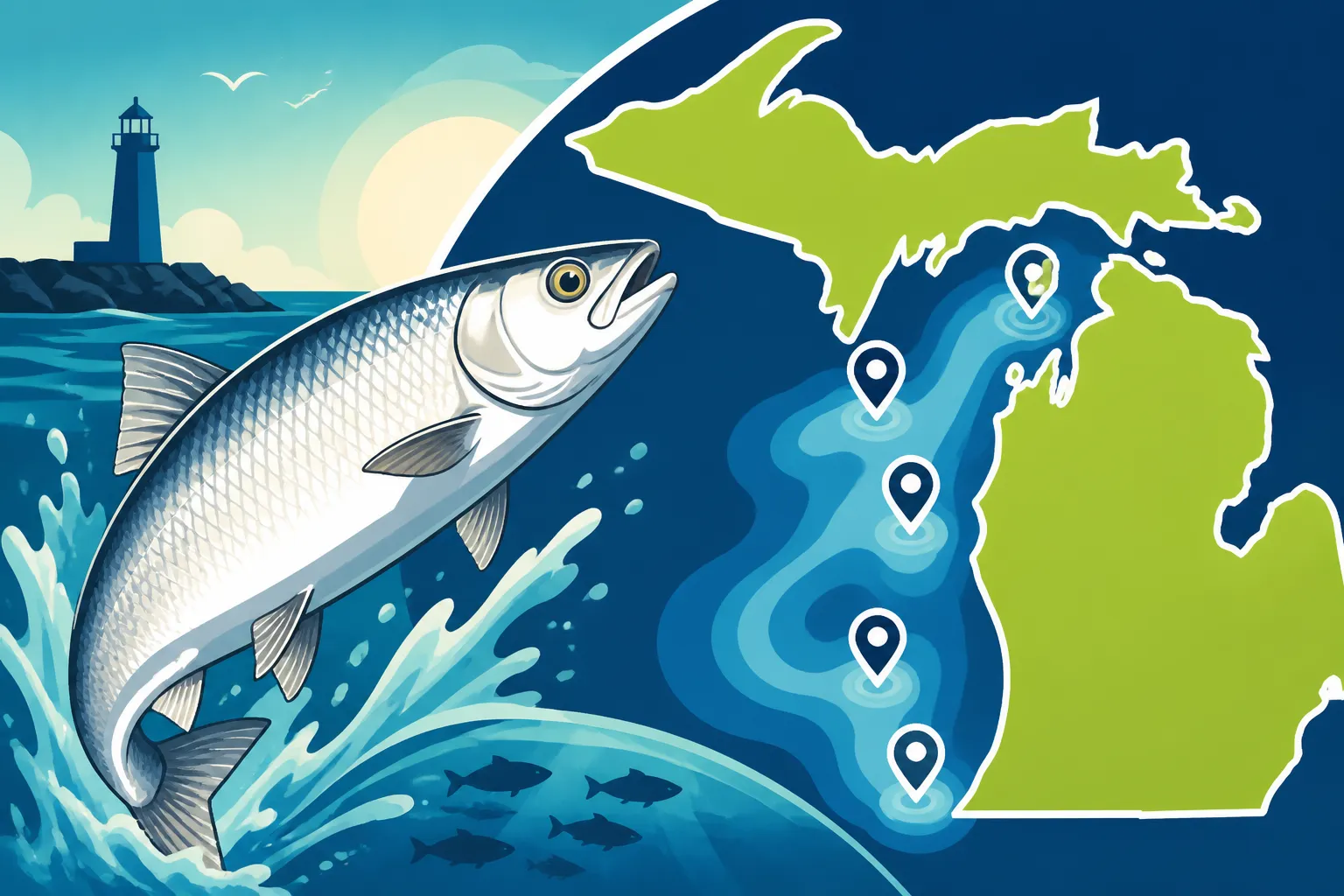
Lake Michigan is vast, stretching across the entire western border of Michigan's Lower Peninsula. While whitefish can be found throughout, certain regions and specific locations consistently produce better results due to their unique underwater geography and known whitefish populations.
Northern Michigan Gems: Traverse City and Frankfort
The northern parts of Lake Michigan are renowned for their picturesque beauty and fantastic fishing, including excellent whitefish opportunities.
Grand Traverse Bay (Near Traverse City):
Grand Traverse Bay, split into the East and West Arms, is a premier whitefish destination. The deep, cold waters of the bay provide ideal habitat, with numerous drop-offs, humps, and expansive flats where whitefish forage.
- East Arm: Known for its deep water access and excellent structure. Anglers often target whitefish here from late fall through early spring, as well as during the summer in deeper sections. The areas around Power Island and the various deep ledges near shore can be very productive.
- West Arm: Also offers deep water and good structure, particularly along the eastern shore of the arm. Ice fishing can be exceptional in certain areas of the bay during winter, especially for those targeting whitefish in relatively shallower, yet still significant, depths.
Many local charter captains operate out of Traverse City, and using a service like FishingBooker can help you connect with experienced guides who know the specific whitefish honey holes in Grand Traverse Bay. They can provide insights into Trolling Gear for Michigan's Great Lakes that's effective here.
Frankfort and Arcadia:
South of Traverse City, the coastal towns of Frankfort and Arcadia offer excellent access to Lake Michigan's main basin, which holds strong whitefish populations.
- Frankfort: The waters outside the Frankfort harbor are popular for both boat and pier anglers. The deep-water drop-offs and shelves just offshore are prime whitefish territory. In late fall, as whitefish move shallower to spawn, pier fishing can be incredibly productive, especially during calm evenings.
- Arcadia: Similar to Frankfort, the deeper waters accessible from Arcadia provide consistent whitefish action. Anglers often drift or jig in depths of 80-120 feet, focusing on areas where the lakebed transitions from sand to gravel or rock. The key here is to find those subtle changes in bottom composition that attract whitefish.
Central Coast Standouts: Ludington and Manistee
Moving south along the central Michigan coastline, Ludington and Manistee continue the tradition of excellent Great Lakes fishing, with whitefish being a significant part of the catch.
Ludington:
Ludington is famous for its salmon and trout, but it's also a fantastic spot for whitefish. The deep water adjacent to the Ludington State Park and the areas around the Big Sable Point lighthouse are particularly good.
- Offshore Reefs and Humps: Several submerged reefs and humps offshore provide excellent structure for whitefish. These features break up the monotony of the lakebed and concentrate baitfish and invertebrates, making them magnets for whitefish.
- Harbor Mouth: During certain times of the year, particularly late fall, whitefish can be found closer to the harbor mouth and even within the harbor itself as they stage for spawning. This offers opportunities for anglers without large boats.
Manistee:
Manistee, situated at the mouth of the Manistee River, benefits from both the river's influence and access to prime Lake Michigan waters.
- Manistee Lake Connection: The connection of Manistee Lake to Lake Michigan means a dynamic environment. While Manistee Lake itself isn't a primary whitefish spot, the outflow into Lake Michigan can create unique current patterns and sediment deposits that attract whitefish to adjacent deeper areas.
- Deepwater Flats: Just offshore from Manistee, there are extensive deepwater flats that are dotted with subtle humps and depressions. These areas, typically in the 70-130 foot range, are excellent for drifting or slow-trolling for whitefish. Many anglers utilize specialized deep-water jigging or weighted presentations here. For more insights on fishing the rivers that feed into the Great Lakes, check out our guide on Best Rivers for Trout and Steelhead in Michigan, as these river systems often influence nearshore Lake Michigan activity.
Southern Lake Michigan Opportunities
While the northern and central coasts are often lauded for whitefish, southern Lake Michigan also holds its own, especially for anglers seeking closer-to-home options.
Muskegon and Grand Haven:
The waters off Muskegon and Grand Haven, though perhaps less famous for whitefish than their northern counterparts, still offer consistent action, especially in the deeper stretches.
- Muskegon Lake Outflow: The area where Muskegon Lake connects to Lake Michigan, and the deepwater structure immediately offshore, can be productive. Look for deep drop-offs and contours that provide cooler water.
- Grand Haven Pier and Offshore: The Grand Haven pier can offer some whitefish opportunities during the late fall spawning runs. Offshore, anglers focus on depths beyond 70 feet, often employing similar deep-water jigging or trolling techniques used further north. The key is to find those hard bottom areas in the cooler water.
South Haven and St. Joseph:
Further south, towards the Indiana border, towns like South Haven and St. Joseph still provide access to whitefish. The fish here will follow similar deep-water patterns as in the central and northern parts of the lake.
- Deep Structure: Look for any identified deep structures, such as old river channels, humps, or rock piles in the 80-150 foot range. These areas are less frequently targeted for whitefish compared to salmon, so they might offer less pressured fishing.
- Navigational Charts: Utilizing detailed navigational charts or electronic mapping systems is critical in these southern regions to pinpoint promising bottom features. If you're looking to launch your boat, make sure you're aware of Michigan Boat Registration Requirements before heading out.
Mastering the Art of Lake Michigan Whitefish Angling
Catching whitefish is a nuanced art that requires patience, the right gear, and a good understanding of their delicate feeding habits. Forget aggressive retrieves; whitefish prefer a subtle approach.
Effective Techniques and Presentation
Because whitefish primarily feed on small invertebrates on or near the bottom, your presentation needs to be subtle and close to the lakebed.
- Bottom Bouncing/Drifting: This is perhaps the most common and effective method. Using a three-way swivel, a heavy sinker (often 1-3 ounces or more, depending on depth and current), and a leader (18-36 inches) with a small hook. The goal is to keep your bait just off the bottom while drifting slowly over known whitefish grounds. Many anglers opt for a second leader with another hook.
- Vertical Jigging: For boat anglers, vertical jigging small spoons or specialized whitefish jigs directly below the boat can be very effective, especially when you mark fish on your sonar. The key is a very subtle jigging motion, often just barely lifting the bait off the bottom and letting it flutter back down. Remember, whitefish have small mouths, so small jigs are crucial.
- Downrigging (Deep Trolling): While more commonly associated with salmon and trout, downriggers can be used to present small spoons or flies at the precise depths where whitefish are holding. This is particularly effective when whitefish are suspended slightly off the bottom or when covering large areas to locate schools.
- Ice Fishing: When ice fishing, small jigs tipped with bait (like wax worms or minnow heads) are dropped through the ice. A flasher or sonar unit is almost essential to detect fish and adjust your depth. A subtle jigging motion or simply holding the bait still can be key.
No matter the technique, the "feel" for the bite is paramount. Whitefish bites are often incredibly light – sometimes just a subtle pressure or a slight twitch on the line. Being observant and quick to react is crucial. Consider checking out How to Catch Whitefish in Michigan for more detailed technique breakdowns.
Essential Gear and Bait Selection
Your gear selection will significantly impact your success when targeting whitefish.
- Rod and Reel: A light to medium-light action spinning rod (6-7 feet) with a sensitive tip is ideal. Pair this with a small, smooth spinning reel spooled with 6-10 lb test monofilament or fluorocarbon line. Some anglers prefer braided line with a fluorocarbon leader for increased sensitivity in deeper water.
- Terminal Tackle:
- Hooks: Small, sharp hooks are a must. Size 6 to 10 snelled hooks are common.
- Sinkers: Pencil weights, bottom-walking sinkers, or pyramid sinkers in various weights (1-5 ounces) depending on depth and current.
- Swivels: High-quality barrel or three-way swivels to prevent line twist.
- Baits:
- Live Bait: Wax worms, spikes (maggots), small minnows, or pieces of nightcrawler are all highly effective.
- Artificial Baits: Small teardrop jigs, Swedish Pimples, or other compact, flashy spoons can work well, especially when tipped with a piece of live bait. Small soft plastics can also be effective.
- Electronics: A good quality fish finder or sonar unit is invaluable for locating depth contours, bottom structure, and even marking individual fish or schools. GPS helps in marking productive drifts or spots. If you're a seasoned boat angler, you might be interested in our Best Boats for Michigan Fishing guide to ensure your vessel is optimized for Lake Michigan's conditions.
Timing Your Whitefish Excursions
While whitefish can be caught year-round, certain periods offer better opportunities.
- Late Fall (October – December): This is prime time. As water temperatures drop, whitefish become very active feeders and move into shallower areas (comparatively) to stage for spawning. This is often the best window for both boat and pier anglers to experience consistent action. Michigan Fishing Season Dates and Rules will give you a general idea of season openers, though whitefish often follow their own natural rhythms.
- Early Spring (April – May): Post-spawn, whitefish are often recovering and can be found transitioning from deeper wintering grounds to shallower feeding areas as the lake thaws.
- Summer Nights: While challenging, night fishing for whitefish in summer can be productive. They often move shallower under the cover of darkness to feed, and the cooler night temperatures can make them more active.
Planning your trip around these peak times and monitoring local fishing reports can significantly increase your chances of success. When booking a trip, especially if you're traveling, consider looking at options through FishingBooker to find local charters during these optimal periods.
Here's a quick summary of top Lake Michigan whitefish spots and their characteristics:
| Location | Primary Season | Typical Depth Range (feet) | Key Structure | Fishing Method |
|---|---|---|---|---|
| Grand Traverse Bay | Fall, Early Spring, Winter | 60 – 120 | Drop-offs, deep flats, humps, gravel | Bottom Bouncing, Jigging, Ice Fishing |
| Frankfort / Arcadia | Late Fall – Early Spring | 70 – 150 | Ledges, gravel bottoms, offshore reefs | Bottom Bouncing, Jigging, Pier Fishing (Fall) |
| Ludington | Late Fall, Early Spring | 80 – 140 | Rocky reefs, transition zones, humps | Bottom Bouncing, Jigging, Trolling |
| Manistee | Late Fall, Early Spring | 70 – 130 | River mouths, deeper channels, flats | Bottom Bouncing, Jigging |
| Muskegon / Grand Haven | Late Fall, Early Spring | 70 – 120 | Deep drop-offs, hard bottom areas | Bottom Bouncing, Jigging |
Remember, a Michigan fishing license is always required for anglers aged 17 and older. You can find all the details you need in our Michigan Fishing License Guide for Residents and Nonresidents. Happy fishing, and may your cooler be heavy with delicious Lake Michigan whitefish!
Disclaimer
Fishing conditions and regulations in Michigan can change frequently. Always consult the latest Michigan Department of Natural Resources (DNR) fishing guide or website before heading out on the water to ensure you are aware of current rules, regulations, and any emergency orders that may be in effect. The information provided in this guide is for general informational purposes only and should not be considered a substitute for official DNR publications.