How to Catch Walleye at Night in Michigan
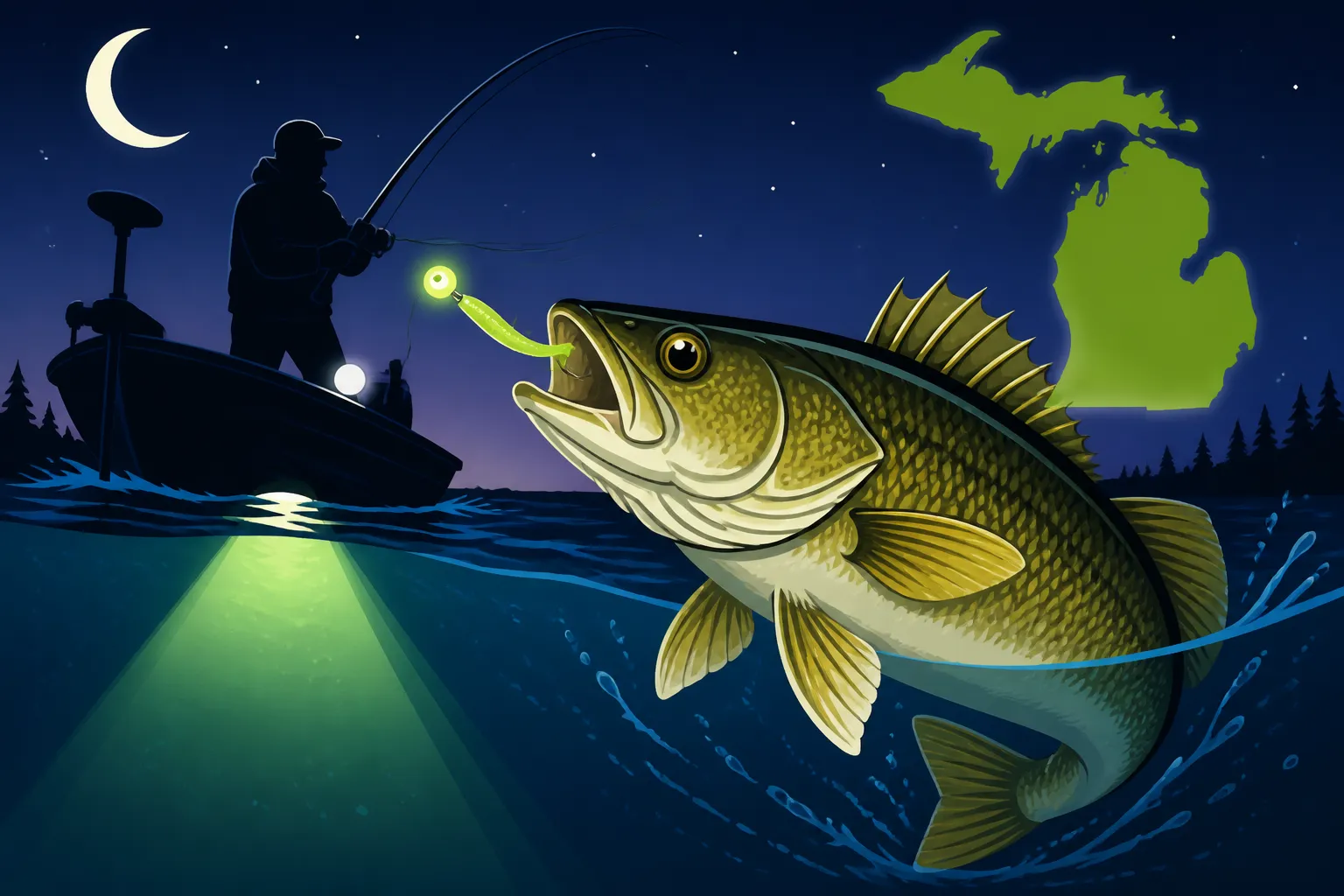
Many anglers find themselves frustrated when the daytime bite for walleye in Michigan just isn't happening. It can feel like you're doing everything right, but those elusive fish are simply not cooperating. This comprehensive guide will illuminate the tactics, gear, and safety precautions you need to know to successfully target and catch walleye after dark in Michigan waters, transforming those slow days into productive nights.
Why Night Fishing for Walleye is So Effective in Michigan
There's a reason seasoned walleye anglers often swear by the nighttime bite: it offers a completely different playing field where the odds often swing in your favor. Michigan's walleye, known for their light-sensitive eyes and predatory instincts, undergo a significant behavioral shift once the sun dips below the horizon, making them more accessible and aggressive.
Walleye Behavior After Dark
Walleye are equipped with a tapetum lucidum layer in their eyes, which gives them superior low-light vision compared to many other fish species. This evolutionary advantage means that as ambient light fades, they gain a tactical edge over their prey. During the day, walleye often retreat to deeper, darker waters or seek refuge in heavy cover to avoid bright light and ambush unsuspecting prey. However, once twilight sets in, they become far more active.
You'll often find walleye moving out of those deeper haunts and venturing into shallower feeding grounds, points, flats, and even rocky shorelines. This nocturnal migration brings them within easier reach for shore anglers and boaters alike. They're less wary, more focused on feeding, and generally more willing to chase down a lure or bait. Think of it like this: the buffet opens, and they're ready to eat without the intense scrutiny of daylight and boat traffic. This change in behavior is a primary reason why mastering how to catch walleye at night in Michigan can be incredibly rewarding.
Reduced Pressure and Solitude on the Water
One of the undeniable perks of night fishing is the peaceful solitude it offers. During daylight hours, popular Michigan walleye fisheries like Lake St. Clair, Saginaw Bay, or Lake Erie's Michigan waters can be bustling with recreational boaters, jet skis, and other anglers. This constant activity often spooks fish and makes them more cautious. But once night falls, the crowds dissipate.
This significant reduction in boat traffic, noise, and overall human presence creates a calmer environment. Walleye, no longer feeling the constant pressure, become more relaxed and bold in their movements. You can often work prime fishing spots more thoroughly and methodically without feeling rushed or having to compete with dozens of other boats. This quiet atmosphere also allows you to focus better on your presentation and detect subtle bites that might be missed amidst daytime distractions. It’s not just about catching fish; it’s about experiencing Michigan’s beautiful waters in a whole new, tranquil way.
Prime Feeding Windows
While walleye generally become more active after dark, certain periods within the night can be exceptionally productive. The hours immediately following sunset and leading up to sunrise are often considered "prime time." These transitional periods, when light levels are rapidly changing, are when walleye often engage in their most aggressive feeding frenesies.
Additionally, paying attention to moon phases can offer further insight. Many experienced night anglers believe that the periods around a new moon (darkest nights) or a full moon (brightest nights) can trigger intensified feeding patterns, though opinions vary on which is superior. On those bright full moon nights, walleye might stay in slightly deeper water or relate more closely to shadow lines, while on darker nights, they might roam more freely in the shallows. Regardless of the moon phase, the key takeaway is that walleye are crepuscular feeders, meaning they are most active during twilight. Understanding these windows can help you plan your trips and maximize your chances of success when night fishing for walleye in Michigan.
Essential Gear for Michigan Night Walleye Fishing
Successfully catching walleye after dark requires more than just your typical daytime setup. Safety, visibility, and specific lure choices become paramount. Having the right equipment ensures both a productive and safe experience on Michigan's diverse waterways.
Lighting and Visibility Gear
When you’re out on the water after the sun goes down, adequate lighting isn't just a convenience—it's a critical safety measure and a tool for success.
- Headlamps: A good quality headlamp is your best friend for hands-free illumination. Look for models with multiple brightness settings and, crucially, a red light option. Red light preserves your night vision, meaning when you turn off your headlamp, your eyes don't have to readjust as drastically to the darkness. Brands like Petzl or Black Diamond offer reliable options, many of which you can find on Amazon. You'll need it for tying knots, unhooking fish, and navigating your immediate surroundings.
- Boat Lights: If you're in a boat, ensure your navigation lights are fully functional and properly displayed according to Michigan boating laws. Additionally, a powerful spotlight can be invaluable for spotting buoys, debris, or distant shorelines. Some anglers also use a diffused cabin light or a small LED lantern to provide enough ambient light to see their tackle without being overly bright and spooking fish or ruining night vision.
- Lanterns/Area Lighting: A small, battery-powered LED lantern can be fantastic for lighting up your immediate fishing area, especially if you're shore fishing or need to rig multiple rods. Again, consider models with a red light setting. These are great for keeping your hands free and avoiding fumbling in the dark.
Rods, Reels, and Line Choices
While your general walleye setup might work, optimizing it for night fishing can make a big difference in sensitivity and control.
- Rods: Sensitivity is key for detecting those subtle walleye bites in the dark. A medium-light to medium-heavy spinning or casting rod, typically 6'6" to 7'6" in length, with a fast action tip is ideal. The fast action tip allows you to feel even the slightest tap, while the backbone provides enough power for a solid hookset and fighting a strong fish. Graphite rods tend to be more sensitive than fiberglass.
- Reels: Pair your sensitive rod with a smooth-operating spinning or baitcasting reel that has a reliable drag system. A size 2500-3000 spinning reel or a low-profile baitcaster is generally sufficient for most Michigan walleye. Ensure your reel is well-maintained, as you won't want any hitches in the dark.
- Line: Many night anglers prefer braided line (10-20 lb test) for its incredible sensitivity and lack of stretch, which helps detect faint bites. However, braid can be more visible to fish in clearer waters, so it's often best to tie on a fluorocarbon leader (6-12 lb test, 3-6 feet long) using a strong knot like a FG or Albright knot. The low visibility and abrasion resistance of fluorocarbon are excellent in the water. For those who prefer monofilament, a high-quality, low-stretch monofilament (8-12 lb test) can also work, though it won't offer the same level of sensitivity as braid.
Lures and Baits for Nighttime
Walleye are opportunistic feeders, and at night, they often rely on vibration, scent, and silhouette to find their prey.
- Crankbaits: These are often the go-to for night trolling or casting from shore. Choose shallow-diving models if fishing near shore or deeper divers if working deeper edges. Darker colors like black, blue, purple, or natural patterns (perch, shiner) can create a strong silhouette against the dim light, making them easier for walleye to see. Lures with internal rattles add an important auditory element, attracting fish from a distance. Consider brands like Rapala, Bandit, or Berkley Flicker Shads; many popular models are readily available on Amazon.
- Jerkbaits: Long, slender jerkbaits can be incredibly effective, especially when twitched and paused. These baits mimic injured baitfish and can provoke aggressive strikes. Again, darker colors or those with a translucent quality that glows under UV light can be very productive.
- Jigs with Scented Plastics: For a slower, more vertical presentation, jigs tipped with scented soft plastics are excellent. Consider glow-in-the-dark jigs or those with dark-colored plastics that provide good contrast. Scented baits like those from Berkley Gulp! or PowerBait can be a game-changer, as walleye will often follow a scent trail in the dark.
- Live Bait: You simply can't beat live bait, especially when walleye are finicky. Nightcrawlers, shiners, or large minnows fished under a slip bobber or on a bottom bouncer rig are deadly effective. The natural movement and scent of live bait are irresistible to feeding walleye. For more ideas, check out our guide on Best Bait for Michigan Walleye.
Safety and Comfort Gear
Night fishing, while rewarding, carries inherent risks. Being prepared for anything is crucial.
- Personal Flotation Devices (PFDs): These are non-negotiable, especially when boating at night. Have one for every person on board, and consider wearing an inflatable PFD for comfort.
- First-Aid Kit: A well-stocked first-aid kit for minor cuts, hook punctures, or other mishaps is essential.
- Bug Spray: Michigan nights, especially during warmer months, mean mosquitos and other biting insects. Don't let them ruin your trip; pack a strong insect repellent.
- Warm Clothing: Even on warm summer days, nights on Michigan lakes or rivers can get surprisingly chilly. Layered clothing, including a waterproof outer shell, is highly recommended to stay comfortable and prevent hypothermia.
- Navigation Tools: A reliable GPS unit or a chart plotter with up-to-date mapping is invaluable for navigating safely in the dark, especially on larger bodies of water or unfamiliar lakes. Knowing your route and potential hazards is paramount.
- Communication Device: Always carry a fully charged cell phone. For larger bodies of water, a marine VHF radio is a smart addition, as cell service can be spotty.
- Knife/Line Cutters: You'll need these for quickly cutting line, especially if a hook gets stuck or you need to re-tie in a hurry.
Being thoroughly prepared with the right gear ensures your focus remains on the fishing, not on unforeseen problems.
Proven Techniques for Night Walleye Fishing Success
Now that you're geared up, let's dive into the actual fishing strategies that consistently put Michigan walleye in the net after dark. These techniques leverage walleye's nocturnal habits and their reliance on sensory input.
Shoreline and Shallow Water Targeting
One of the biggest advantages of night fishing is that walleye frequently push into much shallower water to feed. These areas, often inaccessible or unproductive during the day due to light and boat traffic, become prime hunting grounds.
- From a Boat: If you're in a boat, focus on structural elements like shallow points, sand flats adjacent to deeper drop-offs, rock piles, or the outside edges of weed beds. Approach these areas slowly and quietly, using your electric trolling motor if possible, to avoid spooking fish. Cast crankbaits (preferably those with rattles), jerkbaits, or jigs tipped with scented plastics towards the shore or structure, working them back to the boat. Pay attention to sudden depth changes indicated by your fish finder or marked on your charts. For specific locations, our guide to the Best Walleye Lakes in Michigan's Lower Peninsula can offer some fantastic starting points.
- From Shore: Shore anglers have a unique opportunity at night. Look for public piers, breakwalls, or rocky points that extend into the water. Walleye will often cruise these areas looking for baitfish. Use long casting rods to reach further out. Popular techniques include casting and slowly retrieving crankbaits or jerkbaits, or fishing live bait (minnows or crawlers) under a slip bobber. The glow from city lights or streetlights can sometimes even attract baitfish, which in turn draws walleye. This is a great way to put some fish in the cooler without needing a boat.
Trolling with Crankbaits
Trolling is a highly effective method for covering water and locating active walleye at night, especially on larger lakes and bays like Saginaw Bay.
- Lure Selection: As mentioned, darker-colored crankbaits with rattles are excellent. Experiment with different diving depths until you find where the fish are holding. Jointed crankbaits often have a wider, more erratic action that can be very enticing in the dark.
- Trolling Speed and Depth: A slow, consistent troll is usually best, typically between 1.0 to 2.5 miles per hour. The exact speed often depends on the lure you're using and how much action it needs to impart. Use your electronics to monitor depth and identify structure. Walleye at night often suspend over deeper water or hug the breaklines near shallow feeding flats. Consider how to set up your trolling system by referring to our article on Michigan Walleye Fishing Techniques.
- Planer Boards/Side-Planers: These are invaluable for spreading your lines out and covering a wider swath of water, especially in clear conditions or when fish are spooky. Planer boards get your lures away from the boat, making them appear more natural. This allows you to run multiple lines at varying depths and distances from the boat. Check out brands like Offshore Tackle or Church Tackle on Amazon for reliable planer boards.
- Lights on Lures: Some anglers experiment with glow-in-the-dark or even battery-powered LED crankbaits. While not always necessary, they can sometimes trigger an aggressive strike from curious walleye, especially in very dark or stained water.
Casting and Jigging Structures
For a more active and targeted approach, casting and jigging can be incredibly productive, especially when you've identified specific holding areas.
- Rock Piles and Reefs: These are classic walleye hideouts. Cast jigs (1/4 to 3/8 ounce is common) tipped with scented soft plastics or live minnows onto the structure. Use a slow, methodical retrieve, letting the jig bounce off the rocks. The "thump" of the jig hitting the bottom can attract attention.
- Weed Edges: Walleye will often patrol the outside edges of weed beds, ambushing baitfish that venture too far out. Cast jerkbaits or swim jigs parallel to the weed line, working them slowly. A "snap-pause" retrieve with a jerkbait can be irresistible.
- Points and Humps: Any underwater point or hump that rises from deeper water is a potential walleye ambush spot. Cast jigs, blade baits, or even vertical jigging spoons on top of and around these features. Experiment with different retrieve speeds until you find what the walleye prefer. For detailed jigging strategies, our guide on How to Jig for Walleye in Michigan provides excellent insights.
- Scent is Key: In the dark, scent becomes even more important. Don't hesitate to add gel scents or use heavily scented soft plastics. Walleye's sense of smell is highly developed, and it can draw them in when visibility is low.
Live Bait Presentations
When all else fails, or when you just want to stick to a proven method, live bait remains king for many walleye anglers.
- Slip Bobber Rigs: This is a fantastic method for fishing live bait at a precise depth, especially in shallow areas or over structure. Rig a large minnow, shiner, or half a nightcrawler under a slip bobber, allowing the bait to suspend just off the bottom or above weed tops. Cast it out and let it sit, or slowly retrieve it. The natural movement of the bait is often all it takes.
- Bottom Bouncers: When drifting or slowly trolling, a bottom bouncer rig with a crawler harness or a live minnow can be incredibly effective. The bottom bouncer keeps your bait near the bottom, where walleye are often feeding. This is particularly good for covering broader areas of flats or transition zones.
- Carolina Rigs: For a more stationary approach from a boat or shore, a Carolina rig with a walking sinker and a fluorocarbon leader can present a live minnow or nightcrawler naturally on the bottom. The fish can pick up the bait without feeling the weight of the sinker.
Remember, Michigan's fishing regulations include specific Michigan Walleye Daily Possession Limit and Michigan Walleye Size and Bag Limits you must adhere to. Always check the latest DNR regulations before heading out.
Safety Considerations for Fishing Michigan Waters at Night
While the rewards of night fishing for walleye are plentiful, the risks are also amplified. Navigating Michigan's lakes and rivers in the dark demands extra caution and preparation. Your safety and the safety of anyone with you should always be your top priority.
Navigation and Hazards
The most significant challenge of night fishing is reduced visibility. What might be a minor obstacle during the day can become a serious hazard after dark.
- Know Your Water: Never fish unfamiliar waters at night. Stick to areas you've thoroughly explored during daylight hours and are confident navigating. Memorize the location of shoals, rock piles, submerged structures, and channel markers.
- GPS and Chartplotter: A reliable GPS unit with detailed electronic charts is an absolute must for night boating. Mark your launch point, productive fishing spots, and any known hazards. Use the "track" feature to retrace your path if needed. Brands like Humminbird, Lowrance, and Garmin offer excellent units with features like LakeMaster or Navionics mapping, which can be invaluable.
- Go Slow: Whether in a boat or even walking a shoreline, reduce your speed significantly. It takes longer for your eyes to adjust to changes in light, and reaction time is slower. Look far ahead of your boat with a powerful spotlight if necessary, but avoid shining it constantly as it can impair your night vision.
- Stay in Designated Channels: If navigating a river or a channel, stick strictly to the marked boundaries. Buoys and markers often have reflective tape or lights that become visible with a spotlight, but currents and unseen debris can still pose risks.
Weather Awareness
Michigan weather can be unpredictable, and conditions can change rapidly, especially on the Great Lakes or larger inland lakes. These changes are far more dangerous at night.
- Check Forecasts Meticulously: Before heading out, consult multiple weather forecasts for your specific location. Pay close attention to wind speed and direction, potential for thunderstorms, and temperature drops. A seemingly calm evening can quickly turn into a rough, cold, and wet night.
- Be Prepared for Changes: Always dress in layers, including waterproof outer gear, even if the forecast looks clear. A sudden rain shower can make conditions miserable and dangerous, chilling you to the bone.
- Know Your Limits: If the wind picks up, or storms roll in, don't hesitate to cut your trip short. No walleye is worth risking your life. Have an escape plan and know where the nearest safe harbor or exit point is. It's better to be safe at home than stranded on the water in adverse conditions.
Communication and Buddy System
Even with all the right gear and knowledge, unforeseen circumstances can arise. Having a plan for communication and assistance is critical.
- Never Fish Alone: Whenever possible, fish with a buddy. There's safety in numbers, and an extra pair of eyes and hands can be invaluable in an emergency.
- Tell Someone Your Plan: Always inform a friend or family member of your exact fishing location, who you are with, and your estimated return time. Give them a detailed float plan, especially if you're venturing out onto a larger body of water.
- Reliable Communication Devices: A fully charged cell phone in a waterproof case is essential. However, cell service can be unreliable in many remote Michigan fishing areas. Consider a marine VHF radio for boat-to-boat or boat-to-shore communication on larger lakes. Satellite communicators, like those from Garmin InReach, offer an even higher level of safety for truly remote adventures, allowing you to send messages or an SOS signal regardless of cell service.
- Emergency Signals: Carry a whistle, air horn, or signal mirror. These can be crucial for attracting attention if you run into trouble. A spare flashlight or strobe light can also serve as a distress signal.
Being proactive about safety isn't about being paranoid; it's about being responsible and ensuring you can enjoy many more nights of successful walleye fishing in Michigan. Following all Michigan Fishing Regulations Every Angler Should Know will also contribute to a safe and enjoyable experience.
| Aspect | Daytime Walleye Fishing | Nighttime Walleye Fishing |
|---|---|---|
| Walleye Behavior | Often deeper, wary of light/activity, less active | Move shallower, less cautious, aggressive feeding |
| Primary Senses Used | Sight, lateral line, scent, vibration | Lateral line, scent, vibration, low-light sight |
| Crowds/Pressure | High on popular waters | Significantly lower, more solitude |
| Optimal Lures | Variety of colors, natural presentations | Darker colors, rattles, glow, scented baits |
| Gear Focus | General tackle, sun protection | Headlamps, navigation lights, sensitive rods, safety gear |
| Safety Concerns | Boating traffic, sun exposure | Navigation hazards, weather changes, limited visibility |
| Best Locations | Deep structure, current seams, main lake points | Shallow flats, shorelines, weed edges, transition zones |
Disclaimer
Fishing involves inherent risks, including but not limited to adverse weather conditions, boating accidents, and injuries from hooks or fish. Always prioritize safety, understand local regulations, and be prepared for emergencies. The information provided in this guide is for informational purposes only and does not substitute professional advice or adherence to official Michigan Department of Natural Resources (DNR) guidelines. Always consult the most current Michigan fishing regulations before heading out.