What Is a Skipper Steelhead
It can be incredibly confusing to be out on a Michigan river, reeling in what feels like a solid steelhead, only to see it jump and realize it's much smaller than the "chrome rockets" you've heard about. You might wonder if it's a different species, a juvenile, or perhaps something else entirely. This comprehensive guide will clear up the mystery of what a "skipper steelhead" is, why you encounter them, and how understanding their unique characteristics can make you a more informed and successful angler in Michigan's amazing waters.
The Journey of a Steelhead: From River to Great Lake and Back
To truly grasp what a skipper steelhead is, we first need to appreciate the incredible, often perilous journey of the steelhead in Michigan. Steelhead are, in essence, rainbow trout that exhibit an anadromous life cycle, meaning they hatch in freshwater rivers, migrate to the vast expanse of the Great Lakes (acting like an ocean for them), grow large, and then return to their natal rivers to spawn. This isn't just a simple commute; it's a testament to resilience and instinct.
When those tiny eggs hatch in the gravel beds of a cold, clean Michigan river like the Manistee or the Pere Marquette, they become delicate fry. As they grow, they develop into what we call "parr" – small, camouflaged fish with distinctive vertical markings, perfectly adapted to hiding in the river's eddies and riffles. These parr spend a year or two, sometimes even three, feeding on insects and growing stronger. This is their childhood, where they learn to survive the swift currents and evade predators. Many won't make it past this stage, which is a natural part of the cycle, but those that do are destined for bigger things.
Then, a magical transformation occurs. As spring approaches and river conditions are just right, these parr undergo a physiological change called "smoltification." They lose their parr marks, turn a silvery color, and their bodies prepare for saltwater (or in our case, Great Lakes) living. Now called "smolts," they begin their downstream migration, driven by an innate urge to reach the abundant food and growth opportunities of the open lake. This journey is fraught with danger, from predatory fish and birds to challenging river conditions. But for those that succeed, the Great Lakes offer a bounty that allows them to pack on significant size and strength, becoming the formidable fish we know as steelhead. Understanding this fundamental journey is key to recognizing the unique role a skipper plays. You can learn more about this incredible transformation in our article on Steelhead Life Cycle in Michigan Rivers.
Unmasking the Skipper Steelhead: What Makes Them Unique?
So, after all that talk about growing big in the Great Lakes, what's a "skipper steelhead" doing back in the river when it's still relatively small? That's the core question, and it's a valid one that often leads to head-scratching moments for anglers. A skipper steelhead is essentially an immature adult steelhead that has returned to the river prematurely, often without a full spawn cycle under its belt. These aren't the giant, chrome-bright specimens that have spent years gorging themselves in Lake Michigan or Lake Huron. Instead, they are typically smaller, ranging anywhere from 16 to 24 inches, sometimes a bit larger, but definitely not the 10-15 pound monsters you might be dreaming of.
Their return isn't usually driven by the primary urge to spawn in the way a fully mature steelhead's is. Instead, skippers are often considered "opportunistic" or "exploratory" returners. They might be coming back to the river for a variety of reasons:
- Early Sexual Maturation: Some steelhead mature faster than others, and a small percentage may develop an urge to return to the river before they've reached their full growth potential in the lake. It's like a teenager trying to act like an adult too soon!
- Feeding Opportunities: Rivers, especially during strong insect hatches or salmon runs, can offer incredibly rich feeding grounds. A skipper might return to capitalize on this temporary abundance of food, bulking up before heading back to the lake.
- Environmental Cues: Fluctuations in water temperature, river flows, or even the scent of other returning fish can trigger a migratory instinct in these younger fish, pulling them upstream even if their biological clock isn't fully set for spawning.
- Failed Spawning Runs: Sometimes, a steelhead might have started a run, perhaps as a very young adult, and for whatever reason (environmental stress, lack of a mate), it didn't complete a full spawn. It might then re-enter the river system a bit "ahead of schedule" on its next go-round.
The term "skipper" really captures this premature or perhaps less-than-full-commitment attitude. They often dart around more erratically, are incredibly aggressive, and are not necessarily holding in traditional spawning lies. They're exploring, feeding, and generally acting like energetic youngsters, which can make them a ton of fun to catch. They're a valuable part of the overall steelhead population, contributing to genetic diversity and ensuring that not all fish follow the exact same life path, which can be an evolutionary advantage.
Spotting a Skipper on the Water: Identification Tips for Anglers
Distinguishing a skipper steelhead from a fully mature adult or even a very large resident rainbow trout can sometimes be tricky, but there are definitely some tell-tale signs to look for. It's not just about size, although that's often the most obvious indicator. Knowing what you're seeing can help you better understand the dynamics of the river you're fishing and even adjust your tactics.
First and foremost, size is usually the biggest clue. While a full-grown Michigan steelhead might easily hit 8-15 pounds and measure 28-35+ inches, a skipper will typically be in the 3-7 pound range, often measuring between 16 and 24 inches. They're substantial fish, certainly, but lack the sheer bulk and length of a multi-year lake resident. Their girth will also be less pronounced; they'll look more streamlined and less deep-bodied than a true trophy steelhead.
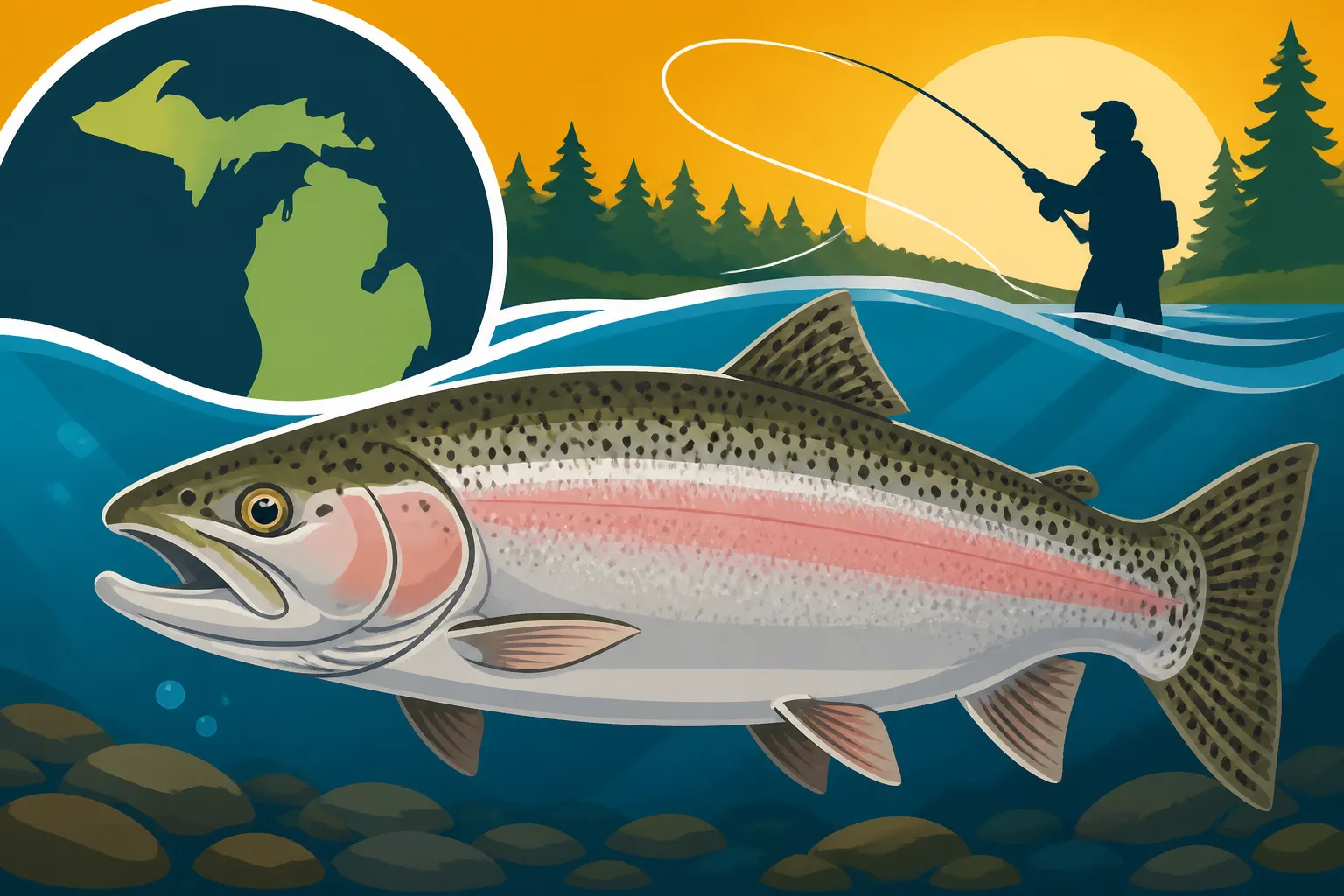
Visually, pay attention to their coloration and overall condition. Skippers often exhibit a brilliant, almost neon silver color when they first enter the river, indicating their recent transition from the Great Lakes. They might have a faint pink band along their lateral line, but it's usually less vibrant than the deep red or purple hues seen on more mature, spawning-phase fish that have been in the river for a while. Their fins will likely be pristine, sharp, and undamaged, as they haven't endured as many spawning battles or river obstacles. You won't see the scarred, battle-worn look that older, larger steelhead sometimes carry. Their scales will be tightly packed and shiny, reflecting the clear, nutrient-rich waters of the big lake.
When it comes to behavior, skippers are often more active and aggressive than their larger counterparts. They're not as focused on specific spawning rituals or holding patiently in deep pools. Instead, they might be found aggressively chasing baitfish, nymphs, or even taking surface flies if conditions are right. They tend to be more nomadic, moving frequently and exploring different parts of the river. If you hook into a fish that's pulling incredibly hard for its size, making multiple aerial acrobatics, and generally putting on a spectacular fight, there's a good chance you've got a skipper on the line. They're full of youthful vigor and haven't yet learned the cautious wisdom of older, more experienced fish. It's a thrilling experience, and you might find some excellent videos on Amazon showcasing this kind of energetic fight.
Here's a quick comparison to help you differentiate:
| Characteristic | Juvenile Steelhead (Parr/Smolt) | Skipper Steelhead | Mature Steelhead |
|---|---|---|---|
| Size | Small (3-8 inches) | Medium (16-24 inches) | Large (25-35+ inches) |
| Weight | < 1 lb | 3-7 lbs | 8-15+ lbs |
| Appearance | Parr marks (fry), Silvery (smolt) | Bright silver, pristine fins | Chrome to dark olive, often with strong pink/red stripe |
| Girth | Slender | Streamlined | Deep-bodied, thick |
| Behavior | Hides, feeds on insects | Aggressive, active feeder, exploratory | Holds in spawning lies, can be wary, strong fighting |
| Goal | Growth, lake migration | Opportunistic feeding, early return | Spawning, then kelting (returning to lake) |
Targeting Skipper Steelhead: Effective Fishing Strategies
While you might not set out specifically to catch skipper steelhead, understanding their habits can certainly improve your chances of a successful day on the water, especially during times when larger, more mature fish might be less active. Skippers offer fantastic action and are a great way to hone your steelhead fishing skills.
One of the best times to encounter skippers is during the fall steelhead run and particularly the spring steelhead run, right after ice-out. These periods see a general influx of steelhead into the rivers, and skippers are often among the first to arrive or are actively cruising the system. They are less confined by spawning duties and more driven by feeding, making them excellent targets. Look for them in areas where food is abundant – behind salmon redds where eggs might be drifting, near current breaks where insects collect, or along seams where they can ambush baitfish. While older fish might stack up in deep pools, skippers are often found in slightly shallower runs, tail-outs of pools, or even gravelly flats. Our guide on Michigan Steelhead Run Timing can help you pinpoint these prime periods.
When it comes to gear and techniques, flexibility is key. Because skippers are so aggressive and often actively feeding, a wider range of presentations can be effective.
- Float fishing with small spawn bags, beads (which mimic salmon eggs), or natural baits like wax worms or small minnows is incredibly effective. The visual drift allows them to track the bait, and their aggressive nature means they're likely to strike. Having a good selection of floats and split shot from Amazon can make all the difference in achieving the perfect drift.
- Small spoons and spinners can also entice a strike. Because skippers are more about opportunistic feeding, a flashy, erratic presentation can trigger their predatory instincts. Think about smaller sizes (1/4 to 3/8 ounce) in bright colors or natural baitfish patterns.
- Fly fishing can be exhilarating for skippers. Nymphing with stoneflies, caddis, or even smaller attractor patterns can be very productive. In the right conditions, especially during a hatch, skippers will readily rise to dry flies, providing an unforgettable topwater take. Streamer fishing, mimicking baitfish, is another killer technique for these aggressive eaters. If you're looking to get started, you can find a Best Fly Fishing Gear for Trout Rivers guide to help you out.
Remember that because they're younger and often smaller, they might not be able to handle the heaviest gear designed for battling giants. A medium-light to medium power rod with a fast action, paired with a reliable spinning reel spooled with 8-10 lb fluorocarbon or monofilament main line and a lighter leader (6-8 lb), is often ideal. This setup allows for good casting control and sensitivity, while still providing enough backbone to handle their spirited fights. Check out our recommendations for What Line Weight for Michigan Steelhead.
Finally, catch-and-release is paramount with all steelhead, but especially with skippers. These are the future of Michigan's steelhead fishery. Treat them with care:
- Use barbless hooks to minimize damage.
- Land the fish quickly to reduce stress.
- Keep them in the water as much as possible.
- Use a rubberized net to protect their slime coat.
- If you must take a photo, do it quickly and support the fish horizontally with two hands.
- Allow the fish to recover fully before releasing it, holding it gently in the current until it swims away under its own power.
By practicing responsible catch-and-release, you help ensure that these feisty young fish return to the Great Lakes to grow even larger and contribute to future spawning runs. Every skipper you release is an investment in the incredible Michigan steelhead fishery for years to come.
The Role of Skippers in Michigan's Steelhead Population
While perhaps not the prized "trophy" many anglers seek, skipper steelhead play a crucial, often underestimated, role in the overall health and resilience of Michigan's incredible steelhead population. Their presence in the rivers isn't just a quirky anomaly; it's an indicator of a dynamic and evolving ecosystem.
Firstly, skippers represent future spawning stock. These are the young adults that, given another year or two in the Great Lakes, will likely return as full-sized, reproductively mature steelhead. Their early, exploratory runs might even serve as practice for the more serious business of spawning down the line. By ensuring their safe return to the lake through careful catch-and-release practices, we are directly investing in the sustainability of the fishery. It's a testament to the diverse life history strategies within a single species, ensuring that not all eggs are in one basket, so to speak. If all steelhead followed the exact same growth and return schedule, the population would be far more vulnerable to specific environmental stressors or changes.
Secondly, skippers contribute to genetic diversity. Their varied return times and potential for earlier maturation mean that the gene pool is continually mixing and adapting. This natural variation is vital for any species facing changing environmental conditions, water temperatures, and food availability. A diverse population is a robust population, better equipped to handle challenges like invasive species or habitat alterations, which are always a concern in the Great Lakes region. Michigan's Great Lakes Fishing Guide often highlights the complexity of this ecosystem.
Lastly, and perhaps most tangibly for anglers, skippers provide valuable angling opportunities. Imagine a slow day on the river, the big fish are lock-jawed, and suddenly, a school of aggressive skippers moves through, eager to take a fly or a bead. These fish can turn a potentially frustrating outing into an action-packed day. For new steelhead anglers, they offer a chance to experience the incredible fight of a lake-run rainbow trout without the immense pressure of trying to fool a wary, 15-pound monster. They build confidence, refine techniques, and provide a lot of fun. They also serve as an important educational tool, allowing anglers to observe steelhead behavior and understand the nuances of river fishing.
So, the next time you hook into a "smaller" steelhead, don't be disappointed. Recognize it for what it is: a vibrant, energetic skipper, a vital part of Michigan's amazing fishery, and a promise of future generations of magnificent steelhead. Respecting these fish and understanding their place in the larger ecosystem only adds to the richness of the Michigan fishing experience, whether you're chasing them in the Au Sable River Trout Fishing in Michigan or the Manistee River Steelhead and Salmon Fishing in Michigan.
Disclaimer
This article is for general informational purposes only and does not constitute professional advice. Laws, prices and regulations vary by location and change over time. Consult a qualified professional for guidance on your specific situation.