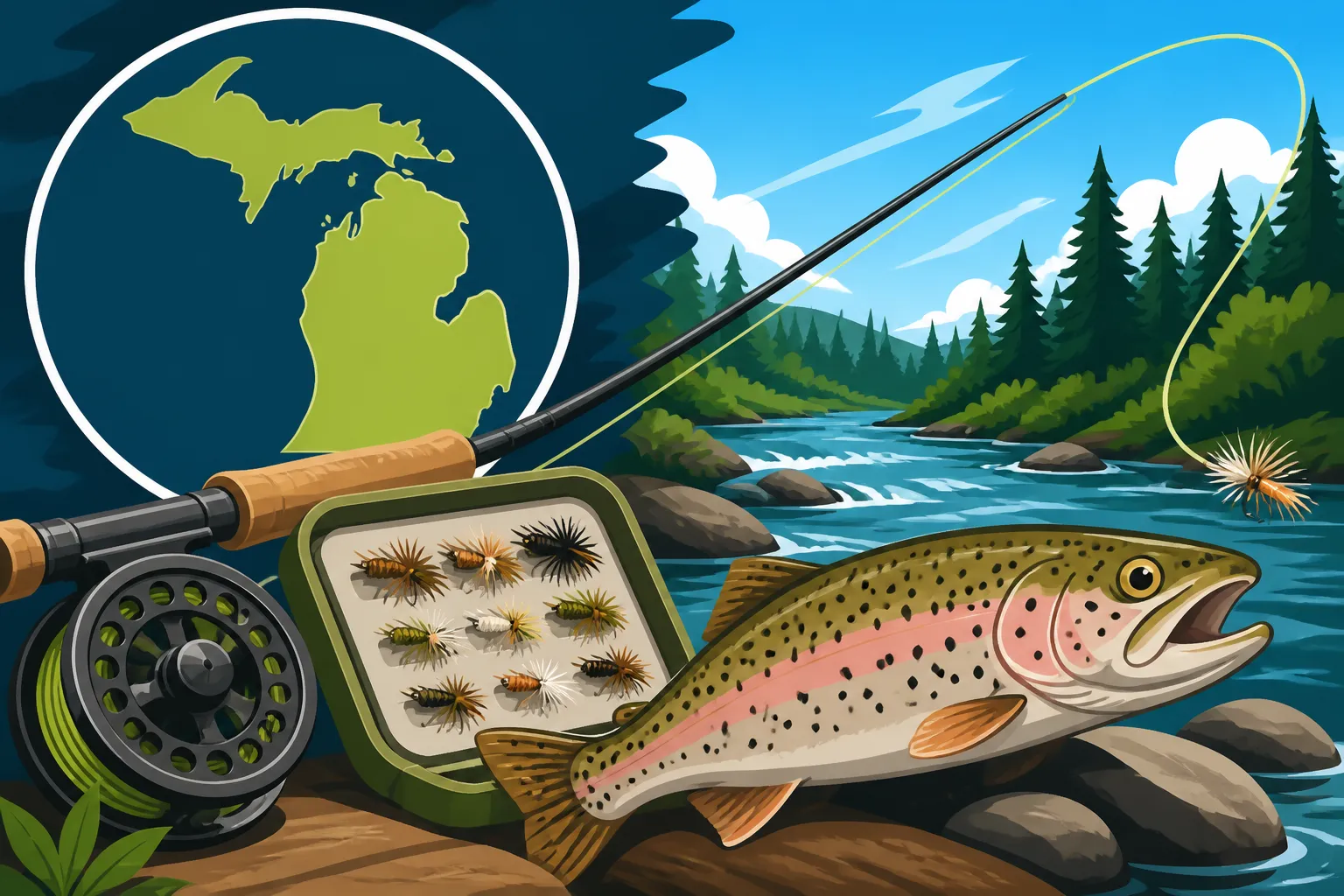
Best Fly Fishing Gear for Trout Rivers
If you've ever stood on the banks of a beautiful Michigan trout river, watching the water ripple by, only to realize your gear isn't quite up to the task – maybe your cast falls short, your line tangles, or you just feel generally unprepared – you know the frustration. Fly fishing for trout in our state's diverse waters, from the famed Au Sable to the smaller, wilder streams, requires specific equipment to truly enjoy the experience and find success. This comprehensive guide is here to walk you through the essential fly fishing gear tailored for Michigan's unique trout rivers, ensuring you're ready for whatever the current brings.
Understanding Michigan's Trout River Environment
Before we dive into the nitty-gritty of rods and reels, it's crucial to understand the environment you'll be fishing in. Michigan's trout rivers aren't all the same, and the gear you choose should reflect the specific challenges and opportunities each one presents. Thinking about the conditions will help you make smarter choices about every piece of equipment.
The Unique Challenges of Michigan's Coldwater Fisheries
Michigan is blessed with an incredible network of coldwater rivers and streams, perfect for supporting robust trout populations. These waters often originate from groundwater springs, keeping them cool even through the summer, which is vital for trout survival. However, these environments also come with their own set of challenges. We're talking about varying flows, from gentle glides to swift rapids, and often very clear water that demands stealth and careful presentation. Rivers like the Au Sable River Trout Fishing in Michigan or the Pere Marquette River Fly Fishing in Michigan are classic examples, offering diverse conditions along their lengths.
The presence of diverse insect life, from prolific caddis and mayfly hatches to stoneflies, means your fly selection needs to be broad, and your presentation adaptable. You're not just casting; you're often trying to mimic tiny, delicate insects in a precise manner. Additionally, many of these rivers are bordered by dense foliage, requiring accurate casting in tight quarters. Winter fly fishing, while less common, also presents its own cold-weather demands, from ice on your guides to numb fingers. The ever-changing conditions from spring runoff to summer low-water periods and fall spawning runs will always keep you on your toes.
Key Trout Species and Their Habitats
Michigan's trout rivers are home to several prized species, each with preferences that can influence your gear choices. We primarily target brown trout, rainbow trout (including their migratory steelhead forms), and brook trout. Brown trout are often found in larger, more complex river systems, known for their wary nature and larger size potential. They can be found holding in deep pools, under cut banks, or near fallen logs, requiring accurate casts and sometimes heavier tippets to bring them to hand.
Brook trout, our only native trout, typically inhabit smaller, colder, and often more secluded streams. These beautiful fish might not grow as large, but they offer an incredibly rewarding experience in pristine environments. For them, delicate presentations and lighter gear are usually the order of the day. Rainbow trout and steelhead, which are migratory rainbows, can be found in a wide range of rivers, often in faster, oxygenated water. Understanding the typical size and fighting style of the species you're targeting in a specific river, as discussed in Michigan's Most Popular Fish Species, will steer you toward the right rod weight and line strength.
The Core of Your Setup: Rod, Reel, and Line
These three components form the foundation of your fly fishing arsenal. Getting them right is critical for an enjoyable and effective day on the water. They need to work together seamlessly, like a well-oiled machine, to deliver your fly accurately and handle whatever fish decides to bite.
Selecting the Ideal Fly Rod for Michigan Trout
The fly rod is your primary tool for casting and fighting fish. For general trout fishing in Michigan, a 9-foot rod in a 4-weight or 5-weight is typically the most versatile choice. A 5-weight rod is often considered the workhorse of trout fishing; it's light enough to present delicate dry flies on smaller streams, yet powerful enough to cast streamers or nymph rigs on larger rivers like the Manistee, and to handle a respectable brown trout. A 4-weight is fantastic for smaller streams and lighter presentations, offering a bit more finesse, especially when targeting brook trout or smaller browns where delicacy is key.
When choosing a rod, consider its "action," which describes how much the rod bends when casting. A "fast action" rod bends mostly in the tip, offering power and accuracy for longer casts or windy conditions, often favored for bigger rivers or heavier flies. A "medium action" rod bends more into the middle, providing a good balance of power and feel, excellent for all-around trout fishing. A "slow action" rod bends almost to the handle, excelling at delicate presentations and short, accurate casts on smaller streams, though it takes more timing to cast effectively. For beginners, a medium-fast action rod is a great starting point, offering forgiveness while still providing ample power. You can find a vast selection of rods from brands often carried by Bass Pro Shops, allowing you to feel the action in person.
Matching Your Fly Reel for Performance and Balance
While the rod does most of the casting work, the fly reel plays a vital role in balancing your setup, holding your line, and providing the crucial drag system to fight fish. For trout fishing in Michigan, you generally don't need a heavy-duty, large-arbor reel with an overly complex drag. A simple, reliable reel that balances well with your chosen rod is often sufficient. The key is balance – when you hold the rod at the grip, the setup should feel comfortable and not tip heavily forward or backward.
Look for a reel that matches your rod's weight (e.g., a 5-weight reel for a 5-weight rod). While you might not "reel in" trout constantly, a smooth, consistent drag is essential for preventing break-offs when a feisty fish makes a run. Modern disc drags are very reliable. The reel's primary function will be to store your fly line and backing (extra line behind your fly line to give a strong fish more running room). A large arbor reel can be a nice feature, as it retrieves line faster and reduces line memory, but it's not strictly necessary for most Michigan trout scenarios. Online retailers like Amazon offer a huge variety of reels, making it easy to compare features and read reviews.
Choosing the Right Fly Line and Backing
The fly line is arguably the most critical component for casting. It's the weight that loads your rod, allowing you to propel your fly across the water. For most Michigan trout fishing, a weight-forward floating line (WF-F) is the go-to choice. The weight-forward taper helps with casting distance and turning over longer leaders, while the floating aspect keeps your line on the surface for dry fly presentations and makes nymphing or streamer fishing easier by allowing you to mend your line effectively.
For specific situations, you might consider other line types. If you're consistently fishing deep nymphs or small streamers in strong currents, a sink-tip line might be beneficial to get your flies down quickly. If you're fishing very small, clear streams where delicate presentation is paramount, a double-taper floating line (DT-F) can offer softer landings, though it sacrifices some casting distance. Match your line weight to your rod weight (e.g., a 5-weight line for a 5-weight rod). Behind your fly line, you'll need backing, typically 20-pound dacron, to ensure you have enough line capacity if you hook into a larger fish that decides to make a long run. Best Fly Line for Steelhead offers some insight, and many of the principles apply to trout as well.
Here's a quick guide to common fly rod weights and their applications in Michigan:
| Rod Weight | Ideal for (Michigan) | Typical Fish Size | Advantages | Disadvantages |
|---|---|---|---|---|
| 3-Weight | Small creeks, delicate brook trout streams, very clear water | 6-12 inches | Maximum finesse, light presentations | Limited power, struggles in wind/big flies |
| 4-Weight | Medium-sized trout rivers, dry fly fishing, small nymphs | 8-16 inches | Excellent feel, good all-rounder for finesse | Can be underpowered for heavy streamers or large fish |
| 5-Weight | Most Michigan trout rivers (Au Sable, Pere Marquette), general nymphing, dry flies, light streamers | 10-20+ inches | Most versatile, handles wind, good power | Can feel a bit heavy for tiny brook trout |
| 6-Weight | Larger rivers, bigger streamers, modest bass, windy days | 12-24+ inches | More power for bigger flies and fish | Less delicate presentation for small dries |
Essential Terminal Tackle and Flies
Once you have your rod, reel, and line, it's time to consider the bits and pieces that connect your line to the fish. This is where precision and thoughtful selection really come into play. A poorly tied knot or the wrong fly can mean the difference between a successful outing and a frustrating one.
Leaders, Tippet, and Knots You Need to Know
Between your fly line and your fly, you'll need a leader and tippet. The leader is a tapered piece of monofilament or fluorocarbon that gradually reduces in diameter, helping to transfer the casting energy from your heavy fly line to your delicate fly with a natural presentation. For trout, a 7.5 to 9-foot leader, tapering down to a 3X, 4X, or 5X tippet, is standard. The "X" rating refers to the diameter of the tippet, with higher numbers indicating thinner, more delicate material. For general trout fishing, 4X or 5X is versatile. If you're fishing tiny dries on super clear water for spooky fish, you might go down to 6X or even 7X. If you're throwing larger streamers or dealing with bigger, stronger fish, 3X might be a better choice.
Tippet is the very end section of your leader, which you tie your fly to. You carry spools of tippet to extend your leader as it gets shorter from changing flies or to adjust the diameter for different flies and conditions. Michigan Fishing Regulations Every Angler Should Know outlines rules that might impact your setup, so always be aware. Essential knots you'll need to master include the surgeon's knot for tying on tippet sections, the improved clinch knot or Davy knot for tying flies to tippet, and a loop knot for streamers. Knowing these knots well, and practicing them, is just as important as having the right rod.
Must-Have Michigan Trout Fly Patterns
The selection of flies can feel overwhelming, but for Michigan trout rivers, a core collection will get you far. You'll want a variety of patterns to imitate the local insect life and to fish different water columns.
- Dry Flies: These imitate insects floating on the surface. Classic patterns include Elk Hair Caddis (various sizes and colors), Parachute Adams (a universal mayfly imitation), and grasshopper/ant patterns for late summer. Always have a few larger attractor patterns like the Stimulator, especially on bigger rivers.
- Nymphs: These imitate immature insects drifting sub-surface. Hare's Ear Nymph, Pheasant Tail Nymph, and Prince Nymph are absolute staples. Having them in different sizes (e.g., #12 down to #18) and with or without beadheads (for extra weight) is crucial. A Zebra Midge or similar tiny midge pattern can be a lifesaver when trout are finicky.
- Streamers: These imitate baitfish or larger aquatic creatures. Woolly Buggers (black, olive, brown) are incredibly effective and versatile. Other patterns like Zonkers or Clouser Minnows can also trigger aggressive strikes from larger trout. When you start exploring Michigan's Great Lakes Fishing Guide for steelhead, you'll find similar streamer concepts.
Your local fly shop is an invaluable resource for current hatch information and recommended patterns, or you can find diverse selections on platforms like Amazon.
Indicators, Weights, and Other Rigging Components
When fishing nymphs or even some streamers, you often need help detecting subtle bites and getting your fly down to the fish. That's where strike indicators and weights come in.
- Strike Indicators: These are essentially small, buoyant bobbers that attach to your leader, showing you when a fish takes your fly or when your drift is off. There are various types, from foam pinch-on indicators to yarn indicators. Experiment to find what works best for you in different water conditions.
- Split Shot/Putty Weights: These add weight to your leader to get your nymphs or streamers down faster and deeper into the strike zone. Non-toxic split shot is widely available in various sizes. Lead-free weighting putty is also popular as it's easily adjustable. The amount of weight depends on current speed and depth. Always ensure you're aware of specific regulations, as What Counts as an Artificial Lure Under Michigan's Trout Rules might be relevant to your rigging.
- Forceps/Hemostats: Indispensable for safely removing flies from fish, especially smaller trout. They also come in handy for pinching down barbs if you prefer to fish barbless.
- Nippers: Small clippers for trimming tippet and leader knots cleanly. Many come with a small needle to clear hackle from hook eyes.
Staying Comfortable and Safe: Waders and Boots
Michigan's trout rivers are cold, and you'll often find yourself standing in the water for extended periods. Staying dry, warm, and sure-footed is paramount not just for comfort, but for safety. No one wants a day cut short by hypothermia or a nasty fall.
Finding the Right Waders for Michigan River Conditions
Waders are your personal barrier against the cold water. For Michigan's trout rivers, breathable chest waders made from Gore-Tex or similar multi-layer fabrics are highly recommended. While neoprene waders offer more warmth, they can be stifling and uncomfortable during warmer months or when hiking to spots. Breathable waders, paired with appropriate layering underneath, offer versatility across seasons. Look for durable construction, reinforced knees, and comfortable suspenders. Bootfoot waders have integrated boots, which can be convenient for easy on/off, but stockingfoot waders (which require separate wading boots) offer better ankle support and a more custom fit, which is generally preferred for walking and wading in tricky currents.
Consider the fit carefully. You want enough room for layering in colder weather without them being so baggy that they restrict movement or become a hazard. A good pair of waders is an investment, but it's one that will pay dividends in comfort and longevity. Many reputable outdoor brands offer excellent wader options, often available through retailers like Bass Pro Shops, where you can compare different models and try them on. Remember, staying dry is key, especially during Michigan's Spring Trout Opener Techniques when water temperatures are still quite chilly.
Wading Boots for Secure Footing
If you opt for stockingfoot waders, a good pair of wading boots is an absolute must. Michigan rivers, particularly those with gravel or cobble bottoms, can be incredibly slick, and a fall in cold water can be dangerous. Wading boots are designed specifically for this purpose, offering superior grip and support. There are two main types of soles: felt and rubber. Felt soles offer exceptional traction on slimy rocks but can be prone to transferring invasive species between waterways if not properly cleaned and dried. Rubber soles, especially those with aggressive tread patterns or the ability to accept studs, are becoming increasingly popular for their durability and reduced risk of transferring invasives.
Many anglers choose to add studs or cleats to their rubber-soled boots for maximum traction, especially on challenging sections of river. Look for boots that offer good ankle support, as navigating uneven river bottoms can twist an ankle quickly. Ensure they fit snugly over your wader booties, allowing for any thicker socks you might wear in colder weather. Your wading boots are your connection to the riverbed, and they need to inspire confidence with every step. For more in-depth advice on what to look for, check out Best Wading Boots for Michigan Rivers.
Beyond the Basics: Accessories for Efficiency and Success
Once you have your core gear and know you'll be comfortable, it's time to consider the smaller items that make a big difference in efficiency, safety, and overall enjoyment. These are the tools that streamline your process and ensure you're always prepared.
Nets, Nippers, and Other On-Stream Tools
Having the right small tools readily accessible can drastically improve your time on the water.
- Landing Net: A good net is essential for safely landing and releasing trout, minimizing stress on the fish. For fly fishing, a net with a rubber or silicone basket is ideal, as it protects the fish's slime coat and prevents hooks from tangling. Look for a net with a short handle if you primarily wade, or a longer handle if you often fish from a boat or high bank. A magnetic net release or a lanyard that keeps your net close at hand is a huge convenience. Responsible catch-and-release is critical for maintaining healthy fish populations, and a proper net facilitates this.
- Forceps/Hemostats: We mentioned these earlier for knot tying, but their primary use is for quickly and safely removing flies from a fish's mouth, especially if the hook is deeply set.
- Nippers: Small, sharp clippers attached to a lanyard or zinger are invaluable for cleanly cutting tippet and leader material. Many nippers also have a small pin for clearing dried head cement or hackle from the eye of a hook.
- Leader Straightener: A small rubber pad that helps remove memory from your leader, allowing for a straighter, more natural drift.
- Floatant: For dry fly fishing, floatant (a paste or liquid applied to your fly) is crucial for keeping your flies riding high on the water. A good desiccant (drying agent) can also revive waterlogged flies.
- Thermometer: A stream thermometer is a great tool for understanding water temperatures, which heavily influence trout activity and feeding behavior. Knowing the temperature can help you decide which flies or techniques to use.
These little items, while seemingly minor, collectively enhance your ability to fish effectively and ethically.
Vests, Packs, and Storage Solutions
How you carry your gear on the water is a matter of personal preference, but having a well-organized system is key. You need easy access to your fly boxes, tippet, nippers, and other essentials without fumbling.
- Fishing Vest: The classic choice, offering numerous pockets to organize your fly boxes, tippet spools, floatant, and other tools. Vests distribute weight evenly across your shoulders. They can sometimes feel a bit bulky in warmer weather, but for sheer organizational capacity, they are hard to beat.
- Chest Pack/Sling Pack: These are increasingly popular alternatives to vests. Chest packs sit on your chest, keeping all your essential items directly in front of you. Sling packs are worn over one shoulder and can be swung around to your front for access. Both offer a more minimalist feel than a vest and can be more comfortable in hot weather. They also keep your back clear for backpacks if you're hiking into remote areas.
- Backpack: If you're planning longer excursions or need to carry extra water, snacks, a rain jacket, or even a camera, a small, lightweight backpack can supplement your vest or chest pack.
- Fly Boxes: Invest in several good quality fly boxes, preferably waterproof, to organize your flies by type, size, or target species. Slim boxes are great for vests/packs, while larger boxes might be better for storing bulkier streamers.
- Sun Protection: Don't forget polarized sunglasses (crucial for seeing fish and subsurface structure, plus eye protection), a wide-brimmed hat, and sunscreen. Even on cloudy days, UV rays can be intense.
Whether you choose a vest or a pack, the goal is to have everything you need within easy reach, allowing you to focus on the fishing, not rummaging through your gear. You'll find a wide range of these products from various manufacturers at retailers like Bass Pro Shops or through online platforms such as Amazon.
Maintaining Your Investment: Gear Care Tips
Your fly fishing gear is an investment, and proper care will ensure it lasts for many seasons, performing optimally whenever you hit the river. Neglecting your equipment can lead to premature wear, malfunctions, and unnecessary expenses.
Extending the Life of Your Rod and Reel
Your rod and reel deserve regular attention to keep them in top shape. After each outing, especially if you've been in salty water (though less common for Michigan trout rivers, it's good practice for any fishing), wipe down your rod blanks and cork grip with a damp cloth to remove dirt and grime. Check all the rod guides for any cracks or damage that could fray your line. Store your rod in its cloth sock and hard case to protect it from impacts.
For your reel, a quick rinse with fresh water (avoiding direct, high-pressure spray into the drag system) is often sufficient after a day of fishing. Periodically, you'll want to clean and lightly lubricate the moving parts according to the manufacturer's instructions. Keep an eye on your drag system; if it feels gritty or inconsistent, it might need to be serviced or cleaned. Store your reel in a soft case when not in use. Regular checks and cleaning can prevent small issues from becoming major problems, ensuring your gear is always ready for How to Fish for Steelhead in Michigan or chasing that elusive brown trout.
Cleaning and Storing Waders and Fly Lines
Waders, being in constant contact with water and often mud, require specific care. After each use, hang your waders inside out to dry thoroughly, then turn them right side out to dry the exterior. This prevents mildew and extends the life of the breathable membrane. Never store them wet or crumpled up. If you've been fishing in different watersheds, consider cleaning your waders and boots to prevent the spread of invasive species, as outlined in Michigan Fishing Regulations Every Angler Should Know. Store them hanging in a cool, dry place, away from direct sunlight. Even a small pinhole can become a frustrating leak, so inspect them periodically.
Your fly line also benefits from regular cleaning. Dirt, grime, and even fly line dressing can build up, reducing its casting performance and making it sink when it should float. Use a soft cloth and a specialized fly line cleaner (or mild soap and water) to wipe down your line. After cleaning, apply a fly line dressing to rejuvenate its slickness and flotation. Store your reel with the line loosely spooled, or even better, on a line winder in larger coils to prevent memory. This simple maintenance routine will ensure your fly line casts smoothly and floats true for many seasons of chasing Michigan trout.
Disclaimer
This article is for general informational purposes only and does not constitute professional advice. Laws, prices and regulations vary by location and change over time. Consult a qualified professional for guidance on your specific situation.