What Gear Do You Need for Shore Fishing
Feeling a bit overwhelmed by the sheer amount of fishing gear out there, especially when you just want to enjoy a relaxing day casting a line from the shore in Michigan? You're not alone! Many anglers, myself included, have stood in the fishing aisle wondering what really makes a difference and what's just extra weight. This comprehensive guide is designed to cut through the noise, breaking down exactly what essential gear you need to have a successful and enjoyable shore fishing experience across Michigan's diverse waters, from inland lakes to the vast Great Lakes.
The Foundation: Rod, Reel, and Line for Michigan Shore Fishing
When you're fishing from the shore, your rod, reel, and line are your primary connection to the water. Getting these right can make all the difference in your casting distance, ability to fight fish, and overall enjoyment. You're not dealing with the complexities of boat placement or trolling motor control; it's all about what you can manage from land.
Choosing Your Rod: Length, Action, and Power
For shore fishing, versatility is often key. You need a rod that can handle various casting distances and different species you might encounter. A good general-purpose rod will serve you well.
- Length: Longer rods generally allow for longer casts, which is a huge advantage when you're limited to the shoreline. For most Michigan shore fishing scenarios, a rod between 7 and 9 feet is an excellent starting point. A 7-foot rod is manageable in tighter spots, like brushy riverbanks, while an 8 or 9-foot rod really lets you launch baits out into deeper water on larger lakes or the Great Lakes. If you're targeting smaller panfish in tight inland spots, a shorter 6-foot ultralight might be perfect. But for general-purpose, covering more water, lean longer.
- Action: This refers to where the rod bends. "Fast action" rods bend mostly at the tip, offering sensitivity and quick hook sets, which is great for feeling subtle bites. "Moderate action" rods bend more through the middle, providing better casting distance and a more forgiving fight with larger fish, absorbing sudden runs. For shore fishing, especially if you're using a variety of baits and targeting different species, a "medium-fast" action is a fantastic all-around choice. It gives you a good balance of sensitivity and casting performance.
- Power: This describes the rod's strength, or how much weight it can handle. "Medium-light" power is excellent for panfish, small trout, or bass. "Medium" power is arguably the most versatile for Michigan shore fishing, capable of handling everything from decent bass and walleye to smaller salmon or steelhead in rivers. If you're specifically targeting larger species like salmon off a pier or bigger catfish, a "medium-heavy" power rod might be more appropriate. You want enough backbone to turn a fish away from snags or structure.
Selecting Your Reel: Spinning vs. Baitcasting
For the vast majority of shore anglers, a spinning reel is the go-to choice, and for good reason. They are incredibly user-friendly, excellent for casting lighter lures, and generally more forgiving when it comes to tangles. This is especially true for beginners or those who only fish occasionally.
- Spinning Reels: Look for a reel in the 2500 to 4000 series size range. A 3000-series reel paired with a 7-foot medium-action rod is a match made in heaven for many Michigan shore fishing situations. They handle monofilament, fluorocarbon, and braided lines well, and the open-face design makes casting straightforward.
- Baitcasting Reels: While superb for accuracy and handling heavier lures, baitcasting reels have a steeper learning curve due to the potential for "backlashes" or "bird's nests." If you're an experienced angler who prefers a baitcaster for specific techniques like casting heavy jigs or crankbaits for bass or pike from shore, by all means, use one. But for general shore fishing versatility, the spinning reel is king.
The Right Line: Monofilament, Fluorocarbon, or Braid
Each line type has its strengths and weaknesses, and often the best setup involves a combination.
- Monofilament (Mono): This is the traditional, all-around fishing line. It's affordable, has good knot strength, and, importantly for beginners, it stretches. This stretch can be forgiving, absorbing shock from sudden runs and reducing hook pull-outs. It's less visible in water than braid but more visible than fluorocarbon. A 6-10 lb test monofilament is great for panfish and smaller bass.
- Fluorocarbon (Fluoro): Almost invisible underwater, fluorocarbon is a favorite for clear water and finicky fish. It has less stretch than mono, offering better sensitivity and hook setting power. However, it can be stiffer, more expensive, and harder to knot properly. Many anglers use fluorocarbon as a leader material (a short section tied to your main line) rather than a main line, particularly when using braid.
- Braided Line (Braid): Super strong for its diameter, braided line has virtually no stretch, providing incredible sensitivity and powerful hook sets. It's fantastic for casting long distances and cutting through weeds. The downside is its visibility in clear water and its tendency to be more abrasive on rod guides. It's often paired with a fluorocarbon leader (e.g., 10-20 lb braid as a main line with a 6-10 lb fluoro leader) to combine the benefits of both: strength and low visibility. Best Rods and Reels for Michigan Fishing delves deeper into these choices.
Pro Tip: Consider spooling your spinning reel with 10-15 lb braided line and carrying a spool of 6-10 lb fluorocarbon leader material. This versatile setup will cover most shore fishing situations you'll encounter in Michigan.
Beyond the Rod: Essential Terminal Tackle and Baits
Once you have your rod, reel, and line sorted, it's time to think about what you'll actually tie on the end of your line. Terminal tackle is the gear at the "terminal" end of your fishing line, and it includes hooks, weights, swivels, and lures or bait.
Hooks, Sinkers, and Floats
These are the absolute bread and butter of your tackle box. You can't fish without them!
- Hooks: You'll need a variety of sizes and styles.
- J-hooks (e.g., Baitholder, Aberdeen): Classic and versatile, these work well for live bait like worms or minnows. Sizes 4, 6, 8, and 10 are good for panfish and smaller game fish, while 1/0, 2/0, or 3/0 are better for bass, walleye, or catfish.
- Circle Hooks: Excellent for catch-and-release, as they tend to hook fish in the corner of the mouth, reducing gut-hooking. Often used with larger live or cut baits.
- Offset Worm Hooks (EWG hooks): Ideal for Texas rigging soft plastic worms for bass, making them weedless.
- Sinkers/Weights: Essential for getting your bait down to where the fish are, especially in current or deeper water.
- Split Shot Weights: Small, easy to attach by pinching onto your line. Great for light baits or adding just a little weight to a bobber rig.
- Bullet Weights: Tapered, designed to slide easily through weeds and cover when Texas rigging soft plastics.
- Egg Sinkers/Walking Sinkers: These slide freely on the main line, allowing a fish to pick up the bait without feeling the weight, often used for bottom fishing with live bait.
- Pyramid or Bank Sinkers: Heavier weights for holding bottom in strong currents or on windy days, especially when fishing larger rivers or the Great Lakes.
- Floats/Bobbers: These suspend your bait at a desired depth and indicate when a fish bites.
- Clip-on Bobbers: Simple to use for lighter baits, common for panfish.
- Slip Bobbers: These allow your line to "slip" through them, so you can fish much deeper than your rod length. Essential for fishing deeper holes from shore, especially for walleye or crappie.
- Swivels and Snaps: Small but mighty, these prevent line twist and make changing lures quick and easy. Barrel swivels and snap swivels are must-haves.
Baits and Lures for Michigan Shore Fishing
What you tie on depends heavily on what you're targeting. For a general shore angler, a mix of live bait and common artificials is smart.
- Live Bait: Often the most effective option, especially for panfish, catfish, and sometimes walleye.
- Worms/Nightcrawlers: The universal bait. Effective for nearly everything that swims in Michigan.
- Minnows: Excellent for walleye, bass, pike, and even larger panfish. You can often buy these at local bait shops.
- Leeches: A fantastic bait for walleye and bass, especially in warmer months.
- Artificial Lures: These require a bit more active fishing, but can be incredibly rewarding.
- Soft Plastics: Worms, creature baits, tubes, and swimbaits are deadly for bass and pike. Best Bait for Michigan Walleye also highlights some soft plastic options for walleye. Carry a variety of colors like green pumpkin, black, and white.
- Spinners: In-line spinners (like Mepps or Rooster Tail) are simple, effective, and catch almost everything, from panfish and trout to bass and pike.
- Spoons: Casting spoons are great for covering water and effective for pike, bass, and sometimes even salmon or steelhead from Great Lakes piers.
- Jigs: From small panfish jigs to larger jig heads paired with soft plastics, jigs are incredibly versatile. They can imitate baitfish, crawfish, or insects.
- Crankbaits: These mimic baitfish and are excellent for covering water and targeting bass and walleye. Have a few shallow-diving and medium-diving options.
- Topwater Lures: Think poppers, walk-the-dog baits. Explosive strikes on the surface are thrilling for bass and pike, especially in low light conditions.
It's a good idea to research the species you're most likely to catch at your chosen shore fishing spot to fine-tune your bait selection. Many of Michigan's lakes and rivers hold abundant populations of Yellow Perch Fishing in Michigan and various bass species, which are prime targets for shore anglers.
| Gear Type | Specific Items/Sizes | Common Use |
|---|---|---|
| Hooks | J-hooks (4-10, 1/0-3/0), Circle hooks, EWG hooks | Versatile for live bait, specific for plastics |
| Sinkers | Split shot, Bullet weights (1/8-1/2 oz), Egg sinkers | Depth control, weedless rigging, bottom fishing |
| Floats/Bobbers | Clip-on bobbers, Slip bobber kit | Suspending bait, bite indication |
| Swivels/Snaps | Barrel swivels, Snap swivels (size 7-12) | Prevent line twist, quick lure changes |
| Artificial Lures | Soft plastics (worms, swimbaits), Spinners, Spoons, Jigs, Crankbaits | Active fishing for various species, covering water |
| Live Bait | Nightcrawlers, Minnows, Leeches (seasonal) | Often most effective, universal appeal |
Comfort, Safety, and Convenience: What Else to Pack
Fishing isn't just about catching fish; it's about enjoying your time outdoors. Being prepared with a few non-fishing essentials can significantly improve your experience and keep you safe.
Personal Comfort Items
Michigan weather can be fickle, even in summer. Layering is always a good idea.
- Appropriate Clothing: Dress for the weather, and then some. A waterproof and windproof jacket is a lifesaver, even on days that start sunny. Long pants and sleeves can protect against sun and insects. In cooler weather, thermals and a warm hat are crucial.
- Footwear: Depending on your spot, you might be walking on uneven terrain, wet grass, or even wading into shallow water. Waterproof hiking boots or sturdy waders are excellent choices. Best Waders for River Fishing can offer more guidance if you plan to get in the water.
- Sun Protection: Sunscreen, a wide-brimmed hat, and polarized sunglasses are non-negotiable. Polarized sunglasses don't just protect your eyes; they cut glare on the water, allowing you to see submerged structure and even fish, which is a huge advantage for Shore Fishing Techniques for Michigan's Great Lakes.
- Bug Repellent: Especially in spring and summer, Michigan's mosquitoes and black flies can be relentless. Don't let them ruin your day.
- Water and Snacks: Stay hydrated, especially on warm days. Fishing is surprisingly good exercise!
Essential Tools and Safety Gear
These items make fishing easier, safer, and ensure you're compliant with regulations.
- Pliers/Forceps: Absolutely critical for safely removing hooks from fish, especially those with teeth. Keep them accessible.
- Line Cutters/Scissors: For neat and precise cuts of fishing line.
- Tape Measure: Essential for checking if your catch meets Michigan Walleye Daily Possession Limit or other size regulations. You don't want to get fined for an undersized fish.
- Small First-Aid Kit: Minor cuts, scrapes, and hook punctures happen. A basic kit with bandages, antiseptic wipes, and pain relievers is invaluable.
- Multi-tool: A good quality multi-tool with various functions can solve many small problems that arise on the water.
- Headlamp/Flashlight: If you plan on fishing at dawn, dusk, or even into the night, this is a must-have. Walleye and catfish, in particular, often become more active after dark.
- Net or Lip Gripper: For safely landing fish, especially larger ones, from shore. A long-handled net is incredibly useful.
- Cooler: If you plan to keep your catch, a small cooler with ice will keep your fish fresh. Best Cooler for Keeping Fish Fresh offers some great options.
Carrying Your Gear
You need a way to organize and transport all this stuff!
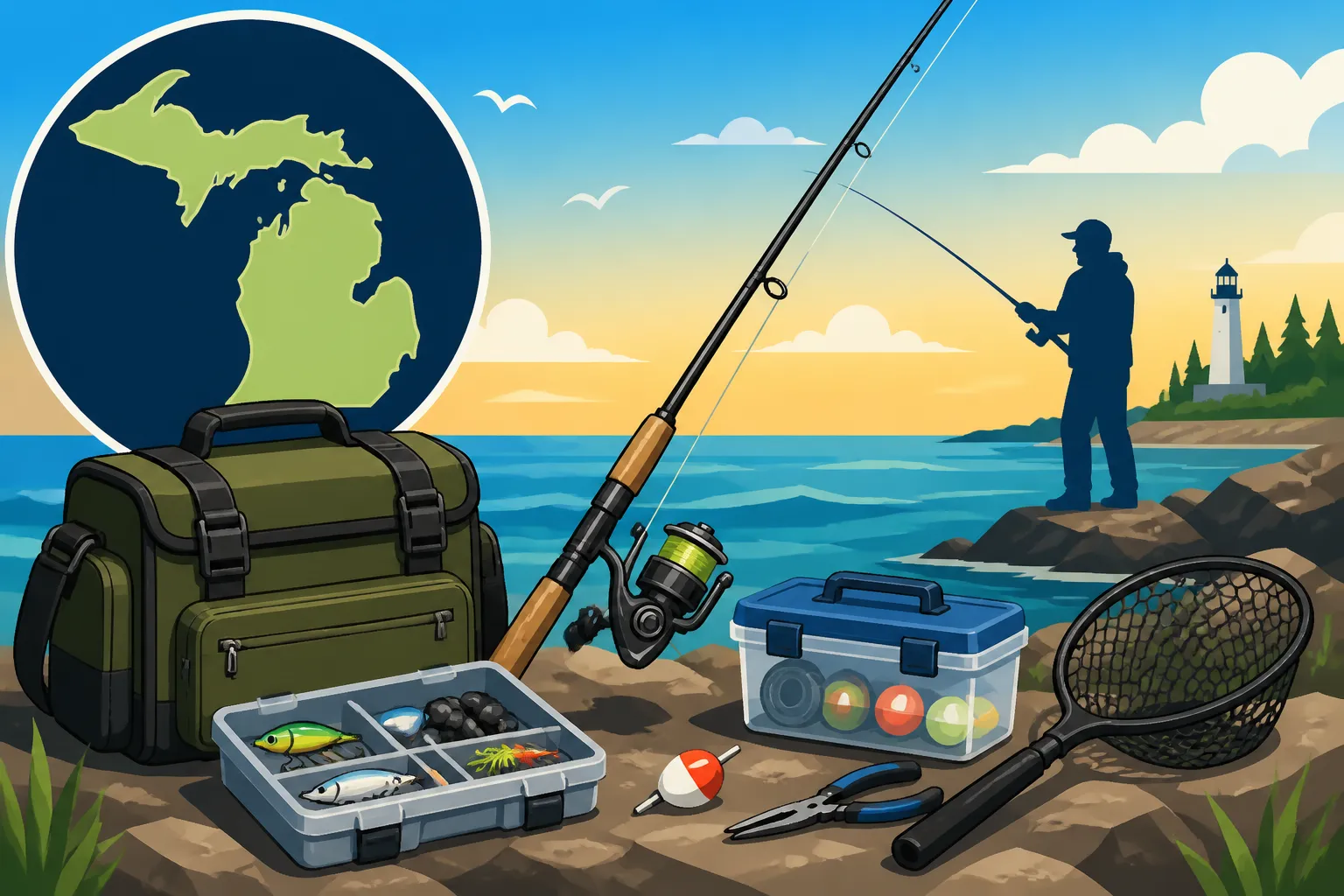
- Tackle Box or Backpack: A tackle box with multiple compartments is classic, but a fishing-specific backpack can be more comfortable for walking to remote spots. Some backpacks even have rod holders. Look for one that's easy to access. Best Tackle for Michigan Walleye Fishing highlights options relevant to organizing your gear.
- Rod Case (Optional): If you have a favorite rod or are traveling a distance, a soft or hard rod case protects your valuable equipment.
Finding Your Gear: Shopping Smart for Michigan Shore Angling
Now that you know what you need, let's talk about where to get it and how to make smart choices without breaking the bank. There are fantastic options whether you prefer browsing in person or shopping from the comfort of your home.
Local Bait and Tackle Shops
Don't underestimate the value of your local independent bait and tackle shop. These places are often treasure troves of hyper-local knowledge. The staff can tell you what baits are working, what species are biting, and even suggest prime shore fishing locations in the immediate area. They often carry specialized gear tuned for local conditions, and supporting them helps keep these vital community hubs alive. Plus, you can often pick up fresh live bait here, which can be challenging to source elsewhere.
Big Box Retailers and Online Giants
For a wider selection, competitive pricing, and convenience, larger retailers are often the way to go.
- Big Box Sporting Goods Stores: Stores like Bass Pro Shops are fantastic for getting hands-on with a massive selection of rods, reels, and tackle. You can feel the different rod actions, compare reel sizes, and get advice from knowledgeable staff. They often have dedicated fishing departments that stock everything from budget-friendly combos to high-end specialist gear, perfect for gearing up for anything from a Michigan Fishing License Guide for Residents and Nonresidents trip to a serious quest for Muskellunge Fishing in Michigan from the shoreline.
- Online Retailers: Websites like Amazon offer an unparalleled selection, often with customer reviews that can help you make informed decisions. You can compare brands, read about product features, and often find deals that might not be available elsewhere. This is especially good for non-perishable items like lures, lines, and accessories. Just be sure to check return policies before you buy, especially for larger items like rods. For example, you might find a great deal on a bulk pack of hooks or soft plastics on Amazon, or specific rod and reel combos that suit your budget.
Budgeting for Your Shore Fishing Setup
You don't need to spend a fortune to get started with shore fishing. Here's a quick breakdown of how to approach your budget:
- Entry-Level (Under $100-150): You can easily find a decent rod and reel combo (often bundled together) for around $50-70. Add some basic hooks, weights, a few lures, and line, and you're good to go. This is a perfect starting point for casual anglers or kids.
- Mid-Range ($150-300): This budget allows you to buy a separate, higher-quality rod and reel, which will offer better performance, sensitivity, and durability. You can also invest in a more diverse tackle selection, a better tackle box, and some of the comfort items like polarized sunglasses or a basic pair of waders.
- Premium ($300+): For serious anglers who fish frequently or target specific species, this budget allows for specialized rods and reels, top-of-the-line lines, and a comprehensive tackle selection. This is where you might invest in gear designed for How to Fish for Steelhead in Michigan from riverbanks or specific Michigan Walleye Fishing Techniques.
Remember, the most important thing is to get out there and enjoy yourself. Start with the basics, learn what works for you and your local waters, and gradually upgrade your gear as your passion grows. Happy fishing, fellow Michigander!
Disclaimer
This article is for general informational purposes only and does not constitute professional advice. Laws, prices and regulations vary by location and change over time. Consult a qualified professional for guidance on your specific situation.