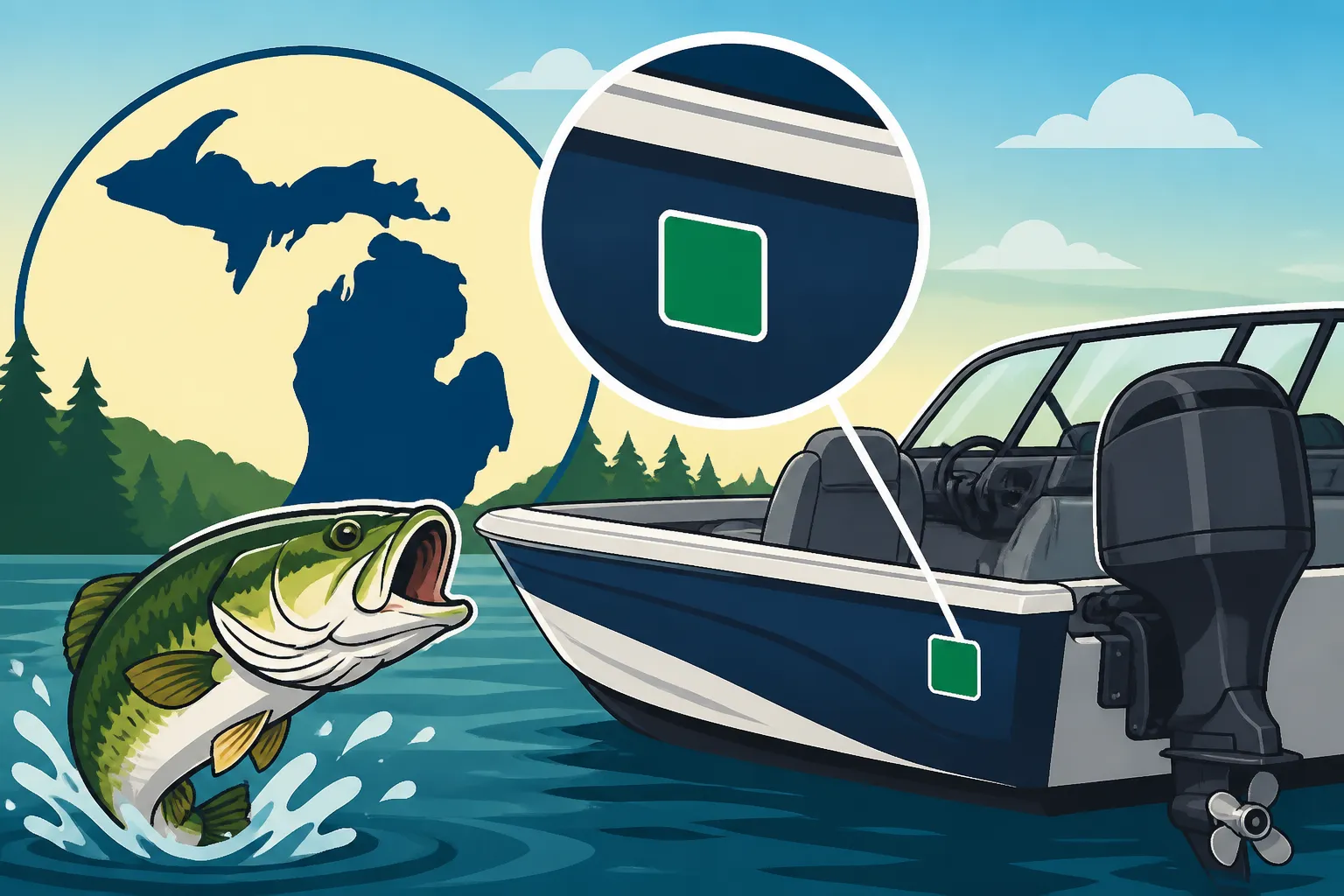
Michigan Boat Registration Decal Placement
So you've finally registered your boat in Michigan, perhaps a sleek bass boat for chasing smallmouth on Lake St. Clair or a cozy pontoon for leisurely cruises on Houghton Lake. You've gone through the process, received your official documents, and now you have these little adhesive decals. But then comes the moment of truth: where exactly do they go on your vessel? It's a surprisingly common question, and getting the placement wrong can lead to a bit of a headache with law enforcement out on the water. This comprehensive guide is here to walk you through Michigan's specific requirements for boat registration decal placement, making sure your time on the water is smooth sailing and fully compliant.
Understanding the Basics of Michigan Boat Registration Decals
Before we dive into the nitty-gritty of where to stick those decals, let's clarify what they are and why they're so important. In Michigan, just like with your car, your boat needs to be properly registered with the state, and a key part of that registration is displaying specific decals. These aren't just decorative stickers; they serve a vital purpose in ensuring all vessels operating on Michigan waters are accounted for and meet legal standards. Think of them as the boat's license plate validation stickers.
What Are Michigan Boat Registration Decals?
Michigan boat registration decals are essentially proof that your vessel's registration is current and valid. When you successfully register your boat, or renew an existing registration, you'll receive a set of these decals along with your registration certificate. They typically consist of two distinct decals: one that shows the expiration year of your registration and another smaller one that might indicate the current registration period or simply be a state identifier. These decals are designed to be weather-resistant and are usually quite brightly colored to ensure high visibility. They are a quick visual cue for law enforcement, like the Michigan Department of Natural Resources (DNR) conservation officers, that your boat is legally allowed to be on the water. Without them, or with improperly placed or expired ones, you might find yourself explaining things when a patrol boat pulls alongside.
The Registration Cycle and Decal Updates
Michigan's boat registration system operates on a specific cycle, which directly impacts your decal updates. Unlike some states that might have an annual renewal, Michigan boat registrations are valid for three years. This means you won't be getting new decals every single year, but rather every three years when your registration is due for renewal. Michigan Boat Registration Renewal Every Three Years outlines this cycle in more detail. However, it's crucial to understand that even though your decals might be valid for three years, they still need to be properly displayed for the entire duration. As the end of your three-year cycle approaches, you'll want to begin the renewal process well in advance to ensure you receive your new decals before the old ones expire. There's nothing worse than planning a fishing trip to the Best Places to Fish in Michigan only to realize your decals expired last month! The new decals will reflect the updated expiration year, and once they arrive, the process of removing the old and applying the new begins.
Precise Placement: Where Your Decals Must Go
This is where many boaters get a little nervous, and for good reason. Michigan has very specific rules about where your registration decals need to be affixed. It's not just about slapping them anywhere they fit; there's a method to the madness designed for consistent and easy identification by authorities.
Placement Relative to Registration Numbers
The most critical rule for decal placement in Michigan is their relationship to your boat's registration numbers. These numbers, which are assigned by the state when you register your vessel, must be displayed prominently on both sides of the forward half of the hull. They need to be block characters, at least three inches high, and in a contrasting color to your boat's hull, so they stand out clearly.
Now, for the decals: they must be affixed on both sides of the boat, immediately following and in line with the last letter of the registration number. So, if your registration number reads "MI 1234 AB," your decal should go right after the "B" on both the port (left) and starboard (right) sides of your vessel. This ensures that when an officer scans your boat's registration, the associated decal is right there, confirming its validity at a glance. It's a logical system, but easy to misunderstand if you're not paying close attention to the wording in the official Michigan Fishing Regulations Every Angler Should Know. Remember, both the numbers and the decals need to be visible from a distance. If you're struggling to place them straight, a bit of painter's tape can work wonders as a guide, helping you line everything up perfectly.
Visibility and Adhesion Requirements
Beyond just placing them next to the registration numbers, Michigan's regulations emphasize the importance of visibility and proper adhesion. These decals aren't meant to be hidden or peeled; they need to be clear and readable.
First, let's talk about visibility. The decals must be prominently displayed on the hull, meaning they should not be obscured by mooring lines, fenders, fishing gear, or any other equipment. Imagine a DNR officer doing a quick sweep with binoculars from a patrol boat; they need to be able to see those decals without any obstructions. This often means placing them on a flat, unobstructed part of the bow, high enough above the waterline to be easily seen, even when your boat is underway or docked. If your boat has a particularly busy bow area, you might need to get creative with how you arrange your fishing rod holders or anchor, making sure they don't block the decals.
Next, adhesion. The decals must be securely affixed to the boat. This might seem obvious, but a poorly applied decal can peel, crack, or fade prematurely, making it difficult to read and potentially leading to issues. Before applying, ensure the surface of your boat is clean, dry, and free of wax or oil. A good scrub with rubbing alcohol (test a small, inconspicuous area first!) can help create a clean surface for optimal adhesion. Once applied, smooth out any air bubbles from the center outwards to ensure a flat, secure bond. You want those decals to last the full three years of your registration cycle, through sun, rain, and all the adventures Michigan's waters throw at them. Many boaters find helpful cleaning supplies and decal application tools at stores like Bass Pro Shops or even general retailers like Amazon to ensure a perfect application.
Common Mistakes and How to Avoid Them
It's easy to make a mistake when it comes to something as seemingly simple as sticking a decal. But knowing the common pitfalls can help you steer clear of unnecessary trouble and ensure your boat is always compliant.
Overlapping or Obscured Decals
One of the most frequent mistakes boaters make is either overlapping the registration numbers with the decal or placing the decal in such a way that it becomes obscured. Remember the rule: the decal goes immediately following and in line with the last letter of your registration number. This means there should be a small, clear space between the last character of your registration number and the start of your decal. Don't let the decal cover any part of the number, even if it's just a tiny overlap. The entire number and the entire decal must be fully visible and legible.
Another common issue is placing the decal too close to a rub rail, a cleat, or where a fender often hangs. During normal operation or when your boat is docked, these items can easily cover or partially obscure the decal. Imagine trying to identify a boat from a distance, only to find half the registration information hidden. This defeats the purpose of the decals being a quick visual identifier. Always step back after you've considered a placement spot. Look at it from different angles, and even simulate having fenders out or lines tied to see if anything will get in the way. Take your time; rushing this step is often what leads to these frustrating, yet avoidable, errors.
Expired Decals Still on Display
This is a classic "oops" moment for many boaters. Your Michigan boat registration is valid for three years, and along with that, your decals have an expiration year printed on them. Once that year passes, those decals are no longer valid, even if you've already renewed your registration and are just waiting for the new ones to arrive. Michigan Fishing License Expiration Date is a similar concept for anglers. Leaving expired decals on your boat is a sure way to attract unwanted attention from the DNR. It gives the impression that your boat isn't properly registered, even if it is.
The solution is simple: when your new decals arrive, remove the old ones promptly. Peeling off old decals can sometimes be a bit of a chore, especially if they've been baked on by the sun for three years. A heat gun (on a low setting, with extreme caution to avoid damaging your hull), a plastic scraper, and a bit of adhesive remover can make the job much easier. Always test any cleaners or removers in an inconspicuous spot first to ensure they won't damage your boat's finish. Once the old ones are off and the surface is clean, you can proudly apply your fresh, new decals, signaling to everyone that your vessel is ready for another three years of adventure on Michigan's beautiful waters.
Maintaining Your Decals for Longevity and Compliance
Applying your decals correctly is only half the battle; keeping them in good condition throughout their three-year lifespan is just as important. Faded, peeling, or damaged decals can render them unreadable and lead to compliance issues, even if your registration is perfectly valid.
Preparing Your Boat's Surface
The secret to long-lasting decals really starts before you even peel off the backing. Proper surface preparation is absolutely critical for the adhesive to bond effectively and withstand the elements. Simply wiping down the area with a rag isn't enough, especially if your boat has been waxed recently or has accumulated grime.
Begin by thoroughly washing the area where the decals will go with soap and water to remove any dirt, salt, or general muck. Rinse it completely and let it air dry. Once dry, the real prep work begins. Use rubbing alcohol or a specialized marine surface prep solution (available at stores like Bass Pro Shops or through online retailers like Amazon) to clean the area. This step is essential because it removes any wax, grease, or residue that could prevent the decal's adhesive from sticking properly. Apply the alcohol or prep solution with a clean cloth, making sure to wipe until no residue is visible. Let the area completely dry before proceeding. A perfectly clean, dry, and smooth surface is the best foundation for your decals, ensuring they adhere firmly and stay put through seasons of Michigan weather, from scorching summer sun to freezing winter ice.
Tips for Long-Lasting Adhesion
Once you've meticulously prepared the surface, the application itself needs to be done with care to maximize adhesion and longevity. Don't rush this part.
First, apply the decals in moderate temperatures. Trying to apply them on a freezing cold day or a scorching hot, humid afternoon can hinder proper adhesion. Aim for a dry, temperate day. When applying, start by peeling back just a small section of the decal's backing paper. Position the decal carefully, ensuring it's straight and in line with your registration numbers. Then, slowly press down the exposed portion, working out any air bubbles with a squeegee or even a credit card wrapped in a soft cloth. Continue to peel back the backing paper gradually while smoothing the decal onto the hull, always working from the center outwards to eliminate air pockets. Air bubbles trapped under the decal can lead to peeling over time.
Once applied, give the decals some time to "cure" or fully adhere before exposing them to harsh conditions or aggressive scrubbing. Some boaters even lightly press a soft cloth over the entire decal after application to ensure every part has made good contact with the hull. Regular cleaning of your boat should be gentle around the decals; avoid using abrasive cleaners or high-pressure washers directly on them, as this can cause them to lift or fade. If you notice any edges starting to peel, you can sometimes use a small amount of marine-grade adhesive (again, test first!) to re-secure them, but proper initial application is always the best defense against premature wear. Taking these extra steps will help ensure your decals remain crisp, clear, and fully compliant for the entirety of their three-year lifespan.
| Aspect | Correct Decal Placement | Incorrect Decal Placement |
|---|---|---|
| Location | Both sides of the forward half of the hull. | Anywhere other than the forward half of the hull. |
| Relation to Numbers | Immediately following and in line with the last letter of the registration number. | Covering any part of the registration number, or not in line. |
| Visibility | Fully visible, unobstructed by gear, lines, etc. | Partially or fully obscured by equipment or boat features. |
| Condition | Clearly readable, securely affixed, current year. | Faded, peeling, air bubbles, expired date. |
| Surface Prep | Applied to a clean, dry, wax/oil-free surface. | Applied to a dirty, wet, or waxed surface. |
| Adhesion | Smooth, no air bubbles, flat. | Wrinkled, lifted edges, trapped air bubbles. |
Special Considerations for Different Vessel Types
While the core rules for Michigan boat registration decal placement are pretty consistent, certain types of vessels might require a little extra thought due to their design or typical use. It's not a one-size-fits-all world out on the water, and Michigan's regulations try to account for that.
Canoes, Kayaks, and Smaller Vessels
When it comes to canoes, kayaks, stand-up paddleboards with motors, or other very small vessels that require registration, the challenge often lies in finding a suitable, flat, and visible surface for both the registration numbers and the decals. While a large powerboat has ample hull space, a sleek kayak might not. Do Kayaks Need to Be Registered in Michigan? covers these rules.
The key here is still the forward half of the hull and clear visibility. For many kayaks and canoes, this might mean placing them on the very front of the bow, or on a relatively flat section near the bow that's still considered part of the "forward half." The important thing is that the numbers and decals are clearly displayed on both sides of the vessel, immediately following the last letter of the registration number. You might need to be extra meticulous with measurements to ensure everything fits cleanly and is straight. Since these vessels often sit lower in the water, consider placing them slightly higher up on the hull if possible to avoid being splashed or obscured by small waves. The material of these vessels (plastic, fiberglass, wood) also matters for adhesion; ensure your surface prep is extra thorough to prevent peeling. Sometimes, people will opt for custom vinyl numbers and decals if their boat has a unique shape, just to ensure they meet the size and visibility requirements while looking clean.
Boats with Bow-Mounted Motors
Many modern fishing boats, especially those designed for bass or walleye, feature powerful bow-mounted trolling motors. These motors, while incredibly useful for precise boat control, can sometimes present a challenge for decal placement. The motor assembly, bracket, and associated wiring can occupy a significant portion of the bow, right where your registration numbers and decals are supposed to go.
If your boat has a bow-mounted motor, you need to carefully assess the available space on the port and starboard sides. The goal is to place the decals as far forward as possible, on the forward half of the hull, and immediately after your registration numbers, without being obstructed by the motor or its mounting hardware. This might mean placing them slightly lower or higher than you originally intended, but always within the bounds of the "forward half" and ensuring they remain fully visible from all angles. Test how the motor deploys and stows to make sure it doesn't swing over and rub against your decals, which can cause them to peel prematurely. If you find yourself truly limited on space, sometimes shifting the registration numbers slightly more towards the center of the bow (while still on the forward half) can create the necessary room for the decals. It's about finding that sweet spot where functionality meets compliance, keeping in mind that the DNR prioritizes clear, unobstructed identification.
Why Proper Decal Placement Matters (Beyond Just Avoiding Fines)
It's easy to view boat registration decals as just another hoop to jump through, another bureaucratic detail. But beyond the immediate concern of avoiding a ticket, proper decal placement plays a significant role in broader boating safety and resource management in Michigan.
Avoiding Fines and Warnings
Let's be honest, this is often the primary motivator for most boaters: nobody wants a ticket. Conservation officers and other law enforcement personnel on Michigan's waters are constantly checking for proper boat registration. An improperly placed, expired, or obscured decal is a red flag. What Is the Penalty for an Unregistered Boat in Michigan can give you a better idea of the consequences of not being compliant. While an officer might issue a warning for a minor, easily rectifiable issue, repeatedly flaunting the rules or having severely non-compliant decals could lead to a fine.
Think about it from their perspective: they need to quickly and accurately identify vessels. If your decals are tucked away, peeling, or impossible to read, it makes their job harder and wastes valuable time that could be spent on more serious matters. Taking a few extra minutes to ensure your decals are perfectly placed and maintained can save you from an awkward conversation, a potential delay in your fishing trip, or an unexpected hit to your wallet. It's a small investment of time for peace of mind and hassle-free boating.
Ensuring Public Safety and Identification
Beyond the individual repercussions, proper decal placement contributes to overall public safety on Michigan's vast network of lakes, rivers, and Great Lakes waters. In an emergency situation, clear and easily identifiable registration numbers and decals are paramount. If your boat is involved in an accident, or if you encounter an emergency where you need assistance, rescue personnel need to be able to quickly identify your vessel. The registration numbers and current decals are key to linking your boat to its owner, allowing authorities to gather information swiftly.
Furthermore, these decals also aid in enforcing Michigan's Michigan Fishing Regulations Every Angler Should Know and protecting our natural resources. They help the DNR track vessel usage, which in turn informs decisions about waterway management, invasive species control, and public access. When every boat displays its registration clearly, it creates a more accountable and safer environment for all who enjoy Michigan's incredible fishing and boating opportunities. It's a small responsibility that has a ripple effect, contributing to a better experience for everyone on the water.
Disclaimer
This article is for general informational purposes only and does not constitute professional advice. Laws, prices and regulations vary by location and change over time. Consult a qualified professional for guidance on your specific situation.