Where Do You Put Registration Numbers on a Boat in Michigan
Ah, the joys of boat ownership in Michigan! You've got your vessel, you're ready to hit the water, but then comes the head-scratcher: where exactly do those official registration numbers go? It seems straightforward, but get it wrong, and you could face unnecessary hassles from the DNR or Coast Guard. This guide is here to cut through the confusion and walk you through precisely where and how to properly display your boat's registration numbers in Michigan, ensuring you're compliant and ready for smooth sailing without any unexpected stops.
Understanding Michigan's Boat Registration Requirements
Before we even talk about placement, it’s important to understand why these numbers exist and what legal requirements they fulfill. Michigan, like all states, has clear rules regarding vessel identification, and these numbers are your boat's unique ID on the water. Ignoring these details isn't just a minor oversight; it's a direct path to potential fines and frustrating interruptions to your time on the lake or river.
The Legal Mandate for Displaying Numbers
The requirement to display registration numbers isn't some arbitrary rule; it's a fundamental aspect of marine safety and law enforcement. Every motorized vessel, from a tiny fishing boat with an electric motor to a powerful Great Lakes cruiser, needs to be registered with the Michigan Department of Natural Resources (DNR). These numbers serve as immediate identification for your boat, much like a license plate on your car. They allow authorities to quickly identify vessels, track ownership, and respond effectively in emergencies. Think about it: if there's an accident, or a boat is reported stolen, those clearly displayed numbers are the first piece of information law enforcement needs. This mandate helps ensure accountability on the water, making it safer for everyone. For a deeper dive into what vessels need to be registered, check out our guide on Which Boats Need to Be Registered in Michigan.
Michigan's regulations generally align with federal standards, so if you're traveling across state lines or venturing into federal waters, you're typically still in compliance. The key is that the numbers must be permanently affixed and visible. This isn't a temporary placard you can tape on and take off; it's considered part of your vessel's identity. Trying to skirt these rules, even unknowingly, can lead to a lot of headaches, so understanding this basic legal framework is the first step in responsible boat ownership.
What Information Do the Numbers Convey?
When you look at a Michigan boat registration number, you'll see a specific format, typically "MI 1234 AB" or similar. This isn't just a random string of characters; each part has a distinct meaning. The "MI" prefix is the state identifier, clearly indicating that the vessel is registered in Michigan. Following that, you'll have a series of numbers and then two letters. This unique combination is assigned to your specific vessel, ensuring no two boats in Michigan share the same identifying sequence.
This standardized format allows DNR officers, Coast Guard personnel, and even concerned citizens to quickly identify and report a vessel. Imagine you witness a reckless boater; being able to jot down those clear, contrasting numbers quickly is invaluable. It’s not just about compliance; it's about contributing to overall safety and order on Michigan's vast waterways. This identifying information is crucial for everything from routine inspections to urgent search and rescue operations, providing a reliable way to trace a boat back to its owner.
Consequences of Incorrect Placement
It's easy to assume that as long as the numbers are somewhere on your boat, you're good to go. Unfortunately, that's not the case, and incorrect placement can lead to real frustrations. Nobody wants to be pulled over by a DNR patrol boat while they're enjoying a peaceful day of fishing or a leisurely cruise. The consequences can range from a stern warning and a directive to fix the issue immediately, to a formal citation and a fine. These fines can quickly add up and definitely put a damper on your boating budget. We've heard stories of anglers having their entire day cut short because their numbers were obscured by a fender or too small to read.
Beyond the monetary penalties, incorrect placement can cause delays and inconvenience during routine safety checks. A DNR officer might spend extra time trying to verify your registration if the numbers aren't immediately obvious and compliant. This takes time away from their patrol duties and from your enjoyment of the water. Essentially, proper placement isn't just about avoiding a ticket; it's about demonstrating that you're a responsible boater who understands and respects the rules designed to keep everyone safe. If you're curious about the potential repercussions for not having your boat registered at all, our article on What Is the Penalty for an Unregistered Boat in Michigan dives into more detail.
The "Sweet Spot" for Michigan Boat Registration Numbers
Now that we understand the legalities, let's get down to the nitty-gritty: exactly where do those numbers go? Michigan regulations are quite specific because visibility and readability are paramount. Think of it from the perspective of someone trying to read your numbers from a distance, perhaps even from another moving vessel or shore.
Clear Visibility from the Front Half
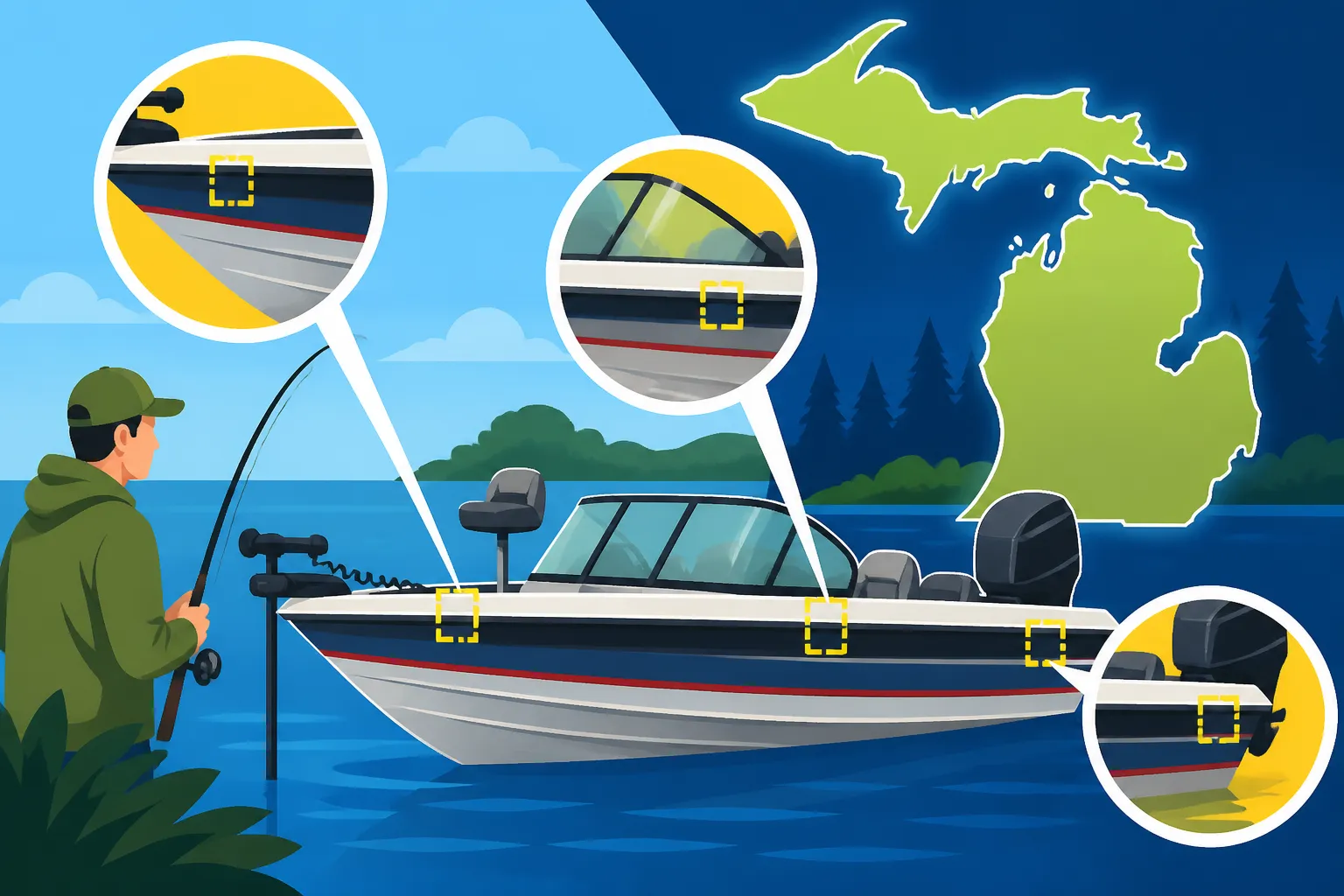
The golden rule for Michigan boat registration numbers is that they must be "permanently attached to each side of the forward half of the vessel." What does "forward half" mean in practice? It means on the bow or front section of your boat, not on the stern (back) or tucked away in a spot that's only visible from certain angles. The numbers should be easily seen when looking at your boat from either side of the front. This is the prime real estate.
Picture your boat on the water. If you're looking at it head-on or from either side towards the front, those numbers should pop. They shouldn't be hidden by anything, like an anchor, dock lines, or even your fishing rods. They need to be prominently displayed on the hull itself. For instance, on a typical runabout, they'll often be found along the side of the bow, usually below the rub rail. On a larger boat, they'll still be on the forward half, perhaps closer to the deck or integrated cleanly into the hull design. The key is unobstructed visibility at all times when the boat is afloat.
Proper Spacing and Size Requirements
This is where many boaters can inadvertently fall short. It's not enough to just have the numbers; they need to meet specific criteria for size, font, and spacing to ensure maximum readability. Here's a breakdown of what Michigan requires:
- Height: Each character (letter and number) must be at least 3 inches high. This isn't just for show; it ensures readability from a distance.
- Font: The characters must be in block letters. This means no fancy scripts, no italicized fonts, no thin lines, and no decorative flourishes. Simple, bold, and clear is the name of the game.
- Color: The color of the numbers must contrast sharply with the color of your boat's hull. If you have a dark blue hull, you'll need white or light-colored numbers. If your hull is white, black or dark-colored numbers are necessary. This contrast is vital for visibility in various lighting conditions, from bright sunshine reflecting off the water to overcast skies.
- Spacing: There must be a space or a hyphen between the "MI" prefix, the number group, and the letter group. So, "MI 1234 AB" or "MI-1234-AB" is correct. "MI1234AB" is not. This small detail ensures that each part of your registration number is distinct and easy to decipher, preventing confusion at a glance.
You can often find pre-cut vinyl numbers that meet these specifications at marine supply stores, or even online retailers like Bass Pro Shops or Amazon. Just be sure to double-check the size and block letter requirement before you buy. Remember, these aren't just aesthetic choices; they are regulatory mandates designed for clear identification on the water.
Choosing Durable Materials for Your Numbers
Once you understand where and how the numbers should look, the next consideration is the material. After all, your boat spends its life exposed to the elements: sun, water, wind, and varying temperatures. You want your registration numbers to last, not fade, crack, or peel after just one season.
Most boaters opt for vinyl decals. These are widely available and come in a variety of colors and finishes. When selecting vinyl, look for marine-grade options that are specifically designed for outdoor use and UV resistance. Cheap vinyl can quickly fade in the strong Michigan sun or start to peel at the edges after repeated exposure to water. High-quality vinyl will have a strong adhesive that stands up to the rigors of boating. If you're buying online from a place like Amazon, definitely read reviews about durability and adhesion.
Another option, though less common for the average boater, is to paint the numbers directly onto the hull. This provides the most permanent solution but requires a very steady hand, good stencil work, and marine-grade paint. If you go this route, ensure the paint is suitable for fiberglass or aluminum (depending on your hull material) and that it offers excellent UV protection to prevent premature fading. While a painted application might last longer, the initial application is much more involved and difficult to reverse if you make a mistake. Regardless of the material, the goal is longevity and maintaining that sharp contrast and readability over many seasons.
Step-by-Step Guide to Applying Your Registration Numbers
Applying your boat registration numbers correctly isn't just about slapping them on. A little preparation and precision can make a huge difference in how they look and how long they last. Think of it like a mini DIY project where patience pays off.
Pre-Application Surface Preparation
This step is absolutely critical and often overlooked. You can have the highest quality vinyl numbers in the world, but if the surface isn't properly prepared, they won't stick, or they'll start peeling off prematurely. Imagine putting a sticker on a dusty, greasy surface; it just won't hold.
First, thoroughly clean the area where the numbers will go. Use a good boat soap and water to remove any dirt, grime, or existing adhesive residue. After washing, rinse the area completely and let it dry. Don't rush this part; a completely dry surface is key. Next, use a degreaser or rubbing alcohol on a clean cloth to wipe down the area. This removes any wax, oil, or residue that could interfere with the adhesive. Again, let it air dry completely. The surface should feel smooth and squeaky clean. If your boat has any significant texture or oxidation on the hull, you might need to lightly buff or polish the area to create a smoother application surface. Taking these few extra minutes for preparation will save you hours of frustration and potentially having to re-apply numbers down the line.
Precision Placement Techniques
Once your surface is pristine, it's time for the actual application. Precision here is key for a professional, compliant look. Nobody wants crooked or uneven numbers!
Start by measuring and marking the desired placement. Remember, the numbers need to be on the forward half of the vessel and at least 3 inches high, in block letters, with contrasting color. Use a measuring tape to find a suitable spot that is both prominent and looks good aesthetically. Then, use painter's tape to create a straight horizontal line where the bottom edge of your numbers will rest. You can also use painter's tape to mark the exact starting and ending points of your number sequence, ensuring proper spacing. Many boaters find it helpful to lay out the full sequence of numbers on the tape first to visualize the spacing.
When applying vinyl decals, it’s often easiest to use a "hinge" method. Apply a piece of painter's tape horizontally across the top of your pre-arranged numbers (still on their backing paper), creating a hinge. Then, peel off the backing paper from the bottom half, press the numbers onto the hull, and slowly work your way up, smoothing out any bubbles with a squeegee or even a credit card as you go. Once the bottom half is down, remove the hinge tape, peel off the remaining backing paper, and apply the top half, smoothing it out. Take your time to push out any air bubbles, working from the center of each letter outwards. This method helps ensure a straight, even application. Don't forget to leave the required space or hyphen between the MI, numbers, and letters. You might also want to apply your annual renewal decal at this time, right after the main numbers. We have more tips on this in our guide to Michigan Boat Registration Decal Placement.
Post-Application Care and Maintenance
So, your numbers are on, they look great, and they're perfectly straight. Fantastic! But the job isn't quite done. A little post-application care will help ensure they remain compliant and look good for years to come.
First, allow the adhesive to cure properly. This typically means avoiding washing the area or exposing it to harsh conditions for at least 24-48 hours, sometimes even longer depending on the product's instructions and temperature. This curing time allows the adhesive to fully bond with the boat's hull, making it more resistant to water and scrubbing. When you do wash your boat, be gentle around the registration numbers. Avoid direct, high-pressure spray from power washers, which can lift edges or even peel off vinyl.
Regularly inspect your numbers for any signs of wear and tear. Are the edges starting to peel? Is the color fading? Are there any cracks in the material? If you notice any issues, address them quickly. Sometimes a peeling edge can be re-adhered with a small amount of super glue, but if the numbers are significantly damaged or unreadable, it’s time to replace them. Maintaining clear, legible numbers is an ongoing responsibility of boat ownership. Remember that you also have an annual decal that needs to be current. While it's a fishing license, the principle of renewal and keeping current is similar to Michigan Fishing License Renewal Each Spring.
Common Mistakes to Avoid When Placing Boat Numbers
Even with the best intentions, it's easy to make small mistakes when placing your boat registration numbers. These errors, while seemingly minor, can lead to non-compliance and unnecessary hassle. Being aware of these common pitfalls can save you a lot of trouble on the water.
Overlapping or Obscuring the Hull
One of the most frequent mistakes boaters make is placing their numbers in a location where they become partially or fully obscured by other equipment. This might happen inadvertently when you're docked or anchored. Imagine you've perfectly placed your numbers on the bow, but then you tie off a fender or secure your anchor, and suddenly a portion of those numbers is covered. From a distance, they're no longer fully readable, and that makes them non-compliant.
Always choose a spot that remains clear and unobstructed under normal operating conditions. Think about where your dock lines will sit, where your fenders typically hang, or if you have any accessories like rod holders or navigation lights that might cast shadows or physically block the view of the numbers. The rule is about visibility at all times when on the water, not just when your boat is sitting perfectly still in your driveway. A quick check after you've rigged your boat for a day on the lake can prevent a frustrating encounter with a conservation officer. This is just one of many important Michigan Boating Laws for Anglers to keep in mind.
Incorrect Color Contrast
While you might have a favorite color scheme for your boat, when it comes to registration numbers, aesthetics take a backseat to visibility. A common mistake is choosing numbers that are too close in color to the hull, making them difficult to read, especially in certain lighting conditions. For example, dark blue numbers on a dark green hull might look sharp up close, but on a sunny day with glare on the water, they could become almost invisible to an observer trying to read them from even a moderate distance.
Michigan law explicitly states that the numbers must contrast sharply with the background color of the hull. If your boat is a lighter color, like white or light gray, you need dark numbers (black, dark blue, dark red). If your boat is a darker color, you need light numbers (white, yellow, silver). Metallics can also be tricky; while they might shimmer beautifully, they can sometimes lack the necessary contrast and readability, particularly at oblique angles or in dim light. Always err on the side of caution and choose a stark contrast to ensure your numbers are easily legible, no matter the conditions.
Neglecting Renewal Decal Placement
You've got your permanent registration numbers perfectly applied, but don't forget about the smaller, often overlooked annual renewal decal! This little sticker indicates that your registration is current and valid for the operating year. Many boaters correctly apply their main numbers but then either forget to apply the decal, place it in an incorrect spot, or let it fall off without replacing it.
The Michigan renewal decal needs to be displayed in close proximity to the registration numbers, typically following the last letter of the registration number on the same line. It needs to be clearly visible, not tucked away or obscured. This decal is your proof of current registration, and without it, even with perfectly placed numbers, you could still be considered non-compliant. When you receive your new decal each year, take a moment to remove the old one completely and apply the new one carefully, just like you did with your main numbers, ensuring good adhesion. It's a small detail, but a crucial one for hassle-free boating.
Here’s a quick overview of what needs to be displayed:
| Item | Requirement | Placement Location | Notes |
|---|---|---|---|
| Registration Numbers | At least 3 inches high, block letters, contrasting color, space/hyphen separation | Each side of the forward half of the vessel (bow) | Permanently affixed, unobstructed, clearly visible at all times. |
| Annual Decal | Provided with current registration | After the last letter of the registration number on the hull. | Must be current for the operating year. Remove old decals first. |
By paying attention to these details, you can ensure your Michigan boat registration numbers are always compliant, saving you from potential headaches and allowing you to focus on what truly matters: enjoying Michigan's incredible waterways. Make sure to consult the latest Michigan Fishing Regulations Every Angler Should Know for the most up-to-date information on all rules.
Disclaimer
This article is for general informational purposes only and does not constitute professional advice. Laws, prices and regulations vary by location and change over time. Consult a qualified professional for guidance on your specific situation.