Michigan Boating Safety Certificate Requirements
It's incredibly frustrating when you just want to get out on Michigan's beautiful waters for a peaceful day of fishing or boating, but you're constantly worried about whether you've got all your ducks in a row with the legal stuff. The rules around boating can feel like a tangled mess, especially when it comes to required certifications. This guide is here to untangle that knot, walking you through everything you need to know about Michigan's boating safety certificate requirements so you can hit the water with confidence.
Who Needs a Michigan Boating Safety Certificate?
Navigating the rules for who actually needs a Michigan Boating Safety Certificate can feel like trying to read fine print in the dark, especially if you're new to boating or just visiting our incredible state. The core idea behind these requirements is all about safety – making sure that anyone operating a vessel, particularly younger or less experienced individuals, understands the rules of the water to prevent accidents and protect everyone enjoying Michigan's lakes and rivers.
Age-Based Requirements for Operators
Michigan’s boating safety laws are largely driven by age, aiming to ensure that operators have a baseline understanding of safety protocols and regulations before they take the helm. It’s not just about knowing how to start an engine; it's about knowing right-of-way rules, navigation lights, and what to do in an emergency.
If you were born after December 31, 1978, and you're operating a boat that's more than 65 horsepower, you absolutely need to carry a Michigan Boating Safety Certificate. This is a big one, and it catches a lot of folks off guard. Imagine you're out on Houghton Lake in a powerful bass boat, ready to chase some walleye, and you get stopped. If you're under that age threshold and don't have your certificate, you could be facing a fine. It's a key regulation to keep Michigan's waterways safer for everyone.
Requirements for Personal Watercraft (PWC) Operators
Personal watercraft, like jet skis, offer a different kind of thrill on the water, but they also come with their own set of rules, largely due to their speed and maneuverability. Because of their nature, PWC operation has stricter age and certification requirements.
If you're operating a PWC in Michigan, regardless of your age, you generally need to possess a boating safety certificate. There are some specific nuances here, especially regarding supervision. For instance, if you're under 14 years old, you cannot operate a PWC at all, even with a certificate or adult supervision. This hard line is in place because PWCs, while incredibly fun, demand a high degree of awareness and quick reflexes. For anyone 14 years of age or older operating a PWC, that certificate is non-negotiable. It’s important to remember that these rules are in place for the safety of the operator and other boaters enjoying the same waters.
How to Obtain Your Michigan Boating Safety Certificate
Once you've determined that you need a boating safety certificate, the next logical step is figuring out how to actually get one. Thankfully, Michigan offers several straightforward pathways to fulfill this requirement, catering to different learning styles and schedules. It's not about jumping through hoops, but about ensuring you gain the necessary knowledge to be a responsible boater.
Online Boating Safety Courses
For many, the most convenient way to earn their Michigan Boating Safety Certificate is through an approved online course. These courses are designed to be flexible, allowing you to learn at your own pace from the comfort of your home, or even from your phone while waiting for your order at your favorite local diner.
There are several state-approved online providers that offer comprehensive courses covering everything from navigation rules and buoy systems to emergency procedures and Michigan-specific regulations. These courses typically involve reading modules, watching videos, and completing quizzes as you go. At the end, you'll take a final exam. Upon successful completion, you'll receive your certificate, often a temporary one you can print immediately, with a permanent card mailed to you later. Many people find these online options, easily accessible through platforms like Amazon for study guides or directly from course providers, incredibly helpful for fitting the education into busy lives. Just make sure the course is approved by the Michigan Department of Natural Resources (DNR) or the National Association of State Boating Law Administrators (NASBLA).
In-Person Classes and Workshops
While online courses offer convenience, some people prefer the structure and direct interaction of an in-person class. Michigan also provides opportunities to obtain your boating safety certificate through traditional classroom settings.
These in-person classes are often hosted by local law enforcement agencies, community education programs, or boating clubs. They typically span a few days or a series of evenings, providing hands-on learning and direct access to instructors who can answer questions and share real-world experiences. This can be particularly beneficial for visual learners or those who appreciate the camaraderie of a group setting. You might even find these courses offered at local Bass Pro Shops locations that host community events. These courses usually culminate in a proctored exam, and upon passing, you'll receive your certificate. It’s a fantastic way to not only learn the material but also to connect with other local boaters. You can often find schedules for these courses listed on the Michigan DNR website.
What to Expect from the Course Material
Regardless of whether you choose an online or in-person course, the core curriculum aims to equip you with essential knowledge for safe boating. Think of it as your driver's education, but for the water. The material is comprehensive and covers a wide range of topics critical for anyone operating a vessel, ensuring you're prepared for common scenarios and unexpected challenges.
Topics typically include understanding basic navigation rules, like who has the right-of-way when two boats are approaching each other, and the meaning of various buoys and markers. You'll learn about different types of boats, essential safety equipment such as life jackets and fire extinguishers (and where to keep them!), and how to respond to emergencies like capsizing or a person overboard. Environmental responsibilities, such as proper waste disposal and preventing the spread of aquatic invasive species, are also usually covered. The goal is to make you a knowledgeable, confident, and environmentally conscious boater. This education isn't just about avoiding a ticket; it's about protecting lives and our cherished Michigan waters. Michigan Fishing Regulations Every Angler Should Know often touches on aspects of these broader boating rules.
Michigan Boating Safety Exemptions and Special Cases
While the general rule is that certain operators need a boating safety certificate, like most regulations, there are specific exemptions and special cases that can apply. It’s easy to assume everyone needs one, but understanding these exceptions can save you time and hassle, ensuring you’re only pursuing the certificate if it's genuinely required for your situation.
Operation on Private Waters
One common question is whether a boating safety certificate is needed when operating a boat on private water. The simple answer is often no, depending on the specifics of that private water body.
If you are operating a boat exclusively on a private lake or pond that has no public access or connection to public waterways, the state's boating safety certificate requirements typically do not apply. This means if you have a small pond on your own property, or a completely landlocked private lake community, the state isn't generally enforcing these certificates. However, it's always smart to still understand boating safety, even in these private settings, as accidents can happen anywhere. Local ordinances might still apply, so it’s wise to check those, but for state-level certification, private, unconnected waters are usually an exception.
Guided Fishing Charters and Rental Boats
Michigan is a popular destination for fishing charters, especially on the Great Lakes, and many visitors enjoy renting boats for a day on an inland lake. These situations often involve unique rules regarding boating safety certificates for the individual operators.
If you’re on a guided fishing charter, you’re usually good to go without your own certificate. The captain of a charter boat is a licensed professional and is responsible for the safe operation of their vessel. You are considered a passenger, not the operator. For rental boats, the rules can be a bit more nuanced. Typically, if you rent a boat that meets the horsepower requirements and you fall within the age category requiring a certificate, you still need to have one. However, some rental companies might offer temporary safety instructions or specific waivers that allow you to operate. Always check with the rental company before you head out to avoid any last-minute surprises. This applies whether you're taking out a small pontoon for a family day on Higgins Lake or a powerful fishing boat for Best Places to Fish in Michigan.
What About Out-of-State Certificates?
Many people who boat in Michigan are visitors from neighboring states or even Canada. It’s a valid concern whether your boating safety education from another jurisdiction will be recognized here. The good news is, Michigan generally has reciprocal agreements with other states and provinces.
If you have a boating safety certificate or equivalent license issued by another state or Canadian province, and that certification meets the requirements of NASBLA, Michigan will typically recognize it. This means you don't need to go through the process of getting a Michigan-specific certificate. Always carry your out-of-state certificate with you when boating in Michigan, just as you would your driver's license. It’s crucial that your home state's course was NASBLA-approved to ensure smooth sailing here. When you’re visiting from out-of-state, understanding Nonresident Fishing in Michigan: What the Law Requires is just as important as knowing the boating safety rules.
Carrying Your Certificate and Other Required Documents
Getting your Michigan Boating Safety Certificate is a fantastic achievement and a crucial step towards responsible boating. But simply having it isn't enough; you need to know what to do with it once you've earned it. Think of it like your driver's license – you don't just get it and leave it at home in a drawer. There are other documents equally important for ensuring you're fully compliant with Michigan boating laws.
Proof of Certification on Board
Just like your car's registration or your fishing license, your boating safety certificate needs to be readily accessible when you're operating your vessel. This isn't just a suggestion; it's a legal requirement.
When you're out on the water, whether it's the vast expanse of Lake Michigan or a quiet stream, you must have proof of your boating safety certificate on board with you. This could be the physical card issued by the state, or in some cases, a valid temporary certificate printed after completing an online course. Law enforcement, such as the Michigan DNR or local sheriff's marine patrol, can request to see this proof, and failure to produce it could result in a citation. It’s always a good idea to keep it in a waterproof bag or container, along with your other important documents, to protect it from the elements. Don't let a sunny day on the Detroit River turn sour because you forgot a piece of paper!
Other Essential Documents to Have
Beyond your personal boating safety certificate, there are several other documents and pieces of identification that are legally required or highly recommended to have on board your boat. Being prepared means having everything necessary for a smooth and safe outing.
Firstly, if your boat requires registration, you absolutely need to carry your current Michigan boat registration certificate. This document proves that your vessel is legally registered with the state. Michigan Boat Registration Requirements goes into much more detail on this topic, but suffice to say, it's non-negotiable. Similarly, any required boat titling documents, particularly for larger vessels, should be accessible. Michigan Boat Titling Requirements Over 20 Feet is an excellent resource if you're unsure about that. And, of course, don't forget your personal identification, like a driver's license or state ID. If you're fishing, your How to Buy a Michigan Fishing License and its physical proof are also must-haves. Keeping all these vital documents organized and protected in a designated waterproof pouch in your boat ensures you’re always ready for a routine check.
| Document Type | Requirement | Why It's Needed |
|---|---|---|
| Boating Safety Certificate | Required for certain operators (age, PWC, horsepower) | Proof of boating education and safety knowledge |
| Boat Registration Certificate | Required for most motorized vessels and larger sailboats | Proof of legal ownership and operation on water |
| Personal Identification (e.g., DL) | Recommended, often requested by law enforcement | Confirms operator identity |
| Fishing License (if applicable) | Required for anglers 17 and older | Proof of legal right to fish in Michigan waters |
| Vessel Title (for larger boats) | Required for certain boat lengths and types | Proof of ownership for significant watercraft |
Understanding Boating Laws and Best Practices
Obtaining your boating safety certificate is a fantastic start, but it's just one piece of the puzzle when it comes to being a responsible and safe boater in Michigan. The certificate signifies that you've learned the rules, but actively understanding and applying Michigan's comprehensive boating laws, along with embracing best practices, is what truly makes a difference out on the water. It’s about more than just avoiding a ticket; it's about fostering a culture of safety and respect for our beautiful natural resources.
Michigan's Boating Laws Beyond Certification
Michigan has a robust set of boating laws designed to ensure the safety of all water users, protect the environment, and regulate specific activities. Your safety certificate course will cover many of these, but it's crucial to regularly review the current Michigan Boating Handbook to stay up-to-date.
These laws cover a wide range of topics, including speed limits, especially in slow-no-wake zones near shore or marinas, and regulations concerning water skiing and towing other recreational devices. There are strict rules about operating a boat under the influence of alcohol or drugs (OUIL), which carry severe penalties, much like operating a motor vehicle. Navigation lighting requirements for nighttime operation are critical for preventing collisions. Furthermore, Michigan has specific laws regarding noise levels, proper sewage disposal, and preventing the spread of aquatic invasive species by cleaning your boat and trailer. Familiarizing yourself with these details is part of being a good steward of our lakes and rivers.
Essential Safety Equipment and Practices
Beyond simply following the law, adopting a proactive approach to safety equipment and practices can prevent accidents and save lives. The bare minimum required by law is a starting point, but savvy boaters often go above and beyond.
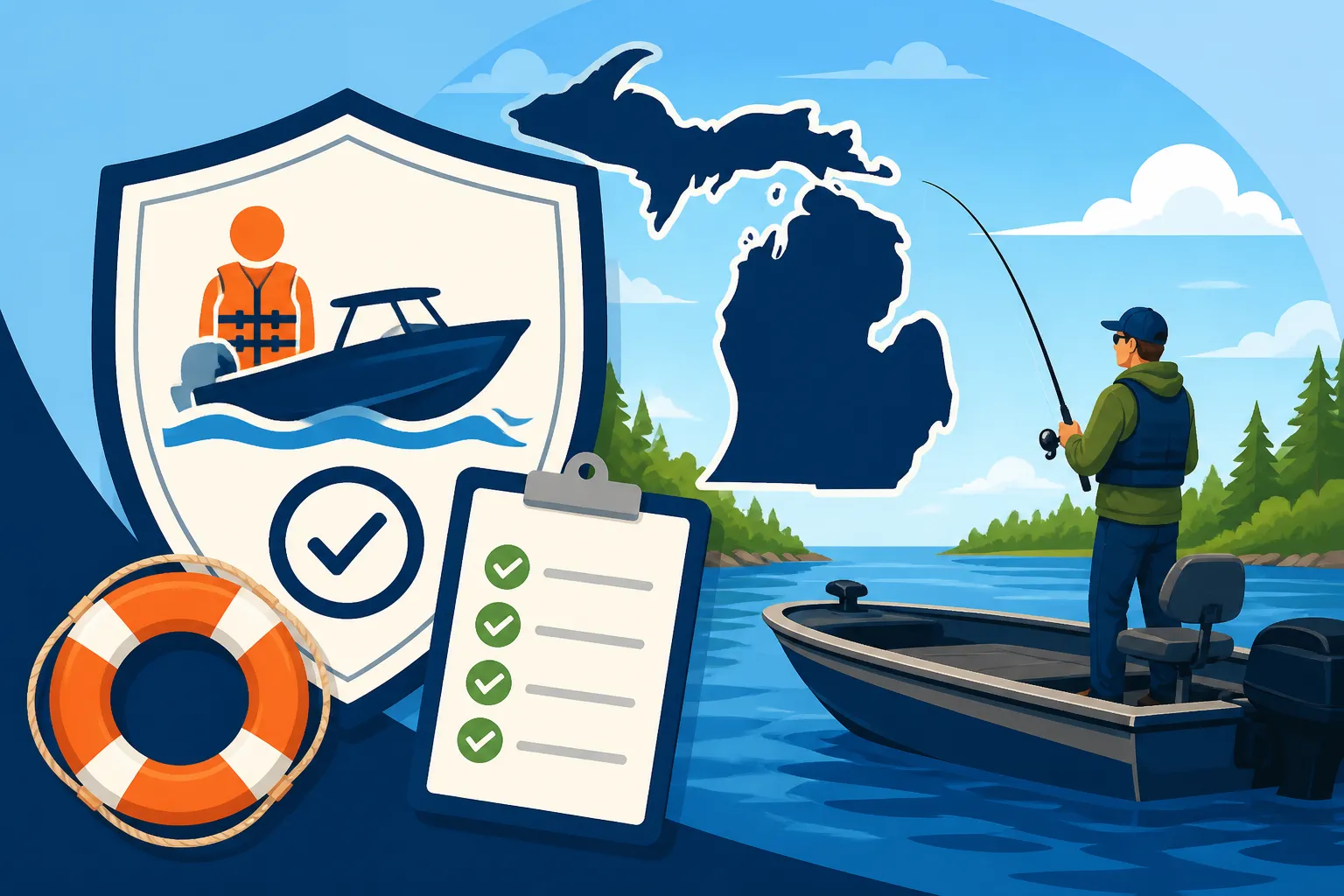
Always ensure you have enough U.S. Coast Guard-approved life jackets for everyone on board, and that children 6 years old and younger wear them at all times when on the open deck of a moving vessel. Life Jackets and Michigan Boating Safety Rules is a must-read for more on this. Beyond life jackets, carry a sound-producing device (like a horn or whistle), a fire extinguisher (if your boat requires one), visual distress signals (flares or a flag), and a throwable flotation device. Consider adding a first-aid kit, an anchor with enough line, and a spare paddle. Before every outing, perform a quick safety check: test your engine, check fuel levels, inspect safety equipment, and monitor weather forecasts. Filing a float plan with a friend or family member, letting them know where you're going and when you expect to return, is also a highly recommended best practice.
Environmental Responsibility on Michigan Waters
Michigan boasts an incredible abundance of freshwater resources, and it's every boater's responsibility to protect these precious ecosystems for future generations. Your boating safety certificate course will touch on these aspects, emphasizing the importance of sustainable boating practices.
This means properly disposing of all waste and never dumping trash, fishing line, or hazardous materials into the water. Preventing the spread of aquatic invasive species, like zebra mussels or Eurasian watermilfoil, is paramount. Always "Clean, Drain, Dry" your boat, trailer, and all fishing gear after leaving any body of water. This simple practice helps prevent the transfer of unwanted species from one lake to another. Be mindful of your wake, especially in sensitive areas or near wildlife habitats, to minimize erosion and disturbance. Understanding these environmental responsibilities isn't just about compliance; it's about preserving the natural beauty and ecological health of places like Torch Lake or the Au Sable River, where we love to fish and recreate.
Penalties for Non-Compliance
It's natural to think about the positive aspects of getting your boating safety certificate—the freedom to explore Michigan's waterways and the peace of mind that comes with being a knowledgeable operator. However, it's equally important to understand the consequences of not complying with Michigan's boating safety regulations. Ignoring these rules can lead to more than just a stern look from a DNR officer; it can result in significant legal and financial repercussions.
Fines and Citations for Missing Certificates
Operating a vessel without the required Michigan Boating Safety Certificate, or failing to produce it when requested by law enforcement, can lead to direct penalties. These aren't just minor inconveniences; they can put a damper on your entire boating experience and your wallet.
If you are stopped and found to be operating a boat or PWC without the necessary certificate, you could receive a citation. The fines for these violations vary, but they are certainly enough to make you wish you had taken the time to complete the course. Additionally, depending on the circumstances and your age, there could be other associated penalties. For younger operators, this might involve parental notification or further educational requirements. The authorities are serious about boating safety, and these fines serve as a deterrent to ensure everyone takes the certification process seriously. It’s far better to invest a little time and effort upfront than to pay a hefty fine later.
Other Potential Consequences and Liabilities
Beyond direct fines, non-compliance with boating safety regulations, including the absence of a required certificate, can open you up to a host of other potential problems and liabilities, especially in the event of an accident.
If you are involved in a boating accident and it's discovered that you were operating without a required boating safety certificate, this could be seen as negligence. Such a finding can significantly impact insurance claims, potentially voiding your coverage or increasing your personal liability for damages or injuries. Imagine an incident on Lake St. Clair where another vessel is damaged, or worse, someone is injured. Your lack of a certificate could make you fully responsible for all costs, which can quickly add up to tens of thousands of dollars. It can also lead to more serious legal charges, especially if the accident results in significant injury or property damage. Boating safety is about mitigating risk, and having your certificate is a fundamental part of demonstrating that you're a responsible operator. Taking a little time for courses, whether online or in-person at a place like Bass Pro Shops, is a small price to pay for such vital protection. Michigan Fishing License Guide for Residents and Nonresidents also highlights how vital it is to always have the proper documentation.
Conclusion: Setting Sail Safely on Michigan's Waters
Getting your Michigan Boating Safety Certificate might seem like just another hoop to jump through, but it’s truly a foundational step toward safe and enjoyable adventures on our state's incredible waterways. From the vastness of the Great Lakes to the peaceful serenity of our inland lakes and winding rivers, Michigan offers unparalleled opportunities for boating and fishing. By understanding and adhering to these requirements, you're not just avoiding fines; you're actively contributing to a safer environment for everyone. Think of it as your passport to responsibly exploring every corner of our water wonderland.
Whether you're planning to troll for salmon on Lake Huron, jig for walleye on Saginaw Bay, or simply enjoy a relaxing cruise, ensuring you have the proper certification means you can focus on the joy of the outing, rather than worrying about compliance. Take the time to complete an approved course, keep your certificate and other essential documents like your Michigan Fishing License Costs and Types Explained handy, and always prioritize safety. With your certificate in hand, you'll be well-prepared to make the most of Michigan’s magnificent aquatic playground, creating lasting memories for years to come.
Disclaimer
This article is for general informational purposes only and does not constitute professional advice. Laws, prices and regulations vary by location and change over time. Consult a qualified professional for guidance on your specific situation.