Best Hook Size for Walleye Fishing
Many Michigan anglers, myself included, have felt the frustration of a subtle tug on the line, a promising thunk, only to reel in… nothing. Or worse, a missed fish that felt so solid, a true trophy slipping away. It often leaves you wondering if your presentation was off, if your bait wasn't quite right, or if that walleye just wasn't hungry enough to commit. But sometimes, the culprit isn't your skill or the fish's appetite, but a crucial piece of gear that we often take for granted: your hook size. This comprehensive guide will dive deep into the world of walleye hooks, helping you understand how to choose the best size for different scenarios to ensure more successful hook-ups and fewer lost fish when you're out on Michigan's incredible waters.
Understanding Walleye Mouth Anatomy and Feeding Habits
Before we even talk about specific hook sizes, it's incredibly helpful to get a grasp of why walleye prefer certain presentations and how they interact with bait. They're not like a northern pike with a huge, toothy maw, or a tiny bluegill with a dainty little purse. Walleye have unique adaptations that influence everything from their strike to how they hold onto your lure, and understanding these can dramatically improve your fishing success.
The Walleye's Unique Mouth Structure
Walleye possess a fairly large mouth for their body size, but it's not a cavernous opening designed to engulf massive prey like a muskie. Instead, their mouth is more of a cone shape, meticulously designed for quickly and efficiently engulfing prey, especially in low light conditions or murky water where they excel. Their jaws are lined with sharp, needle-like teeth, but these aren't primarily for tearing flesh; they're for firmly holding onto slippery prey once it's captured.
The key anatomical features to remember when considering hook size are the relatively soft tissue on the roof of their mouth and the tougher, more bony plate on their bottom jaw. This structure means a hook needs to penetrate effectively to secure a solid hold, often in the corner of the mouth or through the tough upper lip. If a hook is too big, the walleye might struggle to fully suck it in, leading to short strikes or dropped baits. Conversely, if a hook is too small, it might not offer enough gape – the distance between the hook point and the shank – to get around the jawbone for a firm, lasting set. Think about it like trying to grab a handful of water; the hook needs to be just right to catch something substantial.
How Walleye Strike and Ingest Prey
Walleye are primarily ambush predators, perfectly adapted to low-light conditions. They frequently position themselves near structure, in current breaks, or along drop-offs, patiently waiting for an unsuspecting minnow, crayfish, or insect to swim within striking distance. Their strike is typically a swift, powerful inhalation, creating a vacuum that rapidly sucks in the prey. This "vacuum effect" is a critical consideration for hook choice. If your hook and bait are overly bulky or rigid, they might resist being fully drawn into the walleye's mouth, causing the fish to miss or simply mouth the offering.
Once a walleye has inhaled its prey, it will often turn the meal to swallow it headfirst. This turning motion, combined with the act of closing their jaws, is a prime opportunity for the hook to set. A hook that's properly sized to the bait will sit naturally, making it easier for the fish to fully ingest. If the hook is too large, too small, or awkwardly positioned, the walleye might detect it, "mouth" it for a moment, and then spit it out before you even feel a solid bite or get a chance to react. This scenario is particularly common when you're using live bait, where the fish might gently hold the bait for a while before committing to swallowing. Understanding this natural feeding process helps us choose hooks that integrate seamlessly with their behavior, giving us the best possible chance at a solid, reliable hook-up every time.
The Goldilocks Principle: Finding the "Just Right" Hook Size
There's truly no single "best" hook size for walleye, just like there's no singular "best" lure or technique for all conditions. It's really about applying the "Goldilocks Principle"—finding that "just right" balance where your hook is large enough to get a good, solid bite, but small enough to be easily ingested and effectively concealed by your bait or lure. However, there are certainly preferred ranges that seasoned Michigan walleye anglers consistently gravitate towards, offering a great starting point for your tackle box.
Common Hook Sizes for Walleye Fishing: Jigs, Live Bait, and Trebles
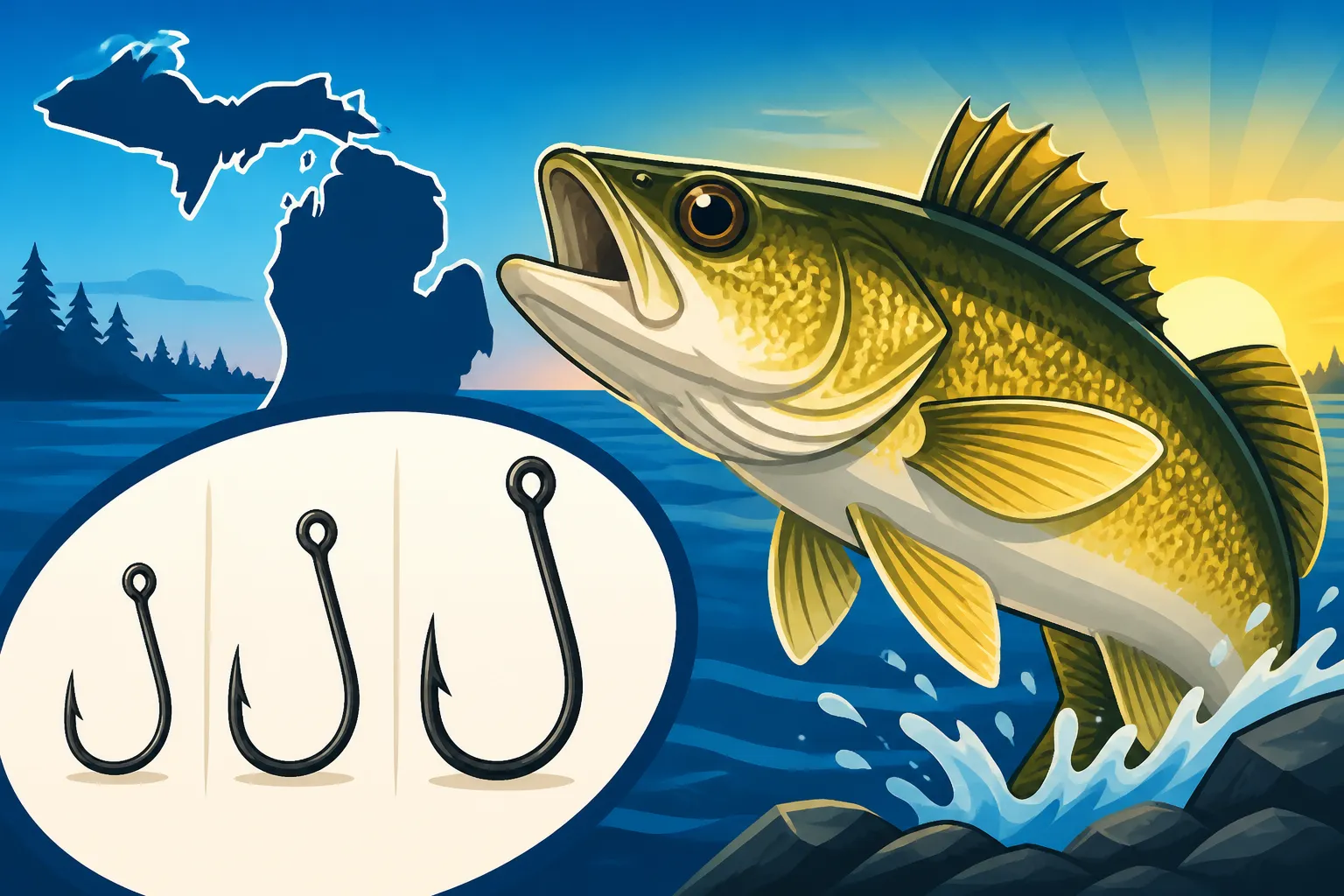
When we delve into hook sizes, it's crucial to remember that the numbering system can be a bit counter-intuitive for newcomers. Generally, for smaller hooks, a higher number signifies a smaller hook (e.g., a size 10 hook is considerably smaller than a size 4). Conversely, for larger hooks, a lower number followed by an "aught" (0) indicates a larger hook (e.g., a 1/0 hook is smaller than a 3/0 hook). It's a system that takes a little getting used to, but it becomes second nature with practice.
For jig heads, which are an incredibly popular and effective presentation for walleye across Michigan, the most common hook sizes embedded directly into the jig range from 1/0 to 3/0. A 1/0 hook is an excellent choice for pairing with smaller soft plastics, tipping with a dainty minnow, or when targeting smaller walleye or those that are particularly finicky. A 2/0 hook is often considered the versatile sweet spot for a general-purpose walleye jig, comfortably accommodating a variety of soft plastics and medium-sized minnows. For larger presentations, such as bulkier swimbaits, or when you're specifically targeting bigger, trophy-sized walleye, a 3/0 hook on a jig head provides that crucial extra gape and robust strength needed for a solid hook-set and secure hold.
When you're using live bait with traditional single hooks, such as when slip bobber fishing, employing a bottom bouncer, or fishing a Lindy rig, you'll typically find yourself reaching for hooks in the size 4 to 2 range, sometimes stepping up to a 1/0 for truly larger minnows. A size 4 or 2 hook is absolutely perfect for delicate leeches, plump nightcrawlers, or smaller minnows (like shiners or fatheads). These hooks are purposefully designed to be small enough not to impede the natural movement of your live bait, yet robust enough to handle the powerful jaws and fighting spirit of a walleye. For a larger sucker minnow or a chub, a 1/0 Aberdeen or Octopus hook might be more appropriate, ensuring the bait can still swim naturally while providing ample hooking power. The key here is that you want the hook to be mostly concealed by the bait, allowing the walleye to focus solely on the meal itself, rather than detecting any foreign objects.
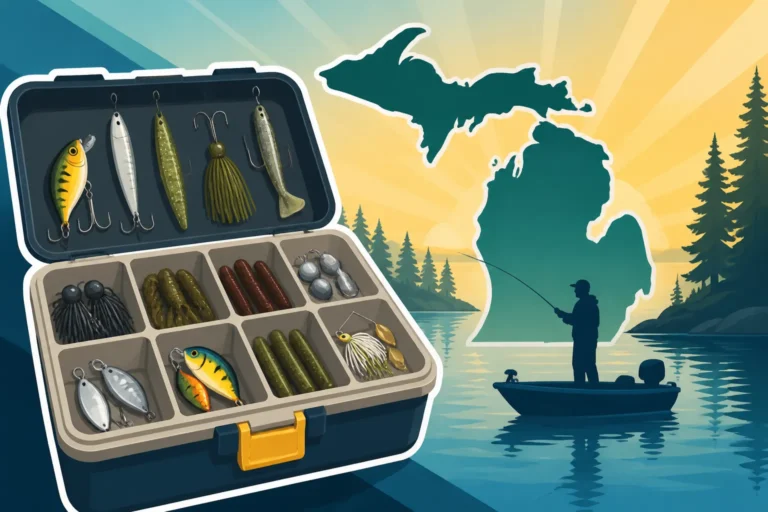
For treble hooks that are factory-installed on crankbaits, jerkbaits, or various spoons, the sizes can vary significantly depending on the specific lure's profile and intended action. Many of the most popular walleye crankbaits, like those you might pick up from Bass Pro Shops or browse for on Amazon, often come equipped with size 6 or 4 treble hooks. Deeper diving models or lures with a larger profile might feature more substantial size 2 or even 1/0 trebles. When you're replacing trebles, whether due to damage or an upgrade, it's absolutely crucial to match the original size as closely as possible, or only go one size up or down if it won't negatively impact the lure's finely tuned action. An oversized treble, for example, can easily throw off a crankbait's balance, preventing it from swimming correctly and making it far less appealing to discerning walleye.
Factors Influencing Your Hook Choice: Bait, Method, and Water
Choosing the right hook size is far from a one-and-done decision; it's a dynamic process based on several critical factors you'll encounter on Michigan's diverse waters, from the vast expanses of Lake Michigan to smaller, intimate inland lakes like Higgins or Burt. These variables demand that you think critically about your tackle before you even cast.
Bait Size: This is, without a doubt, the most important factor in your hook selection. Your hook must be proportionate to the size of your bait. If you're painstakingly trying to present a tiny fathead minnow for a subtle, finesse presentation, a large 2/0 jig hook will completely overpower it, making it look unnatural, inhibiting the minnow's natural movement, and likely deterring any cautious walleye. In this scenario, a much smaller size 4 or 2 Aberdeen hook, lightly hooked through the lips or just behind the dorsal fin, would be significantly more effective. Conversely, attempting to hook a large shiner or a bulky soft plastic swimbait onto a tiny size 6 hook is a recipe for disaster. The hook simply won't have enough gape to adequately clear the bait and get a solid bite into the walleye's tough mouth. Always ensure that a significant portion of the hook point and barb are exposed, ready to grab hold.
Fishing Method/Presentation: The specific way you're fishing directly dictates your primary hook choice. If you're diligently jigging vertically over structure, a jig head (with its integrated hook) is your central concern. If you're slip bobber fishing with delicate live bait, you'll want a lightweight, exceptionally sharp single hook that won't hinder the bait's action. Trolling with crankbaits means paying close attention to the existing treble hooks, and possibly upgrading them. If you're ice fishing, that often calls for much smaller jigging spoons or tungsten jigs with tiny hooks (ranging from size 8-12), typically tipped with a wax worm or a minnow head. This is because walleye can be quite lethargic in cold water, requiring an extremely subtle and irresistible offering. Understanding these method-specific nuances is absolutely key to success, as detailed in guides like Michigan Walleye Fishing Techniques.
Water Conditions and Fish Aggression: The mood of the fish and the conditions of the water greatly influence hook selection. In cold water, or when walleye are particularly finicky and prone to "short striking" or cautiously mouthing the bait, a slightly smaller hook can sometimes lead to a significantly higher number of hook-ups. This is because a smaller hook is simply easier for a wary fish to fully inhale without detection. Conversely, when walleye are actively feeding and aggressively smashing baits, you can often get away with, or even benefit from, a slightly larger, more robust hook that can stand up to powerful strikes and aggressive fighting. The clarity of the water can also play a subtle role; in very clear water, a smaller, less obtrusive hook might be more appealing, especially when using live bait where every detail counts.
Here’s a quick reference table to help visualize common hook sizes for various walleye setups:
| Fishing Method | Bait Type | Recommended Single Hook Size Range | Recommended Treble Hook Size (Lures) | Notes |
|---|---|---|---|---|
| Jigging | Soft Plastics (3-5 inches) | 1/0 – 3/0 (Jig Head Hook) | N/A | Match to plastic size; ensure hook point is well-exposed. |
| Minnow Tipped Jig | 1/0 – 2/0 (Jig Head Hook) | N/A | Smaller minnow, generally a smaller jig hook. | |
| Live Bait Rigs | Leeches, Nightcrawlers | #4 – #2 | N/A | Consider Octopus or Aberdeen styles for optimal presentation. |
| (Slip Bobber, Bottom | Small Minnows (2-3 inches) | #4 – #2 | N/A | Hook through lips or just behind the dorsal fin to maintain liveliness. |
| Bouncer) | Larger Minnows (3-5 inches) | #2 – 1/0 | N/A | Ensure natural movement, conceal hook as much as possible. |
| Trolling/Casting | Crankbaits, Jerkbaits | N/A | #6 – #2 (some 1/0 for large lures) | Standard sizes for most walleye lures; match original when replacing. |
| Spoons | N/A | #6 – #4 | Can sometimes be replaced with a single hook for weedless presentations. | |
| Ice Fishing | Small Jigs (Tungsten, Rattle) | #12 – #8 (Jig Hook) | N/A | Tipped with wax worms or minnow heads. Prioritize small and subtle. |
Specific Hook Types and Their Applications for Walleye
Beyond just the size, the type of hook you select plays an equally significant role in your overall walleye fishing success. Each distinct hook style is meticulously designed for a particular purpose, and knowing precisely when to deploy each one can dramatically improve your hook-up ratio, turning more subtle bites into landed fish.
Jig Heads: The Workhorse of Walleye Anglers
If there's one single lure type that defines walleye fishing for countless anglers across Michigan, it's undoubtedly the jig. And at the absolute core of any effective jig is its hook. Jig heads, by their very nature, feature hooks molded directly into them, making the quality, strength, and inherent sharpness of this integrated hook paramount to your success. As we've already discussed, the most common sizes for general walleye jigging typically range from 1/0 to 3/0, offering a versatile spectrum for various bait sizes and conditions.
The common hook types you'll find incorporated into jig heads often include Aberdeen, O'Shaughnessy, and various round bend styles. Aberdeen hooks are particularly renowned for their light wire construction. This thinner wire can be a blessing; it often bends out under extreme pressure if your jig becomes hopelessly snagged, potentially allowing you to retrieve your valuable lure. They also tend to be exceptionally sharp and are excellent choices for tipping with delicate live bait. O'Shaughnessy hooks, in contrast, are generally constructed from heavier, stronger wire, making them an excellent choice for targeting larger, more powerful fish and in situations where snags are less of a concern. The round bend style typically serves as a versatile middle-ground, offering a good balance of strength and penetration. When you're shopping for jig heads, whether at a bustling local bait shop or browsing the extensive selections on Amazon, always make it a point to check the hook quality. A cheap, dull hook will completely undermine even the most perfectly executed jigging presentation. Reputable brands will often clearly specify their hook type and size directly on the packaging, giving you confidence in your choice. Consider also exploring variations like stand-up jig heads, which are designed to present your bait upright off the bottom, or mushroom head jigs, which excel with finesse plastics, but always, always keep a keen eye on that critical hook size and gape.
Live Bait Hooks: Keeping Your Minnows and Leeches Lively
When you make the strategic decision to opt for live bait, the primary goal is almost always to present it as naturally and appealingly as possible, with the hook serving as a necessary, but minimal, intrusion. This is precisely where specialized live bait hooks truly shine, designed to enhance your bait's natural allure while ensuring effective hook-sets.
Aberdeen hooks are a fantastic and highly recommended choice for a wide array of live bait presentations, particularly when using minnows. Their characteristically thin wire construction minimizes the damage inflicted upon the bait, which is crucial for keeping it lively and active for longer periods – a vital factor for enticing wary walleye. The wider gap inherent in Aberdeen hooks also significantly helps ensure excellent hook penetration once a fish commits. Sizes #4 to #2 are commonly employed for small to medium-sized minnows or leeches.
Octopus hooks are another unwavering favorite among walleye anglers, especially for rigging delicate leeches or pliable worms. Their distinctive design, featuring a shorter shank and an offset point, makes them perfectly suited for tying a "snell" knot and allows for a remarkably natural and unimpeded presentation of softer baits. These hooks consistently offer superior hook-up percentages due to their unique, efficient bend. A trusty size #4 or #2 Octopus hook is an absolute staple in the tackle boxes of many dedicated walleye anglers, particularly for various Michigan Walleye Fishing Techniques.
Circle hooks are steadily gaining widespread popularity, especially among anglers committed to catch-and-release fishing, or when fishing with less experienced individuals like children. Their ingenious design almost guarantees a clean hook-up in the corner of the fish's mouth, dramatically minimizing the chances of gut-hooking – a common concern with other hook types. For walleye, a 1/0 or 2/0 circle hook can be exceptionally effective, particularly when paired with larger live baits. However, it's important to note that circle hooks require a distinctly different hook-setting technique – a gentle, steady pull rather than a sharp, jarring snap – which can certainly take some practice and getting used to.
Treble Hooks: When to Opt for Extra Points (Crankbaits, Jerkbaits)
Treble hooks are the undisputed standard on the vast majority of artificial lures specifically designed for walleye, including popular crankbaits, spoons, and various stickbaits. Their configuration of three sharp points offers a significantly higher chance of hooking a fish, especially during aggressive strikes or when fish are simply slashing at a fast-moving or erratic lure. This multi-point contact can be a game-changer when bites are tentative or unpredictable.
The primary considerations with treble hooks, aside from their size (which, as we discussed, typically ranges from #6 to #2 for most walleye lures), are their inherent strength and their crucial sharpness. Many factory-installed hooks on brand-new lures are generally decent, offering acceptable performance. However, experienced anglers often find that upgrading to higher quality, chemically sharpened trebles can make a truly noticeable difference in their hook-up to landing ratio. When selecting replacement trebles, actively look for hooks crafted from stronger wire (often indicated as 1X or 2X strong) to prevent bending or straightening out on larger, harder-fighting fish. Furthermore, always prioritize chemically sharpened hooks for instant, effortless penetration into the tough mouth of a walleye. When replacing trebles, meticulously try to match the original size as closely as possible to scrupulously maintain the lure's intended and carefully engineered action. For instance, attaching an overtly oversized treble onto a delicate, finely tuned crankbait will inevitably throw off its critical wobble and depth, rendering it less effective. Some shrewd anglers might subtly opt for one size larger on the belly hook of a crankbait to theoretically improve hook-up chances, but this is a very subtle adjustment that requires careful testing. Always pay close attention to how the lure swims after any modifications you make.
Tips for Maximizing Hook-Up Ratios and Landing Walleye
Choosing the right hook size and type is undoubtedly a huge step towards becoming a more successful walleye angler, but it's important to remember that it's just one crucial piece of the much larger puzzle. The best, most perfectly sized hook in the world won't do you much good if it's dull, or if you haven't mastered the art of properly setting it. Let's delve into some final, crucial details and essential tips that can transform more of those tantalizing bites into solidly landed walleye.
The Importance of Sharp Hooks
This might seem like an incredibly obvious piece of advice, yet it's astonishing how many anglers routinely overlook or underestimate the simple, yet profound, act of sharpening their hooks. A dull hook doesn't penetrate bone or tough mouth tissue easily; instead, it tends to scrape, tear, or simply bounce off, leading to frustrating missed opportunities. A truly sharp hook, on the other hand, will find purchase with minimal pressure, often requiring nothing more than the weight of the fish itself to drive home. This distinction is often the difference between a triumphant catch and a heartbreaking miss.
Before every single outing, and even periodically throughout a long, active day on the water, make it an unbreakable habit to take a moment to meticulously check your hook points. A simple, effective test involves lightly dragging the hook point across your thumbnail; if it effortlessly bites into the nail and doesn't slide, you've got a sharp hook. If it slides across your nail with resistance, it's dull and immediately needs attention. A small, portable hook file or a fine-grit diamond sharpening stone, readily available at any reputable tackle shop or through online retailers like Amazon, is an absolutely invaluable tool to keep in your tackle box. For those tiny ice fishing jigs or the delicate points of treble hooks, an extra-fine grit stone or a ceramic sharpening stick works wonders, bringing them back to razor sharpness. Investing in high-quality, chemically sharpened hooks from the very beginning, such as those found on premium jig heads or as replacement trebles, will also save you a significant amount of effort and enhance your success. The advice in Essential Gear for Michigan Steelhead Fishing also thoroughly covers the critical importance of sharp hooks for those powerful, hard-fighting steelhead, a principle that applies just as strongly to walleye.
Setting the Hook Effectively
The "hook set" is truly the moment of truth in fishing, the culmination of all your efforts. With walleye, the precise technique for setting the hook can vary slightly depending on your specific presentation, the fishing method you're employing, and even the current mood and aggression level of the fish. However, a universal general rule of thumb to keep in mind is to execute a firm, deliberate, and sweeping motion. Avoid the temptation to just yank; a controlled sweep is often more effective.
When you're actively jigging, you're constantly watching your line for the slightest taps, an almost imperceptible slackening, or any other unusual movement. The very instant you detect anything out of the ordinary, or if your line goes slack when it should still be falling, drop your rod tip slightly towards the water. Then, with a quick, strong, and confident upward sweep of the rod, pull back rather than straight up. This ensures the hook drives home with sufficient force and angle. For live bait fishing using a slip bobber, allow the fish a few precious seconds to fully take the bait after the bobber submerges (giving it ample time to fully ingest the hook). Then, quickly reel down any slack line until you feel direct contact with the fish, and execute a firm sweep of the rod either to the side or upwards. With crankbaits, the fish often effectively hooks itself due to the speed of the retrieve and the lure's inherent resistance, but a quick, sharp snap of the wrist to ensure the trebles are deeply buried is never a bad idea and provides added security. Remember, the ultimate goal is to drive the hook point cleanly past the barb into the relatively bony mouth of the walleye, securing it firmly for the ensuing fight. Resist the urge to use soft, tentative hook sets; walleye mouths are tough, and timid actions often result in missed fish.
Adjusting Hook Size Based on Angler Feedback and Conditions
Fishing is undeniably an art as much as it is a science, and the most consistently successful anglers are those who are constantly observing, learning, and adapting their tactics. Pay meticulous attention to how the walleye are biting, where precisely they are hooked, and any patterns that emerge throughout your day on the water. This feedback is invaluable.
If you find yourself consistently getting bites but frustratingly failing to hook up, or if the fish you do manage to retrieve are only lightly "pricked" on the very edge of their mouth, your hook might be too large for the current conditions, or your hook set might need refinement. In such scenarios, consider dropping down one hook size, especially if you're using live bait or soft plastics. Sometimes, a smaller, less obtrusive hook is simply easier for a wary or finicky walleye to inhale fully without detection. Conversely, if you're consistently gut-hooking fish (though this is generally less common with proper walleye hook sets and quick reactions), your hook might actually be too small, or you might be waiting too long before executing your hook set.
Always take into account the time of year and the prevailing water temperature. In colder water conditions, prevalent during early spring or late fall in Michigan, walleye can be quite lethargic and less inclined to aggressively chase or strike. In these circumstances, a smaller, more subtle presentation with a correspondingly smaller hook might be absolutely necessary to elicit a bite. During the peak summer bite, however, when walleye are actively feeding and highly aggressive, you can often comfortably go a bit larger with your hooks, particularly on jigs and larger crankbaits, without deterring strikes. Always be prepared and willing to experiment with hook sizes and make immediate adjustments based on what the fish are telling you. This continuous feedback loop and willingness to adapt are what truly distinguish good anglers from great ones, whether you're diligently stocking up on new tackle from Bass Pro Shops or simply refreshing your hook supply through Amazon. For more on the rules, Michigan Fishing Regulations Every Angler Should Know outlines important rules that might affect your gear choices, and Michigan Walleye Size and Possession Limits should always be on your mind when you do land those beauties. For specific techniques, consider checking out Jigging Techniques for Michigan Walleye or Ice Fishing Techniques for Michigan Walleye for more specialized advice. If you're targeting big ones, knowing Michigan's State Fish Records might give you an idea of the tackle strength you'll need. Don't forget to understand Michigan's Fishing License Year Runs April to March to ensure you're always legal on the water. Finally, for an overall understanding of the seasons, check out Michigan Fishing Seasons Explained.
Disclaimer
This article is for general informational purposes only and does not constitute professional advice. Laws, prices and regulations vary by location and change over time. Consult a qualified professional for guidance on your specific situation.