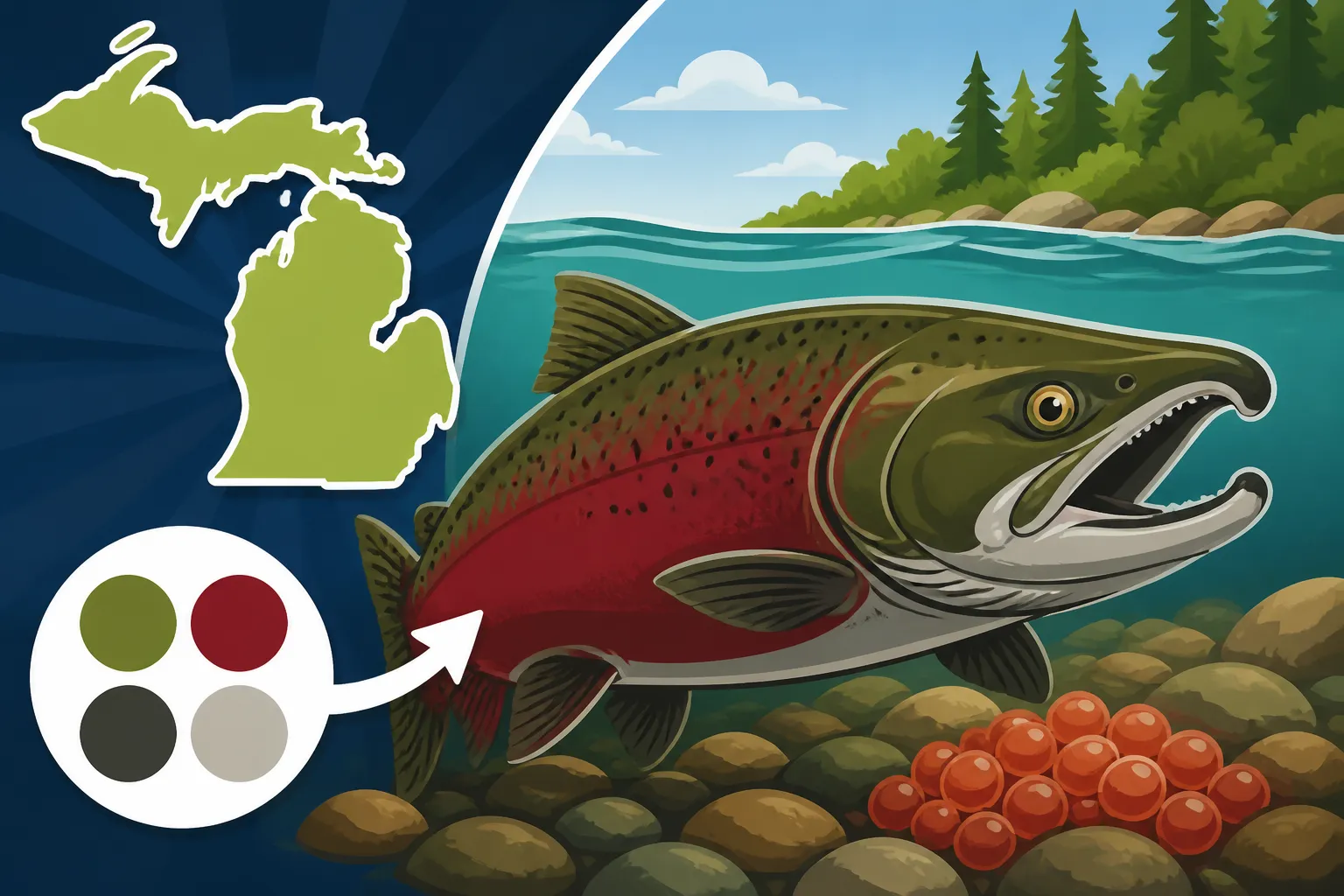
What Color Are Spawning Chinook Salmon
One of the most striking transformations in the natural world unfolds right before our eyes in Michigan's rivers each fall. Anglers and nature enthusiasts alike often wonder, "What color are spawning Chinook salmon?" The vibrant, chrome-bright kings that dominated the Great Lakes suddenly appear to change their very essence as they push upstream, becoming dark, mottled, and deeply colored. This guide will walk you through the incredible color changes spawning Chinook salmon undergo, what triggers these shifts, and why understanding them is so important for Michigan anglers.
The Phenomenon of Spawning Coloration in Chinook Salmon
It’s an incredible journey that takes them from the vastness of the Great Lakes into the relatively shallow, intimate confines of our rivers. And as they make this transition, their appearance changes dramatically, driven by both biology and environment.
The Bright Silver of Lake-Run Chinook
When Chinook salmon, often called "King Salmon," are cruising the open waters of lakes Michigan, Huron, and Superior, they are truly a sight to behold. Their scales shimmer with a brilliant, almost iridescent silver along their sides, fading to a darker, steel-blue or greenish hue on their backs, and a pristine white belly. This coloration isn't just for show; it's a masterful form of camouflage. In the vast, open water column, this counter-shading helps them blend in, making it harder for both predators looking up (against the bright sky) and prey looking down (against the darker depths) to spot them.
These are the fish that many anglers dream of catching – hard-fighting, powerful, and often still in prime condition, packed with rich, orange-red meat. Their streamlined bodies reflect their pelagic lifestyle, constantly on the move, chasing baitfish like alewives and smelt. They are pure power and efficiency, honed by years in the expansive freshwater seas of Michigan. You can learn more about these magnificent creatures in our guide to Chinook Salmon in Michigan's Great Lakes.
The Dramatic Transformation Upon Entering Rivers
As late summer gives way to fall, an ancient instinct takes over. Triggered by shortening daylight hours, cooling water temperatures, and perhaps the scent of their natal streams, mature Chinook salmon begin their migration into the rivers to spawn. This is where the magic, or perhaps the scientific marvel, truly begins. Almost immediately upon entering the freshwater rivers, often just past the river mouth, their bodies start to undergo a profound physiological change.
This shift isn't just superficial; it's driven by intense hormonal surges that prepare them for the monumental task of reproduction. Their digestive systems shut down, as they will no longer feed once they enter the rivers. Instead, all their energy is redirected towards developing eggs and milt, and preparing their bodies for the rigors of spawning. The vibrant silver begins to dull, and their skin starts to thicken, preparing for the inevitable scrapes and battles that lie ahead. The clock is ticking, and their bodies know it.
The Deep Bronze and Olive Hues of Spawning Males
For male Chinook salmon, the color change is the most spectacular and, frankly, intimidating. What starts as a subtle darkening quickly intensifies into a mosaic of deep bronze, olive green, and sometimes even a dark reddish-brown or nearly black. The once silvery flanks become mottled and blotchy, often showing dark vertical bands or patches. Their backs deepen to a rich, almost oily black-green. It’s not uncommon to see shades of purple and even vibrant reds, particularly around the head and tail, as their bodies prepare for their final act.
Beyond color, male Chinook salmon undergo significant physical changes. Their jaws begin to lengthen and curve into a pronounced "kype" or hooked snout, a formidable weapon used to fight rival males for access to females. Their backs develop a distinctive hump, giving them a more robust and aggressive appearance. These transformations serve a dual purpose: to attract females by displaying their strength and genetic fitness, and to intimidate other males, reducing competition for spawning rights. These fish are no longer focused on eating; they are solely driven by the instinct to reproduce. They become a force of nature, powerful and unyielding as they fight their way upstream to fulfill their destiny.
The Subtler Shifts in Spawning Females
While the males put on a dazzling, albeit often menacing, display of color, the female Chinook salmon also undergo changes, though typically more subdued. Their primary focus is on carrying and depositing thousands of eggs, and their coloration reflects this crucial role. As they transition from the lake into the river system, their bodies will lose their vibrant silver sheen, becoming a duller, more muted olive-brown, grayish, or coppery tone.
Their flanks might show some faint mottling or dark patches, but generally, their colors are less intense and less varied than the males. They don't develop the prominent kype or the dramatic hump, maintaining a more rounded, egg-laden profile. Their energy is almost entirely consumed by the development of their roe, which can make up a significant portion of their body weight. These female fish are often focused on finding suitable gravel beds, known as redds, where they can dig their nests and deposit their precious cargo. While less visually striking than the males, their role is arguably the most vital in ensuring the continuation of the species.
Factors Influencing Spawning Salmon Color
The specific hue and intensity of a spawning Chinook can be a complex interplay of several environmental and biological factors. It's not always a one-size-fits-all transformation.
Water Clarity and Riverbed Composition
Think about trying to spot a fish in a crystal-clear mountain stream versus a tannin-stained river. The environment itself plays a huge role in how we perceive, and how the fish's own camouflage, is presented. In rivers with exceptionally clear water and lighter, sandy or gravelly bottoms, even darker spawning salmon might appear less intensely colored or their patterns more distinct. Conversely, in rivers with darker, muddier bottoms or heavy tannin staining, like some stretches of the Au Sable River Trout Fishing in Michigan, the same fish can appear almost black or deep mahogany, their dark colors absorbing the surrounding hues.
The water clarity also impacts how quickly their skin picks up stains and algae, further darkening their appearance. A fish that has been in a clear, shallow section for days might look different from one in a deeper, murkier pool, even if they're at the same stage of spawning. Anglers often comment on how fish from different rivers, even when caught on the same day, can have slightly different colorations due to these localized conditions.
Duration in Freshwater and Spawning Readiness
One of the most significant factors is simply how long the Chinook has been in the freshwater river system and how close it is to actively spawning.
- "Fresh Run" Fish: These are the early birds, the ones that have just recently entered the river from the Great Lakes. They still retain much of their chrome-silver appearance, perhaps with just a hint of darkening along the back or a slight dulling of the scales. They are full of fight and energy, having not yet expended much of their reserves on migration or spawning preparation. Anglers often target these fish because they are considered prime for eating and offer an incredible battle. You'll often find these "fresh" fish near river mouths and in the lower stretches of rivers during the early part of Michigan's Fall Salmon Run Fishing.
- "Dark" or "Stale" Fish: As the weeks pass and the salmon move further upstream, their colors deepen dramatically. They become what anglers call "dark fish." Their bodies are entirely focused on reproduction, and their physical condition often deteriorates. Their once sleek bodies may show signs of wear and tear – scrapes, scars from fighting, and a general loss of muscle mass as they consume their own fat reserves. By the time they reach the spawning beds, they are often a very deep bronze, olive, or even a dark, sooty black. These fish are at the end of their life cycle, having completed their incredible journey to ensure the next generation.
Light Conditions and Observation
Just like with any photography, the lighting makes a huge difference in how you perceive the color of a spawning Chinook. On a bright, sunny day with clear water, you might be able to pick out the subtle olive greens and bronze tones. However, on an overcast day, or when fishing at dawn or dusk, these same fish can appear much darker, almost uniformly black against the dim light. The depth of the water also plays a role; a fish holding in a deep, shadowed pool will always look darker than one lying in a shallow, sun-drenched riffle.
Many seasoned anglers swear by polarized sunglasses, which cut through the glare on the water's surface, allowing them to see into the water more clearly. This can reveal the true, often astonishing, colors of these magnificent fish that might otherwise be obscured by reflections. You can find a good pair of polarized sunglasses on a site like Amazon to help you spot these subtle distinctions.
Why Anglers Care About Spawning Salmon Color
Beyond mere curiosity, understanding the coloration of spawning Chinook salmon holds practical significance for anglers, influencing everything from what they choose to keep to where and how they fish.
Identifying Spawning Stage and Edibility
One of the most common reasons anglers pay close attention to salmon color is to gauge the fish's stage in its spawning run and, critically for many, its eating quality. It's a widely held belief among Michigan anglers that the brighter, chrome-colored salmon fresh from the Great Lakes are the best for the dinner table. Their flesh is firm, vibrant, and rich in omega-3s, a testament to their recent feeding in the lake.
As salmon transition to their darker, spawning colors, their flesh also undergoes changes. It loses its firm texture, becomes paler, and often takes on a softer, sometimes mushy consistency. The fat content, which gives the lake-run fish their flavor, is largely depleted as the fish converts it into energy for their arduous journey and reproduction. While some anglers still choose to keep darker fish, many opt for catch-and-release once the salmon are deep into their spawning coloration. There's a certain respect for allowing these dedicated fish to complete their life cycle, especially if the eating quality has diminished. This ties into ethical angling practices, ensuring the sustainability of our fisheries, a topic covered more deeply in Michigan Fishing Regulations Every Angler Should Know.
Locating Fish and Understanding Behavior
The color of a salmon also acts as a visual cue for anglers trying to locate fish in the river. A bright, fresh-run Chinook might be harder to spot in clear water, relying more on its speed and power. However, a dark, bronze-hued male, especially when it develops its distinctive hump and kype, can be quite visible against a lighter riverbed, particularly in shallower spawning areas.
Experienced river anglers often use these visual cues to understand where fish are in the river and what they might be doing. Fresh-run fish are typically found in deeper runs, pools, and near current breaks, actively pushing upstream. Darker fish, on the other hand, are often found holding on or near spawning redds, defending their territory or preparing to deposit eggs. Observing their color helps anglers deduce their behavior, which in turn informs tackle choices and presentation strategies. For instance, you might use different lures or baits for an aggressive, fresh-run fish compared to a territorial, defensive dark fish.
Ethical Angling and Respecting the Spawning Process
Perhaps the most important reason for understanding spawning salmon coloration is to foster ethical angling practices. These fish have embarked on a one-way trip, pouring all their remaining energy into creating the next generation. Seeing a dark, heavily kiped male or a dull-colored female actively digging a redd should trigger a moment of reflection for any angler.
Many choose to avoid targeting fish that are actively spawning on redds. Disturbing them can disrupt the delicate process of egg deposition and fertilization, impacting future fish populations. If you do hook a dark, spent fish, practicing careful catch-and-release techniques is paramount to give them the best chance to complete their spawning duties. This means minimizing their time out of water, handling them gently with wet hands, and ensuring they are strong enough to swim away before release. Responsible angling ensures that these incredible migrations continue for generations to come, allowing future anglers to witness the spectacle of Michigan Salmon Species Explained.
What to Look for When Targeting Chinook Salmon
So, you're heading out to target these magnificent fish in Michigan's rivers. Knowing what to look for can significantly improve your chances and enhance your understanding of the incredible journey they undertake.
Optimal Time for Bright Fish
If your goal is to catch those prized, chrome-bright Chinook salmon for their eating quality and incredible fight, you'll want to target them early in the run. This typically means late August through September, depending on the river system and weather patterns. Focus your efforts closer to the river mouths and in the lower stretches of larger rivers that connect directly to the Great Lakes. The Manistee River Steelhead and Salmon Fishing in Michigan and the Muskegon River are prime examples of systems known for strong early runs where you can encounter these aggressive, fresh-from-the-lake fish.
During these initial weeks, the salmon are still full of fight and are more likely to strike out of aggression or instinct, even though they've stopped actively feeding. Look for cooler water temperatures and recent rainfall, which often trigger new pushes of fish into the rivers. These conditions make for some of the most exciting and rewarding salmon fishing experiences Michigan has to offer, as you battle powerful fish that haven't yet taken on their spawning colors. You can anticipate these runs by keeping an eye on Michigan Fishing Seasons Explained.
Gear Considerations for River Salmon
Successfully landing a powerful river Chinook, whether it's bright chrome or deep bronze, requires the right tackle. These fish are incredibly strong, using the river current to their advantage, and can test your gear to its limits. A medium-heavy to heavy action spinning or baitcasting rod, typically 8 to 10 feet long, is often preferred for river salmon fishing. This length provides the leverage needed for long casts, good line control, and fighting fish in strong currents. Match it with a sturdy reel spooled with 20-30 lb braided line, often with a fluorocarbon leader of 15-20 lb test.
Lures like wobbling crankbaits, heavy spoons, spinners, and twitching jigs are popular choices for targeting aggressive salmon. For those using natural baits, cured salmon roe (spawn bags), skein, or even live or dead minnows can be highly effective, especially for fish holding in deeper holes. Always ensure your hooks are sharp and strong enough to handle a salmon's powerful jaw. You can often find a wide selection of suitable rods, reels, and terminal tackle on online platforms like Amazon, making it easy to prepare for your next trip. Dive deeper into tackle specifics with our guide on Best Rods and Reels for Michigan Fishing.
Reading the River for Spawners
As the season progresses and salmon deepen in color, they will move onto specific spawning grounds. Learning to "read the river" to identify these areas is a crucial skill for responsible angling. Spawning redds are typically shallow, gravelly areas with a good current, where females dig out depressions to lay their eggs. You'll often see lighter patches of disturbed gravel, almost like clean spots on the riverbed, where a female has been fanning out sediment. Males will typically be nearby, guarding the redd and ready to fertilize the eggs.
If you observe fish actively on a redd, it's generally best practice to move on and target fish in other areas. There are plenty of aggressive salmon, even darker ones, that might be holding in deeper pools or transition areas, not actively on a redd, that are fair game. Using good quality polarized sunglasses, like those you might find on Amazon, can be incredibly helpful for spotting both fish and redds, allowing you to make informed decisions and minimize disturbance to the natural spawning process. Respecting these critical reproductive areas ensures healthy future populations, reinforcing the importance of ethical angling for all Michigan Fishing Regulations Every Angler Should Know.
Disclaimer
This article is for general informational purposes only and does not constitute professional advice. Laws, prices and regulations vary by location and change over time. Consult a qualified professional for guidance on your specific situation.