How Fast Do Walleye Grow in Michigan
Anglers across Michigan often share a common curiosity: how long does it really take for a walleye to grow to a respectable size, and what makes some waters produce bigger fish than others? It can be perplexing when you consistently catch smaller walleye in one spot but hear tales of giants from another. This guide aims to clear up those mysteries, diving deep into the fascinating world of walleye growth in Michigan, revealing the factors at play, and what you can expect when you’re out on the water.
Understanding Walleye Growth Factors in Michigan
The speed at which a walleye grows in Michigan isn't a simple, fixed equation. It's a complex dance between biology and environment, influenced by a multitude of factors. Many anglers might assume that all walleye in the state follow a similar growth trajectory, but that's simply not the case. Understanding these underlying influences can not only satisfy your curiosity but also make you a more strategic and appreciative angler.
Environmental Conditions and Water Quality
Think of a walleye's habitat like a garden; the soil, sunlight, and water quality profoundly affect what can grow there. For walleye, water temperature is a huge engine for their growth. Being cold-blooded, their metabolism speeds up in warmer waters, allowing them to digest food more quickly and convert those nutrients into body mass. However, there's a sweet spot; excessively warm water can cause stress. Lakes and rivers in Michigan with longer periods of optimal warm water (not too hot, not too cold) generally support faster-growing walleye populations.
Beyond temperature, the overall health of the water body, often referred to as water quality, is paramount. This encompasses everything from dissolved oxygen levels to clarity and the absence of pollutants. Walleye need ample oxygen, especially in the deeper, cooler parts of lakes where they often seek refuge in summer. If oxygen levels dip too low, fish become stressed, making them less inclined to feed and grow. Water clarity also plays a role; while ultra-clear water might seem ideal, a moderate amount of turbidity can actually benefit walleye by providing cover for ambushing prey, leading to more successful feeding. The vastness of the Great Lakes, for example, offers diverse water quality conditions compared to smaller inland bodies. You can learn more about these large water bodies in Michigan's Great Lakes Fishing Guide.
Finally, the physical structure of the habitat itself provides crucial elements for growth. Healthy beds of submerged aquatic plants, fallen timber, rocky reefs, and gravelly bottoms are not just pretty scenery. They offer hiding spots for young walleye, prime feeding grounds for adults, and essential spawning areas. When these habitats are degraded or scarce, walleye struggle to find food and shelter, directly impacting their ability to grow large and healthy. It's a vital connection that often goes overlooked, but preserving these natural structures is key to a thriving fishery.
Food Availability and Forage Base
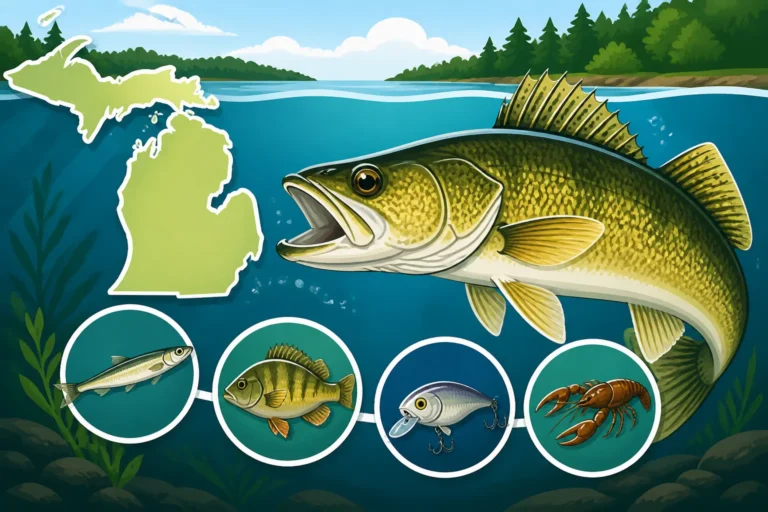
This factor might seem obvious, but its impact cannot be overstated: a walleye will only grow as quickly as it can find and consume food. An abundant, easily accessible forage base acts like premium fuel for walleye, allowing them to pack on pounds rapidly. In Michigan, the typical diet for walleye includes species like yellow perch, gizzard shad, emerald shiners, smelt, and various other minnows. If a particular lake or bay has a booming population of these baitfish, you can almost guarantee the walleye living there will be larger and healthier. Conversely, if the forage base takes a hit due to environmental changes or over-predation, walleye growth can slow down dramatically, resulting in smaller, leaner fish.
The nutritional quality of the forage also makes a difference. Fish that are rich in fat and protein provide more energy and building blocks for growth than leaner options. For instance, a walleye feasting on oily emerald shiners might grow faster than one subsisting on less calorie-dense prey. Anglers often observe this phenomenon firsthand; certain lakes are just known for producing "football" walleye, and almost invariably, it correlates with a superior food source beneath the surface. Knowing what the walleye are eating can give you a significant edge in employing effective Michigan Walleye Fishing Techniques.
The delicate balance of the ecosystem, including the presence of other predator species like northern pike or even larger walleye, also affects food availability. If there's too much competition for the same food source, or if the walleye population itself becomes too dense for the available forage, growth rates can suffer. Fisheries biologists work diligently to monitor these predator-prey dynamics, sometimes implementing stocking programs or harvest regulations to maintain a healthy balance, ensuring there's enough food to support robust walleye growth. A well-stocked tackle box, often acquired from a retailer like Amazon, allows anglers to imitate the local forage species effectively.
Genetic Predisposition and Strain Differences
Just like humans, individual fish possess genetic variations that influence their growth potential, maximum size, and even their preferred behaviors. While all walleye in Michigan are technically the same species, Sander vitreus, there can be distinct genetic "strains" that have adapted to specific environments over countless generations. Some of these strains might naturally grow larger and faster, or exhibit greater resilience to certain environmental stressors, even under identical conditions. These genetic differences aren't always immediately apparent to the casual observer, but they are a very real biological component of growth.
Consider the genetic makeup of walleye in the vast expanse of Lake Erie versus those found in a small, isolated inland lake. Over time, these populations develop unique genetic traits that optimize their survival and growth within their specific niches. Fisheries management often takes these genetic differences into account when conducting stocking programs, sometimes introducing walleye from broodstock known for fast growth or good survival rates in particular types of water. It's akin to selective breeding in agriculture, aiming to foster the most robust fish possible.
While anglers cannot directly alter the genetics of the walleye they pursue, recognizing that these intrinsic differences exist helps explain why certain lakes consistently produce trophy-sized walleye, while others, despite seemingly good conditions, might only yield average-sized fish. It's a fascinating aspect of aquatic biology that adds another layer of appreciation for the diversity of Michigan's fisheries. Exploring books on fisheries science, many of which can be found on Amazon, can offer deeper insights into these genetic factors.
Typical Growth Rates and Size Milestones for Michigan Walleye
With a grasp of what influences walleye growth, let's turn our attention to how fast they actually grow and what size milestones they typically hit in Michigan's waters. It’s crucial to remember that these figures are averages, and individual fish or specific bodies of water can always deviate from the norm. Michigan's walleye fishery is a testament to effective management, providing diverse opportunities to encounter fish at various stages of their development.
Early Life Stages: Fry and Fingerlings
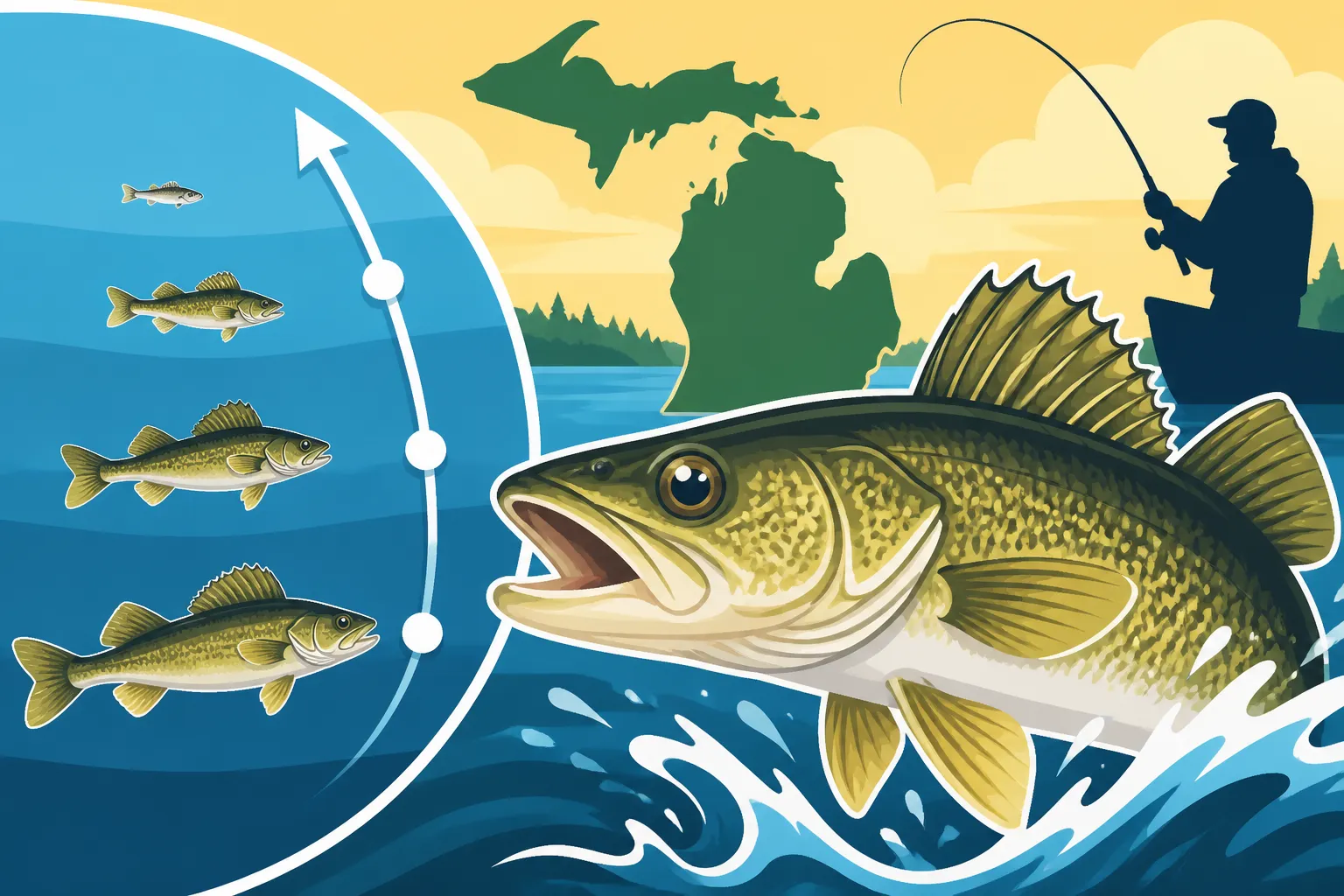
The life cycle of a Michigan walleye begins as a tiny, adhesive egg, typically deposited on gravelly or rocky substrates in lakes and rivers during the spring spawning period. Upon hatching, they emerge as delicate fry—microscopically small, nearly transparent creatures. Survival at this stage is incredibly challenging, as they face immense predatory pressure and sensitivity to environmental shifts. Initially, they subsist on plankton, exhibiting rapid but minute growth, measured in mere millimeters. Within a few weeks, they develop into what are commonly known as fingerlings.
By the late summer of their inaugural year, these fingerlings will usually have grown to a length of 4 to 8 inches. This range is highly dependent on the aforementioned factors like water temperature, the abundance of food, and their genetic potential. In highly productive systems, such as the nutrient-rich waters of Saginaw Bay, where forage is plentiful and growing seasons are long, they can easily reach the upper end of this spectrum, sometimes even exceeding it. Conversely, in colder or less fertile lakes, their growth might be slower, placing them at the lower end. This initial growth phase is critically important; a strong first year significantly enhances their chances of survival and sets the stage for accelerated growth in subsequent years.
The success of an entire "year class"—all the walleye hatched in a given year—is often determined by the conditions during these early life stages. Favorable environmental conditions leading to a large hatch and high survival rate of fry and fingerlings are excellent indicators for future healthy fishing, promising a robust population of legal-sized fish in the coming years. This cyclical pattern is why anglers often speak of "boom years" in walleye fishing, which typically manifest a few years after an exceptionally good spawn.
Juvenile Growth: The First Few Years
Following their first year, walleye enter a phase of more sustained, albeit often slightly slower, growth compared to their initial explosive development as fingerlings. By the conclusion of their second year, Michigan walleye generally range between 10 and 14 inches in length. While often still below the legal minimum size in many areas, they are well on their way. At this stage, they transition into more formidable predators, diversifying their diet to include larger forage fish, which, in turn, fuels their increasing size and strength.
During their third year, a significant number of walleye in Michigan's productive waters will begin to approach or even surpass the common 15-inch minimum size limit. It's quite common to encounter fish in the 14 to 18-inch range during this period, marking them as viable targets for harvest. By their fourth year, a walleye can typically measure anywhere from 16 to 20 inches, with some exceptional individuals pushing even larger in optimal conditions. This crucial growth phase is characterized by steady development, provided there's consistent access to food and stable environmental factors.
It's precisely during these juvenile years that fishing pressure and management strategies become particularly impactful. Regulations such as minimum size limits are specifically designed to safeguard these developing fish, allowing them the opportunity to mature, spawn at least once or twice, and contribute to the overall population before they can be legally harvested. This foresight ensures the long-term sustainability and health of the walleye fishery for future generations of anglers. Key regulations like those found in Michigan Fishing Regulations Every Angler Should Know are fundamental to this process.
Adult Growth: Reaching Legal Size and Beyond
As walleye transition into adulthood, their growth rate, while still continuous, typically decelerates even further. The substantial energy previously channeled into rapid physical development begins to be reallocated towards reproductive efforts. A typical legal-sized walleye, measuring 15 inches or more, in Michigan is generally between 3 to 5 years old. However, true trophy walleye—those magnificent specimens exceeding 25 inches—are considerably older, often ranging from 7 to 10 years of age, or even older. These venerable, larger fish represent survivors, having successfully navigated numerous ecological challenges and benefited from consistent access to abundant, high-quality forage throughout their lives.
Here's a general table illustrating approximate walleye length by age in a moderately productive Michigan water body:
| Age (Years) | Approximate Length (Inches) |
|---|---|
| 1 | 4-8 |
| 2 | 10-14 |
| 3 | 14-18 |
| 4 | 16-20 |
| 5 | 18-22 |
| 6 | 20-24 |
| 7-10+ | 24-30+ |
It’s truly astounding to consider the dedication of time and resources it takes for a walleye to evolve into a truly massive specimen. That coveted 30-inch walleye you might dream of landing has likely been a denizen of Michigan's waters for a decade or more, experiencing countless seasons and challenges! This understanding can significantly deepen your appreciation for every single fish you catch, especially the larger ones. When you hold a substantial walleye, you are not just holding a fish; you are holding a testament to survival, a creature that has navigated its environment successfully for many years. Tools designed for precise measurement, such as durable fish measuring boards, readily available from retailers like Amazon, enable anglers to accurately document these impressive milestones and track their catches.
Regional Differences in Walleye Growth Across Michigan
Michigan's vast landscape is dotted with an incredible array of aquatic environments, ranging from the immense expanse of the Great Lakes to thousands of diverse inland lakes and an intricate network of rivers. Given this extensive hydrological variety, it's only natural that walleye growth rates exhibit significant variations depending on their specific habitat. These regional disparities are a key reason why anglers often hold differing expectations and employ distinct strategies when fishing in, for example, the prolific waters of Lake Erie compared to a tranquil, remote lake in the Upper Peninsula.
Great Lakes Walleye Growth (e.g., Lake Erie, Saginaw Bay)
The Great Lakes, particularly the highly productive waters of Lake Erie and Saginaw Bay (which is part of Lake Huron), are world-renowned for their phenomenal walleye fisheries. A substantial contributing factor to this reputation is the exceptionally rapid and consistent growth rates observed in these populations. These expansive bodies of water are characterized by high productivity, meaning they boast incredibly abundant forage bases, including species like gizzard shad, emerald shiners, and vast populations of yellow perch. The sheer scale of these lakes also provides enormous stretches of ideal habitat, allowing walleye to disperse widely and access food resources without excessive localized competition, thereby reducing growth inhibitors.
Walleye inhabiting these extensive Great Lakes systems typically grow faster and attain larger average sizes more reliably than their counterparts in many other parts of the state. It is not at all uncommon to observe 15-inch walleye by their second or third year, and impressive 20-inch fish by their fourth or fifth year of life. Trophy-sized walleye, often exceeding 25 inches, are caught with remarkable regularity, especially in the Western Basin of Lake Erie, an area often lauded as the "Walleye Capital of the World." The stable thermal conditions and nutrient-rich environments prevalent in these large waters significantly contribute to their accelerated metabolism and robust growth, creating an ideal setting for large fish. If your primary objective is to pursue substantial walleye, these vast Great Lakes regions are frequently the most promising destinations. Familiarizing yourself with the Michigan Great Lakes Fishing Regulations Guide will provide you with essential details specific to these prolific waters.
The continuous influx of nutrients, coupled with diligent and science-based fisheries management, plays a crucial role in ensuring that these Great Lakes walleye populations remain exceptionally healthy and highly productive. Anglers are drawn to these areas in droves, often opting for professional charter services, specifically because of the established reputation for fast-growing, large walleye. This confluence of environmental factors and management creates an almost perfect ecosystem for walleye to thrive and achieve impressive dimensions.
Inland Lake Walleye Growth (e.g., Houghton Lake, Lake Gogebic)
Michigan's myriad inland lakes present a far more diverse and complex picture regarding walleye growth. Some, like Houghton Lake, which stands as Michigan's largest inland lake, can be remarkably productive and support excellent walleye growth rates. However, many others—particularly smaller, colder, or less nutrient-rich lakes—may exhibit noticeably slower growth rates. In a typical inland lake environment, walleye might require an additional year or two to attain the same size as their rapidly growing Great Lakes counterparts. Here, a 15-inch walleye might be 3 to 4 years old, and a substantial 20-inch fish could be 6 or 7 years of age.
Lakes situated within the Upper Peninsula, such as the expansive Lake Gogebic, often experience colder average water temperatures and considerably shorter growing seasons. These climatic factors naturally decelerate walleye growth, meaning while these lakes might not produce the sheer volume of "trophy" fish seen in places like Lake Erie, the walleye they do harbor are typically incredibly healthy and offer a fantastic fishing experience. The key is to adjust your expectations and thoroughly understand the local environmental conditions. Furthermore, smaller inland lakes often have more restricted forage bases, which can impose limitations on the maximum size walleye can achieve. For more details on these waters, check out the Houghton Lake Fishing Guide: Michigan's Largest Inland Lake.
Despite these natural constraints, many inland lakes benefit immensely from active management and stocking programs spearheaded by the Michigan Department of Natural Resources (DNR). These initiatives are designed to bolster walleye populations and introduce genetic strains with strong growth potential. Such stocking efforts, combined with ongoing habitat improvements, are crucial for ensuring that even Michigan's more modest inland lakes continue to offer quality walleye fishing experiences for everyone.
River System Walleye Growth (e.g., Detroit River, Bay de Noc)
River systems across Michigan, such as the vibrant Detroit River or the ecologically rich Bay de Noc (which connects directly to Lake Michigan), provide a distinct and often dynamic environment for walleye. Walleye growth rates in these flowing waters often strike a balance, falling somewhere between the accelerated rates of the Great Lakes and the more moderate growth seen in average inland lakes. The Detroit River, for example, is particularly celebrated for its immense spring walleye runs, which feature fish migrating upstream from Lake Erie. Many of these fish are large, robust specimens that have benefited from the rapid growth opportunities of the open lake.
The constant current and flow characteristic of rivers can offer a consistent supply of nutrients and diverse forage species. However, it also demands that fish expend more energy to maintain their position or to actively swim against the current. This increased energy expenditure can sometimes result in walleye that are slightly leaner and more muscular compared to their counterparts inhabiting more placid lake environments. Nevertheless, the abundant forage and the migratory patterns often observed in these river systems are more than capable of supporting excellent growth and substantial fish. For instance, in areas like the St. Clair River, walleye thrive on the plentiful baitfish populations. Resources like guides to Detroit River Perch Fishing Spots often also touch upon the general health and vitality of the entire river's fish population, including its walleye.
Ultimately, walleye growth in river systems is a fascinating amalgamation of specific riverine challenges and unique advantages. Those rivers that directly connect to the Great Lakes frequently benefit from the larger ecosystem's immense productivity, which allows for larger, faster-growing fish to enter these waterways. This confluence of factors makes river fishing for walleye a consistently thrilling and often exceptionally rewarding endeavor for anglers seeking substantial fish.
How Anglers Can Apply This Knowledge
Understanding the intricate dynamics of walleye growth isn't merely an academic pursuit; it’s highly practical knowledge that can significantly enhance your success and encourage more responsible angling practices. Knowing what to realistically expect from different bodies of water can influence critical decisions, from your choice of fishing gear and preferred fishing locations to your overall approach to conservation and sustainability.
Targeting Different Size Classes of Walleye
If your primary objective is to consistently catch dinner-plate sized walleye—those desirable 15- to 20-inch fish—knowing which specific Michigan waters are known for fostering faster growth rates is invaluable for directing your efforts. Expansive bodies of water like Lake Erie and Saginaw Bay stand out as prime examples where you are far more likely to encounter walleye of these dimensions on a regular basis. For these fish, standard walleye jigs, crankbaits, or even classic spinner rigs are often highly effective. Many of these proven lures and tackle components can be easily acquired from online retailers like Amazon. Conversely, if you're specifically pursuing a true "hawg"—that elusive 25-inch plus behemoth—you might strategically focus your attention on older, well-established walleye populations found in particular Great Lakes regions or in exceptionally productive inland lakes renowned for producing trophy-class fish. This pursuit may also necessitate adjusting your tackle to be more robust, capable of handling larger, stronger fish.
Conversely, if you find yourself fishing in a smaller, colder inland lake where the growth rates are inherently slower, it's wise to adjust your expectations accordingly. In such an environment, a 16-inch walleye might be celebrated as a significant trophy, whereas in the hyper-productive waters of Lake Erie, it might be considered just another average catch for the cooler. This nuanced understanding empowers you to appreciate the unique characteristics of the local fishery for what it genuinely offers, ensuring a more fulfilling and enjoyable experience rather than one shadowed by unrealistic expectations. Embracing these local dynamics is fundamental to a truly rewarding day on the water, whether you're targeting robust smallmouth bass in Lake St. Clair or pursuing walleye in a remote, pristine northern lake. Always be mindful of the rules, as Michigan Walleye Daily Possession Limit and Michigan Walleye 15-Inch Minimum Size Limit are crucial guidelines for ethical harvesting.
Furthermore, applying your knowledge of walleye growth extends to tailoring your fishing techniques. For younger, often more aggressively feeding walleye, faster retrieves and lures with flashy presentations can prove highly effective. However, for older, more experienced, and typically larger walleye, a more subtle approach, perhaps utilizing live bait or slower, more deliberate presentations, might yield better results. Knowing the general age and size profile of the walleye populating a particular fishing spot can significantly inform these tactical decisions, increasing your chances of hooking the specific size class of fish you're targeting.
Understanding Regulations and Conservation Efforts
Michigan's comprehensive fishing regulations, encompassing critical aspects like size and bag limits, are not arbitrarily set; they are directly formulated based on extensive scientific research into fish growth rates and population dynamics. Minimum size limits, such as the frequently enforced 15-inch walleye rule, are thoughtfully designed to ensure that the vast majority of walleye have the opportunity to mature and spawn at least once, thereby guaranteeing their crucial contribution to the next generation before they can be legally harvested. This approach is a cornerstone of sustainable fisheries management, balancing angler opportunity with ecological responsibility. Knowing the growth trajectory of walleye helps you grasp why these regulations are so vital and why adhering to them is paramount.
Possession limits serve as another essential regulatory tool, specifically designed to prevent overharvesting and ensure that a sufficient number of fish remain within the ecosystem to continue reproducing and growing. For a species like walleye, which can take several years to reach a harvestable size, these limits are particularly critical for long-term population health. When you diligently follow these regulations, you are actively making a direct contribution to the enduring health and robust abundance of Michigan's walleye populations. It transcends merely avoiding a penalty; it embodies your role as a responsible steward of our invaluable natural resources.
Conservation efforts extend far beyond simply adhering to regulations. They also encompass proactive measures like vital habitat protection, stringent pollution control, and the implementation of wise and effective stocking practices. By actively supporting organizations and initiatives dedicated to safeguarding Michigan's waterways and preserving critical fish habitats, you are directly aiding in maintaining and enhancing the environmental conditions that enable walleye to grow quickly and healthily. This is undeniably a collective endeavor, and every angler plays an indispensable part in securing the vibrant future of walleye fishing throughout our magnificent state.
Contributing to Healthy Walleye Populations
Beyond simply observing and adhering to established regulations, there are proactive and impactful ways that individual anglers can significantly contribute to the health and vitality of walleye populations, particularly concerning their growth potential. A highly effective practice is catch and release, especially when it comes to larger, older female walleye. These mature females are often the most prolific spawners, capable of producing a substantially greater number of high-quality eggs, which are crucial for future generations. Releasing these prime breeders allows them to continue their critical role in the reproductive cycle, directly supporting the future growth and sustainability of the entire walleye population.
When engaging in catch and release, particularly with a sensitive species like walleye, proper handling techniques are paramount to minimizing stress and ensuring survival. It is essential to minimize their time out of the water, use wet hands when handling the fish to protect their protective slime coat, and always support their full body weight. Considering the use of barbless hooks can also facilitate easier hook removal and further reduce trauma to the fish. Investing in a quality landing net with a rubberized mesh (numerous excellent options are available on Amazon) is highly recommended, as it helps protect the fish's delicate slime coat and fins from damage. Every single fish that you successfully and properly release represents another invaluable opportunity for that fish to grow even larger and contribute further to the spawning efforts.
Education stands as another immensely powerful tool in conservation. Actively sharing your knowledge about walleye growth rates, the ecological importance of larger, older fish, and the critical role of conservation with fellow anglers helps to significantly raise awareness. This fosters a stronger, more informed community that is collectively committed to sustainable fishing practices. The deeper our collective understanding of these incredible fish and the intricate ecosystems they inhabit, the better equipped we become to protect them. This collective effort is what ensures that Michigan proudly remains a premier walleye fishing destination, not just for us, but for countless generations of anglers to come.
Disclaimer
This article is for general informational purposes only and does not constitute professional advice. Laws, prices and regulations vary by location and change over time. Consult a qualified professional for guidance on your specific situation.