What Is a Splake
If you've ever found yourself scratching your head at the boat launch, wondering about a fish that looks a bit like a lake trout but not quite, or a brook trout that seems a little too big and streamlined, you might have encountered a splake. This unique fish often sparks confusion among anglers, especially those new to Michigan's diverse waters. This comprehensive guide will demystify the splake, exploring its origins, how to identify it, where to find these elusive beauties in Michigan, and the best techniques to bring one to your net.
Understanding the Splake: A Hybrid Marvel
The world of fish hybrids is fascinating, and the splake is a shining example of nature's, and sometimes human intervention's, ability to create something truly distinct. It's not a naturally occurring species in most waters, but rather a carefully crafted crossbreed with specific purposes in mind for fisheries management.
The Unique Parentage: Brook Trout Meets Lake Trout
At its core, a splake is a hybrid cross between a male brook trout and a female lake trout. Think of it as a biological experiment designed to combine the best attributes of both parent species. The idea behind this cross-breeding was to create a fish that grows faster and larger than a brook trout but is more catchable and can survive in shallower, less oxygenated waters than a lake trout. Brook trout are typically smaller, thrive in colder, shallower streams and rivers, and are prized for their vibrant colors. Lake trout, on the other hand, are denizens of the deep, growing to massive sizes in the cold, oxygen-rich depths of the Great Lakes and larger inland lakes. The splake aims to bridge that gap, offering a unique blend of characteristics that make it a compelling target for anglers. This genetic blend means splake inherit traits from both sides, making them quite adaptable. You can dive deeper into the individual species by reading about Michigan Trout Species Explained, Lake Trout Identification in Michigan, and Brook Trout in Michigan Rivers.
Physical Characteristics and Identification
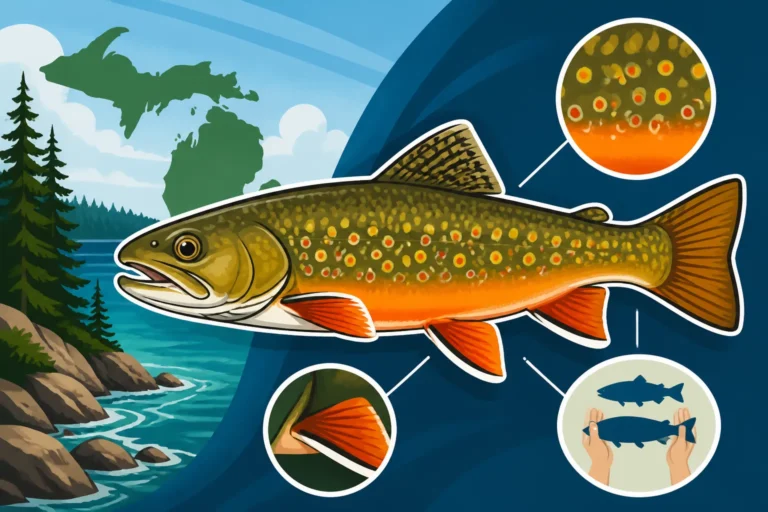
Identifying a splake can be tricky, as it often displays a mosaic of features from its parents. However, there are some key indicators that can help you distinguish it from a pure brook or lake trout. Generally, splake tend to be more torpedo-shaped than the robust, stocky lake trout, but more elongated than the chunky brook trout. Their tail fin is often a good clue: while a brook trout has a relatively square tail, and a lake trout has a distinctly forked tail, a splake's tail usually falls somewhere in between—slightly forked, but not as deeply as a pure lake trout.
In terms of coloration and spotting, splake can exhibit characteristics of both. You'll typically see light spots on a darker body, similar to a lake trout, but these spots might be more worm-like (vermiculations) on their back and dorsal fin, a trait inherited from the brook trout. Some splake will even show the vibrant red or orange spots with blue halos that are so characteristic of brook trout, particularly along their flanks. Their pectoral and pelvic fins might have a white leading edge, a classic brook trout feature. It's a bit like playing a fishy detective game out on the water! If you're really struggling, comparing them side-by-side with images of pure species can help. For a more detailed look at these subtle differences, check out How to Tell a Splake From a Lake Trout.
Why Were Splake Introduced to Michigan?
The introduction of splake into Michigan's waters wasn't by accident; it was a strategic decision by fisheries managers. The primary goal was to create a sport fish that could thrive in certain inland lakes where neither brook trout nor lake trout were performing optimally. Lake trout, for instance, need very cold, deep, oxygenated water, which limits their presence to only the deepest, coldest lakes and the Great Lakes. Brook trout, while beautiful, don't typically grow to a size that can sustain a robust sport fishery in larger lakes, and they prefer stream environments.
Splake were seen as a solution to fill an ecological niche. They grow faster than brook trout and are more aggressive feeders, making them more accessible and enjoyable for anglers. At the same time, they are more tolerant of warmer, less oxygenated waters than lake trout, allowing them to inhabit a broader range of inland lakes. This means more fishing opportunities for a popular type of game fish in areas that might otherwise have limited populations. These stocking programs are part of a broader strategy, which you can read about in What Is Splake Stocked for in Michigan.
Where to Find Splake in Michigan Waters
Knowing what a splake is just the first step; the real adventure begins when you try to find them. While they are a hybrid, their preferences for habitat often lean towards a balance of their parent species.
Preferred Habitats and Water Conditions
Splake generally favor cold, clear, deep-water lakes, but with a crucial difference from pure lake trout: they don't necessarily need the extreme depths and oxygen levels that true lakers demand. This makes them more available in many of Michigan's larger, deeper inland lakes, not just the Great Lakes. You'll often find splake congregating around underwater structures like humps, drop-offs, and points, especially those near cold-water inlets or spring-fed areas. They are opportunistic feeders, so areas with abundant baitfish, like smelt or shiners, will often hold good numbers of splake. Look for them in depths ranging from 20 to 60 feet, though they can certainly be found shallower or deeper depending on water temperature and food availability. In general, they're searching for that comfortable thermal zone.
Key Michigan Lakes Known for Splake Fishing
Michigan boasts several inland lakes where splake have been successfully stocked and offer excellent fishing opportunities. While specific "hot spots" can change with seasons and stocking efforts, some lakes consistently produce good numbers of splake. For instance, some of the deeper, cooler lakes in the northern Lower Peninsula and throughout the Upper Peninsula are prime splake territory. These might include lakes with a mix of rocky and sandy bottoms, and those with significant depths where they can find cooler water during the warmer months. Always check the latest Michigan fishing regulations or local DNR resources for specific stocking reports and lake-specific rules. While some splake might wander into the Great Lakes, their primary presence is generally in specific inland lakes targeted by stocking programs. For overall Great Lakes fishing information, you might find Michigan's Great Lakes Fishing Guide useful for context.
Splake Behavior Through the Seasons
Just like many other fish species, splake behavior shifts with the changing seasons, influencing where and how you might target them.
- Spring: As ice melts, splake become more active and can often be found in shallower waters, sometimes as shallow as 10-20 feet, especially near points, rocky shoals, or river mouths. They're keen to feed after a long winter and will readily chase baitfish. Trolling or casting spoons and stickbaits can be very effective during this time.
- Summer: As surface waters warm, splake retreat to deeper, cooler sections of the lake. They'll hug the thermocline (the layer where water temperature changes rapidly) or hold near underwater structures in 30-60+ feet of water. Downriggers, lead core line, or heavy jigs become essential to reach these depths. Early morning and late evening can still bring them shallower.
- Fall: Similar to spring, as water temperatures begin to drop and cool, splake will start to move shallower again, becoming more active and aggressive. This is a fantastic time for casting and trolling, as they actively feed to prepare for winter.
- Winter (Ice Fishing): Splake are a favorite target for ice anglers in Michigan. They can be found cruising under the ice at various depths, often relating to structure or baitfish schools. Jigging with spoons or small swimbaits, or setting up tip-ups with live bait, can be incredibly productive. For detailed information on winter angling, refer to the Michigan Ice Fishing Guide.
Fishing Techniques for Michigan Splake
Catching splake requires a blend of tactics, combining strategies used for both brook trout and lake trout. It's about adapting to their hybrid nature and habitat preferences.
Gear and Tackle Recommendations
Having the right gear is crucial for a successful splake outing. For open water, a medium-light to medium-action spinning or casting rod, 6 to 7 feet in length, is a versatile choice. Pair this with a reliable spinning reel spooled with 6-10 pound test monofilament or fluorocarbon line, or 10-20 pound braided line with a fluorocarbon leader. A good quality fishing reel can make all the difference, and you can find many excellent options on retailers like Amazon. When it comes to lures, splake are often quite aggressive. Spoons (like Little Cleos, Dardevles, or Krocodiles), stickbaits (such as Rapala, Smithwick, or Berkley Flicker Shads), and jigs tipped with a minnow or soft plastic are all excellent choices. For deeper summer fishing, consider heavier spoons or vertical jigs. Don't forget a sturdy landing net, as splake can put up a surprisingly strong fight! For more general gear advice, check out Best Rods and Reels for Michigan Fishing and Essential Gear for Michigan Steelhead Fishing.
Effective Methods for Open Water Fishing
There are several proven techniques for targeting splake during the open water seasons:
- Trolling: This is often the most effective method, especially for covering large areas and finding active fish. Use small to medium-sized spoons or stickbaits, varying your speed and depth until you find what works. Flat-lining can be effective in shallower spring and fall waters, while downriggers or lead core line are essential for reaching deeper splake in summer. Pay attention to your fish finder to locate schools of baitfish or thermal breaks.
- Casting: In spring and fall when splake are shallower, casting spoons, spinners, or stickbaits towards rocky points, drop-offs, and weed edges can be very productive. Cast out, let your lure sink to the desired depth, and retrieve with a varied pace to entice a strike.
- Jigging: When you've located splake on your fish finder, vertical jigging is a fantastic technique. Drop a heavy spoon or jig, often tipped with a piece of minnow, right down to their depth. Work the lure with sharp lifts and drops, pausing occasionally. This can be deadly, especially when fish are suspended.
Remember, splake can be finicky, so experimenting with different lure colors, sizes, and retrieve speeds throughout the day is key. Sometimes a subtle color on a clear day, or a bright, flashy option on an overcast one, can be the ticket.
Ice Fishing for Splake
Ice fishing for splake is incredibly popular in Michigan's colder months, offering a unique challenge and rewarding catches. The appeal is clear: you can target them effectively through the ice when they are often more concentrated.
- Jigging through the ice: Similar to open water jigging, this involves dropping a spoon or jig, often tipped with a minnow head or a wax worm, down to where the fish are holding. Many anglers use flashers or portable fish finders (many great compact ones are available on Amazon) to mark fish and monitor their activity, allowing for precise depth adjustments and lure presentations. Vary your jigging cadence, from aggressive rips to subtle quivers, until you find what triggers a bite.
- Tip-ups: Setting up tip-ups with live minnows is another highly effective method for splake. Position your bait at various depths, especially near the bottom or suspended in the water column where you've marked fish or found structure. The stationary bait can often tempt more wary splake.
- Hole Placement: Focus on structure—underwater points, humps, sharp drop-offs, and areas where baitfish are concentrated. Drilling a series of holes at different depths along a contour line can help you pinpoint where the splake are most active.
Always prioritize safety on the ice, checking ice thickness regularly and being aware of weather conditions.
| Feature | Splake | Lake Trout | Brook Trout |
|---|---|---|---|
| Parentage | Brook Trout x Lake Trout | Pure Lake Trout | Pure Brook Trout |
| Tail Fin Shape | Slightly forked | Deeply forked | Square or slightly notched |
| Body Shape | Elongated, torpedo-like | Robust, heavy-bodied | Stocky, shorter |
| Spotting | Light spots on dark body, often with vermiculations; some red/blue spots | Light spots on dark body, no red/blue spots, no vermiculations | Dark spots on light body, vibrant red/blue spots, strong vermiculations |
| Pectoral/Pelvic Fins | Often white leading edge | Usually without white edge | Distinct white leading edge |
| Preferred Depth | Mid-depths (20-60 ft), tolerates warmer water than lake trout | Deep, cold water (60-200+ ft) | Shallow, cold streams & rivers, some shallow lakes |
| Growth Rate | Faster than brook trout | Slow, but large overall | Moderate, smaller overall |
Michigan Splake Regulations and Conservation
As with any game fish in Michigan, understanding and adhering to regulations is not just a legal requirement but a vital part of conservation, ensuring these unique fish thrive for future generations.
Size and Possession Limits
The Michigan Department of Natural Resources (DNR) sets specific regulations for splake, which can vary by water body. These regulations typically include minimum size limits and daily possession limits. The purpose of a minimum size limit is to allow fish to reach maturity and spawn at least once before being harvested, contributing to the population's sustainability. Possession limits, on the other hand, manage the total number of fish an individual can keep. It is absolutely crucial to consult the current Michigan Fishing Regulations Every Angler Should Know before heading out on the water. These rules are subject to change and may have specific nuances for different lakes. You can often find the most up-to-date information on the Michigan DNR website or through their Michigan's DNR Hunt Fish App for Licenses and Reporting which is a handy tool.
Conservation Efforts and Management
Michigan's splake fishery is largely a product of active management by the DNR. This includes ongoing stocking programs, where young splake are raised in hatcheries and released into specific lakes. These efforts are carefully planned to enhance fishing opportunities while minimizing any potential negative impacts on native fish populations. Research is also a continuous process, monitoring splake populations, their growth rates, and their interaction with other species in the ecosystem.
As anglers, our role in conservation is equally important. Practicing responsible catch-and-release, especially for fish outside legal limits or those we don't intend to keep, helps maintain healthy populations. Using proper handling techniques, like wetting your hands before touching the fish and using tools to remove hooks quickly, significantly increases a released fish's chances of survival. By following regulations and being mindful stewards of our waters, we help ensure that the unique splake fishery remains a vibrant part of Michigan's angling landscape.
Disclaimer
This article is for general informational purposes only and does not constitute professional advice. Laws, prices and regulations vary by location and change over time. Consult a qualified professional for guidance on your specific situation.