How to Read River Flow for Steelhead Fishing
One of the biggest frustrations for Michigan steelhead anglers is showing up at a favorite river only to find the water is either raging like a torrent or barely a trickle, completely throwing off your game plan. Understanding river flow isn't just about knowing if the water is high or low; it's about predicting where those elusive chrome beauties will be, what they'll bite, and how you need to adjust your approach. This guide will walk you through exactly how to read Michigan river flow, transforming those unpredictable days into successful steelhead adventures.
Understanding the Basics of River Flow and Steelhead Behavior
River flow is the heartbeat of a river system, constantly changing and dictating everything from fish behavior to water clarity. For steelhead, these fluctuations are crucial. They aren't just swimming aimlessly; their entire existence is tied to finding comfortable lies, accessible food, and pathways to spawning grounds, all of which are directly influenced by the water moving around them.
How River Flow Impacts Steelhead Movement and Location
Think of a river as a highway for steelhead, but a highway with ever-changing speed limits and detours. When the water is at a "normal" flow, fish tend to spread out, holding in diverse locations from current seams to deeper runs. They're more likely to be actively feeding and migrating.
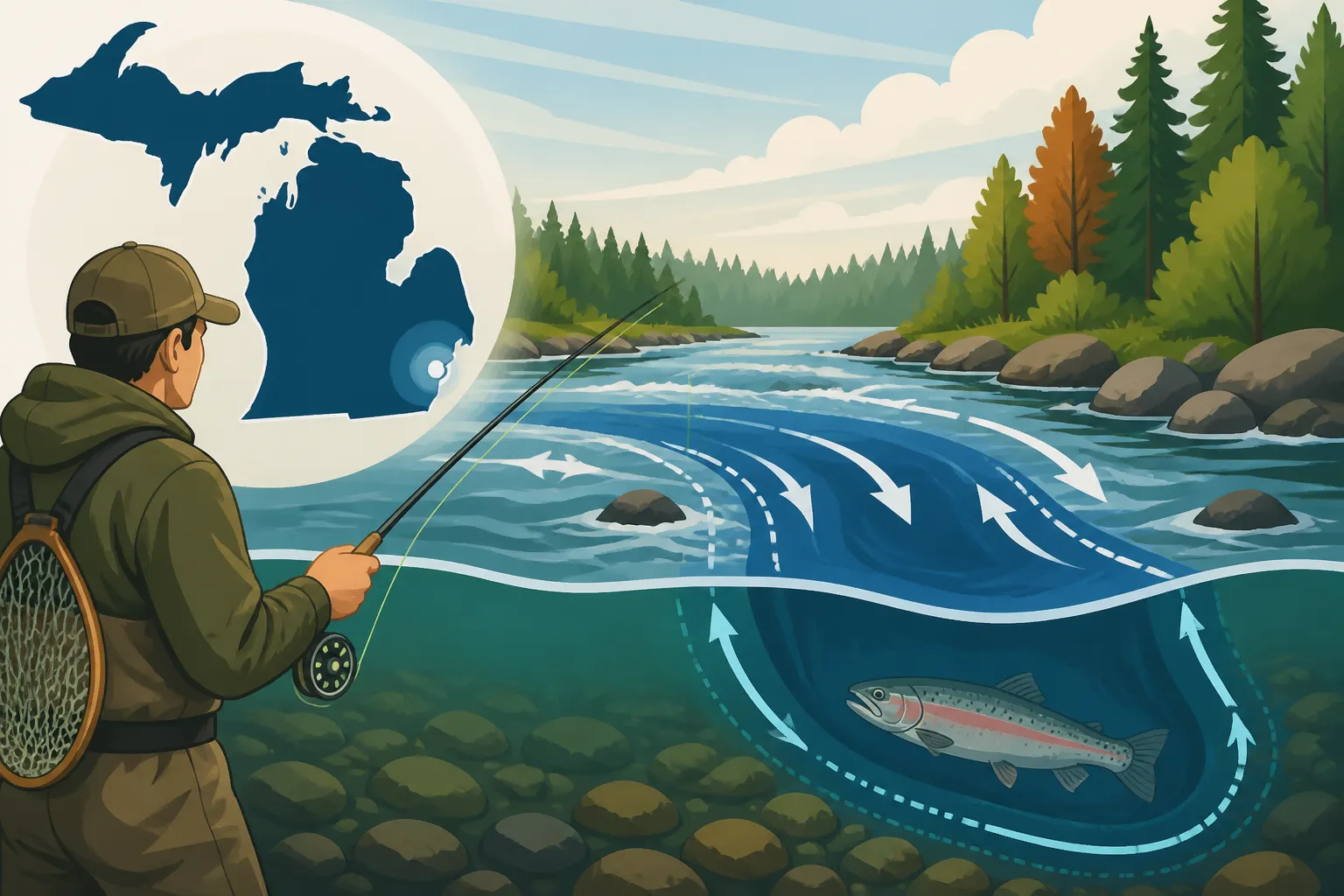
However, when the river rises, especially rapidly, it can turn into a muddy, fast-moving challenge. Steelhead, being smart fish, will seek refuge from the main current. This means they'll often move to the softer water on the inside bends, behind large obstructions like fallen trees or boulders, or into slower eddies. These spots provide a break from the relentless flow, allowing them to conserve energy. They might also move closer to the banks, in areas where the current is less powerful, often referred to as "soft edges." The sheer volume of water can also push them into areas that are normally too shallow, creating new holding lies.
Conversely, when the river gets too low and clear, it can make steelhead incredibly spooky. They become more visible to predators (including you!) and feel vulnerable. In these conditions, they tend to congregate in the deepest pools, under cut banks, or in heavily shaded areas where they feel secure. Their feeding activity might slow down, and they'll be far more selective about what they eat. You might find them stacked up in the longest, slowest runs, practically glued to the bottom. Understanding Michigan Steelhead Run Timing becomes even more critical in these conditions, as fish might hold in staging areas longer or push through faster if conditions allow.
The Ideal Flow Conditions for Michigan Steelhead
So, what's that sweet spot? Most seasoned anglers agree that ideal steelhead fishing conditions typically involve stable or slightly rising/falling flows after a period of high water has begun to recede. This "dropping and clearing" period is often prime. Why?
- Optimal Flow Speed: The current isn't so fast that fish have to fight it constantly, but it's strong enough to bring food past them.
- Good Water Clarity: The water isn't muddy, but it might have a slight stain or "color," which gives steelhead a sense of security while still allowing them to see your presentation. Gin-clear water can be tough.
- Temperature Stability: Stable flows often mean stable water temperatures, which are key for active fish. Sudden temperature drops (often associated with cold rains or snowmelt) can shut them down.
- Access to Food: Stable flows allow aquatic insects, baitfish, and other food sources to move more naturally, stimulating steelhead to feed.
When you're aiming to learn How to Fish for Steelhead in Michigan, knowing these ideal conditions is half the battle, because it helps you target the most productive days.
Key Factors Influencing Michigan River Flow
Michigan's rivers are dynamic systems, and their flow can change dramatically based on several environmental factors. It's not just random; there's always a reason for high water or low water, and understanding those reasons helps you predict future conditions.
Precipitation and Snowmelt: The Primary Drivers
The most obvious and impactful factors affecting river flow in Michigan are rainfall and snowmelt.
- Heavy Rainfall: A significant downpour, especially over a short period, can quickly turn a calm river into a raging torrent. The ground can only absorb so much water; the rest becomes runoff, swelling tributaries and main river channels. This often results in muddy, high water, pushing steelhead into slack water pockets.
- Prolonged Rain Events: Days of steady, moderate rain can cause a more gradual but sustained rise in river levels, which can be less disruptive than a sudden flash flood. This type of rise can sometimes trigger a strong bite as fish feel more secure and food is washed into the river.
- Spring Snowmelt: As winter transitions to spring, Michigan's substantial snowpack begins to melt. This can cause massive, sustained high water events in rivers that drain large land areas, especially those originating in the northern parts of the state or the Upper Peninsula. Rivers like the Manistee or Au Sable can see significant spring flows from snowmelt. This influx of cold water can sometimes slow fish activity initially, but as temperatures stabilize, it often kickstarts major steelhead runs. This is when anglers truly look forward to the opening of Michigan Fishing Season Dates and Rules for many species.
Keeping an eye on weather forecasts, particularly for prolonged rain or warming trends that could initiate snowmelt, is crucial for planning your steelhead trips. You might grab a new fishing journal from Amazon to jot down river conditions and weather patterns—it’s amazing how much you can learn over a few seasons.
Dam Releases and Tributary Contributions
While natural precipitation is a huge player, humans and geology also have their say.
- Dam-Controlled Rivers: Some of Michigan's premier steelhead rivers, like sections of the Muskegon River, are controlled by hydroelectric dams. Operators release water to generate power, manage flood control, or maintain specific reservoir levels. These releases can cause rapid and significant changes in river flow, sometimes several feet in just a few hours. This can be a blessing or a curse; a controlled release can draw fresh steelhead upriver, but an unexpected surge can make fishing dangerous or impossible. It's vital to check the hydro-power generation schedules for these rivers before heading out.
- Tributary Influx: Even on rivers without dams, smaller feeder creeks and tributaries can play a substantial role. A localized thunderstorm that hits a particular watershed can cause a minor tributary to blow out, sending a plume of muddy, high water into the main river system, affecting conditions downstream. Sometimes this localized influx can create a "fishing window" if it brings in fresh fish, but more often it means finding clearer water above the confluence.
Seasonal Changes and Their Effect on Flow
Michigan's distinct seasons bring predictable patterns of river flow:
- Spring: Dominated by snowmelt and spring rains, leading to generally high and often cold water. This is when Michigan's Spring Fishing Season Guide comes into full effect, with strong steelhead runs.
- Summer: Typically the period of lowest flows, especially if there's a prolonged dry spell. Rivers can become very clear and warm. Fish become more lethargic and seek cooler, deeper water.
- Fall: As autumn progresses, increased rainfall and cooler temperatures can lead to rising flows again, drawing in fresh runs of salmon and, later, the first push of fall steelhead. This is when anglers prepare for the Fall Steelhead Run in Michigan Rivers.
- Winter: Flows tend to stabilize once the ground freezes and major snowmelt is over, though mid-winter thaws can cause temporary rises. Rivers might become very clear, and ice formation can also affect flow dynamics. Anglers interested in How Water Temperature Affects Steelhead Runs might be particularly keen on these seasonal variations.
Practical Ways to Read River Flow on the Water
Okay, so you know what influences flow, but how do you actually interpret it when you're standing on the bank, ready to cast? This is where your observation skills really come into play.
Visual Cues: Interpreting Water Clarity, Speed, and Debris
Your eyes are your first and best tools for assessing river flow.
- Water Clarity: This is a huge indicator.
- Gin-Clear: Means very low flow, often after a prolonged dry spell or a period of stable, cold weather. Steelhead will be spooky, and you'll need to use lighter lines and more subtle presentations.
- Slight Stain/Color: Often the "perfect" clarity. The water has enough tint to give fish confidence but is clear enough for them to see your bait or fly. This suggests stable or slowly dropping flows.
- Stained/Milky Coffee: Indicates recent precipitation or significant snowmelt. Flows are likely moderate to high. Fish might be active but harder to spot.
- Chocolate Milk/Muddy: High, fast water, usually after heavy rains. Fishing will be very challenging, often requiring bright, large baits or lures to be seen. Fish will be hugging the banks and structure.
- Water Speed: Watch how quickly leaves, twigs, or foam float downstream.
- Crawling Pace: Low flow. Focus on deep pools and slow runs.
- Brisk Walk: Moderate, ideal flow. Fish can hold in a variety of places.
- Running Pace: High flow. Look for obvious slack water, eddies, and protected areas behind structure. This can be dangerous for wading, so always prioritize safety.
- Debris: The amount and type of debris can tell you a lot.
- Minimal Debris: Stable, usually lower flows.
- Leaves, Small Twigs: Recent rain or rising water, washing material from the banks.
- Large Branches, Logs, Whole Trees: Very high, potentially dangerous water. Steer clear of areas with heavy debris, as they indicate powerful currents and hazardous conditions.
Using River Gauges and Online Resources
Before you even leave the house, technology can give you a significant advantage.
- Online River Gauges: Government agencies often maintain real-time river gauges that measure water height (stage) and discharge (flow rate in cubic feet per second, or CFS). These gauges provide invaluable data. Look for trends: Is the river rising rapidly? Falling steadily? Is it cresting? A river that's dropping and clearing after a peak is often excellent. Conversely, a rapidly rising, muddy river is usually a sign to stay home or find another spot.
- Mobile Apps and Websites: Many fishing-specific apps or state DNR websites aggregate this gauge data into user-friendly formats. They can even provide historical data, allowing you to learn what flows are typically productive on your favorite stretch of river. For example, if a river usually fishes well between 500-800 CFS, and the gauge reads 2,000 CFS, you know it's high. You can often find a good selection of durable, waterproof cases for your phone on Amazon to protect it while checking these resources on the go.
- Checking Forecasts: Combine gauge data with weather forecasts. If the river is high but falling, and no more rain is predicted, conditions are likely to improve rapidly. If it's already high and more heavy rain is on the way, it's probably going to get worse before it gets better.
Shoreline and Bank Indicators
Once you're at the river, look for physical evidence of past and present water levels.
- High-Water Marks: Look for lines of dried leaves, grass, or fine debris high up on the banks or on trees near the water. These "bathtub rings" show you where the water level has been recently. If the current water level is well below these marks, the river is dropping. If it's near or above them, the river is high or rising.
- Exposed Rocks and Submerged Vegetation: A rocky stretch of river that's usually covered might be completely exposed during low flow. Conversely, vegetation that's normally above water might be completely submerged, indicating high water. Pay attention to how much river bottom you can see—more bottom usually means lower, clearer water.
- Bank Erosion: Freshly eroded banks can indicate a recent period of very high, fast water. This can also create new holding lies or remove old ones.
Adjusting Your Steelhead Strategy Based on Flow
Knowing the flow is just the first step; the real skill comes in adapting your fishing techniques and gear to match those conditions. This is where your experience and understanding of How to Fish for Steelhead in Michigan truly shines.
Tactics for High and Fast Water
When the river is up and ripping, steelhead seek shelter. Your job is to find them there and get your presentation into their strike zone without it being immediately swept away.
- Target Slack Water: Look for eddies behind large rocks, fallen trees, or sharp bends in the river. Fish will congregate here, expending minimal energy.
- Fish Close to the Banks: The current is almost always slower right along the shoreline. Often, fish will be tucked in tight to the bank, especially under overhanging cover or cut banks.
- Heavier Weights and Larger Baits: To get your offering down to the fish in fast water, you'll need more weight. Bigger split shot, heavier jig heads, or larger pencil leads are essential. Larger, brighter baits or lures (like brightly colored spawn bags or large plugs) can also be more easily seen in turbid water. You can easily order new split shot or heavier jig heads from Amazon when you're preparing for a trip.
- Shorter Drifts: In fast water, your bait gets through the strike zone quickly. Focus on shorter, more controlled drifts in slower pockets.
- Safety First: High water can be incredibly dangerous. Wading becomes precarious. Always use a wading staff, wear a life vest, and consider fishing from the bank or only in very shallow, stable areas.
Strategies for Low and Clear Water
Low and clear conditions demand a completely different approach – stealth and finesse are key.
- Longer Leaders and Lighter Line: To avoid spooking fish, use longer leaders (8-12 feet or more) and reduce your main line test if possible. This makes your presentation look more natural. What Line Weight for Michigan Steelhead will be crucial here.
- Smaller, Natural Presentations: Downsize your baits or flies. Small beads (which can be rigged in specific ways to make them appear natural, though Is a Bead Considered an Artificial Lure for Michigan Trout? has specific rules), small spawn bags, natural-colored jigs, or subtle fly patterns will be more effective.
- Stealth and Distance: Avoid stomping around on the banks. Cast from a distance, wear drab clothing, and approach carefully. Polarized sunglasses are essential for spotting fish without being seen.
- Target Deep Pools and Shaded Areas: Fish will be seeking cover. Concentrate your efforts on the deepest parts of pools, under cut banks, and any shaded areas where they feel safe. Night fishing can also be productive in very clear conditions. A reliable headlamp for early mornings or late evenings on the water; Amazon has plenty of options to help with this.
Fishing Stable and Optimal Flow Conditions
When conditions are stable and optimal, you can often employ a wider range of techniques and expect fish to be more active and spread out.
- Cover More Water: Fish will be holding in prime lies across the river. You can effectively drift through runs, current seams, and riffles.
- Versatile Techniques: This is when methods like Float Fishing for Michigan River Steelhead or Centerpinning for Michigan Steelhead really shine, allowing for long, natural drifts. Fly fishing with nymphs or streamers also becomes highly effective.
- Experimentation: With more active fish, you have the luxury of experimenting with different baits, lures, and fly patterns to see what they prefer on that particular day.
Gear Considerations for Different Flows
Your gear setup should also evolve with the river conditions.
- Rods: For high water, a slightly longer, more powerful rod might help control your line in the current and handle heavier weights. In low, clear water, a more sensitive rod can detect those subtle takes from wary fish. Thinking about Best Rod Length for River Steelhead is important.
- Line: As mentioned, adjust line weight and leader length. Fluorocarbon leaders are excellent in clear water due to their low visibility.
- Wading Gear: Regardless of flow, reliable rain gear is essential, and you can find a huge selection on Amazon. A sturdy pair of wading boots, perhaps found on Amazon, can make a huge difference in changing flows, providing the grip and stability you need when wading in varying currents. A wading staff is non-negotiable for safety, especially if you're exploring new water or during higher flows.
Ultimately, reading river flow for steelhead fishing is an ongoing learning process. It combines scientific observation with a keen angler's intuition. By understanding the causes of flow changes, observing visual cues, and utilizing available data, you'll be well on your way to more consistently finding and catching Michigan's magnificent steelhead.
Disclaimer
This article is for general informational purposes only and does not constitute professional advice. Laws, prices and regulations vary by location and change over time. Consult a qualified professional for guidance on your specific situation.