Which Boats Need to Be Registered in Michigan
Trying to figure out which boats actually need to be registered in Michigan can feel like navigating a maze, especially if you're new to boating or just acquired a different type of watercraft. It’s not always as straightforward as "if it floats, register it," and the rules can sometimes catch even seasoned anglers off guard. This comprehensive guide is here to untangle all that confusion, helping you understand precisely what Michigan law requires for your particular vessel.
Understanding Michigan's Boat Registration Mandate
Michigan, with its incredible coastline on the Great Lakes and thousands of inland lakes and rivers, is a boater's paradise. But with all that water comes a responsibility to keep things organized and safe, which is why boat registration is a critical component of state law. It's not just about paying a fee; it's about identification, safety, and funding the very resources that make Michigan a top fishing and boating destination.
The Fundamental Rule: Motorized is the Key
At its core, Michigan's boat registration rule hinges almost entirely on one simple factor: whether your watercraft is propelled by machinery. If it has a motor, any motor, regardless of its size, horsepower, or how it's powered (gas, electric, even remote control), it almost certainly needs to be registered. This is the big differentiator. Think about it this way: if your vessel could, theoretically, move itself without you physically rowing, paddling, or sailing, then the state wants it registered.
This core rule clarifies many common questions right off the bat. A small fishing boat with a 5-horsepower outboard? Needs to be registered. A personal watercraft (PWC) like a Jet Ski? Absolutely. Even an inflatable dinghy with a tiny electric trolling motor attached falls under this umbrella. The Michigan Department of Natural Resources (DNR) uses this mechanical propulsion as the primary trigger for registration, ensuring that all powered vessels on public waters are identifiable.
Why the DNR Requires Registration
You might wonder why the state bothers with all this paperwork for something as simple as a boat. The reasons are actually quite practical and beneficial to all of us who enjoy Michigan's waters. Firstly, registration provides a unique identification number, similar to a license plate on a car. This is crucial for law enforcement, making it easier to track vessels in case of theft, accidents, or to enforce boating safety regulations. Imagine trying to report a hit-and-run on the water if no boats had identifying numbers – it would be a nightmare!
Secondly, the fees collected from boat registrations directly support the very systems that benefit boaters and anglers. These funds go towards things like maintaining public boat launches, improving water access, funding marine patrols, and even supporting fish stocking programs. So, while it might feel like just another fee, it's actually an investment in the health and accessibility of Michigan's aquatic resources. It's part of the cycle that allows us to enjoy our beautiful lakes and rivers for generations to come.
The Difference Between Registration and Titling
This is a point of confusion for many boat owners, and it's important to clarify. In Michigan, registration and titling are two distinct processes, though they often go hand-in-hand. Registration is what gives your boat its unique identification number (the "MI" numbers) and allows you to legally operate it on public waters. It’s renewed periodically, similar to your vehicle tabs.
Titling, on the other hand, establishes legal ownership of the vessel. Just like a car, your boat will have a title that proves you are the rightful owner. Most motorized boats over a certain length (typically 20 feet) are required to be titled in Michigan, but even smaller motorized boats and some sailboats can be titled. You'll typically get a title when you purchase a new or used boat, and this is a one-time process unless ownership changes. For deeper insight into this, you can check out Michigan Boat Titling Requirements Over 20 Feet.
Specific Watercraft That Absolutely Need to Be Registered
Let's dive into the types of boats that are almost universally required to be registered in Michigan. Understanding these categories will cover the vast majority of vessels you'll encounter on the water.
Any Vessel with Mechanical Propulsion
As we touched on earlier, this is the broadest category and encompasses a huge range of watercraft. If it has an engine, electric motor, or any other mechanical means of propelling itself through the water, it needs to be registered. This includes:
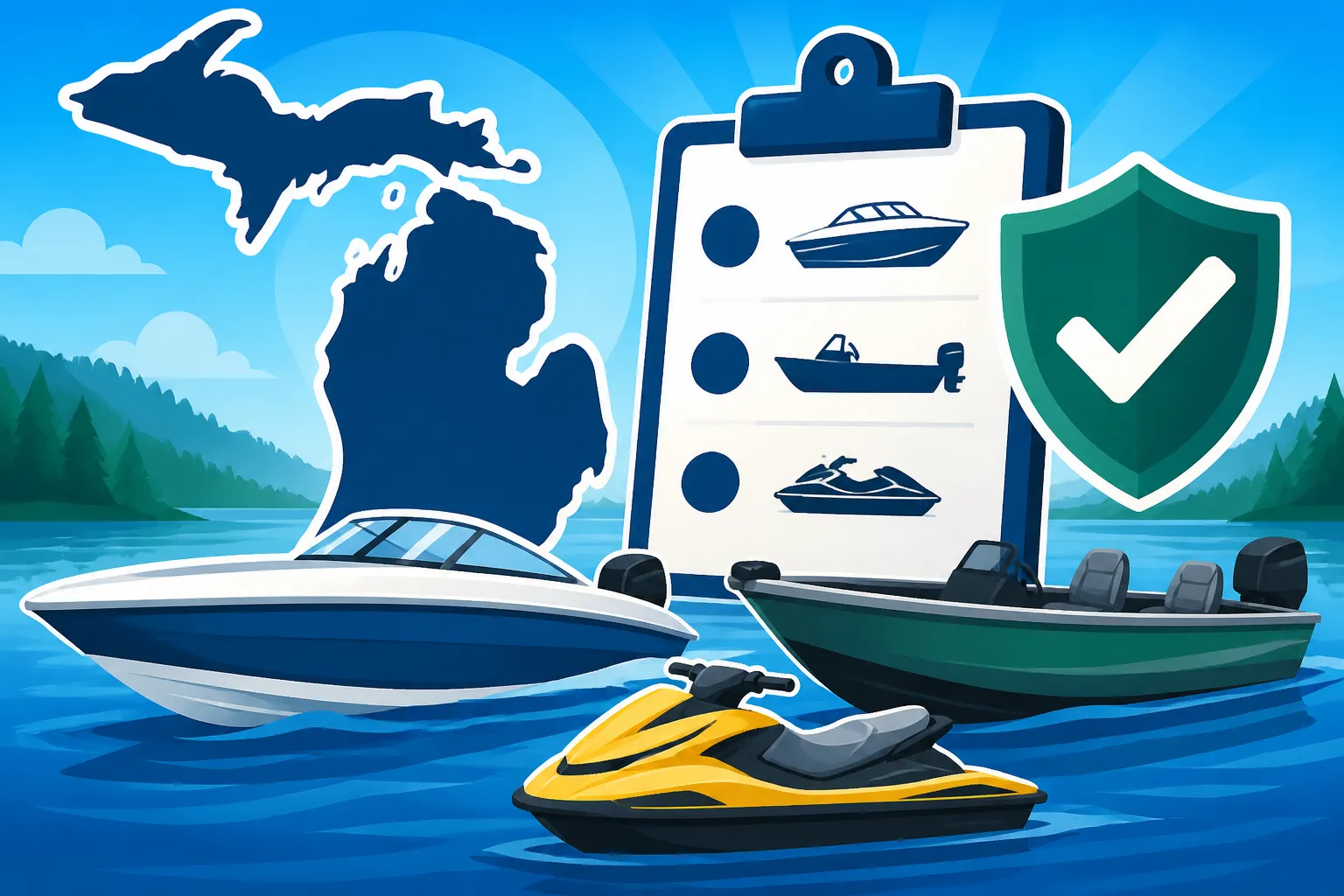
- Motorboats of all sizes: From small johnboats used on inland lakes to large cabin cruisers on the Great Lakes, if it's got an engine, it needs its MI numbers. This is true whether it's a gas-guzzling outboard, an efficient inboard, or even a brand-new electric motor system. No matter the horsepower, if it moves mechanically, it's in.
- Personal Watercraft (PWCs): Think Jet Skis, WaveRunners, Sea-Doos. These high-energy machines are definitely motorized and are always subject to registration. They're popular on many Michigan lakes, and their operators need to be fully compliant with all state laws, including registration.
- Boats with electric motors: This is a common sticking point. Many anglers use small electric trolling motors, often powered by a battery, to silently navigate shallow areas or hold position. Even though these are electric and often low horsepower, they are still considered mechanical propulsion by the state. So, if you're out there with your canoe or kayak and decide to add an electric motor, congratulations, your vessel now needs to be registered. This is a surprise for many who thought only gasoline engines counted! For more details, see Does a Boat With a Trolling Motor Need to Be Registered?.
The key takeaway here is not to assume a small motor or electric power grants an exemption. The DNR's definition of "mechanical propulsion" is quite encompassing.
Sailboats Over a Certain Size and Their Unique Rules
While many sailboats rely purely on wind power, Michigan does have specific rules for larger sailboats. Generally, sailboats that are 16 feet or longer in length must be registered, even if they never use an auxiliary motor. This rule acknowledges that larger sailboats, due to their size and potential speed, have a greater presence on the water and fall under the same identification needs as larger motorized vessels.
However, there's a nuance here. If a sailboat, regardless of its length, is equipped with any kind of motor (even a small auxiliary one for getting in and out of harbors), then it must be registered, just like any other motorized vessel. So, if you have a 14-foot sailboat that occasionally uses a small outboard to navigate a calm marina, it needs to be registered. If you have a 20-foot sailboat that is purely wind-powered, it also needs to be registered due to its length. Always err on the side of caution and check the official regulations for your specific vessel.
Watercraft Used for Commercial Purposes
This category is fairly straightforward but incredibly important. Any boat, regardless of its size, propulsion type, or typical registration requirements, that is used for commercial purposes in Michigan absolutely must be registered. This includes:
- Charter fishing boats: If you're running a business taking clients out fishing on the Great Lakes or an inland lake, your vessel needs to be registered, often under specific commercial classifications. This ensures accountability and safety for paying customers.
- Tour boats: Any vessel used to give tours, whether it's a scenic cruise on Lake Michigan or a historical tour on a river, falls under this commercial umbrella.
- Boats used for research or other services: If your boat is employed in scientific research, commercial transport, or any other paid service, it will need to be properly registered.
The rationale here is not just about identification but also about regulatory oversight. Commercial operations often have additional safety requirements and inspections, and proper registration is the first step in ensuring these standards are met. This also often ties into specific licenses and permits that the commercial operator must hold, beyond just the boat's registration.
Common Exemptions to Michigan's Registration Rules
Now that we've covered what definitely needs registration, let's look at the boats that often don't, which can be a huge relief for many casual users of Michigan's beautiful waters.
The World of Unmotorized Watercraft
This is where many paddlers and casual users find themselves. Generally speaking, if your watercraft is propelled solely by human power or wind, and it doesn't meet the length requirement for sailboats, it is exempt from registration in Michigan. This includes:
- Kayaks and Canoes: These increasingly popular vessels, whether for fishing, recreation, or touring, do not require registration as long as they are unmotorized. This is fantastic news for those who love the peace and quiet of paddling Michigan's rivers and lakes. You can pick up a fishing kayak from Bass Pro Shops or order a sturdy canoe from Amazon and be on the water without worrying about license plates. However, remember the caveat: slap an electric motor on it, and you're back in registration territory. For more details on this, explore Do Kayaks Need to Be Registered in Michigan?.
- Paddleboards (SUPs): Stand-up paddleboards, which have exploded in popularity, are also considered unmotorized and do not require registration. They offer a great way to enjoy the water, and their exemption keeps things simple for participants.
- Rowboats and Dinghies (without motors): If you have a classic rowboat or a small dinghy that you propel solely with oars, it does not need to be registered. It’s all about that lack of mechanical assistance.
- Sailboards/Windsurfers: These lean-to-sail vessels are also exempt, falling under the unmotorized, wind-propelled category, much like smaller sailboats.
This exemption makes getting on the water with these types of vessels incredibly accessible, reducing bureaucratic hurdles and allowing more people to enjoy Michigan's vast aquatic resources with minimal fuss.
Small Boats Serving Larger Registered Vessels
Michigan law also provides an exemption for small, unmotorized boats that are used as tenders for a larger, properly registered or documented vessel. Imagine a large yacht on Lake Michigan that carries a small dinghy on board to ferry passengers to shore. As long as that dinghy is unmotorized and used solely as a tender for the main vessel, it typically does not need its own registration.
The key here is its purpose and its lack of independent mechanical propulsion. If that dinghy suddenly gets a small motor, or if it's used extensively for fishing expeditions away from the main vessel, then its exempt status would be compromised. This exemption is really designed for the convenience of larger vessel owners who need a small ancillary craft for specific, limited tasks directly related to the main boat.
Out-of-State Visitors and Reciprocity
Michigan generally extends reciprocity to boats registered in other states. This means if you're visiting Michigan from, say, Ohio or Indiana, and your boat is properly registered in your home state, you typically don't need to register it again in Michigan for recreational use. This is a common courtesy among states and helps promote tourism and ease of travel for boaters.
However, there are usually limits to this. Reciprocity typically applies to temporary visits, often for a period of up to 60 or 90 consecutive days. If you establish residency in Michigan or plan to keep your boat in Michigan waters for an extended period beyond what reciprocity allows, then you would eventually need to transfer its registration to Michigan. It’s always best for non-residents to check the specific time limits and rules to ensure they stay compliant, especially if they are frequently visiting or staying for longer durations. Michigan welcomes visitors, but expects compliance after a certain timeframe. Nonresident Fishing in Michigan: What the Law Requires touches on similar principles for fishing licenses.
Navigating Niche Scenarios and Special Cases
Beyond the clear-cut rules, there are some specific situations that often lead to questions. Let's explore these common points of confusion and clarify them.
Trolling Motors: A Frequent Point of Confusion
This is perhaps one of the most common areas of misunderstanding. Many people assume that because a trolling motor is small, electric, and primarily used for slow-speed maneuvering or positioning, it doesn't count as "mechanical propulsion." This is a misconception in Michigan. As stated earlier, any boat with any motor, regardless of its size or power source (gasoline or electric), must be registered.
So, if you attach a small electric trolling motor to your canoe, kayak, or even a paddleboard for enhanced fishing or easier travel, your vessel is now motorized and requires registration. This catches a lot of anglers by surprise. They bought a non-motorized vessel, then added a convenient motor, inadvertently stepping into the registration requirement. It's not about horsepower; it's about the presence of mechanical power. Ensure you've got your registration in order if you're planning to power your vessel this way.
| Watercraft Type | Has Motor? | Needs Michigan Registration? | Common Examples |
|---|---|---|---|
| Fishing Boat | Yes | Yes | Bass boat, Jon boat, Walleye boat |
| Personal Watercraft | Yes | Yes | Jet Ski, Sea-Doo, WaveRunner |
| Sailboat (under 16 ft) | Yes | Yes | Small sailboat with auxiliary motor |
| Sailboat (16 ft+) | No | Yes (due to length) | Large wind-powered cruising sailboat |
| Kayak | Yes | Yes | Kayak with electric trolling motor |
| Canoe | Yes | Yes | Canoe with transom-mount electric motor |
| Rowboat | Yes | Yes | Rowboat with small outboard |
| Kayak | No | No | Recreational paddling kayak |
| Canoe | No | No | Paddled canoe |
| Paddleboard | No | No | Stand-up paddleboard |
| Rowboat | No | No | Classic oar-powered rowboat |
| Tender Boat (unmotorized) | No | No (if attached to registered vessel) | Small dinghy for a yacht |
Documented Vessels: A Different Kind of Paperwork
For very large vessels, particularly those used on the Great Lakes or for commercial purposes, there's another level of identification: federal documentation through the U.S. Coast Guard. Instead of state registration, these vessels receive a Certificate of Documentation, which includes a unique official number. This is typically for boats over a certain gross tonnage, and it serves as proof of nationality and ownership.
If your vessel is federally documented, it is generally exempt from state registration in Michigan. The federal documentation essentially takes precedence. However, even documented vessels still typically need to abide by Michigan's boating safety laws and regulations, and they might still need to display a Michigan use tax decal. This is a specialized area usually reserved for very large recreational vessels or commercial fleets, so most recreational anglers won't deal with federal documentation.
Other Minor Exceptions and Temporary Use
There are a few other minor exceptions or temporary situations worth noting:
- Boats on private waters: If your boat is exclusively used on private property, like a pond on your own land that has no public access, it generally does not need to be registered. The moment it touches public waters, however, the rules apply.
- Vessels owned by the U.S. government: Boats owned and operated by the federal government are typically exempt from state registration.
- Lifeboats: Dedicated lifeboats that are carried aboard another vessel are also generally exempt.
For short-term testing or demonstrations by dealers, there are usually specific temporary permits or dealer registration plates available, but these are for very limited circumstances and not for general recreational use. Always confirm with the Michigan DNR if you're unsure about a specific, unusual situation.
Your Guide to the Michigan Boat Registration Process
Once you've determined that your boat needs to be registered, the next step is actually going through the process. It's not overly complicated, but knowing what to expect can save you a lot of hassle.
Step-by-Step: How to Register Your Boat
The process of registering your boat in Michigan typically involves a few key steps:
- Gather Your Documents: You'll need proof of ownership, which could be a manufacturer's statement of origin (for new boats), a bill of sale (for used boats), or a previous title/registration. You'll also need personal identification.
- Visit a Secretary of State Office or Online: While the DNR handles the regulations, actual registration is typically done through the Michigan Secretary of State. You can visit one of their branch offices in person, or for renewals and some initial registrations, you might be able to complete the process online. The Secretary of State website is often the quickest way to find specific requirements and forms.
- Pay the Fees: There will be a registration fee, which varies depending on the length of your vessel. These fees contribute to Michigan's waterways. For a breakdown of potential costs, check out Michigan Boat Registration Cost and Renewal.
- Receive Your Registration and Decals: Once processed, you'll receive a registration certificate, your official Michigan registration numbers (starting with "MI"), and validation decals. The registration is valid for three years, expiring on March 31st of the third year. This means you'll need to remember Michigan Fishing License Renewal Each Spring and your boat registration too!
It's a fairly streamlined process, but having all your paperwork in order beforehand will make it much smoother. Many people find it easiest to do it in person the first time to ensure everything is correct, then use online options for subsequent renewals.
The Critical Details: Numbers, Letters, and Decals
Getting your registration doesn't end with receiving the paperwork; you also have responsibilities for displaying your identification correctly.
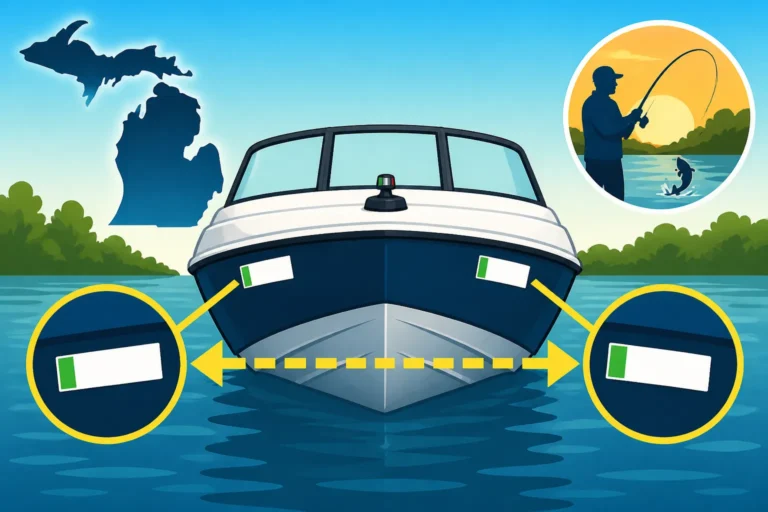
- Registration Numbers: Your "MI" numbers must be clearly displayed on both sides of the forward half of your boat. These numbers must be block characters, at least three inches high, and in a contrasting color to the hull. There should be a hyphen or equivalent space between the two letters and the four numerals, and another between the four numerals and the two letters that follow (e.g., MI-1234-AB). This ensures they are easily readable by marine law enforcement. Detailed guidance on placement can be found in Where to Display Michigan Boat Registration Numbers.
- Validation Decals: Along with your registration numbers, you'll receive small validation decals that indicate the current registration period. These decals must be affixed on each side of the vessel, within six inches of and directly behind the "MI" registration number. Again, proper placement is key to avoiding issues with enforcement officers. For more specific instructions, refer to Michigan Boat Registration Decal Placement.
- Registration Certificate: You must carry your current registration certificate on board the vessel whenever it is in operation. This is similar to carrying your driver's license in your car. It's your proof that your boat is legally registered.
Incorrectly displaying your numbers or decals, or not having your registration on board, can lead to fines and other penalties, so pay close attention to these details!
When and How to Renew Your Registration
Michigan boat registrations are valid for a three-year period, expiring on March 31st. You'll typically receive a renewal notice in the mail or digitally before your registration expires. It’s your responsibility to ensure it’s renewed on time, even if you don't receive a reminder.
Renewing your registration is generally much simpler than the initial process. You can often do it:
- Online: The Michigan Secretary of State website provides an easy online renewal portal. This is often the most convenient option for many boat owners.
- By Mail: You can mail in your renewal form and payment.
- In Person: Visit any Secretary of State branch office.
Timely renewal is crucial. Operating a boat with an expired registration is just as illegal as operating an unregistered boat, and it carries similar potential penalties. Setting a reminder on your phone or marking your calendar for early spring is a good practice to ensure you're always compliant before the main boating season kicks off.
Consequences of Non-Compliance
It's easy to overlook paperwork, but ignoring boat registration in Michigan can lead to some unpleasant consequences that no boater wants to face.
Penalties for Unregistered Boats
Operating an unregistered boat on Michigan waters is a violation of state law. If you're stopped by the DNR or local marine patrol and your boat isn't properly registered, you could face:
- Fines: The most common penalty is a monetary fine. The amount can vary depending on the specifics of the violation and whether it's a first offense, but it's an expense that could easily be avoided.
- Court Appearances: In some cases, especially for repeat offenses or if other violations are present, you might be required to appear in court.
- Delayed Boating: At the very least, you'll likely be ordered off the water until you can prove proper registration. This can ruin a fishing trip or a fun day out with family. Imagine driving all the way to a fantastic spot like Lake St. Clair for some bass fishing, only to be told you can't launch your boat because your registration is expired!
It’s simply not worth the risk. The small amount of effort and cost involved in proper registration pales in comparison to the potential legal trouble and disruption to your boating plans. For insights on what happens if you fish without the right paperwork, you can review What Happens if You Fish in Michigan Without a License for a related context.
Safety and Enforcement on Michigan Waters
Beyond the legal penalties, boat registration is fundamentally tied to safety on our waterways. When a boat is registered, it's identifiable. This identification is critical in emergencies, such as:
- Accidents: In the event of a collision or other accident, registered numbers help law enforcement identify the vessels involved and investigate effectively.
- Search and Rescue: If a boat goes missing or is involved in a distress situation, having a registered number makes it much easier for rescue teams to track and identify the vessel, potentially saving lives.
- Theft: Sadly, boat theft does occur. Registered numbers are a vital tool for recovering stolen vessels and prosecuting offenders.
Marine patrol officers, whether from the DNR or local sheriff's departments, are out on the water to ensure everyone is safe and compliant. They check for proper registration, safety equipment, and adherence to boating laws. While their presence might sometimes feel like an interruption, they are essential for maintaining order and protecting both boaters and the environment. Understanding and following the rules, including boat registration, is a sign of a responsible boater and contributes to a safer, more enjoyable experience for everyone on Michigan's waters.
Disclaimer
This article is for general informational purposes only and does not constitute professional advice. Laws, prices and regulations vary by location and change over time. Consult a qualified professional for guidance on your specific situation.