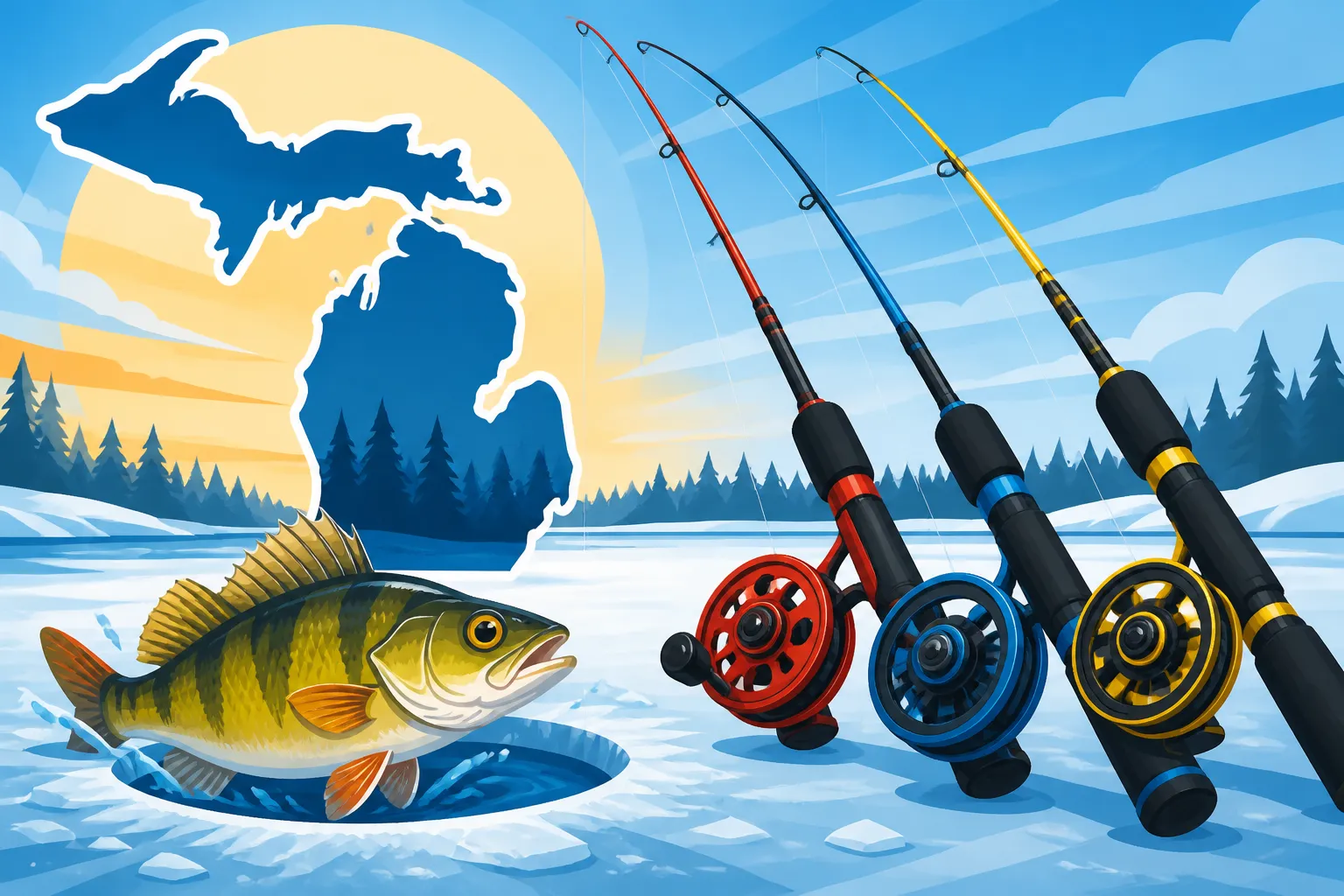
Best Ice Fishing Rods for Cold-Weather Anglers
There's nothing quite like the chill of a Michigan winter, and for many anglers, that means it's time to hit the hard water. But battling the elements and tricky fish under the ice requires specialized gear, and if you've ever tried to use your summer spinning rod for ice fishing, you know the frustration of frozen guides, a limp tip that can't detect a bite, and a handle that offers no real feel. This comprehensive guide is here to walk you through everything you need to know about selecting the best ice fishing rods for cold-weather angling, ensuring you're well-equipped for success on Michigan's frozen lakes.
The Unique Demands of Michigan Ice Fishing
Ice fishing isn't just regular fishing with a hole in the ice; it's an entirely different sport that presents its own set of challenges. From the freezing temperatures that can wreak havoc on your gear to the subtle bites of sluggish fish, your rod needs to be specifically designed to handle these conditions. Ignoring these unique demands often leads to missed opportunities and a less enjoyable experience out on the ice.
Why Regular Rods Just Won't Cut It
Imagine trying to jig a tiny panfish lure with a 7-foot medium-heavy bass rod. It's clunky, offers no sensitivity, and makes subtle movements nearly impossible. Now, add sub-freezing temperatures, which make standard guides freeze solid, your line stick, and the rod blank stiff and unresponsive. That's essentially what happens when you try to use a conventional open-water rod for ice fishing. These rods are simply too long and too flexible in the wrong places, designed for casting distance and fighting larger, more active fish in open water. Their guides are often too small, quickly icing over and preventing your line from flowing freely.
Furthermore, traditional rods often lack the specific blank materials and tapers needed to transmit the faint "tick" of a perch mouth or the delicate inhale of a walleye under a foot of ice. You need a rod that can offer precise control in a very small area, often directly over your target, and one that won't become a frozen, unresponsive stick after an hour on the ice. Many experienced anglers, myself included, learned this the hard way through numb fingers and lost fish before investing in proper ice fishing gear. It’s a common rite of passage, but thankfully, one you can now bypass with the right information.
The Importance of Sensitivity in Frigid Conditions
Under a sheet of ice, fish tend to be less aggressive and their bites can be incredibly subtle. Sometimes, it's just a slight "mushy" feeling, or your line might just go slack for a second. If your rod isn't designed to pick up on these minute signals, you'll simply never know a fish was there. That's why sensitivity is paramount in ice fishing. The best ice rods are engineered to amplify even the slightest tap or weight change, sending that information directly to your hand.
This sensitivity comes from a combination of factors: the rod's blank material, its taper, and the quality of its components. Solid carbon or graphite blanks are excellent for transmitting vibrations, and a well-designed tip will flex just enough to show the bite without being overly soft and masking stronger takes. Think of it like trying to hear a whispered secret across a noisy room versus in a quiet library; a sensitive rod provides that quiet library experience, allowing you to detect what would otherwise be lost in the "noise" of a less responsive setup. For many species like crappie or bluegill, differentiating between a brush against your line and an actual bite can make all the difference in filling your bucket. Michigan Ice Fishing Guide covers these scenarios in more depth.
Understanding Ice Rod Actions and Powers
Just like open-water rods, ice fishing rods come in various actions and powers, and understanding the difference is crucial for choosing the right tool for the job. These two characteristics dictate how the rod bends and how much force it can handle, directly impacting your ability to detect bites and fight fish effectively. A mismatched rod can lead to anything from lost fish to a completely unfulfilling day on the ice.
Rod Action: Fast, Medium, or Slow?
Rod action describes where along the blank a rod will flex when pressure is applied. It dictates how quickly the rod tip returns to its original position after being bent.
- Fast Action: A fast-action rod flexes primarily in the top third or less of the blank. This design offers excellent sensitivity because the tip is very responsive, making it ideal for detecting light bites. It also provides a quick hook set because the power is concentrated closer to the tip. This is often the preferred choice for finesse presentations, especially when targeting finicky panfish or light-biting walleye. However, the stiffer blank can sometimes tear hooks out of soft-mouthed fish if you set the hook too aggressively.
- Medium Action (or Moderate-Fast): These rods flex in the upper half of the blank, offering a good balance between sensitivity and a forgiving bend. A medium action rod is a fantastic all-around choice for many ice fishing scenarios, providing enough feel for subtle bites while having enough give to absorb head shakes and prevent hooks from pulling out. It’s a versatile option if you plan to target a variety of species and don't want to carry a dozen different rods.
- Slow Action (or Moderate/Full): A slow-action rod bends evenly throughout its entire length, from tip to butt. While less common for active jigging, these rods excel at protecting light lines and providing a more "parabolic" bend that cushions the fight. They are often used for dead sticking or fishing with tip-ups, where a visual indication of a bite is the primary goal, or for fighting larger fish on lighter lines where a softer, more forgiving rod can prevent break-offs. They don't offer the same crisp sensitivity for detecting jigging bites, but for specific techniques, they are indispensable.
Rod Power: Ultra-Light to Heavy Duty
Rod power refers to the lifting strength of the rod, essentially how stiff the blank is. It's about how much resistance the rod can put on a fish without breaking.
- Ultra-Light (UL): These are extremely delicate rods, perfect for tiny lures, light lines (1-4 lb test), and notoriously subtle biters like crappie, bluegill, and smaller perch. The rod will bend significantly under even a small fish, maximizing the fight. If you're focusing on panfish, an ultra-light rod is absolutely essential for feeling those nearly imperceptible takes.
- Light (L): A step up from ultra-light, light power rods handle slightly larger panfish, medium-sized perch, and smaller trout. They can manage lines up to about 6 lb test and slightly heavier jigs or small spoons. This is a very popular power rating for all-around panfish and even light walleye applications where bites are very soft.
- Medium-Light (ML): This is a true workhorse power for many Michigan anglers. Medium-light rods are excellent for larger perch, walleye, and even smaller northern pike. They offer a good blend of backbone for fighting fish and sensitivity for detecting bites. You can typically use 6-10 lb test line with these rods. Many anglers choose a medium-light rod for its versatility on lakes like Houghton Lake or Saginaw Bay.
- Medium (M): Medium power rods are built for larger walleye, small to medium pike, and decent-sized lake trout. They provide significant backbone for powerful hook sets and controlling larger fish, and can handle lines up to 12-15 lb test. This is a solid choice for those who are specifically targeting larger game fish through the ice. Ice Fishing Techniques for Michigan Walleye often call for this power range.
- Medium-Heavy (MH) / Heavy (H): These are the beasts of the ice fishing world, designed for trophy pike, muskie, and big lake trout found in Michigan’s deeper, colder waters. They have immense lifting power, can handle heavy lines (15-30+ lb test), and are meant to subdue powerful fish. While they lack the finesse for panfish, they are critical for preventing break-offs when a true monster hits your line. If you're heading out for How to Catch Northern Pike Through the Ice, a heavy rod is a must.
Here's a quick comparison of rod power and action for common Michigan ice fishing targets:
| Target Species | Recommended Rod Power | Recommended Rod Action | Ideal Line Weight (approx.) | Typical Lure Weight (approx.) |
|---|---|---|---|---|
| Bluegill, Crappie | Ultra-Light | Fast to Moderate-Fast | 1-4 lb test | 1/64 – 1/16 oz |
| Perch (medium) | Light | Fast | 2-6 lb test | 1/32 – 1/8 oz |
| Walleye (average) | Medium-Light | Fast to Moderate-Fast | 4-10 lb test | 1/16 – 1/4 oz |
| Walleye (large) | Medium | Moderate-Fast | 8-15 lb test | 1/8 – 3/8 oz |
| Northern Pike | Medium-Heavy to Heavy | Moderate | 10-20 lb test | 1/4 – 1 oz+ |
| Lake Trout (large) | Heavy | Moderate | 15-30 lb test | 1/2 oz – 2 oz+ |
Key Features to Look For in an Ice Fishing Rod
Beyond action and power, several other features contribute significantly to a rod's performance and your overall comfort on the ice. Overlooking these details can lead to frozen hands, snagged lines, and a frustrating experience that might cut your day short. When you're out there in freezing temperatures, every little design choice makes a difference.
Handle Materials and Ergonomics
The handle of your ice rod is your primary point of contact, and in cold weather, its material and design are crucial for both comfort and sensitivity.
Traditional cork handles are a favorite among many anglers for their warmth and natural feel. Cork remains relatively warm to the touch, even in sub-zero temperatures, preventing that jarring cold sensation you get from bare metal or dense foam. It also transmits vibrations exceptionally well, allowing you to feel those subtle bites more clearly. The natural texture provides good grip, even with wet gloves.
EVA foam handles are another popular option. They are often more durable than cork, less prone to chipping or denting, and still offer good insulation from the cold. Many modern ice rods, particularly those found at retailers like Bass Pro Shops, feature ergonomically designed EVA handles that fit comfortably in the hand, reducing fatigue during long hours of jigging. Some rods even combine both materials, using cork for the main grip and EVA for accent or reinforcement. Regardless of material, look for a handle that feels good in your gloved hand and provides enough length to comfortably rest against your forearm or elbow if you're holding it for extended periods.
Guides and Reel Seats: Built for the Cold
Standard fishing rod guides, especially those with small inserts, are notorious for freezing up on the ice. Once ice forms inside the guide, your line stops flowing freely, making it impossible to jig effectively or reel in a fish. This is why specialized ice rod guides are so important. Look for rods with larger, single-foot, stainless steel guides that are designed to shed ice. Some high-end rods feature recoil guides, which are made of a flexible nickel-titanium alloy that springs back into shape even after being bent, and are virtually impervious to ice buildup.
Reel seats also need to be robust and functional in the cold. Many ice rods forgo traditional screw-down reel seats in favor of simple, lightweight tape-wrapped or band-style reel seats. These designs reduce metal-to-skin contact, which can be painfully cold, and allow for quick reel changes. If a rod does have a screw-down seat, ensure it's made of a durable, corrosion-resistant material and that the threads are coarse enough not to seize up when frozen. A good reel seat should hold your reel securely without adding unnecessary weight or bulk, ensuring a balanced setup even with thick gloves on. What Gear Do You Need to Ice Fish in Michigan offers a broader look at complementary equipment.
Rod Length: A Crucial Consideration
Ice rods are significantly shorter than open-water rods, typically ranging from 18 to 36 inches, though some specialized models might be slightly longer. This shorter length is not arbitrary; it's a deliberate design choice that enhances control and sensitivity in the close quarters of an ice shanty or while sitting on a bucket.
- Short Rods (18-24 inches): These are ideal for fishing inside smaller shelters or where space is limited. They offer maximum control over tiny jigs and are incredibly sensitive, perfect for panfish. The shorter length means less "swing" in your jigging motion, allowing for very precise lure movements right under your hole.
- Medium Rods (25-30 inches): This is the most versatile length for many anglers. It provides a good balance of sensitivity, control, and fighting power. These rods are comfortable to use both inside and outside of shelters and are well-suited for targeting a range of species from large perch to walleye. If you're only getting one rod, this length is often a good starting point.
- Longer Rods (31-36+ inches): While still relatively short compared to open-water rods, these longer ice rods offer a bit more leverage for fighting larger fish and can provide a slightly wider jigging sweep. They are often preferred for larger species like pike or lake trout, or when fishing outside in the open where a little extra reach might be beneficial. However, they can be cumbersome in a small pop-up shelter. Consider your primary target species and fishing environment when choosing rod length.
Matching Your Rod to Michigan Fish Species
Michigan offers a fantastic array of fish species that can be targeted through the ice, each with its own feeding habits and fighting characteristics. A truly successful ice angler understands that a "one-size-fits-all" rod simply won't cut it. Matching your rod's power and action to your target species is paramount for both detecting bites and effectively landing fish.
Panfish Perfection: Ultra-Light and Sensitive
When you're chasing Michigan's prolific panfish—bluegill, crappie, and smaller perch—sensitivity is king. These fish often have incredibly subtle bites, sometimes just inhaling a tiny jig without any aggressive tug. An ultra-light (UL) or even extra ultra-light (XUL) rod with a fast or moderate-fast action is your best friend here. These rods are designed with extremely sensitive tips, often made of a flexible material like fiberglass or carbon fiber, that will visually telegraph even the slightest twitch or "lift" bite.
Imagine sitting in your shanty on Lake St. Clair, targeting crappie. You're using a small tungsten jig tipped with a wax worm. A stiff rod would leave you guessing, but a sensitive UL rod will show a gentle dip in the tip, or even just a slight straightening of a previously bowed line. This visual cue, combined with the rod's ability to transfer minute vibrations to your hand, allows you to detect bites you'd otherwise miss. These rods typically handle lines from 1 to 4 lb test, which is crucial for getting those tiny jigs down and presenting them naturally. Using anything heavier often spooks these wary fish. How to Catch Perch Through the Ice in Michigan often details this level of finesse.
Walleye and Perch Power: Versatility is Key
Moving up to larger perch and the ever-popular walleye, you'll need a rod with a bit more backbone, but without sacrificing too much sensitivity. A light (L) to medium-light (ML) power rod with a fast action is usually the sweet spot. This combination provides enough power to drive a hook through a walleye's bony mouth and control its head shakes, while still offering the sensitivity needed to detect their often-light bites.
Walleye, especially in colder water, can be surprisingly finicky. Sometimes they mouth the bait, or simply "load" the rod tip, rather than delivering a distinct strike. A fast-action tip on a medium-light blank will show these nuanced bites, allowing you to react quickly. These rods can comfortably handle 4-10 lb test line and are suitable for jigging spoons, lipless crankbaits, or larger tungsten jigs. The versatility of a medium-light, fast-action rod makes it a go-to for many anglers hitting popular walleye spots like Saginaw Bay or Muskegon Lake. For instance, an angler could pick up a quality medium-light rod at Amazon or a local Bass Pro Shops and be well-equipped for most walleye scenarios. How to Catch Walleye Through the Ice in Michigan delves into the specific gear choices for these sought-after fish.
Pike and Lake Trout: Heavy Hitters Need Strong Rods
When you're chasing Michigan's toothy northern pike or deep-dwelling lake trout, you're entering big fish territory, and your rods need to be up to the challenge. For these species, a medium-heavy (MH) or heavy (H) power rod with a moderate to fast action is essential. These rods are built with robust blanks that can withstand powerful runs and heavy head shakes, preventing the fish from breaking your line or snapping your rod.
Pike often hit aggressively, but their sheer power demands a rod with significant lifting strength. Lake trout, especially large ones, pull hard and dive deep, requiring a rod that can absorb that force over an extended fight. These rods typically handle heavier lines, from 10-30 lb test, and are designed for larger lures like big spoons, tube jigs, or dead bait under a tip-up. While sensitivity isn't as critical for detecting their often-aggressive strikes, enough backbone to set a big hook and muscle a heavy fish out of a 10-inch hole is paramount. You wouldn't want to bring a panfish rod to a pike fight, or you'll quickly be heading home with a broken rod and a story of "the one that got away." Best Ice Fishing Techniques for Michigan Lakes highlights how these powerful rods fit into a successful strategy.
Types of Ice Fishing Rods: A Closer Look
As you explore the world of ice fishing rods, you'll encounter various constructions and purchasing options. Understanding the differences between solid and tubular blanks, and deciding whether to buy a combo or separate components, can significantly impact your fishing experience and budget. Each choice has its merits depending on your specific needs and how often you hit the ice.
Solid Carbon vs. Tubular Blanks
The blank, or main body, of an ice fishing rod is its heart, and its construction method dictates much of the rod's performance.
- Solid Blanks: Many high-quality ice rods feature solid carbon (graphite) or fiberglass blanks. Solid carbon blanks are incredibly sensitive, transmitting even the lightest bites directly to your hand. They also tend to be very durable, capable of bending deeply without snapping, which is a huge advantage when battling a strong fish in a tight space. Fiberglass solid blanks, while less sensitive than carbon, are exceptionally tough and offer a more parabolic (slower) bend, which can be great for absorbing shock and preventing hooks from pulling out, especially when dead sticking with a very light line. The inherent density of solid blanks often contributes to their superior sensitivity and cold-weather performance. The trade-off is often a slightly heavier feel compared to tubular options.
- Tubular Blanks: Similar to open-water rods, some ice rods are made with tubular blanks, which are hollow. These rods tend to be lighter weight and can have a faster action, making them responsive for quick jigging motions. Tubular graphite blanks can still offer good sensitivity, but they may not be quite as robust as solid blanks when it comes to extreme stress or accidental impacts in a crowded shanty. They can sometimes be more prone to breaking if twisted or stressed incorrectly. For anglers prioritizing a very light setup for active jigging, especially for walleye or larger panfish, a well-designed tubular graphite rod can be an excellent choice. However, when selecting one, pay close attention to the wall thickness and overall quality of construction to ensure it can stand up to the rigors of ice fishing.
Combos vs. Individual Rods
Deciding whether to buy a rod and reel as a pre-assembled combo or to purchase them separately is a common dilemma for anglers, especially those just getting into ice fishing.
- Combos: Ice fishing combos are often an attractive option, particularly for beginners or those looking for a budget-friendly way to get started. They typically pair a rod and reel that are matched in terms of power, action, and size, providing a balanced setup right out of the box. Many popular brands offer combos that are great for general panfish or walleye fishing. The convenience is undeniable – you pick it up, spool it with line, and you're ready to fish. However, the components in a combo might not always be top-tier. The reel might be a basic model, and the rod's sensitivity or durability might be compromised to meet a certain price point. For casual anglers or those needing multiple setups quickly, buying a few combos from a sporting goods store or even a big online retailer like Amazon can be very efficient.
- Individual Rods and Reels: For serious ice anglers or those targeting specific species, buying individual rods and reels offers a significant advantage: customization. You can select a high-performance rod blank with the exact action and power you need, then pair it with a reel known for its smooth drag and cold-weather performance. This allows you to build a perfectly balanced and optimized system for your preferred fishing style and target species. For example, you might choose a specialized carbon blank for maximum panfish sensitivity and pair it with a high-quality ultralight reel that won't freeze up. While this approach is often more expensive, it provides superior performance and allows you to upgrade components independently over time. If you're planning on spending many days on the ice pursuing specific trophy fish, investing in quality individual components will pay dividends in the long run.
Maintaining Your Ice Rods for Longevity
Your ice fishing rods are an investment, and like any other piece of specialized gear, they require proper care and maintenance to ensure they perform season after season. Neglecting your rods can lead to reduced sensitivity, component failure, and a shorter lifespan, forcing you to replace them sooner than necessary. A little attention after each outing goes a long way in preserving your gear.
Post-Trip Care and Storage
After a long day on Michigan's frozen lakes, it's easy to pack up and head straight for warmth. However, taking a few extra minutes to care for your rods will make a huge difference. First, always wipe down your rods and reels with a clean, dry cloth. This removes any ice, snowmelt, or fish slime that can cause corrosion or attract dirt. Pay special attention to the guides and reel seats, ensuring no moisture is left behind that could freeze and expand, potentially damaging components. If you notice any stubborn ice buildup or grime, a slightly damp cloth followed by a thorough drying is best.
Next, allow your rods to air dry completely before storing them. Never store wet rods in a cramped case or bag, as this can trap moisture and lead to mildew or corrosion. Once dry, store your rods in a cool, dry place away from direct sunlight and extreme temperature fluctuations. Rod sleeves or cases are an excellent way to protect them from dings and scratches during transport and storage. Avoid leaning them against walls where they might warp or placing heavy items on top of them. Proper storage, whether in a dedicated rod rack or individual sleeves, helps maintain their original action and structural integrity.
Winterizing for Off-Season Protection
As the ice melts and open water fishing calls, it's time to put your ice rods away for their summer slumber. "Winterizing" (or rather, "summerizing") your rods is crucial for ensuring they're in prime condition when the cold returns. Start by thoroughly cleaning each rod, as described above. Remove your reels from the rod, giving them a separate cleaning and light lubrication (following the reel manufacturer's instructions). This prevents any moisture or contaminants from festering in the reel seat.
Inspect your rod guides for any signs of damage, such as cracks, bends, or missing inserts. If you find any, now is the time to repair or replace them, rather than waiting until you're eager to hit the ice next season. Check the integrity of the handle, looking for any cracks in cork or tears in EVA foam. If any parts are worn, consider whether they need replacement or repair. Finally, store your rods loosely, ideally in individual cloth sleeves or hanging vertically in a rod rack, to prevent any long-term bending or warping of the blanks. Don't leave them in a hot attic or damp basement; a climate-controlled area is best. By taking these steps, when Michigan Fishing License Renewal Each Spring comes around, your ice rods will be ready for the next hardwater adventure, saving you time, money, and frustration.
Disclaimer
This article is for general informational purposes only and does not constitute professional advice. Laws, prices and regulations vary by location and change over time. Consult a qualified professional for guidance on your specific situation.