Do Kayaks Need to Be Registered in Michigan?
It's completely understandable to feel a bit lost when trying to figure out if your beloved kayak needs to be registered in Michigan. You just want to enjoy the beautiful waters, paddle out, and maybe catch some fish, but the thought of getting tangled up in red tape can be a real headache. Many folks assume that because a kayak is small and paddle-powered, it's exempt from all the typical boat rules, and that's often true, but there are some crucial exceptions that can sneak up on you. This comprehensive guide will clear up all the confusion, detailing exactly when your kayak needs to be registered in Michigan, what the process entails, and why these rules exist in the first place, so you can paddle with peace of mind.
Navigating Michigan's Watercraft Registration Laws
Michigan boasts an incredible amount of freshwater, from the vast Great Lakes to thousands of inland lakes and countless rivers. This abundance of water means a lot of different types of watercraft are out there, and the state's laws try to account for all of them. The good news for most kayakers is that the rules for human-powered vessels are generally more relaxed than for their motorized counterparts. However, simply saying "kayaks don't need registration" isn't the full story, and understanding the nuances is key to staying on the right side of the law.
The General Rule for Motorized vs. Non-Motorized Vessels
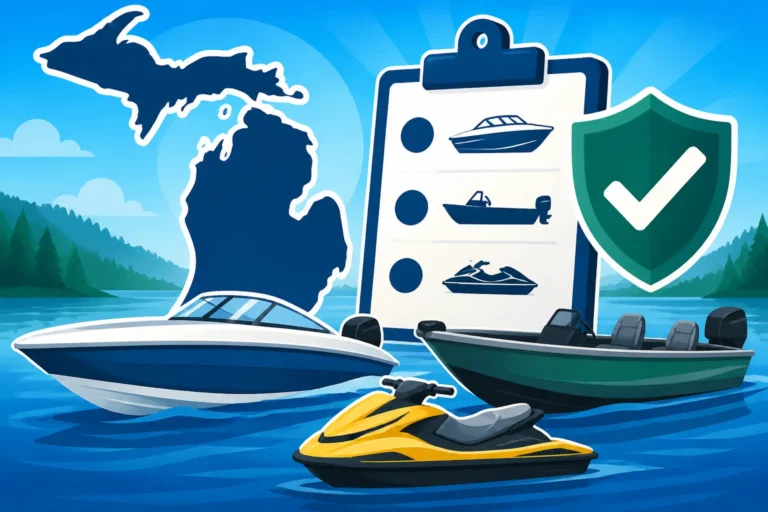
At its core, Michigan's marine law makes a very clear distinction: if a vessel has a motor, it almost certainly needs to be registered. If it doesn't, it usually doesn't. This seems straightforward enough, right? The state defines a "vessel" as every description of watercraft used or capable of being used as a means of transportation on water. Then it digs into the propulsion. When you're talking about boats like powerboats, jet skis, or even larger sailboats with auxiliary engines, registration is absolutely mandatory. This system helps the Department of Natural Resources (DNR) track watercraft, fund critical conservation efforts, and, most importantly, provides a means of identification for safety and emergency services. Without these registrations, it would be a logistical nightmare to manage Michigan's crowded waterways and respond to incidents.
For traditional kayaks, canoes, paddleboards, and rowboats that rely solely on human muscle power, this distinction means they typically fall outside the registration requirement. You can grab your paddle, head to the water, and launch without needing a sticker or registration number displayed. This is a huge relief for many casual paddlers and anglers who appreciate the simplicity and low overhead of human-powered recreation. However, it's crucial not to let this general rule lull you into a false sense of security, because technology and ingenuity have a way of blurring these lines, especially when electric motors come into play.
Why Your Kayak's Propulsion Method Matters
This is where things can get a little tricky, and it's often the source of most questions for kayakers. While a paddle is clearly human-powered, what about a tiny trolling motor you clip onto the stern? Or a small sail you added for those days with a nice breeze? Michigan law focuses on how the vessel is propelled. Any watercraft that is motor-powered, or that is a sailboat 16 feet or longer, must be registered. This means if your kayak, regardless of its original design, is fitted with any kind of motor, it suddenly enters a whole new category. This isn't just about large outboard engines; it extends to small electric trolling motors, too.
Imagine you've got a fantastic fishing kayak, maybe one you picked up from a place like Bass Pro Shops, and you decide to add a small electric motor to help you cover more water, especially on larger inland lakes or when fishing the Great Lakes. The moment that motor is attached and capable of propelling the kayak, your vessel becomes a "motor-powered" watercraft in the eyes of the law. It no longer matters that you primarily paddle it; the capability of motor propulsion is the deciding factor. The same principle applies, though less commonly, to kayaks that might be equipped with sails and exceed certain size limits. It’s not just the presence of the motor, but the potential use of it for propulsion that triggers the registration requirement. This detail often catches people off guard, assuming their small, "temporary" motor is somehow exempt.
When Your Kayak Absolutely Needs to Be Registered in Michigan
Okay, so we've established the general rule. Now, let's dive deeper into the specific scenarios where you absolutely must register your kayak. This is usually the most critical information for kayakers, as these situations often represent additions or modifications that might not seem like "motorboats" in the traditional sense, but they are under Michigan law.
The Electric Motor Exemption (or Lack Thereof)
This is hands down the most common reason a kayak or canoe user finds themselves needing to register their craft. Many anglers love the stealth and convenience of a small electric trolling motor on their kayak. It helps them fight currents, cover distances, and hold position in wind without constantly paddling. But here’s the kicker: Michigan law does not differentiate between a massive outboard engine and a tiny electric trolling motor when it comes to registration. If your kayak is equipped with any type of motor, whether gas or electric, regardless of horsepower or thrust, it must be registered.
Think about it this way: you purchase a reliable 30-pound thrust electric trolling motor, perhaps from a reputable online retailer like Amazon, and attach it to your kayak. The moment you do this, your kayak transitions from a simple paddlecraft to a motor-powered vessel. This means you need to obtain Michigan boat registration numbers, have them properly displayed on the bow, and affix a registration decal. You might think, "It's just a little motor, it barely moves me!" But the law is black and white on this. The capability to be propelled by a motor is what counts. So, before you hit the water with that silent, efficient electric helper, make sure you've completed the necessary registration steps. Ignoring this could lead to an unexpected conversation with a DNR conservation officer on your next outing.
Kayaks with Sails or Other Mechanical Propulsion
While less common than electric motors, some adventurous kayakers or even specialized sailing kayaks exist. If your kayak is primarily propelled by a sail and measures 16 feet or longer, it also falls under Michigan's registration requirements. For most standard kayaks, even those with small accessory sails, this isn't usually an issue as they rarely reach that length and are still primarily paddle-driven. However, if you're exploring the world of larger, more sophisticated sailing kayaks or similar hybrid craft, it's a detail you absolutely cannot overlook.
Additionally, any other form of "mechanical" propulsion beyond human power (like foot-pedal drives, which are still considered human power unless linked to a motor) would trigger the requirement. The key takeaway here is to assess your kayak's primary and secondary propulsion methods. If there's any engine, electric or gas, or a sail on a larger craft, registration is your next step. This focus on mechanical propulsion ensures consistency across all watercraft that can move without direct human exertion, contributing to clearer regulations and safer waters for everyone. For those interested in deeper dives into these specifics, exploring the Michigan Boating Laws for Anglers is a great next step, as it covers a broad range of regulations beyond just registration.
The Michigan Kayak Registration Process
Alright, so you've determined your kayak needs to be registered. Don't fret! The process is fairly straightforward, though it does require some attention to detail. The key is to gather your documents, understand your options for applying, and then ensure your kayak is properly marked once the registration is complete.
Gathering Your Documents and Information
Before you even think about filling out a form, you'll need to collect a few essential pieces of information and documentation. This will make the entire process much smoother and prevent delays.
Here’s a typical checklist of what you'll need:
- Proof of Ownership: This is paramount. If you bought your kayak new, you'll likely have a Manufacturer's Statement of Origin (MSO) or Certificate of Origin (MCO). If you bought it used, you'll need a bill of sale that includes the hull identification number (HIN), the seller's name and signature, the purchase price, and the date of sale. The HIN is usually found on the stern of the kayak, typically on the right side, and is crucial for identification.
- Personal Identification: You'll need a valid driver's license or state ID.
- Kayak Information: Be ready with details about your kayak, such as its make, model, year, length, and the type of motor (if applicable, including horsepower or thrust).
- Payment: There will be a registration fee, which varies depending on the length of your vessel and the type of propulsion. It's best to check the current rates on the Michigan DNR website or directly with a dealer to ensure you have the correct amount. While not usually as expensive as registering a large powerboat, these fees contribute to important programs.
Having all this ready before you start will save you a lot of back-and-forth. It’s like preparing your tackle box before a big fishing trip; you don't want to realize you're missing a key lure when you're already out on the water.
Where and How to Register Your Kayak
Michigan offers a few convenient ways to get your kayak registered, allowing you to choose the method that works best for your schedule and preferences.
You can register your kayak through:
- Online: The Michigan DNR website is often the quickest and easiest way to register or renew. You can access the necessary forms, submit your information, and pay the fees electronically. This is fantastic for busy folks who prefer to handle things from the comfort of their home. Just make sure you have digital copies of any required documents ready to upload.
- DNR Customer Service Centers: If you prefer in-person assistance or have questions that need to be answered directly, you can visit one of Michigan's DNR customer service centers. Staff there can guide you through the forms and ensure everything is completed correctly. This is often the best option if you have a complex situation or are unsure about any part of the process.
- Authorized Dealers and Retailers: Many boat dealers and some outdoor recreation retailers (like a local Bass Pro Shops or even some smaller tackle shops) are authorized to process boat registrations. This can be a convenient option if you're already purchasing gear or have a dealer nearby. Always call ahead to confirm they offer this service and what documents they require.
- Mail: You can also typically mail in your application and supporting documents. While this is the slowest method, it's an option for those who prefer traditional mail.
Once your application is processed and fees are paid, you'll receive your registration certificate, unique registration numbers, and a validation decal. Remember, Michigan's registration period typically runs for three years, so mark your calendar for renewal! If you're wondering about the cost specifics, you can check out the details in Michigan Boat Registration Cost and Renewal. For managing your license and registrations on the go, the Michigan's DNR Hunt Fish App for Licenses and Reporting is an invaluable tool.
Understanding Registration Numbers and Decal Placement
This is a frequently misunderstood part of the registration process. It's not enough just to have the registration; you have to display it correctly on your kayak so it's clearly visible to enforcement officers.
Here's what you need to know:
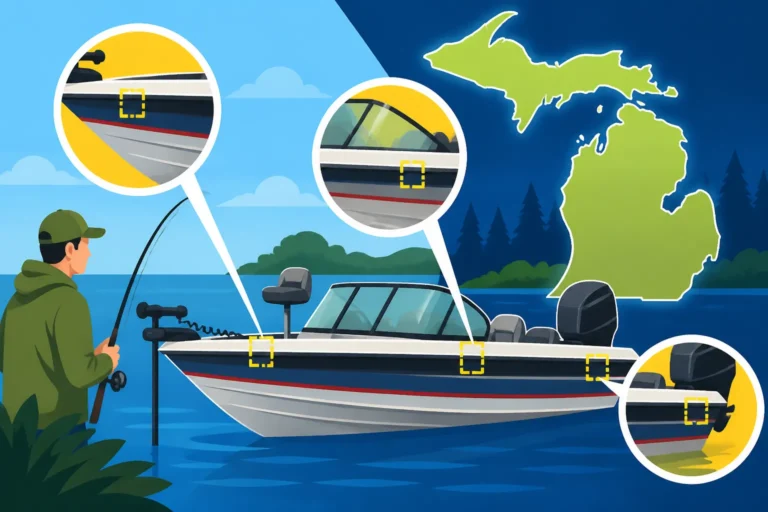
- Registration Numbers: You will receive a unique set of numbers and letters (e.g., MC 1234 AB). These numbers must be permanently attached to the forward half of the kayak on both sides of the bow. They need to be block characters, at least 3 inches high, and in a color that contrasts sharply with the background of your kayak's hull. For example, if your kayak is light-colored, use dark numbers; if it's dark, use light numbers. Many sporting goods stores or marine suppliers can create these vinyl numbers for you. You can even find kits on online marketplaces like Amazon that adhere strongly to most kayak materials.
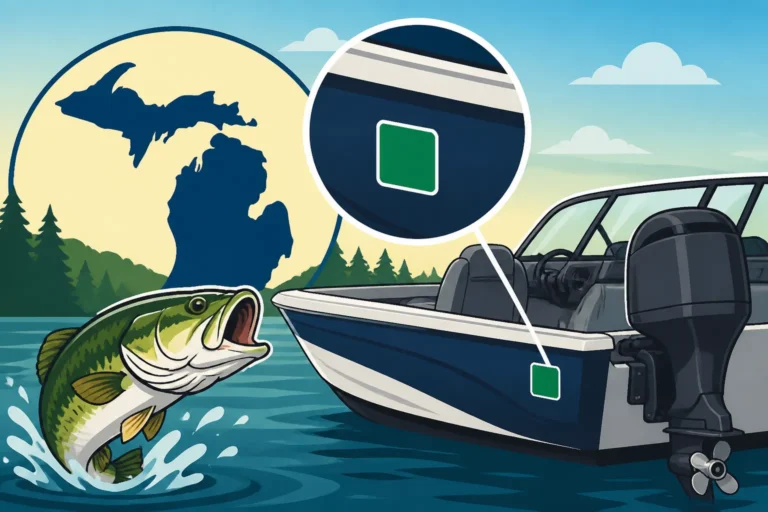
- Validation Decal: In addition to the numbers, you'll receive a small validation decal. This decal indicates the current registration period and must be displayed on the port (left) side of the bow, within 3 inches of the registration numbers, toward the stern. It also needs to be clearly visible.
Proper placement is not just a suggestion; it's a legal requirement. If your numbers are too small, not contrasting enough, or incorrectly placed, it could lead to a citation from a conservation officer. They need to be able to identify your vessel quickly and easily, especially in emergency situations or during routine patrols. Failing to display these correctly is a common mistake and one that's easily avoided with a little planning. For a detailed visual guide and further explanation, refer to Where to Display Michigan Boat Registration Numbers and Michigan Boat Registration Decal Placement.
| Requirement Category | General Rule (No Motor/Sail < 16ft) | With Any Motor (Electric or Gas) | With Sail (16ft or Longer) |
|---|---|---|---|
| Registration Needed | No | Yes | Yes |
| Hull ID Number | Always Present (Manufacturer) | Required for Registration | Required for Registration |
| Displayed Numbers | Not Required | Yes (3" block, contrasting color) | Yes (3" block, contrasting color) |
| Validation Decal | Not Required | Yes (Port side, near numbers) | Yes (Port side, near numbers) |
| Boating Safety Course | Not Required (unless under 16 w/motor) | Yes (if born after Dec 31, 1978 and operating motor) | Yes (if born after Dec 31, 1978 and operating motor) |
Note: This table summarizes general requirements. Always consult the official Michigan DNR regulations for the most current and specific details.
The Ramifications of Unregistered Kayak Use
It might seem like a small thing, especially for a humble kayak, but failing to properly register your motor-powered or sailing kayak can lead to unnecessary trouble. The DNR doesn't impose these rules just to be difficult; they're in place for funding, accountability, and the safety of everyone on the water. Ignoring them can turn a peaceful day on the lake into a stressful encounter.
Fines and Penalties for Non-Compliance
If you're caught operating a kayak that requires registration but isn't properly registered, you could face fines and penalties. While the exact amount can vary depending on the specific violation and the discretion of the conservation officer, it's typically a civil infraction. This means you'll likely receive a ticket, similar to a traffic ticket, which will carry a monetary fine. In some cases, repeated offenses or other concurrent violations could lead to more significant penalties.
Beyond the immediate financial hit, there's the inconvenience. You might have to interrupt your fishing trip or recreational paddle, explain the situation to an officer, and then deal with the court or payment process later. It's a hassle nobody wants, especially when a little proactive planning could have prevented it entirely. Think of the cost of the fine as money that could have gone towards new fishing gear or a well-deserved meal after a long day on the water. It simply isn't worth the risk to skip a relatively simple registration process. Many times, these interactions are just part of routine checks to ensure everyone is compliant with the law and operating safely.
Safety and Enforcement Implications
Beyond the legal and financial penalties, operating an unregistered kayak when it should be registered also has broader safety and enforcement implications. The registration system serves as a vital tool for identifying watercraft. In the event of an accident, a missing person, or a theft, those unique registration numbers are crucial for law enforcement and rescue personnel. They provide a clear way to identify the vessel and its owner, which can be critical in emergency situations.
Imagine a scenario where your kayak, equipped with an electric motor, drifts away or capsizes. Without proper registration and identifying numbers, it becomes much harder for authorities to trace it back to you. This could delay rescue efforts if you're in distress or make it nearly impossible to recover your stolen property. The fees collected from registrations also contribute to funding marine safety programs, public access sites, and environmental conservation efforts that benefit all Michigan anglers and boaters. By registering your qualifying kayak, you're not just complying with the law; you're actively contributing to a safer, better-managed aquatic environment for everyone. Understanding the importance of these rules helps us appreciate why they exist, even if they occasionally feel like a bureaucratic hurdle.
Disclaimer
This article is for general informational purposes only and does not constitute professional advice. Laws, prices and regulations vary by location and change over time. Consult a qualified professional for guidance on your specific situation.