What Happens if You Fish in Michigan Without a License
It's happened to the best of us, hasn't it? You're out on the water, the sun is shining, the fish are biting, and then a conservation officer pulls up, asks for your license, and your heart sinks. The fear of getting caught without a valid Michigan fishing license is a real concern, and the confusion around what actually happens can be stressful. This guide is here to walk you through the realistic consequences, from the immediate encounter to long-term repercussions, and most importantly, how to avoid these situations altogether.
The Immediate Consequences of Being Caught Fishing Without a License
Finding yourself face-to-face with law enforcement when you know you're not compliant can be an incredibly nerve-wracking experience. It's often not about malice but simple oversight, yet the law doesn't always distinguish between the two in the moment. Understanding what to expect can help you navigate the situation with a bit more clarity, even if it's unpleasant.
Initial Encounter with Law Enforcement
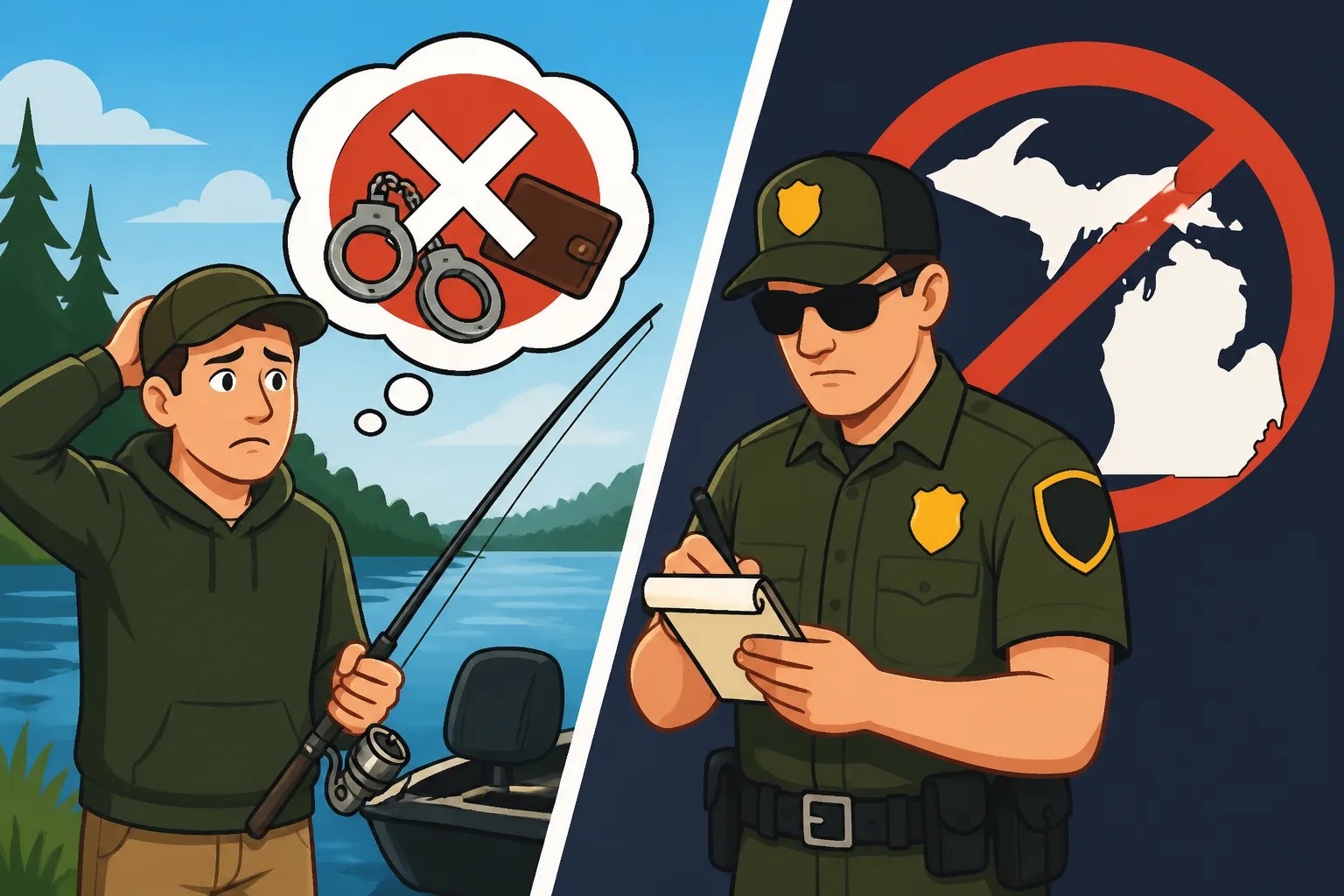
When a Michigan Department of Natural Resources (DNR) conservation officer, or even local law enforcement in some areas, approaches you while fishing, their primary role is to ensure everyone is adhering to state regulations. This typically begins with a friendly, "Hello, how's the fishing?" followed by a request to see your fishing license and, sometimes, to check your catch for compliance with bag and size limits.
If you can't produce a valid license, whether it's because you forgot it at home, it expired, or you simply never bought one, the tone will shift. While some officers might, in very rare and specific circumstances (like a genuine, verifiable technical glitch on the DNR app or an honest mistake on a free fishing weekend where you misunderstood the rules), offer a verbal warning, this is not the norm. The expectation is that you, as an angler, are responsible for knowing and following the rules. Most likely, you'll be issued a citation. Remember, honesty is usually the best policy here, but it won't necessarily get you out of a ticket.
Understanding the Immediate Citation
When a conservation officer issues a ticket for fishing without a license, it's not just a minor slap on the wrist. In Michigan, fishing without a license is generally classified as a misdemeanor offense. This means it's more serious than a simple traffic ticket or a civil infraction. While a first-time offense might often be handled with a fine, the potential for more severe penalties exists, which is why it's crucial to take it seriously.
The citation will include details like the date, time, location, the specific regulation you violated (e.g., MCL 324.43522, which pertains to fishing without a license), and instructions on how to proceed. This usually involves either paying a pre-determined fine by a certain date or appearing in court. It's important to read this document carefully. Don't assume you can just toss it in the glove box and forget about it. That court date is non-negotiable, and failing to appear can lead to even more serious legal trouble, like a warrant for your arrest.
Financial Penalties and Fines
The financial hit from being caught fishing without a license can be a significant deterrent. It's not just the base fine; there are often additional costs that add up quickly, turning a day of peaceful angling into a costly mistake. It's far more expensive than simply buying the license in the first place!
Base Fines for License Violations
For a first-time offense of fishing without a Michigan fishing license, the base fine can range from around $100 to $500. However, this is rarely the total cost. Michigan law also dictates that court costs, state assessments, and other administrative fees are added on top of the base fine. This means a $100 base fine could easily balloon to $250-$500 or more once all the additional charges are factored in.
Consider a hypothetical scenario: You're fishing for walleye on Saginaw Bay, confident in your setup, perhaps even using a new lure you just ordered from Amazon. A DNR officer checks your credentials, and you realize your license expired last month. Instead of a pleasant day, you're looking at a ticket. If the base fine is $150, you could also face a $75 state assessment, a $50 court cost, and a $25 bond fee. Suddenly, your $150 violation just cost you $300. This is why understanding the full scope of Michigan Fishing License Costs and Types Explained is so important.
Aggravating Factors and Increased Penalties
The severity of your fine, and even the type of charge, can escalate dramatically if there are aggravating factors involved. This isn't just about forgetting your license; it's about compounding violations that demonstrate a disregard for conservation laws.
Here are some examples of what can make your situation much worse:
- Fishing during a closed season: If you're caught without a license and you're fishing for a species like trout or walleye outside of the legal Michigan Fishing Season Dates and Rules for that specific body of water, your penalties will be much higher.
- Exceeding bag or size limits: Catching more fish than allowed, or fish that are too small or too large, while also lacking a license, adds another layer of violation. This could mean separate fines for each offense. You can learn more about these specifics in the Michigan Daily Bag Limits by Species and Michigan Statewide Minimum Size Limits guides.
- Using illegal gear: Employing nets, spears, or other prohibited methods (unless specifically allowed for certain species like suckers or carp) will result in severe penalties, potentially including immediate confiscation of the illegal equipment.
- Fishing prohibited species: Targeting protected species or fishing in areas designated as sanctuaries.
- Prior offenses: If this isn't your first rodeo, the penalties for repeat offenders are significantly harsher. A judge will look at your history, and what might have been a simple fine before could now lead to more serious repercussions.
In such cases, fines can quickly climb into the thousands of dollars, and the likelihood of avoiding court is slim to none. It's not just about the monetary value; these factors can also influence whether a prosecutor decides to push for jail time or a longer suspension of fishing privileges.
Beyond the Fines: Broader Legal and Practical Repercussions
While the immediate financial penalties sting, the consequences of fishing without a license in Michigan can extend far beyond a simple fine. These broader legal and practical repercussions can affect your freedom, your ability to fish in the future, and even your criminal record.
Potential Jail Time or Probation
As mentioned, fishing without a license is categorized as a misdemeanor in Michigan. While a first-time, simple violation might typically result in just a fine, the law allows for much more severe punishment. A misdemeanor can carry a penalty of up to 90 days in jail and a fine of up to $1,000, plus court costs.
When might jail time or probation become a real possibility?
- Repeated Offenses: If you're a habitual offender, consistently breaking fishing laws, a judge is much more likely to impose jail time or probation. They want to send a clear message.
- Aggravated Violations: If your lack of a license is combined with other serious violations, like commercial poaching, significant over-limits, or fishing with illegal methods that severely impact wildlife, a prosecutor might push for a jail sentence.
- Failure to Appear or Pay: Ignoring the citation, failing to show up for your court date, or not paying your fines can lead to further legal action, including warrants for your arrest and contempt of court charges, which almost certainly bring jail time into play.
Probation means you'd be under court supervision, often with conditions like reporting to a probation officer, avoiding further legal trouble, and potentially community service. This is a significant burden and a clear indicator that the justice system takes conservation violations seriously.
Loss of Fishing Privileges
One of the most impactful consequences for any passionate angler is the potential loss of fishing privileges. Michigan's DNR has the authority to revoke your fishing license or suspend your ability to purchase a new one for a specified period.
This isn't just a slap on the wrist; it means you cannot legally fish in Michigan for the duration of your suspension. The length of suspension can vary based on the severity and frequency of the violation, ranging from a few months to several years. Imagine not being able to participate in the excitement of the Michigan Steelhead Run Timing or the tranquil solitude of fly fishing the Au Sable River for years.
Furthermore, Michigan is part of the Interstate Wildlife Violator Compact. This agreement among many states means that if your fishing privileges are suspended in Michigan, those same privileges can also be suspended in other member states. So, if you live in Michigan but love to fish in Wisconsin or Ohio, you could find yourself banned from those waters too. This really underscores the importance of understanding the Michigan Fishing License Guide for Residents and Nonresidents and always being compliant.
Confiscation of Gear
In certain circumstances, a conservation officer has the authority to seize any fishing gear used in the commission of a violation. This typically happens in cases of serious offenses, particularly when illegal methods are employed, or when a boat is used for commercial poaching without the necessary licenses.
Examples of when gear might be confiscated include:
- Using illegal nets to catch fish.
- Spearfishing in prohibited waters for game fish.
- Using a boat for illegal commercial fishing activities without proper permits.
While a simple forgotten license might not lead to the confiscation of your rod and reel, it can happen if the violation is severe enough or part of a larger, more egregious pattern of illegal activity. Reclaiming confiscated gear can be a lengthy, expensive, and often unsuccessful legal process, adding another layer of cost and frustration to an already bad situation.
How to Avoid the Hassle: Ensuring You're Always Legal
The best way to deal with the consequences of fishing without a license is to avoid them entirely. It’s surprisingly easy to ensure you’re always on the right side of the law, and the peace of mind is absolutely priceless.
Purchasing and Renewing Your License
The process of buying a Michigan fishing license is designed to be straightforward and accessible. There's really no good excuse for not having one.
- Online Convenience: The easiest way for many is to purchase or renew your license online through the Michigan DNR's eLicense system. You can do this from the comfort of your home, even right before you head out to the lake. Simply visit the DNR website, log in or create an account, and follow the prompts. You can then print your license or save a digital copy to your phone.
- Retailers: Prefer an in-person transaction? Most sporting goods stores, bait shops, and even many convenience stores across Michigan are authorized license retailers. Places like Frank's Great Outdoors or Cabela's will have knowledgeable staff who can assist you. This is also a great opportunity to pick up some local bait or get a quick fishing report! Find out Where to Buy a Michigan Fishing License in Person.
- DNR Offices: You can also purchase a license at any Michigan DNR customer service center during business hours.
- The DNR Hunt Fish App: This fantastic app, available for both Apple and Android devices, allows you to purchase and store your licenses digitally right on your smartphone. It also includes fishing regulations, maps, and allows for harvest reporting, making it an invaluable tool for any Michigan angler. It’s perfect for ensuring you always have proof of your license, whether you bought your tackle from Amazon or a local shop, you'll have your license readily available.
- Checking Expiration Dates: This is a big one! Many anglers forget that the Michigan Fishing License Year Runs April to March. This means your license will expire on March 31st, regardless of when you bought it the previous year. Mark your calendar for late March or early April to remind yourself about Michigan Fishing License Renewal Each Spring.
Understanding Michigan's License Requirements
Knowledge is power, especially when it comes to avoiding legal trouble. The rules aren't overly complicated, but they do require a quick read-through each year.
- Who Needs a License: Generally, anyone 17 years of age or older needs a fishing license to fish in Michigan's public waters. There are some nuances for specific groups. For instance, Michigan Youth Fishing License Rules explain that those under 17 do not need a license. However, if a child is fishing with an adult who does need a license, the adult is responsible for ensuring the child adheres to all other regulations like bag limits.
- Residency: There's a clear distinction between Michigan Resident Fishing License Cost and Michigan Nonresident Fishing License Cost. Make sure you understand the Michigan Fishing License Residency Requirements Explained to avoid purchasing the wrong type of license.
- Exceptions to the Rule:
- Free Fishing Weekends: Michigan offers two Free Fishing Weekends Explained each year – one in winter and one in summer. During these weekends, all fishing license fees are waived for both residents and non-residents. This is a fantastic opportunity to introduce someone new to fishing or just enjoy a day on the water without the license cost.
- Private Waters: Typically, you do not need a license to fish in your own private pond, as long as the pond is entirely enclosed within your private property and has no connection to public waters (meaning fish can't move in or out from public streams or lakes). This is a very specific exemption, so if there's any doubt, err on the side of caution and get a license.
- Reading the Regulations Digest: Every year, the Michigan DNR publishes the official Michigan Fishing Regulations Digest. This comprehensive guide covers all the rules, bag limits, size limits, and special regulations for specific waters. You can download the Michigan Fishing Regulations Digest PDF for 2026 (or the current year) online, or pick up a physical copy at any license retailer. It's your ultimate resource for staying compliant with Michigan Fishing Regulations Every Angler Should Know. Take the time to read it, especially the sections pertaining to the waters you plan to fish.
By taking these proactive steps, you can ensure your time on Michigan's beautiful waters remains enjoyable and free from the stress of legal repercussions.
Summary of Potential Consequences for Fishing Without a License in Michigan
| Violation Severity | Typical First Offense (Simple) | Repeat Offense / Aggravated |
|---|---|---|
| Legal Classification | Misdemeanor | Misdemeanor (can escalate to more severe charges) |
| Base Fine Range | $100 – $500 | $500 – $1,000+ |
| Additional Costs | Court costs, state assessments, administrative fees (+$150-300+) | Significantly higher court costs, state assessments, potential bond fees |
| Potential Jail Time | Up to 90 days (rarely imposed for simple first offense) | High likelihood of jail time (e.g., 30-90 days) or strict probation |
| Fishing Privileges | Potential for short-term suspension (e.g., 3-6 months) | Guaranteed license revocation/suspension (1+ years); Interstate Compact ban |
| Confiscation of Gear | Unlikely for simple license violation | Likely, especially for illegal methods or commercial violations |
| Criminal Record Impact | Misdemeanor on record | Misdemeanor on record, potentially affecting employment/opportunities |
Disclaimer
The information provided in this guide is for general informational purposes only and does not constitute legal advice. While we strive to provide accurate and up-to-date information, fishing regulations and legal penalties can change. Always consult the official Michigan Department of Natural Resources (DNR) regulations and, if facing legal charges, seek advice from a qualified legal professional.