Does a Boat With a Trolling Motor Need to Be Registered?
It can be incredibly confusing to figure out all the rules for boating in Michigan, especially when it comes to smaller vessels or specialized equipment like a trolling motor. Many anglers just want to get out on the water without unknowingly breaking a law, and the question of whether a boat with just a trolling motor needs to be registered is a common head-scratcher. This comprehensive guide will clear up that confusion, explaining Michigan's boat registration requirements specifically as they apply to boats equipped with trolling motors, so you can fish with peace of mind.
The Core of Michigan's Boat Registration Requirements
Let's start with the basics. Michigan, like most states, has a system in place to identify vessels operating on its waters. This isn't just about collecting fees; it's crucial for safety, law enforcement, and even funding conservation efforts. The fundamental rule often revolves around whether a boat is "motorized." If it has an engine, it typically needs to be registered.
What Michigan Considers a "Motorized Vessel"
This is where the distinction often gets tricky for anglers. When you think of a "motorized vessel," your mind might immediately jump to big speedboats with powerful outboard engines. However, the Michigan Department of Natural Resources (DNR) has a broader definition. Essentially, if your boat is propelled, even in part, by any kind of mechanical means, it falls under the "motorized" umbrella. This includes gas engines, electric trolling motors, and even small portable outboards. The size of the motor, its power output, or whether it's your primary means of propulsion usually don't change the requirement.
Imagine you've got a trusty canoe, perfect for navigating those quiet backwaters. If you decide to add a small electric trolling motor to the stern to help you cover more ground or fight a current, that canoe instantly becomes a "motorized vessel" in the eyes of the law. It no longer matters that you can paddle it; the presence of the motor triggers the registration requirement. This catches a lot of folks by surprise, especially those who primarily rely on manual power but appreciate the convenience of an electric assist for certain situations. It’s a common frustration to discover that your seemingly simple setup now needs official paperwork.
Why Registration Matters for All Motorized Boats
Boat registration serves several vital purposes beyond just a bureaucratic formality. For starters, it provides a unique identification number for your vessel, much like a license plate on a car. This is incredibly important in emergencies. If your boat is involved in an accident, gets lost, or is stolen, law enforcement and rescue services can quickly identify it and link it back to you. This also ties into environmental protection and resource management. The funds generated from boat registrations contribute to maintaining Michigan's boat launches, waterways, and fish stocking programs, directly benefiting the angling community.
Think about it: when you're out on the vastness of Lake Michigan or even a busy inland lake like Houghton, being able to identify vessels quickly is paramount. Registration helps ensure accountability on the water, promoting safer boating practices for everyone. Without it, tracking down owners in cases of negligence or illegal activity would be a nightmare. It also helps the DNR keep track of the number and types of vessels on Michigan waters, which is valuable data for planning and managing public access and natural resources. For more on what's required, check out the Michigan Boat Registration Requirements guide.
Demystifying the Trolling Motor Question
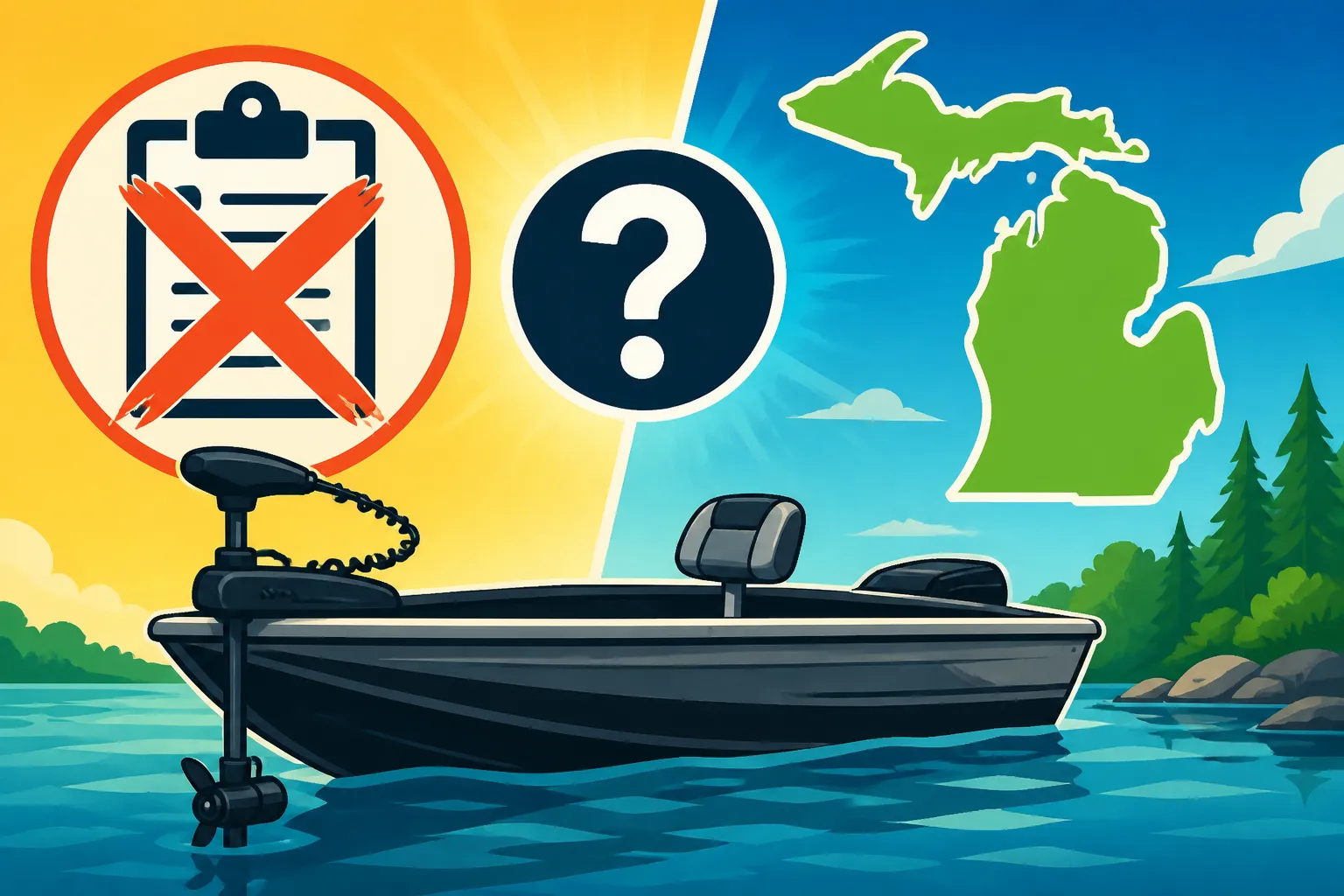
So, to directly answer the burning question: Yes, if your boat has a trolling motor, it generally needs to be registered in Michigan. This applies whether the motor is electric or gas-powered, regardless of its horsepower. The key factor is that it is a mechanical device used for propulsion.
Electric vs. Gas: The DNR's Unified Stance
One of the biggest misconceptions revolves around electric trolling motors. Many anglers assume that because they're quiet, emissions-free, and often low-powered, they might be exempt from the rules that apply to traditional gas engines. Unfortunately, that's not the case. The Michigan DNR doesn't differentiate between the power source when it comes to registration requirements. If it's a motor, it's a motor. This means that if you mount an electric trolling motor, whether you bought it from Bass Pro Shops or ordered it through Amazon, on your rowboat, kayak, or inflatable, that vessel requires registration.
The reasoning behind this unified stance is consistency and clarity in regulation. Trying to create separate rules based on electric versus gas, or horsepower thresholds, could lead to endless confusion and loopholes. By simply stating that any mechanical propulsion device triggers registration, the rule becomes much easier to understand and enforce. This ensures that all boats capable of powered movement, regardless of how "eco-friendly" or small that power might be, are identifiable and accounted for on Michigan's beautiful waterways.
Small Boats, Big Rules: Even Canoes and Kayaks Can Require Registration
This is another common surprise for paddlers. A canoe or kayak, when propelled solely by paddles, does not need registration. But the moment you attach a trolling motor, even a tiny one, it crosses the line into a "motorized vessel." This includes stand-up paddleboards if someone were to rig a motor to them! The size of your vessel doesn't exempt it from the motor rule. A 10-foot fishing kayak with a small electric motor needs registration just as much as a 20-foot bass boat.
This regulation ensures that regardless of the vessel's original design, its current operational capability dictates its legal status. Imagine a scenario where a search and rescue team is looking for a missing kayaker, and the only distinguishing feature mentioned is an electric motor. Without registration, tracing that specific vessel becomes much harder. It's about safety and accountability, even for the smallest craft venturing onto Michigan's lakes and rivers. So, while a lightweight paddlecraft might feel less formal than a larger boat, if it's motorized, treat its registration seriously. If you're pondering different vessel types, you might want to read Which Boats Need to Be Registered in Michigan.
Common Exemptions to Michigan Boat Registration
While the rule about trolling motors is pretty clear, there are indeed some types of vessels that are exempt from Michigan's registration requirements. It's important to understand these exemptions so you don't unnecessarily register a boat or, conversely, mistakenly believe your motorized vessel is exempt.
Boats That Are Clearly Exempt
Generally, the following types of vessels do not need to be registered in Michigan:
- Manually propelled vessels: This is the big one. If your canoe, kayak, rowboat, or stand-up paddleboard is only moved by paddles, oars, or your own muscle power, you do not need to register it. This is why adding a trolling motor changes everything – it takes it out of this category.
- Sailboats: Specifically, sailboats that are 16 feet or less in length and are propelled only by sail. If a sailboat, regardless of length, has a motor (even a small auxiliary one or a trolling motor), it generally does need to be registered.
- Boats from other states: If your boat is legally registered in another state and you're just visiting Michigan waters for a limited period (usually less than 90 consecutive days), you typically don't need to register it here. However, if you become a Michigan resident or keep your boat in Michigan for an extended period, you will need to register it in Michigan.
- Ship's lifeboats: Lifeboats that are part of a larger, registered vessel and are used solely for emergency purposes.
- Competition vessels: Boats used exclusively for racing, provided they have a valid racing permit. This is a very niche exemption and wouldn't apply to most recreational anglers.
It's always smart to double-check the latest Michigan fishing regulations digest or the DNR website for the most up-to-date and specific exemptions, as rules can sometimes be nuanced. Don't assume; verify! A quick call to the DNR can save you a lot of headache down the road.
Temporary Exemptions and Special Cases
Beyond the clear exemptions, there are a few special scenarios to consider. For example, if you've just purchased a new boat (with or without a trolling motor) from a dealer, they often provide you with temporary operating papers that allow you to use the boat for a short period while your official registration is being processed. This isn't a long-term solution, but it gets you on the water legally while you wait for the permanent decals and certificate.
Another "special case" might involve a boat that is being transported through Michigan waters but not actually operated here, or a vessel that is purely for display purposes and not intended for use on the water. These are, again, quite specific and don't typically apply to the average angler. The vast majority of boats actively used for fishing, especially those with any form of mechanical propulsion like a trolling motor, will fall under the registration requirements. If you're curious about exceptions related to size or usage, delve into Boats Exempt From Michigan Registration.
Here's a quick reference table to help clarify:
| Boat Type & Propulsion Method | Michigan Registration Required? | Notes |
|---|---|---|
| Canoe/Kayak (Paddles Only) | No | Manually propelled. |
| Canoe/Kayak (with Trolling Motor) | Yes | Any mechanical propulsion (electric or gas) triggers registration. |
| Rowboat (Oars Only) | No | Manually propelled. |
| Rowboat (with Trolling Motor) | Yes | Regardless of motor size or type. |
| Sailboat (Sail Only, ≤ 16 ft) | No | Must be solely sail propelled and 16 feet or less. |
| Sailboat (with Motor) | Yes | Even small auxiliary motors or trolling motors require registration for sailboats. |
| Motorboat (any size, any motor) | Yes | Standard requirement for all traditionally powered vessels. |
| Inflatable Boat (with Trolling Motor) | Yes | Inflatables, if motorized, follow the same rules as hard-hulled boats. |
| Boat registered in another state | No (temporary) | If visiting for less than 90 days. Longer stays or residency requires Michigan registration. |
Practical Steps for Registering Your Trolling Motor-Equipped Boat
Alright, so you've determined that your boat with its trusty trolling motor needs to be registered. Don't fret; the process itself isn't overly complicated, but it does require attention to detail. Getting it right ensures you avoid any unwelcome interactions with marine patrol.
The Registration Process Simplified
The first step is to gather the necessary documentation. This typically includes proof of ownership (like a bill of sale or manufacturer's statement of origin), proof of identity, and any previous registration documents if you're transferring ownership. You'll then head to a Michigan Secretary of State branch office or submit your application through the mail. Many anglers find the in-person option more straightforward, especially if they have questions or need to clarify specifics about their vessel.
You’ll fill out the application form, provide the required information about your boat and its motor (even a trolling motor), and pay the registration fees. The fees typically depend on the length of your boat. Once processed, you'll receive a registration certificate and decals. Remember, these registrations are usually valid for three years, and you'll need to renew them before they expire. It’s easy to forget about renewal, especially if you only boat seasonally, so setting a reminder on your phone or marking it on a calendar is a good idea. For details on how often you need to update it, see Michigan Boat Registration Renewal Every Three Years. You can even make it easier on yourself by checking out Buying a Michigan Fishing License Online or Michigan's DNR Hunt Fish App for Licenses and Reporting which sometimes offer integrated services for registrations.
Proper Display of Registration Numbers and Decals
Once you have your registration certificate and decals, proper display is critical. This isn't just a suggestion; it's a legal requirement. Here’s what you generally need to do:
- Registration Numbers: Your unique registration numbers must be displayed on both sides of the forward half of your boat. They need to be block letters, at least three inches high, and in a contrasting color to the hull so they're easily visible. They also must be permanently attached, meaning stick-on letters are usually fine, but hand-drawn or temporary markings are not. There must be a hyphen or space between the letters and numbers (e.g., MI-1234-AB).
- Validation Decals: The small, colored validation decals (which indicate the current registration period) must be displayed within six inches to the rear of the registration numbers on both sides of the boat. These are usually placed on the same line as the numbers, or slightly above.
Failing to properly display these numbers and decals can result in a citation, even if your boat is technically registered. It's frustrating to get a ticket for something seemingly minor, but these rules are in place for quick identification and enforcement. Make sure your numbers are clean, clearly legible, and not obstructed by ropes, fenders, or other gear. Whether you've just installed a new trolling motor on a small fishing boat or are upgrading to a larger vessel, ensuring these details are correct is a key part of responsible boating. If you're buying any boat accessories, from new numbers to cleaning supplies, many anglers find a wide selection at retailers like Bass Pro Shops or through online stores like Amazon. You can learn more about how to put them on correctly by reading Where to Display Michigan Boat Registration Numbers.
The Impact of Not Registering Your Boat
Ignoring the registration requirements for your trolling motor-equipped boat might seem like a small oversight, but it can lead to some significant headaches and financial penalties. It's simply not worth the risk. The Michigan DNR and local law enforcement actively patrol waterways, and unregistered motorized vessels are easy to spot.
Penalties for Unregistered Operation
If you're caught operating a motorized boat, including one with just a trolling motor, without valid registration, you could face fines. These aren't usually minor slaps on the wrist; they can be substantial, and they often come with additional court fees. Imagine you've driven a couple of hours to your favorite fishing spot, spent time launching your kayak with its electric motor, only to be stopped by a conservation officer. Not only could your day of fishing be cut short, but you'd be looking at a fine that likely far exceeds the cost of a three-year registration.
Beyond the monetary penalties, there could be other consequences. In some cases, repeated offenses or severe violations could potentially lead to your vessel being impounded, or even more serious legal ramifications. It's also important to consider the principle of it: registering your boat is a small contribution to the overall management and safety of Michigan's aquatic resources. It's part of being a responsible angler and boater. Take the time to understand your obligations, perhaps by reviewing Michigan Fishing Regulations Every Angler Should Know, to ensure your outings are stress-free and legal.
Ensuring Compliance for a Worry-Free Fishing Experience
The ultimate goal for any angler is to enjoy their time on the water, not to constantly worry about legalities. By understanding and complying with Michigan's boat registration requirements, you're setting yourself up for a much more relaxed and enjoyable experience. Whether you're planning a quiet day on an inland lake with your electric trolling motor or heading out to the vastness of the Great Lakes in a larger craft, knowing your paperwork is in order provides immense peace of mind.
Before you launch your boat, take a moment to ensure your registration is current, the numbers and decals are properly displayed, and all safety equipment is on board. This proactive approach will save you from potential fines, embarrassment, and the hassle of dealing with legal issues. Michigan offers incredible fishing opportunities, and abiding by the regulations helps preserve those opportunities for everyone. Having all your paperwork in order, whether it's for a new boat purchased at a dealership or a used one with a motor you found on Amazon, is key to a smooth day on the water. Also, don't forget to get your Michigan Fishing License Guide for Residents and Nonresidents sorted, as that's a separate but equally important requirement!
Disclaimer
This article is for general informational purposes only and does not constitute professional advice. Laws, prices and regulations vary by location and change over time. Consult a qualified professional for guidance on your specific situation.