Michigan Muskellunge Catch Reporting Online System
There’s nothing quite like the thrill of hooking into a Michigan muskellunge. These magnificent "fish of 10,000 casts" are legendary, but landing one comes with a big responsibility: reporting your catch. For many anglers, the thought of navigating official government websites can feel like a chore, taking the shine off an otherwise incredible experience. This guide will walk you through the Michigan Muskellunge Catch Reporting Online System, making the process clear, simple, and stress-free so you can fulfill your duty to conservation with ease.
Why Muskellunge Reporting Matters So Much in Michigan
Catching a muskie is often a once-in-a-lifetime event for many, a testament to patience and persistence. But beyond the personal triumph, every reported muskie plays a vital role in ensuring these incredible fish continue to thrive in Michigan waters. It's not just about a bureaucratic checkbox; it's about robust conservation.
The Conservation Imperative for Michigan's Apex Predator
Muskellunge are truly special. As apex predators in their ecosystems, they help maintain ecological balance, but their slow growth rates and long lifespans (some can live over 30 years!) make them particularly vulnerable to overfishing and environmental changes. This is why every single interaction with a muskie—especially a successful catch—provides invaluable data. The Michigan Department of Natural Resources (DNR) relies on angler reports to:
- Track Population Health: By monitoring catch rates and sizes, the DNR can get a clearer picture of how muskie populations are doing in specific lakes and rivers. Are they increasing or decreasing? Are there enough mature fish?
- Assess Stocking Programs: Michigan has active muskellunge stocking programs in many waters. Reporting helps the DNR understand the success of these efforts. Are the stocked fish surviving and growing? Are they contributing to the fishery as intended?
- Inform Future Regulations: The data collected from angler reports directly influences future fishing regulations, including size limits, bag limits, and season dates. This ensures that rules are based on real-world population dynamics, not just guesswork, leading to a sustainable and healthy muskie fishery for generations to come. Without this information, it would be much harder to make informed decisions about protecting this incredible resource.
Understanding Michigan's One Muskellunge Per Year Rule
Michigan has a very specific regulation designed to protect its muskellunge: the Michigan's One Muskellunge Per Year Rule. This means that once you decide to harvest a muskie (i.e., keep it), you're done for the year. This rule underscores the conservation-focused approach to muskie management.
Even if you practice catch-and-release, which is highly encouraged for these magnificent fish, reporting your catch is still critically important. A released muskie still provides data on its presence, size, and health in a particular body of water. The DNR needs to know about all muskie encounters, not just those that are harvested, to accurately gauge population strength and distribution. Think of it as contributing to a large-scale citizen science project every time you successfully land one. It's a small effort that yields massive returns for the future of muskie fishing in our state.
Navigating the Michigan Muskellunge Catch Reporting Online System
The idea of reporting a fish online might seem a bit cumbersome, especially after an exhilarating day on the water. However, the Michigan DNR has streamlined the process, making the online system quite user-friendly. The key is knowing what to expect and having your information ready.
Step-by-Step Guide to Online Reporting
Once you've landed that magnificent muskie, the clock starts ticking. Michigan law requires that all harvested muskellunge be reported within 24 hours. Even if you're practicing catch-and-release, reporting is highly encouraged and beneficial for conservation efforts. The primary method for reporting is through the DNR's dedicated online system. Here's a walkthrough of the typical process:
- Access the DNR Website: Head directly to the Michigan DNR website's fishing section. You'll find a specific portal or link for Michigan Muskellunge Catch Reporting Online System.
- Log In or Create an Account: If you've purchased a Michigan fishing license online before, you likely already have an account. If not, you'll need to create one, which usually involves providing your license number and some personal details.
- Initiate a New Report: Look for an option to "Report a Muskellunge Catch" or similar.
- Enter Your License Information: You'll need to input your valid Michigan fishing license number. This links the catch directly to you.
- Fill in Catch Details: This is where you provide all the crucial information about your muskie. This includes the date and time of the catch, the body of water (lake or river name), the county, and specific details about the fish itself.
- Provide Fish Measurements: Accurately measure the total length of the muskie (from the tip of its snout to the tip of its tail). If you have the capability, you might also be asked for its weight.
- Specify Gear Used: Indicate the type of gear you used (e.g., casting, trolling, fly fishing) and the lure or bait. This data helps the DNR understand angler effort and success rates with different methods.
- Indicate Harvest or Release: Clearly state whether the muskie was harvested or released. If released, confirm it was done immediately and in good health.
- Submit Your Report: Review all the entered information for accuracy before submitting. You'll usually receive a confirmation number or email.
Remember, the Michigan's 24-Hour Muskellunge Reporting Requirement is strict for harvested fish, so having your notes ready immediately after the catch is crucial. Before you even hit the water, it’s a great idea to have a durable, easy-to-read measuring tape on hand—many anglers find excellent, waterproof options on Amazon that make field measurements simple and accurate.
Essential Information You'll Need to Provide
Accuracy is key when reporting your muskie catch. The more precise your information, the more valuable it is to the DNR's conservation efforts. Here’s a breakdown of the critical details you’ll be asked for:
| Information Required | Description | Why It's Important |
|---|---|---|
| DNR Customer ID/License # | Your unique identifier as a licensed angler. | Links the catch to a specific angler, allowing the DNR to track effort and participation. |
| Date and Time of Catch | The exact date and approximate time you caught the fish. | Helps identify fishing patterns, peak activity times, and correlates with environmental conditions (weather, water temperature) that may be recorded. |
| Water Body Name & County | The specific lake or river where the muskie was caught, along with the county it resides in. | Essential for pinpointing muskie populations in specific locations, informing local management decisions, and assessing regional health. |
| Fish Length (Total) | Measured from the tip of the snout to the tip of the tail. | Crucial for tracking growth rates, age structure, and the overall health of the muskie population. Also vital for verifying compliance with minimum size limits. |
| Harvested or Released | Indicate whether the fish was kept (harvested) or returned to the water (released). | Distinguishes between removal from the population and continued contribution to the fishery. Important for calculating true harvest numbers. |
| Gear Used | Type of tackle (e.g., casting, trolling, fly fishing) and specific bait/lure. | Helps the DNR understand effective fishing methods, angler effort, and the impact of different gear on muskie populations. |
| Fish Condition (Released) | If released, you might be asked to assess its condition (e.g., "excellent," "fair," "poor"). | Provides insight into catch-and-release mortality rates and informs best practices for handling. |
When measuring, lay the muskie flat on a measuring board or against a tape measure. Pinch the tail for the maximum total length. If you can safely take a photo of the fish on a measuring board, that's even better for verification and your personal records! For locations, be as specific as you can without giving away your secret spot – a general area on the lake, or a stretch of river, is usually sufficient.
Troubleshooting Common Online Reporting Issues
While the online system is generally straightforward, sometimes technology (or life!) throws a curveball. Don't panic if you encounter an issue. The DNR understands that not everything goes perfectly.
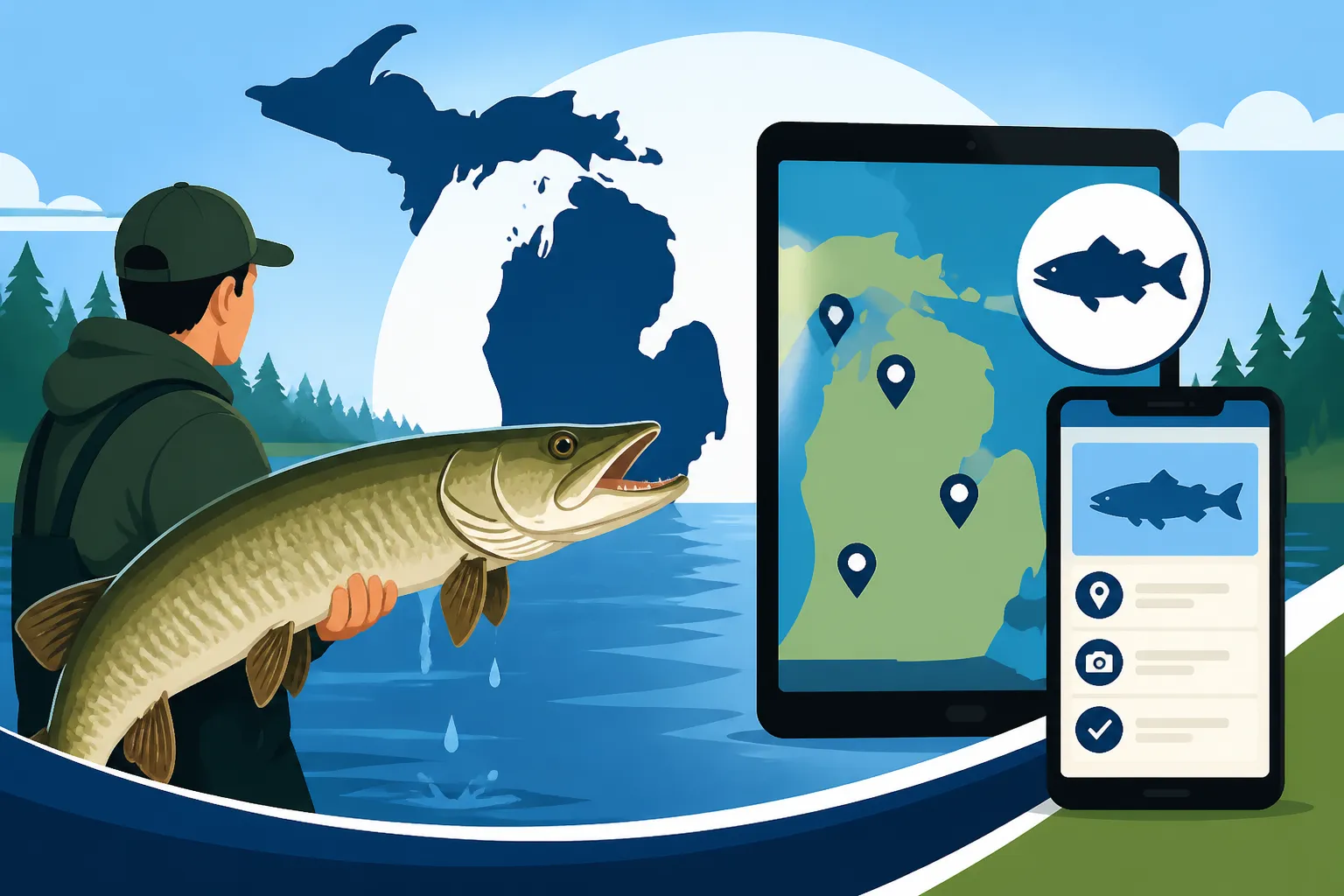
One common concern is immediate internet access. After a long day of fishing in a remote area, you might not have cell service or Wi-Fi. What then? While the online system is preferred, Michigan does offer alternatives. You can call the Michigan Muskellunge Catch Reporting Phone Number to report your catch. Keep in mind that for harvested fish, the 24-hour window still applies, so plan accordingly. Another option is the Can You Buy a Michigan Fishing License on the DNR Hunt Fish App?; the DNR's Hunt Fish App sometimes offers reporting features, which might be more convenient if you have limited data but not full browser access.
What if you realize you made a mistake on your report after submitting it? Perhaps you misremembered the exact length or the time of the catch. Don't just leave it; contact the DNR directly. They can guide you through the process of correcting your submission. It’s always better to ensure accuracy rather than leaving incorrect data in the system.
Finally, a quick reminder: even if your intention was to release the muskie and it swam away seemingly healthy, it's still incredibly valuable to report those catch-and-release instances. The system is designed to record both harvested and released fish, so make sure you use it for all your muskie encounters.
Beyond the Report: Best Practices for Muskellunge Anglers
Catching a muskie is a monumental achievement, but your responsibility doesn't end with a photo and an online report. Being a responsible muskie angler extends to how you handle these magnificent fish, the gear you use, and how well you know the regulations for the specific waters you're fishing.
Catch and Release for Michigan's Trophy Muskies
For most muskie anglers, the goal isn't necessarily to harvest a fish, but to experience the thrill of the battle and then release it to fight another day. Given their slow growth and trophy potential, proper catch-and-release techniques are absolutely vital for muskellunge survival. A muskie is an investment in our fisheries, and we want them to reproduce and grow even larger.
Here's how to ensure the best possible outcome for a released muskie:
- Minimize Fight Time: Use heavy-duty tackle that can subdue the fish quickly, reducing exhaustion.
- Net Selection: Employ a large, rubberized net. These nets are much gentler on the fish's protective slime coat and fins than traditional nylon nets. Many excellent, durable rubberized nets designed for muskie fishing can be found on Amazon.
- Keep it Wet: Try to keep the muskie in the water as much as possible. If you must lift it for a quick photo, support its entire body horizontally, never vertically by the jaw or gills.
- Quick Hook Removal: Have long-nose pliers, bolt cutters (for cutting hooks if necessary), and a jaw spreader ready before the fish is even in the net. Work quickly and efficiently to remove hooks. If a hook is deeply embedded and removal would cause more trauma, cut the hook or leader instead.
- Resuscitation: If the fish seems stressed or sluggish, hold it gently upright in the water, facing into the current (if present), and move it back and forth to force water over its gills until it swims away strongly on its own.
These practices align perfectly with Catch-and-Immediate-Release Rules for Muskellunge and contribute significantly to their long-term survival. Learning How to Catch and Release a Muskellunge effectively is perhaps the most important skill for any dedicated muskie angler.
Gear Up for Responsible Muskie Fishing
Having the right gear isn't just about landing the fish; it's about doing so responsibly and preparing for the mandatory reporting. Muskie fishing demands specialized equipment that can handle these powerful predators while also facilitating their safe handling and accurate measurement.
- Rods and Reels: You'll want stout, powerful rods (often 7.5 to 9 feet in length) paired with baitcasting reels capable of handling heavy lines (50-80 lb braid is common) and large lures. This heavy gear helps you land the fish more quickly, reducing stress. You can find robust Best Tackle for Michigan Muskellunge options from brands like Shimano and Daiwa, widely available through retailers including Amazon.
- Leaders: Always use a heavy-duty wire or fluorocarbon leader. Muskie have razor-sharp teeth that can easily snap standard fishing line, leading to lost lures and, more importantly, a muskie swimming off with hooks embedded.
- Nets: As mentioned, a large, rubberized landing net is non-negotiable. It protects the fish and keeps hooks from tangling. Look for a net with a hoop size of at least 30-40 inches. A good quality Best Net for Landing Muskellunge is an investment in conservation.
- Hook Removal Tools: Essential tools include extra-long needle-nose pliers, jaw spreaders, and bolt cutters (in case a hook needs to be cut for rapid release). Keeping these readily accessible in your boat or tackle box will save valuable time during the unhooking process.
Investing in quality gear ensures a more successful outing and, crucially, minimizes harm to the fish you catch.
Knowing Your Waters and Regulations
Michigan's fishing regulations can sometimes feel like a labyrinth, with general statewide rules and then specific exceptions for certain lakes or rivers. It's critical for muskie anglers to not only understand the general Michigan Fishing Regulations Every Angler Should Know but also to be aware of any hyper-local rules that might apply to their chosen fishing spot.
For instance, while there's a statewide minimum size limit for muskie, some specific lakes are managed for larger trophy fish and have special rules. For example, lakes like Lake Hudson and Thornapple Lake in Michigan are known to have a 50-inch minimum size limit for muskie. Knowing these nuances, such as Michigan Lakes With a 50-Inch Muskellunge Minimum, is paramount before you even cast a line.
The best way to stay informed is to consistently consult the current Michigan Fishing Regulations Digest. The DNR updates this digest annually, and it's your go-to source for all the latest rules, special regulations, and reporting requirements. You can usually find a PDF version online, making it easy to reference on your phone or tablet. Make a habit of Reading the Michigan Fishing Regulations Digest each year before the season gets into full swing; it’s your best defense against inadvertently violating a rule and ensures you're fishing legally and responsibly.
Disclaimer
The information provided in this guide is for general informational purposes only and is not a substitute for the official Michigan Department of Natural Resources (DNR) fishing regulations. Anglers are responsible for consulting the latest Michigan Fishing Guide and all applicable state and local laws before fishing. Regulations can change, so always verify current rules directly with the Michigan DNR.