How to Catch Walleye in Murky Water
It's incredibly frustrating, isn't it? You wake up, check the weather, and head to your favorite Michigan walleye spot, only to find the water resembling a muddy coffee. Your heart sinks a little because you know those crystal-clear tactics you usually rely on are probably going to be useless. Fishing murky water for walleye can feel like a blind shot in the dark, but it doesn't have to be. This guide will help you understand why walleye actually thrive in these conditions and equip you with the specialized gear and techniques to turn that muddy challenge into a successful fishing trip.
Decoding Walleye Behavior in Murky Michigan Waters
When the water clarity drops, many anglers assume the fish just shut down, but that's rarely the case with walleye. These incredible fish are perfectly designed to operate in low-light and low-visibility conditions. Understanding their adaptations is the first step to turning a frustrating day into a fantastic one.
The Low-Visibility Advantage for Walleye
Walleye are famous for their large, reflective eyes, which contain a special layer called the tapetum lucidum. This layer acts like a natural amplifier, allowing them to gather more light in dim conditions than many other fish species. What feels like a disadvantage to us—fishing in cloudy, stirred-up water—is actually prime hunting time for a walleye. They can see better than their prey in these situations, giving them a significant predatory edge. It can feel disheartening for us, squinting to see our line, but for them, it's like the lights just got turned down at a buffet. This is why you often find walleye more active during the day in murky conditions than you would in clear water.
Beyond their exceptional eyesight, walleye heavily rely on their other senses when visibility is poor. Their lateral line system, a row of sensory pores running along their sides, detects vibrations and pressure changes in the water. This allows them to "feel" prey moving nearby, even if they can't see it. This sensory input becomes absolutely critical when the water is clouded with sediment or algae. Furthermore, walleye possess a keen sense of smell. They can detect subtle chemical cues from bait and prey from a distance, guiding them to a potential meal when sight is limited. So, while we might be struggling to see, a walleye is essentially using sonar and a highly sensitive nose to navigate and hunt.
Understanding Different Types of Murky Water
Not all murky water is created equal, and knowing the source of the murkiness can help you predict fish behavior and choose your tactics. For instance, heavy rains can wash sediment and debris into rivers and lakes, creating a silty, muddy turbidity. This influx of freshwater can also change water temperatures and oxygen levels, which might push walleye to different depths or structures. Rivers like the Grand River after a big rain might see a massive change in clarity and flow.
On the other hand, high winds on a large lake like Lake Michigan or Saginaw Bay can stir up bottom sediments, especially in shallower areas. This type of murkiness might be localized to certain shorelines or bays, leaving other areas relatively clear. In these situations, the water might clear up quicker once the winds die down. Algal blooms, particularly in nutrient-rich inland lakes, can also cause murky conditions, often giving the water a green or brown tint. These blooms can impact oxygen levels, especially at night, which can make walleye less active in certain areas. Each type of murkiness presents its own subtle challenges and opportunities, influencing where fish hold and how aggressively they might feed.
Tailoring Your Tackle and Baits for Murky Conditions
When the water's murky, your usual go-to lures and presentations might disappear into the gloom. This is where you need to adapt, focusing on drawing attention through vibration, bold colors, and irresistible scents.
Lure Selection: Loud, Proud, and Scented
In low visibility, you need lures that loudly announce their presence. Think about what a walleye relies on when it can't see far: vibration and smell. Crankbaits with internal rattles are fantastic for this; their erratic wobble and noise cut through the murky water, sending out strong vibrations that walleye can detect with their lateral line. Spinnerbaits, with their flashing blades, create both visual disturbance and vibration, mimicking a struggling baitfish. Blade baits, with their intense vibration when jigged, are also highly effective. Consider checking out your local tackle shop or even Amazon for a wide selection of these attention-grabbing lures.
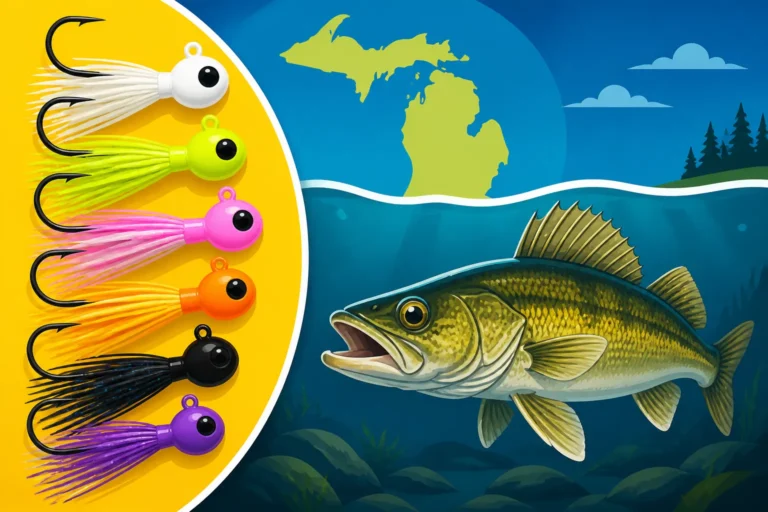
When it comes to color, forget subtle. You want bold, contrasting colors that create a strong silhouette or stand out vividly, even if the color range is limited. Chartreuse, bright orange, hot pink, and iridescent greens are often incredibly effective. Sometimes, surprisingly, black can also work well by creating a very distinct silhouette against the slightly lighter water. To dive deeper into this, you might find our guide on Best Lure Color for Murky Water Walleye particularly helpful. Beyond sight and vibration, scent is a huge advantage. Adding liquid scent attractants to your artificial lures or opting for live bait like shiners, leeches, or nightcrawlers can make all the difference. Walleye will follow their nose to a meal, especially when their eyes are less useful. For more detailed information on bait, check out our guide on Best Bait for Michigan Walleye.
Rod, Reel, and Line for Enhanced Sensitivity
In murky water, you're often fishing more by feel than by sight. This makes your rod, reel, and line choices critically important. You need gear that maximizes sensitivity, allowing you to detect the most subtle takes, which are common when walleye can't fully see their prey. A fast-action rod, usually 6'6" to 7'6" in length, is ideal. The fast tip allows you to feel light bites, while the stronger backbone gives you the power to set the hook effectively. Graphite rods are generally more sensitive than fiberglass, transmitting vibrations from your line and lure directly to your hand. If you're looking for a good all-around option, our article on Best Spinning Rod for Walleye offers some excellent recommendations.
For line, many anglers swear by braided line in murky water. Braid has almost zero stretch, which significantly increases sensitivity, letting you feel every bump, tic, and subtle mouth movement. It also cuts through the water well, which is an advantage if you're dealing with current. While its visibility isn't a concern in murky water, many anglers still opt for a fluorocarbon leader (6-10 lb test is common) for abrasion resistance and a bit of shock absorption. Fluorocarbon also has a similar refractive index to water, making it virtually invisible, though this is less critical in murky conditions. The combination of sensitive rod and no-stretch line gives you the best chance to feel those hesitant walleye bites.
Optimizing Jigging and Trolling Techniques
The golden rule for murky water presentations is to slow down. Walleye need more time to locate and commit to a bait when visibility is limited. For jigging, this means a slower, more deliberate retrieve. Instead of aggressive snaps, try a gentle lift and a longer fall, allowing your jig to hang in the strike zone longer. Focus on feeling the weight of the jig as it falls – any interruption, even a slight slackening or extra weight, could be a bite. This is crucial for successful How to Jig for Walleye in Michigan. Play with your jig weight too; sometimes a slightly heavier jig, like those discussed in Best Jig Weight for Walleye, helps maintain contact with the bottom and creates a stronger thud for walleye to key in on.
When trolling, reduce your boat speed significantly. Where you might troll at 1.5-2.5 mph in clear water, try dropping it to 0.8-1.5 mph in murky conditions. This gives walleye more time to hone in on your lure's vibration and scent trail. Run your lures closer to the bottom or structure where walleye are likely holding, using planer boards to cover wider areas if you're in open water. Focus on making contact with the bottom periodically, stirring up puffs of sediment to attract attention.
Here's a quick comparison of popular lure types for murky walleye:
| Lure Type | Key Advantage in Murky Water | Best Presentation | Recommended Colors |
|---|---|---|---|
| Crankbaits | Strong vibration, rattles | Slow troll, controlled retrieve | Chartreuse, Orange, Firetiger |
| Spinnerbaits | Flash, vibration, weedless | Slow retrieve, stop-and-go | White/Chartreuse, Black/Blue |
| Jigs (w/ plastics) | Versatility, scent retention | Slow lift-drop, subtle bounces | Chartreuse, Orange, White |
| Blade Baits | Intense vibration, flash | Vertical jigging, yo-yo retrieve | Chrome, Gold, Firetiger |
| Live Bait Rigs | Natural scent, movement | Slow drift, still fishing, bottom bouncing | N/A (focus on natural bait) |
Locating Those Elusive Walleye When Visibility is Low
Finding fish is always the biggest challenge, but in murky water, it becomes even more critical. You can't rely on spotting schools or seeing them chase bait. Instead, you need to think like a walleye and focus on prime holding areas and how to interpret your electronics.
Relying on Structure and Depth
In clear water, walleye might roam more, but in murky conditions, they often hug structure much more tightly. These areas provide ambush points and offer a sense of security. Think about weed lines, especially those with sharp edges or pockets. Walleye will sit just inside or along these lines, waiting for prey to swim by. Rock piles, sunken logs, and even bridge pilings create current breaks and hiding spots. Any sharp drop-off or breakline, where the depth changes quickly, is a prime target. These areas concentrate baitfish and provide oxygen-rich water, making them irresistible to walleye.
It's not just about what's on the bottom, but the bottom itself. Hard bottom areas (rock, gravel) tend to hold heat longer and attract bait. Soft, silty bottoms might be less productive unless there's a specific feature like a channel edge. Pay attention to current. Walleye are ambush predators and will often sit just out of the main current flow, in eddies or behind structure, waiting for food to be swept past them. This strategy conserves energy and allows them to strike unsuspecting prey. Understanding How Deep Do Walleye Live at in Summer can also help guide your structural search, as their depth preferences can shift with water temperature and oxygen availability.
Maximizing Your Electronics (Yes, Even in Murky Water!)
Just because you can't see into the water doesn't mean your fish finder is useless. In fact, it becomes an even more invaluable tool in murky conditions. Your fish finder isn't just for seeing individual fish marks; it's for understanding the bottom contour, identifying hidden structure, and locating those crucial depth changes. Use your sonar to map out those rock piles, subtle humps, and abrupt drop-offs that walleye will gravitate towards. Pay close attention to changes in bottom hardness, which often indicate productive feeding areas. If you're interested in upgrading, our article on Best Fish Finder for Boat Fishing in Michigan provides a great overview of modern units.
Even in murky water, down imaging and side imaging can still provide valuable information, though their effective range might be reduced. Down imaging can give you a clearer picture of what's directly below your boat, helping you discern between different types of structure. Side imaging can help you scan wider areas for submerged timber or rock fields that might be just outside your main sonar cone. Most importantly, use your GPS to mark any productive areas. If you catch a walleye or see promising structure, immediately drop a waypoint. This allows you to return to that exact spot, even if conditions change. Don't be afraid to slow down and meticulously scan an area before making your first cast.
Strategic Considerations and When to Adapt
Fishing murky water is a game of patience and adaptability. Sometimes, the conditions can work in your favor, while other times, you might need to adjust your expectations or even your fishing schedule.
Timing Your Murky Water Efforts
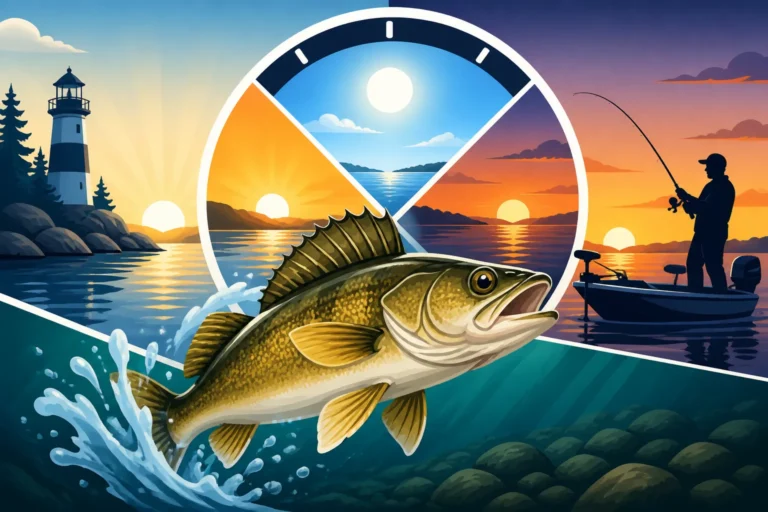
One of the surprising benefits of murky water for walleye anglers is that it often extends the prime feeding windows. In clear water, walleye are typically most active during low-light periods like dawn, dusk, and night, due to their light-sensitive eyes. However, murky water essentially creates perpetual low-light conditions. This means that walleye can be active and feeding throughout the day, even under bright midday sun. This is a huge advantage for anglers who might not be able to hit the water at first light. So, don't dismiss a midday trip just because the water is cloudy. In fact, it might be the best time to go! You might even find that your normal Best Time of Day to Catch Walleye advice changes completely in these conditions.
Heavy cloud cover on an already murky day can further enhance this effect, making the walleye even more comfortable and aggressive. Pay attention to how long the water has been murky. Freshly churned-up water right after a storm or high winds might take a few hours for the fish to settle back into a pattern. But once they adjust, they can be incredibly catchable. If the murkiness is due to an algal bloom, be mindful of oxygen levels, especially in shallow, warm water, and focus on deeper areas or those with more current.
Safety and Practical Tips for Murky Conditions
While focusing on catching fish, it’s vital to prioritize safety, especially when boating in murky water. Submerged hazards like stumps, rocks, or shallow areas that are easily visible in clear water become invisible death traps when the water turns cloudy. Navigate slowly, use your depth finder constantly, and pay close attention to navigation markers. Always wear your life jacket, and consider fishing with a buddy. You can find essential boating safety information on the Michigan DNR website, which emphasizes the need for a Michigan Boating Safety Certificate Requirements. Always let someone know where you're going and when you expect to return.
From a practical fishing standpoint, a good anchor system is invaluable. Being able to hold steady over a productive piece of structure is critical when precise lure placement is necessary. If you're in a river with current, a drift sock or two can help slow your drift, giving the walleye more time to react to your bait. After a successful day of murky water fishing, remember that while the fish themselves are perfectly fine to eat, they might look a bit different. Walleye from murky water can sometimes have a slightly darker coloration or take on a faint "muddy" smell from the environment. A thorough cleaning, removing all dark meat and skin, will usually eliminate any off-flavors. Don't let the appearance deter you; a Michigan walleye is always a fantastic meal!
Conclusion
Fishing for walleye in murky water can initially feel like a curse, stripping away your confidence and making you question every tactic. But with the right mindset and a few strategic adjustments, it can actually turn into some of the most rewarding fishing you'll experience in Michigan. By embracing the walleye's natural adaptations to low visibility, focusing on loud, proud, and scented presentations, leveraging your electronics, and understanding where these fish hold tight to structure, you can transform a challenging day into a productive one. So, next time you encounter that muddy water, don't pack up and go home; grab your specialized gear, slow down your approach, and get ready to feel that distinct walleye thump!
Disclaimer
This article is for general informational purposes only and does not constitute professional advice. Laws, prices and regulations vary by location and change over time. Consult a qualified professional for guidance on your specific situation.