Best Bait for Perch in Michigan
It can be incredibly frustrating to hit the water, whether it's a vast Great Lake bay or a quiet inland pond, with the hopes of filling a bucket with tasty yellow perch, only to find them completely uninterested in your offerings. We've all been there, scratching our heads, wondering what secret bait everyone else is using. This comprehensive guide is here to unravel that mystery, diving deep into the tried-and-true, and sometimes surprising, baits that consistently catch perch across Michigan's diverse waters.
Understanding Yellow Perch Eating Habits
Before we even talk about specific baits, it's crucial to understand what makes a yellow perch tick, or rather, what makes them bite. These little guys are opportunistic feeders, which means they'll munch on pretty much anything small enough to fit in their mouths. But like us, they have preferences, and those preferences can change based on the season, water conditions, and what's naturally abundant in their environment.
Perch are primarily sight feeders in clear water, but they can also rely heavily on their sense of smell and lateral line in murky conditions or when hunting in deeper water. They love to school up, especially around structure like weed beds, drop-offs, docks, and submerged timber. Where there's one perch, there are usually more, and a feeding frenzy can quickly ensue if you hit on the right presentation. Think small, natural, and sometimes, a little flashy. Understanding Yellow Perch Identification in Michigan can also help you recognize their preferred habitats.
What Perch Naturally Prey On
In the wild, yellow perch primarily feed on aquatic insects, small crustaceans, and other tiny invertebrates. As they grow, their diet can expand to include small baitfish, like minnows, and even the fry of other species. This natural diet gives us our biggest clues about what baits will be most effective.
Imagine a perch swimming through a weed bed in Saginaw Bay. It's looking for a tasty larva wriggling by or a small minnow darting through the stalks. If your bait mimics these natural food sources in size, action, and sometimes scent, you're already way ahead of the game. This is why things like wigglers, waxworms, and tiny minnows are such classic perch getters. They're just like what the perch are used to eating every day.
How Water Conditions Influence Bait Choice
The clarity and temperature of the water play a huge role in how perch feed and, by extension, what bait works best. In crystal-clear waters, especially on a sunny day, perch rely heavily on their eyesight. This is when natural-looking baits, subtle movements, and smaller presentations shine. Bright colors or overly aggressive lures might spook them.
However, when the water is murky from a recent rain or disturbed by boat traffic, or when you're fishing deeper areas with less light penetration, scent becomes a major factor. This is when adding a dab of scent to your artificial lure or using live bait that naturally emits a smell can make all the difference. Likewise, in very cold water during ice fishing season, perch are sluggish and might prefer a stationary or very slowly presented bait over something zipping around. Understanding these nuances is key to consistent success while Yellow Perch Fishing in Michigan.
Live Bait: The Undisputed Champions
When it comes to consistently catching yellow perch in Michigan, live bait often reigns supreme. There's just something about the natural movement, scent, and texture that perch find irresistible. If you're serious about filling a cooler, starting with live bait is usually your best bet.
Minnows
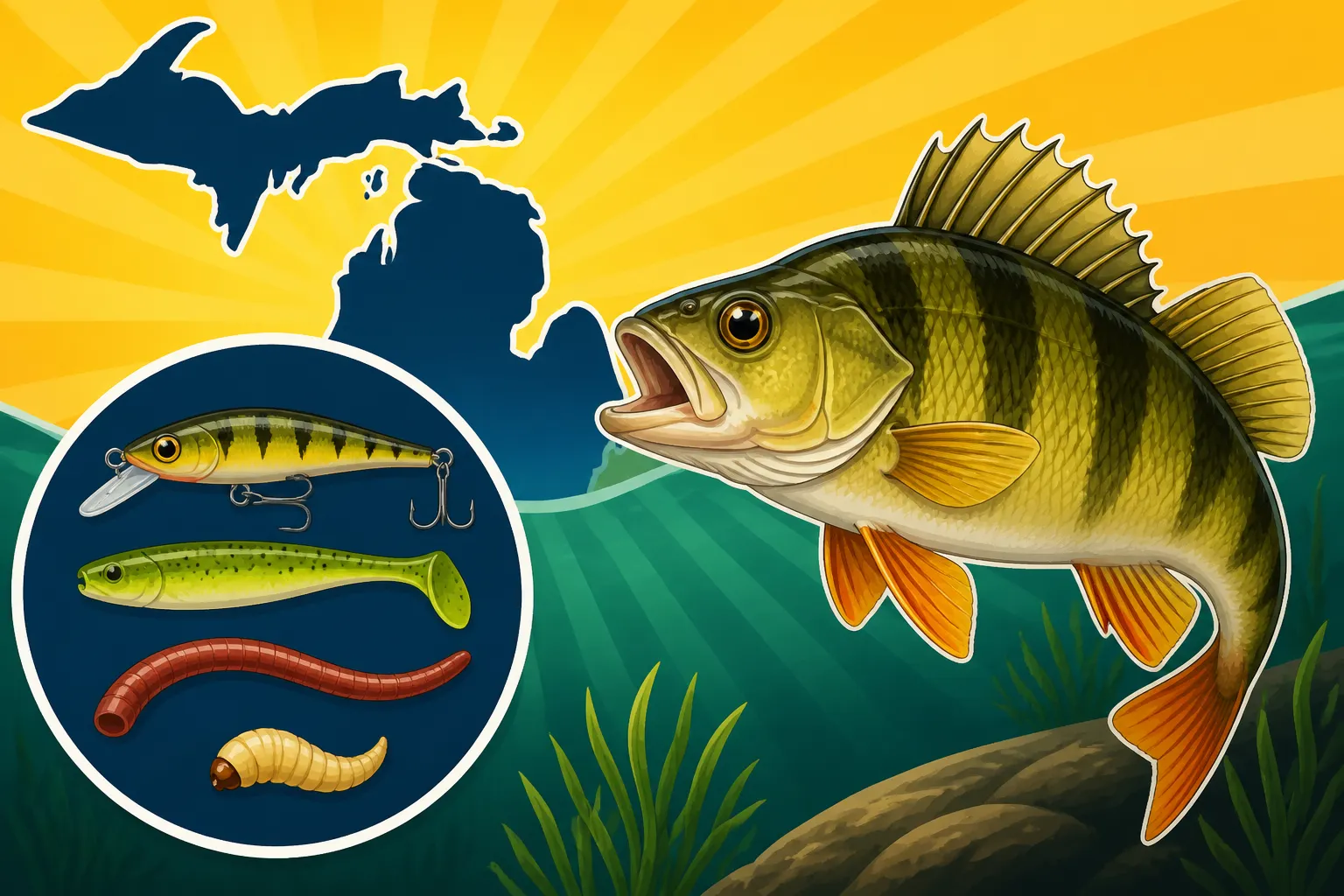
Tiny minnows are hands down one of the most effective baits for yellow perch, especially for catching larger specimens. Fathead minnows, emerald shiners, or even small rosy reds will work wonders. The key is small. A minnow that's too large will intimidate smaller perch and might only attract larger predators.
You want to hook your minnow lightly through the back, just behind the dorsal fin, or through both lips. This allows it to swim naturally and present a tempting target. Fish them under a bobber or on a small jig or drop shot rig. The erratic movement of a live minnow sends out vibrations that perch can detect from a distance, drawing them in for a closer look and, hopefully, a bite. I've seen days on Lake St. Clair where minnows outfished everything else by a mile, especially for those bigger perch.
Worms and Grubs
Ah, the classic crawler! While a full nightcrawler might be a bit much for most perch, sections of nightcrawlers are absolute gold. Just a small piece, about an inch or two long, threaded onto a small hook, provides both scent and enticing wiggle.
But don't stop there! Waxworms, red worms, and even spikes (maggots) are incredibly effective, particularly when jigging or ice fishing. These small grubs are packed with scent and have a subtle movement that mimics aquatic insects. You can buy them by the hundreds at most bait shops, and they're easy to keep alive. Thread a couple of waxworms onto a small jig head, and you've got a perch magnet. During the winter, learning How to Catch Perch Through the Ice in Michigan often involves these very baits.
Other Natural Baits
While minnows and worms are the go-to, don't overlook other natural options. Small pieces of cut bait, especially from oily fish, can attract perch through scent. Some anglers even swear by small leeches, though they can be harder to find.
If you're fishing in an area with a strong crayfish population, a tiny piece of crayfish tail might also work. The key is to think about what's naturally present in the water and try to imitate or use it. Sometimes, the most unexpected natural bait can be the most effective, especially if the perch are keyed into a specific food source at that moment.
Artificial Lures: When Presentation Matters
While live bait is often king, artificial lures have their place and can sometimes even outfish natural offerings, especially when perch are aggressive or you need to cover more water. The trick with artificials is matching the hatch and getting the presentation just right.
Jigs and Soft Plastics
Jigs are incredibly versatile and come in a dazzling array of colors and sizes. For perch, you'll want small jigs, typically from 1/32 to 1/8 ounce, though sometimes even smaller for ice fishing. Tipping a jig with a tiny soft plastic grub, tube, or a minnow imitation is a deadly combination.
Soft plastics that mimic small minnows, insect larvae, or even tiny worms are perfect. Colors like chartreuse, white, orange, and natural browns and greens are perennial favorites. The action of these tiny plastics, when retrieved slowly or gently jigged, can be incredibly enticing. Many anglers find great success buying small jig heads and a variety pack of tiny soft plastics from retailers like Amazon, allowing them to experiment with different combinations on the water.
Spoons and Blade Baits
When perch are aggressively feeding, especially in deeper water or when schooling tightly, small spoons and blade baits can be incredibly effective. The flash and vibration they emit can call in fish from a distance.
Vertical jigging spoons, like the Swedish Pimple or a slender Kastmaster, are excellent choices, particularly for ice fishing or fishing over distinct structure. These spoons flutter enticingly on the drop, mimicking a dying baitfish. Blade baits, with their strong vibrations, can also trigger reactive strikes. The key is to use a light line and a subtle jigging motion to keep these lures dancing in the strike zone. You might be surprised at how well these work, especially if you're looking for Ice Fishing Techniques for Perch during colder months.
Ultralight Spinners and Crankbaits
For covering water quickly or targeting actively feeding perch in shallow areas, ultralight spinners and tiny crankbaits can be fantastic. Spinners, with their flashing blades, imitate small baitfish or insects darting through the water. Sizes 0 or 1 are ideal.
Tiny crankbaits, especially those with a subtle wiggle and diving lip that gets them down a few feet, can also be very productive. Choose natural baitfish patterns or bright, attracting colors depending on water clarity. The key with both of these is a steady, slow retrieve, sometimes with a few twitches to add erratic action. Again, you can find a wide variety of these ultralight lures on Amazon to experiment with, allowing you to fine-tune your approach for different conditions.
Seasonal and Location Considerations
Michigan's fishing opportunities change dramatically with the seasons, and perch fishing is no exception. What works in the summer might be completely ineffective in the winter. Understanding these shifts is crucial for consistent success.
Spring and Early Summer Perch Tactics
As the ice melts and water temperatures begin to rise in spring, perch become more active. They'll often move into shallower areas to spawn, and then into transitional zones where they can feed on emerging insects and small baitfish. This is a great time for both live bait and small artificials.
Focus on weed lines, shallow flats adjacent to drop-offs, and around submerged structures. A small minnow under a bobber can be deadly, as can slowly retrieved jigs tipped with a worm or soft plastic. As temperatures stabilize in early summer, perch often scatter a bit more but will still relate to cover and structure. This is a great time for exploring new spots, and sometimes a bigger offering might tempt a larger perch.
Mid-Summer to Fall Perch Strategies
During the heat of mid-summer, perch often move to deeper, cooler waters, relating to thermoclines and deep structure. Finding them can be the biggest challenge. Once located, they're often eager to bite. Vertical jigging with spoons, blade baits, or heavy jigs tipped with minnows can be very effective for these deeper fish.
As fall approaches and water temperatures cool again, perch will start to move shallower, often schooling up tightly as they prepare for winter. This is a prime time for aggressive feeding. Look for them around points, humps, and the edges of expansive weed beds. During the fall, especially in places like Saginaw Bay, Michigan Walleye Size and Bag Limits are a big topic, but often where you find walleye, you'll find perch too, feeding on the same baitfish.
Ice Fishing for Perch
Michigan's ice fishing scene is legendary, and perch are a huge part of it. When the lakes freeze over, perch fishing can be phenomenal. The key to success is patience, proper jigging techniques, and the right bait. Small jigs, 1/32 to 1/16 ounce, tipped with waxworms, spikes, or a single minnow eye, are often the most productive.
Using a flasher or fish finder is a game-changer for ice fishing perch, allowing you to see your bait and the fish's reaction. Focus on transition areas, humps, and breaklines. Some of the Best Ice Fishing Lakes in Michigan are known for their abundant perch populations, offering fantastic opportunities throughout the winter. Remember to check out the Michigan Ice Fishing Guide for more in-depth tips.
Regional Perch Hotspots and Specific Bait Advice
Michigan is a big state with vastly different bodies of water. What works in Lake St. Clair might be slightly different from what works in a small Upper Peninsula lake.
For instance, on Lake St. Clair, where perch can grow to impressive sizes, larger minnows on a drop shot rig or small tubes can be very effective. This lake is also famous for its exceptional bass fishing, and it's not uncommon to catch perch while targeting smallmouth. Remember the specific rules for Michigan Yellow Perch Limit on Lake St. Clair to stay within regulations.
In Saginaw Bay, especially during the colder months, jigging spoons tipped with minnow heads or wigglers are absolute killers. Many anglers on this productive bay will also use small emerald shiners.
For inland lakes with clearer water, very subtle presentations with waxworms on tiny jigs or even just a plain hook with a small piece of worm under a slip bobber can entice wary perch. It's always a good idea to chat with local bait shop owners or other anglers; they often have the most up-to-date information on what's biting and what baits are hot in their specific area.
Comparing Perch Baits: Live vs. Artificial
Let's break down the general pros and cons of using live bait versus artificial lures for perch fishing in Michigan. Understanding when to use which can significantly improve your catch rate.
| Bait Type | Pros | Cons | Ideal Conditions/Situations |
|---|---|---|---|
| Live Bait | – Natural movement, scent, and texture are highly attractive. – Often outperforms artificials when fish are finicky. – Can be fished effectively with simple gear. – Appeals to a wide range of perch sizes. |
– Requires keeping alive and fresh (minnow buckets, aeration). – Can be more expensive than artificials over time. – Messier to handle (especially worms). – Less efficient for covering large areas quickly. |
– Finicky fish, slow bite. – Cold water (ice fishing). – Deep water where scent is crucial. – Targeting larger perch specifically. – Still fishing or slow drifting. |
| Artificial Lures | – Durable and reusable, cost-effective long-term. – Wide variety of colors, shapes, and actions. – Easy to store and transport. – Great for covering water and actively searching for fish. – Less messy. |
– Requires more skill in presentation (jigging, retrieving). – May not always match the natural forage as closely as live bait. – Less effective when perch are extremely passive or finicky. – Scent often needs to be added artificially. |
– Actively feeding perch. – When covering large areas. – Aggressive jigging or casting. – When speed is important (e.g., trying different depths quickly). – When targeting perch in specific structures. |
Ultimately, the best approach is often a combination of both. Many anglers will tip an artificial jig with a small piece of live bait, getting the best of both worlds: the flash and action of the lure with the irresistible scent and texture of live bait. This hybrid approach is a secret weapon for many seasoned perch anglers in Michigan. Don't forget to review Michigan Fishing Regulations Every Angler Should Know before you head out.
Final Tips for Perch Success
Catching perch in Michigan isn't just about the bait; it's about the whole experience. Here are a few extra tips to help you put more of those tasty panfish in your cooler.
Light Tackle is Your Friend
Perch have relatively small mouths, and they can be surprisingly subtle with their bites, especially in cold water. Using ultralight or light spinning gear with 4-6 pound test monofilament or fluorocarbon line will significantly increase your success. A lighter line allows for better sensitivity, helping you feel those faint nibbles, and it also presents your bait more naturally. A sensitive rod tip is also key; watch it closely for any slight twitch or dip.
Patience and Persistence Pay Off
Sometimes, you'll drop your bait down and immediately get a bite. Other times, you'll need to move around, try different depths, or experiment with various retrieves. Perch often school in specific areas, and if you're not getting bites, moving 50 feet can make all the difference. Don't be afraid to try different spots on a given body of water. Remember, finding the fish is half the battle, and a Michigan Fishing License Guide for Residents and Nonresidents is your first step to getting started.
Keep Them Fresh
Perch are delicious, but only if they're kept fresh. Bring a cooler with ice or a livewell if you plan on keeping your catch. Get them on ice as soon as possible after catching to preserve their flavor. A quick bleed can also help improve the meat quality, especially for larger fish. There's nothing quite like a meal of fresh-caught Michigan yellow perch!
Whether you're hitting the Best Fishing Spots on the Au Sable River in Michigan for trout or the bigger lakes for perch, remember that adapting your bait and technique to the conditions is key. Keep these tips in mind, and you'll be well on your way to a successful and rewarding perch fishing experience in Michigan.
Disclaimer
This article is for general informational purposes only and does not constitute professional advice. Laws, prices and regulations vary by location and change over time. Consult a qualified professional for guidance on your specific situation.