How Did Chinook Salmon Get Into the Great Lakes
It might seem hard to imagine now, but there was a time when the Great Lakes fishery was in real trouble, facing an ecological crisis that threatened to collapse the entire ecosystem. Anglers were seeing their beloved native fish stocks dwindle, and a non-native nuisance fish was taking over. This guide will walk you through the fascinating and often challenging journey of how Chinook salmon, affectionately known as "Kings" by many Michigan anglers, came to inhabit our beautiful Great Lakes, transforming the fishing landscape forever.
The Ecological Void: Why the Great Lakes Needed a Change
Before the arrival of Pacific salmon, the Great Lakes were a very different place, facing severe ecological imbalances that left both scientists and anglers scratching their heads, wondering what could possibly be done. The delicate balance that once supported robust populations of native fish had been completely upended, creating a dire situation for the entire ecosystem.
The Alewife Explosion and Native Fish Decline
The mid-20th century saw a dramatic and unsettling shift in the Great Lakes. Our precious native top predators, particularly the magnificent Lake Trout Identification in Michigan, had been decimated. Overfishing played a significant role, of course, but the invasion of sea lamprey through the Welland Canal was the true ecological gut-punch. These parasitic invaders latched onto our native fish, slowly but surely bleeding them dry and making a comeback nearly impossible.
With the native predators gone or severely diminished, a vacuum was created in the food chain. Into this void surged an explosion of another invasive species: the alewife. These small, silvery forage fish, also an Atlantic Ocean native that found its way into the lakes, reproduced at an alarming rate without natural predators to keep their numbers in check. Picture vast schools of these fish, practically blanketing the lakes, competing with the remaining native species for food, and ultimately dying off in massive numbers. These die-offs were more than just unsightly; they represented tons of decaying fish washing ashore, fouling beaches, and creating a truly unpleasant experience for residents and tourists alike. It was a bleak time for the Great Lakes, a period of ecological desperation where something drastic needed to happen.
The Search for a Solution
Faced with this environmental catastrophe – dying beaches, a collapsing fishery, and an ecosystem spiraling out of control – fisheries biologists and state agencies, including the Michigan Department of Natural Resources (DNR), knew they had to act decisively. Simply wishing the problem away or relying on slow, natural recovery wasn't an option. The alewife population was so out of control that it was actually hindering the recovery of any native species being stocked, as young lake trout or other predators simply couldn't keep up with the sheer numbers of alewives.
The challenge was to find a suitable predator, one that could thrive in the Great Lakes environment and, crucially, target the abundant alewife population. They needed a fish that could grow large, be a strong fighter, and offer an attractive sport fishing opportunity to rekindle public interest and support for the restoration efforts. This was a monumental task, requiring careful consideration of biological factors, potential impacts, and long-term sustainability. The idea of introducing a non-native species was not taken lightly; it was a last resort, a calculated gamble to save a dying ecosystem. The scientific community poured over studies, consulted with experts, and weighed the pros and cons of various salmon and trout species, understanding that this decision would echo through the lakes for generations.
A Bold Introduction: Bringing Chinook Salmon to Michigan
The decision to introduce Pacific salmon was a bold move, driven by necessity and a desire to revitalize the Great Lakes. It wasn't a spontaneous act but a carefully planned initiative that began with cautious optimism.
Early Experiments and Their Impact
The first significant introductions of Pacific salmon into the Great Lakes actually started with coho salmon in the mid-1960s. Michigan played a pioneering role, releasing coho into Lake Michigan tributaries like the Platte and Big Huron rivers. The results were almost immediate and nothing short of spectacular. These silver bullets, fresh from the Pacific Northwest, found the perfect conditions: an endless supply of alewives to feast upon and plenty of cold, clear water to thrive. The coho quickly established themselves, growing to impressive sizes and providing an incredible sport fishery that quickly captured the imagination of anglers across the region.
The success of the coho salmon program paved the way for the next logical step: the introduction of Chinook salmon. Biologists observed how effectively the coho were suppressing alewife numbers and providing a world-class fishing experience, and they believed the larger, even more voracious Chinook could have an even greater impact. This initial success was a crucial turning point, proving that a non-native species could not only survive but also flourish and contribute positively to the ecosystem and economy. Anglers began to flock to the Great Lakes, boats filled the harbors, and the hope for a vibrant fishery was reignited. It was clear that these new residents were not just surviving; they were thriving.
Michigan's Pioneering Role in Stocking Efforts
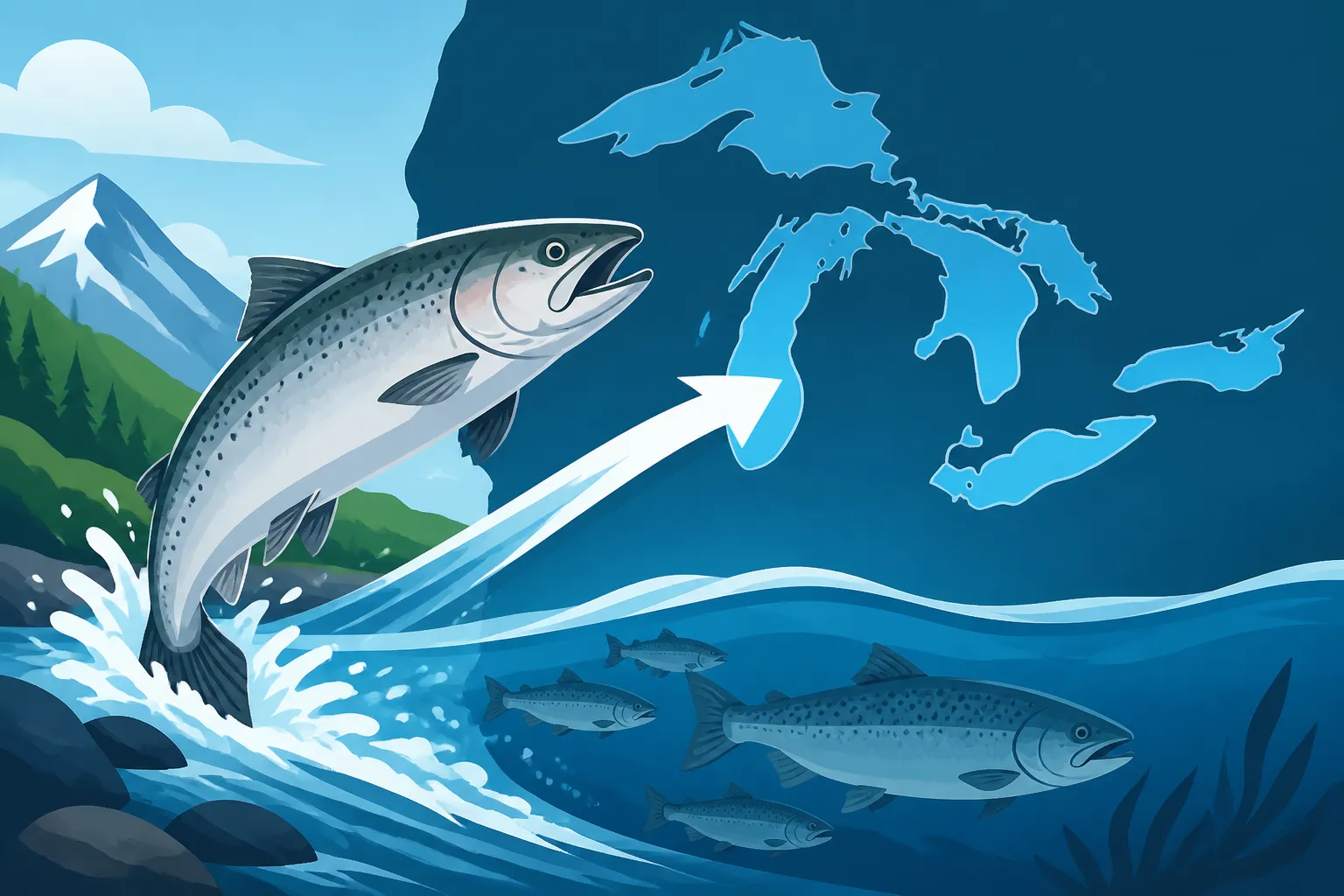
Michigan, specifically its Department of Natural Resources (DNR), was at the forefront of the Chinook salmon introduction. In 1967, following the success with coho, Chinook salmon fingerlings were first stocked into Lake Michigan, primarily into the Big Manistee River and the Little Manistee River. These weren't just a few fish; these were carefully cultivated populations raised in state hatcheries, trucked to release sites, and gently introduced into the cold, clean waters of Michigan's rivers, destined for the vastness of Lake Michigan.
The DNR's vision was to create a self-sustaining population where the salmon would spend several years growing fat on alewives in the lake, then return to their release rivers to spawn, completing their life cycle. This foresight not only helped manage the alewife problem but also created a phenomenal fishery. Imagine the excitement as anglers started pulling in these massive "King" salmon, fish that could weigh upwards of 20 pounds, sometimes even more! The sheer power and fight of a Chinook on the end of a line quickly made it one of the most sought-after game fish in the Great Lakes. This strategic stocking program transformed Michigan's angling scene, drawing in tourists and boosting local economies. The long-term commitment to these stocking efforts, combined with ongoing research and management, has ensured that the Great Lakes continue to be a premier destination for Chinook Salmon in Michigan's Great Lakes.
The King's Reign: Transforming the Great Lakes Fishery
The introduction of Chinook salmon wasn't just an ecological experiment; it was a massive success that completely redefined what it meant to fish the Great Lakes. These powerful fish truly earned their nickname, the "Kings," for their size, their fight, and the dominant role they now play in the ecosystem.
Angling Opportunities and Economic Boost
The arrival of Chinook salmon sparked a golden age of Great Lakes fishing. Suddenly, anglers had access to a world-class trophy fishery right in their backyard. The sheer thrill of battling a hard-fighting King salmon, known for its powerful runs and aerial acrobatics, drew enthusiasts from all over the country. Charter fishing businesses boomed, bait and tackle shops flourished, and coastal towns experienced a significant economic revival. Think of towns like Manistee, Ludington, and Frankfort, where the annual salmon runs bring thousands of people, eager to experience the excitement. The fall runs, in particular, are legendary, with rivers teeming with salmon, offering incredible opportunities for shore anglers, waders, and boaters alike.
This economic impact extends far beyond just fishing gear. Local restaurants, hotels, and gas stations all benefit from the influx of anglers. The Michigan DNR's strategic decision to introduce these fish created not just a fishery but an entire industry. Whether you're trolling offshore for them in the open waters of Lake Michigan or targeting them as they stage near river mouths, the opportunities are abundant. If you're looking to get into this exciting form of fishing, you'll find a wide range of specialized gear, from heavy-duty trolling rods to specific lures, readily available on platforms like Amazon, making it easier than ever to get started. Learning How to Troll for Chinook Salmon on Lake Michigan can open up a whole new world of angling adventure.
Ongoing Management and Challenges
While the introduction of Chinook salmon has been largely successful, it hasn't been without its challenges. Managing a non-native species in such a large, complex ecosystem requires constant vigilance and adaptation. The primary goal is to maintain a healthy balance between the salmon and their primary food source, the alewife. If alewife populations drop too low, the Chinook can suffer from "pin-heading," a condition caused by malnutrition, leading to reduced growth and survival. Conversely, too many alewives can still cause die-offs and ecological issues.
The DNR continuously monitors fish populations, stocking levels, and the health of the ecosystem. Diseases, such as bacterial kidney disease (BKD), can also impact salmon populations, requiring careful management strategies in hatcheries and ongoing research. Furthermore, the reliance on stocking means that the Great Lakes Chinook fishery is, to a large extent, a "put-grow-and-take" operation, requiring significant investment in hatchery facilities and personnel. It's a delicate balancing act, trying to provide incredible fishing opportunities while also ensuring the long-term health and stability of the entire Great Lakes ecosystem. Anglers play a crucial role by adhering to Michigan Fishing Regulations Every Angler Should Know and supporting conservation efforts.
| Year Introduced | Species | Primary Purpose | Initial Impact | Current Status |
|---|---|---|---|---|
| 1966 | Coho Salmon | Alewife Control, Sport Fishing | Immediate success, huge popularity | Self-sustaining in many areas, still stocked |
| 1967 | Chinook Salmon | Alewife Control, Trophy Sport Fishing | Rapid growth, created a premier fishery | Heavily stocked, highly popular |
The Life Cycle of Great Lakes Chinook: Adapted to a New Home
Understanding the life cycle of Chinook salmon in the Great Lakes helps us appreciate how perfectly they've adapted to their new environment and why they've been such a successful introduction. While they can't truly complete their full life cycle without human intervention in some cases, their instincts remain remarkably strong.
Spawning Runs and Riverine Contributions
Like their Pacific Ocean cousins, Great Lakes Chinook salmon are anadromous, meaning they spend most of their lives in open water (in this case, the Great Lakes) and return to freshwater rivers to spawn. When fall arrives, usually starting in late August and peaking in September and October, these powerful fish begin their arduous journey upstream. They'll push into rivers like the Manistee, Au Sable, and Pere Marquette, driven by an instinct to reproduce. It's a sight to behold, witnessing these massive fish fight their way against strong currents, sometimes leaping waterfalls, all to reach their ancestral (or introduced) spawning grounds.
Once they reach suitable gravel beds, the females will dig "redds" – nests in the river bottom – where they deposit their eggs, and the males fertilize them. After spawning, both male and female Chinook salmon typically die, completing their life cycle, much like their Pacific counterparts. These decaying salmon actually contribute nutrients back into the river system, benefiting other aquatic life. While some natural reproduction does occur in certain rivers, the vast majority of the Great Lakes Chinook population relies on continuous stocking efforts by the DNR to sustain the fishery. This commitment to maintaining a robust population is why Michigan anglers can enjoy such incredible fishing during Michigan's Fall Salmon Run Fishing.
Growth in the Open Waters
The real magic for Great Lakes Chinook happens during their time in the vast open waters of the lakes. After hatching from eggs in the gravel beds of the rivers, tiny salmon fry emerge and spend their initial weeks or months in the protective nursery of the river. As they grow a bit stronger, they migrate downstream, eventually reaching the immense expanse of the Great Lakes. This is where the alewife connection becomes critical.
These young salmon find an abundant buffet of alewives, which are rich in fat and protein, allowing them to grow at an incredible rate. A Chinook salmon might spend anywhere from two to five years foraging in the lakes, packing on pounds and growing into the formidable fighters that anglers know and love. Their diet of alewives, coupled with the cold, deep waters of the Great Lakes, provides the ideal conditions for rapid growth. It's this sustained period of growth in the lakes, driven by the readily available food source, that produces the magnificent King salmon Michigan is famous for. Understanding the patterns of these fish throughout the year is key to successful angling, especially knowing Best Months for Salmon Fishing in Michigan. You can find excellent resources, including maps and seasonal guides, through online retailers like Amazon to help you plan your next trip and locate potential hotspots.
Disclaimer
This article is for general informational purposes only and does not constitute professional advice. Laws, prices and regulations vary by location and change over time. Consult a qualified professional for guidance on your specific situation.