Best Gear for Surf Fishing on Lake Michigan
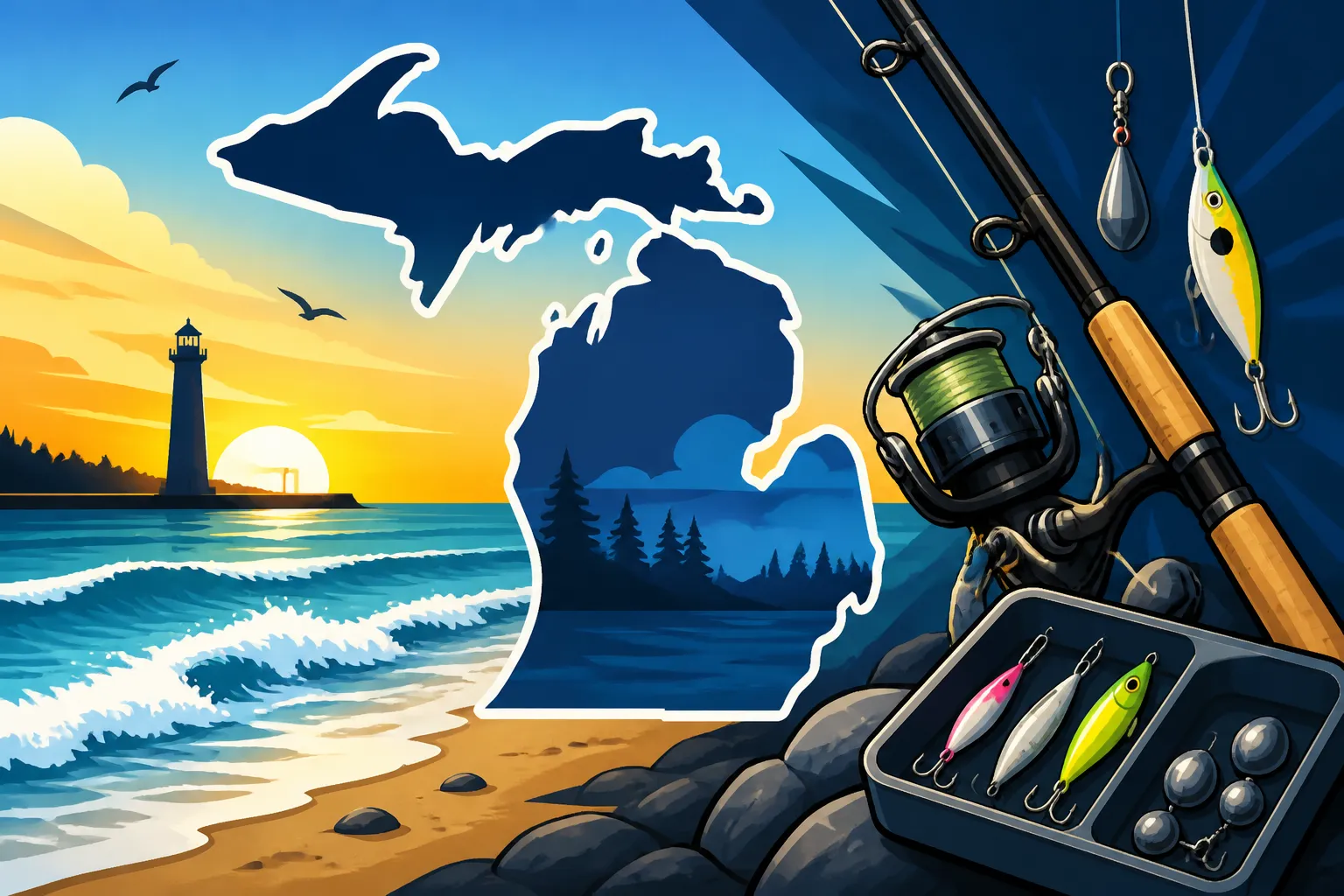
There's nothing quite like the immense expanse of Lake Michigan, standing on the sandy shore with the waves crashing in, feeling that undeniable pull to cast a line out into the deep blue. But surf fishing on our magnificent Great Lake isn't like fishing a small inland pond; it presents unique challenges that require specific gear to not only succeed but also to truly enjoy the experience. This guide is all about helping you cut through the confusion and get properly equipped to tackle the waves and target those prized fish lurking just beyond the breakers.
Understanding the Unique Demands of Lake Michigan Surf Fishing
Stepping onto the sandy shores of Lake Michigan with a fishing rod in hand is an experience unlike any other. It’s majestic, often peaceful, but it also demands respect and preparation. You're not just casting into still water; you're battling elements and aiming for fish that behave differently than their river or small lake counterparts.
The Dynamic Nature of Great Lakes Shorelines
Michigan's Great Lakes coastlines, particularly Lake Michigan, are incredibly dynamic environments. The shoreline isn't static; it's constantly shaped by waves, currents, and wind. This means the water depth can change dramatically, sandbars can form and disappear, and the bottom structure is rarely consistent. You might find a steep drop-off just a few yards out, or a gradual slope that requires exceptionally long casts to reach deeper water. These variables directly impact your gear choices.
For instance, the constant wave action means you need heavy enough sinkers to hold your bait in place against the surge, preventing it from washing back to shore too quickly. It also means you need a rod with enough backbone to cast those heavier weights, often into a strong headwind. Imagine trying to cast a light freshwater setup into a 2-foot chop – it simply won't reach where the fish are, and your bait will be dragged around hopelessly. The strong currents and undertows also mean that any fish you hook, especially a powerful Chinook or steelhead, will use that current to its advantage, putting immense strain on your tackle. You'll also need to consider casting distance; fish often hold beyond the initial wave breaks, requiring a robust rod and reel combo that can reach those distant troughs and channels.
Target Species from the Surf
One of the most exciting aspects of Lake Michigan surf fishing is the incredible variety of species you might encounter. While many anglers immediately think of salmon and steelhead, the opportunities are actually much broader depending on the season and location.
Primary Targets:
- Salmon: Both Chinook (King) and Coho (Silver) salmon are highly sought after, especially during their migratory runs in late summer and fall. These fish are powerful fighters and often hug the shoreline before heading into tributary rivers. Targeting Michigan Salmon Species Explained is a thrill from the surf.
- Steelhead: These migratory rainbow trout are another top contender, particularly during spring and fall runs. They're known for their acrobatic jumps and strong pulls, making for an unforgettable fight. How to Fish for Steelhead in Michigan from the surf can be incredibly rewarding.
- Lake Trout: While often associated with deeper offshore waters, lake trout will sometimes cruise closer to shore, especially in cooler conditions or when baitfish are abundant.
- Brown Trout: Much like lake trout, brown trout are opportunistic feeders that can be found cruising near shore, especially around rocky structures or current breaks.
Secondary & Opportunistic Catches:
- Smallmouth Bass: In areas with rocky bottoms or clear water, smallmouth can be caught from the surf, especially during warmer months.
- Yellow Perch: A beloved panfish, perch are often found in large schools and can be targeted from piers or even sandy beaches if conditions are right and they're chasing bait.
- Walleye: While less common directly from the surf, walleye can be caught in certain areas, particularly around river mouths or structure.
The species you're primarily targeting will influence your gear choice. For instance, a heavy-duty rod and reel suitable for battling a 20-pound King salmon might be overkill for perch, but it's essential if you want to stand a chance against the bigger fish. Conversely, delicate gear designed for panfish won't survive a salmon strike.
Essential Rod and Reel Setups for Lake Michigan Surf Fishing
Your rod and reel are the backbone of your surf fishing arsenal. They need to be robust, capable of handling heavy baits or lures, and able to withstand the abuse of casting into the wind and fighting strong fish in choppy water.
Choosing the Right Surf Rod
When it comes to surf fishing, size truly matters. You're not looking for your everyday bass or panfish rod here.
- Length: A good Lake Michigan surf rod typically ranges from 9 to 12 feet, sometimes even longer. Why so long?
- Casting Distance: The primary reason is to achieve significant casting distance. You often need to cast beyond the breaking waves to reach deeper channels, drop-offs, or baitfish schools where larger predatory fish are lurking. A longer rod generates more tip speed, propelling your bait further.
- Line Clearance: A longer rod helps keep your line elevated above incoming waves, reducing drag and preventing your line from getting tangled in the immediate surf zone or caught on obstacles.
- Fish Fighting Power: The length provides leverage when fighting large fish, allowing you to steer them through waves and prevent them from digging into sandbars.
- Action and Power: Look for a rod with a moderate-fast to fast action and a medium-heavy to heavy power rating.
- Moderate-Fast Action: This means the rod bends mostly in the top third or half, providing enough flexibility for good casting distance and absorbing shock, while still having plenty of backbone.
- Heavy Power: This rating indicates the rod's ability to handle heavier lures and baits (often 2-6 ounces or more) and to lift and fight larger fish effectively.
- Material: Most quality surf rods are made from graphite or a graphite/fiberglass composite.
- Graphite: Offers excellent sensitivity and lighter weight, which is a blessing when casting repeatedly.
- Fiberglass: Adds durability and a more parabolic bend, making it great for absorbing powerful runs but can be heavier and less sensitive. Composites offer a good balance.
- Handle: A long butt section on the handle is crucial for two-handed casting, giving you the leverage needed to launch heavy rigs. Many anglers prefer cork or EVA foam for comfort and grip.
Selecting a Durable Spinning Reel
Your reel needs to be a workhorse, capable of enduring saltwater-like conditions (even though it's freshwater, the sand and spray can be corrosive) and handling the demands of heavy lures and powerful fish.
- Size: For Lake Michigan surf fishing, a spinning reel in the 4000 to 6000 series (or equivalent, depending on the manufacturer) is generally recommended.
- Line Capacity: These sizes offer sufficient line capacity for long casts and extended runs from large salmon or steelhead.
- Drag System: They typically feature robust drag systems that can be smoothly adjusted to tire out strong fish without breaking your line.
- Durability and Sealing: This is paramount. Look for reels advertised as sealed or corrosion-resistant. While Lake Michigan isn't saltwater, the constant exposure to sand, spray, and sometimes even brackish water near river mouths can be brutal on internal components. A well-sealed reel will last longer and perform more reliably. Many manufacturers like Shimano, Penn, and Daiwa offer excellent options in this category. You'll find a wide selection of durable reels perfect for the task at your local Bass Pro Shops or online through Amazon, ensuring you get a model designed for tough conditions.
- Gear Ratio: A moderate gear ratio (around 4.9:1 to 5.6:1) offers a good balance of retrieve speed and cranking power, which is important for both retrieving lures through current and fighting fish.
Line Choices: Braided vs. Monofilament
The type of fishing line you choose significantly impacts your casting distance, sensitivity, and fish-fighting ability.
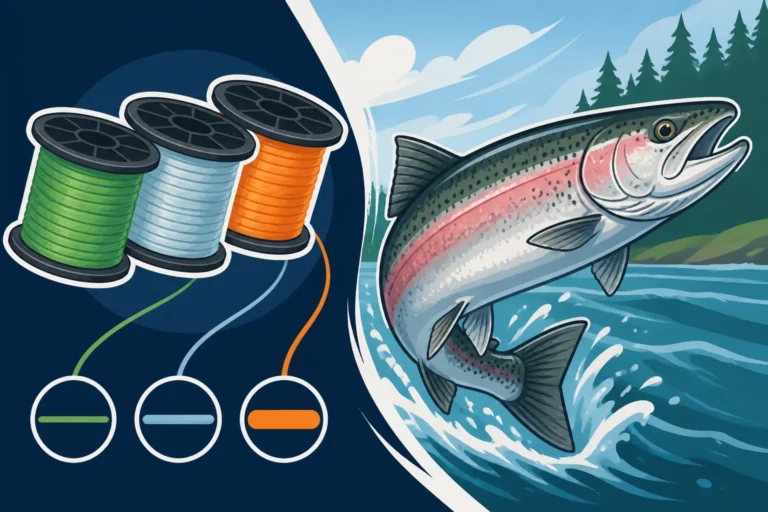
- Braided Line: This is a popular choice for surf fishing due to its exceptional qualities.
- Pros: Incredible strength-to-diameter ratio (allowing for more line on the spool and longer casts), minimal stretch (providing superior sensitivity for detecting subtle bites, even at long distances), and excellent abrasion resistance against sand and waves.
- Cons: Less forgiving if you get a snag (less stretch means more direct impact on knots or rod), more visible in clear water, and can be more expensive.
- Recommendation: A good starting point is 20-30 lb braided line.
- Monofilament Line (Mono): The classic choice.
- Pros: More forgiving due to its stretch (can absorb sudden jolts from a biting fish), generally less expensive, and easier to handle for knot tying.
- Cons: More stretch means less sensitivity, larger diameter for the same breaking strength (less line on the spool), and can develop "memory" over time.
- Recommendation: If you prefer mono, look for 15-25 lb test.
- Fluorocarbon Leader: Regardless of whether you use braid or mono as your main line, adding a fluorocarbon leader is highly recommended.
- Benefits: Fluorocarbon is virtually invisible underwater, offers excellent abrasion resistance (crucial for sharp teeth or rocky bottoms), and provides a bit of shock absorption.
- Connection: Use a strong knot like an Albright or FG knot to connect your main line to a 3-6 foot fluorocarbon leader in the 15-25 lb range.
| Line Type | Pros | Cons | Recommended Use Cases |
|---|---|---|---|
| Braided | High strength, low stretch, sensitive, thin | Visible, expensive, unforgiving | Long casts, detecting subtle bites, heavy cover, fighting large, powerful fish |
| Monofilament | Stretchy, forgiving, affordable, easy to tie | Visible, lower sensitivity, thicker, less abrasion resistant | General purpose, beginners, shock absorption, when stretch is desired (e.g., jumpy fish) |
| Fluorocarbon Leader | Invisible, abrasion resistant, moderate stretch | Stiffer, more expensive than mono | Connecting to main line, targeting wary fish, areas with sharp structure |
Terminal Tackle and Baits That Get Results
Having the right rod and reel is just the beginning. The small but mighty components that connect your line to the fish—your terminal tackle—are equally critical. And, of course, knowing what to put on the hook is key!
Rigs for Different Situations
The way you rig your bait or lure can make all the difference in presentation and effectiveness.
- The Carolina Rig: This is a fantastic bottom-fishing rig for the surf, especially when you want your bait to move naturally with the current while staying near the bottom.
- Setup: Thread an egg sinker (or a pyramid sinker if you need more holding power) onto your main line, followed by a bead (to protect the knot from the sinker), then tie on a barrel swivel. To the other end of the swivel, tie a 1-3 foot fluorocarbon leader, and finally, your hook.
- Use: Ideal for presenting natural baits like spawn bags, cut bait, or even a large nightcrawler for salmon, steelhead, or lake trout that are cruising the bottom. The swivel prevents line twist, and the leader allows your bait to drift enticingly.
- Three-Way Rig (or Dropper Rig): Great for presenting multiple baits or when you want your bait suspended off the bottom.
- Setup: Tie a three-way swivel to your main line. From one eye of the swivel, tie a short leader (6-12 inches) with a sinker. From another eye, tie a longer leader (1-3 feet) with your hook and bait. The third eye connects to your main line.
- Use: This rig can be effective for targeting fish that might be suspended higher in the water column or for trying different baits at different depths simultaneously.
- Sinker Choices:
- Pyramid Sinkers: Excellent for holding bottom in strong currents and waves due to their shape.
- Sputnik Sinkers: These have wire prongs that dig into the sand, offering superior holding power in extremely heavy surf.
- Egg Sinkers: Allow the line to slide freely, making them great for Carolina rigs where you want fish to pick up the bait without feeling immediate resistance.
- Hooks: Always use sharp, strong hooks appropriate for your target species and bait. Sizes from 1/0 to 4/0 are common for salmon and steelhead, while smaller sizes might be used for perch. Octopus or circle hooks are popular for natural baits.
- Swivels: High-quality barrel or ball-bearing swivels are essential to prevent line twist, especially when casting and retrieving in current or using spinning lures.
Effective Natural Baits
Sometimes, nothing beats the real thing. Natural baits often outperform artificial lures, especially for finicky fish or during specific seasons.
- Spawn Bags: These small mesh bags filled with salmon or trout eggs are absolutely deadly for steelhead, coho, and chinook salmon. They mimic natural food sources and are highly attractive. You can buy them pre-tied or make your own with fresh or cured eggs. They are often fished under a float or on a bottom rig.
- Cut Bait: Pieces of oily baitfish like smelt, alewife, or even suckers can be incredibly effective, particularly for lake trout and larger salmon. The scent trail they put out can draw fish in from a distance.
- Nightcrawlers: While often thought of for freshwater species like bass and panfish, a large nightcrawler fished on a bottom rig can surprise you with a steelhead or even a smaller salmon. They are also excellent for yellow perch.
- Shrimp: Freshwater shrimp or pieces of larger shrimp can be surprisingly effective for a variety of species, especially when other baits aren't working.
Productive Artificial Lures
Artificial lures allow for active fishing, covering a lot of water and enticing strikes from aggressive fish.
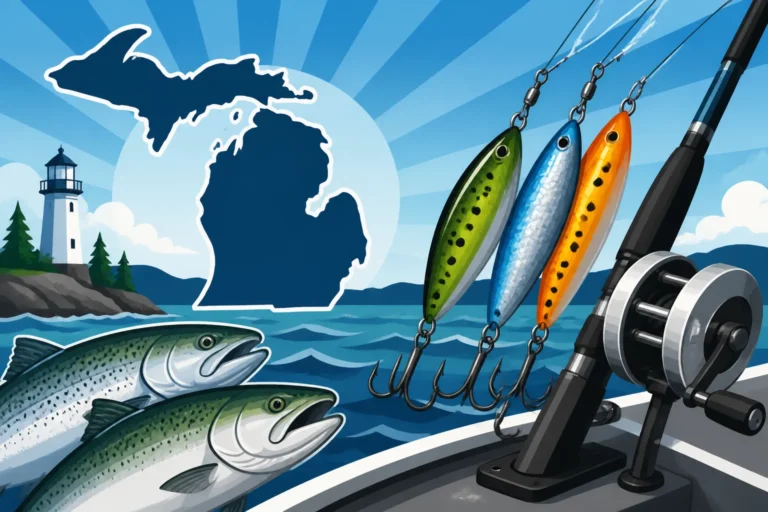
- Casting Spoons: These are surf fishing staples for a reason. Their erratic wobble and flash mimic wounded baitfish, making them irresistible to salmon, steelhead, and lake trout.
- Popular Options: Brands like Krocodile (often in chrome or blue/chrome) and Little Cleo (gold/orange, silver/blue) are legendary on the Great Lakes.
- Technique: Cast them out, let them sink to the desired depth, and retrieve with a varying speed, adding occasional jerks to impart extra action.
- Stickbaits (Minnow Plugs): These lures perfectly imitate slender baitfish and are excellent for targeting salmon and steelhead cruising just below the surface or in the mid-water column.
- Popular Options: The classic Rapala Original Floater or Jointed Rapala, as well as deeper-diving models, are highly effective. Other brands like Yo-Zuri also produce excellent stickbaits.
- Colors: Natural baitfish patterns (silver, blue/silver) are always a good bet, but don't shy away from brighter colors like fire tiger or chartreuse in murky water.
- Soft Plastics: Grubs, swimbaits, and worm imitations can be incredibly versatile, especially when fished on a jig head.
- Grubs and Swimbaits: Small swimbaits or curly-tail grubs can tempt smallmouth bass and perch, while larger models on heavier jig heads can work for steelhead.
- Colors: Experiment with natural greens, browns, and whites, or vibrant chartreuse and pink.
- Jigs: Bucktail jigs or marabou jigs can be deadly for steelhead, especially when retrieved with an erratic twitching motion. For walleye, lead-head jigs tipped with a minnow or soft plastic can be very effective, especially when fished near structure or drop-offs. Jigging Techniques for Michigan Walleye can also translate to certain surf conditions.
Crucial Accessories and Comfort Gear
Surf fishing can be a tough endeavor, exposing you to the elements and demanding physical exertion. The right accessories not only make the experience more comfortable but also more successful and safer.
Waders and Footwear
To effectively surf fish, you often need to wade out into the water to get past the immediate shore break, reach deeper water, or retrieve a fish.
- Chest Waders: These are non-negotiable. Forget hip waders; the waves of Lake Michigan will inevitably go over them. Chest waders keep you dry and, importantly, warm in cooler temperatures, which are common during prime salmon and steelhead seasons.
- Neoprene Waders: Excellent for cold weather due to their insulating properties. They are durable but can be bulky and hot in warmer conditions.
- Breathable Waders: Lighter and more comfortable for warmer weather, or if you plan to do a lot of walking. They offer less insulation but are more versatile.
- Wading Boots: If you choose stockingfoot waders, you'll need sturdy wading boots. Look for boots with good ankle support and felt or rubber soles with studs for grip on slippery rocks or sandy bottoms. A stable footing is crucial when wading in current and waves. Good quality boots and waders are an investment, but they are absolutely essential for comfortable and safe surf fishing. Many anglers find great deals on these items at Bass Pro Shops or by browsing options on Amazon.
Rod Holders and Storage
You won't want to hold your rod for hours on end, and proper storage keeps your gear organized and protected.
- Spike Rod Holders: These are simple, yet ingenious devices. Typically made of PVC pipe or sturdy metal, they have a pointed end that you drive into the sand. They allow you to safely rest your rod while you wait for a bite, bait a hook, or attend to other gear. Some models are adjustable for different rod angles, which can be useful depending on wave conditions. They prevent your expensive rod and reel from getting covered in sand or being pulled into the water by a rogue wave or an unexpected strike.
- Tackle Management Systems: When surf fishing, mobility is key. You don't want to lug a heavy tackle box through the sand.
- Surf Bags: These specialized bags are designed to be worn over the shoulder or on a belt. They're typically waterproof or highly water-resistant and feature compartments for lures, leader material, and tools. They allow you to carry just the essentials without being weighed down.
- Fishing Backpacks: A good fishing backpack with multiple compartments can also work, especially if you're carrying extra layers, water, or a small lunch. Ensure it's durable and can handle sand and moisture. Having your Best Tackle Box Setup for Michigan Anglers organized into a portable system will make your day much smoother.
Essential Tools for Safety and Success
Beyond your primary fishing gear, a few indispensable tools can make your surf fishing trip safer and more productive.
- Pliers and Scissors: Essential for cutting line, removing hooks (especially from toothy fish), and crimping sleeves. Rust-resistant models are a must.
- Measuring Tape or Bump Board: Michigan has strict Michigan Bag and Size Limits Explained for various species. You need to be able to accurately measure your catch to ensure it's legal to keep. A bump board is great for quickly and accurately measuring fish on the sand.
- Landing Net: A large, long-handled landing net is incredibly valuable, especially when you hook a powerful salmon or steelhead. Trying to land a big fish by hand in crashing waves can be risky and often results in lost fish. A net with a rubberized mesh is gentler on the fish if you plan to release it.
- Headlamp: Even if you plan to fish during the day, a headlamp is crucial if you stay out past dusk or arrive before dawn. It allows you to rig up, tie knots, and navigate the shoreline safely in low light.
- First-Aid Kit: A small, basic first-aid kit is always a good idea. Hooks are sharp, and cuts happen.
- Valid Fishing License: Last but certainly not least, always carry your Michigan Fishing License Guide for Residents and Nonresidents and be aware of all local Michigan Fishing Regulations Every Angler Should Know. Fishing without one can lead to hefty fines and confiscation of your gear.
Having the right gear for surf fishing on Lake Michigan isn't just about catching more fish; it's about making your time on the water more comfortable, enjoyable, and safe. With a little preparation and the right setup, you'll be well on your way to experiencing the thrill of a lifetime as you battle a Great Lakes giant from the shore.
Disclaimer
This article is for general informational purposes only and does not constitute professional advice. Laws, prices and regulations vary by location and change over time. Consult a qualified professional for guidance on your specific situation.