How to Catch Yellow Perch on Lake St. Clair
There's nothing quite like a day spent on Lake St. Clair, especially when you're after those feisty yellow perch. Many anglers, myself included, have felt that twinge of frustration when the bite just isn't happening, or you're reeling in undersized fish while others around you are filling their buckets. It can feel like a secret code you just haven't cracked. But don't worry, this guide is going to break down everything you need to know to successfully target and catch yellow perch on this incredible body of water, from understanding their habits to mastering the techniques that consistently put fish in the boat or on the ice.
Understanding Lake St. Clair's Yellow Perch Fishery
Lake St. Clair is often hailed as a freshwater angler's paradise, and for good reason. Its unique characteristics make it an ideal habitat for a thriving yellow perch population, providing consistent opportunities for a fantastic day of fishing. Knowing why perch love this lake and how they behave throughout the year is your first step to consistent success.
Why Lake St. Clair is a Perch Paradise
Lake St. Clair isn't your average deep-water lake; it's relatively shallow, with an average depth of only about 10 feet. This shallow nature means the water warms up quickly in the spring and holds a more uniform temperature, which yellow perch absolutely adore. The expansive, fertile bottom, coupled with plenty of weed beds, provides abundant food sources like insect larvae, minnows, and crustaceans, forming a perfect buffet for growing perch. It's truly a rich ecosystem.
Beyond the food and favorable temperatures, the sheer size of the lake, almost 430 square miles, offers vast areas for perch to roam and find sanctuary. You'll find a mix of sandy flats, rocky areas, and extensive weed lines that provide both cover from predators and prime foraging grounds. This diverse habitat allows for a large, healthy population of perch, offering anglers plenty of opportunities no matter where they drop a line. It’s no wonder this lake is a go-to spot for anglers seeking this popular panfish.
The Life Cycle and Habits of Yellow Perch in Lake St. Clair
Yellow perch in Lake St. Clair follow a predictable seasonal pattern driven primarily by water temperature and their need to feed and reproduce. They typically spawn in late spring, usually April or early May, once water temperatures reach around 45-50 degrees Fahrenheit. During this time, they move into shallow, vegetated areas to lay their distinctive ribbon-like egg masses. After spawning, they disperse and begin their summer feeding frenzy.
Throughout the warmer months, perch are incredibly active, often schooling in large numbers. They are opportunistic feeders, constantly on the move to find their next meal. As fall approaches, they become even more aggressive, fattening up for the lean winter months, often moving to slightly deeper edges of weed beds or structural features. In winter, during the ice fishing season, they tend to school tightly and move slower, often congregating near deeper channels, drop-offs, or offshore humps, making them a prime target for ice anglers. Understanding these movements is key to knowing Best Time to Catch Yellow Perch on Lake St. Clair and where to find them.
Essential Gear for Lake St. Clair Yellow Perch
Having the right tools for the job can make a world of difference when chasing yellow perch on Lake St. Clair. While you don't need the most expensive gear, having a setup that's sensitive enough to detect those subtle perch bites and robust enough to handle the occasional bigger fish is crucial.
Rods, Reels, and Line
For yellow perch, you're going to want a light to ultra-light spinning rod, typically between 5 and 6.5 feet in length. The key here is a sensitive tip that can telegraph even the slightest nibble. A fast action rod is ideal, meaning the bend is concentrated near the tip, allowing for quick hooksets. Pair this with a small spinning reel, size 500 or 1000, spooled with 4 to 6-pound test monofilament or fluorocarbon line. Some anglers prefer braided line for its sensitivity, but if you go that route, add a fluorocarbon leader to make it less visible in Lake St. Clair's often clear waters.
When it comes to the line, monofilament offers good stretch and knot strength, which can be forgiving with lighter tackle. Fluorocarbon is nearly invisible underwater and has less stretch, providing excellent sensitivity. You can find a wide array of options for both rods and reels on platforms like Amazon, making it easy to get quality gear delivered right to your door. Remember, the goal is to feel those delicate bites, so don't go too heavy on your setup.
Terminal Tackle
Your terminal tackle is where the magic happens, and for perch, simplicity often reigns supreme. Small hooks, typically size 6 to 10, are perfect for their smaller mouths. Aberdeen-style hooks are popular because their thin wire makes them less likely to gut-hook a fish and easier to remove. Split shot sinkers are your friend for getting bait down quickly and keeping it in the strike zone; have an assortment of sizes on hand.
Bobbers are also essential, especially when fishing live bait or small jigs. Slip bobbers are fantastic for fishing at varying depths, as they allow you to set your bait precisely where the fish are holding without having a fixed bobber sliding down your line. For specific rigs, a simple split shot rig, a small jig, or a perch rig (a pre-tied rig with two snelled hooks) are all highly effective. Don't forget swivels to prevent line twist, especially when using minnows. You can easily stock up on these small but critical items, like pre-tied perch rigs and various hook sizes, through online retailers.
Electronics and Accessories
While not strictly mandatory, having good electronics can significantly boost your perch catching success, especially on a large body of water like Lake St. Clair. A quality fish finder is invaluable for locating schools of perch, identifying submerged structure, and determining depth. Look for models with good resolution and the ability to distinguish individual fish from baitfish. Many modern units also offer GPS, which is incredibly useful for marking productive spots and navigating the lake.
Beyond electronics, a few key accessories will make your trip more comfortable and efficient. A good bait bucket with an aerator will keep your minnows lively throughout the day. A pair of long-nosed pliers or a hook remover is crucial for safely unhooking fish, especially if you're practicing catch and release. And, of course, a valid Michigan Fishing License Guide for Residents and Nonresidents is non-negotiable before you even think about wetting a line. You can often find great deals on portable fish finders, bait buckets, and other essential accessories for your perch adventures on sites like Amazon.
Top Techniques for Catching Yellow Perch on Lake St. Clair
Once you have your gear sorted, it's time to talk tactics. Yellow perch can be particular, but with the right approach, you can have a truly banner day on Lake St. Clair. It often comes down to presenting the right bait or lure in the right way.
Live Bait Presentations
Live bait is, hands down, one of the most effective ways to catch yellow perch on Lake St. Clair. They are natural predators, and a struggling minnow or a juicy worm is hard for them to resist. Minnows are probably the most popular choice. Small emerald shiners, fathead minnows, or even rosy reds work wonders. Hook them lightly through the lips or just behind the dorsal fin to keep them active. A simple bobber rig, set to suspend the minnow just above the weed tops or near the bottom, is incredibly effective.
Nightcrawlers or pieces of redworm are another excellent option. You can thread a small piece onto a hook or use a whole worm for larger perch. Wax worms, spikes, and grubs are also fantastic, especially during colder water periods or when ice fishing. The key with live bait is to let it do the work – perch are attracted to natural movement and scent. Present your bait naturally, and give the perch time to find it. Remember to always check the specific Michigan Bag and Size Limits Explained for yellow perch on Lake St. Clair to ensure you're compliant.
Artificial Lures and Jigs
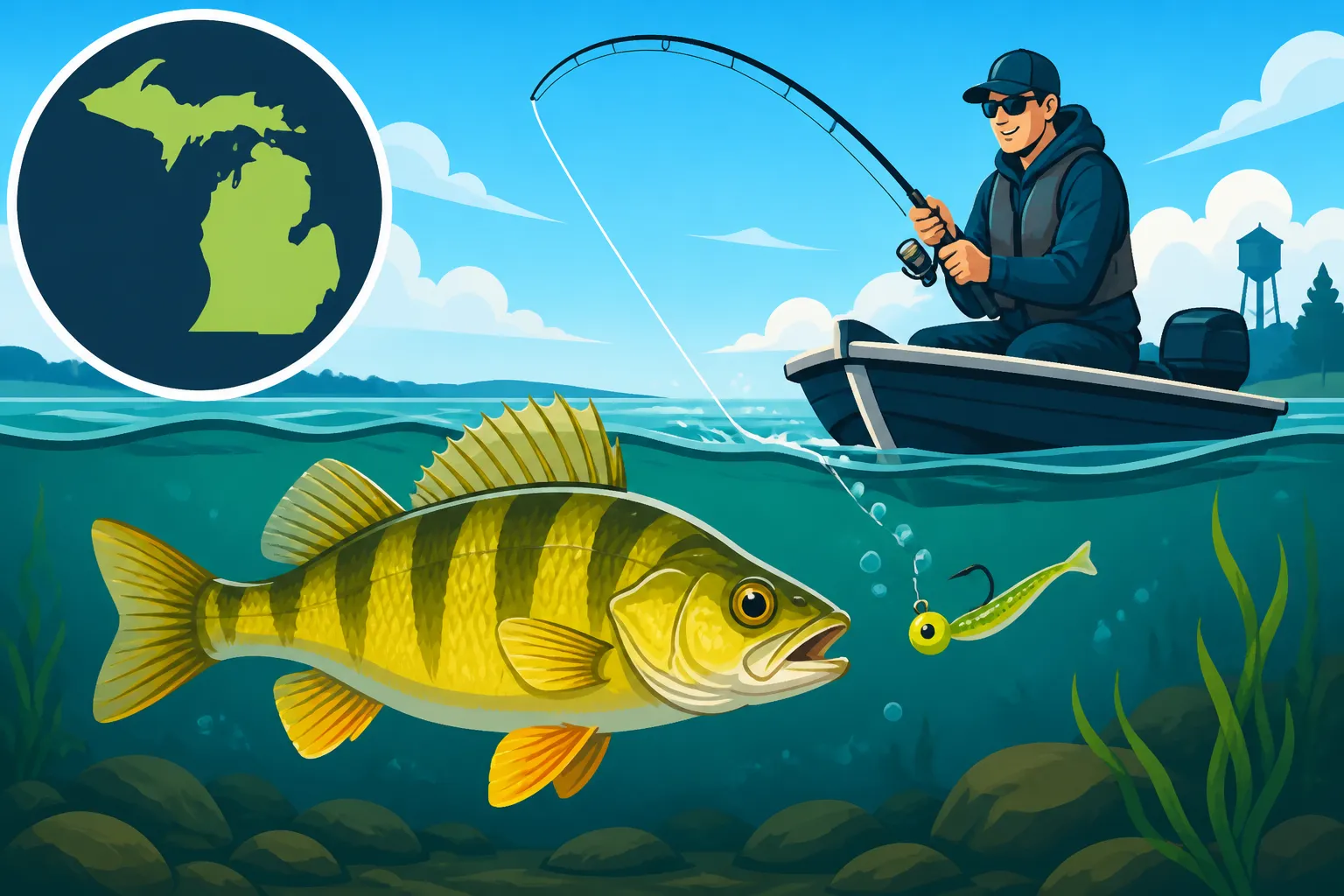
While live bait often excels, artificial lures can be incredibly productive, especially when perch are aggressive or you're trying to cover more water. Small jigs, ranging from 1/32 to 1/8 ounce, are fantastic. Tip them with a small plastic grub, a piece of gulp minnow, or even a wax worm for added scent and appeal. Bright colors like chartreuse, orange, and white often work well, as do more natural hues like brown, black, or olive.
Spoons, especially small Kastmasters or Swedish Pimples, are also great for jigging, particularly through the ice or when vertically jigging from a boat over schools of fish. They flash and flutter, mimicking a wounded baitfish, which can trigger a strong reaction strike. Small blade baits can also be deadly. Experiment with different colors and retrieve speeds until you find what the perch are keying in on. The beauty of artificial lures is that you can quickly change colors or styles to adapt to changing conditions. You can find a huge selection of small jigs, plastic grubs, and spoons perfect for perch fishing on Lake St. Clair on Amazon.
Locating Perch Hotspots
Finding the perch is often half the battle on a big lake like St. Clair. These fish are highly nomadic and often move in schools. Start by looking for structure. Weed beds, especially those with distinct edges or breaks, are prime holding areas. Perch love to hide in the weeds, ambushing baitfish that swim by. Submerged humps, rock piles, and old creek channels or depressions in the lake bottom are also excellent spots.
Pay close attention to depth. While Lake St. Clair is shallow, perch will often congregate at certain depths depending on the season, water temperature, and available food. In summer, they might be in 8-12 feet of water; in fall, they could move to 12-20 feet, or even deeper if you're fishing near the shipping channels. If you have a fish finder, use it constantly to scan for schools of fish or interesting bottom features. Don't be afraid to move if you're not getting bites; perch rarely come to you on Lake St. Clair, you need to find them. Knowing the Best Fishing Spots on Lake St. Clair can give you a head start, but learning to read the water yourself is truly invaluable.
Seasonal Considerations for Lake St. Clair Perch Fishing
Yellow perch fishing on Lake St. Clair is a year-round affair, offering distinct opportunities and challenges with each changing season. Adapting your approach to the time of year is key to consistent success.
Spring and Summer Strategies
As the ice retreats and the water begins to warm in spring, yellow perch become very active, feeding heavily after their spawning efforts. During late spring and early summer, they will often be found in relatively shallow waters, anywhere from 4 to 12 feet deep, especially around new weed growth and submerged vegetation. This is a great time to target them with slip bobbers and live minnows or small jigs tipped with plastics. Look for areas where warmer currents might concentrate baitfish.
Throughout the peak of summer, perch tend to spread out more, often schooling in slightly deeper water or along the deeper edges of the extensive weed beds. Trolling small crankbaits or spinner rigs can be effective for covering large areas and locating schools. Once found, switch to vertical jigging with small jigs or live bait. Remember, perch are active during the day, so early mornings and late evenings aren't as critical as they might be for other species.
Fall Perch Action
Fall is arguably one of the best times to target yellow perch on Lake St. Clair, particularly for those looking for bigger, fatter fish. As water temperatures begin to drop, perch start their pre-winter feeding binge, packing on weight. They often move from the shallower weed beds to more defined structural features like deeper flats, humps, and channels, usually in 10 to 20 feet of water, sometimes deeper.
During the fall run, perch often congregate in massive schools. If you find one, you can often catch them one after another. Vertical jigging with minnows or small spoons is incredibly effective. This is also a fantastic time to use your fish finder to locate those tightly packed schools. Pay attention to changes in barometric pressure, as stable weather often leads to better fishing. The cooler temperatures also mean the perch are firm and delicious, making them a prime target before the ice sets in.
Ice Fishing for Perch
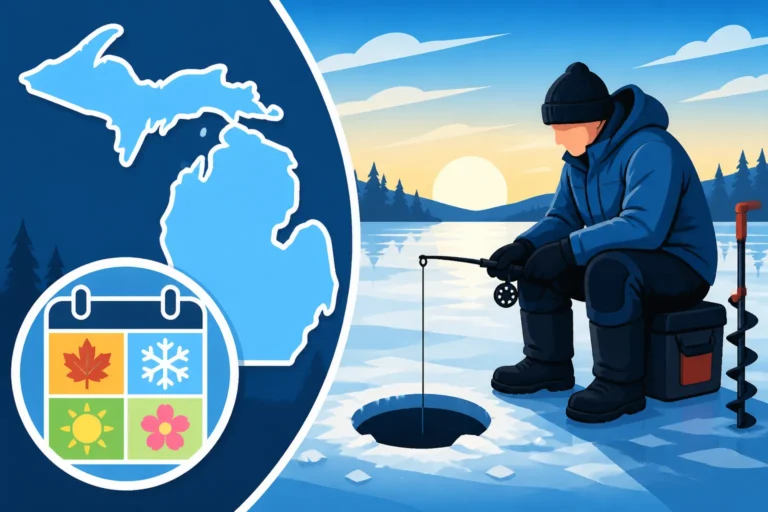
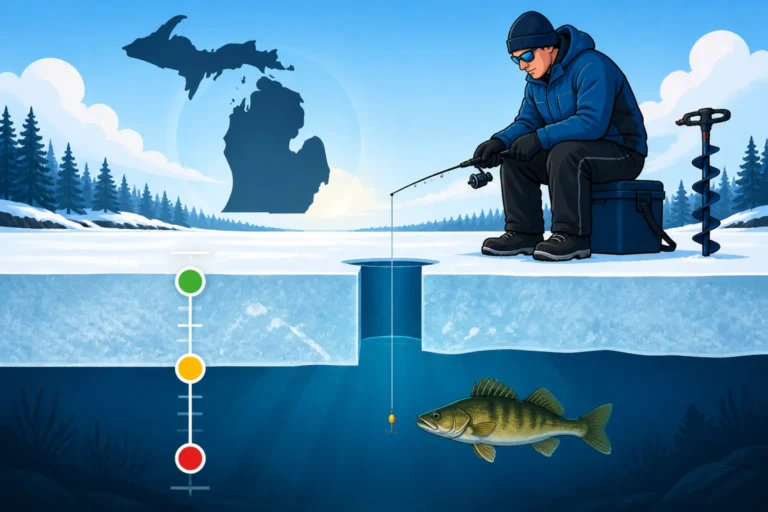
When Lake St. Clair freezes over, a whole new world of perch fishing opens up. Ice fishing for perch is hugely popular, and for good reason—they remain active under the ice. Perch tend to school tightly in winter, often congregating near deeper drop-offs, humps, or the edge of old shipping channels. While the lake is generally shallow, finding those slight depressions or changes in depth can be key.
Your approach to Ice Fishing Techniques for Perch will often involve small jigs, teardrops, or tiny spoons, tipped with live bait like wax worms, spikes, or a single minnow eye. Sensitivity is paramount when ice fishing, so use light line and a sensitive ice rod to detect those subtle up-bites. A flasher or an ice fishing specific fish finder is incredibly helpful for seeing your lure and watching how fish react to it. Safety is also paramount, so always check ice conditions before venturing out. For a detailed guide on everything you need for the hard water season, check out our Michigan Ice Fishing Guide.
Lake St. Clair Yellow Perch Seasonal Fishing Guide
To help you plan your trips, here's a quick overview of what to expect for yellow perch fishing on Lake St. Clair throughout the year:
| Season | Typical Location/Depth | Preferred Baits/Lures | Key Techniques | Notes |
|---|---|---|---|---|
| Spring | Shallow (4-12 ft), new weed growth, near shore | Live minnows, wax worms, small jigs | Slip bobber fishing, slow jigging | Post-spawn feeding frenzy. |
| Summer | Deeper weed edges (8-15 ft), open flats | Live minnows, small jigs, spinner rigs | Vertical jigging, slow trolling, drift fishing | Perch spread out, cover more water. |
| Fall | Deeper flats, humps, channels (10-20+ ft) | Live minnows, small spoons, blade baits | Vertical jigging, drift fishing with bait | Prime time for large, aggressive perch. |
| Winter | Deeper channels, humps, drop-offs (12-25+ ft) | Tiny jigs, teardrops, small spoons tipped with spikes/wax worms | Ice jigging with sensitive rods, tip-ups | Perch school tightly, electronics are key. |
This table provides a general guideline; always be prepared to adapt to the specific conditions you encounter on any given day. The more you explore and experiment, the better you'll become at understanding the subtle nuances of perch behavior on Lake St. Clair. Don't forget to review the current Michigan Fishing Regulations Every Angler Should Know before heading out.
Disclaimer
This article is for general informational purposes only and does not constitute professional advice. Laws, prices and regulations vary by location and change over time. Consult a qualified professional for guidance on your specific situation.