Are Sea Lamprey a Threat to Michigan Fish?
It’s a truly disheartening moment when you reel in a beautiful fish from a Michigan lake or river, only to see those tell-tale circular scars or, worse, a sea lamprey still attached. Many anglers wonder just how serious a problem these invasive creatures really are for our beloved Michigan fisheries. Let me tell you, they are indeed a significant threat, and understanding their impact and the ongoing efforts to control them is crucial for every angler who cares about our Great Lakes ecosystem. This guide will dive deep into why sea lamprey are such a menace, the damage they cause, and what's being done to protect Michigan's precious fish populations.
What Exactly Are Sea Lamprey?
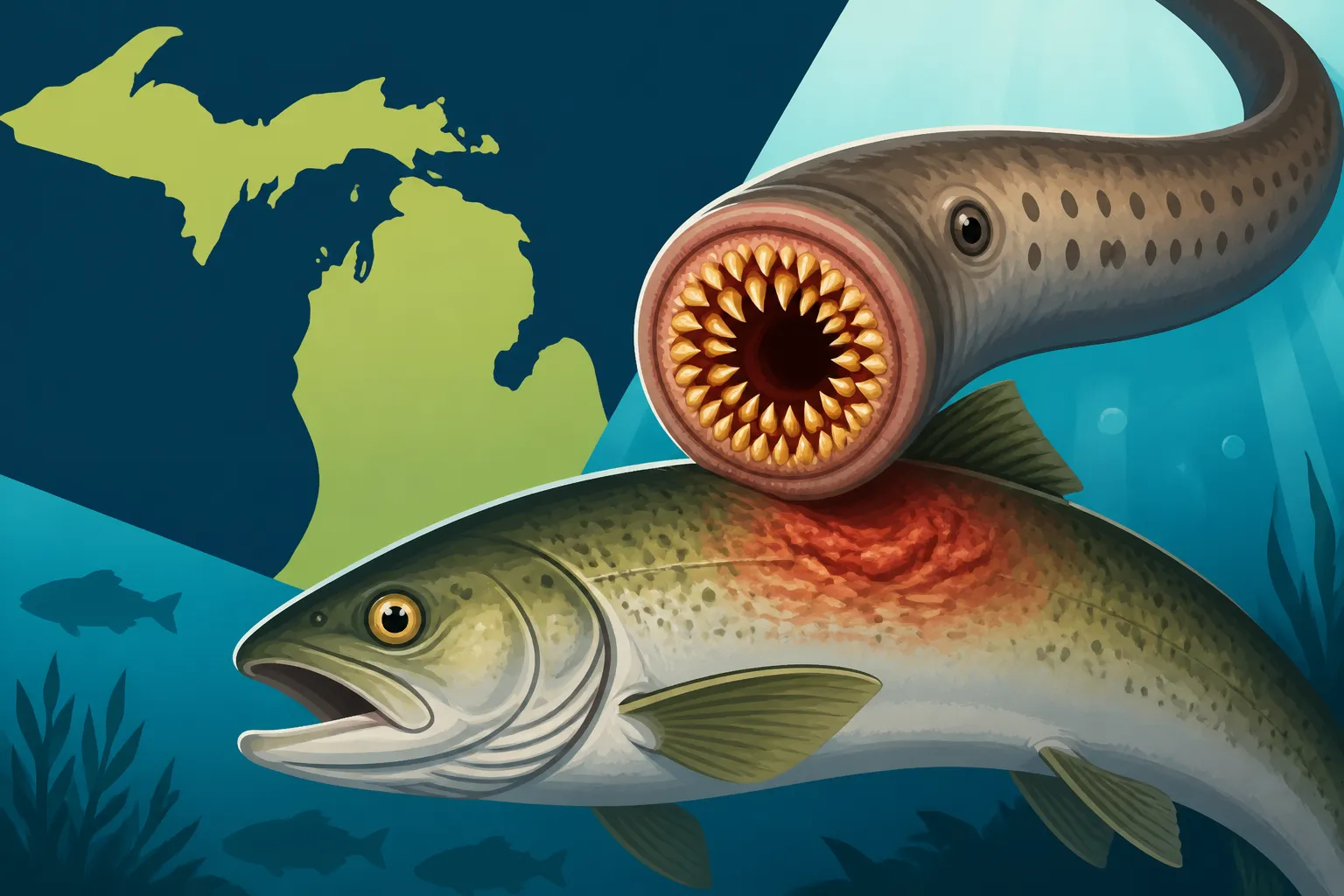
When we talk about sea lamprey, we're discussing a truly ancient and rather unsettling creature. They're often called "vampire fish" for good reason, though technically, they're not fish at all; they are a type of jawless fish known as an agnathan, more closely related to hagfish. These eel-like creatures can grow up to two feet long, with a dark, mottled skin that helps them blend into riverbeds. Their most distinctive feature, and the one that causes so much trouble, is their round, sucker-like mouth lined with rows of sharp, horny teeth, and a rasping tongue. It's a mouth designed for one thing: latching onto other fish and draining their bodily fluids.
The "Vampire Fish" of the Great Lakes
Imagine being a walleye or a lake trout, happily swimming in the depths, when suddenly one of these creatures latches onto your side. That's the reality for many Michigan fish. The sea lamprey uses its suction-cup mouth to firmly attach itself to a host fish. Then, using its sharp teeth and rasping tongue, it files away at the scales and skin, creating an open wound. It then secretes an anticoagulant to keep the blood flowing and feeds on the host's blood and other body fluids. This isn't just a minor inconvenience for the host fish; it's a slow, debilitating attack. The wounds are often severe, leading to significant blood loss, secondary infections, and often, death. A single sea lamprey can kill up to 40 pounds of fish in its adult parasitic stage! It's a stark reminder of the harsh realities of nature, but also of the severe imbalance caused by an invasive species.
Where Did Sea Lamprey Come From?
Unlike some native lamprey species that don't pose the same threat, the sea lamprey is an invasive species in the Great Lakes, meaning it's not naturally found here. They originated in the Atlantic Ocean and made their way into Lake Ontario through the Erie Canal in the 1800s. But the real game-changer was the Welland Canal, which bypasses Niagara Falls. This canal, completed in its current form in the early 20th century, opened a direct pathway for sea lamprey to enter Lake Erie and then, progressively, the upper Great Lakes—Huron, Michigan, and Superior. Without natural predators or effective control mechanisms in these new environments, their populations exploded. This unchecked invasion led to a cascade of ecological devastation that dramatically altered the Great Lakes fishery, setting the stage for decades of struggle to restore balance.
The Devastating Impact on Michigan's Fisheries
The arrival and proliferation of sea lamprey in the Great Lakes caused an ecological catastrophe that forever changed the fishing landscape of Michigan. It wasn't just a nuisance; it was an existential threat to many of our most prized fish species, leading to collapses that still echo in our history books. For generations of anglers, the stories of abundant lake trout and whitefish before the lamprey invasion are almost mythical.
Decimating Native Fish Populations
Before the sea lamprey became established, the Great Lakes, especially Lake Superior, Huron, and Michigan, were renowned for their incredible lake trout populations. These large, predatory fish were the apex predators, maintaining a healthy ecosystem. However, lake trout are particularly vulnerable to sea lamprey attacks due to their large size and smooth skin. Once the lamprey arrived, the lake trout populations plummeted with horrifying speed. It wasn't just lake trout; other important species like Whitefish Fishing in Michigan, burbot, and even some of our beloved salmon species were heavily impacted. The absence of these keystone species allowed for imbalances, affecting everything from baitfish populations to aquatic plant life. Rebuilding these fisheries has been a monumental task, requiring extensive stocking programs, a good fishing license and constant vigilance over the lamprey population.
| Fish Species | Vulnerability to Sea Lamprey | Primary Impact | Status Before Lamprey | Current Status (with control) |
|---|---|---|---|---|
| Lake Trout | High (large, smooth skin) | Direct mortality, stress, disease | Abundant, apex predator | Recovering, requires stocking |
| Lake Whitefish | Moderate to High | Direct mortality, reduced harvest | Commercially important | Stressed, subject to lamprey |
| Chinook Salmon | Moderate | Direct mortality, reduced fitness | Introduced, thriving | Healthy, but still vulnerable |
| Coho Salmon | Moderate | Direct mortality, reduced fitness | Introduced, thriving | Healthy, but still vulnerable |
| Walleye | Low to Moderate (hard scales) | Stress, occasional mortality | Abundant in some lakes | Healthy, generally less affected |
Economic and Recreational Losses
The ecological devastation wrought by sea lamprey translated directly into severe economic and recreational losses for Michigan. Commercial fishing operations, which had thrived on the abundant lake trout and whitefish harvests, saw their livelihoods disappear. Many fishing towns and coastal communities that relied on these industries suffered immense hardship. Recreational anglers, who once flocked to the Great Lakes for trophy trout, found their sport drastically diminished. Imagine planning your dream fishing trip to Lake Superior only to find that the fish you're targeting are either gone or heavily scarred. This kind of impact is deeply felt, not just in dollars and cents, but in the cultural fabric of a state that prides itself on its world-class fishing. The struggle to control lamprey and restore fisheries has been an ongoing saga, demanding significant investment from state and federal agencies and dedicated individuals with a Michigan Fishing License Guide for Residents and Nonresidents.
Michigan's Ongoing Fight Against Sea Lamprey
The sheer scale of the sea lamprey problem demanded a coordinated, sustained response. Michigan, along with other Great Lakes states, Canada, and the federal government, recognized early on that this wasn't a problem any single entity could tackle alone. The Great Lakes Fishery Commission (GLFC) was established specifically to address issues like the sea lamprey, and their efforts have been nothing short of heroic in preventing an even greater collapse of our fisheries.
Lampricide Treatments
The primary weapon in the fight against sea lamprey has been the targeted use of lampricides. These specialized chemicals, primarily TFM (3-trifluoromethyl-4-nitrophenol) and Bayluscide, are applied to streams and rivers where sea lamprey larvae (ammocoetes) live. The beauty of these lampricides is their specificity: they are designed to kill lamprey larvae at concentrations that are safe for most other fish and aquatic organisms. It's a delicate balance, requiring precise application by highly trained teams. These treatments are not a one-time fix; they are an ongoing, cyclical process. Lamprey migrate from the Great Lakes into hundreds of tributary streams to spawn, and their larvae can live in these streambeds for several years before migrating back to the lakes as parasitic adults. Regular surveys and treatments are essential to interrupt this life cycle. Without these lampricide programs, funded through agencies like the GLFC, the Great Lakes fishery would quickly revert to its pre-control, lamprey-dominated state, decimating species like those detailed in Michigan's Great Lakes Fishing Regulations Guide.
Trapping and Barriers
While lampricides target the larval stage, other methods are crucial for catching adult sea lamprey and preventing them from spawning. Traps, often placed at the mouth of rivers or within streams, are designed to capture adult lamprey as they migrate upstream to spawn. These traps allow researchers to monitor lamprey populations, collect data, and remove adult lamprey before they can reproduce. Furthermore, strategically placed barriers, ranging from low-head dams to specially designed electrical weirs, prevent adult lamprey from accessing upstream spawning grounds. These barriers are particularly effective in blocking migration while still allowing other desirable fish species to pass or providing fish ladders for them. It's a continuous balancing act, ensuring that control measures are effective against lamprey without unduly impacting native fish movements. For anglers thinking about where to target species like walleye, understanding these efforts helps appreciate the fish they do catch in places like Saginaw Bay, Michigan, Walleye Fishing on Lake Huron.
The Role of Science and Research
The fight against sea lamprey is deeply rooted in scientific research and innovation. Scientists are constantly studying the lamprey's biology, behavior, and genetics to develop more effective and environmentally friendly control methods. This includes exploring new lampricide formulations, improving trap designs, and investigating biological control options. For instance, research into pheromones, the chemical cues lamprey use to find mates or spawning grounds, is showing promise for attracting lamprey to traps or deterring them from critical spawning habitats. This scientific rigor ensures that control efforts are precise, efficient, and minimize impact on the broader ecosystem. Every step, from understanding their lifecycle to deploying advanced tools (which you might even find referenced in fishing publications available on platforms like Amazon), is backed by rigorous scientific inquiry.
How Anglers Can Be Part of the Solution
As anglers, we have a vital role to play in supporting Michigan's fisheries and the ongoing battle against invasive species like the sea lamprey. Our actions, from how we fish to how we report our catches, can make a real difference. It’s not just about what the agencies do; it’s about collective stewardship.
Catch and Report
When you're out on the water, whether ice fishing for perch or trolling for salmon, you might encounter a fish that has been attacked by a sea lamprey, or even a lamprey still attached to a fish. It's an unpleasant sight, but reporting these encounters is incredibly helpful. If you catch a fish with lamprey wounds, or if you happen to catch a sea lamprey itself, consider reporting it to the Department of Natural Resources (DNR). While specific lamprey reporting isn't typically required like it is for Michigan Muskellunge Harvest Reporting Rules, any unusual observations can contribute to the overall understanding of lamprey distribution and impact. Taking a clear photo of the lamprey or the wound can be especially valuable. This vigilance helps scientists track where lamprey are most prevalent and assess the effectiveness of control measures.
Prevent the Spread
One of the most critical things any angler can do is prevent the spread of all aquatic invasive species, not just sea lamprey. This means always cleaning, draining, and drying your boat, trailer, and fishing gear after every outing. Larval lamprey or other invasive species can hitch a ride on dirty equipment, moving from one body of water to another. If you're moving between a river and a lake, or even different lakes, make sure your equipment is thoroughly cleaned. For instance, when packing up your gear—your rod, reels, and tackle from a retailer like Amazon—take a moment to check for any plant matter or mud. This simple habit protects our diverse fish populations, from the robust Walleye Fishing in Michigan to the elusive Muskellunge Fishing in Michigan, and every other species in between.
Support Conservation Efforts
Finally, one of the most impactful ways anglers can contribute is by supporting the agencies and organizations dedicated to conservation. This often means purchasing your Michigan Fishing License Costs and Types Explained each year. The revenue generated from license sales directly funds fisheries management, stocking programs, habitat restoration, and, yes, even invasive species control efforts. Beyond licenses, consider joining local conservation groups or advocating for policies that support the Great Lakes Fishery Commission and the DNR's work. It's about being an active participant in preserving the incredible fishing opportunities we cherish in Michigan for generations to come. The threat from sea lamprey is real and ongoing, but with continued dedication and collaboration, we can keep these vital ecosystems thriving.
Disclaimer
This article is for general informational purposes only and does not constitute professional advice. Laws, prices and regulations vary by location and change over time. Consult a qualified professional for guidance on your specific situation.