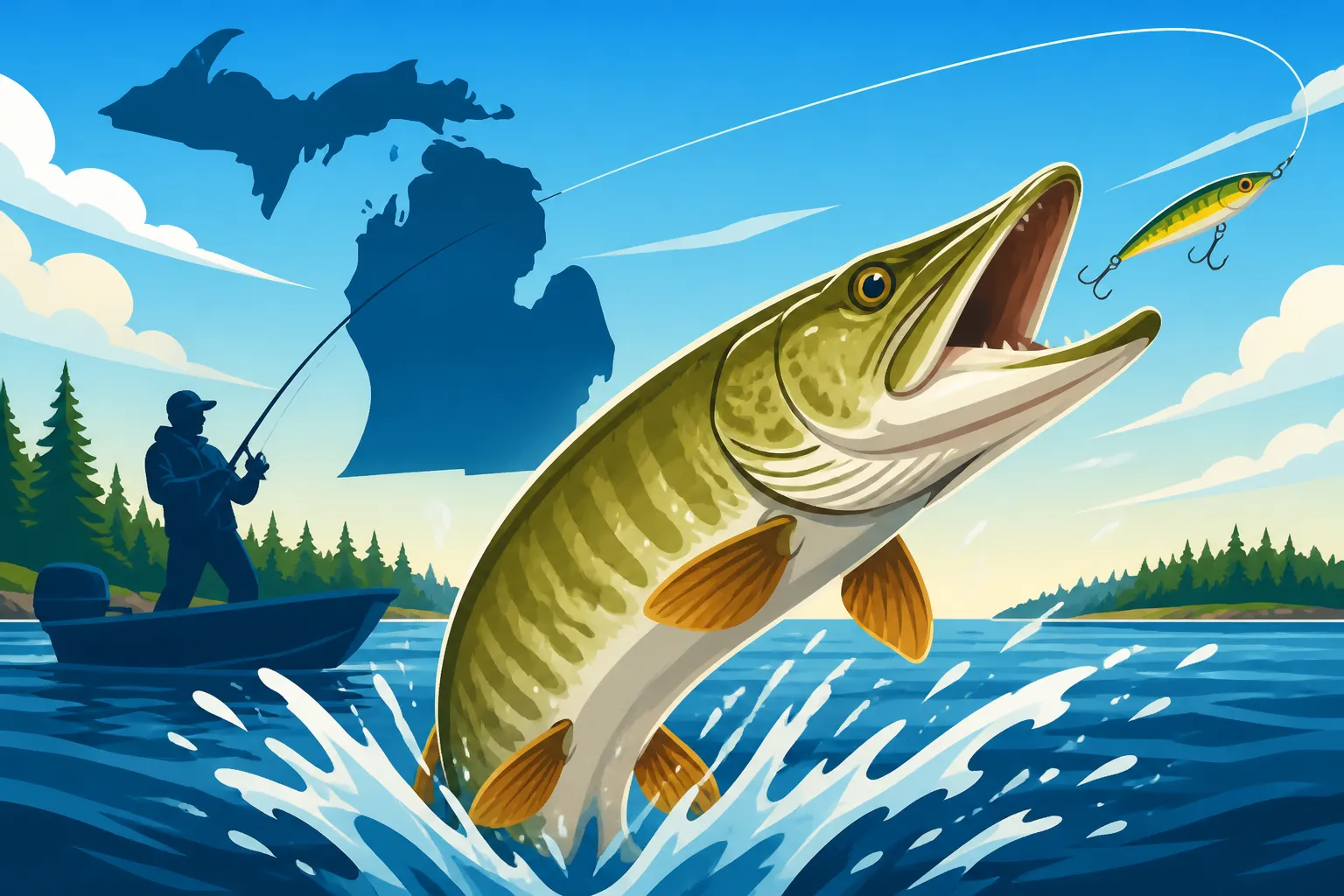
Muskellunge Fishing in Michigan
Oh, the elusive muskie! If you've ever cast a line into a Michigan lake or river with dreams of hooking into one of these magnificent beasts, you know the mixed bag of excitement and profound frustration that comes with it. They call them the "fish of 10,000 casts" for a reason, and if you're feeling like you've already hit about 9,999 of those without success, you're not alone. This comprehensive guide is here to unravel the mysteries of Michigan muskellunge fishing, providing you with the knowledge, techniques, and insights to turn those dreams into thrilling realities, or at least dramatically improve your odds.
The Allure of Michigan Muskellunge Fishing
There's something truly special, almost spiritual, about chasing muskellunge in Michigan. It’s not just about catching a fish; it’s about the pursuit, the challenge, and the moment when all that effort finally culminates in a heart-stopping encounter with a freshwater leviathan. Many anglers spend years, even decades, dedicating themselves to this specific pursuit, driven by an unyielding passion for these formidable predators.
Why Muskies Capture Anglers' Hearts
For starters, muskies are often the largest fish in many of the waters they inhabit. Their sheer size and predatory nature command respect. Imagine a fish that can grow well over 50 inches long, with a toothy maw that looks like it could swallow a small child's arm! But it's more than just their intimidating presence. It's the intelligence, the wariness, and the sheer power they display. A muskie strike isn't a subtle tap; it's often a violent explosion of water, a sudden jolt that almost rips the rod from your hands. That kind of adrenaline rush is incredibly addictive, and once you've felt it, you understand why so many anglers dedicate themselves to this particular species. It's a test of patience, skill, and sometimes, pure stubbornness.
The Thrill of the Chase: A Unique Challenge
The "fish of 10,000 casts" nickname isn't just hyperbole; it’s a badge of honor. Muskies are apex predators, and they didn't get that way by being easy targets. They are notoriously finicky, often following a lure right to the boat, giving you a heart attack, and then just swimming away as if to mock your efforts. This psychological game they play is part of the allure. Every follow, every swirl, every bump sends a jolt through you, reminding you that success is just one cast, one retrieve, one figure-eight away. It’s a constant battle of wits, and when you finally outsmart one, the satisfaction is immense. It teaches you resilience, attention to detail, and the importance of never giving up. Plus, the stories you gather along the way, both of triumph and frustrating near-misses, become legendary among your fishing buddies.
Identifying Michigan Muskellunge
Before you can effectively chase these magnificent creatures, it’s crucial to know what you’re looking for. Michigan waters hold both the purebred muskellunge and the tiger muskie (a sterile hybrid of muskellunge and northern pike). While their behavior can be similar, knowing how to identify them correctly is the first step in truly understanding your quarry.
Key Characteristics and Appearance
Purebred muskellunge are long, cylindrical fish, often described as torpedo-shaped. Their bodies are typically light in color, ranging from silvery-white to yellowish-green, with dark, irregular vertical bars, spots, or blotches. These markings are less defined than those on a northern pike and often fade into the background color as the fish matures, sometimes almost disappearing entirely. The dorsal fin is located far back on the body, close to the caudal (tail) fin, which is deeply forked. A crucial identifying feature is the absence of scales on the lower half of their gill cover and typically 6 to 9 pores on each side of the underside of their jaw. Their mouth is large and filled with sharp, needle-like teeth, perfectly adapted for snatching prey. They are truly impressive to behold in person.
Distinguishing Muskies from Northern Pike
This is where many anglers, especially newer ones, can get confused. Northern pike and muskellunge share a similar body shape and predatory demeanor, but there are distinct differences if you know what to look for. The most reliable way to tell them apart is by examining the scales on their cheek and gill cover, and the pores under their jaw.
Muskellunge:
- Cheek: Fully scaled.
- Gill Cover: Upper half scaled, lower half bare (no scales).
- Jaw Pores: 6 to 9 pores on each side of the underside of the jaw.
- Markings: Dark markings (bars, spots) on a light background. Markings often indistinct or faded.
Northern Pike:
- Cheek: Fully scaled.
- Gill Cover: Upper half scaled, lower half fully scaled.
- Jaw Pores: 5 or fewer pores on each side of the underside of the jaw.
- Markings: Light markings (spots, beans) on a dark background. Markings are usually very distinct.
Another quick, though less definitive, indicator is the coloration pattern. Pike tend to have light spots or 'bean-shaped' markings on a dark background, almost like stars in a night sky. Muskies, conversely, generally have darker markings (bars or spots) on a lighter background, sometimes even appearing tiger-striped, especially in the case of hybrid tiger muskies. Understanding these differences is key to proper identification, which in turn helps with adherence to Michigan Fishing Regulations Every Angler Should Know.
Here's a quick comparison table:
| Feature | Muskellunge | Northern Pike |
|---|---|---|
| Body Shape | Long, cylindrical, torpedo-like | Long, slender, more snake-like |
| Color/Markings | Dark bars/spots on light background; often indistinct | Light spots/beans on dark background; distinct |
| Cheek Scales | Fully scaled | Fully scaled |
| Gill Cover | Upper half scaled, lower half bare | Upper half scaled, lower half fully scaled |
| Jaw Pores | 6-9 pores on each side of jaw underside | 5 or fewer pores on each side of jaw underside |
| Tail Fin | Deeply forked | Less deeply forked |
Where to Find Michigan Muskellunge
Michigan is a muskie angler's paradise, boasting a diverse range of waters that hold these incredible fish. From sprawling inland lakes to connecting river systems and even the vast expanse of the Great Lakes, you have options. However, knowing where to focus your efforts is paramount to success. Not all waters are created equal when it comes to muskie populations.
Top Inland Lakes for Muskies
When it comes to inland lakes, Michigan offers some truly legendary muskie fisheries. These lakes often have abundant forage, diverse structure, and the habitat necessary for muskies to thrive and grow to trophy sizes. One of the most famous is Lake St. Clair, often touted as one of the best muskie fisheries in the world. Its shallow, fertile waters, expansive weed beds, and proximity to major population centers make it incredibly popular. While Lake St. Clair is known for its incredible numbers, other lakes like Lake Hudson and Thornapple Lake are managed with specific, often larger, minimum size limits for muskellunge, providing opportunities for truly giant fish. Other excellent inland lake options include Black Lake, Lake Gogebic, and some deeper, colder lakes like Lake Leelanau and Burt Lake which also hold good populations. Best Michigan Lakes for Muskellunge offers even more detail on these prime spots. When fishing these lakes, look for expansive weed flats, sharp breaks, rock piles, and submerged timber – classic muskie ambush points.
Great Lakes and River Systems
Don't underestimate the potential of Michigan's Great Lakes for muskie fishing, particularly parts of Lake Huron and the connecting waters like the St. Clair River and Detroit River. These massive systems offer incredible opportunities, though they often require different tactics and gear due to their size and current. The St. Clair River, in particular, is a phenomenal fishery, known for its strong currents and a healthy population of resident muskies. Fishing these rivers requires specialized boat control and an understanding of current breaks and deep pockets. Additionally, while less common, certain bays and shallower areas of the Great Lakes themselves can hold muskies, especially areas with abundant baitfish and cover. Understanding Michigan Great Lakes Fishing Regulations Guide is crucial when venturing into these larger waters. Remember, these vast waters can be intimidating, but they also hold some of the biggest muskies in the state.
When to Target Michigan Muskellunge
Timing is everything when it comes to muskies. Understanding their seasonal movements and preferred conditions can dramatically increase your chances of success. These fish are highly sensitive to water temperature, forage availability, and even changes in weather patterns.
Seasonal Strategies: Spring, Summer, Fall
Each season offers unique opportunities and challenges for muskie anglers:
- Spring (Post-Spawn): After the spawn in late spring (typically May to early June, depending on water temps), muskies are often recuperating and can be quite aggressive. They're looking to feed heavily to regain energy. Focus on shallower bays and weed lines where the water warms first and baitfish congregate. Smaller, more active presentations like jerkbaits and bucktails can be effective. This can be a great time to target fish before the summer boat traffic really picks up, but remember to give them space and respect their post-spawn vulnerability.
- Summer: As water temperatures rise and weed growth becomes dense, muskies will move to deeper weed edges, expansive weed flats, and offshore structures. Trolling large baits (crankbaits, spoons) becomes very popular, especially in big water like Lake St. Clair, allowing you to cover vast areas. In calmer conditions, casting large bucktails, topwaters, and even soft plastics over weed beds can be incredibly exciting. During summer, low-light conditions (dawn, dusk, overcast days) can be particularly productive as muskies are less active in direct sunlight.
- Fall: This is widely considered the prime time for trophy muskies. As water temperatures drop, muskies enter a "feed bag" mode, aggressively bulking up for the long winter. They move to deeper structures, rocky points, and steep breaks, often associating with large schools of baitfish. Bigger baits are key now – large crankbaits, gliders, and heavy duty bucktails are the norm. The cooler weather means longer, more consistent feeding windows. Many of the truly giant muskies caught each year are landed during the fall months. It's also when you might encounter fish migrating into river systems from the Great Lakes.
Best Times of Day and Water Conditions
Muskies are ambush predators, and their activity often correlates with periods of low light or specific weather conditions that provide cover or stimulate feeding.
- Low Light: Dawn and dusk are almost always prime times. The reduced light gives muskies a predatory advantage, making them more confident to hunt in shallower waters or closer to the surface. Overcast days, especially those with a light drizzle or fog, can extend these low-light conditions throughout the day, often leading to excellent fishing.
- Weather Fronts: Fishing just before a cold front moves in, when barometric pressure is falling, can be fantastic. Muskies often go on a feeding frenzy knowing that tougher feeding conditions are ahead. Conversely, fishing during a stable high-pressure system, especially after a cold front, can be very challenging as fish often become lethargic and less willing to strike.
- Wind and Waves: A good chop on the water can be your friend. Wind-driven waves break up the surface, reduce light penetration, and create current and turbidity, all of which can make muskies more aggressive and less wary. Focus on windblown points and shorelines where baitfish might be pushed into accessible ambush zones.
- Moon Phases: While highly debated, many muskie anglers swear by certain moon phases, particularly the new and full moon periods, or specific moon rise/set times as peak activity windows. While not scientifically proven across the board, many veteran anglers plan their trips around these "solunar" tables.
Essential Gear for Michigan Muskellunge Fishing
You can't bring a knife to a gunfight, and you certainly can't bring ultralight tackle to a muskie hunt. These fish are large, powerful, and will expose any weakness in your gear. Investing in robust, reliable equipment isn't just a suggestion; it's a necessity for both success and safety.
Rods, Reels, and Line: Heavy Duty is Key
Muskie fishing demands heavy-duty gear that can withstand the strain of casting oversized lures, fighting powerful fish, and holding up to repeated abuse.
- Rods: Look for specialized muskie rods. These are typically stout, fast-action baitcasting rods, often 8 to 9.5 feet long. The extra length helps with casting those heavy baits, controlling the fish during the fight, and performing a proper figure-eight at the boat. A rod with a heavy power rating (e.g., Heavy or Extra Heavy) is essential. You can find excellent options for various budgets on platforms like Amazon.
- Reels: A high-quality baitcasting reel with a robust gear system, a strong drag, and a high line capacity is non-negotiable. Look for models designed for saltwater or heavy freshwater applications. A good retrieve ratio (around 5:1 or 6:1) is balanced for burning bucktails and retrieving large crankbaits. The reel needs to be able to handle the stress of hours of casting and grinding.
- Line: Braided line is the standard for muskie fishing, typically in the 80 to 120 lb test range. Its lack of stretch provides excellent sensitivity for feeling subtle takes and the power needed for a solid hookset and fighting big fish in heavy cover. A heavy fluorocarbon or steel leader (at least 100 lb test, often longer than a foot) is absolutely critical to prevent the muskie's razor-sharp teeth from cutting your main line. Never, ever fish for muskies without a bite-proof leader!
Lures That Entice the Apex Predator
Muskie lures are a world unto themselves – often enormous, intricately designed, and expensive. But they are purpose-built to trigger strikes from these finicky predators. Best Lures for Muskellunge goes into extensive detail, but here's a quick overview:
- Bucktails: These are probably the most iconic muskie lures. Featuring a spinner blade (or multiple blades) and a skirt of deer hair, bucktails are designed for fast retrieves, creating significant flash and vibration. Different sizes and blade configurations (single, double, in-line, tandem) offer versatility. They are excellent for covering water quickly and drawing reaction strikes.
- Jerkbaits & Gliders: These are hard-bodied lures with no lip, designed to be worked with rod twitches and pauses, mimicking erratic baitfish. They require skill to impart the correct action but can be deadly, especially in cooler water or when fish are following.
- Crankbaits: Large lipped crankbaits are fantastic for trolling or casting, especially when you need to reach specific depths. They come in various dive curves and actions, mimicking everything from panfish to large suckers.
- Topwaters: The most exhilarating strikes often come on topwater lures. Big walk-the-dog baits, prop baits, and creeper baits cause a commotion on the surface, driving muskies into a frenzy, particularly during low-light periods or over weed beds.
- Soft Plastics: Large soft plastic swimbaits, grubs, and creature baits, often weighted, are gaining popularity. They offer a more subtle presentation with natural swimming actions and can be worked effectively through heavy cover.
Always carry a variety of lure types and colors. Muskies can be incredibly particular, and what works one day might not work the next. Don't be afraid to experiment.
Safety and Handling Equipment
Muskie fishing isn't just about catching; it's also about safe handling for both the angler and the fish. These are powerful, toothy creatures that deserve respect.
- Net: An oversized, rubberized landing net (muskie specific, often with a hoop size of 36×40 inches or larger and a long handle) is essential. The rubberized mesh protects the fish's slime coat and fins, while the large size helps safely contain a thrashing muskie.
- Release Tools: Long-nosed pliers, bolt cutters (for cutting hooks if deeply embedded), and jaw spreaders are absolutely vital. These tools allow you to safely remove hooks without putting your hands near their formidable teeth. Keep them easily accessible in the boat or on your person.
- Heavy Gloves: While not for handling the fish directly (the net is for that), heavy-duty gloves can be useful for gripping tools or if you accidentally brush against a toothy lure.
- Camera: To capture that unforgettable moment! Just be quick and minimize the fish's time out of the water.
- First Aid Kit: Always a good idea when dealing with hooks, teeth, and slippery conditions.
Remember, proper handling, especially when adhering to Catch-and-Immediate-Release Rules for Muskellunge, is crucial for the fish's survival, ensuring future generations of anglers can experience this incredible fishery.
Effective Muskellunge Fishing Techniques
Catching a muskie often comes down to dedication and employing the right techniques for the conditions. While there's no magic bullet, mastering a few core approaches will significantly improve your odds. Remember, consistency and confidence in your presentation are key.
Trolling for Open Water Giants
Trolling is a fantastic way to cover vast expanses of water, especially on large inland lakes or the Great Lakes, allowing you to present baits at specific depths for extended periods. This technique is particularly effective during summer and fall when muskies might be relating to deeper structures or suspended baitfish in open water.
To troll effectively, you'll need a boat capable of maintaining precise speeds (often between 2.5 and 5 mph, but sometimes slower or faster depending on the lure and fish mood). Large, deep-diving crankbaits are a staple for trolling, along with weighted spinnerbaits or even bucktails if you add weight. Use a line counter reel to precisely know how much line you have out, which directly correlates to your lure's depth. Downriggers or planer boards can also be employed to spread out your presentation and target different depths and areas away from the boat's prop wash. Experiment with lure colors, depths, and speeds until you find what triggers bites. Don't be afraid to make sharp turns or speed changes; these erratic movements can often draw a strike from a following fish.
Casting and Jerkbaiting in Structure
Casting is arguably the most engaging way to fish for muskies, offering that direct connection to the lure and the potential for a visible, explosive strike. This technique is best suited for targeting specific structures like weed edges, rock piles, submerged timber, or shorelines.
- Bucktail Burn: This involves casting a bucktail lure and retrieving it quickly and steadily. The idea is to create so much flash and vibration that a muskie can't resist a reaction strike. Experiment with retrieve speeds and add short pauses or surges.
- Jerkbait and Glidebait Working: These lures require more finesse. Cast them to your target, let them sink to the desired depth, then use sharp, downward twitches of your rod tip to make the lure dart and glide erratically, mimicking an injured baitfish. Follow each twitch with a brief pause, allowing the lure to suspend or slowly sink. This stop-and-go action is often what triggers a hesitant muskie.
- Topwater Commotion: For topwater lures, cast over shallow weed beds or along dark, shaded banks, and retrieve with actions designed to create maximum surface disturbance – walking the dog, popping, or churning. The visual aspect of a muskie exploding on a topwater is truly unforgettable.
No matter the casting technique, always finish your retrieve with a "figure-eight" or "L-turn" boat-side. This involves sweeping your rod tip and lure in a large figure-eight or circular motion right next to the boat before lifting it from the water. Many muskies will follow a lure all the way to the boat, deciding at the last second to strike. A well-executed figure-eight often converts these "follows" into catches, providing some of the most heart-stopping moments in muskie fishing.
Best Practices for Catch and Release
Given the "fish of 10,000 casts" moniker and the relatively slow growth rate of muskies, conservation through catch and release is paramount. Most muskie anglers practice selective harvest or catch and release exclusively, ensuring these populations remain healthy. How to Catch and Release a Muskellunge provides a detailed walkthrough.
- Minimize Fight Time: Use heavy tackle to land the fish quickly, reducing stress.
- Keep it in the Water: Whenever possible, unhook the fish while it's still in the net and submerged in the water. This preserves its protective slime coat and reduces stress.
- Use Proper Tools: Have your long-nosed pliers, hook cutters, and jaw spreaders ready. Never put your hands in a muskie's mouth.
- Support the Fish: If you must take the fish out for a quick photo, support its body horizontally with two hands – one under the belly near the pectoral fins, and the other supporting the tail. Never hold a muskie vertically by the jaw; this can cause severe internal damage.
- Be Quick: Time out of water should be minimal – ideally under 30 seconds for a photo.
- Revive Properly: Hold the fish gently in the water, facing into any current, until it regains its strength and can swim away on its own. It may take several minutes. Look for strong tail kicks and good color before letting it go.
Adhering to these practices ensures that the muskellunge you catch today can grow larger and provide a thrilling experience for another angler tomorrow. It's part of being a responsible steward of Michigan's fisheries.
Michigan Muskellunge Regulations and Conservation
Regulations are not just rules; they are vital tools for managing and conserving fish populations for future generations. For muskellunge, specific rules on size, bag limits, and even reporting are in place to ensure the sustainability of this prized sportfish. Understanding and respecting these regulations is a crucial part of muskie fishing in Michigan.
Understanding Size and Bag Limits
Michigan has some very specific and often generous (in terms of encouraging growth) regulations for muskellunge. Generally, the statewide minimum size limit for muskellunge is quite large, often around 42 inches. This significant minimum size allows fish to mature and reproduce multiple times before they can be legally harvested, which is critical for maintaining healthy populations. However, some specific lakes, like Lake Hudson and Thornapple Lake, have even larger minimum size limits, sometimes as high as 50 inches. This is often done to create "trophy" fisheries where anglers have a better chance of encountering truly giant fish.
The bag limit for muskellunge is typically very restrictive, often set at one fish per year. Michigan's One Muskellunge Per Year Rule highlights this conservation-focused approach. This low bag limit emphasizes catch and release as the primary goal for most muskie anglers, reserving harvest for a truly exceptional fish. It’s also important to note that these limits can change, so always consult the most current Michigan Fishing Regulations Digest PDF for 2026 or the Michigan DNR website before heading out.
Mandatory Harvest Reporting and Why It Matters
One of the unique aspects of muskellunge fishing in Michigan is the mandatory harvest reporting requirement. If you are fortunate enough to legally harvest a muskie, you are required to report it to the DNR within 24 hours of capture. This can typically be done online through the DNR website or via a dedicated phone number. Michigan Muskellunge Harvest Reporting Rules outlines the precise process.
This reporting isn't just bureaucratic red tape; it's a critical component of muskie management. The data collected from these reports – including length, weight, location of catch, and date – provides valuable information to fisheries biologists. It helps them track population trends, assess growth rates, evaluate the success of stocking programs, and make informed decisions about future regulations. By reporting your catch, you directly contribute to the conservation efforts that ensure Michigan continues to have a world-class muskie fishery. Think of it as your part in the scientific process of managing this magnificent species.
Protecting Michigan's Muskie Population
Beyond the regulations, protecting muskie populations involves a broader understanding of their ecological role and vulnerabilities. Muskies are top predators, and their health is an indicator of the overall health of the ecosystem.
- Habitat Preservation: Healthy muskie populations rely on clean water, intact shorelines, and thriving aquatic vegetation. Participating in or supporting efforts to protect these habitats directly benefits muskies and all other fish species.
- Responsible Angling: As discussed with catch and release, practicing minimal handling stress is crucial. Avoiding fishing for muskies when water temperatures are extremely high (e.g., mid-summer heatwaves) can also reduce post-release mortality, as muskies are more susceptible to stress in warm water.
- Education: Spreading awareness about proper muskie identification (distinguishing them from northern pike), regulations, and handling techniques helps ensure that all anglers are stewards of the resource.
- Support Stocking Efforts: In some systems, muskellunge populations are maintained or enhanced through stocking programs. Fishing license fees, like those detailed in Where Michigan Fishing License Money Goes, directly contribute to these vital conservation efforts.
By consciously adopting these protective measures, anglers ensure that the thrill of muskie fishing remains a vibrant part of Michigan's outdoor heritage for generations to come.
Common Challenges and Troubleshooting
Muskie fishing isn't easy; if it were, it wouldn't be as rewarding. You're going to face frustrations, lost fish, and long stretches without a bite. Understanding common challenges and having strategies to troubleshoot them is part of becoming a successful muskie angler.
The Elusiveness Factor: Dealing with "Follows"
Ah, the dreaded muskie follow. You've made thousands of casts, you're working your favorite bucktail, and suddenly, a massive shadow materializes behind your lure, right at the boat. Your heart leaps into your throat, but then, with a flick of its tail, the muskie turns and disappears back into the depths. It's a universal experience in muskie fishing, and it can be incredibly frustrating.
- The Figure-Eight is Your Friend: This cannot be stressed enough. Many follows are converted into strikes by an aggressive, well-executed figure-eight or L-turn. The sudden change in direction and speed, often coupled with the lure entering the boat's "blind spot," can trigger that predatory instinct. Make your turns wide and deep, using the rod tip to keep the lure moving as naturally as possible. Sometimes, a series of quick, small figure-eights is more effective than one big one.
- Vary Your Retrieve: If fish are following but not committing, try changing up your retrieve speed, adding pauses, or twitching your rod tip. The goal is to make the lure seem more like a struggling baitfish, rather than a robotic retrieve.
- Change Lures/Colors: Sometimes a different size, shape, or color of lure is all it takes. If they're following a bright bucktail, try a more natural-colored glider, or vice-versa. Keep a diverse selection, perhaps in a tackle bag easily accessible from Amazon, to quickly swap out.
- Re-cast Immediately: If a muskie follows and spooks, mark the spot mentally (or with a GPS waypoint if in a boat). Often, if you let the area rest for a few minutes and then cast a different lure back to the same spot, that fish might still be there and willing to strike.
Tackling Equipment Failures and Snags
Muskie fishing means using heavy gear, casting heavy lures, and often fishing around heavy cover. This combination inevitably leads to equipment failures and snags. Being prepared can save you time, money, and frustration.
- Line Management: Backlashes on baitcasting reels are common with heavy lures. Learn to properly thumb your spool to prevent them. If one does happen, take the time to pick it out carefully; don't just yank, as this can damage your expensive braided line. Regularly inspect your line for frays or nicks, especially near the leader, and re-tie or cut out damaged sections.
- Leader Integrity: Always check your leader after every fish, or even after a few hours of casting. A muskie's teeth can abrade even heavy fluorocarbon, and a damaged leader is a recipe for a lost trophy. Carry spare leaders and the tools to tie new ones.
- Lure Retrieval: Fishing around structure means snags will happen. A good lure retriever (a heavy chain or weight on a cord that slides down your line to snag the lure) can save countless expensive baits. Investing in one is a no-brainer.
- Hook Maintenance: Muskie hooks take a beating. Check them regularly for sharpness and bends. A dull hook won't penetrate, and a bent hook will straighten out on a powerful fish. Carry a hook file and extra treble hooks for replacements.
- Boat Preparedness: If you're fishing from a boat, ensure your motor is well-maintained, your battery is charged, and you have essential safety gear like life jackets, a marine radio, and navigation tools, especially if venturing onto the Great Lakes. Michigan Boating Laws for Anglers provides vital information.
Ultimately, muskie fishing is a journey, not a destination. Embrace the challenges, learn from every follow and every lost fish, and celebrate every single success. The more time you put in, the more you refine your techniques and gear, the closer you'll get to consistently hooking into these incredible Michigan giants.
Disclaimer
This article is for general informational purposes only and does not constitute professional advice. Laws, prices and regulations vary by location and change over time. Consult a qualified professional for guidance on your specific situation.