Where Michigan Fishing License Money Goes
It’s a question every dedicated angler has likely pondered at some point, especially when you’re pulling out your wallet to renew that annual license: exactly where does all that hard-earned money go? You’re not alone in wondering if your investment truly makes a difference or if it just disappears into some bureaucratic black hole. This comprehensive guide will peel back the layers, revealing precisely how your Michigan fishing license dollars are used to enhance and protect the fisheries we all cherish.
The Foundational Role of Michigan Fishing Licenses
When you purchase a Michigan fishing license, you're not just buying a piece of paper that gives you permission to cast a line. You're actually making a direct investment in the health and future of Michigan's incredible aquatic resources. This revenue forms the backbone of critical conservation and management efforts carried out by the Michigan Department of Natural Resources (DNR). Without these funds, many of the programs that keep our lakes and rivers teeming with fish simply wouldn't exist.
More Than Just a Permit: Investing in the Future
Think about it this way: every time you head out to your favorite fishing spot, whether it's a tranquil inland lake or the vast expanse of the Great Lakes, you're benefiting from decades of careful planning, scientific research, and hands-on management. Your license fee contributes to sustaining this legacy. It’s an essential part of what allows the DNR to monitor fish populations, protect sensitive habitats, and ensure that future generations can experience the same joy of fishing that we do today. For a complete understanding of what you need, check out our guide on the Michigan Fishing License Guide for Residents and Nonresidents.
This model of funding wildlife and fisheries management through user fees – like hunting and fishing licenses – is a cornerstone of conservation across North America. It ensures that those who directly benefit from the resource (anglers, in this case) also directly contribute to its well-being. It’s a self-sustaining cycle designed to keep our waters vibrant and productive.
The Connection to Conservation Efforts
The connection between your license purchase and tangible conservation efforts is incredibly direct. These funds are earmarked specifically for programs that benefit fish and aquatic ecosystems. This isn't just about stocking fish; it's about the bigger picture of ecosystem health. Healthy fish populations depend on clean water, intact habitats, and balanced predator-prey relationships. Your license supports everything from wetland restoration projects that benefit spawning fish to stream bank stabilization efforts that prevent erosion and protect water quality.
Imagine a world where these funds didn't exist. Rivers could become choked with sediment, spawning grounds could be destroyed, and fish populations would plummet without careful management. Your contribution, no matter how small it feels individually, collectively fuels the efforts that prevent such scenarios and maintain the biodiversity of Michigan's waters.
Diving Deep into the Michigan DNR's Fisheries Programs
The Michigan DNR’s Fisheries Division is the primary beneficiary of your fishing license dollars. This division is tasked with the enormous responsibility of managing nearly 11,000 inland lakes, over 36,000 miles of rivers and streams, and thousands of square miles of Great Lakes waters that fall within Michigan’s boundaries. The programs they oversee are diverse and critical, touching every aspect of fisheries management.
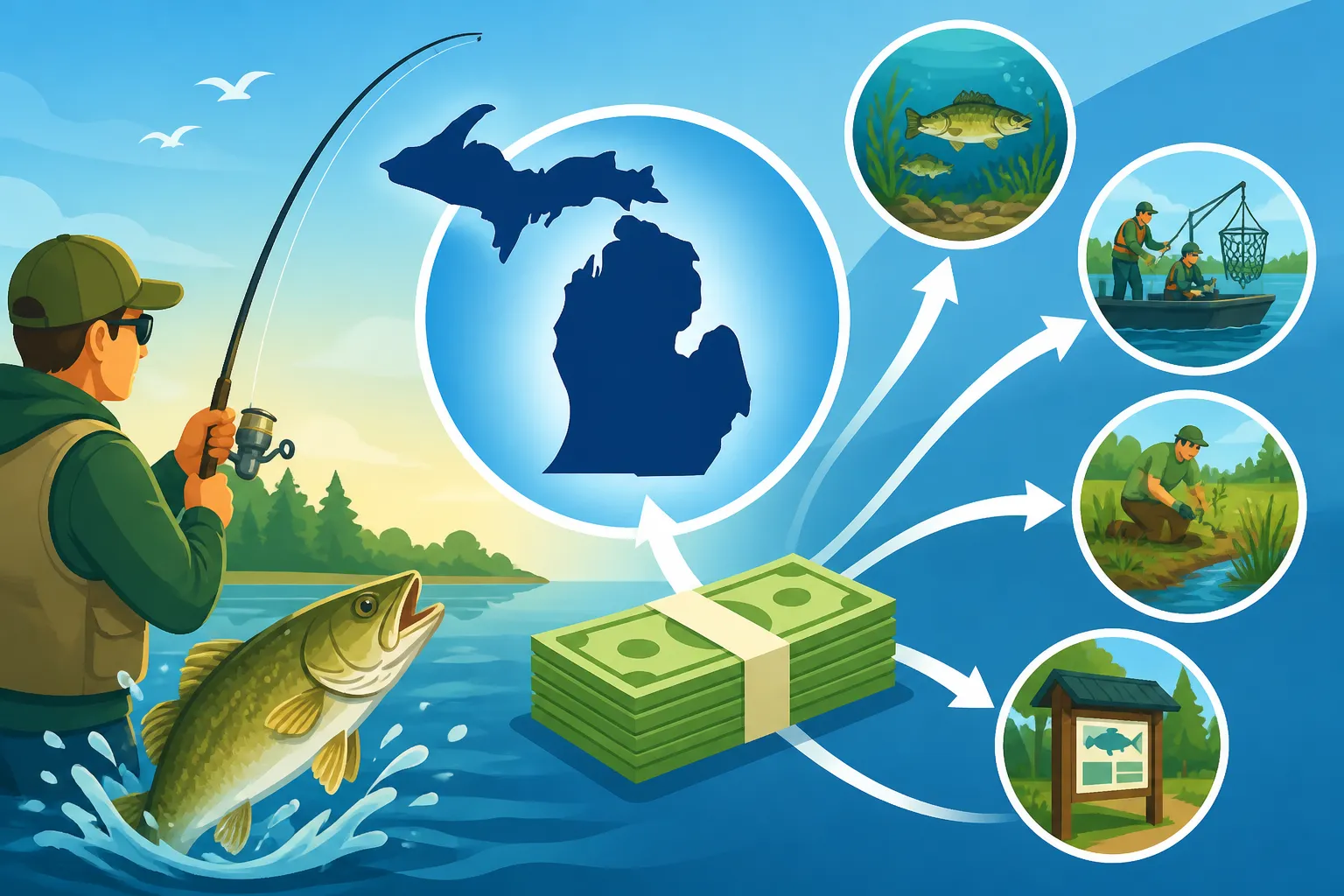
Direct Allocation to Fish Stocking and Habitat Restoration
A significant portion of your license fee goes directly into fish stocking programs. This isn't just about throwing fish into a lake; it's a carefully planned operation based on scientific data. The DNR operates several fish hatcheries across the state, including the Wolf Lake State Fish Hatchery and the Thompson State Fish Hatchery, which raise millions of salmon, trout, walleye, and other species each year. These fish are then strategically stocked into various waterways to bolster populations, introduce new species, or compensate for natural reproductive limitations. For a full breakdown of costs, see our article on Michigan Fishing License Costs and Types Explained.
But it's not just about stocking. Habitat is king when it comes to healthy fish populations. Funds are also dedicated to critical habitat restoration projects. This could involve removing old dams to open up new spawning grounds for migrating fish like steelhead, or restoring natural river flows. It also includes projects like placing woody structures in lakes to provide cover and spawning substrate for panfish and bass, or planting native vegetation along shorelines to prevent erosion and improve water quality. These efforts create healthier environments where fish can thrive naturally.
Supporting Research, Surveys, and Management
Effective fisheries management isn't guesswork; it's built on a foundation of sound science. Your license dollars fund vital research and surveys that help biologists understand fish populations, their health, and their interactions with the environment. This includes things like electrofishing surveys to estimate population sizes, angler creel surveys to understand catch rates and angler effort, and studying the impacts of environmental changes on aquatic ecosystems.
These studies inform crucial management decisions, such as setting appropriate bag and size limits, determining stocking priorities, and identifying areas where habitat improvement is most needed. The ongoing data collection helps the DNR adapt its strategies to ensure sustainable fishing opportunities. Without this scientific understanding, management would be reactive and less effective, potentially leading to declines in fish stocks.
Funding for Enforcement and Public Safety
Another crucial area supported by your license fees is enforcement. Conservation Officers, funded in part by license sales, are on the front lines, ensuring that everyone adheres to Michigan’s fishing regulations. This includes checking licenses, enforcing bag and size limits, and investigating poaching. Their work is essential for preventing overharvesting and maintaining fair access for all anglers. Nobody wants to see someone take more than their share, and these officers are there to prevent that. You can find more details on what rules apply in our Michigan Fishing Regulations Every Angler Should Know article.
Beyond enforcement, these funds also contribute to public safety initiatives on the water. This might involve patrolling popular fishing areas, responding to emergencies, or assisting boaters in distress. When you're out enjoying a day on the lake, the presence of these officers provides an added layer of safety and security, knowing that someone is there to ensure rules are followed and help is available if needed.
Federal Aid and Matching Funds: Amplifying Your Investment
While state fishing license fees are critical, they don't work in isolation. A significant portion of funding for Michigan's fisheries management and conservation efforts comes from federal aid programs, primarily the Dingell-Johnson Act (officially known as the Federal Aid in Sport Fish Restoration Act). This act creates a powerful partnership between anglers, the fishing industry, and state wildlife agencies.
The Dingell-Johnson Act: A National Partnership
The Dingell-Johnson Act is truly a game-changer for fisheries funding. Enacted in 1950, it imposes an excise tax on specific fishing equipment, tackle, and motorboat fuels. When you buy a new fishing rod, a tackle box, or even gas for your boat, a small portion of that purchase goes into a dedicated trust fund managed by the U.S. Fish and Wildlife Service. This fund then allocates money back to state fisheries agencies, like the Michigan DNR, based on a formula that considers factors such as the land area and number of licensed anglers in each state.
What makes this program so effective is its matching fund requirement. For every three federal dollars a state receives through Dingell-Johnson, the state must contribute one dollar of its own. Guess where that state dollar primarily comes from? You guessed it – fishing license sales. So, your Michigan fishing license dollar doesn't just fund state programs; it also acts as the vital matching component that unlocks an additional three federal dollars for fisheries conservation in Michigan. It's an incredible multiplier effect for your investment.
How Federal Dollars Bolster Michigan Fisheries
These federal funds, combined with your state license fees, are instrumental in supporting a wide array of programs in Michigan. This includes things like ongoing fish stocking, habitat improvement, and scientific research on our Great Lakes. For instance, large-scale projects aimed at restoring native Lake Trout populations in Lake Superior or combating invasive species across the Great Lakes often rely heavily on these combined state and federal funds.
It also supports angler education programs and the development of public access sites. Imagine all the projects that the state might not be able to tackle without this significant federal boost. It means more resources for biologists to conduct comprehensive surveys, more opportunities to improve water quality, and ultimately, better fishing for everyone. This national partnership, fueled by anglers' purchases, ensures a robust and well-funded approach to managing our aquatic treasures.
Beyond the Fish: Access, Education, and Infrastructure
While it’s easy to focus on the fish themselves, your license dollars also contribute to aspects of Michigan fishing that aren't directly swimming in the water but are absolutely essential for a positive angling experience. This includes providing and maintaining the places we fish from, teaching new anglers the ropes, and keeping the gears of the entire system turning.
Improving Public Access and Facilities
What’s the point of having amazing fishing if you can’t get to it? A portion of license revenue is dedicated to acquiring, developing, and maintaining public access sites. This means boat launches, fishing piers, shoreline access points, and even parking lots. Think about the public boat launch at your favorite lake – the ramps, the docks, the parking area – these facilities require ongoing maintenance and occasional upgrades, and your license helps fund that. You can find a detailed guide on places to fish in our Best Places to Fish in Michigan article.
For example, enhancing a popular pier on Lake Michigan or developing a new canoe launch on the Au Sable River directly benefits anglers by making it easier and safer to get out on the water. These infrastructure investments are crucial for ensuring that fishing remains accessible to everyone, regardless of whether they own a fancy fishing boat or simply want to cast a line from shore. Many of these projects require equipment that might be sourced from various vendors, with smaller, routine purchases even coming from places like Amazon to keep costs down and efficiency up.
Fostering the Next Generation of Anglers
The future of fishing depends on introducing new people to the sport. Your license money helps fund vital education and outreach programs designed to teach kids and adults how to fish responsibly and develop an appreciation for conservation. This includes "Angler 101" workshops, school programs, and events held during Michigan’s free fishing weekends.
These programs often provide equipment, instruction, and a safe, welcoming environment for beginners to learn. The hope is that these new anglers will become the next generation of license buyers and conservation advocates. Investing in education isn't just about fun; it’s about securing the long-term sustainability of fishing in Michigan. You might even find recommended starter fishing kits on Amazon for these educational programs.
Maintenance and Operations: Keeping Things Running
Behind every great fishing program are the unsung heroes and the essential operational costs. Your license dollars contribute to the everyday expenses of running the DNR's Fisheries Division. This includes things like staff salaries for biologists, technicians, and administrators who do the groundwork, vehicle maintenance for conservation officers patrolling vast areas, and the utility bills for hatcheries and offices.
It also covers the cost of equipment, from specialized research tools to basic office supplies. While not as glamorous as stocking millions of fish, these operational expenses are absolutely vital to ensure that the entire system functions smoothly and effectively. Without this foundational support, even the best-laid plans for fisheries management would quickly fall apart.
Tracking Your Dollars: Transparency and Accountability
It's completely fair to want to know how your money is being managed. Transparency and accountability are key components of public trust, and the Michigan DNR strives to be open about how fishing license revenues are utilized. You have a right to understand the financial flow and the impact of your contribution.
Annual Reports and Public Oversight
The Michigan DNR publishes annual reports that detail how funds, including those from fishing license sales, are allocated and spent. These reports often break down expenditures by program area, allowing the public to see exactly where their money is going – from fish stocking and habitat improvement to law enforcement and education. These documents are typically available on the DNR’s official website, often in downloadable PDF format, providing a clear window into their financial operations.
Furthermore, these budgets and reports are subject to legislative review and public comment periods, ensuring a level of oversight beyond just the DNR itself. Public forums and advisory committees also provide opportunities for anglers to voice their opinions and ask questions about management decisions and financial allocations. This system of checks and balances helps ensure that funds are used efficiently and in the best interest of Michigan’s fisheries and angling community.
The Value Proposition for Every Angler
When you consider the full scope of what your Michigan fishing license supports – from robust fish populations and pristine habitats to safe access and educational opportunities – the value proposition is quite strong. A basic annual resident fishing license in Michigan is a relatively modest investment when weighed against the vast benefits it provides for conservation and recreation across the entire state. If you’re curious about specific license types, consider reading about the Michigan Resident Annual Fishing License Cost or the Michigan 24-Hour Fishing License Explained.
Every dollar spent on a license helps maintain Michigan’s status as a premier fishing destination, ensuring that whether you're targeting smallmouth bass on Lake St. Clair or trolling for salmon on Lake Michigan, those opportunities will continue to exist for years to come. It’s an investment in a rich outdoor tradition and a shared natural heritage. Even looking for specific gear on Amazon can provide insights into what the broader angling community values and needs, indirectly reflecting the effectiveness of these programs.
Here’s a simplified breakdown of typical Michigan fishing license revenue allocation:
| Category | Estimated Percentage of Revenue | Key Activities Funded |
|---|---|---|
| Fisheries Management | 35-45% | Research, surveys, fish stocking, habitat projects |
| Law Enforcement | 20-30% | Conservation Officer salaries, equipment, patrols |
| Public Access & Facilities | 10-15% | Boat launches, piers, shoreline access, maintenance |
| Education & Outreach | 5-10% | Angler education, youth programs, workshops |
| Administration & Support | 10-15% | Staff salaries, operational costs, IT support |
| Federal Aid Match | (Included above, but critical) | State portion to unlock Dingell-Johnson federal funds |
Note: These percentages are illustrative and can fluctuate based on annual budgets, specific project needs, and federal aid availability.
Disclaimer
Please remember that fishing regulations, license costs, and program allocations can change. Always consult the official Michigan Department of Natural Resources (DNR) website or their most current fishing guide for the most up-to-date and accurate information before planning your fishing trips.