Best Time to Fish After Rain for Steelhead
Oh, the age-old question that keeps every Michigan steelhead angler up at night: when, exactly, is the absolute best time to hit the river after a good downpour? It's a frustrating dance, isn't it? You see the rain falling, your heart races with anticipation, but then you're left wondering if you should race to the river immediately, wait a few hours, or perhaps even a day or two. This guide is all about helping you decode Michigan's rivers after a rain event so you can stop guessing and start catching those chrome beauties.
Understanding How Rain Impacts Steelhead Rivers
Rain isn't just rain when it comes to steelhead fishing; it's a dynamic force that completely reshapes the river environment. Knowing how different types and durations of rainfall affect the water is your first step to mastering post-rain timing. It's truly a game of observation and understanding river dynamics.
The Initial Deluge: High and Muddy Waters
When a significant rain event hits, especially after a dry spell, the immediate impact on our Michigan rivers can be quite dramatic. You'll often see the water level begin to rise rapidly, sometimes by several feet in a matter of hours on smaller systems. Along with this increase in flow comes a surge in turbidity, making the water muddy and murky. This isn't just a slight discoloration; often, the river can turn into what looks like chocolate milk, especially if the rain is heavy and prolonged, or if it follows a period of heavy agricultural runoff or significant bank erosion.
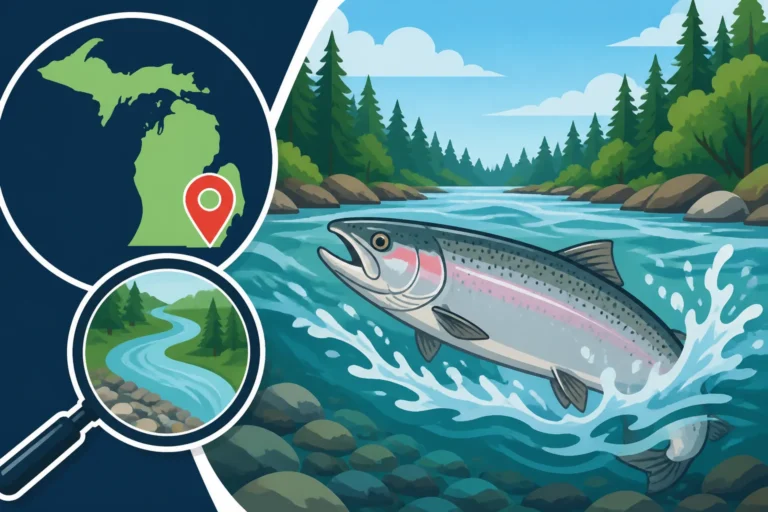
It's easy to look at a blown-out river like this and feel completely deflated. You've been planning this trip for weeks, checking the Michigan Steelhead Run Timing, and now it looks totally unfishable. But hold on a second. While fishing in truly "blown out" conditions can be difficult, if not impossible and even dangerous, this initial surge is often what triggers significant movements of steelhead upstream. These fish, staging in the Great Lakes, are just waiting for that perfect window of increased flow and cover to make their dash upriver to spawn. Your job is to wait for the river to work its magic and then capitalize on the improving conditions.
Beyond visibility and flow, rain can also affect water temperature, which is a huge factor for steelhead. A warm rain in early spring can actually warm up cold river water, making sluggish fish more active. Conversely, a frigid fall or winter rain can drop water temperatures, potentially slowing down steelhead activity for a short period. Understanding these subtle shifts is crucial.
The Clearing Window: Finding the Sweet Spot
After the initial deluge, the river begins its process of returning to normal, and this is where the magic happens for steelhead anglers. The most productive fishing often occurs during what we call the "falling and clearing" window. This is that sweet spot when the water levels are steadily dropping, and the turbidity is gradually decreasing, but the river still has some stain and increased flow compared to its pre-rain state. It’s like the river is slowly exhaling after holding its breath.
The duration of this falling and clearing window varies wildly depending on several factors: the size of the river, the intensity and duration of the rainfall, and the type of soil in the surrounding watershed. Smaller, flashier rivers, especially those with sandy bottoms, might clear up within 12-24 hours after the rain stops. Larger systems, like the Manistee River Steelhead and Salmon Fishing in Michigan or the Muskegon, with broader floodplains and more clay in their soil, can take several days, or even a week, to fully clear. The beauty of these larger systems is that once they start to fall and clear, the good fishing can last for a prolonged period, sometimes for days on end, giving you a wider window of opportunity.
During this period, steelhead become much more comfortable moving and feeding. The increased flow still provides a current break and pushes bait through the system, but the improving visibility means they can now see your offerings without being completely blind. It's a delicate balance; too clear, and they become spooky; too dirty, and they can't find your presentation. This "just right" window is what you're constantly aiming for.
Factors Influencing Post-Rain Steelhead Behavior
Rain doesn't just change the river's appearance; it fundamentally alters the conditions that dictate where steelhead hold and how aggressively they feed. Being attuned to these behavioral shifts can significantly increase your success.
Water Temperature Shifts and Steelhead Activity
As mentioned, rain can dramatically influence river temperatures, and steelhead are highly sensitive to these changes. In the colder months, particularly during the Winter Steelhead Run in Michigan Rivers, a warm rain can be a blessing. It might be chilly on land, but if the rain is above freezing, it can actually raise the river temperature by a degree or two. This subtle warming can be enough to kick lethargic steelhead into a more active feeding mode, making them more willing to chase and strike your bait. They might move into faster current seams or shallower riffles where they were previously absent.
Conversely, a cold rain, especially early in the Fall Steelhead Run in Michigan Rivers or during a cold snap, can cool the water down quickly. This might put the fish off the bite temporarily, causing them to hold tighter to cover or move into deeper, slower pools where the water temperature is more stable. However, even then, the increased flow might still draw fresh fish into the river, so it's a trade-off. It’s all about monitoring the subtle changes and adjusting your approach. Keep an eye on water temperature gauges if available, or carry a small thermometer yourself – it’s one of the most underutilized tools an angler can have.
Increased Flow and Food Availability
One of the biggest benefits of post-rain conditions for steelhead is the surge in food availability. The increased flow, even as it begins to drop, scours the riverbanks and dislodges all sorts of tasty morsels: worms, insects, larvae, and even small baitfish that might have been hiding in slack water. This makes for an easy meal delivery service for steelhead, and they know it. They'll often shift their holding positions to take advantage of these new feeding lanes, sitting in current seams where food is funneled directly to them with minimal effort.
This bounty of natural food is why your presentation matters so much. When the river is still a bit stained, steelhead might be less picky about your offerings, but they're still looking for something that looks natural and moves with the current. Larger, more robust baits or brighter colors can be more visible in these stained conditions. Think about how a salmon egg or a worm would tumble naturally, and try to replicate that drift. The key is to get your bait in front of these actively feeding fish who are taking advantage of nature's buffet.
The increased flow also provides essential cover. Steelhead, being migratory fish, are always on alert for predators. High, stained water offers them a sense of security, allowing them to move more freely throughout the river system without feeling as exposed. This can translate to more aggressive takes and a broader distribution of fish throughout the river, rather than being concentrated in just a few deep holes.
Timing Your Trip: The Goldilocks Zone After Rain
So, you've got the general idea of how rain impacts the river and the fish. Now, let's talk about the practical side of timing your trip to hit that perfect "Goldilocks Zone" – not too early, not too late, but just right. This is where diligent planning and a bit of patience pay off in spades.
The "Too Soon" and "Too Late" Scenarios
Fishing too soon after a major rain event is a common mistake, and it can be a real disheartening experience. If the river is still rising rapidly, completely blown out with zero visibility, and full of debris, you're not only risking your safety (especially if wading), but your chances of catching a steelhead plummet to near zero. It’s a wasted trip, full stop. The fish simply can’t see your offering, or they're too busy fighting the current and finding refuge to actively feed. It's like trying to find a needle in a haystack in a dark, swirling washing machine.
On the other hand, waiting too long can also mean missing out. If you delay until the river has completely dropped back to its pre-rain levels and cleared up entirely, the prime feeding window might have passed. The steelhead that moved in might have already settled into their usual holding patterns, becoming more wary, or they might have moved further upstream. The surge of natural food will have dissipated, and the heightened activity will have subsided. It’s a common frustration to hear reports of anglers crushing fish "yesterday" when you finally get out there only to find the river is now back to normal. That’s why observation and understanding the pace of your chosen river are so vital.
Reading the River: Signs of Prime Conditions
So, how do you know when it’s "just right"? It comes down to constantly reading the river. The absolute best way to gauge conditions is to observe the river directly. If you live close by, a quick drive past a familiar access point can tell you everything you need to know. Look for dropping water levels; the mud lines on the banks will indicate how high the water was and how much it has dropped. Crucially, observe the clarity. You're looking for that sweet spot where you have about one to three feet of visibility, a nice "green" or "tea-stained" look rather than chocolate milk. This ensures the fish have enough cover, but can still spot your offering.
For those not living river-side, technology is your friend. Utilize online river gauges (like those provided by the USGS or NOAA) that show real-time water levels and flow rates. You can see if the river is still rising, cresting, or, ideally, on a steady downward trend. Combine this with detailed weather forecasts to predict how continued precipitation might impact the clearing process. Talking to local bait shops or checking online fishing reports can also offer invaluable insights into how specific stretches are fishing. Even asking around on social media forums can give you a leg up, though take those reports with a grain of salt and verify them if possible.
Gear and Techniques for Post-Rain Conditions
When the river is in that falling and clearing state, you'll often need to make adjustments to your gear and techniques. The increased flow means you might need heavier weights to get your presentation down to the strike zone, especially if you're Drift Fishing Michigan Rivers for Steelhead. Don't be afraid to size up your split shot or add more weight to ensure your bait is ticking bottom naturally. Your local tackle shop, or even online retailers like Amazon, will have a wide selection of weights and sinkers designed for various river conditions.
For bait selection, larger and brighter presentations can be more effective in stained water. Think brighter colored beads (perfect for Bead Fishing for Trout and Salmon), larger spawn bags, or even brightly colored jigs tipped with wax worms. Fluorescent colors like chartreuse, orange, or hot pink often stand out better in reduced visibility. As the water clears, you can transition back to more natural colors and smaller presentations.
Your fishing method might also need tweaking. While fly fishing can still be effective, especially with nymphing rigs, many anglers find float fishing or centerpinning particularly successful in these conditions. The controlled drift allows your bait to stay in the strike zone longer, mimicking natural food washing downstream. A good quality float setup can be found on Amazon, making it easy to adapt your approach. Don't forget to check your leader and mainline regularly for abrasions from debris in the faster currents – a strong line is part of Essential Gear for Michigan Steelhead Fishing.
Regional Nuances: Michigan's Diverse Steelhead Rivers
Michigan is blessed with an incredible network of rivers, each with its own unique characteristics. What works on one river after a rain might not apply directly to another. Understanding these regional differences is key to truly mastering post-rain steelhead fishing.
West Michigan Rivers: The Manistee, Pere Marquette, and Muskegon
The larger river systems on the west side of Michigan, such as the Big Manistee, Pere Marquette, and Muskegon River Michigan Steelhead Run Timing are often referred to as "big water." These rivers have significant watersheds, meaning they collect water from a vast area, and as such, they react differently to rain events than smaller streams. While they can get just as high and muddy during a major downpour, they generally take longer to rise and, crucially, longer to fall and clear. This extended clearing time can be a huge advantage for anglers.
For instance, after a substantial rain, the Pere Marquette River might be unfishable for a day or two, but once it starts to drop and gain that perfect "green" stain, the fishing can remain excellent for three to five days, sometimes even a full week. The vastness of these rivers means steelhead have more places to hold, and the increased flow pushes more fish upstream over a longer period. This provides a more forgiving window for anglers to get out and find success. You might find pods of steelhead pushing hard in the lower stretches, while others are already settling into prime lies further upstream. These rivers are excellent choices if you're planning a trip from out of town, as they offer a more reliable prolonged fishing window after rain. You can often find fantastic gear, like a good Best Rod Length for River Steelhead, on Amazon before your trip.
Smaller Tributaries and Northern Michigan Rivers
In contrast to the big water systems, Michigan's smaller tributaries and many of the rivers found in the northern Lower Peninsula and Upper Peninsula tend to be much "flashier." These rivers have smaller watersheds, often with steeper gradients, and react almost immediately to rainfall. A good rain can blow them out within hours, but they also tend to drop and clear much faster. Think of rivers like the Betsie, Platte, or some of the smaller, unnamed tributaries that feed into the larger systems.
For these smaller, faster-reacting rivers, timing is absolutely critical. You might only have a window of a few hours of prime conditions before the water either becomes too high and muddy, or it drops and clears completely, making the fish more wary. This requires a more nimble approach and often means being on the river as soon as conditions are optimal, or even planning to fish it on the trailing edge of a system, rather than waiting. Anglers who are local and can monitor these rivers frequently have a distinct advantage. If you're targeting fish in a river like the Au Sable River Trout Fishing in Michigan, which is known more for its trout, similar principles apply to any steelhead that might run its lower sections during migrations. For these quicker-clearing rivers, having your gear ready to go – waders, a reliable rod, and your choice of Fly Fishing Techniques for Michigan Steelhead – is essential, and a quick delivery from Amazon can get you equipped in no time.
Understanding these regional differences means you can strategically choose which river to target after a rain based on your schedule and access. If you have a full weekend, a larger river might be your best bet, but if you can sneak out for a few hours, a rapidly clearing smaller stream might offer explosive action.
| River Size / Type | Initial Rain Impact | Time to Peak (Approx.) | Time to Clear (Approx.) | Best Fishing Window | Notes |
|---|---|---|---|---|---|
| Small Tributaries | Rapid rise, very high turbidity | 2-6 hours | 12-36 hours | Narrow; immediately after peak & falling | Highly dependent on rainfall intensity; quick to react. |
| Medium Rivers | Moderate rise, significant turbidity | 6-18 hours | 24-72 hours | Good; often 1-3 days of prime conditions | Offers a more forgiving window than small streams. |
| Large Rivers | Slower rise, extensive turbidity | 18-48 hours | 3-7+ days | Prolonged; can last for several days after peak | Excellent for extended trips; holds fish longer. |
Ultimately, fishing for steelhead after rain in Michigan is a dynamic pursuit that rewards patience, observation, and an understanding of river systems. There's no magic formula, but by learning to read the water, knowing your river's typical behavior, and having the right gear and techniques, you can turn a potentially frustrating weather event into an incredibly productive and memorable day on the water.
Disclaimer
This article is for general informational purposes only and does not constitute professional advice. Laws, prices and regulations vary by location and change over time. Consult a qualified professional for guidance on your specific situation.