How to Catch Northern Pike Through the Ice
There's nothing quite like the chill in the air and the crunch of snow underfoot when you're heading out for a day of ice fishing in Michigan, especially when you're dreaming of a monster northern pike. But let's be real, ice fishing for these toothy critters can feel a bit daunting if you're not sure where to start, or if you've spent days staring at a hole in the ice with no action. You want to know the secrets to consistently pulling big pike through the ice, and this guide is here to unravel those mysteries, giving you the confidence to tackle Michigan's frozen waters.
Understanding Northern Pike Behavior Under Ice
Northern pike are formidable predators, and their behavior shifts as the seasons change. When the water turns to ice, they don't just disappear; they adapt. Knowing where they'll be and how they're feeding is your first step to success. It's not just about drilling a hole and dropping a line; it's about understanding their winter world.
Where Pike Hide in Winter
Even under a thick blanket of ice, northern pike are still ambush predators, and they seek out structures and cover that allow them to lay in wait for unsuspecting prey. Unlike some species that might gravitate to deep, open water in winter, pike often remain relatively shallow, especially in areas with vegetation or distinct structural features. Think about those healthy weed lines you fished in the summer—many of those same areas will hold pike through the ice, particularly if the weeds retain some greenness, offering oxygen and cover.
Look for transition zones: where a shallow flat meets a sudden drop-off, along submerged points, or around sunken timber and rock piles. These spots provide both cover and access to different depths, allowing pike to move up to feed or retreat to slightly deeper water if conditions demand it. In Michigan's vast system of lakes, from Houghton Lake to the smaller inland gems, identifying these key areas on a map before you even set foot on the ice can save you hours of unproductive drilling. Don't be afraid to venture into bays and shallower areas, especially those with darker bottoms that absorb more sunlight, as these spots tend to warm up slightly and attract baitfish.
Pike Feeding Habits in Cold Water
Pike are still voracious eaters in winter, though their metabolism does slow down. They're opportunistic, meaning they'll take advantage of whatever easy meal presents itself. Their diet largely consists of smaller fish like perch, minnows, suckers, and even smaller pike. What this means for you, the angler, is that bigger baits often yield bigger pike. They're looking for a substantial meal that provides a lot of energy for minimal effort.
While they might not chase a lure across the entire lake like they would in summer, they will strike aggressively at a bait presented directly in their strike zone. Their feeding windows might be shorter, often coinciding with dawn, dusk, or even midday in heavily overcast conditions. Pay attention to changes in barometric pressure, as a steady or rising pressure often correlates with more active feeding. A calm, quiet day can sometimes be more productive than a blustery one, as it makes it easier for pike to ambush prey without fighting strong currents or water movement.
Ideal Ice Conditions for Pike
Safety on the ice is paramount, and it's something every angler needs to take seriously. Before you even think about drilling a hole, you need to understand the ice. Generally, at least four inches of clear, solid ice is recommended for safe foot travel, but for added peace of mind, many seasoned Michigan anglers prefer six inches or more. Factors like snow cover, currents, and even recent temperature fluctuations can dramatically affect ice strength. Always check conditions locally and drill test holes as you venture out. If you're unsure about safety, it's best to err on the side of caution. For more comprehensive information, make sure to check out our guide on How Thick Does Ice Need to Be to Fish in Michigan.
Beyond safety, certain ice conditions can impact pike activity. A layer of snow on the ice, while potentially making travel tougher, can actually be beneficial. It insulates the ice, keeping it from thickening too rapidly, and more importantly, it blocks out sunlight. This can make pike feel more comfortable moving into shallower water during the day, as the reduced light penetration mimics lower light conditions. Conversely, clear ice on a sunny day might push them slightly deeper or make them less active during midday hours, so adjust your approach accordingly.
Essential Gear for Ice Fishing Pike
You wouldn't head into a blizzard without a warm coat, and you shouldn't head onto the ice for pike without the right gear. Pike are powerful fish, even in cold water, and they require a robust setup. Having reliable equipment is not just about comfort; it's about successfully landing that trophy fish and staying safe in the elements.
Rods, Reels, and Line
When targeting northern pike through the ice, you’ll typically be using two main types of setups: a jigging rod for active fishing and tip-ups for a more passive, widespread approach.
For jigging, you want a sturdy medium-heavy to heavy action ice fishing rod, typically 30 to 42 inches long. This length gives you enough leverage to fight a strong pike without being too cumbersome in a shelter. Couple that with a reliable spinning reel in the 2000-4000 series range. For line, a strong braided line in the 20-30 lb test range is a popular choice due to its sensitivity and low stretch, allowing you to feel even the most subtle bites. It's crucial, however, to add a fluorocarbon or steel leader of 30-50 lb test. Pike have notoriously sharp teeth that will easily slice through monofilament or braid, so don't skimp on the leader! You can find a wide array of durable options on Amazon, from reputable brands. If you're looking for recommendations, our article on Best Ice Fishing Rods for Cold-Weather Anglers delves deeper into specific choices.
For tip-ups, which are arguably the most popular method for pike, you need a different setup entirely. These are devices that sit over the hole and signal a bite when a flag springs up. You'll typically spool tip-ups with a heavy braided or Dacron line (30-50 lb test) as your main line, followed by a heavy fluorocarbon or steel leader. The heavy line helps with handling larger fish and resists abrasions from ice edges. Our guide on How to Tie a Tip-Up for Pike Fishing provides step-by-step instructions for getting your tip-ups ready for action.
Augers and Shelters
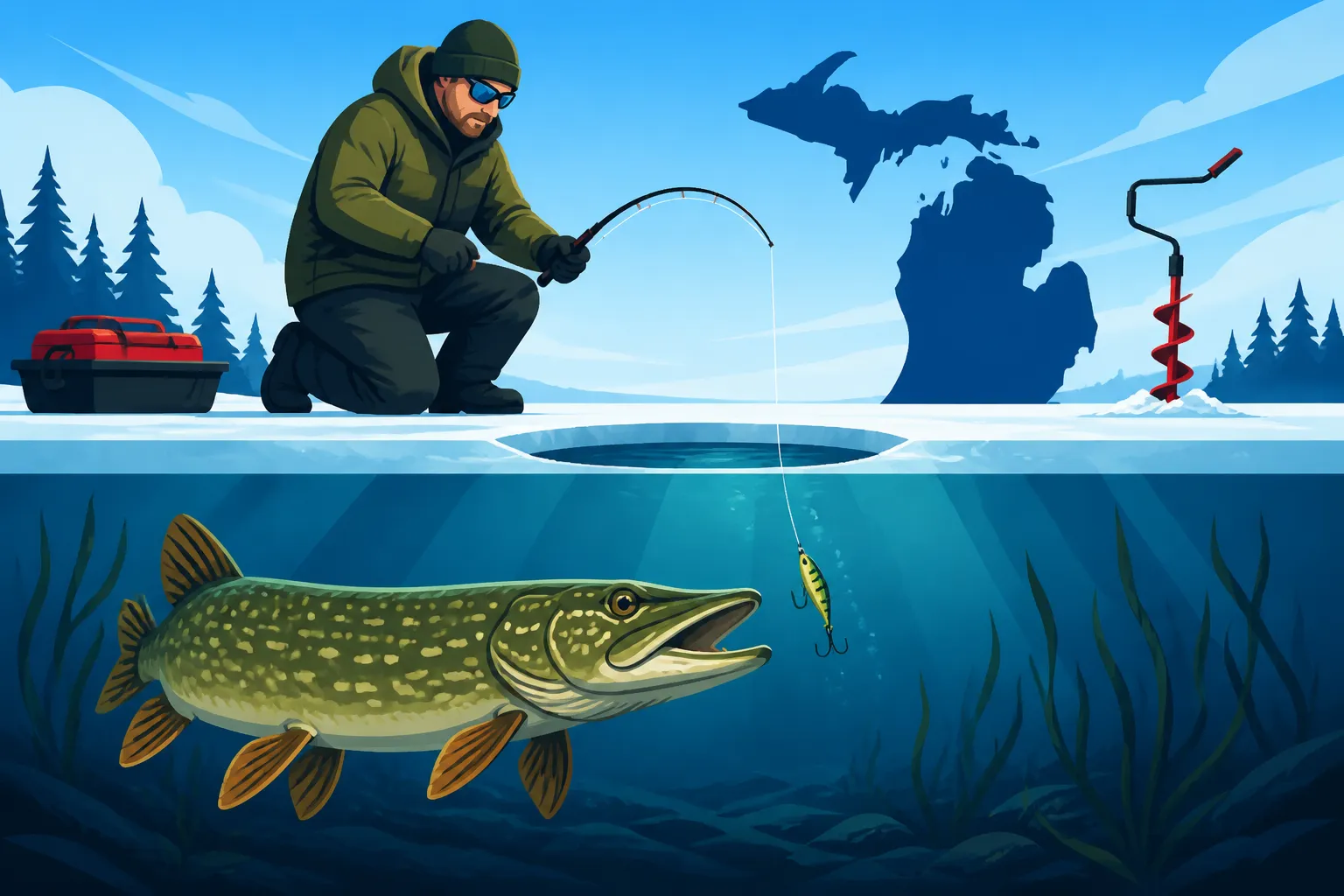
Drilling holes in thick Michigan ice requires a quality auger. For pike fishing, you'll want an auger that cuts a wider hole, typically 8-10 inches in diameter. This larger hole makes it much easier to pull a sizable pike through, especially if it decides to thrash around at the surface. You have a few options: manual hand augers (good for thinner ice or a great workout), propane augers (convenient and powerful), or electric augers (quiet and increasingly popular). Each has its pros and cons, and many anglers find great deals and a variety of models on Amazon. For a detailed comparison, check out our insights on Best Ice Augers for Michigan Ice Fishing.
Once your holes are drilled, an ice shelter can be a game-changer, particularly on those frigid Michigan days. A good shelter, whether it's a portable pop-up or a more robust shanty, provides warmth, protection from the wind, and a comfortable base of operations. This can extend your fishing day significantly and make the experience much more enjoyable. Modern shelters come with plenty of features like insulated fabric, windows, and even built-in seating. Finding one that suits your needs and budget is easy with the vast selection available on Amazon. Our Best Ice Shelter for Michigan Ice Fishing article offers a deep dive into choosing the right one for your setup.
Baits and Lures
When it comes to bait for northern pike, bigger is often better. Live bait is king for tip-ups. Large shiners, suckers, or even medium-sized panfish (where legal, always check local regulations!) are excellent choices. A 6-8 inch sucker minnow, hooked through the back or lips, swimming freely under a tip-up, is hard for a hungry pike to resist. The movement and scent are incredibly effective.
For jigging, flashy spoons, large swimbaits, and even jigging raps can entice a strike. Spoons like the classic Daredevle or a Williams Wabler, tipped with a minnow head or a piece of cut bait, can be deadly. The flash and vibration mimic injured baitfish, triggering a pike's predatory instincts. Jigging them aggressively, then pausing, often draws attention. Remember, pike are visual hunters, so colors like chartreuse, orange, and silver can be particularly effective in stained or clear water, respectively. While live bait is a classic, having a selection of artificial lures on hand for active jigging can also lead to great success, especially when covering multiple holes.
Best Techniques for Catching Pike Through the Ice
Ice fishing for pike isn't just about waiting; it's about strategy, patience, and knowing how to present your offering effectively. With the right techniques, you can turn a slow day into a memorable one.
Tip-Up Strategies and Setups
Tip-ups are a fantastic way to cover a lot of water and present live bait to pike. The key is to spread them out strategically. If regulations allow for multiple lines per angler (and in Michigan, you can use up to three lines when ice fishing), deploy your tip-ups across different depths and areas where you suspect pike might be hiding. For instance, place some along a weed edge, others on a nearby drop-off, and one or two on an adjacent flat. This helps you locate active fish.
Setting up your tip-ups correctly is critical. Use a heavy leader to prevent bite-offs, and choose a hook size appropriate for your bait – usually a 1/0 to 4/0 treble hook or a large single hook. Hook your live minnow or sucker gently through the back, just behind the dorsal fin, being careful not to hit its spine, or through the lips for more natural swimming. Depth is crucial: set your bait a foot or two off the bottom, or just above any visible weed tops. This keeps it visible and allows it to swim naturally without getting tangled. When a flag goes up, don't rush! Let the pike run with the bait for a few seconds, allowing it to fully ingest it, then set the hook with a strong, sweeping motion. More details on this can be found in our guide on Tip-Up Fishing for Michigan Pike.
Jigging for Active Pike
While tip-ups are often set-and-forget, jigging provides a more active and engaging way to target pike. This is particularly effective if you're marking fish on your flasher or fish finder. Use larger, flashy spoons, lipless crankbaits, or even big soft plastic swimbaits on a heavy jig head. The key is to generate a lot of flash and vibration to attract attention.
Drop your lure to the desired depth (often just above where you're marking fish or near cover) and then use an aggressive jigging motion. Lift your rod tip sharply, then let the lure flutter back down on a semi-slack line. The "thump" on the drop and the erratic movement on the lift often trigger reaction strikes from curious or hungry pike. Experiment with the retrieve speed and pauses; sometimes a prolonged pause after an aggressive jig is exactly what it takes to get a pike to commit. Don't be afraid to add a small piece of minnow or scent to your artificial lures for added appeal.
Setting Up a Productive Pike Spread
A truly successful ice fishing outing for northern pike involves a thoughtful "spread" of your gear. This isn't just about randomly drilling holes. It’s about creating an efficient and effective network of lines that maximizes your chances. Start by identifying prime ambush points using a good lake map or your fish finder. These could be weed beds, drop-offs, points, or the edges of submerged structures.
Once you’ve identified your target area, drill a series of holes. If allowed, spread your tip-ups in a fan pattern, covering different depths and sections of the chosen structure. For instance, if you're working a weed edge, set one tip-up right on the edge, one a few feet into the weeds, and one a few feet into the deeper water just off the edge. In the center of your spread, or perhaps slightly off to one side, you might set up your ice shelter and actively jig. This allows you to stay warm, watch your jigging line, and keep an eye on all your tip-up flags. Remember, the goal is to present baits in various locations and depths until you find where the active fish are holding. For more general insights into getting set up, our comprehensive Michigan Ice Fishing Guide offers a wealth of information.
Safety Considerations for Michigan Ice Anglers
No matter how excited you are to chase those Michigan pike, safety should always be your absolute top priority on the ice. The beauty of a frozen lake can quickly turn dangerous if precautions aren't taken seriously.
Ice Thickness and Conditions
As mentioned earlier, understanding ice thickness is critical. Never assume the ice is safe based on past experience or what others are doing. Always check yourself. Ice thickness can vary dramatically even on the same body of water, due to factors like currents, springs, underwater structures, and recent weather. A good rule of thumb is to look for clear, blue ice, which is the strongest. White or "snow" ice is much weaker, often only half the strength of clear ice.
Avoid areas near inlets, outlets, bridges, or any place where water flow might create thinner ice. Be extra cautious if there's standing water on the ice, as this could indicate deteriorating conditions. Always go with a buddy, tell someone your plans, and carry safety gear like ice picks, a spud bar (to test ice ahead of you), and a throw rope. For up-to-date information on Michigan's varying ice conditions throughout the colder months, a read of Michigan Ice Fishing Season Timing can be incredibly helpful.
Emergency Gear and Preparedness
Being prepared for an emergency on the ice could literally save your life. In addition to knowing about ice thickness, always dress in layers, with waterproof and windproof outer layers. Hypothermia is a serious risk in Michigan's winter conditions. Carry a fully charged cell phone in a waterproof case, along with a portable charger.
Essential safety gear includes a set of ice picks worn around your neck. If you break through, these can help you grip the ice and pull yourself out. A whistle can signal for help, and a small first-aid kit is always a good idea. Consider wearing a personal flotation device (PFD) or a survival suit, especially early or late in the season when ice is less stable. It might seem like overkill, but it's much better to be overprepared than to find yourself in a life-threatening situation.
Cold Weather Protection
Beyond just staying safe on the ice, staying warm and comfortable is key to enjoying your time outdoors. Michigan winters are no joke, and frostbite can sneak up on you. Layering is paramount. Start with a moisture-wicking base layer, add insulating middle layers (fleece or down are great), and finish with a waterproof and windproof outer shell. Don't forget your extremities: a warm hat, insulated gloves or mittens, and waterproof, insulated boots are non-negotiable. Chemical hand and foot warmers can also be a lifesaver on particularly frigid days.
Staying hydrated is also important, even in cold weather. Bring a thermos of hot coffee, tea, or soup to help keep your core temperature up. A comfortable, portable chair and a reliable heat source in your ice shelter will make a huge difference in your endurance and enjoyment. Being warm and comfortable allows you to focus on the fishing, rather than just enduring the cold.
| Gear Category | Item | Purpose | Notes |
|---|---|---|---|
| Fishing Gear | Medium-Heavy Ice Rod & Reel | Active jigging for powerful pike | 20-30 lb braid, 30-50 lb leader |
| Tip-Ups (multiple) | Passive fishing, covering multiple holes | Spool with heavy Dacron/braid, heavy leader | |
| Large Treble/Single Hooks | Securely hook large live bait | Sizes 1/0 – 4/0 recommended | |
| Live Bait (Suckers, Shiners) | Primary bait for tip-ups, irresistible to pike | Check local regulations for baitfish rules | |
| Artificial Lures (Spoons, Jigs) | Active jigging for reactive strikes | Tip with minnow head for scent | |
| Bait Bucket/Aerator | Keep live bait fresh and active | Essential for a successful trip | |
| Ice Safety | Ice Picks | Self-rescue in case of break-through | Worn around the neck for quick access |
| Spud Bar / Ice Chisel | Test ice thickness ahead of you | Essential for venturing onto unknown ice | |
| Throw Rope | Aid for rescuing others or yourself | At least 50 feet long, highly visible | |
| Personal Flotation Device (PFD) | Buoyancy in case of falling through | Mandatory for early/late season, good year-round | |
| Comfort & Shelter | Wide-Blade Auger (8-10 inch) | Drill holes big enough for pike | Manual, propane, or electric |
| Ice Shelter / Shanty | Protection from wind and cold | Insulated models are ideal for Michigan winters | |
| Portable Heater | Keep warm inside the shelter | Propane-powered, ensure ventilation | |
| Warm Clothing (Layers) | Stay warm and dry in varying conditions | Moisture-wicking base, insulating mid, waterproof outer | |
| Insulated Boots, Hat, Gloves | Protect extremities from frostbite | Crucial for extended time on ice | |
| Thermos (Hot Drink/Food) | Keep core temperature up, provide energy | Hot cocoa, coffee, soup are great | |
| Other Essentials | Fish Finder / Flasher | Locate fish and monitor depth | Vexilar, Marcum, Humminbird are popular brands |
| Headlamp / Lantern | For low light conditions and night fishing | Essential for early mornings or late evenings | |
| Pliers / Jaw Spreader | Safely remove hooks from toothy pike | Protect hands from sharp teeth | |
| Measuring Tape / Scale | Measure and weigh your catch | Practice catch-and-release, know limits |
Disclaimer
Fishing involves inherent risks, including but not limited to, changing weather conditions, slippery surfaces, and sharp objects. Always prioritize safety and exercise caution. Adhere to all local and state fishing regulations, including those set forth by the Michigan Department of Natural Resources. This guide is for informational purposes only and does not guarantee fishing success or safety.