Best Pike Fishing Techniques in Michigan
Northern pike in Michigan are some of the most exhilarating fish to pursue, known for their aggressive strikes and powerful fights. However, many anglers, myself included, have spent frustrating hours casting to what seems like perfect pike habitat only to come up empty-handed. It can be tough to crack the code on these toothy predators. This guide will dive deep into the most effective pike fishing techniques in Michigan, helping you understand their habits, choose the right gear, and implement strategies that will lead to more successful outings on our beautiful waters.
Understanding Michigan Pike Behavior and Habitats
To consistently catch northern pike in Michigan, you first need to get inside their heads, so to speak. These ambush predators are creatures of habit, heavily influenced by their environment and the changing seasons. Knowing where they live and what drives their feeding will dramatically increase your chances of success.
Prime Locations for Northern Pike
Michigan is blessed with an abundance of waters perfect for northern pike, from vast Great Lakes bays to countless inland lakes and winding rivers. Pike thrive in areas that offer plenty of cover for them to hide and ambush unsuspecting prey. Think shallow, weedy flats, submerged timber, lily pad fields, and transition zones where shallow water drops off into deeper areas. They love these "edge" environments.
For instance, places like the sprawling weed beds of Saginaw Bay on Lake Huron are legendary for their pike populations, as are the shallow bays and marshy areas of Lake St. Clair. Inland, large, fertile lakes such as Houghton Lake and Lake Gogebic in the Upper Peninsula are absolutely teeming with pike, particularly in their shallower, vegetation-rich sections. River systems, especially those with slower currents and oxbows, like sections of the Muskegon River or the Grand River, can also hold impressive numbers of pike. When you're scouting a new spot, look for these visual cues. If you see extensive weed growth or fallen trees in the water, you've likely found a potential pike sanctuary. Our comprehensive guide to "Michigan Lakes for Northern Pike" offers even more detailed insights into specific hot spots across the state.
Seasonal Movements and Feeding Patterns
Pike are highly attuned to water temperature and the availability of their favorite forage, leading to distinct seasonal movements and feeding patterns. Understanding these shifts is crucial for adapting your techniques throughout the year.
In spring, as ice recedes and water temperatures begin to rise, pike become incredibly active. They've just completed their spawning rituals, often in shallow, marshy areas, and are incredibly hungry. They'll be found in those very same shallow, warming waters, sometimes in as little as 2-5 feet of water, looking to replenish their energy reserves. This is a prime time for aggressive fishing, as they're not particularly picky.
As summer progresses and water temperatures climb, pike often move to slightly deeper, cooler waters, seeking out thermoclines or areas with submerged springs. They'll still relate to cover, but perhaps deeper weed lines (10-20 feet), submerged humps, or the deep edges of drop-offs. Early morning and late evening become the most productive times, as the midday sun can push them even deeper or make them less active. However, don't write off shallower spots entirely, especially during cooler summer days or in low-light conditions; some big pike will still patrol those hunting grounds. If you're wondering how to keep fishing productive in the heat, our article "How to Catch Fish During Summer Heat in Michigan" might offer some crossover tips.
Fall is another fantastic time for pike fishing in Michigan. As water temperatures cool down, pike move back into shallower areas, feeding aggressively to build up fat reserves for the winter. They're often found gorging themselves on baitfish that are also moving shallower. This period can offer some of the most exciting fishing, with pike willing to chase a variety of lures.
Finally, during winter, when Michigan lakes freeze over, pike can still be caught through the ice. They tend to stay in somewhat predictable areas near major weed beds or structural elements, but their activity levels might be lower. Understanding these seasonal changes allows you to adjust your approach and target pike effectively year-round.
Essential Gear for Michigan Pike Anglers
Equipping yourself with the right tools is non-negotiable when targeting northern pike. These fish are powerful, have razor-sharp teeth, and often inhabit dense cover, meaning your gear needs to be robust and reliable. Skimping on tackle can lead to lost fish and frustrating break-offs.
Rods, Reels, and Line Choices
When it comes to rods and reels, you'll want something that can handle the sheer power of a surging pike. For most situations, a medium-heavy to heavy action spinning or baitcasting rod, typically 6'6" to 7'6" in length, is ideal. The stout backbone of these rods provides the leverage needed to pull big pike out of heavy cover, while the tip still offers enough sensitivity to detect subtle bites. Popular brands like Ugly Stik or St. Croix offer excellent options that can withstand the abuse pike fishing often entails.
Pair your rod with a reliable reel that has a smooth, strong drag system. For spinning setups, a 3000-5000 series reel is usually sufficient, while a robust baitcasting reel is also an excellent choice, especially for casting heavier lures. The key is a drag system that can smoothly let line out under pressure without jerking, preventing break-offs when a big pike makes its initial run.
Line choice is critical. Braided line is highly recommended for pike fishing due to its incredible strength, lack of stretch, and abrasion resistance. A 20-40 lb test braided line is a good starting point. While braid is fantastic, northern pike have very sharp teeth that can easily slice through monofilament or fluorocarbon main lines. This means a good leader is absolutely essential. A 10-12 inch wire or heavy fluorocarbon (40-80 lb test) leader is a must-have. You can find pre-made wire leaders on Amazon, or you can tie your own heavy fluorocarbon leaders. This combination gives you the strength and sensitivity of braid with the necessary tooth protection at the business end. For more general advice on selecting fishing equipment, check out our guide on "Best Rods and Reels for Michigan Fishing".
Best Lures and Baits for Pike
Pike are aggressive, predatory fish, and their diet consists primarily of smaller fish, but they won't hesitate to strike at anything that looks like a meal. This means a variety of lures and baits can be effective.
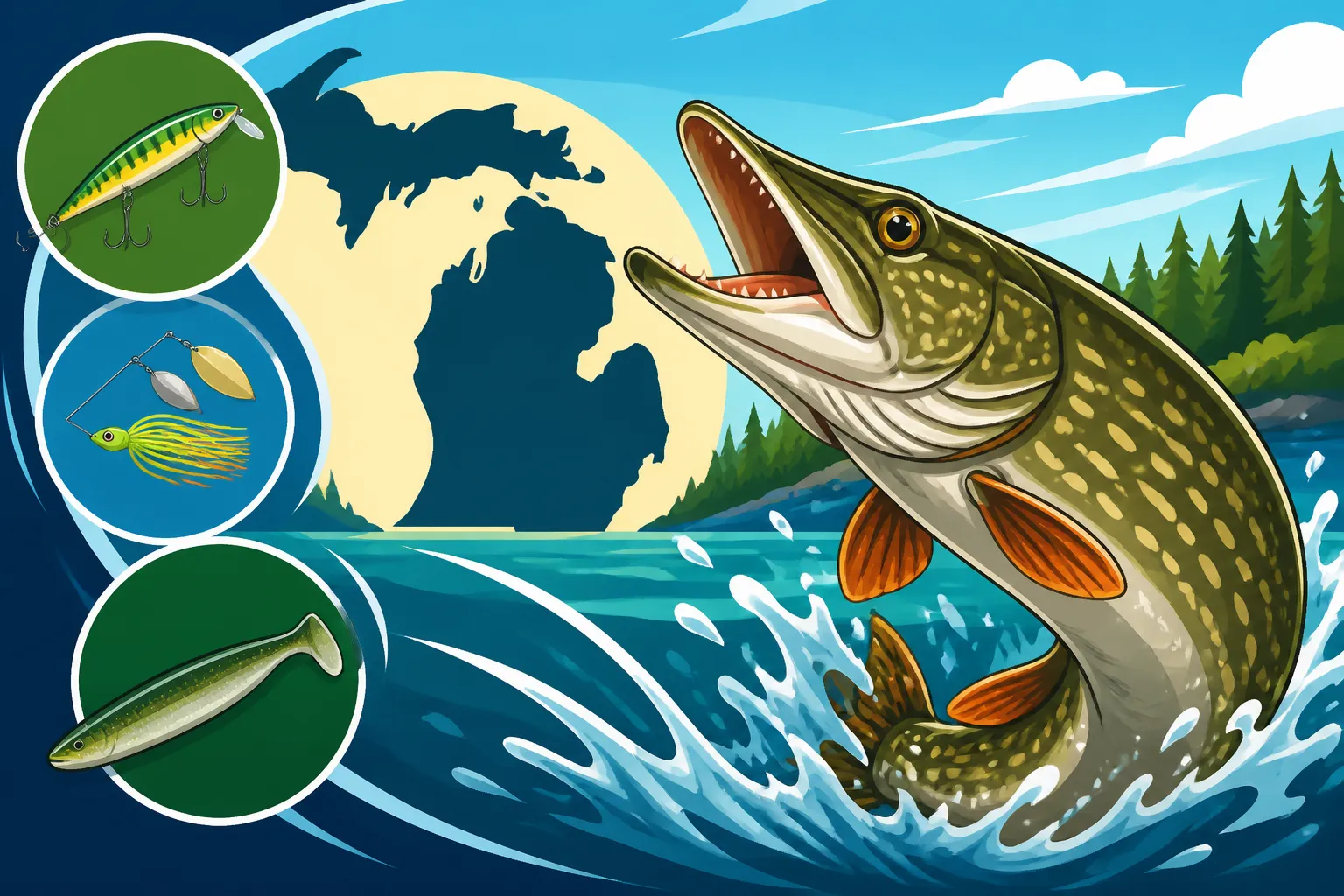
Spoons are classic pike attractors. Their wobbling, flashing action mimics injured baitfish, making them irresistible. Iconic brands like the Eppinger Dardevle spoon are staples in many Michigan pike anglers' tackle boxes. Chartreuse, red and white, and five of diamonds patterns are consistently effective. Sizes ranging from 1/2 oz to 1 oz are great for general use.
Spinnerbaits are another fantastic choice, especially when fishing around weeds. Their weedless design allows them to be retrieved through heavy cover without snagging, while the spinning blades create flash and vibration that infuriates pike. Bright colors, like chartreuse, white, or orange, often work well in Michigan's varied water conditions. You can find a vast selection of these on Amazon.
Jerkbaits and swimbaits that imitate minnows or other baitfish are also highly effective. These lures, when retrieved with a "jerking" or stop-and-go motion, mimic a struggling fish, triggering aggressive strikes. Larger sizes (5-8 inches) tend to attract bigger pike. Brands like Rapala or LiveTarget offer excellent options.
Finally, don't underestimate the power of live bait. A large shiner, sucker, or golden shiner rigged under a bobber can be incredibly effective, especially for wary pike or when fishing in colder water. These baits provide natural scent and movement that can be irresistible. Make sure to check Michigan's fishing regulations for legal live bait options in specific waters.
Here's a quick comparison of popular pike baits and lures:
| Lure Type | Ideal Conditions | Retrieval Style | Best Features |
|---|---|---|---|
| Spoons | Clear to stained water, open water or weed edges | Steady retrieve, stop-and-go | Highly reflective, mimics injured baitfish |
| Spinnerbaits | Weedy areas, stained water | Steady retrieve, slow roll | Weedless design, high vibration, flash |
| Jerkbaits | Clear water, structure | Erratic jerks, long pauses | Mimics struggling baitfish, visual appeal |
| Swimbaits | Open water, deeper weed lines | Steady retrieve, slow roll | Realistic profile, natural swimming action |
| Live Bait | Cold water, finicky pike, still fishing | Under a bobber, bottom rig | Natural scent and movement, often triggers bites |
Proven Pike Fishing Techniques
Now that you understand where pike live and what gear you need, let's talk about the strategies that bring these aggressive fish to the net. Different situations call for different approaches, and being versatile is key to consistent success.
Casting and Retrieving Strategies
Casting is perhaps the most common and exhilarating way to target northern pike. It allows you to systematically cover water and present your lure to potential ambush points. The key here is not just casting randomly, but strategically targeting areas where pike are likely to be hiding.
Start by casting your chosen lure (spoons, spinnerbaits, jerkbaits) to the edges of weed lines, around submerged logs, or near any noticeable change in structure. Pike love these transition zones because they offer both cover and a clear vantage point for ambushing prey. Don't be afraid to cast right into the thick stuff, especially with a weedless spinnerbait.
Your retrieval speed and action are just as important as your cast placement. Pike often respond well to an erratic retrieve. Try a steady retrieve with a few sudden jerks or pauses. For jerkbaits, a "twitch, twitch, pause" cadence is often deadly, mimicking a wounded baitfish. Experiment with different speeds and actions until you find what triggers a strike. Sometimes, a super-fast retrieve can trigger a reactive bite, while other times, a slow, methodical retrieve with long pauses will coax a hesitant pike into striking. Remember, pike are visual predators, so making your lure stand out is crucial. Early morning and late evening often see pike most active in shallower water, making casting particularly effective during these times.
Trolling and Still Fishing for Pike
While casting is exciting, sometimes covering more water efficiently or presenting bait to deeper, less accessible pike requires different techniques like trolling or still fishing.
Trolling is an excellent strategy for covering large areas, especially on bigger lakes or when pike are scattered or holding deeper. This involves pulling lures behind a moving boat. Trolling allows you to present multiple lures at different depths and speeds, increasing your chances of finding active fish. For pike, you'll want to use larger crankbaits, spoons, or even big swimbaits designed for trolling. Pay close attention to your boat speed; often, a slow to moderate speed (1.5-3 mph) is ideal, but again, experimentation is key. Use your fish finder to locate schools of baitfish or prominent underwater structures like humps or drop-offs, and then troll your lures through or around these areas. Downriggers can be invaluable for presenting lures at precise depths, especially in deeper Great Lakes bays or larger inland waters.
Still fishing, or fishing with a stationary bait, can be incredibly effective when pike are less active, or when you've identified a very specific spot where a pike is likely holding. This technique usually involves rigging a large live bait (like a sucker or shiner) under a large bobber, or on a bottom rig, and letting it sit in a prime ambush spot. Target deep weed edges, around downed trees, or near points. The natural movement and scent of live bait can entice even the most reluctant pike to bite. This method is often favored when fishing for "Northern Pike Identification in Michigan" in colder water or during slower periods, offering a more patient approach that can yield big rewards. Just ensure your leader is robust enough to prevent a cut-off from those sharp teeth!
Ice Fishing for Pike
When Michigan's waters turn to ice, the pursuit of pike doesn't have to stop. In fact, ice fishing for pike is incredibly popular and can be very productive. The key to success lies in understanding their behavior under the ice and deploying the right techniques.
The primary method for ice fishing pike is through the use of tip-ups. A tip-up is a device that signals a bite by flagging up when a fish takes the bait, allowing you to cover a wider area than you could with a single jigging rod. Rig your tip-ups with a strong line (50-80 lb braided line is common), a heavy fluorocarbon or wire leader, and a large hook (treble or single) baited with a lively minnow or small sucker. Position your tip-ups along weed edges, near drop-offs, or over submerged humps – essentially, the same types of structure they'd inhabit during open water. Pike often cruise these areas looking for an easy meal. For a detailed guide on setting up, check out "How to Tie a Tip-Up for Pike Fishing".
In addition to tip-ups, jigging with a heavy-action ice fishing rod can also be effective. Large jigging spoons, lipless crankbaits, or even substantial soft plastics worked vertically through the ice hole can trigger strikes. While jigging, watch your fish finder closely for signs of pike moving in. Sometimes, an aggressive jigging motion followed by a long pause is all it takes. Remember that even though you're ice fishing, a good landing net and a pair of long-nose pliers are crucial for handling these toothy fish safely. Our "Michigan Ice Fishing Guide" offers a deeper dive into all aspects of winter angling in the state.
Handling and Conservation of Michigan Pike
Catching a magnificent northern pike is an incredible experience, but it comes with the responsibility of handling these fish properly and respecting Michigan's fishing regulations. Conservation ensures that these powerful predators will be around for future generations of anglers to enjoy.
Safe Handling and Release Practices
Northern pike are notorious for their sharp teeth. A quick glance inside their mouth reveals rows of needle-like teeth, making improper handling a recipe for injury to both you and the fish. Therefore, having the right tools for handling is paramount.
Always carry a good pair of long-nose pliers (at least 10-12 inches long) and, ideally, a jaw spreader. The jaw spreader can be gently inserted to hold the pike's mouth open, giving you safe access to remove hooks deep within its mouth without risking your fingers. Avoid trying to stick your hand directly into a pike's mouth, especially if the fish is still feisty.
When landing a pike, use a large, rubber-coated landing net. The rubber coating protects the fish's slime coat, which is vital for its health, and helps prevent hooks from getting tangled in the netting. Once the fish is in the net, try to keep it in the water as much as possible if you intend to release it. If you must bring it into the boat or onto the ice, do so quickly and lay it on a wet surface.
To hold a pike for a quick photo, support its body horizontally with one hand under its belly and the other gently gripping the gill plate (not in the gills themselves). Avoid holding large pike vertically by the jaw, as this can cause severe damage to their spine and internal organs. If the fish is bleeding or deeply hooked, it's often best to cut the line as close to the hook as possible, as attempts to remove a deeply embedded hook can cause more harm. Releasing a pike successfully means getting it back into the water quickly and allowing it to swim off on its own power.
Michigan Regulations and Limits
Michigan's Department of Natural Resources (DNR) sets specific regulations to manage northern pike populations and ensure sustainable fishing. These regulations often include minimum size limits and daily possession limits, which can vary depending on the specific body of water you're fishing. It's not uncommon for some lakes to have different rules than others, or for Great Lakes tributaries to have distinct regulations.
For example, many waters might have a statewide minimum size limit of 24 inches for northern pike, with a daily possession limit of two fish. However, some special regulation waters might have different rules, such as higher minimum sizes or even catch-and-release only. It is absolutely crucial to consult the most current "Michigan Fishing Regulations Every Angler Should Know" digest before you head out. This digest, available online through the Michigan DNR website or at licensed dealers, details all the specific rules, including "Michigan Daily Bag Limits by Species" and size restrictions. Not knowing the rules is not an excuse, and violating them can result in fines and other penalties. By understanding and adhering to these regulations, you're playing an active role in protecting Michigan's fantastic pike fishing opportunities for everyone.
Disclaimer
The information provided in this guide is for general informational purposes only and is not intended as legal advice regarding fishing regulations. Fishing rules and regulations are subject to change and vary by location and season. Always consult the most current Michigan Department of Natural Resources (DNR) fishing guide or website before engaging in any fishing activities.