Best Live Bait for Michigan Walleye in Spring
There’s nothing quite like the anticipation of spring walleye fishing in Michigan. After a long, cold winter, the chance to hit the water and target these delicious, hard-fighting fish is a dream for many anglers. But let’s be real, those early spring walleye can be notoriously finicky, making bait selection a critical factor for success. This guide will walk you through the very best live baits that will give you an edge when chasing Michigan walleye during the spring thaw.
Why Spring Walleye Fishing is a Unique Challenge in Michigan
Spring walleye fishing isn't just about throwing out a line; it's about understanding the subtle dance between their biological needs and the awakening ecosystem. As the ice recedes and water temperatures begin to climb, walleye transition from their winter patterns into a pre-spawn, spawning, and post-spawn frenzy. This distinct behavioral shift dictates where they are and, crucially, what they’re willing to bite.
Understanding Walleye Spawning Patterns
In Michigan, walleye typically spawn when water temperatures hit anywhere from 40 to 50 degrees Fahrenheit. This often happens in late March through April, though it can vary significantly depending on whether you’re fishing the warmer southern reaches or the colder Upper Peninsula. During the pre-spawn phase, walleye are gorging themselves, building energy reserves for the intense act of spawning. They'll move from deeper wintering holes into shallower staging areas, often near river mouths, rocky reefs, or shoals where they intend to lay their eggs.
Once spawning begins, their focus shifts entirely to reproduction, and their feeding can slow considerably. This is often the toughest time to catch them. However, immediately after spawning, they enter a post-spawn recovery period where they are again incredibly hungry, albeit often lethargic. They'll linger in these spawning areas or nearby deeper water, looking for easy meals to regain strength. Knowing these phases is key to predicting where they’ll be and what they’ll be looking for. It also helps to be aware of specific season openers, like the Lower Peninsula Trout and Walleye Opener versus the Upper Peninsula Walleye Season Opener, as regulations often align with these biological events.
The Impact of Cold Water Temperatures
Early spring water temperatures play a massive role in walleye metabolism and behavior. Cold water means slower digestion and less activity. Unlike the aggressive chase of summer, spring walleye are often sluggish and prefer an easy, enticing meal. They won't expend much energy chasing down fast-moving lures. This is precisely why live bait shines during this period. A natural, struggling minnow or a slowly twitching worm offers an irresistible, high-protein snack that requires minimal effort to consume. They're more apt to "nose" a bait rather than strike it violently, which means subtle presentations are paramount.
Beyond temperature, water clarity can also be a factor. Spring thaws often bring runoff, leading to murkier conditions in rivers and near shorelines. This reduces visibility, forcing walleye to rely more on their lateral line to detect vibrations and their keen sense of smell. Live bait, with its natural scent and subtle movements, becomes even more effective under these conditions. If you're encountering stained water, you might also want to read up on How to Catch Walleye in Murky Water for additional tips.
Top Live Baits for Spring Walleye in Michigan
When it comes to tempting those early spring walleye, live bait consistently outperforms artificial lures due to its natural appeal. The movement, scent, and texture are hard for a walleye to resist, especially when they're not in an aggressive mood.
The Mighty Minnow
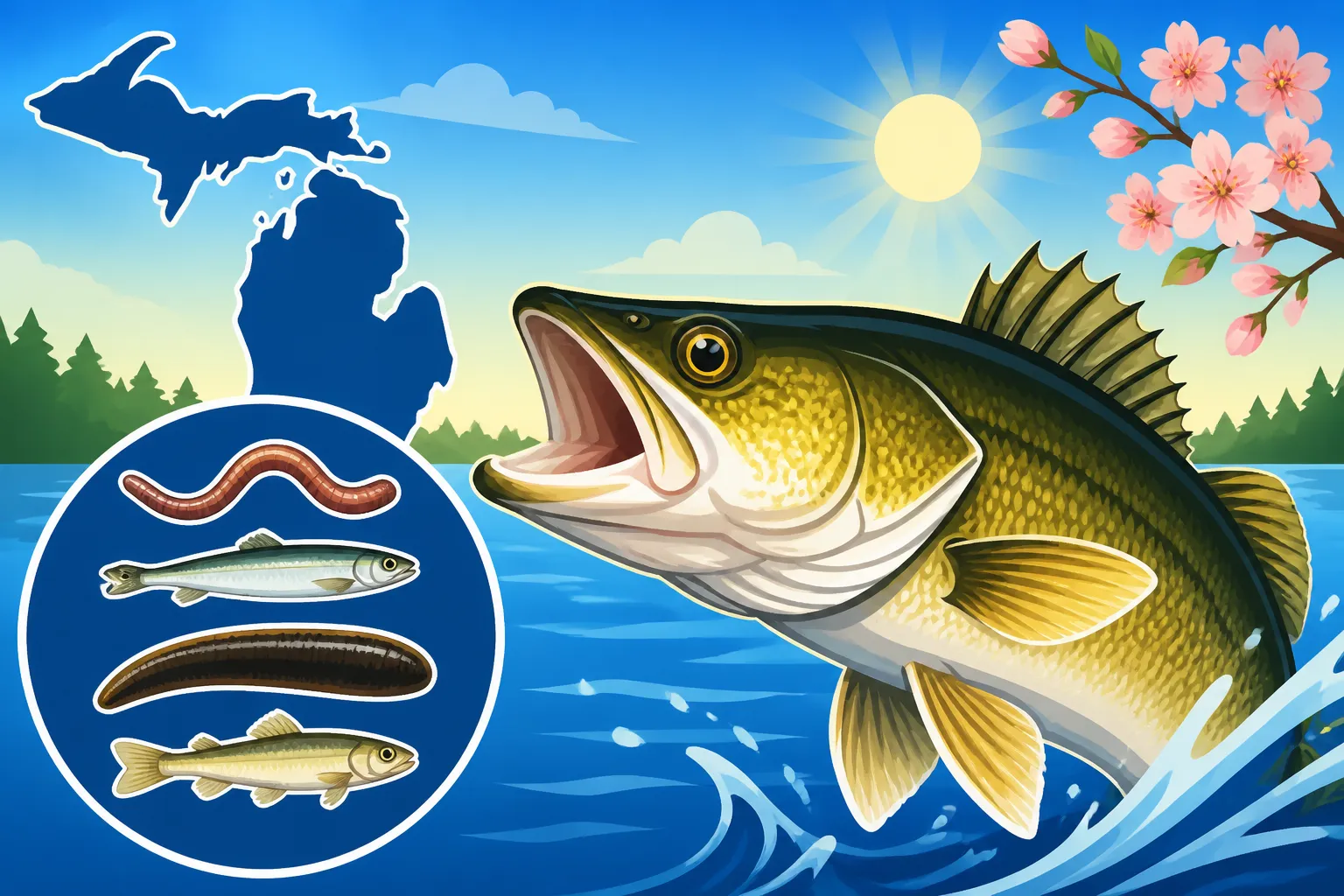
Minnows are arguably the king of spring walleye bait, and for good reason. They are the natural prey of walleye and perfectly mimic what these fish are already hunting.
- Shiners: Golden shiners, emerald shiners, and spottail shiners are all fantastic choices. Golden shiners tend to be larger and more robust, making them great for jigging or slow-trolling. Emerald shiners are often found in the Great Lakes system and its tributaries, and their silvery flash is incredibly attractive. Spottail shiners are smaller but lively. The key with shiners is their natural flash and their frantic swimming action when hooked, which really grabs a walleye's attention. I often pick up a couple dozen from my local bait shop or even order bait-related accessories like aerators and minnow buckets from Amazon before a trip.
- Chubs: Creek chubs and redtail chubs are hearty and very active minnows. They're excellent for current situations in rivers, where their strong swimming motion helps them stay in place and look natural. They can also withstand more abuse from casting or being fished in rougher conditions. Many anglers swear by a large chub for a trophy-sized walleye during the pre-spawn.
- Fathead Minnows: While smaller, fathead minnows are readily available and incredibly lively. They're perfect for finesse presentations, especially when walleye are lethargic. Their smaller profile can be just the ticket when bigger baits are ignored. They’re often preferred for ice fishing, but don't underestimate their effectiveness in early spring open water, particularly when fished slowly on a small jig.
Keeping your minnows lively is crucial. A good aerated minnow bucket is a must-have. Dead or dying minnows lose their appeal quickly, and a sluggish minnow won't entice a sluggish walleye.
Wiggly Worms: The Versatile Option
Nightcrawlers, while often thought of as a summer bait for walleye, are surprisingly effective in the spring, particularly as the water warms slightly into the mid-40s and 50s. Their natural scent and continuous wiggling motion are hard for a walleye to ignore.
- Presentation is Key: When fishing with nightcrawlers in spring, slow and subtle is the name of the game. You're not trying to imitate a fleeing baitfish; you're offering an easy meal. Tipping a jig with half a nightcrawler, or using a whole worm on a simple hook under a slip bobber, can be incredibly productive. The worm’s scent trail can also be a significant advantage in turbid waters where visibility is low. Many anglers find success with nightcrawlers when the walleye are transitioning into post-spawn and are looking for something easy and protein-rich. For a general overview of bait options, check out Best Bait for Michigan Walleye.
Leeches: A Later Spring Favorite
While not typically the top choice for the absolute earliest spring fishing (when water temps are below 45 degrees), leeches become incredibly effective as the water warms up a bit more. By late April and early May, when walleye are fully in their post-spawn recovery and becoming more active, leeches can be a consistent producer.
- Natural Movement and Durability: Leeches are incredibly tough and active in the water. They'll squirm and undulate, creating a tempting profile. They also stay on the hook remarkably well, enduring multiple casts or light bites. Like nightcrawlers, their natural scent is a big draw. You can find excellent leech containers and other live bait accessories on Amazon to keep them healthy.
- Rigging Leeches: Leeches are best fished on a simple plain hook (Aberdeen or Octopus style), often under a slip bobber or directly on a jig head. They are fantastic for drifting over flats or fishing current breaks. When they’re feeling more aggressive, a leech on a bottom bouncer rig can cover a lot of ground effectively.
Here's a quick comparison of these top live baits for spring walleye:
| Live Bait Type | Peak Effectiveness | Key Advantages | Best Presentation | Notes |
|---|---|---|---|---|
| Minnows | Early Spring (Pre-spawn to Post-spawn) | Natural flash, frantic movement, primary walleye forage | Jigging, Slip Bobber, Slow Troll | Keep lively with aeration, consider shiners/chubs for larger fish |
| Nightcrawlers | Mid-Spring (Post-spawn, Warming Water) | Strong natural scent, continuous wiggle, versatile | Jigging (tipped), Slip Bobber, Walleye Rig | Slow presentation is key, cut worms for finesse |
| Leeches | Late Spring (Warmer Post-spawn) | Durable, active movement, excellent scent | Slip Bobber, Jigging, Bottom Bouncer | More effective as water warms above 45-50°F |
Rigging and Presentation Techniques for Live Bait
Having the best live bait is only half the battle; knowing how to present it is equally crucial. Spring walleye are often lethargic, so your presentation needs to be slow, subtle, and natural.
The Classic: Jigging with Live Bait
Jigging is perhaps the most popular and effective method for presenting live bait to spring walleye, especially in rivers and along breaklines. The combination of a jig's weight for depth control and a live minnow's natural action is deadly.
- Jig Head Selection: Opt for jig heads in the 1/8 to 1/4 ounce range in most situations, though you might go heavier in strong currents or deeper water. Colors like chartreuse, orange, white, or plain lead can all be effective. The key is a sharp hook to ensure good hooksets. You can find a vast array of jig heads and other terminal tackle on Amazon to experiment with.
- Minnow Placement: Hook your minnow through the lips or lightly through the dorsal fin. Lip-hooking allows the minnow to swim more freely and naturally. Dorsal fin hooking is better for horizontal presentations or when you want the minnow to stay in a specific depth range.
- The Retrieve: The retrieve should be excruciatingly slow. Cast out, let the jig sink to the bottom (or just above where you're marking fish), and then use a slow lift-drop, drag-pause, or subtle quiver motion. The goal is to make the minnow look injured or disoriented, an easy target. Often, the bite will be a subtle "thunk" or just added weight on your line, so pay close attention. Mastering this can significantly improve your Michigan Walleye Fishing Techniques.
Suspending Baits with Slip Bobber Rigs
A slip bobber rig is invaluable for presenting live bait at a precise depth, especially when walleye are suspended or holding just off the bottom. This setup is fantastic for covering flats, weed edges, or even river eddies without constantly snagging.
- Components: A slip bobber rig consists of a bobber stop (thread or plastic), a bead, a slip bobber, another bead, a weight (split shot or sinker), and a hook. Hook choices include a plain Aberdeen or Octopus hook, or a small jig head.
- Depth Control: The beauty of the slip bobber is its ability to be set at any depth. Once your bobber stop is adjusted, you can cast your bait, and the weight will pull the line through the bobber until it hits the stop, holding your bait at the desired depth. This is perfect for fishing over submerged structure or when fish are congregating at a specific depth. It also helps detect those light spring bites as the bobber slowly dips or moves sideways.
Covering Water with Bottom Bouncing and Drifting
When walleye are spread out or you're trying to locate schools in larger bodies of water or rivers, bottom bouncers and drifting rigs are excellent choices. They allow you to cover ground while keeping your live bait in the strike zone.
- Bottom Bouncers: These L-shaped weights keep your line elevated above the bottom while the lead arm bounces along. A snell (leader) of about 3-6 feet with a hook and live bait (minnow or leech) trails behind. Slowly troll or drift with your boat, allowing the bouncer to maintain contact with the bottom. This is a very effective way to present bait to walleye cruising along ledges or subtle depth changes.
- Drifting Rigs: In rivers, simply drifting a minnow or worm on a light jig head or plain hook with minimal weight can be incredibly effective. The current does all the work, presenting your bait naturally downstream. You want just enough weight to keep your bait near the bottom without constantly snagging. This mimics a natural piece of forage tumbling with the current. This method is particularly good if you're targeting areas like Saginaw Bay. You might find more specific insights in Best Time to Fish Saginaw Bay for Walleye.
Other Considerations for Spring Walleye Success
While live bait is a huge advantage, several other factors can influence your spring walleye success. Paying attention to these details can make a significant difference in your catch rates.
Understanding Current and Structure
Walleye are ambush predators, and in the spring, they rely heavily on current breaks and underwater structure to conserve energy and ambush prey.
- Current Breaks: In rivers, look for eddies, seams where fast water meets slow water, the upstream side of submerged rocks or logs, and bridge pilings. These spots offer a resting place for walleye out of the main current, but still provide easy access to food washing by.
- Underwater Structure: In lakes, focus on transition areas like points, rocky reefs, submerged humps, and the edges of sharp drop-offs. Walleye will often stage on the shallower side of these structures before moving up to spawn, and then retreat to the deeper side post-spawn. Identifying these key holding areas is paramount, and a good fish finder can be your best friend.
The "Low and Slow" Mantra
We've touched on it already, but it bears repeating: spring walleye demand a "low and slow" approach. Their metabolism is slow, their feeding windows can be short, and their bites are often subtle.
- Slower Retrieve Speeds: Whether you're jigging, trolling, or drifting, aim for the slowest possible retrieve or drift speed that still allows you to control your bait. This gives the walleye ample time to inspect the offering and commit to a bite.
- Patience is a Virtue: Don't get discouraged by long lulls. Walleye can turn on and off in an instant. Keep your bait in the water, vary your retrieves just slightly, and stay vigilant. The fish might not hammer your bait; they might simply "suck it in" or apply subtle pressure. A sensitive rod is critical for detecting these light bites. Consider a good quality spinning rod, many of which are available on Amazon, specifically designed for finesse walleye fishing. You might be interested in Best Spinning Rods for Michigan Walleye to help you pick the right gear.
Using Electronics and Locating Schools
Modern electronics can be a game-changer for spring walleye, allowing you to efficiently locate fish and understand the underwater topography.
- Fish Finders: Your fish finder isn't just for showing depth; it's a window into the underwater world. Look for schools of baitfish, which often indicate the presence of predatory walleye. Identify sharp breaklines, humps, and submerged timber that walleye might be relating to. When you mark fish arches, note their depth and target that specific zone with your live bait.
- GPS and Mapping: Use your GPS to mark successful spots, track your drifts, and navigate back to productive areas. Detailed lake maps or digital charts on your fish finder can reveal hidden structure and depth contours that you might otherwise miss. Knowing where the fish are and precisely how deep they're holding drastically increases your chances. Remember, once you find them, you'll still need to respect local regulations regarding daily limits, which are thoroughly explained in guides like Michigan Walleye Daily Possession Limit.
By combining the right live bait with a nuanced understanding of spring walleye behavior and effective presentation techniques, you'll be well on your way to a successful and rewarding fishing experience in Michigan's beautiful waters. And always remember to consult the Michigan Fishing Regulations Every Angler Should Know before heading out!
Disclaimer
The information provided in this guide is for general informational purposes only. Fishing regulations and conditions in Michigan can change frequently. Always consult the latest Michigan Department of Natural Resources (DNR) regulations and local advisories before engaging in any fishing activities. Adherence to all applicable laws and safety guidelines is the sole responsibility of the angler.