Best Spinning Rods for Michigan Walleye
Oh, the quest for the perfect walleye spinning rod in Michigan! It's a journey many of us anglers have been on, feeling overwhelmed by the sheer number of options out there. You want something that feels right in your hand, gives you that vital sensitivity to detect a subtle walleye bite, and has the backbone to land a trophy. This guide is here to cut through the confusion and help you understand exactly what to look for, ensuring your next Michigan walleye adventure is as successful and enjoyable as possible.
Understanding Michigan Walleye Fishing: Techniques and Challenges
Before we even talk about rods, we need to talk about walleye fishing itself in Michigan. It's not a one-size-fits-all endeavor. Our state offers such diverse waters, from the vast expanse of the Great Lakes like Lake Erie and Saginaw Bay to countless inland lakes and winding rivers. Each environment and the techniques we use there demand slightly different characteristics from our gear. The challenges are real, from fighting strong currents to feeling light bites in deep water, or needing to cast accurately into tight spots.
The Diverse Walleye Habitats of Michigan
Michigan's walleye population thrives in an incredible variety of environments. Think about the deep, cold waters of parts of Lake Superior, where you might be vertical jigging or even trolling, versus the shallower, weedy flats of Lake St. Clair or Houghton Lake where casting crankbaits or slip bobber fishing is king. Then you have the strong currents of the Detroit River or the St. Clair River, demanding precise jigging presentations. Each of these unique settings places different demands on your rod, influencing everything from its length to its action. A rod that excels at pitching jigs in a river might feel clumsy trying to cast a heavy crankbait off a pier on Lake Michigan. Understanding these distinctions is the first step to making an informed choice.
Common Walleye Fishing Techniques in Michigan
Michigan walleye anglers employ a range of effective techniques, and your rod choice plays a pivotal role in each. We often find ourselves vertical jigging, especially in rivers or deeper lake basins, where feeling every bump and subtle tap is paramount. Trolling is another massive technique, particularly on the Great Lakes for those massive Saginaw Bay walleye, requiring rods with specific actions to handle planer boards and diving baits. Casting crankbaits, spinner rigs, or even slip bobbers with live bait are staples in many inland lakes and shallower areas. Each technique calls for a rod that enhances its effectiveness, whether it's the sensitivity for a jig, the parabolic bend for trolling, or the casting distance for covering water. For a deeper dive into these methods, check out Michigan Walleye Fishing Techniques.
Key Features of an Ideal Walleye Spinning Rod
So, what makes a spinning rod truly great for walleye fishing? It comes down to a few critical features that work together to give you the best chance of success. It's not just about getting any rod; it's about getting the right rod that matches your predominant style of fishing and the waters you frequent most in Michigan.
Rod Length Considerations for Walleye
The length of your spinning rod is one of the first decisions you'll make, and it significantly impacts your fishing experience. For many walleye anglers, rods typically fall in the 6' to 7'6" range. Shorter rods, say 6' to 6'6", offer superior control and sensitivity for vertical jigging or working lures in tight quarters, like from a crowded boat or a small inland lake. They're excellent for pinpoint accuracy.
On the other hand, longer rods, from 7' to 7'6", are fantastic for casting distance, which is crucial when covering expansive flats or fishing from shore or a large pier. They also provide better leverage when fighting a strong walleye and help with line management, especially when using lighter lines or smaller baits. If you're often casting crankbaits on big waters or fishing from open banks, a longer rod will make a noticeable difference in your reach and ability to spread out your presentation.
Rod Power and Action Explained
Understanding rod power and action is perhaps the most crucial aspect of choosing the right walleye rod. "Power" refers to how much force it takes to bend the rod, ranging from ultra-light to heavy. For walleye, you'll typically be looking at light, medium-light, or medium power rods. A light power rod is great for finesse techniques, smaller jigs, and feeling the most delicate bites, common when walleye are finicky. Medium-light offers a good balance for slightly heavier jigs and small crankbaits, providing sensitivity without being overly flimsy. A medium power rod provides the backbone for larger baits, trolling, or fighting bigger walleye in current, giving you more control.
"Action" describes where the rod bends along its length. Fast action rods bend mostly at the tip, offering incredible sensitivity and quick hook-sets, which is essential for jigging and feeling those subtle walleye pickups. Moderate-fast action rods bend in the top third or so, providing a bit more give for casting and absorbing lunges from fighting fish, making them versatile for many lure types. Moderate action rods bend further down, into the middle of the blank, and are excellent for casting reaction baits like crankbaits, as they load up well and prevent fish from tearing hooks out. Choosing the right combination of power and action will significantly improve your ability to present baits effectively and land fish.
Handle Design and Reel Seat Comfort
Never underestimate the importance of the rod's handle and reel seat. When you're spending hours on the water, whether it's a chilly morning on the Detroit River or a hot afternoon on Houghton Lake, comfort matters. A good handle should feel natural in your hand, providing a secure grip even when wet. Cork handles are classic for their lightweight feel, warmth in cold weather, and excellent grip, though EVA foam is also popular for its durability and resistance to wear.
The reel seat should securely hold your spinning reel without any wobble or play, ensuring that all the vibrations from your line are transmitted directly to your hand. Some anglers prefer an exposed blank reel seat for maximum sensitivity, while others prioritize a fully enclosed, comfortable grip. Test out a few different designs if you can; what feels good to one angler might feel awkward to another. Best Rods and Reels for Michigan Fishing delves into more general considerations, but for walleye, this ergonomic fit is key to avoiding fatigue and maintaining sensitivity.
Rod Materials and Construction: What Matters
The guts of your fishing rod—the materials it's made from and how it's put together—are crucial for its performance, durability, and even its feel in your hands. It's not just about a fancy paint job; the core components determine how sensitive the rod is, how much power it can generate, and how long it will stand up to the rigors of Michigan fishing.
Graphite vs. Fiberglass Blanks
The vast majority of modern walleye spinning rods are made from either graphite, fiberglass, or a composite blend of both. Graphite rods are renowned for their incredible sensitivity and light weight. This is a huge advantage when you're trying to detect the lightest tap from a walleye in deep water or subtle changes in bottom composition. They allow you to feel everything, which translates into more hook-ups. However, graphite can be more brittle than fiberglass, making it more prone to snapping if mishandled or put under extreme stress.
Fiberglass rods, on the other hand, are much more durable and flexible. They excel in situations where a softer, more parabolic bend is desired, such as trolling with diving baits or casting heavy crankbaits where shock absorption is key. While less sensitive than graphite, their forgiving nature makes them a good choice for certain applications or for anglers who prioritize toughness. Many modern walleye rods, especially those designed for specific techniques, use composite blanks, blending graphite and fiberglass to achieve a desired balance of sensitivity, strength, and flexibility. For example, a rod might have a sensitive graphite tip for bite detection and a fiberglass mid-section for better flex and power.
Guide Types and Quality
The guides on your spinning rod, those small rings that channel your fishing line, are far more important than many anglers realize. High-quality guides reduce friction, allowing your line to cast further and retrieve smoother. They also dissipate heat, which is crucial when fighting a powerful fish or using braided line, which can generate more friction than mono. Common guide materials include stainless steel, often with ceramic inserts like aluminum oxide or silicon carbide (SiC).
Ceramic inserts are particularly desirable for their hardness and smoothness, which minimizes wear on your line and extends casting distance. While more expensive, premium SiC guides are incredibly durable and slick, making them a favorite among serious anglers. Cheap guides can lead to premature line wear, decreased casting performance, and even potential line breaks at critical moments. Pay attention to how the guides are wrapped and secured; a quality build ensures they stay put and don't come loose after a few seasons of battling Michigan walleye.
Split Grip vs. Full Grip Handles
When it comes to handle design, you'll often see two main styles: split grip and full grip. A full grip handle, extending the entire length of the butt section, offers a traditional feel and can be more comfortable for anglers who like to tuck the rod butt under their arm or against their body during a fight. It provides a solid, continuous surface to hold onto.
Split grip handles, which feature a gap in the handle material exposing the rod blank, have become increasingly popular. The primary benefit of a split grip is weight reduction; less material means a lighter rod, which can reduce fatigue over a long day of casting and jigging. Additionally, some anglers claim the exposed blank in the split grip design enhances sensitivity, as vibrations are transmitted directly through the bare rod blank to your hand. For many walleye applications, where every ounce of sensitivity counts, a split grip can be a valuable feature. The choice often comes down to personal preference for weight, balance, and feel.
Matching Your Rod to Specific Walleye Techniques
Now let's get down to the nitty-gritty: how do you pick a spinning rod that truly excels at the way you like to fish for walleye in Michigan? It's all about aligning the rod's characteristics with your preferred techniques. After all, the best rod is the one that makes you a more effective and comfortable angler.
Rods for Vertical Jigging
Vertical jigging is a deadly technique for walleye, especially in places like the Detroit River or over deeper humps in the Great Lakes. For this, you absolutely need a rod with maximum sensitivity. A 6'3" to 6'9" spinning rod with a fast or extra-fast action and a medium-light or medium power is often the sweet spot. The fast tip allows you to feel every subtle "tick" of a walleye inhaling your jig, and the quick action ensures a rapid, powerful hook-set. The medium-light power offers enough backbone to fight a decent walleye without overpowering smaller jigs.
Imagine you're jigging a small 1/4 oz lead head in 20 feet of water; that sensitive tip is what tells you the difference between a rock and a bite. Too soft an action, and you'll miss those quick strikes. Too heavy a power, and you won't feel anything at all. Many anglers prefer a high-modulus graphite blank for the ultimate in sensitivity. If you're constantly trying to perfect your jigging game, this specific rod setup will be your best friend. For more on jigging, check out Jigging Techniques for Michigan Walleye.
Rods for Casting Crankbaits and Spinner Rigs
When you're casting crankbaits, jerkbaits, or spinner rigs for walleye in areas like Saginaw Bay's flats or along the weed lines of inland lakes, you'll want a rod that can handle the heavier lures and provide good casting distance. A spinning rod in the 7' to 7'6" range with a moderate-fast to moderate action and medium power is generally excellent. The longer length aids in getting your lure out there, covering more water, which is critical when walleye are spread out.
The moderate-fast or moderate action is key for these reaction baits. It allows the rod to load up smoothly during the cast, propelling your lure with minimal effort. More importantly, it provides a softer bend, which prevents fish from tearing off treble hooks during aggressive strikes or head shakes. A medium power provides the necessary backbone to cast larger baits and battle bigger walleye that might engulf your crankbait. This setup gives you versatility for a variety of casting presentations, allowing you to effectively work different depths and cover. If you are casting heavier baits you may want to look into Best Tackle for Michigan Walleye Fishing.
Rods for Slip Bobber Fishing and Live Bait
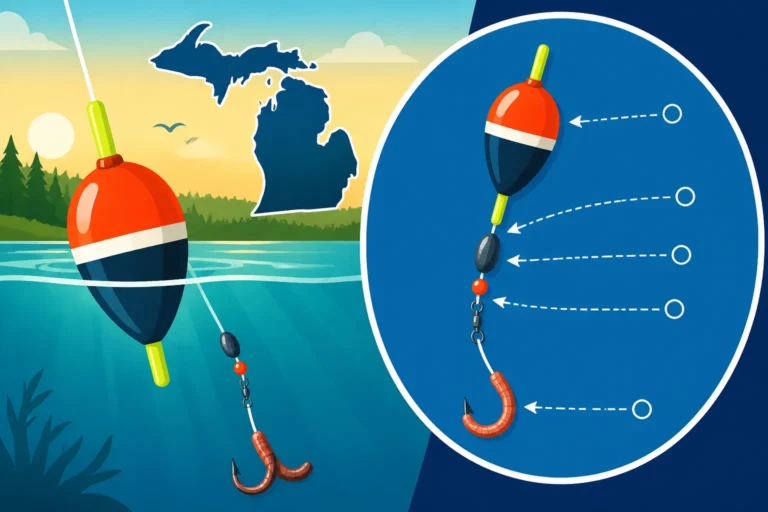
Slip bobber fishing is a classic and highly effective way to present live bait to walleye, especially around structure or when targeting specific depths. For this technique, you'll generally want a more forgiving rod that still offers good casting distance. A spinning rod between 7' and 7'6" with a medium-light or medium power and a moderate or moderate-fast action works wonderfully. The length allows for long casts with your bobber rig, and the moderate action is crucial for several reasons.
First, it protects lighter lines (often used with live bait) from breaking on a strong hookset, and it helps prevent smaller baitfish from being ripped off the hook during the cast. Second, it's more forgiving when a walleye takes the bait and runs, providing a smoother fight and less chance of the hook pulling out. The sensitivity of the rod isn't quite as critical here, as the bobber acts as your primary strike indicator, but enough power to cast the bobber and weight, and then fight the fish, is paramount. This style of rod is also excellent for other live bait presentations, like bottom bouncing or drifting minnow rigs.
| Technique | Rod Length (Typical) | Rod Power | Rod Action | Key Benefit |
|---|---|---|---|---|
| Vertical Jigging | 6'3" – 6'9" | Medium-Light | Fast/Extra-Fast | Maximum Sensitivity, Quick Hook-sets |
| Casting Crankbaits | 7'0" – 7'6" | Medium | Moderate-Fast | Casting Distance, Hook Retention |
| Slip Bobber / Live Bait | 7'0" – 7'6" | Medium-Light/Medium | Moderate/Moderate-Fast | Forgiving, Smooth Fights, Casting Distance |
| Trolling (Light) | 7'6" – 8'6" | Medium | Moderate | Line Control, Shock Absorption |
Note: For heavier trolling applications, specialized trolling rods are often used, which fall outside the typical "spinning rod" category for casting and jigging.
Popular Spinning Rod Brands and Where to Find Them
Alright, so you understand the technical specs. Now, which brands should you be looking at, and where can you actually get your hands on these magical walleye wands? There are so many fantastic rod manufacturers out there, and finding them is easier than ever.
Top Rod Manufacturers for Walleye Anglers
When it comes to quality spinning rods for walleye, several brands consistently rise to the top. St. Croix is a legendary name, known for their high-quality blanks and handcrafted feel. Their Eyecon and Legend Tournament Walleye series are specifically designed with walleye techniques in mind and are beloved by many Michigan anglers. G. Loomis is another premium brand, famous for its incredibly sensitive and lightweight rods, although they come with a higher price tag. Fenwick has a strong reputation for producing excellent rods across various price points, often offering great sensitivity for their cost. Shimano and Daiwa, while renowned for their reels, also produce a wide range of highly capable spinning rods that pair perfectly with their reel offerings.
Beyond these well-known names, brands like Abu Garcia, Ugly Stik (for extreme durability), and Berkley offer solid performance, often at a more budget-friendly price point, which is perfect for new anglers or those looking to expand their arsenal without breaking the bank. The key is to read reviews, talk to other anglers, and if possible, hold the rod in your hand to see how it feels.
Where to Purchase Your Walleye Spinning Rod
Finding the right walleye spinning rod in Michigan isn't difficult with today's options. For many, a trip to a large outdoor retailer is the best first step. Places like Bass Pro Shops offer an extensive selection where you can physically handle many different models, feel their balance, and ask knowledgeable staff for advice. This "hands-on" approach is invaluable, especially for something as personal as a fishing rod. You can really get a sense of the action and power just by wiggling the rod.
Beyond physical stores, online retailers like Amazon provide an incredible selection, often with competitive pricing and detailed customer reviews. This can be a great way to research specific models, compare features, and sometimes find rods that might not be available in your local shops. Just be sure to check the return policy if you're buying a rod sight unseen. Don't forget local tackle shops; these independent stores often have staff who are expert local anglers, offering personalized advice tailored to specific Michigan waters and conditions. They're an invaluable resource for local insights, including the Best Time to Fish Saginaw Bay for Walleye or tips for other specific spots.
Considering Rod and Reel Combos
For those just starting out, or looking for a convenient, matched setup, spinning rod and reel combos can be a great option. Many reputable brands offer these combos, ensuring the reel is properly balanced with the rod. This takes the guesswork out of pairing components, which can be tricky for newcomers. While dedicated anglers often prefer to choose their rod and reel separately for ultimate customization, a quality combo can offer excellent performance for the price.
However, if you're serious about targeting walleye with specific techniques, investing in a high-quality rod and then pairing it with a complementary reel usually yields better results. This allows you to fine-tune your setup for maximum sensitivity, durability, and technique-specific performance. Ultimately, the choice depends on your budget, experience level, and how specialized you want your setup to be. Regardless of your choice, remember to also consider Michigan Walleye Daily Possession Limit and other regulations as part of your preparation.
Caring for Your Walleye Spinning Rod
You've invested time, thought, and maybe a bit of hard-earned cash into selecting the perfect walleye spinning rod. Now, it's crucial to make sure that rod lasts for years of productive fishing. Proper care and maintenance aren't just about preserving its looks; they ensure it performs at its best, season after season, and prevents costly replacements due to neglect. A well-cared-for rod feels better, casts better, and ultimately helps you catch more fish.
Cleaning and Storage Best Practices
After every trip, especially when fishing saltwater or murky inland lakes, give your rod a quick rinse with fresh water. Pay particular attention to the guides and reel seat, where salt, sand, or grime can accumulate and cause damage over time. Use a soft cloth to gently wipe down the blank, removing any dirt or fish slime. Avoid harsh chemicals, which can damage the rod's finish or components. Once clean, make sure the rod is thoroughly dry before storing it.
For storage, never leave your rod leaning against a wall or in a corner where it can bend or warp. This is a common mistake that can lead to permanent damage over time. Ideally, store your rods horizontally on a rack or vertically in a rod holder, ensuring they are not under any stress. Rod socks or sleeves are excellent for protecting individual rods from scratches and tangles when stored together or transported. Proper storage ensures your rod maintains its straightness and integrity, ready for your next outing on Michigan waters.
Preventing Common Rod Damage
Fishing rods, especially sensitive graphite ones, can be surprisingly delicate if not handled correctly. One of the most common causes of rod breakage is high-sticking. This occurs when an angler lifts the rod too vertically during a fight, putting excessive stress on the tip and upper sections, which are not designed to handle weight at such extreme angles. Always try to keep the rod bent in a parabolic curve, using the entire blank to fight the fish.
Another frequent culprit is accidental impact. Be mindful when walking around with your rod, especially through brush or near boat hatches. A quick bump against a hard surface can create a weak point in the blank, leading to a catastrophic failure later. Also, ensure your line is never wrapped tightly around the rod guides when stored; this puts undue pressure on the delicate guide inserts. Regularly inspect your guides for cracks or sharp edges, as these can quickly fray and break your line. Taking these simple precautions will significantly extend the life of your valuable walleye rod.
Transporting Your Rod Safely
Getting your rods to and from your favorite Michigan fishing spots without damage is paramount. Never just toss your rods unprotected into the back of a truck or car. They will inevitably bounce around, get tangled, and likely suffer damage. Hard rod cases or padded rod bags are an excellent investment, offering superior protection during transit. These cases prevent rods from being crushed, bent, or scratched.
If you're using multiple rods, consider using individual rod socks or soft sleeves before placing them in a larger bag or case. This prevents guides from scratching adjacent blanks and keeps lines from tangling. When transporting rods in a vehicle, always secure them so they don't slide around or get caught in doors or windows. For boat transport, consider rod holders specifically designed to keep your rods safe and organized, away from foot traffic and potential impact. Treating your rods with care during transport will save you frustration and money in the long run.
Disclaimer
This article is for general informational purposes only and does not constitute professional advice. Laws, prices and regulations vary by location and change over time. Consult a qualified professional for guidance on your specific situation.