Best Trolling Speed for Coho Salmon
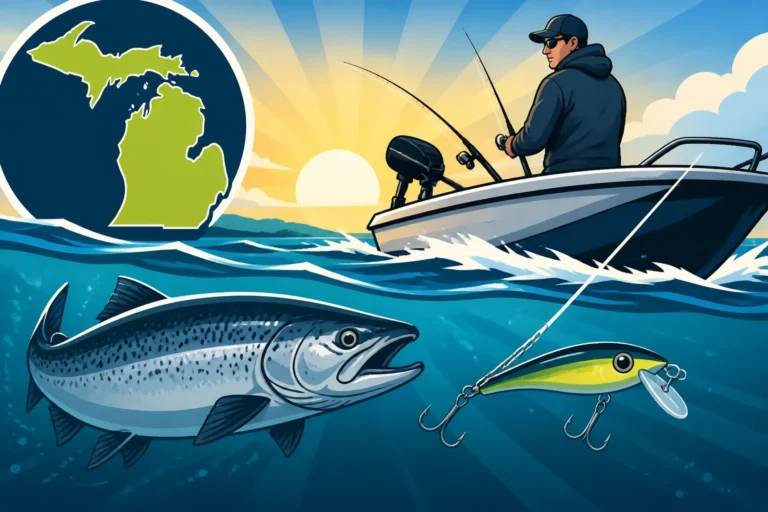
It's incredibly frustrating, isn't it? You've got your boat rigged, your lines in the water, and you're out on the vast expanse of Lake Michigan or Huron, but the Coho Salmon just aren't hitting. Often, the missing piece of the puzzle comes down to one crucial factor: your trolling speed. This comprehensive guide will pull back the curtain on the subtle art of finding that perfect pace to entice those aggressive Coho, helping you turn slow days into successful ones.
Understanding Coho Salmon Behavior and Why Speed Matters
Coho Salmon are a beloved sportfish in Michigan's Great Lakes, known for their acrobatic fights and delicious table fare. But to consistently catch them, you need to think like a Coho. Their behavior, influenced by everything from water temperature to prey movement, dictates how they react to your presentation, and speed is a huge part of that equation.
The Coho's Aggressive and Erratic Nature
Unlike some of their more laid-back cousins, Coho Salmon are typically aggressive feeders. They're opportunistic predators, often found cruising the upper water column, looking for an easy meal. This aggressive nature means they're often willing to chase, but that chase instinct needs to be triggered by a lure that looks like a struggling or fleeing baitfish. If your lure is moving too slow, it might appear unnatural or uninteresting. Too fast, and it might seem impossible to catch, or worse, just a blur they can't identify. The sweet spot in speed mimics the darting, unpredictable movements of their natural prey, making your lure irresistible.
How Water Temperature Influences Coho Activity
Water temperature is a game-changer for Coho Salmon. They are cold-water fish, generally preferring temperatures between 45 and 58 degrees Fahrenheit. Within this range, their metabolism and activity levels are at their peak. When water temperatures are on the cooler side of their preferred range, say in early spring or late fall, Coho might be a bit more lethargic, requiring a slightly slower trolling speed to give them time to react and strike. Conversely, when the water is warmer and the Coho are more active, they'll often respond better to faster speeds, which can trigger a more reactionary bite. Understanding these nuances is critical, especially when fishing during the Michigan Spring Fishing Season Guide or during the Fall Salmon Run in Michigan Rivers.
Prey Fish and Their Movement
What Coho eat, and how that food moves, directly impacts the ideal trolling speed. In the Great Lakes, Coho primarily feast on baitfish like alewives, smelt, and sometimes even smaller sculpins or shiners. These baitfish are generally fast-moving creatures, often darting and fleeing when pursued. Your trolling speed needs to replicate this action. A spoon that's wobbling erratically at the right speed looks like a panicked alewife. A dodger and fly combo, when pulled at its optimal pace, creates a frantic, injured baitfish presentation. If your lure isn't swimming like the real thing, it’s less likely to fool a discerning Coho. The more you can mimic their natural forage, the better your chances of success.
Dialing In Your Trolling Speed for Michigan Coho Salmon
Finding the perfect trolling speed isn't just about picking a number and sticking to it. It's a dynamic process that requires constant observation and adjustment based on a multitude of factors.
The "Sweet Spot" General Speed Range
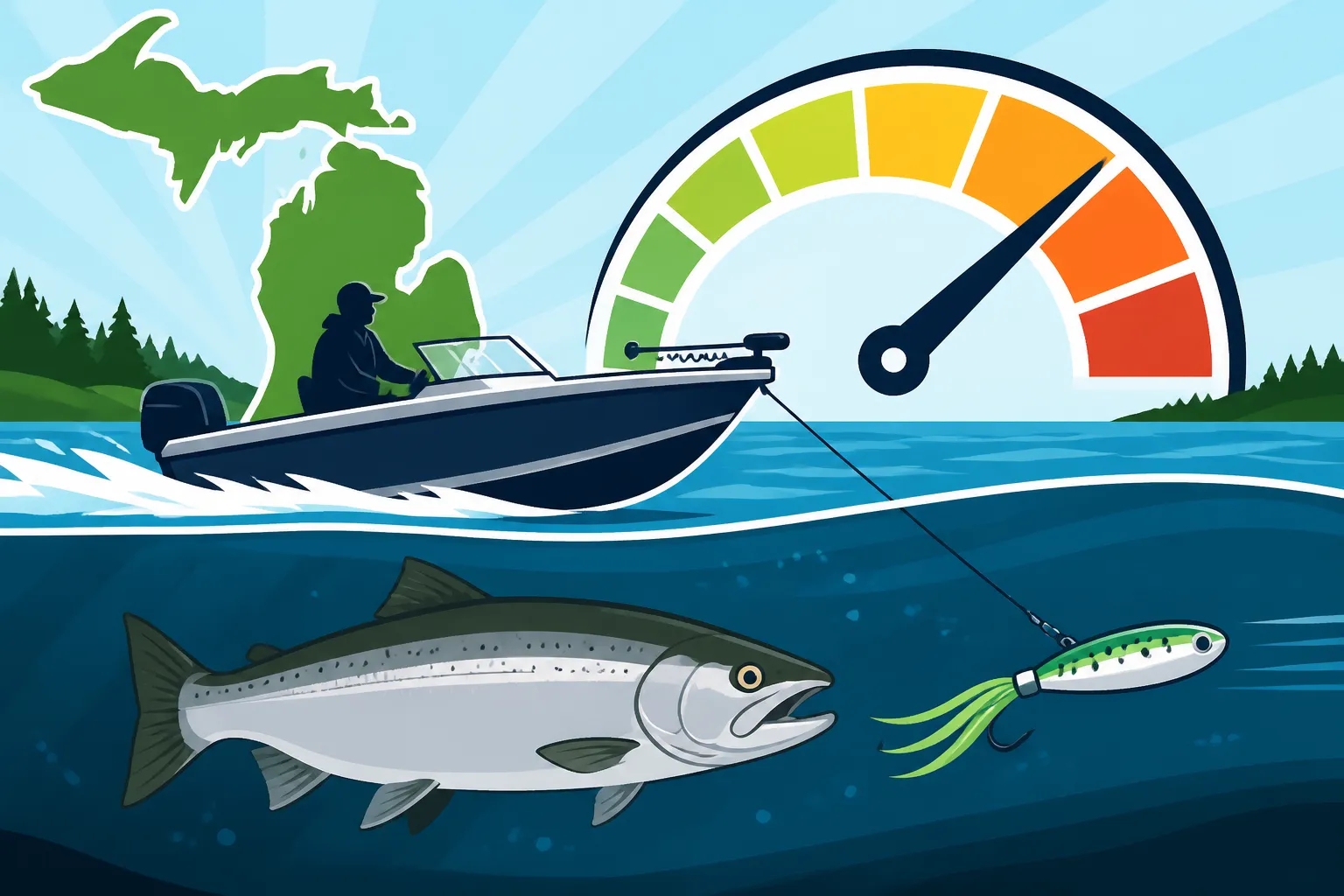
For Coho Salmon, most seasoned Michigan anglers will tell you to start somewhere in the range of 2.0 to 3.5 miles per hour (mph), as measured by GPS. This is a fantastic general guideline for Trolling for Coho Salmon on the Great Lakes. However, it's crucial to understand this is merely a starting point. On any given day, the "sweet spot" might be at the lower end or push past the upper end, depending on the conditions and the mood of the fish. Think of it like tuning a guitar – you start with a general note, then make fine adjustments until it sounds perfect. Many advanced fish finders and GPS units, which you can easily find on Amazon, offer highly accurate speed readings, which are essential for this fine-tuning.
Adjusting for Lure Type and Action
Different lures perform optimally at different speeds, and this is where many anglers either excel or falter.
- Spoons: Spoons like the popular Michigan Stinger, Dreamweaver, or Warrior Lures often require faster speeds, typically in the 2.5 to 3.5 mph range, to achieve their signature erratic, side-to-side wobbling action. Too slow, and they'll just drag listlessly. Too fast, and they might blow out or spin unnaturally.
- Dodgers and Flies: This combination is deadly for Coho. Dodgers are designed to create a distinct erratic motion that attracts fish, and the fly trailing behind it mimics a stunned or injured baitfish. The key here is to find the speed that makes the dodger "kick" or "flash" properly. This is often a slightly slower range, perhaps 2.0 to 2.8 mph. A good rule of thumb is to look at your rod tip – it should have a rhythmic pump, indicating the dodger is working correctly.
- Plugs and Stickbaits: Brands like Rapala or Bomber often come to life at varying speeds. Some plugs are designed for slower presentations (1.5-2.5 mph), offering a wide, slow wobble, while others might dive and dart more effectively at higher speeds (2.5-3.0 mph). It’s all about watching the lure's action in the water, ideally by deploying it alongside the boat before setting your lines.
Factors Requiring Speed Adjustments
Even when you've chosen the right lure for the general speed, Mother Nature has a say. Several environmental factors will demand adjustments to your actual boat speed to maintain the desired lure speed through the water.
- Currents: The Great Lakes can have surprisingly strong currents, especially in certain areas or near river mouths. A strong head current means your boat's GPS speed might show 2.5 mph, but your lure is only moving through the water at 1.5 mph. Conversely, a tail current means your lures are screaming through the water faster than your GPS indicates. You need to constantly monitor your speed over ground (GPS) and then adjust to achieve the desired speed through water. This can be tricky, but pays off.
- Water Clarity: In exceptionally clear water, Coho might be more skittish and prone to inspecting your offering. A slightly slower, more subtle presentation might be more effective. In stained or murky water, a faster speed and more aggressive lure action can help fish find your bait through vibration and flash.
- Fish Activity and Bite: Sometimes the fish just aren't hitting, even when you feel like you're doing everything right. This is when experimentation becomes your best friend. If the bite is slow, try incrementally increasing or decreasing your speed by 0.1 or 0.2 mph. Sometimes that tiny adjustment is all it takes to trigger a strike. Keep an eye on your fish finder for any activity, and remember that Michigan's Great Lakes Fishing Guide provides excellent general information to help you pinpoint active areas.
- Wave Conditions: Choppy waters can significantly impact your trolling speed and lure action. When battling waves, your boat's speed will naturally fluctuate. You'll need to use your throttle more actively to maintain a consistent speed, or sometimes, embrace the erratic action the waves impart on your lures. For those using larger vessels, considering the Best Fishing Boats for the Great Lakes can make navigating these conditions much easier.
Practical Tips for Optimizing Your Coho Trolling Speed
Success in Coho trolling often comes down to attention to detail and a willingness to adapt. These practical tips will help you fine-tune your approach and get more fish in the boat.
Monitoring Your Speed Accurately
Gone are the days of guessing your speed by eye. Accurate speed monitoring is non-negotiable for serious Coho anglers. Your boat's paddlewheel speedometer, if you even have one, measures speed through the water, which is great for understanding lure action relative to water, but it's heavily affected by current. For consistent trolling, you need GPS speed (speed over ground). This tells you your true movement. Many modern fish finders and chartplotters, including popular models from brands like Garmin or Humminbird, have integrated GPS, providing real-time, precise speed data. You can find excellent units with these features on Amazon, offering different price points for every budget. Using the Michigan DNR Hunt Fish App for Licenses and Reporting might not give you speed data, but it's a great tool for overall fishing management.
The S-Turn Strategy and Speed Changes
One of the oldest and most effective tricks in the trolling playbook is the "S-turn" or "Z-turn" maneuver. Instead of trolling in a perfectly straight line, intentionally make gradual, sweeping turns. Here's why this works wonders:
- Inside vs. Outside Lines: As you turn, the lures on the inside of the turn will slow down, while the lures on the outside of the turn will speed up. This momentary change in speed and action often triggers a reactionary strike from Coho that might have been following your lure but were hesitant to commit.
- Mimicking Fleeing Bait: The accelerating and decelerating action of your lures during an S-turn closely mimics a baitfish trying to escape or an injured one struggling. It adds an element of unpredictability that Coho, with their aggressive nature, find hard to resist. Pay close attention to which side of the boat gets hit more frequently during turns; this can tell you whether the fish prefer a slower or faster presentation on that particular day.
Reading Your Rod Tips and Lure Action
Your fishing rod tips are like an extension of your eyes when trolling. They provide invaluable feedback about what your lures are doing beneath the surface.
- Spoons and Plugs: For spoons and plugs, you want to see a consistent, rhythmic wiggle or pulse in your rod tip. If the tip is completely still, your lure might not be working correctly or your speed is too slow. If it's vibrating wildly or seems erratic in a non-rhythmic way, your speed might be too fast, causing the lure to "blow out" or spin. Fine-tune your speed until you see that perfect, consistent action. Many anglers rely on specific Best Trolling Rods for Michigan Salmon to best communicate this lure action.
- Dodgers and Flies: With dodgers, the rod tip should show a strong, rhythmic pump-and-release motion. This indicates the dodger is oscillating correctly, creating the flash and vibration that attracts Coho. If your rod tip is barely moving, speed up. If it's thrashing violently, slow down. The beauty of this visual feedback is that it allows you to adapt even without a perfect GPS reading of speed through water.
Common Trolling Speed Mistakes and How to Avoid Them
Even experienced anglers can fall into traps when it comes to trolling speed. Avoiding these common pitfalls will significantly boost your Coho success.
Sticking to One Speed Too Long
Perhaps the most common mistake is finding a speed that worked once, or for another species like Chinook Salmon in Michigan's Great Lakes, and sticking to it rigidly. The reality is that the "perfect" speed changes constantly. The mood of the fish, water conditions, light penetration, and even the type of baitfish they're keying on can all shift throughout the day, or even hour by hour. If you're not getting bites, don't be afraid to change things up. Try incremental adjustments, experimenting in 0.1 or 0.2 mph increments, and observe how your lures react and if it triggers any strikes. If you're using specialized equipment like Downriggers for Michigan Great Lakes Trolling, these subtle speed changes become even more impactful on the lure's action deep underwater.
Ignoring Water Conditions
As we discussed earlier, currents and wave action play a massive role in the actual speed your lures are moving through the water. It’s easy to look at your GPS and think you're hitting that 2.5 mph mark, but if you're battling a strong head current, your lures might be practically stagnant. Conversely, a strong tailwind and current can make your lures appear to be flying through the water, something Coho might deem too fast to chase. Always be mindful of your surroundings. Look at the water's surface, observe your rod tips, and if possible, use an actual water speed sensor if your boat has one, in addition to GPS. This holistic approach helps you maintain the effective lure speed, not just the boat's speed.
Not Matching Speed to Forage or Fish Mood
Every fishing day is different. Sometimes Coho are hot and aggressive, smashing anything that moves quickly. Other times, they're more sluggish, perhaps after a cold front or during a bright, sunny lull, and require a slower, more enticing presentation. Not adjusting your speed to match the prevailing conditions and the fish's mood can lead to a lot of missed opportunities. Pay attention to any bites you do get. Did they happen during a turn when a lure sped up or slowed down? Did they come on a specific lure type that performs better at certain speeds? Learn to "read the fish" and the environment. This adaptability is what separates good Coho anglers from great ones. Always ensure you're up-to-date on all Michigan Fishing Regulations Every Angler Should Know as well, as these can impact your overall strategy.
Here's a quick guide to common lure types and their optimal Coho trolling speeds:
| Lure Type | Typical Coho Trolling Speed (GPS mph) | Key Action at Optimal Speed | Notes |
|---|---|---|---|
| Spoons (e.g., Stinger) | 2.5 – 3.5 mph | Erratic, wide side-to-side wobble; visible rod tip pulse | Ideal for aggressive fish. Speed often needs to be higher to get proper "kick" and flash. Consider blade size and weight – larger/heavier spoons can sometimes run faster without blowing out. Look for spoons readily available on Amazon as they often list recommended speeds for their products. |
| Dodgers & Flies | 2.0 – 2.8 mph | Dodger creates a rhythmic "kick" and flash; fly trails with enticing, lifelike movement. Rod tip shows strong, rhythmic pump. | Often deadly. Focus on the dodger's action, not just the boat speed. Too fast, dodger spins; too slow, dodger doesn't kick. Good for both aggressive and slightly more lethargic Coho. |
| Plugs / Stickbaits | 1.8 – 3.0 mph | Specific wobble and dive pattern for each plug. Consistent vibration in rod tip. | Varies significantly by plug design. Some require slower speeds for their wide wobble, others come alive faster. Experiment to find the specific plug's sweet spot. |
| Flasher & Fly / Hoochie | 2.0 – 3.0 mph | Flasher creates attraction; fly/hoochie trails. Similar to dodger, but often a wider, less frantic action. | Flashers tend to have a wider rotation than dodgers, creating a different kind of attraction. Ensure the flasher is rotating smoothly and not tumbling. Great for enticing fish from a distance. |
Remember, these are starting points. The ultimate judge of the "best" trolling speed for Coho Salmon is always the fish themselves. Keep adjusting, keep observing, and you'll find that winning formula for consistent success on Michigan's incredible waters.
Disclaimer
The information provided in this guide is for general informational purposes only and is based on common angling practices and general knowledge of Michigan fishing. Fishing conditions, regulations, and fish behavior can change rapidly. Always consult the latest Michigan Department of Natural Resources (DNR) fishing guide for current regulations, seasons, and any special body of water rules before heading out. Fishing involves inherent risks, and safety should always be your top priority.