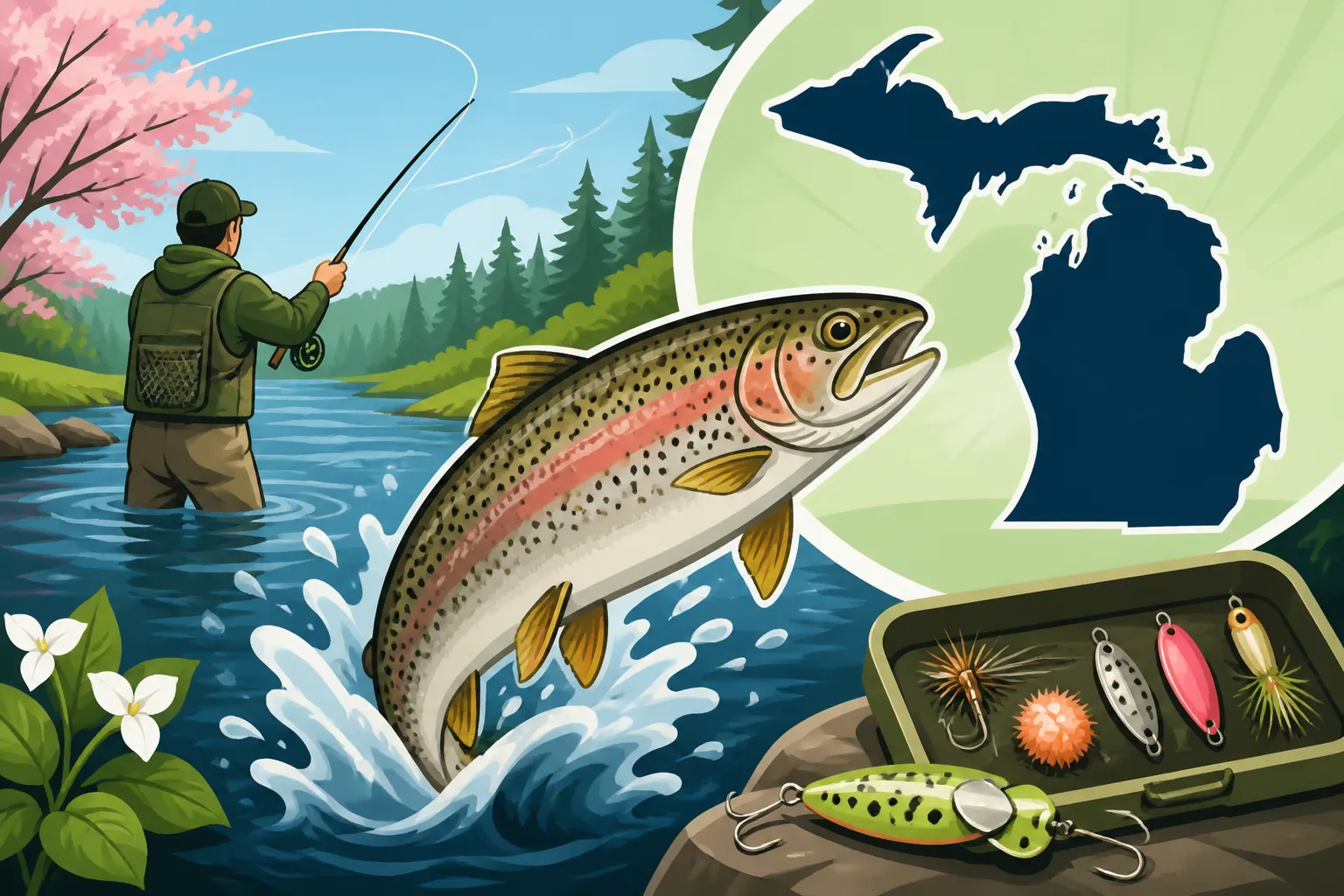
Michigan’s Spring Trout Opener Techniques
Ah, the Michigan spring trout opener! It's a day many of us dream about all winter long, a true sign that life is returning to our beloved rivers and streams. But let's be honest, it can also be a truly frustrating experience. You've got that pent-up excitement, maybe a bit of cabin fever, only to be met with icy water, finicky fish, and unpredictable weather. This guide is here to walk you through the essential techniques and considerations to make your spring trout opener in Michigan not just tolerable, but truly successful and enjoyable, helping you navigate those early season challenges with confidence.
Understanding Michigan's Spring Trout Landscape
The spring trout opener isn't just a date on the calendar; it's a dynamic shift in the natural world. Rivers are waking up, snowmelt is contributing to flow, and trout, after a long winter, are beginning to shake off their lethargy. To really connect with these fish, you need to understand the environment they’re living in and what makes them tick during these often-challenging early days.
When and Where the Opener Kicks Off
For most of Michigan's inland trout streams, the official trout opener generally falls on the last Saturday of April. This means a surge of anglers descends upon popular rivers like the Au Sable, Manistee, and Pere Marquette. It's a ritual, a social event almost, but it also means crowded access points and a need for a little extra patience and courtesy on the water. However, it's crucial to remember that this "opener" date specifically applies to inland waters that have designated trout regulations. For some of the larger waters and tributaries that connect directly to the Great Lakes, things can be a bit different. Many sections of these larger rivers, especially those famous for steelhead runs, actually have a year-round trout season, though specific tackle restrictions might apply during certain times. It’s always best to consult the official Michigan DNR regulations digest to confirm the specific rules for the water you plan to fish, as rules can vary even by river section. You can find detailed information about these dates and rules in our guide to Michigan Fishing Season Dates and Rules.
The distinction between inland streams and Great Lakes tributaries is paramount. Smaller inland streams, fed by cold springs, often hold stable populations of wild brown and brook trout. These waters tend to warm up more slowly, meaning cold water tactics are key. Larger rivers, particularly those that host migratory steelhead (which are essentially rainbow trout), offer different challenges and opportunities. These rivers are often wider, deeper, and more affected by snowmelt and spring rains, leading to fluctuating water levels and clarity. The trout opener on these rivers often coincides with the tail end of the steelhead run, presenting opportunities for both resident trout and lingering migratory fish.
Knowing Your Target Species
Michigan is home to a fantastic diversity of trout species, each with its own quirks and preferences, especially in the spring. Understanding what you're likely to encounter can greatly influence your strategy and gear choices.
First, let's talk about Brown Trout. These are often the most common species in many of Michigan's colder, freestone rivers and streams. They are notorious for being a bit more elusive and wary, especially after being pressured by anglers. In early spring, brown trout are typically focused on conserving energy and will often hold in slower, deeper pockets of water or tucked against submerged structure. They're not always aggressively chasing flies or lures, so a subtle, well-presented offering is often the key. Their diet early in the season might consist of nymphs, aquatic worms, and the occasional sculpin or minnow. Our comprehensive guide to How to Catch Brown Trout in Michigan Rivers delves deeper into their habits and effective tactics.
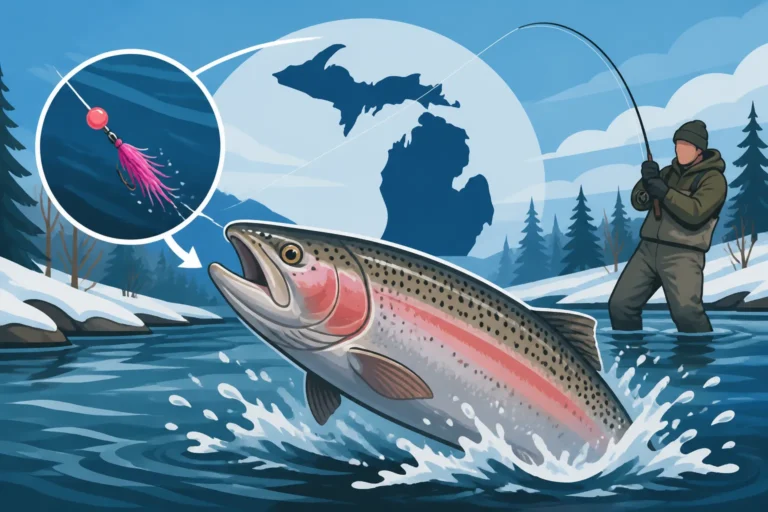
Next are the Rainbow Trout, which many Michigan anglers associate with the "steelhead" runs. While steelhead are migratory rainbow trout that spend time in the Great Lakes, resident rainbow trout also populate many inland streams. These fish tend to be a bit more opportunistic and often feed more actively than brown trout, especially in current. In the spring, both resident rainbows and lingering steelhead can be found. Steelhead that have completed their spawning run and are dropping back to the Great Lakes are often quite hungry and will readily take a variety of presentations. Learning How to Catch Rainbow Trout in Michigan Rivers can significantly boost your success.
Finally, we have the beautiful Brook Trout. Michigan's native trout species, brookies, typically inhabit smaller, colder, and more pristine streams, often found in the Upper Peninsula or remote corners of the Lower Peninsula. They are less tolerant of warmer water and habitat degradation, making their presence a sign of a healthy ecosystem. While not usually as large as browns or rainbows, they are aggressive eaters and a joy to catch. In early spring, brook trout are often found in riffles and runs, willing to chase small dries or nymphs. They are a treasure, and fishing for them often involves more hiking and bushwhacking to reach their secluded haunts. You can learn more about these resilient fish in Brook Trout in Michigan Rivers. Understanding these species' typical behaviors in cold spring water will help you select the right techniques and present your bait or lure effectively.
Essential Gear for Early Season Success
Success on Michigan's spring trout opener isn't just about knowing where the fish are; it's also about being properly equipped for the often-harsh conditions and the specific demands of early-season trout fishing. The right gear can make all the difference between a memorable day and a miserable one.
Rods, Reels, and Line Choices
When it comes to your primary setup, finesse often trumps power in the early spring. Trout, especially in cold water, can be lethargic and easily spooked.
For spin fishing, a light to ultralight spinning rod, typically 6 to 7 feet long, is ideal. This length provides enough leverage for casting lighter baits and lures, while also offering excellent feel for subtle bites. A fast or moderate-fast action will give you the sensitivity to detect those gentle takes and the backbone to fight fish without overpowering them. Pair this with a small spinning reel (size 1000 or 2000) spooled with 4 to 6-pound test monofilament or fluorocarbon line. Monofilament offers good knot strength and shock absorption, while fluorocarbon is nearly invisible underwater and has less stretch, providing more sensitivity. Some anglers prefer a braided main line with a fluorocarbon leader for ultimate sensitivity, especially when fishing deep. You can find a fantastic selection of these setups, perfect for Michigan's trout streams, on platforms like Amazon, offering a wide range of brands and price points.
For fly fishing, a 7 to 9-foot, 3 to 5-weight fly rod is a versatile choice. A 4-weight is often considered the sweet spot for many trout streams, offering enough power to cast decent-sized nymphs and streamers while still being delicate enough for smaller dry flies if conditions permit. Your fly reel should balance your rod and have a smooth drag system. As for line, a weight-forward floating line is standard. In colder water, you might consider a sinking leader or even a sinking tip line if you plan to target deeper holes with streamers. When you're looking for specialized fly-fishing equipment or even your first setup, you might be surprised by the variety available on Amazon. For specific advice on different fly fishing setups, check out Best Fly Fishing Gear for Trout Rivers.
Waders, Boots, and Layering Up
This is perhaps the most critical aspect of early spring fishing in Michigan: staying warm and dry. The water is often frigid, sometimes near freezing, and air temperatures can fluctuate wildly. Getting wet or cold can quickly turn a fun outing into a miserable, even dangerous, situation.
Good quality waders are non-negotiable. Breathable chest waders are generally preferred as they offer the most protection and allow for layering underneath without overheating during exertion. Look for durable construction and reliable seams. Brands like Simms, Orvis, and Redington are popular choices among Michigan anglers, known for their quality. Neoprene waders can also be an option for extremely cold conditions, but they are less versatile for active fishing.
Pair your waders with sturdy, comfortable wading boots. Felt soles offer excellent grip on slippery, mossy rocks, though rubber soles with studs are becoming increasingly popular for their versatility across different terrains and compliance with regulations in some states (Michigan currently allows felt soles). The boots should fit snugly, allowing for thick wading socks. Our guide to Best Waders for River Fishing provides an in-depth look at what to consider.
Beneath your waders, a layering system is absolutely crucial. Start with a moisture-wicking base layer (merino wool or synthetic, never cotton). Add an insulating mid-layer, such as fleece pants or a pair of insulated thermal bottoms. For your upper body, repeat the process: moisture-wicking base layer, a warm fleece or down mid-layer, and a waterproof, windproof outer shell jacket. Don't forget a warm hat, a neck gaiter, and waterproof gloves or fingerless gloves to protect your hands. Remember, you can always shed layers if you get too warm, but you can't add what you didn't bring. You can find a huge selection of high-quality base layers, fleece, and waterproof jackets from various brands on Amazon, ensuring you're prepared for whatever Michigan's spring weather throws at you.
Top Techniques for Tricky Spring Trout
Early spring trout are often sluggish and less willing to chase. This means your presentation needs to be impeccable, and you often need to slow down your approach. Here are some of the most effective techniques for tempting those chilly trout.
Float Fishing and Indicator Nymphing
Float fishing, or indicator nymphing as it's often called in the fly-fishing world, is incredibly effective in cold water because it allows you to present small, subtle baits or flies at the exact depth where trout are holding, without imparting much artificial action. Trout in cold water are often hugging the bottom, unwilling to move far for a meal.
For spin anglers, this involves using a small bobber or float (often a clear or camouflaged slip bobber) set at a depth that allows your bait to drift just off the bottom. You'll use a very small split shot or two to get your bait down quickly and keep it in the strike zone. Natural baits like waxworms, small pieces of crawler, or even cured salmon eggs work exceptionally well with this method. The key is to match the speed of the current with your float, creating a natural, drag-free drift. Pay close attention to your float; any hesitation, dip, or unusual movement could indicate a bite. This technique is particularly potent in deeper runs, pools, and slower seams where trout can conserve energy while waiting for food to drift by.
Fly anglers employ a similar strategy known as indicator nymphing. A brightly colored strike indicator (like a small Thingamabobber or a yarn indicator) is attached to your leader, and one or more weighted nymphs are tied below. The indicator acts like a bobber, signaling strikes and helping you track your drift. Popular spring nymphs include stoneflies, caddis larvae, pheasant tail nymphs, and scuds, often in sizes #12-18. Adding a small amount of weight (split shot) above your nymphs is often necessary to get them down to the fish quickly in heavier currents. A truly effective nymphing presentation means your flies are tumbling along the bottom, mirroring natural aquatic insect larvae. This method requires constant attention to mend your line, eliminating drag and ensuring that perfect drift.
Casting Spinners and Small Crankbaits
While subtle presentations are often key, there are times when an aggressive, flashy offering can trigger a strike, especially from more active rainbow trout or opportunistic brown trout. Spinners and small crankbaits fit this bill perfectly.
Spinners like the classic Mepps Aglia or Panther Martin, in sizes #0 to #3, are excellent choices. The flash and vibration of a spinner can often provoke a reaction strike, even from lethargic fish. In early spring, metallic colors like silver, gold, or copper are often effective, as are those with black, red, or chartreuse accents. The retrieve should be slow and controlled, just fast enough to get the blade spinning. Focus on casting upstream and across, letting the spinner swing downstream and just tick the bottom before reeling it in. Work different depths and current speeds. Spinners are particularly good for covering water and identifying where active fish might be holding in runs and riffles.
Small crankbaits (like those from Rapala or Berkley), typically 1 to 2.5 inches in length, can also be deadly. Look for models that dive to shallow or medium depths, mimicking small baitfish. Colors that imitate natural forage, such as brown, olive, or silver, are good starting points, but don't shy away from brighter colors like firetiger in stained water. Cast them into slower pockets, around submerged logs, or near undercut banks where trout might ambush prey. A slow, steady retrieve with occasional twitches can be very effective. Crankbaits allow you to target specific structures and can draw out larger, more aggressive trout that might ignore a nymph or worm. Just be sure your hooks are sharp; these early season bites can be incredibly soft.
Embracing the Art of Fly Fishing
Fly fishing for trout on the opener in Michigan is a time-honored tradition, and while it might seem intimidating, it's incredibly rewarding. This time of year, with colder water, often means sub-surface presentations are paramount.
The vast majority of fly fishing success on the early opener comes from nymphing. As discussed, weighted nymphs drifted under an indicator are highly effective. Focus on imitating common aquatic insects present in the stream during spring, such as stoneflies, caddis, and mayfly nymphs. Sizes #10 to #18 are usually appropriate. Having a diverse fly box with various sizes and patterns is key, as trout can be incredibly selective. Fly patterns like the Prince Nymph, Hare's Ear, Pheasant Tail, and various stonefly imitations are consistent producers. For more details, explore Michigan's Spring Trout Opener Techniques.
While sparse, there can be opportunities for dry fly fishing, especially on warmer, sunny afternoons when small midges or early black stoneflies might hatch. Look for rising fish in slow, calm pools or eddies. Keep a few tiny midge patterns (size #20-24) or small black stonefly patterns (size #14-18) in your box just in case. Don't expect widespread hatches, but being prepared for those rare moments can lead to some truly special catches.
Finally, streamer fishing can be very effective for targeting larger, predatory brown trout. Small streamers that imitate sculpins, baitfish, or even leeches can entice a strike. Colors like olive, black, white, or brown are popular. A slow, retrieve with short strips and pauses is often best in cold water, mimicking a wounded baitfish. Streamer fishing often involves casting into deeper pools, undercuts, and around large rocks, systematically searching for those big, territorial trout. This active form of fly fishing can be physically demanding but often yields the largest fish.
Bait Choices and Presentation Secrets
When trout are sluggish in cold spring water, what you offer them can be just as important as how you offer it. Natural baits often have an edge due to their scent, while artificials need to perfectly mimic the real thing or provoke a strong reaction.
Natural Baits for Finicky Eaters
For many anglers, especially those just starting out or facing particularly tough conditions, natural baits are the go-to for spring trout. Their natural scent and texture can be irresistible to trout that might ignore artificial offerings.
Live worms, particularly small pieces of nightcrawler or garden worms, are perennial favorites. Threaded onto a small, sharp hook (size #8 or #10), they provide natural movement and a strong scent trail. Present them on a small split shot rig, allowing them to drift naturally along the bottom. The key is a small presentation; don't use a whole nightcrawler unless you're specifically targeting larger fish in slower, deeper water.
Cured salmon or trout eggs are also incredibly effective, especially in rivers where trout and steelhead have recently spawned or are still present. The scent of roe is a powerful attractant. You can fish single eggs or small clusters in a spawn bag, drifted under a float. Brands like Pautzke's Bait Co. are well-known for their quality cured eggs. The natural color and subtle movement of a small spawn bag can trigger aggressive bites. This is a tactic often used by steelhead anglers that translates perfectly to early season trout.
Waxworms and mealworms are another excellent option, particularly for pan-sized trout and brook trout. These grubs are readily available at bait shops and are easy to fish. Their small size makes them perfect for light tackle and subtle presentations. They offer good scent and last a long time on the hook. Drift them through pools and runs, often under a small bobber or with minimal weight. Always ensure your bait is fresh and lively for the best results.
Artificial Baits that Mimic Nature
Artificial baits have come a long way, and many are designed to perfectly imitate the natural forage of trout. The advantage here is durability and the ability to cover more water efficiently.
Soft plastics, especially those shaped like worms, scuds, or small nymphs, are incredibly versatile. Companies like Berkley PowerBait and Gulp! offer scented versions that combine the appeal of natural bait with the convenience of artificials. Small 1- to 2-inch finesse worms, often rigged on a tiny jig head (1/32 to 1/16 ounce), can be deadly. Drift them through runs or slowly reel them through pools. The scent often gives trout the confidence to hold onto the bait longer, giving you more time to set the hook. Colors like natural brown, green pumpkin, white, or even pink can be effective.
Beads, often mistaken for eggs, are a staple in many trout and steelhead anglers' arsenals. These small, usually plastic, spheres are threaded onto your leader and fished a few inches above a small hook. The round shape and various colors (often orange, pink, or chartreuse) perfectly mimic drifting fish eggs. They are fished similarly to natural spawn bags, under a float or indicator, allowing for a drag-free drift. Choosing the right size and color bead to match the conditions and water clarity can make a huge difference. You can find a vast array of beads on Amazon, allowing you to experiment with different sizes and colors to see what the trout prefer on any given day. To learn more about how to rig them, refer to How to Rig a Bead for Steelhead, a technique directly applicable to early season trout.
Small jigs, often dressed with marabou, chenille, or bucktail, are another excellent artificial. Weights from 1/32 to 1/8 ounce are common. The jig can be fished under a float, slowly retrieved along the bottom, or even jigged vertically in deeper holes. The pulsing action of marabou jigs in the current is incredibly attractive to trout. Colors like white, black, olive, or brown are good starting points. The versatility of a small jig allows you to adapt to different depths and current speeds, making it a valuable tool for finding active fish.
Reading the Water and Environmental Factors
Michigan's spring weather can be a real wildcard. One day it's sunny and mild, the next it's sleeting with temperatures hovering just above freezing. These environmental factors play a huge role in how trout behave, and understanding them is key to putting yourself in the right place at the right time.
Decoding Water Temperature and Clarity
These two factors are arguably the most critical for early season trout fishing. Trout are cold-blooded, and their metabolism is directly linked to water temperature.
Water Temperature: In early spring, river temperatures are often in the low to mid-40s Fahrenheit. At these temperatures, trout are sluggish. Their digestion slows down, and they don't expend much energy chasing food. This means they will often be found in areas where they can expend minimal energy to feed, such as behind large rocks, in slow seams, or in deep pools where currents are less demanding. As the day progresses and if the sun hits the water, temperatures might creep up a degree or two, sometimes triggering a brief period of increased activity. Carrying a small stream thermometer is invaluable. When water temperatures are in the upper 30s to low 40s, focus on slow, deep presentations. As temperatures climb into the mid-40s and approach 50, trout might become more willing to move and chase. This knowledge directly influences whether you should be nymphing a deep hole or casting a spinner into a run.
Water Clarity: Spring often brings snowmelt and rain, which can lead to increased water flows and reduced clarity. Trout have excellent eyesight, and in clear water, they can be incredibly wary. This demands finesse, longer leaders, and natural colors. However, moderately stained or slightly turbid water can actually be a good thing. It provides cover for the trout, making them feel safer and sometimes more willing to move out from cover to feed. In these conditions, slightly larger baits, brighter colors (like chartreuse, orange, or even some fluorescent patterns), and baits with more vibration (like spinners or crankbaits) can be more effective. If the water is heavily stained or muddy, fishing can be very tough. Focus on areas where clarity might be slightly better, such as eddies or where smaller, clearer tributaries enter the main stream. Understanding how clarity affects visibility and trout behavior will help you select the right lures and presentation.
Navigating Stream Flow and Structure
Rivers are constantly changing, and spring flows can be particularly dynamic due to snowmelt and rainfall. Knowing how to read the water – identifying good holding lies and understanding current dynamics – is paramount.
Stream Flow: High water levels from spring runoff can be challenging. Fast, high water often pushes trout out of their usual lies in the main current and into slower, calmer areas. Look for fish in eddies, behind large boulders, in side channels, or along the banks where the current is significantly reduced. These areas offer refuge from the strong flow and also act as natural collection points for drifting food. Conversely, if water levels are low and clear, trout will be more exposed and will seek deeper pools, undercut banks, and heavy cover like log jams for safety. Always approach these low-water spots stealthily to avoid spooking fish.
Structure: Trout are structure-oriented fish, always seeking cover, current breaks, and ambush points. In the spring, this is even more critical.
- Log jams and fallen trees: These are prime real estate, offering shelter from current and predators, and often holding significant numbers of fish. Fish the edges and any pockets of slower water around them.
- Undercut banks: Erosion creates pockets beneath the bank where trout can hide, especially larger brown trout. Present your bait or fly to drift directly into these hidden lies.
- Boulders and rocks: Large rocks create current seams, areas where fast water meets slow water. Trout will often sit just downstream of these rocks, waiting for food to be swept past them. The size of the seam depends on the size of the rock and the speed of the current.
- Deep pools: In cold water, deeper pools offer stable temperatures and reduced current, making them excellent holding areas. Fish them thoroughly, allowing your offerings to sink to the bottom.
- Riffles and runs: While these faster-moving sections can hold fish, especially actively feeding rainbows, in early spring, trout might be more concentrated in the slower, deeper sections within or adjacent to them. Look for the slower edges.
A helpful tip is to visually trace the path of leaves or small twigs drifting downstream. This will show you exactly how the current is moving and where the natural drift of food will be. Effective fishing involves placing your bait or fly precisely into these fish-holding zones.
| Technique | Pros | Cons | Ideal Conditions | Target Species |
|---|---|---|---|---|
| Float Fishing / Nymphing | Excellent for lethargic fish; precise depth control; natural drift. | Can be slow; requires careful attention to drift and indicator. | Cold, clear to slightly stained water; moderate to slow current; deeper holes. | Brown Trout, Rainbow Trout, Brook Trout, Steelhead |
| Casting Spinners | Covers water quickly; provokes reaction strikes; good for active fish. | Can spook wary fish in clear, shallow water; less effective on very lethargic fish. | Moderately stained water; swift runs; searching for active fish. | Rainbow Trout, smaller Brown Trout, Brook Trout |
| Casting Small Crankbaits | Targets aggressive fish; imitates baitfish; good for specific structure. | Can be snaggy in heavy cover; less effective on very finicky fish. | Moderately stained water; slower pools; around wood or rock structure. | Larger Brown Trout, Rainbow Trout |
| Fly Fishing (Streamers) | Targets large, predatory trout; active search method. | Can be physically demanding; requires specific fly casting skills. | Varying water conditions; targeting specific deep structures. | Large Brown Trout, some Rainbow Trout |
Safety, Ethics, and Conservation on the Water
While the excitement of the opener is undeniable, it's vital to approach your day on the river with a strong sense of responsibility, both for your own safety and for the health of Michigan's precious trout resources.
Cold Water Safety Precautions
Michigan's spring rivers, especially on opener day, are often frigid. This presents real dangers that every angler needs to be aware of.
The most significant risk is hypothermia. Even on a sunny day, if you fall into 40-degree water, your body can lose heat rapidly. Always wear appropriate layers, as discussed earlier, and ensure your waders are in good condition to prevent leaks. Bring a change of clothes in a dry bag, even if you don't plan on getting wet. If you start to shiver uncontrollably, feel confused, or experience numbness, get out of the water immediately, change into dry clothes, and seek warmth.
Wading safety is another critical concern. Early season flows can be higher and faster than usual due to snowmelt. Always use a wading staff for stability and to probe the bottom before stepping. Avoid wading alone if possible, and always let someone know where you're going and when you expect to return. Never cross swift currents that are deeper than your knees, especially if the bottom is uneven. The force of the water can easily sweep you off your feet, and waders can fill with water, making it extremely difficult to recover. Be extra cautious around log jams, submerged rocks, and slippery moss-covered areas. Remember, no fish is worth risking your life over.
Practicing Catch and Release
Michigan's trout populations, especially wild ones, are a precious resource. Practicing responsible catch and release, even if you plan to keep a legal limit, helps ensure these fisheries thrive for future generations.
When you land a trout, try to keep it in the water as much as possible. This minimizes stress and prevents damage to its protective slime coat. If you must remove the fish for a quick photo, do so quickly and wet your hands beforehand. Dry hands can strip away that crucial slime layer, leaving the fish vulnerable to disease.
Use a barbless hook, or crimp down the barb on your hooks with pliers. This makes hook removal much easier and less damaging to the fish's mouth. If the fish has swallowed the hook deeply, cut the line as close to the hook as possible rather than trying to pull it out. The hook will often rust away over time.
For fish you intend to release, handle them gently and support their body fully, especially if they are larger. Avoid squeezing them, particularly around their belly or gills. When releasing, hold the fish gently in the current, facing upstream, until it regains its strength and swims away on its own. Don't just toss it back into the water. This vital practice ensures that Michigan's trout populations remain robust and healthy. For more detailed insights into responsible angling, consider reading Michigan Fishing Regulations Every Angler Should Know, which often includes ethical guidelines for conservation.
Respecting Fellow Anglers and the Environment
The spring opener can draw a crowd, especially on well-known rivers. A little courtesy goes a long way. If someone is already fishing a hole, give them ample space. Don't crowd them or wade directly upstream or downstream of them without permission. A friendly "how's it going?" or "mind if I fish below you?" can make a big difference.
Beyond etiquette, it's our shared responsibility to protect the natural beauty of Michigan's rivers and streams. Pack out everything you pack in, including monofilament scraps, bait containers, and food wrappers. Avoid disturbing the streambed unnecessarily, as this can dislodge aquatic insects and disrupt spawning beds. Be mindful of fragile streambanks. By being good stewards of the environment and respectful of each other, we ensure that the magic of the Michigan trout opener can be enjoyed by everyone for years to come.
Disclaimer
Please remember that fishing regulations, including season dates, bag limits, and specific rules for certain waters, can change. Always consult the latest official Michigan Department of Natural Resources (DNR) fishing guide or website before heading out to ensure you are in compliance with all current regulations. This article is intended for informational purposes only and should not be considered a substitute for the official DNR regulations.