Michigan Steelhead Run Timing
There’s nothing quite like the electrifying pull of a Michigan steelhead on the end of your line. These incredible fish, often called "chrome missiles" or "silver bullets," offer some of the most challenging and rewarding fishing experiences our state has to offer. But let's be honest, figuring out exactly when these elusive beauties decide to make their grand entrance into our rivers can feel like trying to solve a cryptic puzzle, leaving many anglers frustrated and wondering if they've missed the boat – or the run! This guide is here to unravel that mystery, giving you a detailed look into the steelhead run timing across Michigan, so you can plan your trips with confidence and maximize your chances of connecting with these magnificent fish.
The Allure of Michigan Steelhead: Understanding Their Journey
Before we dive into the nitty-gritty of dates and temperatures, it's crucial to understand what makes steelhead so special and why they undertake these incredible migrations. Unlike their landlocked rainbow trout cousins, steelhead are anadromous, meaning they spend a significant portion of their lives in the vast expanse of the Great Lakes, growing large and strong, before returning to their natal rivers to spawn. This unique life cycle is what drives their powerful runs and makes them such a prized catch for anglers across the state.
The Unique Life Cycle of a Michigan Steelhead
Imagine a tiny egg laid in the gravelly bottom of a pristine Michigan river. That's where the journey of a steelhead begins. After hatching, these small fish, called alevin, hide in the gravel, feeding off their yolk sacs. As they grow into fry and then parr, they spend a year or two (sometimes more, depending on the river and conditions) in their freshwater nursery. During this time, they're developing the instincts and strength they'll need for the arduous journey ahead.
Eventually, a remarkable transformation occurs. These young fish, now called smolts, undergo a physiological change that allows them to adapt from freshwater to saltwater – or, in our case, the massive freshwater "seas" of the Great Lakes. They migrate downstream, out of their rivers and into the expansive waters of Lake Michigan, Lake Huron, or Lake Superior. Here, they grow rapidly, feasting on baitfish and invertebrates for several years, often reaching impressive sizes of 8-15 pounds, with some true giants pushing 20 pounds or more! This growth phase is absolutely critical to their development, stocking up energy for their eventual return. If you're keen to learn more about this fascinating process, check out our guide on the Steelhead Life Cycle in Michigan Rivers.
Why Steelhead Migrate to Rivers
So, after years of feasting in the Great Lakes, what compels these powerful fish to leave their abundant feeding grounds and swim hundreds of miles upstream into often turbulent and shallow rivers? The answer, at its core, is reproduction. Steelhead return to the rivers to spawn, ensuring the next generation can begin its own journey. This urge is deeply ingrained in their genetics, a primal call to return to the very waters where they were born.
However, it's not a single, simple migration. Steelhead will often make multiple spawning runs throughout their lives, sometimes returning year after year, which is why you can encounter both "fresh" chrome-bright fish straight from the lake and seasoned, darker fish that have been in the river for a while. These migrations are incredibly taxing on the fish, and their drive to spawn is a testament to their incredible resilience. It’s a natural spectacle that draws anglers from all over, patiently waiting for the signal that the run has begun.
Decoding the Calendar: When Steelhead Hit Michigan Rivers
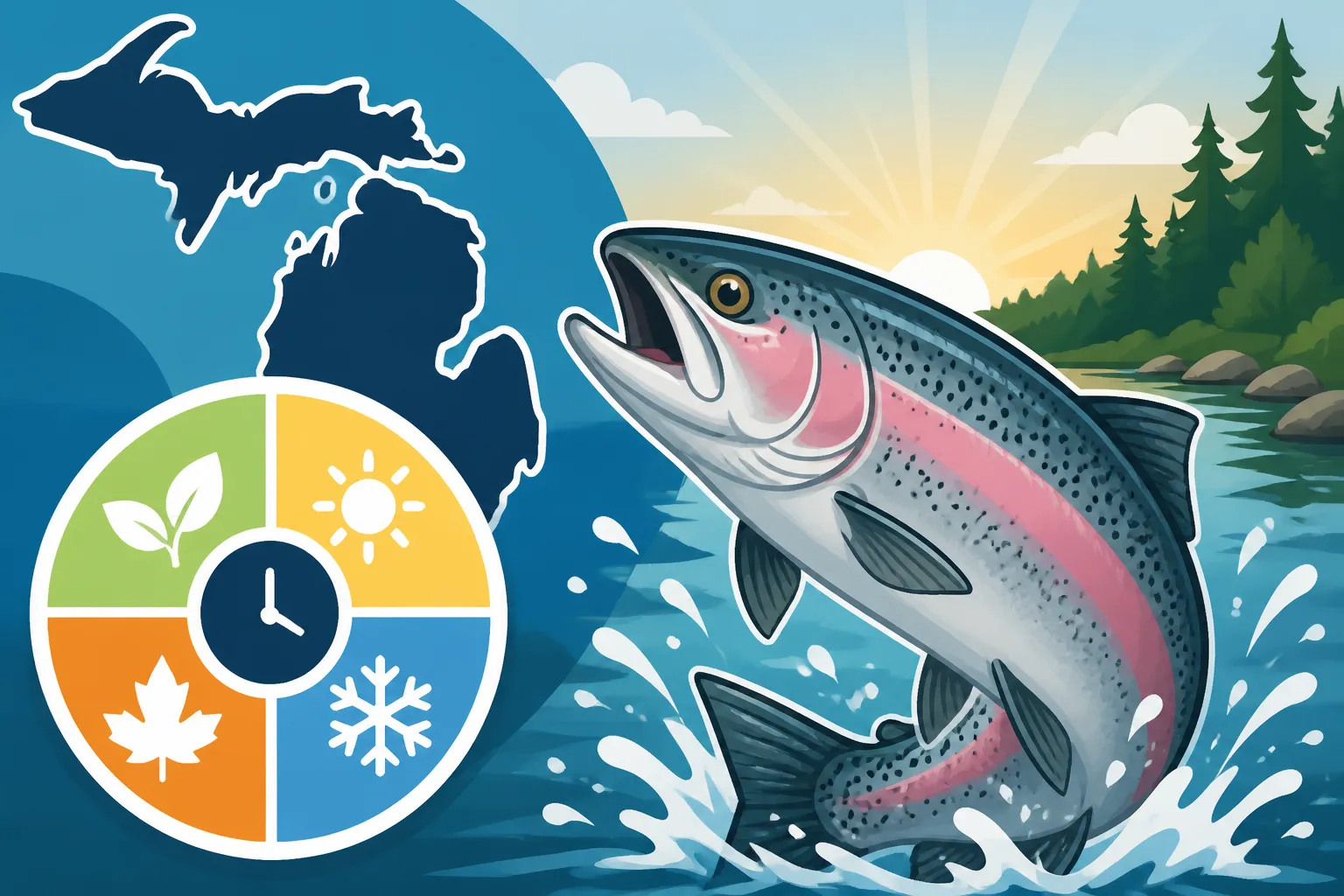
Michigan is blessed with a long and diverse steelhead season, thanks to our extensive network of rivers and the sheer size of the Great Lakes. Unlike many salmon species that have a singular, intense fall run, steelhead provide opportunities for anglers almost year-round, with distinct runs occurring in fall, winter, and spring. Each season presents its own unique challenges and rewards, and understanding these patterns is key to successful fishing.
The Early Anticipation: Fall Steelhead Runs
The first wave of steelhead begins to enter Michigan rivers in the autumn, typically starting in late September and continuing through November. These fish are often referred to as "fall-run" or "early-run" steelhead. What triggers this initial push? Primarily, it's a combination of cooling water temperatures in the Great Lakes and significant rain events that raise river levels. These fish aren't coming in to spawn immediately; rather, they're entering the rivers to stage and hold over for the winter, gradually moving upstream to find suitable holding water.
Fall steelhead are known for their incredible fight and stunning chrome bodies. They're still carrying a lot of the fat reserves they built up in the Great Lakes, making them exceptionally strong. Anglers targeting fall steelhead often focus on the lower and middle sections of rivers, where fish tend to stack up before winter sets in. This can be a fantastic time to be on the water, with vibrant fall colors and less crowded conditions than the peak spring run. If you're particularly interested in this exciting season, you might want to dive deeper into our article on the Fall Steelhead Run in Michigan Rivers.
Braving the Cold: Winter Steelhead Runs
As the calendar flips to December and the frigid grip of winter settles over Michigan, many anglers pack away their gear, assuming the fishing is over. But for the dedicated steelhead enthusiast, winter can offer some of the most rewarding, albeit challenging, opportunities. The winter steelhead run is really an extension of the fall run, with fish that entered in autumn continuing to migrate slowly upstream, joined by a fresh trickle of fish from the lakes whenever weather conditions allow.
During winter, steelhead activity tends to slow down, and they become less aggressive feeders. They seek out deeper, slower-moving pools and stretches of river where they can conserve energy. Ice formation on river edges or even across entire sections can dictate access and fishing conditions. However, on those warmer winter days, or during thaws, a new push of fish can enter the system, and fish already in the river can become more active. Anglers who brave the cold are often rewarded with pristine, unpressured fishing and truly memorable battles. For those willing to bundle up, our guide on the Winter Steelhead Run in Michigan Rivers offers invaluable tips.
Spring Fever: The Peak Spawning Migration
This is it – the main event that most Michigan steelhead anglers eagerly await: the spring steelhead run. Beginning typically in late March and running through April, and sometimes into early May, this is when the vast majority of steelhead make their final push upstream to spawn. Triggered by steadily warming water temperatures (usually above 40°F or 4°C) and increased river flows from snowmelt and spring rains, the rivers swell with an influx of hungry, aggressive fish.
During the spring run, steelhead are actively seeking out spawning beds, or "redds," in gravelly areas of the river. They are often incredibly powerful and put up spectacular fights, frequently leaping clear of the water. This is undoubtedly the busiest time on Michigan's steelhead rivers, with anglers lining the banks and boats drifting through prime stretches. If you're planning your first steelhead trip, aiming for the peak of the spring run is often your best bet for consistent action. The sheer numbers of fish and their active behavior make it an unforgettable experience, but be prepared for company on the water!
Key Rivers and Their Specific Run Characteristics
Michigan boasts an incredible array of steelhead rivers, each with its own character, geography, and often, unique nuances in run timing. While the general seasonal patterns hold true, local conditions, river size, proximity to the Great Lakes, and dam structures can all play a role in when and how the steelhead arrive. Knowing these distinctions can make all the difference in planning a successful trip. For a broader overview of prime locations, check out Best Rivers for Trout and Steelhead in Michigan.
West Michigan Powerhouses: Manistee, Muskegon, Pere Marquette
When people talk about Michigan steelhead fishing, the rivers flowing into Lake Michigan often come to mind first. They are renowned for their strong, consistent runs.
The Manistee River is arguably Michigan's most famous steelhead fishery, boasting a fantastic run that starts strong in the fall and continues through spring. Its large size and stable flows, thanks to damming, make it a reliable destination. Fall steelhead usually show up in good numbers from late September through November, staging in the lower river. Winter offers more solitary fishing in deeper pools, while the spring run explodes from late March to late April. The Manistee is known for producing large fish, and you can often find decent numbers of chrome-bright steelhead well into May, especially in its lower sections. Our dedicated guide, Manistee River Steelhead and Salmon Fishing in Michigan, provides even more depth.
The Muskegon River is another giant, known for its consistent flows and excellent steelhead population. Similar to the Manistee, it experiences strong fall runs from October into December, with fish holding in prime spots throughout the winter. Its spring run is legendary, often peaking in April, drawing huge numbers of anglers. The Muskegon benefits from a good mix of wild and hatchery-raised fish, contributing to its robust populations. It’s a river that can be fished effectively from shore or by boat, offering diverse opportunities.
The Pere Marquette River is unique. As a designated "wild and scenic river," it has no dams, allowing steelhead to migrate freely. It's often considered a fly-fishing paradise. The PM, as it's affectionately known, usually sees fall steelhead entering in October, with good numbers through November. Winter fishing is often productive in deeper bends, and the spring run is strong from late March through April. Because it's a freestone river, its flows are highly dependent on natural precipitation and snowmelt, which can significantly influence the timing and success of a run. Anglers who appreciate a more natural, undisturbed setting often flock to the PM. For specific techniques, our Pere Marquette River Fly Fishing in Michigan article is a must-read.
Southern Michigan Gems: St. Joseph and Grand Rivers
Don't overlook the southern parts of the Lower Peninsula; these rivers offer fantastic steelhead opportunities, especially for anglers closer to the state's metropolitan areas.
The St. Joseph River is a major steelhead producer, flowing into Lake Michigan near the Indiana border. Its steelhead runs can start early in the fall, often in late September, peaking in October and November. Winter fishing is a solid option, particularly in the longer thaws. The spring run, like other rivers, is robust from late March into April, offering plenty of action. The St. Joe is known for its diverse fishing opportunities, from large stretches of slower water to faster riffles, making it versatile for different techniques. It's easily accessible and often less crowded than some of the more northern rivers, especially during the shoulder seasons. Learn more about access and techniques in St. Joseph River Steelhead Fishing in Michigan.
The Grand River is Michigan's longest river, flowing through Grand Rapids before emptying into Lake Michigan at Grand Haven. It offers a significant steelhead run, particularly below the various dams (like the 6th Street Dam in Grand Rapids) that create natural barriers and concentrating points for fish. Fall runs can start as early as late September, with good numbers appearing in October and November. The winter period can be productive below the dams, and the spring run is very popular, usually peaking in April. The Grand River is a fantastic urban fishery, offering unique opportunities right in the city. If you're in the area, our guide to Grand River Fishing Near Grand Rapids, Michigan is an excellent resource.
Northern Michigan's Hidden Steelhead Haunts
While the big rivers get most of the attention, numerous smaller rivers and tributaries in Northern Michigan and the Upper Peninsula also host excellent steelhead runs. Rivers like the Little Manistee, Boardman, Betsie, and numerous streams in the U.P. see strong runs, often peaking a bit later in the spring due to colder water temperatures and later snowmelt. These smaller systems can offer a more intimate fishing experience, though access might be more challenging. Their timing is usually heavily dictated by localized rainfall and temperature fluctuations, making them a bit more unpredictable but incredibly rewarding for the adventurous angler.
Factors That Dictate the Steelhead Surge
Understanding the general seasonal windows is a great start, but pinpointing the exact week or day when the steelhead run truly heats up requires paying close attention to several environmental cues. These factors can vary from year to year, which is why a "good" steelhead year might shift by a week or two, creating the frustration many anglers experience.
Water Temperature: The Ultimate Steelhead Thermometer
Hands down, water temperature is the most critical factor influencing steelhead movement. Fish are cold-blooded, and their metabolism and activity levels are directly linked to the water temperature.
- Optimal Spawning Range: Steelhead prefer water temperatures between 40-50°F (4-10°C) for active migration and spawning. When river temperatures fall below this, fish become sluggish; when they rise too high, they can also become stressed.
- Fall Triggers: In autumn, as lake temperatures cool down and river temperatures become more inviting (often in the mid-50s down to the low 40s), steelhead begin to feel the pull to enter rivers.
- Winter Lulls: During the deep freeze of winter, when water temperatures can hover just above freezing, steelhead activity slows dramatically. They may still move, but typically only in response to a significant warm-up or rise in flow.
- Spring Explosion: The rapid warming of spring water temperatures from the low 30s into the 40s is the primary catalyst for the massive spring run. Each degree counts, and a jump of just a few degrees can spark a fresh push of fish. This is why watching river temperature gauges is as important as watching the weather forecast!
River Flows and Clarity: Reading the Conditions
Beyond temperature, the volume and clarity of river water play a huge role in steelhead migration and angler success.
- High Water and Spikes: Significant rainfall or rapid snowmelt leads to increased river flows. While this can make wading difficult and reduce water clarity, it also acts as a powerful stimulant for steelhead. Higher water provides cover from predators, opens up new migration paths over shallow areas, and makes it easier for fish to push upstream. Often, the best fishing occurs just as a high-water event starts to drop and clarity begins to improve – that "green water" period.
- Low and Clear Conditions: Conversely, prolonged periods of low, clear water can slow down a run considerably. Steelhead become more wary and less likely to move, preferring to hold in deeper pools. Anglers need to adapt their approach in these conditions, using lighter lines, smaller presentations, and often fishing at dawn or dusk when fish feel more secure.
- Turbidity (Clarity): Muddy, chocolate-milk-like water resulting from heavy rains can shut down a bite temporarily. Steelhead rely on their sight to feed and navigate. However, a slight stain or "color" to the water, where visibility is still a few feet, is often ideal. It provides cover for the fish and allows them to feel more comfortable, leading to more aggressive takes.
Precipitation and Weather Fronts: Nature's Push
It's not just the water in the river; the weather around the river plays a vital role.
- Rain Events: A good rainstorm, particularly in the fall and spring, is often precisely what's needed to kickstart or re-energize a steelhead run. The increased flow and slightly cooler or warmer water (depending on the season) that rain brings can trigger a fresh wave of fish to enter the rivers from the Great Lakes. Many seasoned anglers keep a close eye on the long-range forecast for these crucial precipitation events.
- Warm Fronts vs. Cold Fronts: Weather fronts can have a significant impact. A strong warm front in early spring can rapidly raise river temperatures and trigger a burst of spawning activity. Conversely, a sudden cold front can drop water temperatures, causing fish to become lethargic and hunker down. These shifts can frustrate anglers who arrive expecting a hot bite, only to find the fish "off." It’s a constant dance with Mother Nature.
Preparing for the Run: Gear and Techniques
Knowing when the fish are likely to be there is only half the battle. To successfully connect with Michigan steelhead, you need the right gear and the flexibility to adapt your techniques to the specific conditions of the run. Steelhead are notoriously fickle, and what works one day might not work the next.
Essential Tackle for Each Season and River Condition
Your gear setup will undoubtedly shift depending on the season and the river you're fishing. Generally, when How to Fish for Steelhead in Michigan becomes the mission, stout gear is a must.
- Rods and Reels: A longer rod, typically 9-11 feet, with a medium-light to medium action, is ideal for steelhead. These longer rods help with line control, mend, and absorbing the shock of a powerful steelhead's runs. Spinning reels in the 2500-4000 size range or specialized centerpin reels are popular choices. You can find excellent options for rods, reels, and specialized tackle from reputable brands available on platforms like Amazon, offering convenience for outfitting your kit.
- Lines: For mainline, 10-12 lb monofilament or fluorocarbon is common, sometimes braided line with a fluorocarbon leader for sensitivity. Leader material is typically 8-10 lb fluorocarbon, dropping down to 6 lb in very clear, low water conditions. The strength of these fish demands a durable line, but their wariness in clear water requires discretion. For those who favor a more hands-on approach, learning Centerpinning for Michigan Steelhead can greatly enhance your control and presentation.
- Terminal Tackle:
- Fall/Winter: Spawn bags (roe tied in mesh netting), beads (imitating fish eggs), small jigs tipped with wax worms or plastics, and sometimes swung flies. Lead-free weights are mandatory in some Michigan rivers, so always check the Michigan Fishing Regulations Every Angler Should Know.
- Spring: Spawn bags and beads remain highly effective, but bright colored jigs, small crankbaits, and drifted nymphs (for fly anglers) also come into play as fish become more aggressive.
- Having a variety of these baits and lures is key, as steelhead can show distinct preferences based on water clarity and their mood.
Adapting Your Strategy to the Timing
Flexibility is the steelhead angler's best friend. You can’t just show up with one plan and expect it to work every time.
- Fall Strategies: Focus on covering water. Steelhead are often spread out, staging in deeper pools, runs, and current seams in the lower to middle sections of rivers. Drift fishing spawn or beads with light lead is a common and effective method. As the water cools, fish may hold tighter to structure.
- Winter Strategies: Slow down your presentation dramatically. Fish are lethargic, so you need to put the bait right in front of them and let it sit. Deep pools with slower currents are prime targets. Early mornings can be brutally cold but often productive before boat traffic or sun gets high. Be ready for fewer bites but potentially larger fish.
- Spring Strategies: Fish are moving and aggressive. Focus on areas leading to spawning gravel, like the heads and tails of pools, riffles, and transition zones. This is when float fishing with spawn or beads can be incredibly effective, as can casting jigs or swinging flies. On crowded rivers, finding quieter stretches or fishing during off-peak hours can make a difference. Understanding specific Fly Fishing Techniques for Michigan Steelhead can also open up new possibilities.
Understanding Regulations and Conservation
Beyond the technical aspects, being a responsible angler means understanding and adhering to Michigan's fishing regulations. These are designed to protect our fisheries and ensure future generations can enjoy the same incredible experiences.
- Licenses: Always ensure you have a valid Michigan fishing license. You can purchase these easily online or through the Michigan's DNR Hunt Fish App for Licenses and Reporting.
- Bag and Size Limits: Steelhead often have specific bag and size limits that can vary by river or even by section of a river. Always consult the current Michigan fishing guide before heading out.
- Special Regulations: Some rivers have specific gear restrictions (e.g., single-hook artificial lures only), or catch-and-release only sections. These rules are in place for a reason and contribute to the health of the fishery.
- Conservation: Practice good catch-and-release techniques for any fish you don't intend to keep. Handle fish gently, minimize their time out of water, and use proper netting to ensure a strong release. Michigan's steelhead are a precious resource, and responsible angling helps maintain their abundance.
Michigan's steelhead runs are a magnificent phenomenon, offering an exciting challenge for anglers year-round. By understanding the unique life cycle of these incredible fish, paying close attention to the seasonal timings, recognizing the environmental factors that drive their migrations, and equipping yourself with the right gear and knowledge, you'll be well on your way to experiencing the thrill of a lifetime on our beautiful rivers. Good luck out there, and tight lines!
Disclaimer
The information provided in this guide is for general informational purposes only. Fishing conditions, regulations, and fish behavior can change rapidly. Always consult the latest Michigan Department of Natural Resources (DNR) fishing guide and local regulations before heading out on the water. Stay safe and be aware of weather and river conditions.