Michigan Walleye Fishing Techniques
If you've ever cast a line into Michigan's vast waters hoping for that tell-tale tap of a walleye, you know the frustration when the bite just isn't there. These elusive, toothy predators can be incredibly challenging to locate and entice, often seeming to vanish just when you think you've found them. This comprehensive guide is dedicated to peeling back the layers of mystery surrounding walleye fishing in Michigan, offering seasoned techniques and insights to help you consistently put these prized fish in your net.
Understanding Michigan Walleye Behavior and Habitat
To truly master walleye fishing in Michigan, you first need to think like a walleye. These fish are creatures of habit, yet their habits are deeply influenced by the changing seasons, water conditions, and available forage. Understanding their movements and preferences is the bedrock upon which all successful fishing techniques are built.
Seasonal Movement Patterns
Walleye don't just hang out in one spot all year; they're constantly on the move, dictated primarily by spawning cycles, water temperature, and food availability. In early spring, as ice recedes and water temperatures begin to rise into the 40s Fahrenheit, walleye concentrate in shallow, rocky areas of rivers and lake tributaries, as well as on hard-bottomed lake shoals, for spawning. This is often when you'll find them in large numbers in places like the Detroit River or the Grand River, pushing upstream.
After the spawn, which typically peaks when water temperatures hit the low 50s, walleye disperse. They're usually hungry and somewhat lethargic from the spawning ordeal. You'll find them moving to slightly deeper breaks, recuperating and beginning to feed actively on baitfish. As summer progresses and water temperatures climb into the 60s and 70s, walleye seek cooler, deeper waters, often congregating around main lake structures, deep points, and offshore reefs. They become highly photophobic, meaning they avoid bright light, which is why night fishing can be so productive in the warmer months. Come fall, as waters cool again, walleye make a strong push for shallow feeding grounds once more, aggressively bulking up for winter. This pre-winter feeding binge can offer some of the most consistent action of the year, particularly on large bodies of water like Saginaw Bay.
Preferred Structure and Cover
Walleye are often referred to as "structure-oriented" fish, and for good reason. They love to relate to changes in the lake or river bottom. Think about transitions: where a shallow flat drops off into deeper water, a submerged point juts out, or an old creek channel winds through a lakebed. These aren't just random spots; they're ambush points and travel corridors.
Beyond structure, cover is equally important. This could be anything from vast weed beds on inland lakes like Houghton Lake, sunken timber in reservoirs, or rocky reefs and boulders on the Great Lakes. Walleye use these elements to hide from predators, ambush prey, and escape harsh sunlight. On the Great Lakes, especially in areas like Lake Erie or Saginaw Bay, expansive, relatively flat bottoms might still hold walleye around subtle changes in bottom composition, like a patch of gravel among sand, or a slightly higher elevation that creates a current break. When scouting a new spot, always look for these distinct features, as they're prime real estate for walleye. Knowing how to read your sonar for these transitions is absolutely critical.
Diet and Feeding Habits
Understanding what walleye eat and how they prefer to feed is paramount to selecting the right baits and techniques. Their primary diet consists of baitfish such as emerald shiners, smelt, alewives, gobies, perch, and juvenile suckers. They are opportunistic predators, meaning they'll eat what's available and easiest to catch. This also means their diet can shift seasonally and by water body. For instance, in the Great Lakes, alewives and smelt might be key forage, while in an inland lake, it could be perch or shiners.
Walleye typically feed most actively during low light conditions – dawn, dusk, and overcast days, or at night. Their large, light-sensitive eyes, equipped with a reflective layer called the tapetum lucidum, give them superior vision in dim light, a distinct advantage over their prey. They often position themselves to ambush prey from darker areas or against a contrasting background. This predatory behavior influences bait presentation; a subtle presentation often works best, mimicking an injured or unsuspecting baitfish. Sometimes, however, a loud, aggressive presentation can trigger a reaction strike, especially when they're highly active.
Essential Gear for Michigan Walleye Anglers
Having the right tools for the job can make all the difference, especially when pursuing a finicky species like walleye. While you don't need to break the bank, investing in quality gear tailored to Michigan's diverse walleye fisheries will significantly increase your success rate and overall enjoyment.
Rods, Reels, and Line Selection
Choosing the right rod, reel, and line setup is crucial for feeling those subtle walleye bites and successfully battling these hard-fighting fish. For most Michigan walleye applications, a medium-light to medium-heavy action rod, typically 6'6" to 7'6" long, is a great all-around choice. Longer rods, like 7' to 7'6", are excellent for casting longer distances from shore or a boat, handling larger fish, and absorbing lunges, making them ideal for areas like the Detroit River. For jigging, a sensitive, fast-action rod, often 6'3" to 6'9", helps transmit even the slightest tap.
When it comes to reels, a spinning reel in the 2500-3000 series is versatile for jigging, casting, and even light trolling. For heavier trolling on the Great Lakes, baitcasting reels or specialized line counter reels are indispensable for managing line consistently at precise depths.
Line selection depends on your technique. Braided line, like 10-20 lb test, offers incredible sensitivity and strength, making it perfect for jigging or when you need to feel every twitch. However, its low stretch can tear hooks out of a walleye's mouth, so many anglers opt for a fluorocarbon or monofilament leader of 6-10 lb test, typically 2-4 feet long. Fluorocarbon is nearly invisible underwater and has good abrasion resistance, making it an excellent leader material. For pure trolling, especially with crankbaits, 10-12 lb monofilament or a thin diameter braid with a long fluorocarbon leader can be effective. You can find a wide array of options for all these components on Amazon, often with helpful reviews from other anglers.
Lure and Bait Arsenal
Michigan walleye can be picky eaters, so having a diverse selection of lures and baits is key. The "best" choice often depends on the season, water clarity, and depth you're fishing.
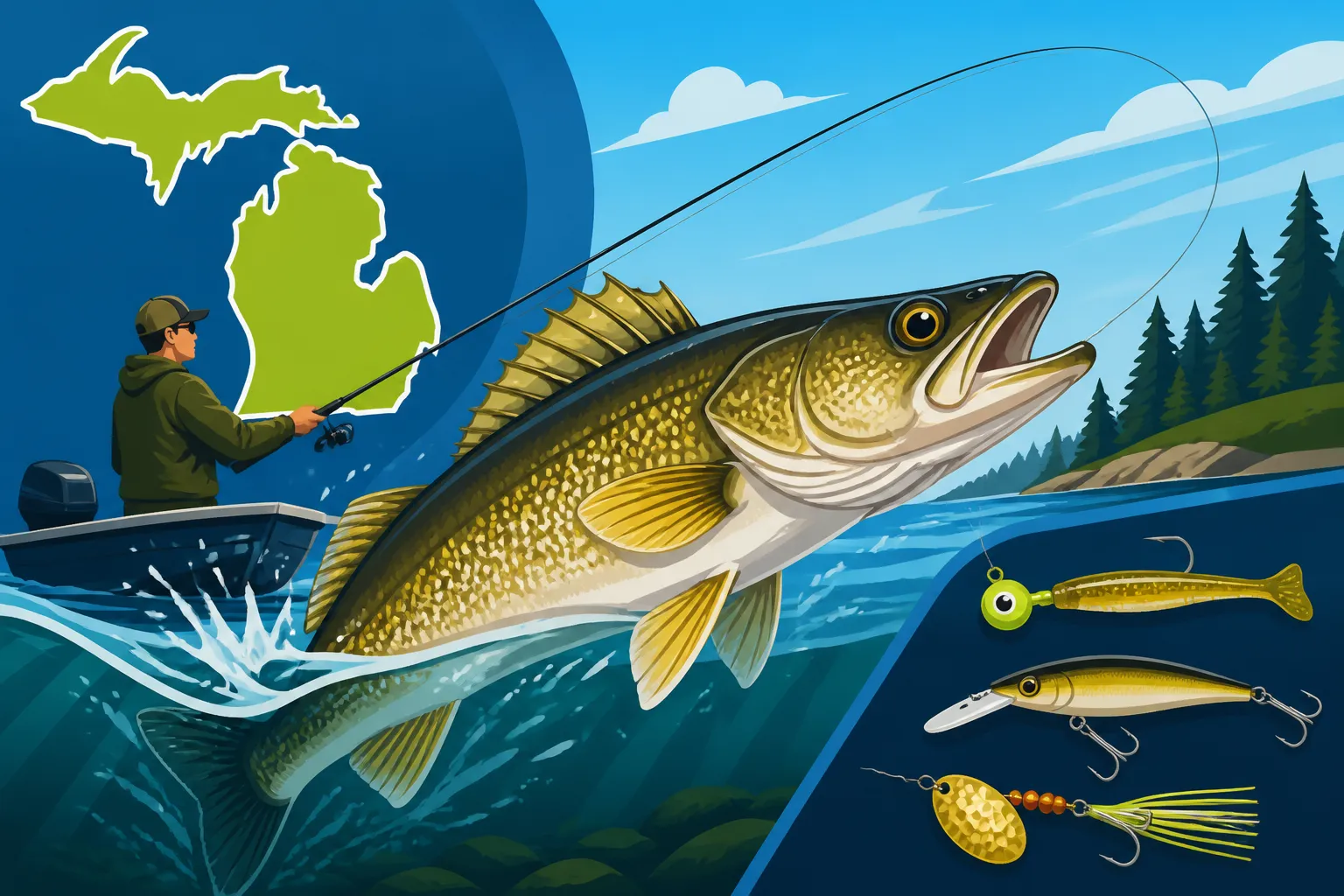
Jigs: These are perhaps the most versatile walleye lures. From traditional lead-head jigs dressed with soft plastics (like Berkley Gulp! minnows or paddletails) to hair jigs and blade baits, they can be cast, vertical jigged, or even trolled. Popular colors include chartreuse, white, orange, and various natural baitfish patterns. For river fishing, heavier jigs are often needed to combat current, while lighter jigs excel in calm lake conditions.
Crankbaits: These diving plugs are phenomenal for trolling or casting, especially when walleye are spread out or suspended. Shallow-diving crankbaits work well in spring and fall, while deep-diving models are essential for summer's deeper waters. Iconic brands like Rapala, Berkley, and Bandit offer various profiles and dive depths. Choose colors that mimic local forage or bright, contrasting patterns for stained water.
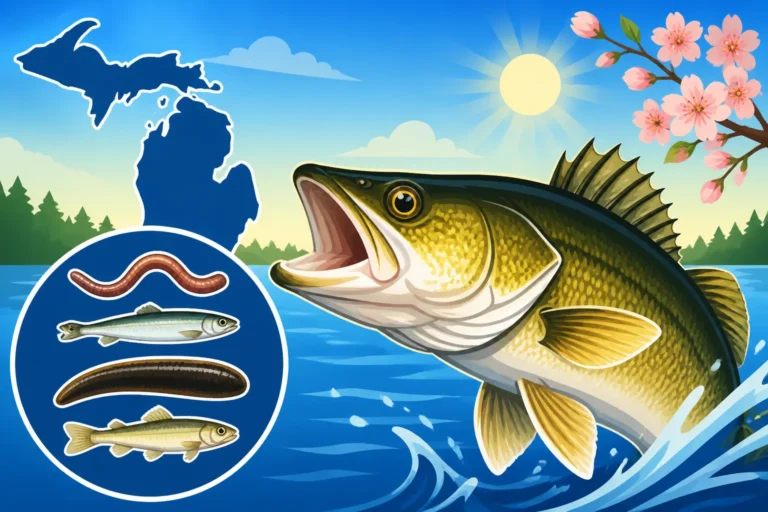
Live Bait: Sometimes, nothing beats the real thing. Minnows (shiners, fatheads, suckers), nightcrawlers, and leeches are perennial walleye favorites. These can be fished on a simple hook and sinker, under a bobber, or on specialized rigs like a Lindy Rig or a Walleye Spinner Rig, which often incorporate a crawler or leech. Knowing the Best Live Bait for Michigan Walleye in Spring can make a huge difference during those early season outings.
Electronics and Navigation Tools
In today's walleye fishing world, electronics are less of a luxury and more of a necessity. A good fish finder or sonar unit, ideally with GPS capabilities, can drastically improve your efficiency.
Sonar (Fish Finder): A modern sonar unit will show you depth, water temperature, bottom composition, and most importantly, mark fish. Down imaging and side imaging technologies provide incredibly detailed views of the underwater world, allowing you to see submerged structure, weed lines, and even schools of baitfish and walleye off to the sides of your boat. Brands like Humminbird and Lowrance offer excellent options. Being able to mark individual fish or schools, then target them precisely, is a game-changer.
GPS and Mapping: Integrated GPS with detailed lake maps allows you to navigate safely, mark waypoints on productive spots, and follow contour lines precisely for trolling or drifting. Many units come pre-loaded with mapping, but often, upgrading to a premium mapping card (like those from LakeMaster or Navionics) provides even greater detail, including depth contours, navigational aids, and identified structures. This is invaluable for efficiently covering large bodies of water like Lake St. Clair or the vast expanses of Lake Michigan. Knowing the exact depth and contour you want to fish, then being able to stay on it, is a huge advantage.
Top Techniques for Open Water Walleye Fishing
Once you have your gear dialed in, it's time to explore the various techniques that prove effective for Michigan walleye. Open water fishing, whether from a boat or shore, offers diverse strategies for targeting these prized fish throughout the year.
Trolling Strategies
Trolling is arguably one of the most effective ways to cover water and find active walleye, especially on larger lakes and bays. It involves dragging lures behind a boat at a controlled speed. The key to successful trolling is understanding depth control, lure action, and boat speed.
Controlling Depth: Various tools help achieve the desired depth. Planer boards, like those from Off Shore Tackle, spread lines out to the sides of the boat, allowing you to cover a wider swath of water without spooking fish directly under the boat. This is particularly effective on Saginaw Bay or Lake Erie, where walleye might be spread out. Downriggers allow you to precisely position lures at specific depths, which is crucial when walleye are holding tight to a thermocline or deep structure. For shallower depths, leadcore line, snap weights, or even simply using deep-diving crankbaits can get your lure into the strike zone. Matching your lure's running depth to the fish's location, which you've ideally found with your sonar, is paramount.
Lure Selection and Speed: Crankbaits are trolling staples, with different models diving to various depths. Spoon-style lures, often tipped with a piece of worm or a minnow, can also be effective, especially for suspended fish. Crawler harnesses, sometimes called "spinner rigs," featuring a blade, beads, and hooks often tipped with a nightcrawler, are incredibly versatile and can be trolled at slower speeds. The ideal trolling speed varies greatly depending on the lure type, water temperature, and walleye mood, but generally ranges from 1.0 to 2.5 mph. Experimentation is key; sometimes a slight acceleration or deceleration, a "S-turn," can trigger a bite by changing the lure's action.
Jigging Methods
Jigging is a more active, hands-on approach that excels when walleye are concentrated in specific areas, such as around humps, reefs, or along drop-offs. It requires a sensitive touch and a good understanding of bottom contact.
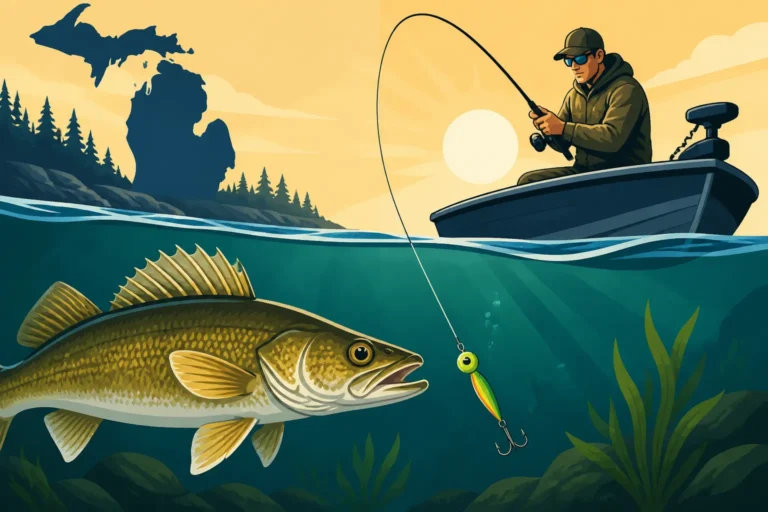
Vertical Jigging: This technique involves dropping a jig straight down to the bottom, lifting it slightly, and letting it fall, mimicking an injured baitfish. It's fantastic for pinpointing fish holding tight to structure or in deeper water. Popular lures for vertical jigging include lead-head jigs tipped with live bait (minnows or half a nightcrawler), soft plastics, or blade baits. The key is to maintain constant contact with the bottom, feeling for any subtle changes or the characteristic "tap" of a walleye bite. This technique is often employed in rivers with current, like the Detroit River, where you "snap jig" to keep the lure moving and enticing. Many anglers find the Jigging Techniques for Michigan Walleye to be one of the most effective ways to catch fish when they are schooled up.
Pitching Jigs: When walleye are in shallower water or around the edges of weed lines, pitching jigs can be highly effective. This involves casting a jig (often a lead-head with a soft plastic grub or minnow imitation) to a target area, letting it sink, and then slowly retrieving it with short hops or drags along the bottom. This allows you to cover more water than vertical jigging while still presenting a natural, enticing meal. This method works well in early spring and late fall in shallower bays or flats.
Casting and Drifting
Sometimes, the most straightforward approaches are the most effective. Casting and drifting allow for a more natural presentation, especially in clear water or when fish are skittish.
Casting Lures: In situations where walleye are actively chasing bait or holding near visible cover, casting can be incredibly productive. Crankbaits, spinnerbaits, and even larger jigging spoons can be cast and retrieved to cover specific areas. This is a great technique for shore anglers or when fishing around docks, fallen trees, or rocky points. Focus on areas where current breaks or structure changes are present, as these are prime ambush points. Remember that walleye prefer low light, so casting during dawn, dusk, or on cloudy days, or even considering How to Catch Walleye at Night in Michigan, can boost your success.
Drifting with Live Bait Rigs: Drifting allows you to cover water slowly and naturally, especially in windy conditions or areas with a gentle current. Using a simple slip-sinker rig with a minnow or a crawler harness, you let your boat or kayak drift over known walleye holding areas. The key is to keep your bait near the bottom. This often requires careful weight adjustments based on drift speed and depth. This technique is often used in shallower bays of the Great Lakes or on larger inland lakes. It's a fantastic way to present live bait in a very natural manner to wary walleye.
| Technique | Primary Season | Ideal Depth | Key Lure/Bait | Advantages | Disadvantages |
|---|---|---|---|---|---|
| Trolling | Spring, Summer, Fall | 10-60+ feet | Crankbaits, Crawler Harnesses | Covers vast areas, great for scattered fish | Requires boat/motor, less "feel" for bite |
| Vertical Jigging | Spring, Fall, Winter | 10-40 feet | Jigs (tipped w/live bait/plastic), Blade Baits | Pinpoints concentrated fish, high sensitivity | Less coverage, requires precise boat control |
| Pitching Jigs | Spring, Fall | 5-20 feet | Jigs (tipped w/soft plastic) | Good for covering weed edges/structure | Limited range, can snag in heavy cover |
| Drifting Live Bait | All Seasons | 5-30 feet | Minnows, Crawlers, Leeches | Natural presentation, good in wind/current | Slower pace, can miss subtle bites |
Mastering Michigan Walleye Fishing Through the Ice
Ice fishing for walleye in Michigan is a cherished winter tradition, offering a unique set of challenges and rewards. When the lakes freeze over, walleye behavior shifts, and so must your approach.
Ice Fishing Gear and Safety
Before you even think about dropping a line, safety is paramount on the ice. Always check ice thickness – a minimum of 4 inches for foot travel, 5-7 inches for snowmobiles/ATVs, and 8-12 inches for small vehicles. Never go alone, always tell someone where you're going, and carry safety essentials like ice picks, a spud bar (to check ice ahead), a throw rope, and a fully charged phone.
For gear, a good ice auger (manual, gas, or electric) is essential for drilling holes. A portable ice shelter provides welcome warmth and protection from the elements, allowing you to focus on fishing comfortably. You'll need specialized short, sensitive ice rods, typically 24-36 inches long, often paired with small spinning reels spooled with light monofilament or fluorocarbon (4-8 lb test) for sensitivity. Don't forget a scoop to keep your holes clear of slush, and a flasher or portable fish finder to see fish and your bait in real-time. You can find excellent portable fish finders and ice shelters on Amazon to enhance your winter outings. Understanding Ice Fishing Techniques for Michigan Walleye starts with having the right equipment.
Locating Walleye Under the Ice
Finding walleye under the ice often comes down to targeting their seasonal holding patterns and feeding habits. Early ice and late ice often find walleye shallower, relating to weed lines, rock piles, and shallow flats near deeper water – much like their spring and fall open water patterns. During mid-winter, they tend to move to deeper structures like main lake points, humps, and even basin edges, often suspending over deep water to chase schools of baitfish.
Pay close attention to subtle contour changes, transitions from soft to hard bottom, and areas where current might create warmer water or concentrate bait. On large inland lakes like Houghton Lake or Higgins Lake, vast flats can hold walleye, but they'll often be found near slight depressions or subtle weed edges. Use your GPS-enabled fish finder to pinpoint these features before drilling. Don't be afraid to drill many holes and move frequently until you find active fish.
Active vs. Passive Ice Fishing Techniques
Ice fishing for walleye offers a blend of active and passive approaches, and often, combining them yields the best results.
Active Jigging: This is where your sensitive ice rod and flasher come into play. Small jigging spoons (like Swedish Pimples or Do-Jiggers), balanced minnow baits (like Rapala Jigging Raps or Shiver Minnows), or even small lead-head jigs tipped with a minnow head or plastic can be incredibly effective. The idea is to actively jig and draw attention to your bait. Watch your flasher for fish approaching your lure, then adjust your presentation. Sometimes a rapid, aggressive jigging motion triggers a strike; other times, a subtle quiver or dead stick presentation is what they want. Often, lifting the lure slightly away from an interested fish will trigger a chase and strike.
Passive Tip-Up Fishing: Tip-ups are a fantastic way to cover multiple holes (within legal limits) and present live bait. These devices typically consist of a spool of line submerged in the water, with a flag that "tips up" when a fish takes the bait. Rig them with a large minnow (such as a shiner or sucker minnow) on a single hook or a quick-strike rig, set just off the bottom or suspended at the depth where you're marking fish on your flasher. While you're actively jigging a nearby hole, your tip-ups are silently waiting for a more cautious walleye. Many anglers rely on tip-ups for passive success, especially when walleye are finicky.
Special Considerations for Michigan Walleye Hotspots
Michigan is blessed with incredible walleye fisheries, each with its own quirks and prime fishing techniques. Knowing the specifics of these hotspots can give you a significant advantage.
Great Lakes Walleye Challenges Saginaw Bay, Lake Erie
The Great Lakes offer world-class walleye fishing, but their vastness and dynamic conditions present unique challenges.
Saginaw Bay, Lake Huron: This shallow, nutrient-rich bay is a walleye factory, famous for its incredible numbers. The challenges here include its sheer size, often turbid water, and susceptibility to wind. Trolling is the dominant technique, with anglers running dozens of lines (within legal limits) off planer boards, targeting walleye that are often spread out across expansive flats or along subtle depth changes. Crawler harnesses and crankbaits in bright colors (chartreuse, orange, firetiger) are hugely popular. Early season, walleye might be shallower, while summer sees them move to deeper parts of the bay. Understanding wind direction and its impact on water clarity and bait movement is crucial for success on Saginaw Bay, Michigan, Walleye Fishing on Lake Huron.
Lake Erie's Michigan Waters: While Ohio's side of Lake Erie often gets the headlines, Michigan's portion, particularly around the Detroit River mouth, also holds fantastic walleye. This section is generally shallower and can be heavily influenced by the Detroit River's flow. Here, trolling with crankbaits and crawler harnesses is king, particularly during the summer months when walleye are abundant. Drifting jigs or vertical jigging with minnows can also be effective, especially near current breaks and structure. The sheer density of walleye here means that when you find them, the action can be non-stop.
Inland Lake Specifics Houghton Lake, Muskegon Lake
Michigan's inland lakes offer a different walleye fishing experience, often more focused on structure and specific weed patterns.
Houghton Lake: As Michigan's largest inland lake, Houghton Lake is a premier walleye destination. Known for its extensive shallow flats and numerous weed beds, walleye here often relate to these features. Jigging with live minnows or soft plastics along weed edges and subtle break lines is popular. Trolling shallow-running crankbaits or crawler harnesses over the flats, especially during low light, also produces. Understanding the vastness of the lake and using GPS to mark subtle features is key. Check out the Houghton Lake Fishing Guide: Michigan's Largest Inland Lake for more in-depth tips.
Muskegon Lake: This drowned river mouth lake, connected to Lake Michigan, offers a unique mix of riverine and lake characteristics. Walleye here often relate to the river channel, deep holes, and connecting points to Lake Michigan. Trolling crankbaits along the channel edges or vertical jigging in deeper sections can be productive. The lake also has extensive weed beds, making casting jigs or crankbaits along the edges effective in low light. The dynamics of current from the Muskegon River can also influence walleye location, often concentrating them in specific areas.
River Walleye Dynamics Detroit River
River walleye fishing, especially in a world-renowned fishery like the Detroit River, demands a specialized approach centered around current and staging areas.
Detroit River: Famous for its incredible spring walleye run, the Detroit River sees millions of walleye migrate upriver to spawn. The primary technique here is vertical jigging, often referred to as "Detroit River jigging." Anglers use heavy jigs (typically 3/4 to 1 1/2 oz) tipped with a live minnow (like an emerald shiner) or soft plastic, dropping them straight down and lifting them subtly to bounce along the bottom. The key is to maintain a vertical presentation despite the strong current, using your boat's electric motor or main engine to "slip" downstream at the same speed as the current. This keeps your jig in the strike zone longer. Walleye will stage in deeper holes, eddy lines, and current seams before and after spawning. This intense fishery often offers high numbers of fish, making it a bucket-list destination for many walleye anglers.
Timing Your Michigan Walleye Adventures
Just like real estate, timing is everything in walleye fishing. Michigan's distinct seasons dictate where walleye will be and how aggressively they'll feed, influencing which techniques will be most successful.
Spring Walleye Opener Excitement
The spring walleye opener, which varies by water body but often occurs around late April or early May for many inland waters and the Lower Peninsula, is one of the most anticipated events for Michigan anglers. This is prime time for post-spawn walleye.
Post-Spawn Recovery: After the rigors of spawning, walleye are often hungry but can be a bit lethargic. They'll gravitate to nearby shallower flats, weed edges, and distinct break lines where they can recover and feed on abundant baitfish. Look for warmer water pockets, as these will attract both bait and hungry walleye. Techniques like casting shallow-diving crankbaits, slow-trolling crawler harnesses, or drifting live bait rigs with minnows or leeches can be incredibly effective. Rivers like the Detroit and Maumee (just south of the Michigan border in Ohio) see massive pre-spawn and spawn runs, and the post-spawn fish in connected waters are often highly catchable. For more details on exact dates, refer to When Does Walleye Season Open in Michigan's Lower Peninsula.
River Runs: Many rivers in Michigan, beyond the Detroit River, experience significant walleye runs in the spring as fish move upstream to spawn. The Grand River, Saginaw River, and Muskegon River are all prime examples. Here, jigging with minnows or soft plastics, particularly in deeper holes, current seams, and around bridge pilings, is a go-to technique. Shore anglers can also have great success in these areas, casting jigs or slip bobber rigs with live minnows into deeper pools.
Summer's Deep Water Tactics
As summer heats up, walleye generally retreat to cooler, deeper waters, making them a bit more challenging to find, but still very catchable. They become less active during the bright daylight hours.
Offshore Structure: Walleye will often hold on offshore humps, reefs, points, and along the deep edges of main lake basins. Trolling becomes a highly effective method, using deep-diving crankbaits, leadcore line, or downriggers to present lures at specific depths where fish are marked on sonar. Speeds often range from 1.5 to 2.5 mph, and varying your speed with S-turns can trigger strikes. On inland lakes, look for the thermocline – walleye often suspend just above or within it, chasing baitfish.
Night Fishing: For many Michigan anglers, summer walleye fishing means night fishing. Walleye's excellent low-light vision gives them an advantage over prey in the dark, and they often move shallower to feed aggressively at night. Casting shallow-diving crankbaits or even slip bobber fishing with live minnows or leeches near weed edges, shallow flats, or rocky shorelines can be incredibly productive. You'll be amazed at the number of walleye you can catch after the sun goes down, especially on popular lakes.
Fall Feeding Frenzy
The cooling waters of autumn trigger a vigorous feeding binge in walleye as they prepare for winter. This is a fantastic time for both numbers and trophy-sized fish.
Shallow Water Return: As lake temperatures drop, walleye often move back into shallower areas that were too warm in summer. Look for them on points, shallow humps, and along the edges of remaining green weed beds, particularly during the late afternoon and evening. Casting crankbaits, pitching jigs with plastic trailers, or slow-trolling crawler harnesses can all be effective. The fall bite can be explosive, as fish are aggressively trying to pack on weight.
River Staging: In many river systems that connect to larger lakes, walleye will begin to stage in deeper holes and channels in preparation for their upstream wintering and spring spawning movements. Vertical jigging or drifting live bait rigs with large minnows in these deeper river sections can produce excellent results, often yielding some of the largest walleye of the year. This is also a fantastic time to target walleye on the deeper edges of the Detroit River. Remember to always consult the Michigan Walleye Daily Possession Limit and other regulations before heading out.
Best Practices for Success and Conservation
Beyond techniques and timing, a successful Michigan walleye angler also embraces ethical practices and a deep understanding of the local regulations. Being a responsible angler ensures the health of the fishery for generations to come.
Reading the Water and Weather
Successful walleye anglers are keen observers of their environment. The water and weather provide a wealth of clues that can help you locate and catch more fish.
Water Conditions: Water clarity, temperature, and current are critical factors. In clear water, walleye tend to be deeper or more active during low light, and natural-colored baits often work best. In stained or turbid water, walleye might be shallower, and brighter, more contrasting colors (chartreuse, orange, firetiger) can be more effective. Water temperature dictates activity levels; cold water often means slower presentations, while warmer water allows for more aggressive tactics. Current, especially in rivers or connecting waters, concentrates fish and food, making current seams and eddies prime spots. A slight chop on the water surface, often called a "walleye chop," is generally preferred as it breaks up light penetration, making walleye more comfortable feeding shallower during the day.
Weather Patterns: Barometric pressure changes significantly impact fish activity. A falling barometer often signals an approaching front and can trigger an aggressive bite before the storm hits. A stable, high-pressure system might lead to a tougher bite, requiring more subtle presentations. Wind direction and speed affect boat control, drift speed, and wave action, all of which influence walleye location and feeding behavior. Learning to adjust your strategy based on these variables is a continuous learning process that comes with time on the water.
Ethical Catch and Release
While walleye are fantastic table fare, practicing ethical catch and release for fish you don't intend to keep, or those that fall outside legal size and bag limits, is vital for conservation.
Minimizing Harm: If you plan to release a fish, handle it as little as possible. Use wet hands to protect its slime coat, which is a crucial defense against disease. If possible, keep the fish in the water while removing the hook. Use needle-nose pliers or a hook remover to quickly dislodge hooks. Avoid over-fighting a fish, especially in warm water, as this can exhaust it to the point of no recovery. If a fish is deeply hooked, it's often better to cut the line as close to the hook as possible, as attempting to remove a deep hook can cause more damage.
Revival: If a walleye appears lethargic upon release, gently hold it upright in the water, facing into any current, allowing water to flow over its gills. Don't throw it back forcefully. Wait until it kicks its tail and swims away strongly on its own. Releasing fish properly ensures they can continue to grow and reproduce, contributing to a healthy fishery for everyone. This is especially important for larger, older walleye which are critical for genetic diversity in the population.
Understanding Regulations and Limits
Michigan has specific and often complex fishing regulations designed to manage its diverse fisheries. Ignorance of the law is not an excuse, and violating regulations can lead to significant fines and penalties.
License Requirements: First and foremost, you need a valid Michigan fishing license. Whether you're a resident or nonresident, an annual or 24-hour license, make sure you have the correct one for your situation. You can easily buy your Michigan Fishing License Guide for Residents and Nonresidents online or at licensed retailers.
Size and Bag Limits: Walleye have specific minimum size limits and daily possession limits that vary by water body and sometimes by season. For example, many waters have a 15-inch minimum size limit, but there might be special slot limits on certain lakes where fish within a specific size range must be immediately released. Always consult the most current Michigan Fishing Guide (available online from the DNR or at retailers) before you head out. Understanding the Michigan Walleye Size and Possession Limits is not just about avoiding a ticket; it's about doing your part to sustain this incredible fishery. Pay close attention to rules regarding how many fish you can keep (daily possession limit) and how many you can have in your possession over multiple days of fishing (possession limit).
Seasonal Rules and Protected Areas: Certain waters may have specific season dates for walleye, or be closed to fishing entirely during spawning periods. There may also be special regulations for specific river sections or protected spawning grounds. Always double-check these localized rules, as they can change from year to year.
Disclaimer
Fishing conditions, regulations, and fish behavior can change rapidly. Always consult the most current Michigan Department of Natural Resources (DNR) fishing guide and local advisories before heading out. The information provided here is for general educational purposes and should not be considered legal advice or a substitute for official DNR publications.