What Line Weight for Michigan Steelhead
One of the most vexing questions for any angler chasing Michigan steelhead is, "What fishing line should I use?" It’s a decision that can literally make or break your day on the water, turning a potential trophy into a heartbreaking snap-off, or worse, a fish that never even touches your bait because your line is too visible. This guide aims to unravel the complexities of line weight selection, helping you match your setup perfectly to Michigan's dynamic steelhead waters.
Understanding Michigan Steelhead and Their Habitat
Steelhead, those magnificent migratory rainbow trout, present a unique challenge to anglers across Michigan's diverse river systems and Great Lakes tributaries. They're powerful, wary, and often found in environments that demand specific line characteristics. Getting your line choice right is foundational to success.
The Wary Nature of Steelhead
Steelhead are notorious for their keen eyesight and often spooky behavior, particularly in the clearer waters of many Michigan rivers. Unlike some other species that might strike aggressively regardless of a little extra hardware, steelhead can be incredibly selective. Imagine a clear, sunny day on a pristine river like the Au Sable, and you're trying to present a tiny egg pattern or a delicate fly. If your line is too thick or too visible, it casts a shadow or creates a disturbance that sends them darting away faster than you can blink. This wariness is why stealth and subtle presentation become paramount, directly impacting your choice of line. They've navigated vast open waters and often shallow, exposed river sections, making them acutely aware of anything out of place. This applies whether you're chasing them during the Fall Steelhead Run in Michigan Rivers or trying to tempt them during the spring.
Diverse Michigan Waters and Their Demands
Michigan offers an incredible variety of steelhead fishing experiences, from the powerful, wide rivers like the Manistee and Muskegon, which demand different gear than smaller, more intimate streams.
- Big Rivers (Manistee, Muskegon, Grand): These rivers often have strong currents, deeper runs, and more structure like fallen trees and log jams. Here, you might be dealing with larger, more powerful fish that have more room to run. The sheer force of the water and the potential for snags mean your line needs to stand up to abuse. You're often employing techniques like Float Fishing for Michigan River Steelhead or heavy drift fishing, which can put significant stress on your main line and leader.
- Smaller Rivers and Tributaries (Pere Marquette, Au Sable, Betsie): These can be clearer, shallower, and have more intricate riffles and pools. Stealth is king in these environments. The fish here can be just as strong but have less room to make long runs, often diving into tight cover. Your presentation needs to be incredibly natural, and your line choice will reflect that need for subtlety. These are often the places where Fly Fishing Techniques for Michigan Steelhead truly shine, demanding very light leaders.
- Great Lakes Tributaries: The lower sections of many rivers, where they meet the Great Lakes, can sometimes be turbid, especially after heavy rains or during spring thaw. Here, visibility might be less of a concern, but the potential for larger, fresh-from-the-lake fish means you'll need backbone in your line. You might also be dealing with higher boat traffic or more structure, necessitating a robust setup.
Each of these environments dictates a different approach to line selection, underscoring why a "one-size-fits-all" answer to line weight for Michigan steelhead simply doesn't exist.
Key Factors for Choosing Steelhead Line Weight
Selecting the right line weight for Michigan steelhead isn't just about grabbing any spool off the shelf. It's a calculated decision based on several critical factors that work together to create an effective and enjoyable fishing experience.
Matching Line to Fishing Technique
Your chosen fishing technique plays a massive role in line weight selection. Different methods demand different line characteristics to perform optimally.
- Drift Fishing/Bottom Bouncing: When you're drifting bait, beads, or small lures along the bottom, particularly in rivers like the St. Joseph or Grand, you need your offering to move naturally with the current. This often calls for a main line that is strong enough to handle hooksets and powerful runs, but also has low memory and enough stretch to absorb shocks. Many anglers opt for a good quality monofilament as a main line in the 8-12 lb range, with a fluorocarbon leader of 6-10 lb test. The leader's invisibility is key here, while the main line provides casting distance and fighting power.
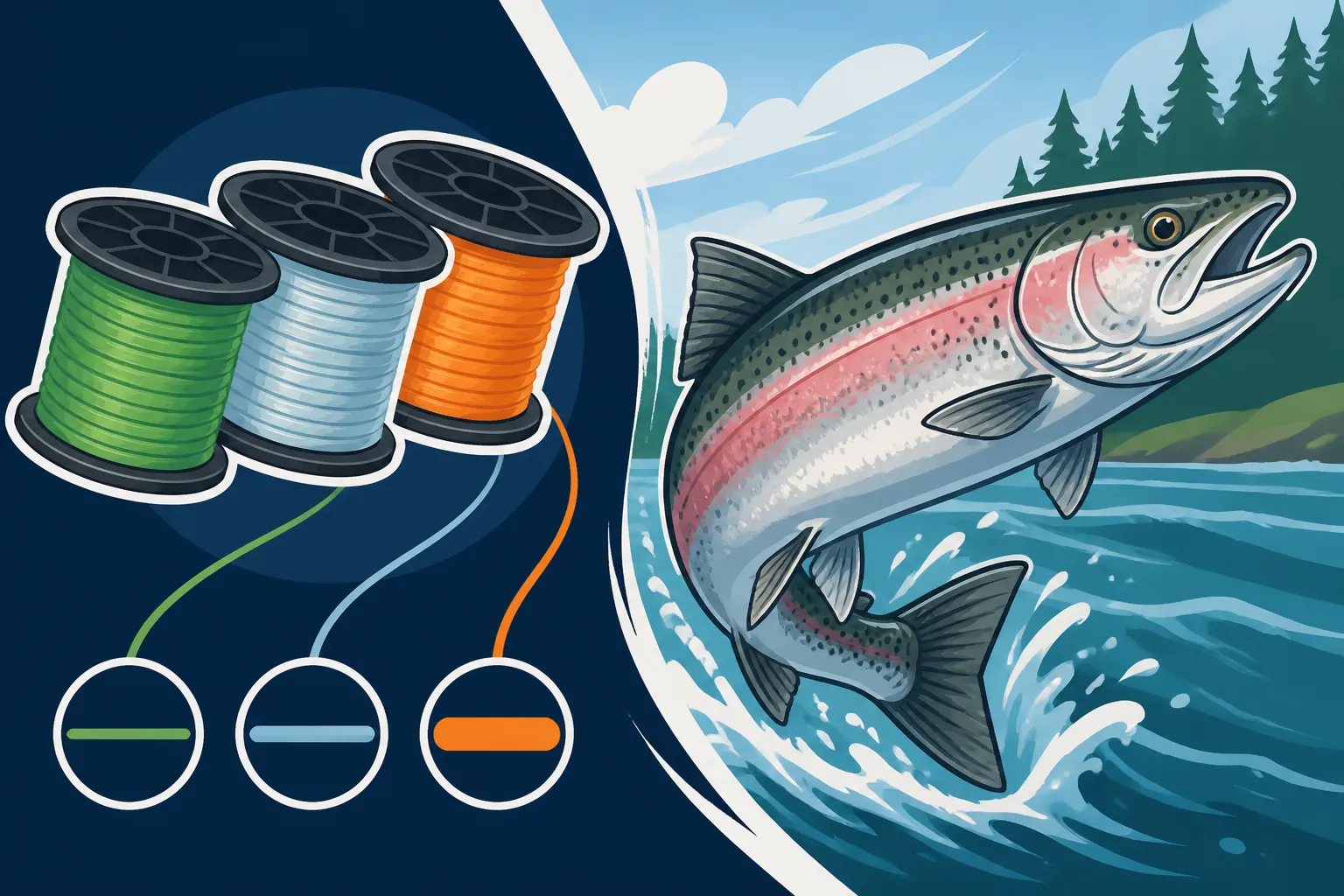
- Float Fishing/Centerpinning: For Centerpinning for Michigan Steelhead or traditional float fishing, particularly on rivers like the Muskegon or Manistee, a high-visibility main line is often preferred, allowing you to easily track your float and detect subtle bites. While the main line might be 10-15 lb test monofilament (often fluorescent green or orange), your leader is where the real finesse comes in, dropping down to 6-10 lb fluorocarbon or even lighter in clear water. The ability to control your drift precisely is paramount, and a line that handles well off the reel is crucial.
- Spin Fishing with Lures/Spawn: Casting spoons, spinners, or weighted spawn bags requires a line that casts smoothly and efficiently. Again, 8-12 lb monofilament or fluorocarbon main lines are common. If you're using braided line, you'll almost certainly want a fluorocarbon leader to provide invisibility and abrasion resistance, as braid itself is highly visible and has no stretch, which can lead to pulled hooks with hard-hitting steelhead.
- Fly Fishing: Fly fishing for steelhead is a world unto itself when it comes to line. While your fly line itself is heavy (weight-forward or specialized nymphing lines), the critical part for steelhead is the leader and tippet. These are often made of fluorocarbon for its invisibility and density, allowing flies to sink naturally. Tippet sizes can range from 3X (around 8-10 lb test) down to 5X (around 4-6 lb test) for incredibly wary fish in clear, low water conditions. The goal is an almost invisible connection to your fly.
Water Clarity and Conditions
The visibility of the water directly impacts how light or heavy you can go with your line. This is a crucial consideration for Michigan anglers.
- Crystal Clear Water: On a bluebird day on a pristine river like the Pere Marquette, steelhead are on high alert. Your line choice absolutely has to prioritize stealth. This is when anglers often drop down to 6-8 lb fluorocarbon leaders, or even 4 lb test tippet when fly fishing. Every ounce of invisibility helps. Even your main line, if visible, can spook fish in shallow, clear runs. Anglers might opt for clear monofilament or a braided main line with an extra-long fluorocarbon leader.
- Stained or Slightly Turbid Water: When rivers are running with a slight tint after a rain or during a thaw, steelhead tend to be less line-shy. They might not see your line as readily, allowing you to bump up your line strength to 10-12 lb test on leaders without sacrificing too many bites. This extra strength can be a huge advantage when fighting a powerful fish near cover.
- Heavy Stains or Muddy Water: In truly muddy conditions, line visibility becomes almost a non-issue. Here, you can lean into heavier lines, perhaps 12-15 lb main lines and leaders, to combat snags and handle the often more aggressive bites you get in these conditions. The fish are less reliant on sight and more on scent and vibration, giving you more leeway with line diameter.
Rod and Reel Setup
The rod and reel you're using are designed for specific line weight ranges, and sticking within those parameters is essential for optimal performance and preventing gear failure.
- Rod Ratings: Every fishing rod has a recommended line weight range, typically printed near the handle (e.g., "8-17 lb line"). Using line that's too light can cause breakage under stress if your drag sticks, while line that's too heavy can put undue stress on the rod blank, potentially leading to snaps or tip damage during a hard fight. It also affects casting performance; a light line on a heavy rod won't load the blank effectively for good casts. When you're picking out Best Rods for Steelhead Fishing, this rating is a primary consideration.
- Reel Capacity and Drag: Your reel's spool capacity and drag system also play a role. A small, lightweight reel designed for trout won't hold enough 20 lb test braid to fight a sustained steelhead run. Conversely, a large saltwater reel might struggle to achieve the delicate drag settings needed for a 6 lb fluorocarbon leader. Ensure your reel can handle the chosen line weight while providing smooth, consistent drag, which is absolutely critical when fighting a powerful steelhead on lighter lines. High-quality reels that offer consistent drag performance are well worth the investment when chasing these fish. You can often find a great selection of reels, with detailed specifications, at outdoor retailers like Bass Pro Shops or online platforms like Amazon.
Potential for Snags and Obstacles
Michigan's steelhead rivers are not manicured golf courses; they are wild environments full of obstacles.
- Woody Debris: Log jams, fallen trees, and submerged branches are prime steelhead holding areas but also notorious line-snaggers. If you're fishing these areas, a slightly heavier line (10-12 lb test leader, 15 lb main line) can give you a fighting chance to pull free of a snag or, more importantly, to steer a fish away from entanglement during a fight. Losing a fish to a snag because your line was too light is a common, frustrating experience.
- Rocks and Gravel: While less prone to outright snapping, abrasive rocks can fray lighter lines quickly. A slightly thicker fluorocarbon leader offers better abrasion resistance.
- Current Strength: Strong currents push fish downstream and increase the drag on your line. Heavier lines handle current better and allow for more control, especially with larger fish that will use the current to their advantage.
By carefully considering all these factors, you can make an informed decision that significantly improves your chances of landing that elusive Michigan steelhead.
Recommended Line Weights for Different Michigan Steelhead Scenarios
Let's break down some common Michigan steelhead fishing scenarios and the line weights that tend to perform best. Remember, these are guidelines, and local conditions can always call for adjustments.
Light Line for Clear Water and Spooky Fish
When Michigan rivers are running low and clear, or on bright, sunny days, steelhead become incredibly wary. This is when going light with your line is essential for getting bites.
- Main Line (Spinning/Casting): For your main line, especially when using a spinning reel, consider a good quality 8-10 lb monofilament or a braided line in the 10-15 lb range. If using braid, a high-quality 8-strand braid will cast smoother and be more sensitive.
- Leader (Fluorocarbon): This is where you really need to go subtle. A 6-8 lb fluorocarbon leader is often the sweet spot. In extremely clear water or highly pressured areas, dropping down to a 4 lb test leader might be necessary. Fluorocarbon is crucial here because it's nearly invisible underwater, sinks faster than mono, and offers excellent abrasion resistance against rocks and gill plates. Make sure your knots are strong and well-tied when using lighter leaders, as a poorly tied knot is the weakest link.
- Fly Fishing Tippet: For fly anglers, tippet in the 4X to 5X range (which translates roughly to 6-8 lb and 4-6 lb test, respectively) is common. Again, fluorocarbon is generally preferred for its stealth. Using a high-quality tippet material with consistent diameter and knot strength is paramount when fishing these lighter strengths. Always remember that the steelhead in rivers like the Manistee can still be incredibly strong, so proper drag setting and fighting technique are crucial on these lighter lines. What Size Reel for Michigan Steelhead Fishing also plays a role in how well you can manage these lighter lines.
Medium Line for General River Conditions
This is often the go-to setup for many anglers, suitable for a wide range of Michigan river conditions where visibility is moderate, and you expect average water levels and current.
- Main Line (Spinning/Casting): A 10-12 lb monofilament is a solid choice for its balance of strength, stretch, and castability. If you prefer braid, a 15-20 lb test braided line offers excellent sensitivity and hook-setting power, especially at a distance. This range gives you a bit more backbone for casting heavier presentations and fighting larger fish.
- Leader (Fluorocarbon): An 8-10 lb fluorocarbon leader provides a good balance of invisibility and strength. This is generally stout enough to handle most steelhead you'll encounter and gives you a fighting chance against snags. It's versatile enough for drift fishing, float fishing, and casting small to medium lures.
- Fly Fishing Tippet: For fly anglers, a 3X to 2X tippet (roughly 8-12 lb test) works well in these conditions. This gives you a little more confidence when hooking into a hot fish, especially if you're nymphing heavier rigs or fishing slightly larger flies.
This medium range is a fantastic starting point for anglers learning How to Fish for Steelhead in Michigan and offers a good margin of error for varying conditions throughout the season.
Heavy Line for High Water, Snags, or Big Fish
Sometimes, conditions demand a heavier-duty approach. This might be during periods of high, stained water, when fishing areas with lots of cover, or when specifically targeting the largest of Michigan's steelhead.
- Main Line (Spinning/Casting): A 12-15 lb monofilament or a 20-30 lb braided line would be appropriate. The added strength of the braid can be a lifesaver in snag-filled environments, allowing you to often free your rig.
- Leader (Fluorocarbon): A 10-15 lb fluorocarbon leader provides maximum abrasion resistance and brute strength. While not as subtle, in these conditions, visibility is often less of a concern, and the ability to control a powerful fish or break free from a snag becomes paramount. This setup is particularly useful when fishing methods like using larger crankbaits or heavy jigs.
- Fly Fishing Tippet: For fly fishing in these extreme conditions, you might still stick to 2X (10-12 lb equivalent) or occasionally 1X (15 lb equivalent) tippet, but the emphasis shifts more to the strength of your rod and reel, and your ability to quickly move the fish away from danger. This scenario is less common in fly fishing, which typically favors finesse.
Remember, heavier line can sometimes reduce casting distance and the natural presentation of your bait, so always weigh the benefits against the potential drawbacks for the specific conditions you face.
Here's a quick comparison table for common steelhead fishing scenarios:
| Scenario | Main Line (Mono/Braid) | Leader (Fluorocarbon) | Fly Tippet (Fluorocarbon) | Primary Advantage | Common Techniques |
|---|---|---|---|---|---|
| Clear/Low Water, Spooky Fish | 8-10 lb Mono / 10-15 lb Braid | 4-8 lb | 5X – 4X (4-8 lb) | Maximum stealth, natural presentation | Nymphing, light drift, small baits |
| General River Conditions | 10-12 lb Mono / 15-20 lb Braid | 8-10 lb | 3X – 2X (8-12 lb) | Versatility, good balance of strength/stealth | Float fishing, drift fishing, lures |
| High/Stained Water, Snags | 12-15 lb Mono / 20-30 lb Braid | 10-15 lb | 2X – 1X (12-15 lb) | Durability, control in heavy cover/current | Heavy lures, large baits, power fishing |
Advanced Tips for Steelhead Line Management
Beyond just choosing the right line weight, how you manage and maintain your fishing line can drastically impact your success rate for Michigan steelhead. These aren't just minor details; they are crucial components of a well-oiled fishing system.
The Importance of Leaders and Knots
Using a separate leader is not just a suggestion; it’s practically mandatory for serious steelhead anglers. The leader serves multiple vital functions that make it indispensable.
- Invisibility: As discussed, fluorocarbon leaders are nearly invisible underwater, a massive advantage when targeting line-shy steelhead. Your main line, especially braid or brightly colored monofilament, might be easily spotted, but a short, clear fluorocarbon leader keeps your bait or lure looking natural.
- Abrasion Resistance: Leaders take the brunt of the abuse from rocks, logs, and a thrashing steelhead’s gill plates. Fluorocarbon is significantly more abrasion-resistant than many main lines, especially monofilament. This means fewer break-offs when a fish dives into cover.
- Shock Absorption: While braid offers incredible sensitivity, its lack of stretch can be detrimental when a steelhead makes a sudden, powerful run. A monofilament or fluorocarbon leader provides just enough stretch to absorb some of that shock, preventing hooks from tearing out or lines from snapping.
- Knots are King: A poorly tied knot can instantly reduce a 10 lb test line to a 2 lb test breaking strength. For connecting your leader to your main line, popular choices include the Double Uni knot or the FG knot, especially when attaching braid to fluorocarbon. For tying terminal tackle (hooks, swivels, lures) to your leader, the Palomar knot or Improved Clinch knot are reliable options. Practice tying these knots until they are second nature, and always moisten your knots before cinching them down to prevent friction damage to the line. Learning how to properly tie your knots is just as important as choosing the Best Line Weight for Michigan Steelhead.
Backing for Fly Reels and Spinning Reels
Backing is the extra line spooled onto your reel beneath your main fishing line. It’s not just for filling up the spool; it’s a critical component, particularly when dealing with long-running fish like steelhead.
- Fly Reels: On a fly reel, backing (typically 20-30 lb Dacron or braided line) serves as your emergency reserve. When a powerful steelhead strips all your fly line off the reel, that backing is what stands between you and a broken off fish. It also ensures your fly line has a consistent, larger diameter to spool onto, preventing tangles and improving line management.
- Spinning Reels: While less critical than for fly reels, a good amount of backing can also be beneficial on spinning reels. It allows you to spool less of your expensive main line, gives you extra yardage for long runs, and creates a larger arbor effect on the spool, which can improve casting and reduce line memory. Many anglers use inexpensive monofilament in a similar test to their main line as backing on spinning reels.
Line Maintenance and Freshness
Your fishing line is a perishable item, and its performance degrades over time and with use. Ignoring line maintenance is a surefire way to experience frustrating break-offs.
- Check for Nicks and Fraying: After every fishing trip, especially if you’ve been battling fish in snaggy areas or against rocks, inspect the last several feet of your leader and main line for nicks, abrasions, or fraying. If you find any, cut back past the damaged section and re-tie your leader. It’s far better to sacrifice a few feet of line than to lose a trophy fish.
- Replace Line Regularly: Monofilament line, in particular, degrades from UV exposure and stress. It develops memory, becomes brittle, and loses strength. Depending on how often you fish, replace your main monofilament line at least once a season, if not more frequently. Braided line lasts longer but can still fray and degrade, especially if constantly exposed to sun. Fluorocarbon leaders should be replaced as needed after heavy use or any significant abrasions. Think of it like changing the oil in your car—it’s routine maintenance that prevents major problems. You can buy quality line in bulk from retailers like Bass Pro Shops or via Amazon to ensure you always have fresh line on hand.
- Line Conditioners: Products specifically designed to condition monofilament can help reduce line memory, increase suppleness, and extend its life. A quick spray before and after a trip can make a noticeable difference in casting and line handling.
By paying attention to these advanced line management techniques, you're not just choosing the right line weight, you're building a reliable system that maximizes your chances of success on Michigan's incredible steelhead fisheries. When you're considering Essential Gear for Michigan Steelhead Fishing, your line choice and management should be at the top of your list.
Disclaimer
This article is for general informational purposes only and does not constitute professional advice. Laws, prices and regulations vary by location and change over time. Consult a qualified professional for guidance on your specific situation.