Best Anchor for Lake Fishing
There's nothing quite like dropping anchor in that perfect Michigan lake spot, knowing you've found the sweet zone where the fish are biting, and your boat isn't going anywhere. But let's be honest, we've all been there: tossing out an anchor only to have it drag, slide, or simply refuse to hold, leaving you drifting out of position and feeling frustrated. This guide is all about helping you understand the different types of anchors and the key factors to consider, so you can pick the best anchor for your lake fishing adventures across Michigan's beautiful waters, ensuring you stay put right where you want to be.
Understanding the Essentials of Lake Anchoring
Before we dive into specific anchor types, it's really important to grasp the fundamental purpose of an anchor in a lake setting. Unlike river fishing where currents are constant and often strong, or Great Lakes fishing where depths and waves can be immense, inland lake fishing presents its own unique set of challenges and needs. You're typically dealing with varied bottom compositions, often shallower depths, and less intense currents. A good lake anchor isn't just about weight; it's about design, holding power, and how well it interacts with the lake bottom.
The True Purpose of a Lake Anchor
Many anglers think an anchor is just a heavy object to throw overboard. While weight plays a role, the true effectiveness of an anchor lies in its ability to "dig in" or "grip" the bottom, creating resistance that holds your boat in place. It's about surface area, design, and how that design engages with the specific terrain beneath your hull. For lake fishing, this often means staying quietly in a prime spot for panfish, holding over a weed bed for bass, or hovering just offshore on a calm morning while waiting for that walleye bite. You want a reliable hold, often with the ability to retrieve it easily when it's time to move on, without wrestling with it for ten minutes.
Think about it: you scouted a perfect drop-off on Houghton Lake, found a promising weed line on Torch Lake, or located a submerged structure on Higgins Lake. You don't want to drift a hundred yards away the moment a slight breeze picks up or another boat's wake rolls through. Your anchor is your silent partner, keeping you precisely where you need to be to make that perfect cast. A poor anchor choice means constant repositioning, lost fishing time, and frankly, a lot of unnecessary annoyance.
Components of a Reliable Anchoring System
While the anchor itself is the star, it's just one part of a complete, safe, and effective anchoring system. You also need a proper anchor rode (which includes chain and rope), and a way to deploy and retrieve it. Skimping on any of these components can compromise the entire system, leading to frustration or even dangerous situations. Imagine trying to retrieve a heavy anchor with inadequate rope, or worse, having your rope chafe through on a rocky bottom because you skipped the chain.
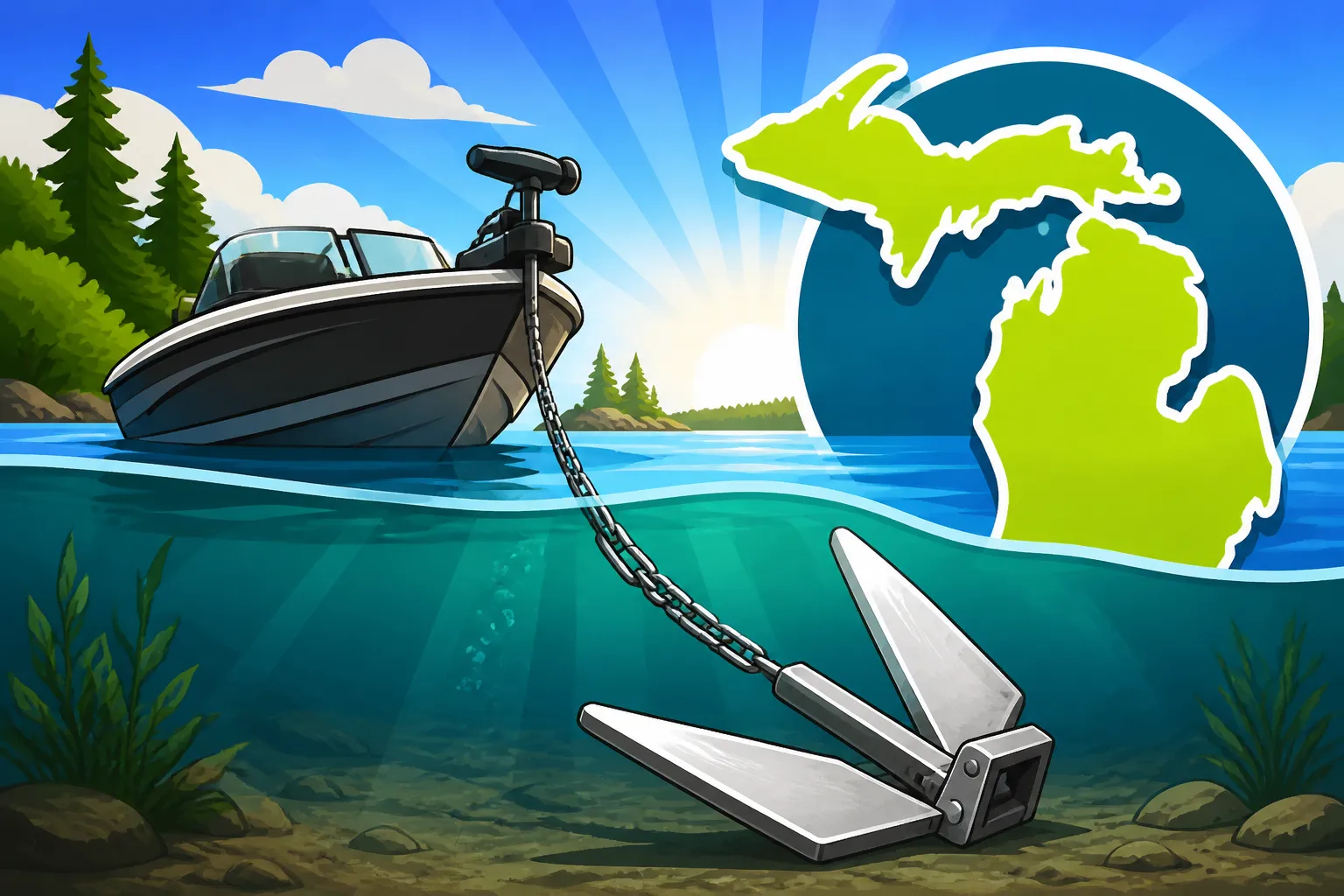
The chain section, often overlooked by newer anglers, is absolutely critical. It provides weight along the first few feet of your rode, helping the anchor fluke lie flat and dig in. It also offers abrasion resistance against sharp rocks or debris on the lake bed. After the chain, your anchor line (rope) should be long enough to provide a proper scope – typically a 5:1 to 7:1 ratio of rope length to water depth, plus your boat's freeboard. This angle is what allows the anchor to set properly and hold its grip. Don't forget a secure attachment point on your boat, like a cleat, and a safe storage spot for your anchor when not in use. Safety is paramount; imagine your anchor getting tangled or dragging while you're trying to navigate busy waters near Best Boat Launch Ramps Near Lake Michigan.
Popular Anchor Types for Michigan Lake Fishing
Michigan's diverse lakes, from the shallow, sandy bottoms of some inland gems to the vast, sometimes muddy, expanses of the Great Lakes bays, mean that no single anchor type is truly a "one size fits all" solution. However, several designs have proven themselves reliable for typical lake fishing scenarios. Let's explore the most common ones you'll see on the water.
Fluke Anchors (Danforth Style)
The fluke anchor, often referred to as a Danforth, is arguably one of the most popular anchor types for lake fishing and smaller recreational boats. It's characterized by its two broad, flat flukes that pivot and dig deep into soft bottoms like sand, mud, or even clay. The design allows it to bury itself, creating excellent holding power for its weight.
I've personally relied on a good fluke anchor for countless hours on Michigan's inland lakes. On a calm day on Lake St. Clair, holding over a smallmouth bass bed, or when setting up for perch on Lake Erie's Michigan waters, a fluke anchor usually does the trick. It's relatively lightweight for the amount of hold it provides, making it easier to deploy and retrieve manually, which is a huge plus if you're constantly moving from spot to spot. However, their weakness lies in rocky or heavily vegetated bottoms. Those broad flukes can't grip irregular surfaces effectively and tend to get snagged in thick weeds. If you find yourself in an area with a lot of heavy rock or debris, a fluke anchor can become more of a liability than an asset, frustrating you with endless snagging and re-sets. You'll often find these readily available at any local outfitter or through online retailers like Amazon.
Mushroom Anchors
Mushroom anchors are simple, often inexpensive, and primarily designed for soft, muddy bottoms. They look exactly as their name implies: a heavy, mushroom-shaped head. These anchors rely almost entirely on their weight and the suction created by their broad, concave base to hold a boat in place.
You'll most often see mushroom anchors used for very small boats, canoes, kayaks, or as permanent mooring anchors for things like swim rafts. For the average angler in a fishing boat, they are generally not recommended as a primary anchor due to their relatively poor holding power compared to their weight. If you're kayak fishing on a smaller, calm lake with a purely muddy bottom, a small mushroom anchor might suffice. However, if there's any wind, current, or a mixed bottom, it will likely drag. The beauty of them is their simplicity and how gentle they are on the bottom, rarely disturbing habitat. For serious fishing, especially on Best Fishing Boats for Michigan's Inland Lakes, you'll usually want something with more aggressive holding power.
Claw Anchors (Bruce Style) and Plow Anchors (Delta Style)
These anchor types are designed for versatility and excellent holding power across a wider range of bottom conditions. The "claw" (often referred to as a Bruce anchor) has a distinctive three-claw design that helps it grab and hold in various substrates, including mud, sand, and even some light rock or gravel. The "plow" (like the Delta anchor) works similarly, with a single, sharp fluke that's designed to dig in quickly and reset itself if the boat swings.
I've seen many anglers on larger boats and even those doing some Michigan's Great Lakes Fishing Guide swear by these. They offer consistent performance in varied conditions, which is fantastic when you're exploring new areas of a lake and aren't sure exactly what's beneath you. Their heavier construction and self-setting capabilities make them a strong choice, particularly for larger fishing boats that need a more robust hold. The main downsides are their larger size and weight, which can be cumbersome on smaller boats, and their tendency to be more expensive. However, if you're dealing with a boat over 20 feet or frequently encounter shifting bottom types, the investment can be well worth it for the peace of mind they provide. You can find high-quality options at places like Bass Pro Shops.
Grapnel Anchors
Grapnel anchors feature multiple thin, sharp flukes that can fold up for compact storage or spread out to grab onto rocks, coral, or other irregular bottom features. These are typically smaller, lighter anchors.
These anchors are a favorite among kayakers and small boat anglers. If you're in a canoe or Best Kayak for Michigan Lake Fishing, fishing a rocky shoreline or an area with a lot of submerged structure, a grapnel can be very effective at snagging onto something and holding you in place. The folding design is super convenient for transport and storage in a compact vessel. However, they aren't designed for digging into soft bottoms like mud or sand; their narrow flukes will just drag. They can also get notoriously snagged in heavy cover, and while some are designed to bend open under extreme pressure to free themselves, it's not a guarantee. They are a specialized tool for specific situations, not a general-purpose lake anchor for most powerboats.
Factors to Consider When Choosing Your Lake Anchor
Choosing the best anchor isn't just about picking a type; it's about matching the anchor to your specific boat, fishing style, and the typical conditions you'll encounter on Michigan's lakes. Neglecting these factors can lead to an ineffective and frustrating anchoring experience. Let's break down the critical elements that should guide your decision.
Boat Size and Weight
This is perhaps the most fundamental consideration. A small kayak or jon boat requires a very different anchoring solution than a 20-foot bass boat or a large pontoon. Heavier boats have more inertia and are more susceptible to wind and waves, requiring an anchor with significantly more holding power. Conversely, an oversized anchor on a small boat is just unnecessary weight and hassle.
If you're running a smaller craft, say a 12-foot aluminum boat with a modest What Size Motor for a Fishing Boat on Inland Lakes, a lightweight fluke or even a heavy mushroom anchor might be perfectly sufficient for calm days. However, if you're in a larger vessel, perhaps one of the Best Fishing Boats for Michigan's Inland Lakes, you'll need something more substantial, likely a larger fluke, a plow, or a claw anchor. Always check the manufacturer's recommendations for anchor size based on your boat's length and displacement. It's a critical safety measure, especially if you get caught in unexpected weather on a larger lake.
Lake Bottom Composition
Michigan's lakes offer a fascinating array of bottom types: soft mud, loose sand, gravel, rocky shoals, and even dense clay. The effectiveness of an anchor is largely determined by how well its design interacts with the bottom it's trying to grip. Knowing what's under your boat is key.
- Soft Mud or Silt: This is where fluke anchors (Danforth) truly shine, digging deep and creating impressive suction. Mushroom anchors also work here, relying on suction and weight.
- Sand: Fluke anchors are excellent in sand, as are plow and claw anchors, which can bury themselves effectively.
- Gravel or Small Rocks: Plow and claw anchors tend to perform best here, as their designs allow them to find purchase among the loose stones. Fluke anchors might struggle to set firmly.
- Heavy Rock or Boulders: Grapnel anchors can sometimes "snag" onto crevices, but these bottoms are generally challenging for any anchor. It's often safer to use a lighter anchor that can be easily dislodged, or better yet, avoid anchoring in such areas if possible.
- Heavy Weeds/Vegetation: Most anchors will have trouble here. They tend to just drag through the weeds without setting. Some specialized "weed anchors" exist, but often, the best strategy is to look for clear spots or use a spud pole in shallow water if available.
Before you drop anchor, consider scouting with your fish finder to get a sense of the bottom composition. It can save you a lot of headache!
Wind, Current, and Wave Conditions
Even on a seemingly placid Michigan lake, conditions can change rapidly. A gentle breeze can quickly become a stiff wind, and passing boat traffic can create significant wakes. Your anchor needs to be able to hold your boat securely against these forces.
- Wind: Wind is a primary force affecting your boat's drift. The more surface area your boat has exposed to the wind (think pontoon boats or those with high cabins), the more windage it will have, requiring a stronger anchor.
- Current: While inland lakes generally have less current than rivers, some connecting channels or larger lakes can have noticeable flows. A good river anchor, often a heavier pyramid or box anchor, is designed to hold against current, but for most lakes, the current is less of a factor than wind. However, it's wise to consider it, especially if you're fishing near an inlet or outlet. This is a point where comparing to Best Anchor for River Fishing can highlight the different priorities.
- Waves/Chop: Waves and chop, whether from wind or boat traffic, create surge and pull on your anchor rode. A good anchor system will absorb these forces without breaking free. This is where proper scope (the ratio of rode length to depth) becomes critical, as it allows the rode to stretch and absorb shock rather than pulling the anchor straight up.
Always err on the side of caution. If there's any doubt about conditions, choose a slightly larger anchor or one known for superior holding power. It's better to be slightly over-anchored than dragging.
Storage and Retrieval Considerations
Let's face it, no one wants to wrestle with a massive, muddy anchor every time they move fishing spots. Practicality and ease of use are important factors, especially if you're fishing solo or in a smaller boat.
Larger, heavier anchors like plow or claw types can be a real pain to pull up by hand, especially after a long day of fishing. This is where anchor winches or electric windlasses become incredibly appealing, though they add cost and complexity. For most lake anglers, a balance between holding power and manageability is key. Fluke anchors, being lighter for their holding power, are often a good compromise. Grapnel anchors, with their folding flukes, are fantastic for compact storage in tight spaces, making them popular for kayaks and canoes.
Consider where the anchor will be stored when not in use. Will it fit in a locker, or will it be rattling around on the deck? A clean, well-managed anchor system keeps your boat tidy and safe, preventing tripping hazards or damage to your deck. Many anglers also find having a small anchor retrieval ring and buoy system invaluable, especially for fluke or grapnel anchors that can get snagged.
| Anchor Type | Best for Bottom Type | Primary Use Case | Pros | Cons |
|---|---|---|---|---|
| Fluke/Danforth | Sand, Mud, Clay | General lake fishing, small-medium boats | Excellent holding power for weight, easy to deploy/retrieve. | Poor in rock/weeds, can snag in heavy cover. |
| Mushroom | Soft Mud, Silt | Kayaks, canoes, permanent moorings | Gentle on bottom, inexpensive, simple. | Very poor holding power for weight, prone to dragging in wind/current. |
| Plow/Delta/Claw | Sand, Mud, Gravel, Light Rock | Medium-large fishing boats, varied conditions | Versatile, self-setting, good holding across many bottom types. | Heavier, larger, more expensive, can be harder to retrieve manually. |
| Grapnel | Rock, Coral, Heavy Structure | Kayaks, canoes, small boats, temporary | Compact storage, good for snagging irregular bottoms. | Poor in soft bottoms, prone to getting irretrievably snagged. |
Maintenance and Best Practices for Your Lake Anchor System
Your anchor system is an investment in your fishing success and safety. Proper maintenance and smart usage practices will extend its lifespan, prevent headaches on the water, and ensure it's always ready when you need it. Ignoring these details can lead to frayed ropes, rusty chains, or worst of all, an anchor that fails precisely when you need it most.
Routine Inspection and Cleaning
After every outing, especially if you've been in muddy or silty areas, take a few minutes to rinse your anchor and chain thoroughly with fresh water. Lake mud can be surprisingly corrosive over time, and leaving it on can accelerate rust and wear. Check your anchor rode – both the rope and the chain – for any signs of chafing, cuts, or wear. Pay close attention to the splice where the chain meets the rope, as this is a common point of stress.
Look for bent flukes, loose components, or any other damage to the anchor itself. Even minor damage can compromise its holding power. If you notice any significant wear on your anchor line, it's a good idea to rotate it or replace the worn section. A weak spot in your rode is an open invitation for a lost anchor. Regularly checking these things ensures that your gear is always in top shape, much like how you'd check your Michigan Fishing Regulations Every Angler Should Know before hitting the water.
Proper Scope and Deployment Techniques
Getting your anchor to set properly isn't just about dropping it; it's about technique. The "scope" refers to the ratio of the length of your anchor rode (chain plus rope) to the depth of the water (plus the distance from the water to your bow roller, called freeboard). For most lake fishing, a 5:1 to 7:1 scope is recommended. This means if you're in 10 feet of water, you should deploy at least 50 to 70 feet of rode.
Here's a general deployment method:
- Motor slowly into the wind or current past your desired anchoring spot.
- Stop your boat and begin to lower your anchor gently to the bottom, don't just throw it.
- Allow your boat to drift backward naturally with the wind or current while feeding out the appropriate amount of rode. This helps the anchor lay flat and gives it a chance to set.
- Once the full scope is out, gently pull back on the anchor line to ensure the anchor is dug in. You should feel it "bite" and stop your boat.
- Secure the line to a sturdy cleat on your boat.
Using sufficient scope is critical. Too little scope means the anchor will be pulled at too steep an angle, causing it to skip or drag rather than digging in. It's a common mistake that leads to unnecessary drifting.
Safe Retrieval and Storage
Retrieving your anchor should also be done carefully. Motor slowly toward the anchor while pulling in the slack on the rode. Once you are directly over the anchor, pull straight up with steady pressure to free it from the bottom. Avoid yanking aggressively, which can damage your gear or even yourself. If it's truly stuck, try motoring in a circle around the anchor to change the angle of pull.
Once retrieved, always clean off any mud or weeds before bringing it fully aboard. Have a dedicated spot for your anchor and rode. A bucket or an anchor locker helps keep the mess contained and prevents the anchor from rolling around and potentially causing damage or injury. Remember, safe boating practices, including proper anchoring, go hand-in-hand with wearing Life Jackets and Michigan Boating Safety Rules.
By understanding the types of anchors available, considering your specific needs, and practicing good maintenance, you'll be well-equipped to choose the best anchor for your Michigan lake fishing adventures. No more drifting, just steady, enjoyable fishing.
Disclaimer
This article is for general informational purposes only and does not constitute professional advice. Laws, prices and regulations vary by location and change over time. Consult a qualified professional for guidance on your specific situation.