Best Rod Length for Centerpinning
Choosing the right centerpin rod length can feel like a daunting task, especially when you're standing in a tackle shop or scrolling online, faced with a dizzying array of options. Many anglers get frustrated trying to balance casting distance, drift control, and portability, often wondering if they're making the right investment for Michigan's diverse waters. This comprehensive guide will break down everything you need to know about selecting the best rod length for centerpinning, ensuring you pick a setup that truly enhances your time on the river, whether you're chasing steelhead or trout.
Why Rod Length is Crucial for Centerpinning Success
When you're out on a Michigan river with a centerpin setup, the length of your rod isn't just a number; it's a fundamental aspect of how effectively you can present your bait, control your drift, and ultimately, land fish. Unlike conventional spinning or baitcasting, centerpinning relies heavily on the rod's ability to keep your line off the water and guide your float downstream naturally. It's all about finesse and maintaining that perfect, drag-free drift.
The Impact on Line Control and Drift Management
A longer rod offers a significant advantage in line control. Imagine you're standing on the bank of the Manistee River, trying to guide your float through a series of currents and eddies. With a longer rod, you can hold more line off the water's surface, minimizing drag from conflicting currents and allowing your float to travel at the same speed as the water, mimicking a natural offering. This "mending" capability is paramount in centerpinning. Shorter rods, while perhaps easier to handle in tight quarters, force more line onto the water, making it harder to achieve those pristine, long drifts that often trick wary steelhead or trout. The subtle difference a few extra feet of rod can make in your ability to follow your float without introducing unnatural drag is truly remarkable. It’s the difference between your bait looking like a natural insect drifting downstream versus a parachute struggling against the current.
Casting Distance and Precision
While centerpin reels are fantastic for smooth, drag-free line release, the rod length plays a critical role in your casting distance and precision. A longer rod allows for a broader casting arc, which translates into greater distance with less effort. This is particularly useful on wider rivers like the Grand or the Muskegon, where reaching prime holding water might mean casting across substantial currents. Furthermore, the leverage provided by a longer rod aids in delicate presentations. You can gently lob a small spawn bag or bead into a tight pocket under an overhanging branch with more accuracy and less splash than you might with a shorter, stiffer rod. The extra length acts as an extension of your arm, giving you a finer touch and more control over where your offering lands and how it begins its journey downstream.
Fish Fighting and Fatigue
Another often-overlooked aspect of rod length is its effect on fighting fish and angler fatigue. A longer rod acts as a shock absorber, distributing the force of a powerful fish's runs and headshakes more evenly across the blank. This not only protects your lighter leaders from snapping but also helps to wear out the fish more efficiently. When a Michigan steelhead decides to make a blistering run, a longer rod's flex can absorb that initial surge, preventing a break-off. For the angler, the leverage provided by a longer rod can reduce strain on the arms and back during prolonged fights, especially with larger fish. However, there's a trade-off: extremely long rods can become cumbersome, particularly when trying to land a fish in close quarters or navigating thick riverside brush. It's a balance between having enough rod to control the fight and not so much that it becomes unwieldy.
Popular Rod Lengths for Centerpinning in Michigan
Michigan’s diverse waterways, from intimate trout streams to broad, sweeping steelhead rivers, call for a variety of approaches. This is especially true when it comes to centerpin rod lengths. What works perfectly on a narrow, brush-lined creek might be completely inadequate for a wide-open big river system. Understanding the common rod lengths and their ideal applications is key to building a versatile arsenal or choosing your first dedicated centerpin setup.
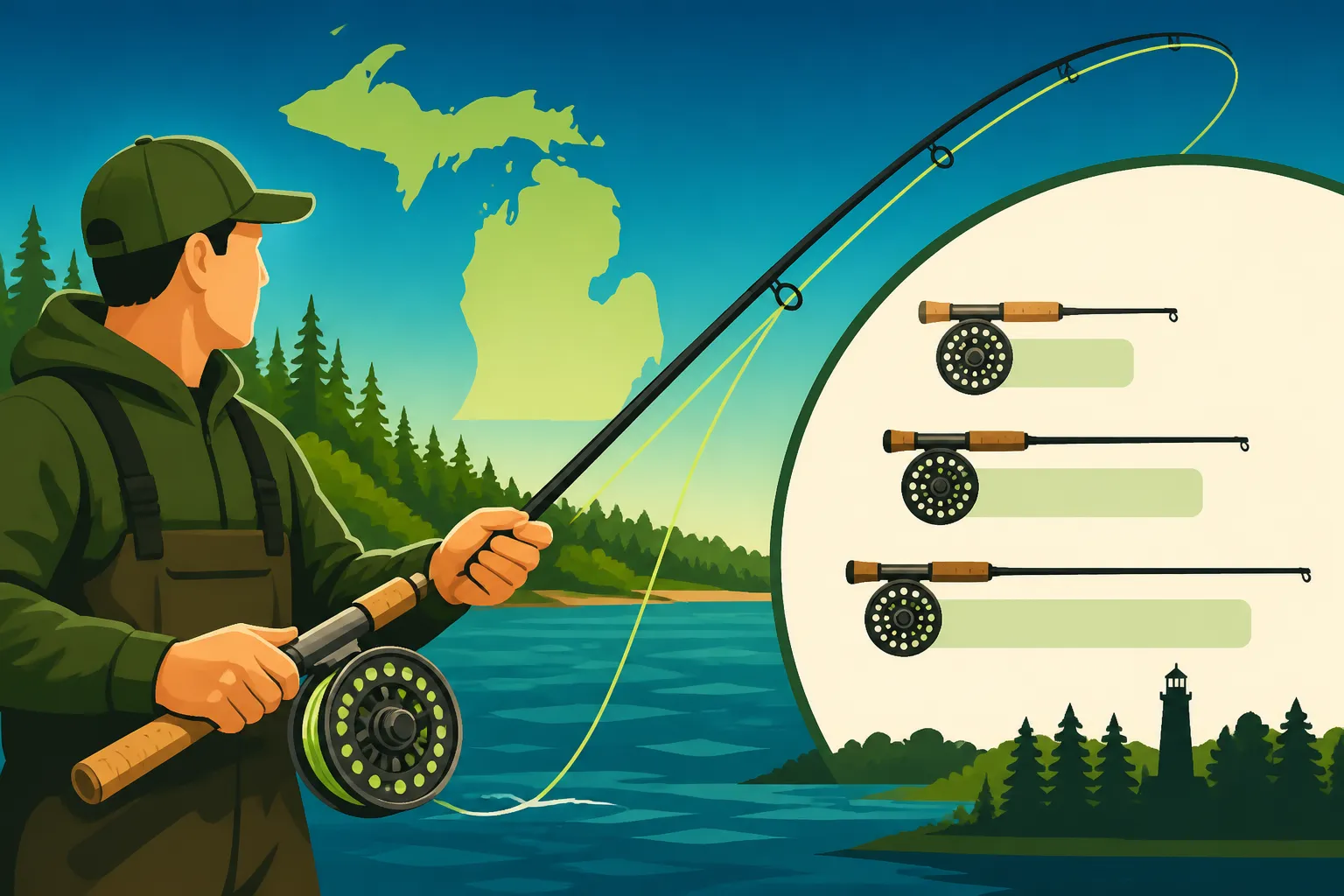
The Versatile 11-Foot Rod
An 11-foot centerpin rod is often considered a great starting point for many Michigan anglers, especially those just getting into the technique or fishing smaller to medium-sized rivers. It strikes a balance between manageability and capability.
- When to Use It: This length shines on rivers like the Boardman or sections of the Au Sable where the banks might be somewhat overgrown, or casting lanes are tighter. It’s easier to navigate through brush, cast under low-hanging branches, and handle fish in confined spaces. If you're often fishing from a boat or kayak where casting space is limited, an 11-foot rod offers better maneuverability. It's also less fatiguing to cast repeatedly throughout a long day.
- Pros: Good balance of casting distance and close-quarters handling. Easier to transport and store. Less arm fatigue. Excellent for smaller rivers or tight bank situations. Many anglers find this length ideal for learning the nuances of centerpin casting.
- Cons: Limited reach for mending line on very wide rivers. Might struggle to achieve the same drag-free drifts as longer rods in complex currents. Less leverage for fighting truly large, powerful fish in open water.
The All-Around 13-Foot Rod
For many dedicated centerpinners, the 13-foot rod is the sweet spot, a true workhorse that handles a vast majority of Michigan’s prime steelhead and salmon rivers. This is often the length you'll see recommended by veteran guides and anglers targeting migratory species.
- When to Use It: This is arguably the most versatile length for steelhead and salmon rivers across Michigan, including significant stretches of the Manistee, Muskegon, and Pere Marquette. It provides excellent line control for long, drag-free drifts, allowing you to cover extensive runs. The added length helps keep your line off the water, especially when dealing with complex currents or needing to cast a fair distance. If you're wading across the river, the extra reach is invaluable for guiding your float and setting the hook on a subtle bite. Many anglers find it to be the perfect compromise for Centerpinning for Michigan Steelhead.
- Pros: Excellent balance of line control, casting distance, and fish-fighting power. Very effective for longer, drag-free drifts on medium to large rivers. Good for wading, as it helps keep line off the water when casting across current. Generally still manageable for transport and bank fishing.
- Cons: Can be slightly cumbersome in extremely tight, brushy spots compared to an 11-foot rod. May still fall short on the absolute widest stretches of river, but these are rare.
The Long-Reach 15-Foot Rod and Beyond
When maximum line control and reach are your absolute priorities, the 15-foot or even longer centerpin rod enters the conversation. These are specialized tools for specific scenarios.
- When to Use It: You’ll typically see these longer rods on very wide rivers, or when anglers are fishing from a high bank, needing to reach out over a complex current seam far from shore. On waters like the lower St. Joseph River or stretches of the Grand River, where you might be making casts that cover a significant portion of the river's width, the 15-foot rod excels. It allows for unparalleled line control and the ability to mend your line with minimal effort, ensuring that perfect drift even at extreme distances. It's also fantastic for very long, slow drifts where any amount of surface drag would ruin the presentation. However, these rods require specific casting techniques and are not for the faint of heart or the beginner.
- Pros: Unmatched line control and mending capabilities over long distances. Maximizes drag-free drifts on wide rivers. Superior leverage for fighting very large fish in open water.
- Cons: Can be very difficult to handle in brushy areas. Transport can be a challenge. Requires more physical effort to cast all day. Not ideal for beginners, as the casting learning curve is steeper. Can be expensive.
| Rod Length | Ideal Michigan River Scenarios | Key Advantages | Potential Drawbacks |
|---|---|---|---|
| 11 Feet | Smaller streams, tight banks, boat fishing, new pinners | Manageable, less fatigue, good for tight spots | Limited reach on wide rivers, less mending power |
| 13 Feet | Most Michigan steelhead/salmon rivers, wading | Versatile, excellent line control, good casting | Can be tricky in dense brush |
| 15 Feet+ | Very wide rivers, high banks, extreme long drifts | Unmatched reach & line control, powerful fighting | Cumbersome, difficult transport, demanding to cast |
Factors to Consider When Choosing Your Rod Length
Selecting the absolute best centerpin rod length isn't a one-size-fits-all decision. What works beautifully for your buddy might not be the best fit for your fishing style or the specific waters you frequent. It's crucial to consider several personal and environmental factors to make an informed choice.
River Size and Bank Accessibility
The physical characteristics of the rivers you primarily fish are arguably the most significant determinant of rod length. Think about your typical fishing spots. Are you on smaller, intimate trout streams like sections of the Pere Marquette River, where wading is common and overhead cover is abundant? Or are you tackling larger, wider rivers like the lower Manistee or the St. Joseph, where long casts and extensive drifts are the norm?
- Small, Brushy Rivers: For rivers with heavy bankside vegetation, overhanging trees, and narrow runs, a shorter rod (11 to 12 feet) will be far more practical. It allows for easier casting in tight windows, maneuvering through brush, and landing fish without snagging your rod tip in a tree. Trying to wield a 15-foot rod in such conditions quickly becomes frustrating.
- Medium to Large Rivers: Most of Michigan's premier steelhead and salmon rivers fall into this category. Here, a 13 to 14-foot rod is often ideal. It provides the necessary reach for mending line over varied currents and achieving longer drifts without being overly cumbersome. These rods excel whether you're wading or fishing from an open bank.
- Very Wide Rivers or High Banks: If you're consistently fishing the widest stretches of rivers or from elevated positions like bridge abutments or high banks, a 15-foot or even 17-foot rod might be your best bet. The extra length gives you unparalleled control over your line and float, allowing you to make extremely long, drag-free drifts. However, be prepared for the added bulk and potential for fatigue that comes with such a long stick. Best Rivers for Trout and Steelhead in Michigan are all unique in this regard.
Target Species and Fighting Style
While centerpinning is largely associated with steelhead, you might also use it for large trout, salmon, or even walleye in specific situations. The species you target and your preferred fighting style can also influence your rod length choice.
- Steelhead and Salmon: These powerful, hard-fighting fish demand a rod with enough backbone and length to absorb their runs and provide leverage. A 13-foot rod is a fantastic all-around choice for Michigan Salmon Species Explained and steelhead, offering a good balance of sensitivity and power. If you’re regularly hooking into trophy Chinook salmon, a slightly longer, more powerful 14-foot rod might give you an edge in controlling those explosive runs.
- Trout: For smaller stream trout, an 11-foot rod can be perfect, offering a lighter touch and a more sporting fight. If you're chasing larger brown trout in wider rivers, a 12 or 13-foot rod provides more control for those longer drifts.
- Fighting Style: Do you prefer to aggressively fight fish, or do you let the rod do most of the work, wearing them down over time? A longer rod generally provides more shock absorption and can be more forgiving with lighter leaders, allowing you to apply steady pressure without risking a break-off. For anglers who prefer a softer, more subtle approach, the extra flex and leverage of a longer rod can be a huge asset.
Personal Preference and Physicality
Ultimately, a fishing rod is an extension of yourself. What feels comfortable and effective to one angler might feel awkward to another. Your height, strength, and even your preferred casting style play a role.
- Height and Reach: Taller anglers might find longer rods more natural to cast and handle, as their natural reach aligns better with the rod's length. Shorter anglers might initially feel overwhelmed by a 15-foot rod, struggling with overhead casting or simply maneuvering it around. It's not insurmountable, but it's a consideration.
- Casting Style: Some anglers prefer a more compact, snap-style cast, while others favor a slower, more deliberate pendulum or "dump" cast common in centerpinning. Longer rods often excel with the latter, leveraging their length to effortlessly propel the float and weight package. You might find that a visit to a local tackle shop or an outing with an experienced centerpinner (like those at Bass Pro Shops) to try different rod lengths can be incredibly insightful before making a purchase. You can also read user reviews on sites like Amazon to see what other anglers with similar builds or preferences are saying about specific models.
- Fatigue: Consider how long you typically fish. A very long or heavy rod can lead to significant arm and shoulder fatigue over a full day of casting, especially if you're making hundreds of casts. A slightly shorter, lighter rod might keep you on the water longer and more comfortably. It's often better to go with a rod you can comfortably fish all day than one that offers maximum reach but leaves you aching after a few hours.
Optimizing Your Centerpin Setup with the Right Rod
Once you've zeroed in on the ideal rod length, there are still a few other considerations to ensure your entire centerpin setup is perfectly harmonized. The rod is just one component; its performance is maximized when paired correctly with the right reel, line, and tackle.
Matching Rod Action and Power
Beyond length, a centerpin rod's action and power are critical. These terms describe how and where the rod bends, and how much force it takes to bend it.
- Action: This refers to where the rod bends. Most centerpin rods have a moderate-fast to moderate action.
- Moderate Action: These rods bend deeper into the blank, closer to the handle. They are excellent for absorbing headshakes, protecting light leaders, and are very forgiving when a fish surges. They also load up nicely for smooth, long casts.
- Moderate-Fast Action: These rods bend mostly in the upper half of the rod, offering a good balance of sensitivity and casting power. They are often preferred for quick hook sets and provide a bit more feel for subtle bites.
- Power (or Taper): This refers to the rod's lifting strength. Centerpin rods typically have a light to medium-light power. You need enough power to control and land large fish, but not so much that the rod is stiff and lacks the flex needed for finesse and line protection. A good centerpin rod will feel sensitive enough to detect subtle takes but have enough backbone to turn a big fish. Finding a rod with a good "through action" that loads well through the middle will give you the best of both worlds – sensitivity for the bite and power for the fight. This is especially important when you're using light leaders, as discussed in Best Line Weight for Michigan Steelhead.
Pairing with Your Centerpin Reel
The centerpin reel itself is a masterpiece of engineering, designed for ultra-smooth line payout. When choosing your rod, consider how the reel will balance.
- Balance Point: A well-balanced setup feels almost weightless in your hand, reducing fatigue. When you mount your centerpin reel, the rod should ideally balance slightly ahead of the reel seat. A rod that is too tip-heavy will feel cumbersome, while one that is too butt-heavy might hinder your casting action. Many modern centerpin rods feature adjustable reel seats or counterweights to help achieve this perfect balance. Don't be afraid to try a few different reels on your chosen rod at a store, or read reviews that discuss balance if purchasing online from a retailer like Amazon or Bass Pro Shops.
- Line Capacity: While the reel holds the line, the rod dictates how you manage it. Ensure your chosen reel has ample capacity for the specific line you plan to use. Most centerpin setups will use a monofilament mainline, often 8-12 lb test, with a fluorocarbon leader of 6-10 lb test, depending on the clarity of the water and the species you're targeting.
Float Selection and Weighting
The centerpin rod's length directly impacts your ability to effectively present floats and weight. Longer rods allow you to lift larger, heavier floats further out, extending your reach. They also give you better control over smaller, more sensitive floats used for finicky fish.
- Float Size: On bigger, faster rivers, you might need a larger float to provide sufficient buoyancy for your shot patterns. A longer rod makes it easier to cast and manage these larger floats.
- Shot Pattern: A well-distributed shot pattern is crucial for a natural drift. The length and action of your rod will influence how smoothly you can cast a weighted float and how sensitively you can detect subtle takes once it's in the water. Remember, the goal is for your bait to sink at the same rate as the current, and your rod's ability to facilitate a drag-free drift is paramount. Many seasoned anglers carry an assortment of floats to match changing river conditions, from tiny pencil floats to larger tear-drop styles, all of which benefit from a rod that allows precise placement and control.
Choosing the right centerpin rod length is a journey, often honed through experience on Michigan's beautiful rivers. By understanding the advantages of different lengths and considering your personal fishing style and target waters, you'll be well on your way to mastering the art of centerpinning and enjoying more success on the water.
Disclaimer
This article is for general informational purposes only and does not constitute professional advice. Laws, prices and regulations vary by location and change over time. Consult a qualified professional for guidance on your specific situation.