Best Tackle Box Setup for Michigan Anglers
It's a familiar scenario for many Michigan anglers: you've planned your fishing trip down to the minute, checked the weather, and picked the perfect spot on a beautiful Michigan lake or river. You arrive, full of anticipation, and open your tackle box only to find a chaotic jumble of lures, rusty hooks, and tangled lines. Instead of fishing, you're excavating. This guide is designed to prevent that frustration, offering a comprehensive walkthrough of the best tackle box setup for Michigan anglers, ensuring your gear is organized, accessible, and ready for action, no matter what Michigan's diverse waters offer.
Understanding Michigan's Diverse Waters and Target Species
Michigan is truly an angler's paradise, but it's also a state of incredible ecological diversity. From the immense, often temperamental Great Lakes to thousands of intimate inland lakes and a network of winding rivers, the fishing environments here vary wildly. What might be the perfect setup for chasing smallmouth bass on Lake St. Clair will likely be completely inadequate for targeting brook trout in a clear Upper Peninsula stream. Therefore, your tackle box shouldn't just be a random collection of gear; it needs to be a strategic selection that reflects this stunning variety, ready for anything from a trophy muskie to a subtle panfish. Before even thinking about individual lures, understanding the arenas you'll be fishing and the species you'll encounter is the first step to building a truly effective tackle setup.
Great Lakes Challenges and Opportunities
Fishing the Great Lakes—Lakes Michigan, Huron, Superior, and Erie—is an experience unlike any other. These are vast, powerful bodies of water that can change dramatically in an instant, influenced by sudden weather shifts, significant depths, and strong currents. Here, anglers are often targeting larger, more powerful species like Chinook and Coho salmon, lake trout, and hefty walleye. Catching these fish typically demands robust, heavy-duty gear, specialized lures designed for open water and deep presentations, and sometimes even sophisticated boat electronics to locate schools and structure. You absolutely wouldn't want to be battling a magnificent king salmon with gear meant for panfish; the scale of the fight demands tackle that can withstand immense pressure and abuse.
The opportunities for truly world-class fishing on the Great Lakes are immense, but so are the demands placed on your equipment. When trolling offshore for salmon and lake trout, for example, you'll need a collection of deep-diving crankbaits, heavy spoons, and strong braided lines, often deployed with downriggers or planer boards to cover vast areas and reach specific depths. If you're fishing from a pier on Lake Michigan, the tackle shifts to heavy casting spoons and beefier rods that can punch a lure through strong winds and waves. The challenge here is to strike a balance between carrying enough robust tackle for diverse Great Lakes conditions and maintaining portability, especially if you alternate between boat and shore fishing. Remember, your tackle for trophy walleye in Lake Erie might differ significantly from what you use for deepwater lake trout in Lake Superior, highlighting the micro-environments within these colossal waters. For a deeper dive into these waters, be sure to check out Michigan's Great Lakes Fishing Guide.
Inland Lakes and Rivers: Variety is Key
Stepping away from the Great Lakes, Michigan's inland waters present a breathtakingly diverse landscape for anglers. Picture the expansive, weed-choked flats of Houghton Lake, brimming with walleye and northern pike, contrasted with the gin-clear, cold waters of a trout stream like the Au Sable River, where delicate presentations are key. In these environments, your focus might shift from brute strength to finesse, precision, and adaptability. You could be sight-fishing for aggressive smallmouth bass around rocky structure, quietly drifting a worm under a bobber for bluegill in a serene cove, or meticulously presenting a tiny fly to a wary brown trout in a riffle. Each of these scenarios calls for a distinct approach and, consequently, a unique selection of tackle.
Michigan's inland lakes themselves are incredibly varied. Some are relatively shallow and fertile, with abundant weed beds that serve as prime habitat for largemouth bass, northern pike, and panfish. Here, lures like weedless frogs, spinnerbaits, and soft plastics are often the ticket. Other lakes are deep, cold, and oligotrophic, holding suspended walleye, perch, or even lake trout, requiring jigs, vertical presentations, or specific crankbaits. Rivers, too, possess their own distinct personalities; a fast-flowing, rocky steelhead river will demand different terminal tackle and weights compared to a sluggish, muddy river known for its catfish and carp populations. Your tackle box for these varied inland waters needs to be a miniature, highly adaptable arsenal, allowing you to quickly switch gears to match changing conditions, target different species, or explore new spots. Having dedicated, smaller trays or utility boxes within your main setup, specifically tailored for these varied environments, is an excellent strategy. If you're keen on exploring trout streams, our guide on Michigan Trout Species Explained can help you prepare.
The Foundation: Choosing the Right Tackle Box or System
Before you even begin to agonize over which specific lures to pack, you need to think critically about the vessel that will house your precious gear. Your tackle box isn't just a simple container; it's your mobile command center for fishing expeditions. The right choice will organize your tackle efficiently, protect it from the elements, and make it effortlessly accessible when you need it most. Conversely, an ill-suited or disorganized setup will lead to endless frustration, lost fishing time, and potentially damaged equipment. Consider your typical fishing routine: do you trek through dense woods to reach remote streams, spend hours trolling on a large boat, or primarily cast from the comfortable confines of a pier or shoreline? Your choice of tackle storage should perfectly align with your fishing habits and environment.
Traditional Hard-Sided Boxes vs. Soft-Sided Bags
The classic, hard-sided tackle box is a nostalgic image for many, often evoking memories of childhood fishing trips. These boxes are generally very durable, offering robust protection for delicate lures and other contents, and frequently feature built-in, flip-out trays that provide a decent level of organization and easy access to common items. They excel at keeping your gear secure and relatively dry, making them a solid choice for use in a boat, on a dock, or when shore fishing where your gear might be exposed to splashes. However, they do come with some limitations. They can be quite bulky, and once their fixed compartments are full, your options for customization are severely restricted. You might find yourself rummaging through multiple layers of gear just to find that one specific hook or weight. These traditional boxes are often best suited for anglers who primarily engage in one type of fishing and have a consistent, unchanging gear setup.
In contrast, soft-sided tackle bags have surged in popularity, and for very compelling reasons. These bags are typically lighter, more flexible, and their primary advantage lies in their superior modularity and adaptability. Most soft tackle bags are intelligently designed to accommodate multiple individual utility boxes (commonly referred to by their size, such as 3600 or 3700 series boxes). This allows you to create specialized setups: one utility box for your "bass lures," another for "walleye jigs," and perhaps a third for "trout terminal tackle." You simply grab the specific box or boxes you need for your day's fishing, leaving the rest at home. Soft bags also often feature an abundance of external pockets, tool holders, and D-rings, perfect for stashing items you need instant access to, such as pliers, line cutters, or a measuring tape. Leading outdoor retailers like Bass Pro Shops offer a vast selection of these versatile soft bags, available in various sizes and configurations to suit any angler's needs. They are an excellent choice for the angler who fishes diverse waters and values the flexibility to tailor their gear on the fly without having to repack an entire tackle box every time.
Modular Systems and Customization
This is where the true genius of soft-sided tackle bags, and the concept of modularity in general, truly comes to life. A well-implemented modular system liberates you from being locked into a single, rigid gear arrangement. Instead, you can dedicate specific utility boxes to different categories, whether it's by lure type (e.g., crankbaits, jigs, soft plastics), by target species (e.g., walleye, bass, panfish), or even by particular fishing techniques. Imagine having one utility box meticulously organized with everything you need for your Michigan Walleye Fishing Techniques, from specific jig heads and plastic trailers to crankbaits and spinner rigs, and another entirely dedicated to your steelhead river essentials, complete with various beads, spawn bags, and appropriate weights. This level of intentional organization is a game-changer, saving you valuable time on the water that would otherwise be spent searching.
To maximize efficiency, many seasoned anglers take the extra step of clearly labeling their utility boxes. A simple permanent marker or adhesive label on the outside of each box indicating "Bass Topwaters," "Walleye Jigs," or "Salmon Spoons" makes it incredibly easy to grab precisely what you need, even in challenging conditions or low light. Beyond the main utility boxes, leverage the external pockets and features of your soft bag. These are ideal for quick-access items that don't fit neatly into a utility box, such as a sturdy pair of fishing pliers, a precise line cutter, a small first-aid kit, or your fishing license. Some advanced bags even boast waterproof phone pockets or integrated rod holders, adding further convenience. The overarching principle is to anticipate your typical fishing day and optimize your tackle access accordingly. You can find a huge variety of individual utility boxes and organizational inserts on Amazon to build out and customize your perfect modular system.
Essential Gear for Every Michigan Angler
Regardless of the specific fish you're targeting or the particular body of water you're casting into in Michigan, there exists a fundamental collection of items that should always reside within your tackle box. These are the unsung heroes of a successful fishing trip – the tools and essentials that prevent frustrating snags, ensure safe fish handling, and allow you to keep fishing effectively when minor issues arise. Consider these items your basic survival kit for angling adventures; without them, even the most expensive lures can be rendered useless, and a small problem can quickly escalate into a trip-ending headache.
Basic Hand Tools and Safety Items
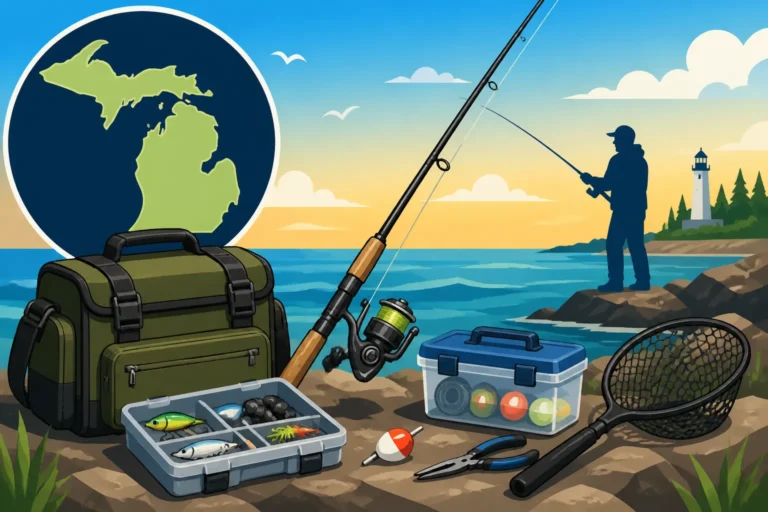
Every angler, from the seasoned pro to the weekend warrior, needs a few reliable tools at their disposal. Foremost among these is a high-quality pair of multi-purpose fishing pliers. Look for a pair with a comfortable, ergonomic grip, capable jaws for removing stubborn hooks, and an integrated line cutter that can cleanly slice through both monofilament and increasingly popular braided lines. Attempting to bite through braided line with your teeth is not only ineffective but also a surefire way to damage your teeth! Equally crucial are a pair of sharp line clippers or small fishing scissors. Furthermore, a hook sharpener is an often-overlooked but invaluable addition. Even brand-new hooks can benefit from a quick touch-up, and razor-sharp hooks are absolutely paramount for ensuring solid hooksets and ultimately, landing more fish.
Beyond the essential tools, your personal safety should never be an afterthought. A compact, well-stocked first-aid kit is an absolute must. Minor cuts, scrapes, and punctures from hooks are an inevitable part of fishing, and having band-aids, antiseptic wipes, and pain relievers readily available can prevent a small injury from derailing your day. Protecting yourself from the elements is also vital: sunscreen and insect repellent are non-negotiables, especially during Michigan's warm and bug-filled spring and summer months. A small headlamp or flashlight can be a lifesaver if your fishing extends into dusk or requires an early morning start before the sun rises. And, if you plan on keeping your catch within Michigan Bag and Size Limits Explained, remember to have a sturdy stringer or a cooler filled with ice to properly preserve the fish.
Line, Leaders, and Terminal Tackle Essentials
Your fishing line serves as the crucial, direct connection between you and the fish, making the right selection and having backup options absolutely critical. Most Michigan anglers will greatly benefit from carrying at least two primary types of line: a general-purpose monofilament, valued for its forgiving stretch and ease of knot-tying, and a high-performance braided line, prized for its exceptional strength, minimal stretch (which translates to incredible sensitivity), and superior casting distance, especially when fishing larger waters or targeting heavier species. Many will also wisely carry a spool of fluorocarbon leader material. This material is nearly invisible underwater, making it ideal for stealthy presentations to wary fish, and its superior abrasion resistance is invaluable when fishing around rocky structures or timber. Consider carrying varying breaking strengths to match different techniques and target species; for instance, 6-10lb test for panfish and trout, 10-20lb for bass and walleye, and 20lb+ for powerful salmon and pike.
Terminal tackle refers to the myriad of small but vital components you attach to the end of your fishing line, and while the options are vast, some items are universally essential. A diverse selection of hooks in various sizes and styles (such as J-hooks, circle hooks, and treble hooks) is non-negotiable. These will cover your needs for live bait, soft plastic presentations, or even replacing rusted or dull treble hooks on your favorite lures. An assortment of sinkers and weights is equally critical, ranging from tiny split shots for finesse applications to heavier bell sinkers needed for fishing in strong currents or reaching significant depths. Swivels and snaps are also key components, as they help prevent annoying line twist and allow for quick, efficient lure changes, saving you precious fishing time. Never compromise on the quality of your terminal tackle; cheap components are a leading cause of lost fish and can lead to endless frustration on the water.
Species-Specific Setups for Popular Michigan Fish
Michigan's angling scene is incredibly vibrant and diverse, offering a multitude of targets that each demand a tailored approach. A "one-size-fits-all" tackle box will simply fall short if you're serious about consistently catching specific species. While your essential tools and general terminal tackle remain constant, the selection of lures, baits, and specialized rigging will vary dramatically depending on whether you're enticing a subtle walleye, battling a powerful salmon, or tempting a hard-fighting bass. This is precisely where your modular tackle system proves its worth, enabling you to hand-pick and pack only the gear relevant to your day's intended adventure, optimizing your readiness for whatever finned challenge awaits.
Walleye and Perch Prowess
Walleye and yellow perch stand as two of Michigan's most beloved and sought-after game fish, found in abundance across vast waters like Saginaw Bay, numerous prolific inland lakes such as Houghton Lake, and even productive rivers like the Detroit River. For walleye, a well-prepared tackle box will feature a strong and varied selection of jigs, commonly tipped with live bait such as minnows or leeches, or enhanced with realistic soft plastic trailers. Quarter-ounce to half-ounce jig heads in both high-visibility colors (like chartreuse and orange) and more natural hues (such as black, brown, and green pumpkin) are an excellent starting point. Crankbaits are equally lethal, especially when trolling or casting in shallower waters or at specific depths. Consider carrying a range of sizes and diving depths to cover various conditions, from shallow-running models for low light or weed tops to deep divers for targeting suspended fish. Blade baits and spinner rigs, particularly those equipped with crawler harnesses, are also highly effective, especially in areas with current or when covering large expanses of water. Always include an assortment of appropriate weights and hooks specifically for live bait rigging to maximize your chances. For even more specific recommendations, our guide on Best Bait for Michigan Walleye offers fantastic insights.
Yellow perch frequently inhabit similar waters to walleye, and much of your tackle can overlap, though generally in smaller dimensions. For perch, tiny jigging spoons, small lead-head jigs (ranging from 1/16 to 1/8 ounce) often tipped with a piece of nightcrawler or a small minnow, and traditional bobber rigs are exceptionally effective. You'll want to use small, panfish-sized hooks (typically #8 to #12) to accommodate their proportionally smaller mouths. Perch are schooling fish, so once you locate a concentration, having quick and easy access to a variety of small, enticing baits is key to continuous action. Keeping a separate, compact utility box entirely dedicated to panfish, stocked with various small hooks, bobbers, and tiny jigs, can significantly streamline your fishing experience and prevent you from rummaging through your larger walleye gear.
Salmon and Steelhead Strategies
Michigan's Great Lakes and their numerous tributary rivers are globally recognized for their spectacular salmon and steelhead runs. Anglers who target the powerful Chinook, acrobatic Coho, and tenacious Atlantic salmon, as well as the migratory rainbow trout known as steelhead, will require a distinct and robust tackle setup. For fishing the vastness of the Great Lakes themselves, trolling is a predominant and highly effective method. This technique necessitates a comprehensive collection of heavy-duty spoons (such as familiar names like Little Cleo or Dardevle), plugs, and versatile flasher/fly combinations, all in various colors and sizes. These are often deployed at specific depths using downriggers or out to the sides with planer boards. These offshore lures are typically larger and heavier than those used in inland waters, specifically designed to attract powerful, fast-swimming fish in expansive open water environments. Having heavy-duty snap swivels and strong leader material (like 20-30lb fluorocarbon) is absolutely essential to withstand the brutal strikes and fights these fish deliver. To master this technique, delve into Trolling for Chinook Salmon on Lake Michigan.
When these magnificent fish transition from the Great Lakes into the rivers for their spawning migrations, the required tackle undergoes a significant shift. River anglers pursuing steelhead and salmon heavily rely on precision drift fishing techniques using natural baits like salmon eggs (often presented in mesh spawn bags), realistic beads that mimic individual eggs, and small marabou jigs. A varied collection of diverse beads in multiple sizes and colors (pinks, oranges, natural roe hues) is a must-have, alongside an assortment of small, exceedingly sharp hooks (typically #6 to #12 octopus hooks) and split shots or pencil weights for achieving the perfect drift. Fly anglers, of course, will carry an entirely separate fly box, meticulously stocked with various egg patterns, stoneflies, nymph patterns, and streamer patterns. It's often practical to organize these river-specific items in a compact, waterproof box that can be easily carried on your person while wading through swift currents, ensuring mobility and quick access. For detailed guidance on river techniques, our article How to Fish for Steelhead in Michigan is invaluable.
Bass and Pike Pursuits
For both the hard-fighting largemouth and smallmouth bass, as well as the aggressive northern pike, Michigan offers truly fantastic action in a wide array of inland lakes and rivers. Bass anglers will need a diverse arsenal of lures to cover various conditions and fish behaviors. For largemouth bass, an extensive collection of soft plastics—including creature baits, stick worms (like senkos), and plastic worms—is vital, rigged in various weedless styles such as wacky, Texas, or Carolina rigs. Topwater lures, such as frogs, poppers, and walking baits, provide thrilling strikes, particularly in shallow, weedy areas or during low light conditions. Crankbaits, spinnerbaits, and chatterbaits effectively round out a solid selection for covering water, enticing strikes, and targeting fish at different depths and structures. Smallmouth bass, which are often found in clearer, rockier waters or even the sprawling Great Lakes like Lake St. Clair, respond exceptionally well to tube jigs, Ned rigs, drop shot presentations, and smaller crankbaits that accurately imitate baitfish.
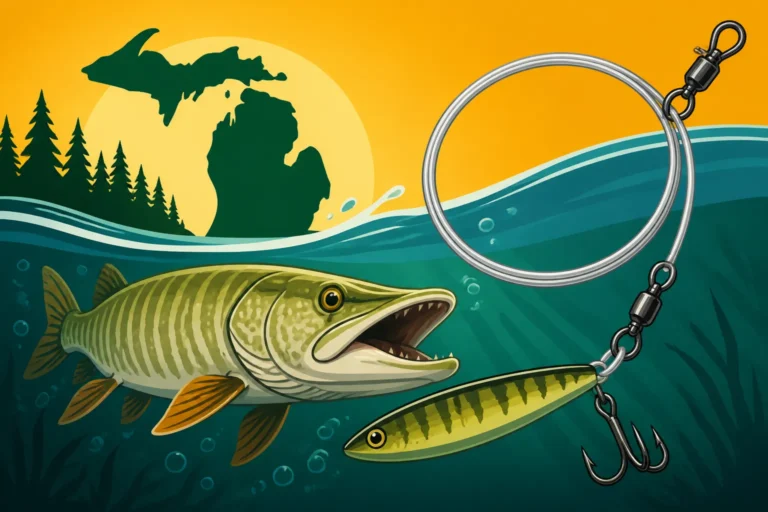
Northern pike are apex predators known for their aggressive strikes and razor-sharp teeth, and your tackle selection for them must reflect this. Large spinnerbaits, flashy spoons, erratic jerkbaits, and realistic swimbaits are all excellent choices for triggering a bite. Crucially, because of their formidable dentition, you absolutely must employ steel or heavy fluorocarbon leaders on all your pike presentations to prevent instant bite-offs. Without a proper leader, you'll be inadvertently donating a considerable number of expensive lures to the local pike population. It's a smart strategy to dedicate a separate compartment or utility box specifically for these larger, tooth-proof lures and your necessary leaders. Remember, pike can frequently be found in similar habitats to largemouth bass, particularly in weedy bays and shallow flats, so there can be some beneficial overlap in your general search patterns and area selection. For similar toothy challenges, exploring Best Lures for Muskellunge can provide additional insights into powerful predator fishing.
Organizational Strategies and Maintenance Tips
Having a perfectly stocked tackle box is undoubtedly a significant achievement, but it represents only half of the equation for sustained angling success. The equally critical second half involves consistently keeping that gear meticulously organized and in pristine working order. A chaotic, disorganized tackle box inevitably leads to wasted time, frustration, and potential damage to your expensive equipment, ultimately detracting from the pure joy of fishing. Moreover, diligently caring for your fishing gear ensures its longevity, saving you money in the long run by avoiding premature replacements. Cultivating good organizational and maintenance habits translates directly into more efficient time on the water and a far more enjoyable fishing experience.
Compartmentalization and Labeling
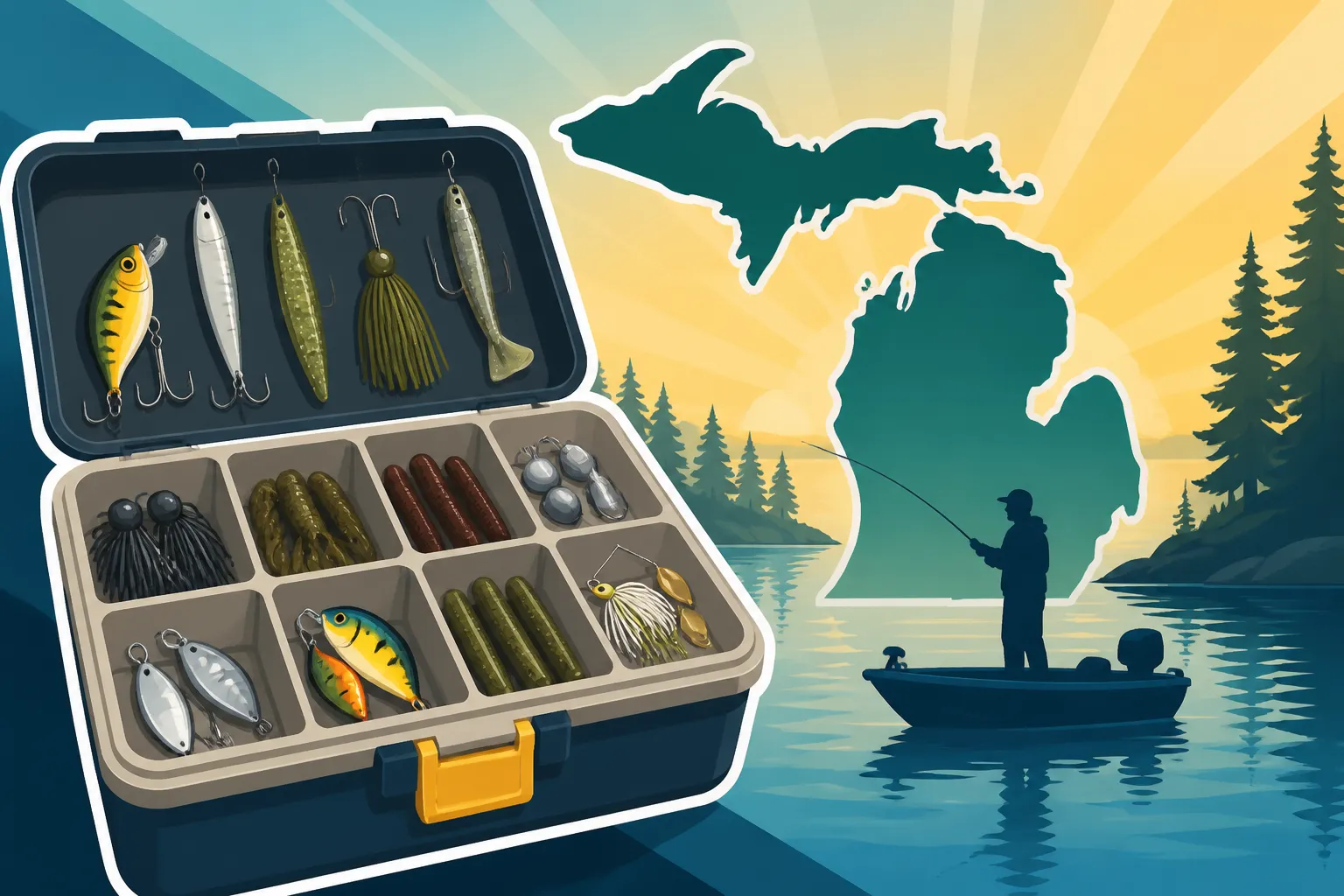
The true secret to an efficient and stress-free tackle box setup lies in intelligent compartmentalization. Regardless of whether you opt for a traditional hard-sided box with fixed trays or a modern soft-sided bag brimming with modular utility boxes, the principle remains the same: designate specific sections for specific types of tackle. For example, ensure all your crankbaits are neatly arranged in one dedicated box or tray, all your soft plastics in another, your jig heads in a third, and all your essential terminal tackle (hooks, weights, swivels, etc.) in a smaller, securely partitioned container. This systematic approach prevents hooks from tangling, keeps different types of soft plastics from melting or discoloring one another, and crucially, makes finding the exact item you need an instantaneous process. Many contemporary utility boxes feature adjustable dividers, offering the invaluable flexibility to customize compartment sizes to perfectly fit various lures and components.
Once you've meticulously compartmentalized your gear, the next critical step is to label everything! Utilize a permanent marker directly on the outside of your utility boxes (or apply durable adhesive labels) to clearly indicate their contents. Simple, descriptive labels like "Walleye Jigs," "Bass Soft Plastics," "Steelhead Beads," or "Terminal Tackle Misc." might seem like a small detail, but this seemingly minor act makes a monumental difference in efficiency, especially if you possess numerous boxes or are attempting to locate a specific item in challenging low-light conditions. For an even finer degree of organization, within each larger compartment, you can employ small, clear plastic bags or miniature containers to group similar items, such as all same-size hooks, different colors of split shot, or various styles of swivels. Amazon provides an incredibly vast selection of specialized storage solutions and labeling tools to help you achieve this meticulous level of organization.
Post-Trip Care and Seasonal Audits
Your fishing adventure isn't truly complete until your tackle box has been properly attended to and put away. After each outing, dedicate a few minutes to clean, dry, and reorganize your gear. This step is particularly vital if you've been fishing in environments with salt residue (which can occur in parts of the Great Lakes due to salinity or road salt runoff) or muddy waters. Thoroughly rinse any saltwater or dirt residue off your lures, ensuring they are completely dry before storage to prevent rust and corrosion. If soft plastics have gotten wet, allow them to air dry completely before returning them to their compartments, as moisture can sometimes cause them to "melt" or stick to other tackle over time. Neatly repack any loose items, and if you've heavily used a particular lure or depleted a specific type of terminal tackle, make a mental or physical note to restock it before your next trip.
Beyond routine post-trip care, it's highly advisable to conduct a comprehensive audit of your tackle box periodically, perhaps once per fishing season or immediately prior to a significant trip. This involves taking everything out, inspecting lures for any signs of rusted hooks or damaged split rings, checking spare spools of line for age, degradation, or sun damage, and discarding any items that are broken beyond repair. Immediately replace any rusted or dull hooks; a sharp, strong hook is an absolute non-negotiable for achieving solid hooksets and successfully landing fish. A seasonal audit is also an excellent opportunity to honestly reassess what gear you're actually using. If a certain lure hasn't seen the water in three seasons, consider donating it to a budding angler or re-evaluating if it genuinely aligns with your current Michigan fishing pursuits. This thorough review ensures your tackle box remains not just organized, but also fully functional and always battle-ready for your next adventure. Many reliable fishing suppliers, including Bass Pro Shops, are excellent resources for restocking and upgrading your tackle after an audit.
Disclaimer
This article is for general informational purposes only and does not constitute professional advice. Laws, prices and regulations vary by location and change over time. Consult a qualified professional for guidance on your specific situation.