Best Leader for Muskellunge Fishing
Trying to land a trophy muskellunge in Michigan only to have it slice through your line like butter with its razor-sharp teeth is a gut-wrenching experience no angler wants to endure. These apex predators are infamous for their aggressive strikes and powerful jaws, meaning your standard fishing line simply won't cut it. This guide will walk you through everything you need to know about choosing the best leader for muskellunge fishing, ensuring your line stays intact and your prized catch makes it to the net.
Why a Robust Leader is Non-Negotiable for Michigan Muskellunge
Muskellunge, often affectionately called "muskies," are without a doubt one of Michigan's most sought-after freshwater game fish. Their sheer size, aggressive nature, and elusive tendencies make them a true challenge for any angler. But what often catches new muskie anglers off guard is the sheer power of their bite and the devastating effect their dental work can have on inadequate fishing line. Without the right leader, you're practically guaranteeing a heartbreak story.
The Toothy Challenge: Understanding Muskie Anatomy
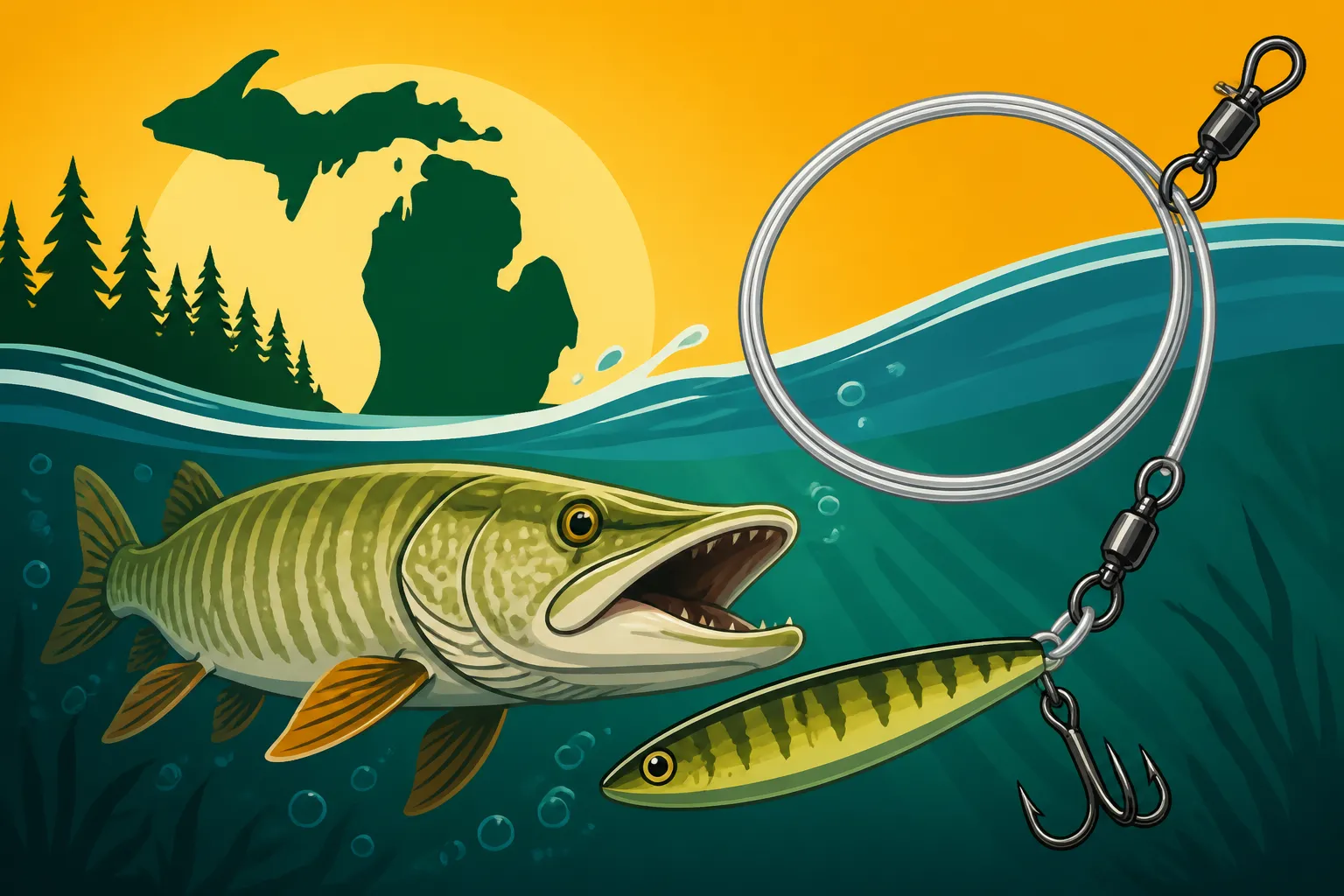
Imagine a fish with a mouth full of hundreds of needle-sharp teeth, capable of not just gripping prey but also tearing through tough scales and flesh. That's essentially what you're dealing with when a muskie strikes. Their mouths are not only large but also lined with an impressive array of sharp teeth designed for holding onto struggling prey. These teeth aren't just for show; they can easily sever monofilament or even braided line in a flash, especially during the violent head shakes and rolls that are characteristic of a muskie fight.
Beyond the initial strike, the teeth can cause abrasion and fraying during a prolonged battle, weakening your line significantly. Picture a large muskie thrashing boatside, its head twisting and turning, its powerful jaws clamping down repeatedly. Each contact with the line is a potential disaster. A standard leader used for bass or walleye fishing simply doesn't have the robust construction to withstand this kind of abuse. It's not about being unlucky; it's about being unprepared for a fish that is truly built for the hunt.
Protecting Your Investment: Lures and Line
Muskie fishing isn't just a passion; it's an investment. Many muskie lures can cost a pretty penny, some easily running into double or even triple digits. Losing a high-end bucktail, a custom-painted jerkbait, or a favorite topwater plug to a bite-off is not just frustrating; it's an expensive lesson. A quality muskie leader acts as a crucial buffer, protecting your main fishing line from those sharp teeth and ensuring your expensive lure stays attached to your rig.
Think about it: you spend hours, maybe even days, casting, retrieving, and patiently waiting for that one explosive strike. When it finally happens, the last thing you want is to lose the battle due to a preventable line failure. A strong leader provides the necessary resistance, allowing you to confidently battle the fish without worrying about losing your entire setup. It gives you the peace of mind to focus on the fight, knowing your terminal tackle is secure. This is why seasoned muskie anglers always emphasize the importance of having a robust leader. You might also be interested in learning about Michigan Muskellunge Fishing Techniques.
Choosing the Right Leader Material for Muskie Success
When it comes to muskie leaders, you'll generally find three main types of materials: steel, fluorocarbon, and titanium. Each has its own distinct characteristics, and understanding their pros and cons is key to selecting the best option for your specific fishing style and conditions in Michigan's diverse waters like Lake St. Clair or Lake Hudson.
Steel Leaders: The Traditional Battle Armor
Steel leaders have been a staple in muskie fishing for a long time, and for good reason: they offer unparalleled bite protection. Made from various types of wire (stainless steel, piano wire, etc.), these leaders are virtually impervious to a muskie's teeth. They come in either single-strand or multi-strand (braided) configurations.
- Single-strand steel leaders are very rigid and offer maximum bite resistance. They're excellent for lures that don't require much action, like heavy jigs or sucker rigs. However, their stiffness can sometimes impede the natural movement of more subtle lures, and they can kink if bent too sharply. Once kinked, they should be replaced immediately, as their integrity is compromised.
- Multi-strand (braided) steel leaders are more flexible than single-strand options, offering better lure action while still providing excellent bite protection. They're often coated with nylon or plastic to reduce kinking and improve casting smoothness. These are a popular choice for bucktails and larger crankbaits.
The main drawback of steel leaders, particularly the uncoated versions, is their visibility. In clear Michigan waters, a shiny steel leader can be more easily seen by wary muskies, potentially leading to fewer strikes. However, in stained or murky water, this isn't as much of a concern. They're also prone to corrosion if not properly cared for, especially after saltwater exposure (though rare in Michigan, it's good practice to rinse all gear). You can find a wide variety of steel leaders, both pre-made and in bulk, at places like Bass Pro Shops or online retailers like Amazon.
Fluorocarbon Leaders: The Stealthy Powerhouse
Fluorocarbon has gained immense popularity in muskie fishing over the past couple of decades, striking an excellent balance between strength, abrasion resistance, and invisibility. Unlike steel, fluorocarbon has a refractive index very close to that of water, making it incredibly difficult for fish to see, especially in clear water conditions. This stealth factor can be a huge advantage when targeting pressured muskies or fishing in crystal-clear lakes like Torch Lake or Higgins Lake.
High-quality muskie fluorocarbon leaders are typically very thick, ranging from 80 lb to 150 lb test. Don't confuse this with the thinner fluorocarbon leaders used for bass or walleye; muskie fluorocarbon is a whole different beast. Despite being monofilament, its density and hardness provide substantial bite resistance, often enough to withstand the initial slash of a muskie. However, it's not entirely bite-proof like steel. If a muskie really grinds down on it or swallows the lure, a bite-off is still a possibility, particularly with lighter pound tests.
Fluorocarbon leaders are excellent for most muskie applications, especially when fishing jerkbaits, glide baits, and topwater lures where presentation and natural action are paramount. They cast smoothly and are less prone to kinking than steel. While more expensive than monofilament, their benefits often outweigh the cost.
Titanium Leaders: The Modern Hybrid Solution
Titanium leaders represent a more modern approach, combining the best attributes of steel and fluorocarbon. Made from nickel-titanium alloys, these leaders are incredibly strong, highly flexible, and remarkably resistant to kinking. They offer superior bite protection to fluorocarbon and are often less visible and more pliable than traditional steel leaders.
The biggest advantage of titanium is its "memory-free" characteristic; it can be bent and twisted without retaining kinks, making it incredibly durable and long-lasting. This means you won't be replacing them as often due to kinks, which can save money in the long run despite their higher upfront cost. They also tend to be lighter than steel leaders of comparable strength.
Titanium leaders are an excellent all-around choice for muskie anglers who want top-tier performance without compromise. They handle a wide range of lures and techniques, from fast-retrieving bucktails to slow-gliding jerkbaits. If you're looking for a premium leader material that offers maximum confidence, titanium is hard to beat. Just like with fluorocarbon, ensure you're getting heavy-duty titanium leaders specifically designed for muskie.
Here's a quick comparison of the common muskie leader materials:
| Leader Material | Bite Protection | Visibility (in water) | Flexibility | Kink Resistance | Cost | Common Uses |
|---|---|---|---|---|---|---|
| Steel (Single-Strand) | Excellent | High | Low | Low | Low | Jigs, Sucker Rigs |
| Steel (Multi-Strand) | Excellent | Medium | Medium | Medium | Low | Bucktails, Crankbaits |
| Fluorocarbon | Good | Very Low | High | High | Medium | Jerkbaits, Glide Baits, Topwater |
| Titanium | Excellent | Low | Very High | Very High | High | All-around, High-Performance Lures |
Decoding Leader Specifications: Length, Strength, and Connections
Beyond the material, the physical specifications of your leader—its pound test, length, and how it connects to your main line and lure—are equally critical for successful muskie fishing. These factors directly influence both the leader's effectiveness in preventing bite-offs and how well your lure performs in the water.
Pound Test: Matching Your Leader to the Fight
The pound test of your leader refers to its breaking strength. For muskellunge, you generally want to err on the side of overkill because of their raw power and sharp teeth. Most experienced muskie anglers use leaders in the 80 lb to 150 lb test range, regardless of the material.
- 80-100 lb test fluorocarbon leaders are often used when extreme stealth is required in very clear water and for smaller to medium-sized muskie lures. While offering good protection, they require careful inspection after every fish or snag.
- 100-130 lb test is a very popular all-around choice for fluorocarbon and titanium, offering a great balance of bite resistance and manageability for most common muskie lures. This range provides ample strength for handling larger fish and more aggressive bites.
- 150 lb test and above is typically reserved for the largest, most aggressive lures, or when fishing in areas known for truly monstrous muskies. It provides maximum confidence but can be a bit stiffer and more cumbersome to work with.
It’s crucial to match the leader's strength not just to the fish, but also to your main line and rod. If you’re running 80 lb braided mainline, a 100 lb or 130 lb leader makes sense. The leader should be strong enough to withstand the muskie’s attack without being excessively heavy to the point where it negatively impacts lure action or casting distance. Always inspect your leader for nicks, fraying, or kinks after every fish, especially after a prolonged battle or if you’ve gotten snagged. A damaged leader is a ticking time bomb.
Leader Length: Balancing Protection and Presentation
The length of your muskie leader is more important than you might initially think. It's a balance between preventing bite-offs and ensuring your lure has a natural presentation.
- Short leaders (6-9 inches) are often used for smaller lures or when you need a very compact rig, but they offer less margin for error. A muskie's mouth is large, and a short leader might not prevent the fish from getting its teeth on your main line if it strikes aggressively or rolls during the fight.
- Medium leaders (10-14 inches) are the most common and versatile choice for general muskie fishing. This length provides enough protection to keep your main line safe from most muskie strikes and headshakes, while still allowing for good lure action and castability. It's a great starting point for most scenarios, whether you're casting large bucktails in the St. Clair River or working jerkbaits on Burt Lake.
- Long leaders (15-24 inches or more) are sometimes preferred for very large lures, when trolling, or when you want maximum protection. For instance, if you're pulling a giant trolling plug behind a planer board, a longer leader ensures that even if a muskie gets fully engulfed, your main line is still safe. However, leaders longer than your rod can make landing and casting more cumbersome, so consider your rod length and casting style.
A good rule of thumb is to have a leader that is at least as long as the fish you expect to catch (or at least the length of its head and jaws) plus a little extra for good measure. This ensures that even if the muskie engulfs the lure deeply, its teeth are still making contact with the leader, not your main line.
The Critical Connections: Swivels and Snaps
The connections at both ends of your leader are just as vital as the leader material itself. You can have the strongest leader in the world, but if your knots or hardware fail, it's all for naught.
- Barrel Swivels/Ball Bearing Swivels: These are essential for connecting your leader to your main line. Muskie lures, especially bucktails, often spin vigorously in the water, and a good quality swivel prevents line twist that can weaken your main line and create tangles. Ball-bearing swivels are generally considered superior for muskie fishing as they offer smoother rotation and greater durability under stress. Always choose a swivel rated for at least the same pound test as your leader, or preferably higher.
- Quick-Release Snaps/Snap Swivels: These connect your leader to your lure, making it quick and easy to change baits. A high-quality, heavy-duty snap is absolutely non-negotiable for muskie fishing. Cheap snaps can bend open or break under the strain of a powerful muskie strike or fight. Look for sturdy, solid stainless steel snaps that are rated for at least 150-200 lbs. Good options include heavy-duty Duo Lock snaps, Stay-Lok snaps, or similar designs. Avoid flimsy clips that can easily open. A strong snap ensures that your expensive lure stays attached to your leader.
When making your own leaders, ensure you use strong crimps or carefully tied knots (like a Palomar or an improved clinch knot for fluorocarbon) that match the leader's breaking strength. For more specific knot advice, you can often find diagrams and tutorials on sites like Amazon or specialized fishing forums.
Practical Considerations for Your Muskie Leader Setup
Beyond the fundamental choice of material, pound test, and length, there are several practical aspects to consider when assembling and using your muskie leader. These nuances can make a big difference in your overall success and enjoyment on the water.
DIY vs. Pre-Made Leaders: What's Best for You?
You have two main options when it comes to muskie leaders: buying them pre-made or crafting your own. Both have their advantages and disadvantages.
- Pre-Made Leaders: These are convenient, readily available, and typically feature professionally crimped connections and high-quality snaps and swivels. If you're new to muskie fishing, pressed for time, or simply prefer the assurance of a factory-built product, pre-made leaders are an excellent choice. Many reputable brands offer a range of steel, fluorocarbon, and titanium leaders in various lengths and strengths. You can find a huge selection at places like Bass Pro Shops or online at Amazon. The downside is that they can be more expensive than making your own, and you might not always find the exact length or snap/swivel combination you prefer.
- DIY Leaders: Making your own leaders allows for complete customization. You can choose your exact material (e.g., specific brand of fluorocarbon or titanium wire), precise length, and preferred type of snap and swivel. This can also be more cost-effective in the long run, especially if you fish frequently and go through many leaders. However, it requires an initial investment in tools (crimpers, wire cutters, heat shrink tubing if using crimps) and a learning curve to ensure your connections are strong and reliable. A poorly made connection is a catastrophic failure waiting to happen. For the adventurous angler, the satisfaction of landing a muskie on a leader you built yourself is hard to beat!
Tailoring Leaders to Specific Lures and Techniques
Your choice of leader can also be influenced by the type of lure you're throwing and the technique you're employing.
- Bucktails and Inline Spinners: These lures are notorious for twisting line. A good quality ball-bearing swivel on a multi-strand steel or titanium leader is ideal here to prevent line twist. A medium-length leader (10-12 inches) works well to keep the lure running true.
- Jerkbaits and Glide Baits: These lures often require a subtle, erratic action imparted by the angler. A more flexible leader, like fluorocarbon or titanium, will allow these lures to "dance" more naturally in the water. A slightly longer leader (12-15 inches) can also give the lure more freedom to glide. Michigan Muskellunge Daily Catch Limit and Michigan Muskellunge Harvest Reporting Rules are good topics to review after a successful jerkbait outing.
- Topwater Lures: For surface baits, a less visible fluorocarbon or titanium leader is often preferred, as a muskie might get a better look at the lure and leader against the sky. Shorter to medium lengths work well, again balancing protection with presentation.
- Trolling: When trolling, especially with larger plugs or baits, a longer and heavier leader (15-24 inches, 130-150 lb test) is often employed to absorb the shock of a strike and provide maximum protection. Since the lure is typically far behind the boat, stealth is less of a concern, making heavy steel or titanium leaders good choices.
Storage and Maintenance for Leader Longevity
Even the best leaders need proper care to perform their best. After each fishing trip, especially if you’ve landed a muskie, it’s crucial to inspect your leaders.
- Inspect for Damage: Look closely for any nicks, cuts, abrasions, fraying, or kinks. Fluorocarbon can get "raspy" from teeth contact. Steel or titanium can kink or show signs of fatigue. If you see any significant damage, it's time to replace the leader. A compromised leader is not worth risking a trophy fish.
- Rinse and Dry: Always rinse your leaders with fresh water after fishing, especially if fishing in areas with brackish water or if they've been exposed to dirt or sand. This helps prevent corrosion on steel components and keeps the line clean. Allow them to air dry completely before storing.
- Proper Storage: Store leaders neatly, perhaps on a leader wheel or in a tackle box compartment where they won't get tangled or bent. Keep them away from direct sunlight and extreme heat, which can degrade fluorocarbon. For DIY bulk leader material, keep spools sealed and protected.
By paying attention to these details, you'll extend the life of your leaders, maintain their strength, and ensure you're always ready for that next legendary Michigan muskie encounter. Having a few spare leaders pre-rigged and ready to go in your tackle box is always a smart move, especially when fishing areas like Lake St. Clair or the Detroit River, where muskie action can be fast and furious.
Disclaimer
This article is for general informational purposes only and does not constitute professional advice. Laws, prices and regulations vary by location and change over time. Consult a qualified professional for guidance on your specific situation.