Best Reels for Steelhead Fishing
If you've ever hooked into a Michigan steelhead, you know they're unlike any other fish. Their powerful runs, acrobatic leaps, and sheer fighting spirit can quickly turn a calm morning into an adrenaline-pumping battle. But if your reel isn't up to the task, that thrilling fight can end in disappointment – a snapped line, a seized drag, or a broken component. Choosing the right reel for these incredible fish isn't just about personal preference; it's about having the proper tool to meet the challenge, and this guide will help you understand exactly what to look for to ensure your next steelhead encounter is a successful one.
Understanding the Demands of Michigan Steelhead Fishing
Michigan's steelhead fishery is legendary, drawing anglers from all over for the chance to tangle with these chrome-bright, powerful fish. But what makes a steelhead reel different from, say, a bass reel or a panfish reel? It all comes down to the unique characteristics of the fish and the diverse environments they inhabit across the Great Lakes region.
The Power and Fight of Steelhead
Steelhead, which are migratory rainbow trout, are renowned for their incredible strength and endurance. When hooked, they don't just swim away lazily; they erupt into explosive runs, often stripping dozens of yards of line in seconds. These fish are notorious for their aerial acrobatics, launching themselves clear out of the water in a desperate attempt to throw the hook. This kind of raw power puts immense strain on your fishing gear, particularly the reel.
Imagine you're fishing a tributary of Lake Michigan, and a 10-pound steelhead suddenly takes your offering. The initial surge feels like a freight train. If your reel's drag isn't incredibly smooth, the sudden jolt can create enough tension to snap your line instantly. If the drag isn't strong enough, the fish can simply peel off line until it reaches a snag or simply runs too far. A lesser reel might even fail mechanically under the pressure, leaving you with a free-spooling spool and a heartbreaking story of "the one that got away." This constant, intense pressure means your reel needs to be built with robust components and a drag system that can withstand and precisely manage the incredible force these fish exert.
Michigan's Diverse Steelhead Habitats
Michigan offers a wide array of steelhead fishing opportunities, from the powerful main stems of major rivers like the Manistee and the Muskegon to smaller, more intimate tributaries, and even the vast expanses of the Great Lakes themselves during their migratory periods. Each of these environments presents its own set of challenges that directly impact your reel choice.
When you're fishing a swift-flowing river, current is a major factor. You might be drifting spawn bags or beads, and you need a reel that offers precise line control to present your bait naturally without being swept away too quickly. Strong currents also mean that when a steelhead takes off, it gains additional leverage from the water pushing against it, intensifying the battle. Snags, fallen trees, and rocky bottoms are common hazards in rivers, requiring a reel with enough stopping power to turn a fish before it can wrap your line around an obstacle. Conversely, if you're targeting steelhead closer to the Great Lakes, you might encounter larger, more open water conditions, where long casts and deeper dives are the norm. Here, line capacity becomes more critical, as a big steelhead might make longer, uninterrupted runs. The constant exposure to water, potentially silty or sandy, also means that corrosion resistance and sealed components are paramount, especially if you're frequently wading or dealing with splash from choppy conditions.
Key Reel Features Essential for Steelhead
When you walk into a store or browse online at places like Bass Pro Shops or Amazon, the sheer number of reels available can be overwhelming. But for steelhead fishing, there are specific features that rise above the rest in terms of importance. These are the aspects you absolutely must prioritize to ensure your reel can handle the fight.
The Importance of a Smooth, Strong Drag System
The drag system is, without a doubt, the heart and soul of a steelhead reel. It's the mechanism that applies resistance to the line when a fish pulls, allowing line to be taken off the spool at a controlled rate without snapping. For steelhead, this drag needs to be two things above all else: incredibly smooth and remarkably strong.
A smooth drag means that when a steelhead makes a blistering run, the line peels off without any stuttering, jerking, or sticking. Any inconsistency in the drag can lead to sudden spikes in tension, which is often what causes fine fluorocarbon or monofilament leaders to snap. You want the drag to apply consistent pressure, allowing the fish to tire itself out while maintaining constant tension on the hook. Think of it like a perfectly tuned brake system on a high-performance car – it needs to be responsive and consistent. Often, higher-quality drag systems utilize multiple carbon fiber washers, which offer superior heat dissipation and consistent pressure compared to felt or other materials. Additionally, a sealed drag system is a massive advantage for steelhead, protecting the delicate internal components from water, dirt, and grit, which can quickly degrade performance, especially when you're frequently wading or fishing in splashy conditions. Without a strong, smooth drag, even the most expensive rod will be useless when that magnificent steelhead decides to make its move.
Gear Ratio and Retrieval Speed
The gear ratio of a reel refers to how many times the spool rotates with one full turn of the handle. This directly impacts your retrieval speed and can be a critical factor in different steelhead fishing techniques. Choosing the right gear ratio can give you a significant advantage in controlling your line and fighting fish.
Lower gear ratios, often in the range of 4.X:1 or 5.X:1, provide more torque, making it easier to crank in heavy lures or battle powerful fish without feeling like you're grinding. These are excellent for deep water jigging or when you need brute strength to turn a large fish away from structure. However, they retrieve line more slowly, which might be a disadvantage if you need to quickly pick up slack line after a long drift or when a fish charges you. Higher gear ratios, typically 6.X:1 or even 7.X:1, are often called "high-speed" reels. They excel at quickly taking up slack, which is crucial when float fishing or indicator nymphing for steelhead in rivers, where subtle bites and swift currents demand immediate line control. If a steelhead turns and swims directly at you, a high-speed reel allows you to reel in quickly to maintain tension and prevent slack line, which can lead to a lost fish. However, these reels offer less raw cranking power. Most anglers targeting steelhead with spinning or baitcasting gear find a medium-high ratio (around 5.X:1 to 6.X:1) to be a good balance for versatility across various techniques.
Durable Construction and Materials
Steelhead fishing is tough on gear. You're often wading in cold, rocky rivers, battling strong currents, and frequently casting and retrieving in sometimes harsh conditions. Your reel needs to be built like a tank to withstand this abuse and perform reliably season after season.
Corrosion resistance is paramount. Even though it's freshwater fishing, reels are constantly exposed to moisture, and cheaper materials can quickly degrade. Look for reels constructed with high-quality aluminum frames, which offer both strength and lightness. Graphite bodies are also common, particularly on more budget-friendly spinning reels, and can offer decent durability if well-made, but generally, aluminum or carbon composite frames provide better rigidity under stress. Critical internal components, such as gears, shafts, and bearings, should be made from stainless steel or other corrosion-resistant alloys. Quality bearings (the more, the better, generally) will ensure smooth operation over time, but they must be sealed to prevent water and debris ingress. Many high-end reels feature fully sealed bodies, which provide an extra layer of protection against the elements, significantly extending the reel's lifespan and maintaining its performance. Think about how often your reel might get dunked or splashed – a poorly constructed reel simply won't last long in the steelhead environment.
Top Reel Types for Michigan Steelhead
Just as there are many ways to fish for steelhead, there are several types of reels that excel in specific applications. Understanding the strengths and weaknesses of each will help you choose the best tool for your preferred method and fishing style.
Spinning Reels: Versatility and Ease of Use
Spinning reels are probably the most popular choice for general steelhead fishing, and for good reason. They are incredibly versatile, relatively easy to use for beginners, and can handle a wide range of techniques, from casting small jigs and spoons to float fishing with light presentations.
One of the biggest advantages of a spinning reel is its ability to cast light lures and baits with ease, making them perfect for delicate presentations necessary to fool wary steelhead. The open-faced design allows for smooth line flow off the spool, and the retrieve is generally straightforward. However, not all spinning reels are created equal for steelhead. You'll want to look for a model specifically designed for medium-heavy freshwater applications. Pay close attention to the bail wire – it should be strong and operate smoothly without sticking. The anti-reverse system should be solid, with no backplay, allowing for immediate hook sets. For Michigan steelhead, a reel size in the 2500-4000 range is typically appropriate, balancing line capacity with weight. While spinning reels are excellent general-purpose tools, cheaper models can suffer from issues like line twist, especially when using lighter lines, or have drag systems that aren't quite as refined as those found in higher-end specialized reels. Brands like Shimano and Daiwa offer excellent spinning reels that perform well in steelhead scenarios, available at fishing retailers like Bass Pro Shops or even online at Amazon. They are a fantastic entry point for anyone learning How to Fish for Steelhead in Michigan.
Centerpin Reels: The Ultimate Drift Fishing Tool
If your primary method for steelhead is drift fishing natural baits or floats in rivers, then a centerpin reel might be your ultimate choice. These reels are distinctly different from spinning or baitcasting reels, operating on a free-spooling design where the spool rotates on a central pin with minimal resistance, allowing for incredibly long, natural, and drag-free drifts.
The beauty of a centerpin lies in its ability to present a bait exactly how a natural piece of food would drift down the river, completely unimpeded by the drag of a conventional reel. This natural presentation can be deadly effective on finicky steelhead. Anglers using centerpins gain unparalleled control over their drift, able to mend line precisely to avoid drag and follow their float for hundreds of feet downstream. However, centerpin reels have a steep learning curve. There is no mechanical drag system in the traditional sense; rather, the angler uses their thumb to apply pressure to the spool to fight the fish. This takes practice and finesse. Casting with a centerpin is also a unique technique, often involving a " Wallis cast" or "sidearm cast," which requires mastering. They are highly specialized for Centerpinning for Michigan Steelhead and Float Fishing for Michigan River Steelhead and are not suitable for casting heavy lures or fly fishing. For serious river steelheaders, the investment in a good quality centerpin reel, often featuring precision-machined aluminum and super-smooth bearings, is considered well worth it.
Baitcasting Reels: Power and Precision
Baitcasting reels are another excellent option for steelhead, particularly for anglers who prefer to throw heavier lures, jigs, or plugs, or who need exceptional casting accuracy. They offer a direct connection to the line and the fish, providing a great deal of power and control.
Unlike spinning reels, baitcasting reels have a revolving spool, which means the line comes straight off the spool without twisting, leading to less line memory and potentially longer line life. Their robust internal gears and powerful drag systems are perfectly suited to handling the strong runs of a steelhead. They excel in situations where you might be jigging in deeper holes, casting spoons into strong currents, or working larger plugs. The precision casting they offer is also a huge advantage when targeting specific pockets or structure in a river. However, baitcasting reels do have a steeper learning curve than spinning reels, especially when it comes to preventing backlashes – those dreaded bird's nests of tangled line. Mastering thumb control during the cast is essential. For steelhead, you'll want a low-profile baitcaster that fits comfortably in your hand, with a strong, smooth drag, and a gear ratio that matches your preferred technique. Some anglers might prefer a round baitcaster for its increased line capacity and robust build, especially if targeting larger fish or using heavier lines. Many of these durable reels can be found at outdoor stores like Bass Pro Shops.
Fly Reels: For the Purist and the Challenge
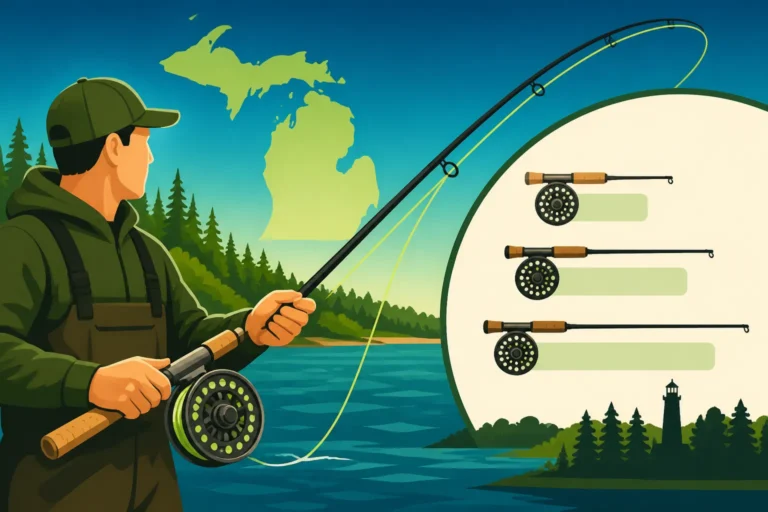
For the dedicated fly angler, the fly reel is an integral part of the overall fly fishing system. While often perceived as merely a line holder, a good fly reel for steelhead is much more than that; it's a critical component for managing line, fighting fish, and balancing your rod.
Steelhead fly fishing often involves swinging flies, nymphing with indicators, or stripping streamers in rivers. The fly reel's primary job is to hold your fly line, backing, and leader, and to provide a smooth, consistent drag when a steelhead decides to run. Unlike conventional reels, you typically strip line off the fly reel by hand when casting and retrieving, only relying on the reel's drag when a fish takes off into your backing. Therefore, a smooth, sealed disc drag system is highly desirable in a steelhead fly reel, providing the consistent pressure needed to tire out a powerful fish without shocking the leader. Large arbor designs are also preferred, as they retrieve line faster, reduce line memory, and provide a more consistent drag as the spool empties. Durability is key, with many high-quality fly reels constructed from machined aluminum. While fly reels are specialized and require specific fly fishing techniques and knowledge, for those who embrace the challenge, they offer an incredibly rewarding way to pursue Michigan steelhead. Check out our guide on Fly Fishing Techniques for Michigan Steelhead for more insights.
Matching Your Reel to Your Technique and Budget
Choosing the best reel for steelhead fishing isn't just about picking the most expensive or the most feature-rich option. It's about finding the right tool that perfectly complements your chosen fishing technique, the line you plan to use, and your overall budget. A reel is an investment, and like any good investment, it should be carefully considered.
Reel Size and Line Capacity Considerations
The size of your reel and its corresponding line capacity are crucial factors that directly impact your fishing experience and your ability to land fish. Too small, and you risk being spooled; too large, and it can throw off the balance of your rod and become cumbersome.
For most river steelhead applications using spinning gear, reels in the 2500 to 4000 size range are ideal. A 2500 or 3000 size offers a lighter feel and is great for finesse techniques, paired with lighter lines. A 4000 size provides increased line capacity and a bit more power, suitable for heavier lines or when targeting larger fish or fishing stronger currents. For baitcasting reels, a low-profile model that can comfortably hold 120-150 yards of 10-15 pound monofilament or braid (with a fluorocarbon leader) is typically sufficient. The larger round baitcasters might offer more capacity, but can be overkill for most river situations unless you're targeting truly trophy-class fish with heavy presentations. When it comes to fly reels, a reel that balances well with your 7-9 weight fly rod and has enough capacity to hold your fly line plus 100-200 yards of 20-30 pound backing is essential. Remember, line capacity isn't just about holding enough line for a long run; it also affects casting distance and line management. A larger spool diameter generally reduces line memory, leading to fewer coils and longer, smoother casts.
Balancing Reel Performance with Cost
It’s easy to get caught up in the allure of high-end reels, but the truth is, you don't always need to spend a fortune to get a capable steelhead reel. However, it's also true that you often get what you pay for when it comes to fishing gear. Understanding this balance is key to making a smart purchase.
Entry-level reels, often found under a certain price point, can certainly catch fish. They are a great starting point for beginners or those who only fish a few times a year. However, they may lack the refined drag systems, the durable components, and the overall smoothness of mid-range or high-end models. Their lifespan might also be shorter, requiring more frequent replacement or repair. Mid-range reels strike a fantastic balance, offering significant performance improvements in terms of drag smoothness, construction quality, and feature sets without breaking the bank. These are often the sweet spot for passionate anglers who fish regularly. High-end reels represent the pinnacle of engineering and craftsmanship, featuring top-tier materials, advanced drag systems, and extreme durability. They are an investment that will last for many years and provide exceptional performance under the toughest conditions. When shopping, whether you're looking at options on Amazon or walking the aisles of Bass Pro Shops, always consider the features relative to the price. Read reviews, and if possible, handle the reel to get a feel for its weight, balance, and retrieve smoothness. Don't be afraid to invest a bit more in a reel that will perform reliably when that trophy steelhead is on the other end of your line.
Maintenance for Longevity
Even the best reel money can buy won't last if it's not properly cared for. Michigan's diverse fishing conditions, from sandy riverbanks to potentially muddy water, can be tough on gear. Regular maintenance is not just recommended; it's essential for ensuring your reel performs flawlessly year after year.
After every outing, especially if your reel has been exposed to water, mud, or sand, take a few minutes to wipe it down with a damp cloth. Pay particular attention to the spool, bail, and handle. If it's been submerged or heavily splashed, a more thorough rinse with fresh, clean water (not a high-pressure spray) is advisable, followed by air drying. Periodically, you should lightly lubricate key moving parts, such as the handle knob and line roller on spinning reels, or the spool shaft on baitcasters. Refer to your reel's manufacturer instructions for specific lubrication points and recommended lubricants. The drag system should also be checked regularly. If your drag feels sticky or inconsistent, it might be time for a more in-depth cleaning or replacement of the drag washers. Proper storage is also crucial; keep your reels in a dry place, ideally in a protective case or bag, to prevent dust buildup and accidental damage. Taking these simple steps will significantly extend the life of your reel and ensure it's always ready for the next Michigan steelhead adventure.
| Reel Type | Pros for Steelhead | Cons for Steelhead | Ideal Uses in Michigan |
|---|---|---|---|
| Spinning Reel | Versatile for many techniques; Easy to cast light lures; User-friendly for beginners; Good general-purpose option. | Can suffer from line twist with light line; Drag systems on cheaper models may be less refined. | Casting jigs, spoons, or spinners; Float fishing; Bottom bouncing with lighter setups. |
| Centerpin Reel | Unparalleled natural, drag-free drifts; Superior line control in current; Extremely sensitive to subtle bites. | Steep learning curve for casting and fighting fish; Specialized for drift fishing; No mechanical drag. | Dedicated drift fishing with floats and natural baits (spawn, beads) in rivers. |
| Baitcasting Reel | Powerful drag and cranking ability; Excellent casting accuracy for heavier lures; Less line twist; Direct feel for the fish. | Can be prone to backlashes (requires practice); Less ideal for very light presentations. | Casting heavier jigs, plugs, or spoons; Trolling in larger river sections or near Great Lakes. |
| Fly Reel | Balances well with fly rod system; Essential for fly fishing techniques; Simple, durable design. | Only for fly fishing; Requires specific fly casting skills; Not for conventional methods. | Nymphing, swinging streamers, dry fly fishing (less common for adult steelhead). |
Disclaimer
This article is for general informational purposes only and does not constitute professional advice. Laws, prices and regulations vary by location and change over time. Consult a qualified professional for guidance on your specific situation.