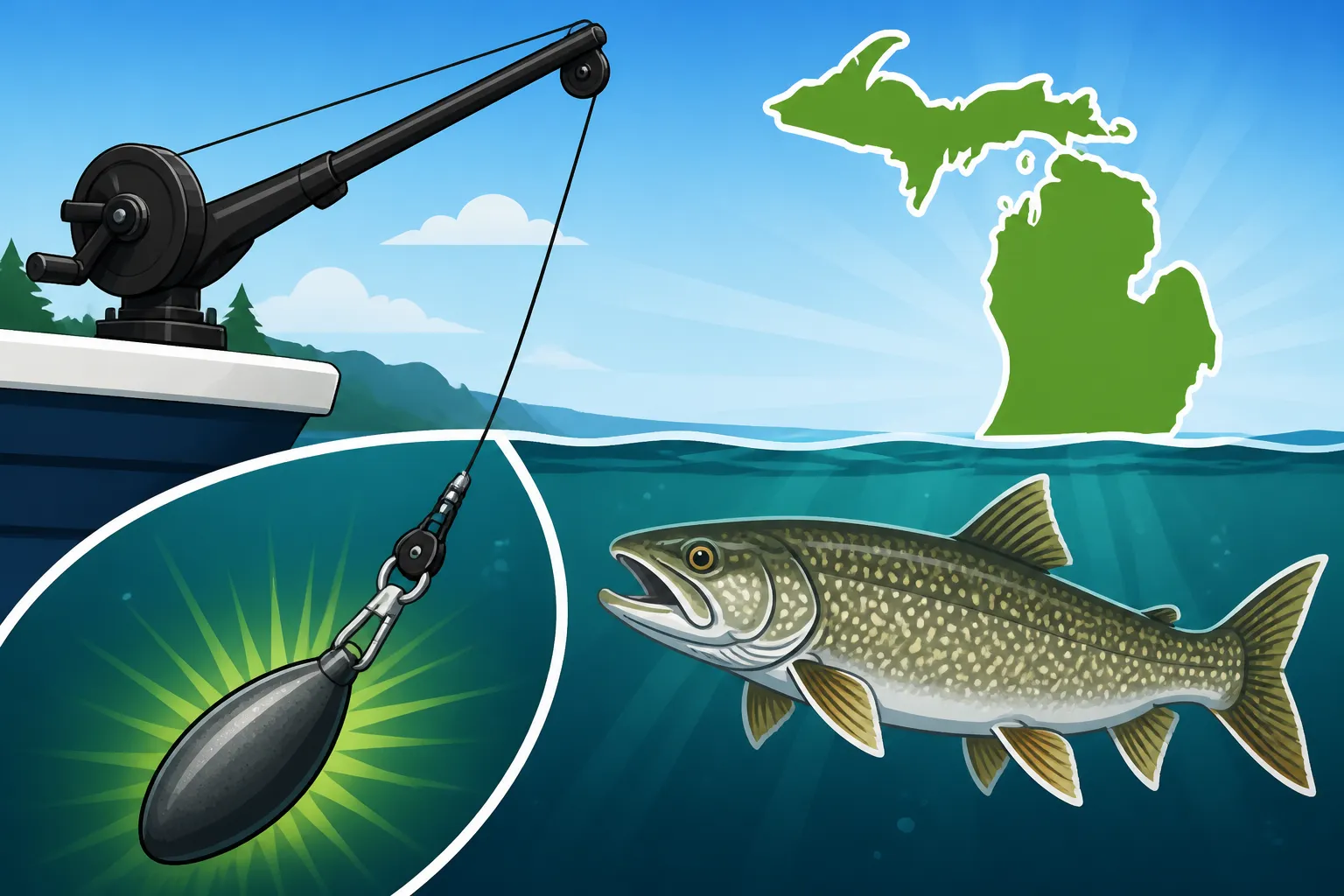
Best Downrigger Weight for Lake Trout
Trying to figure out the perfect downrigger weight for lake trout can feel like a real guessing game, especially when you're staring at a wall of different sizes and shapes at your local tackle shop or browsing endless options online. It's not just about getting your lure down deep; it's about getting it down efficiently, accurately, and keeping it there through currents and turns, which is crucial when targeting those deep-dwelling Lake Michigan and Lake Superior lakers. This guide is designed to cut through the confusion, helping you understand the nuances of downrigger weights so you can confidently select the best option for a successful Michigan lake trout expedition.
Understanding Downrigger Weights and Their Purpose
Downriggers are an essential piece of equipment for many Great Lakes anglers, particularly those pursuing species like lake trout that often inhabit deeper waters. At its core, a downrigger's job is simple: to get your lure or bait down to a specific depth, hold it there, and then release it when a fish strikes, allowing you to fight the fish without the resistance of the heavy weight. The weight itself, often called a "cannonball" or "pancake" weight, is what provides the necessary ballast to achieve this.
Why Downrigger Weight Matters for Lake Trout
Lake trout are notorious for holding in specific temperature zones and structures often found far below the surface. This means precision is key. If your downrigger weight is too light, your line might "blow back" or sweep too far behind the boat, making it difficult to gauge your actual lure depth. You might think you're fishing at 60 feet, but your lure could be closer to 45 feet due to water resistance and boat speed. This lack of control can be incredibly frustrating, leading to missed opportunities when fish are holding tight to a certain depth or structure. On the flip side, an unnecessarily heavy weight can be cumbersome to retrieve, put undue strain on your downrigger equipment, and make subtle adjustments more difficult. Finding that sweet spot in weight selection allows you to effectively present your bait in the lake trout's strike zone, maximizing your chances of a bite.
Types of Downrigger Weights and Their Characteristics
Downrigger weights come in a variety of shapes and sizes, each designed with different hydrodynamic properties to perform under various conditions. Understanding these can significantly impact your success.
- Cannonball Weights: These are the most common and widely recognized type. They are spherical or teardrop-shaped and offer a good balance of descent rate and stability. They're a solid all-around choice for many trolling scenarios and depths. You'll find them in a range of weights, typically from 6 to 15 pounds, sometimes heavier.
- Pancake or "Fish" Weights: These flat, disc-shaped weights are designed to reduce blowback, especially at higher trolling speeds or in strong currents. Their hydrodynamic shape helps them track straighter down, providing a more accurate depth reading. They are excellent for maintaining a precise depth in challenging conditions. Anglers targeting deeper fish or wanting minimal blowback often gravitate towards these.
- Winged or Shark Weights: These weights feature fins or wings, often resembling a small airplane or a shark's tail. Their design is specifically engineered to reduce blowback even further than pancake weights and to track incredibly straight. They are particularly effective when precise depth control is paramount, or when you're dealing with significant boat speed or strong underwater currents. They tend to be a bit pricier but offer superior performance in specific situations.
Each type has its adherents, and often, personal preference and the specific fishing conditions will dictate which you choose. For instance, if you're primarily fishing shallower depths or slower speeds, a cannonball might be perfectly adequate. But once you start pushing into deeper water or faster trolling, a pancake or winged weight really starts to shine.
Factors Influencing Downrigger Weight Selection for Lake Trout
Choosing the right downrigger weight isn't a "one size fits all" situation. Several key factors come into play, and understanding how they interact will empower you to make informed decisions on the water. It’s all about creating the most efficient and effective presentation for those hungry lake trout.
Depth and Water Current Considerations
The primary driver for downrigger weight selection is the desired fishing depth. Lake trout often inhabit the cooler, deeper parts of the Great Lakes, especially during warmer months. If you're targeting fish at 50-80 feet, you'll need a different weight than if you're trying to hit 120-150 feet. Heavier weights cut through the water more effectively, reducing the amount of line let out for a given depth, which in turn minimizes blowback.
Water currents also play a significant role. Even if the surface water is calm, strong underwater currents can exist, especially in large bodies of water like Lake Michigan and Lake Superior. These currents can push your downrigger cable and lure significantly off-course, both horizontally and vertically. A lighter weight will be more susceptible to these forces, leading to less accurate depth control. When encountering noticeable current, stepping up to a heavier weight helps the downrigger ball maintain a more vertical path, ensuring your lure stays in the desired depth zone. Imagine trying to fly a kite in a strong wind with a flimsy string; it's much harder to control than with a stronger line. The same principle applies here. For those deep dives, you might want to consider How Deep to Troll for Lake Trout.
Boat Speed and Trolling Techniques
Your boat's trolling speed directly impacts how much "blowback" your downrigger cable experiences. The faster you go, the more water resistance acts on the downrigger cable and weight, pushing it further back behind the boat and causing it to ride shallower than your counter indicates. This means that if you're trolling at 3.0-3.5 mph for salmon and also hoping to pick up a lake trout, you'll need a heavier downrigger weight to achieve the same depth compared to if you were trolling slower at 1.5-2.0 mph, which is often a more typical lake trout speed.
Different trolling techniques also factor in. Are you running a single downrigger setup, or are you running multiple lines off multiple downriggers? Are you making frequent turns to cover structure, or are you trolling long, straight paths? Frequent turns can cause weights to swing and change depth momentarily. A heavier, more stable weight (like a pancake or winged design) can help minimize these depth fluctuations during maneuvers, keeping your bait in the strike zone more consistently. Consider your typical approach when thinking about Trolling for Chinook Salmon on Lake Michigan or other species that often involve downriggers.
Line Type and Diameter Effects
While not as critical as depth or speed, the type and diameter of the downrigger cable itself can have a subtle impact on weight selection. Most downriggers come spooled with either stainless steel cable or specialized braided line.
- Stainless Steel Cable: This is the traditional choice. It's strong and has minimal stretch. Its typically smaller diameter compared to equivalent strength braid means it cuts through the water a bit more efficiently, resulting in slightly less blowback. However, it can be prone to kinking if not handled carefully.
- Braided Downrigger Line: Increasingly popular, braided lines (often made from materials like Dyneema or Spectra) offer superior strength-to-diameter ratios and are much more forgiving to handle. While their diameter might be slightly larger than steel cable of similar breaking strength, the difference in blowback is usually minimal unless you're pushing extreme depths or speeds. The lack of hum in the water (which steel cable can sometimes produce) and ease of use are major benefits for many anglers.
Regardless of the material, a thicker cable will experience more water resistance than a thinner one, theoretically requiring a slightly heavier weight to maintain the same depth. However, this is usually a marginal effect compared to boat speed and current. The primary consideration for cable is strength and durability for the heavy weights and constant tension they endure. The main takeaway here is that while your choice of downrigger line won't drastically alter your weight needs, it's part of the overall system that contributes to your lure's accurate depth presentation.
Recommended Downrigger Weights for Michigan Lake Trout
Navigating the depths for Michigan lake trout requires not just the right tackle, but also a smart approach to getting your baits into their preferred habitat. Your downrigger weights are a crucial part of this equation. Let's talk specifics.
General Recommendations by Depth Range
When it comes to lake trout, these fish often hug the bottom or hold tight to specific thermal layers, especially in the vastness of the Great Lakes. Here's a general guideline for downrigger weights based on typical target depths:
- Shallow to Mid-Depths (30-70 feet): For these depths, which you might encounter early in the season or in shallower areas of the Great Lakes, an 8-pound cannonball or pancake weight is often sufficient. At slower trolling speeds (around 1.5-2.0 mph), this weight will track well and keep your line relatively vertical. If you're fishing a shallower inland lake for lakers, this range is often perfect.
- Mid-Depths to Deeper Water (70-120 feet): This is a very common range for Lake Michigan and Lake Superior lake trout during much of the open water season. Here, you'll want to step up to a 10-pound or 12-pound weight. A 10-pound cannonball is a workhorse for many anglers, offering a good balance of cutting through the water and being manageable. However, if you're leaning into faster trolling speeds or notice significant current, a 10-pound pancake or winged weight would be an excellent upgrade for minimizing blowback and ensuring precise depth.
- Deep to Very Deep Water (120+ feet): When you're really plumbing the depths, pushing past 120 feet and sometimes down to 180 or even 200 feet, a 12-pound or 15-pound weight becomes almost essential. At these extreme depths, even a slight amount of blowback can mean your lure is many feet shallower than your desired depth. A 15-pound pancake or winged weight will provide the stability and straight tracking needed to put your bait right on the bottom or precisely in that deep thermal band where the lakers are holding.
Remember, these are starting points. Always observe your downrigger counter and fish finder. If your fish finder shows fish at 100 feet and your 10-pound weight is reading 100 feet on the counter but looks significantly swept back on the sonar, it's time to go heavier. Getting the Best Depth to Set a Downrigger is crucial, and the weight plays a huge role.
Adjusting for Specific Lake Michigan and Superior Conditions
Lake Michigan and Lake Superior are immense bodies of water, and conditions can vary dramatically from one area to another, or even hour to hour.
- Lake Michigan: While often calmer than Superior, Lake Michigan can still present significant currents, especially near points, river mouths, or during periods of strong winds. When targeting the deeper lake trout in Grand Traverse Bay or off Ludington, you'll find that 10-pound to 12-pound pancake or winged weights are very popular. If you're mixing in some higher-speed salmon trolling (which can sometimes entice a laker), don't hesitate to bump up to a 15-pound weight to maintain depth. Many anglers running Downriggers for Michigan Great Lakes Trolling find that heavier weights are a benefit for overall control.
- Lake Superior: Known for its vastness and potential for strong currents and deeper average depths, Lake Superior often demands heavier downrigger weights. Anglers frequently use 12-pound to 15-pound cannonballs or winged weights here, especially when fishing for those monster lakers that can inhabit abyssal depths. The added weight helps battle the powerful subsurface currents and ensures your lure stays put. When fishing for Lake Trout Identification in Michigan on Superior, precision is everything. A slightly heavier weight might make retrieval a bit more effort, but the trade-off in accuracy is well worth it.
Always keep an eye on your fish finder and GPS for speed over ground versus speed through water. A discrepancy indicates current, which is your cue to consider a heavier weight.
The Role of Downrigger Release Clips
While not directly a downrigger weight, the release clip is an integral part of the downrigger system and indirectly affects how your weight choice performs. The clip is what holds your fishing line to the downrigger cable, and it needs to hold securely enough to resist the drag of your lure and the water, but release cleanly when a fish strikes.
- Adjustable Tension Clips: Most modern downrigger clips offer adjustable tension. You want enough tension to prevent false releases, but not so much that a smaller lake trout can't trip it. Too loose, and your line might pop out prematurely, leaving you guessing. Too tight, and the fish might pull hard against the downrigger weight before the line releases, potentially pulling the hook or not signaling a bite clearly.
- Placement on the Cable: Some anglers use multiple release clips at different points on the downrigger cable to create a "stacker" system, running more than one line off a single downrigger. When doing this, the weight needs to be sufficient to handle the drag of all the lures, not just one. This technique requires an even heavier weight, often a 15-pound or even 20-pound weight, to prevent excessive blowback from multiple lines.
Experiment with your release clips to find the optimal tension for your lures and target species. It's a small detail, but a properly functioning release clip ensures your weight does its job efficiently and your strike detection is flawless.
Practical Tips for Downrigger Weight Management
You've invested in the right downrigger weights to target those elusive Michigan lake trout, but your job isn't done once they're aboard the boat. Proper care and management of these crucial pieces of gear can extend their lifespan, prevent frustration on the water, and ensure they're ready for action whenever you are.
Storage and Maintenance of Weights
Downrigger weights, being heavy and often made of lead, require a bit of thought for storage. Tossing them haphazardly into a locker can lead to dents, chipped paint, or even damage to other gear.
- Designated Storage: Ideally, you should have a dedicated spot for your downrigger weights. Many boats come with built-in downrigger weight holders, or you can purchase aftermarket racks that securely cradle each weight. This keeps them from rolling around, prevents damage to your boat's gel coat, and ensures they're easily accessible. If you're storing them in a general compartment, consider heavy-duty plastic bins or even old buckets to keep them contained and prevent them from banging into other items.
- Rust Prevention: While most weights are painted or coated, they can still chip and expose the lead, which can oxidize. Stainless steel eyes, where your downrigger cable attaches, are generally corrosion-resistant, but it's always a good practice to rinse your weights with fresh water after each trip, especially if you've been fishing in saltwater (though less of a concern in the Great Lakes, it's still a good habit for general longevity). This simple step helps remove any grime or accumulated minerals that could lead to premature wear or corrosion of the attachment points.
- Inspect Regularly: Before and after each season, and periodically during peak fishing, give your weights a quick inspection. Check the attachment eye for any signs of wear, deformation, or corrosion. Make sure the paint or coating isn't severely chipped, which could make the weight more prone to collecting debris or affecting its hydrodynamics. A quick visual check can save you from a lost weight or a tangled mess out on the water.
Sourcing Downrigger Weights
When it comes time to buy new weights or expand your collection, you have a few options, each with its own advantages.
- Local Tackle Shops: Your independent local tackle shops are fantastic resources. They often carry a selection of downrigger weights, and the staff can provide invaluable local knowledge about what weights work best in your specific Michigan fishing spots. Plus, it's a great way to support small businesses. You can often find a good range of options that cater to the local species like those targeted in Michigan's Great Lakes Fishing Guide.
- Large Retailers: Big box sporting goods stores like Bass Pro Shops typically have a comprehensive selection of downrigger weights, often carrying various brands, shapes, and sizes. They might offer competitive pricing, especially during sales events, and it's a good place to physically compare different weights.
- Online Retailers: For sheer variety and convenience, online marketplaces like Amazon are hard to beat. You can find almost any weight, shape, or brand imaginable, often with customer reviews that can help inform your decision. Just be mindful of shipping costs, as these heavy items can sometimes incur significant charges. It's a good way to find specialized weights like particular winged designs that might not be stocked everywhere.
- Used Market: Keep an eye on local classifieds, fishing forums, or garage sales. Downrigger weights are durable, and you can often find perfectly functional used weights at a fraction of the cost. Just be sure to inspect them thoroughly for any damage to the attachment point before purchasing.
| Weight (Pounds) | Recommended Depth Range (Feet) | Preferred Shape | Trolling Speed Considerations | Notes for Lake Trout Anglers |
|---|---|---|---|---|
| 8 lb | 30-70 | Cannonball/Pancake | Slow to Moderate (1.5-2.0 mph) | Good for shallower inland lakes, early season Great Lakes, or very slow trolls. Lower blowback. |
| 10 lb | 70-120 | Cannonball/Pancake/Winged | Moderate (2.0-2.5 mph) | Versatile for mid-depth Great Lakes lake trout. Pancake/winged ideal for less blowback. |
| 12 lb | 100-150 | Pancake/Winged | Moderate to Higher (2.5-3.0 mph) | Excellent for deeper Lake Michigan/Superior lakers and when currents are present. |
| 15 lb | 140+ | Pancake/Winged | Moderate to Higher (2.5-3.5 mph) | Essential for extreme depths, strong currents, or when stacking multiple lines. Maximize accuracy. |
When you're out there on the water, whether it's the vastness of Lake Superior or the deep trenches of Lake Michigan, confidence in your gear is paramount. Knowing that your downrigger weight is accurately presenting your lure at the exact depth where those Michigan Trout Species Explained or Michigan Salmon Species Explained are lurking makes all the difference. Don't be afraid to experiment a little, and always adjust based on what your electronics and the fish are telling you. Happy fishing!
Disclaimer
This article is for general informational purposes only and does not constitute professional advice. Laws, prices and regulations vary by location and change over time. Consult a qualified professional for guidance on your specific situation.