What Catfish Species Live in Michigan
Michigan is a treasure trove for anglers, but beyond the well-known salmon, trout, and walleye, there's a whole world of whiskered wonders lurking in our waters. Many anglers, especially those new to the state or exploring different species, might wonder exactly what kind of catfish they can expect to encounter. This guide aims to clear up that mystery, detailing the specific catfish species that call Michigan home, where you can find them, how to tell them apart, and some excellent strategies to bring them to the net.
The Main Catfish Species Calling Michigan Home
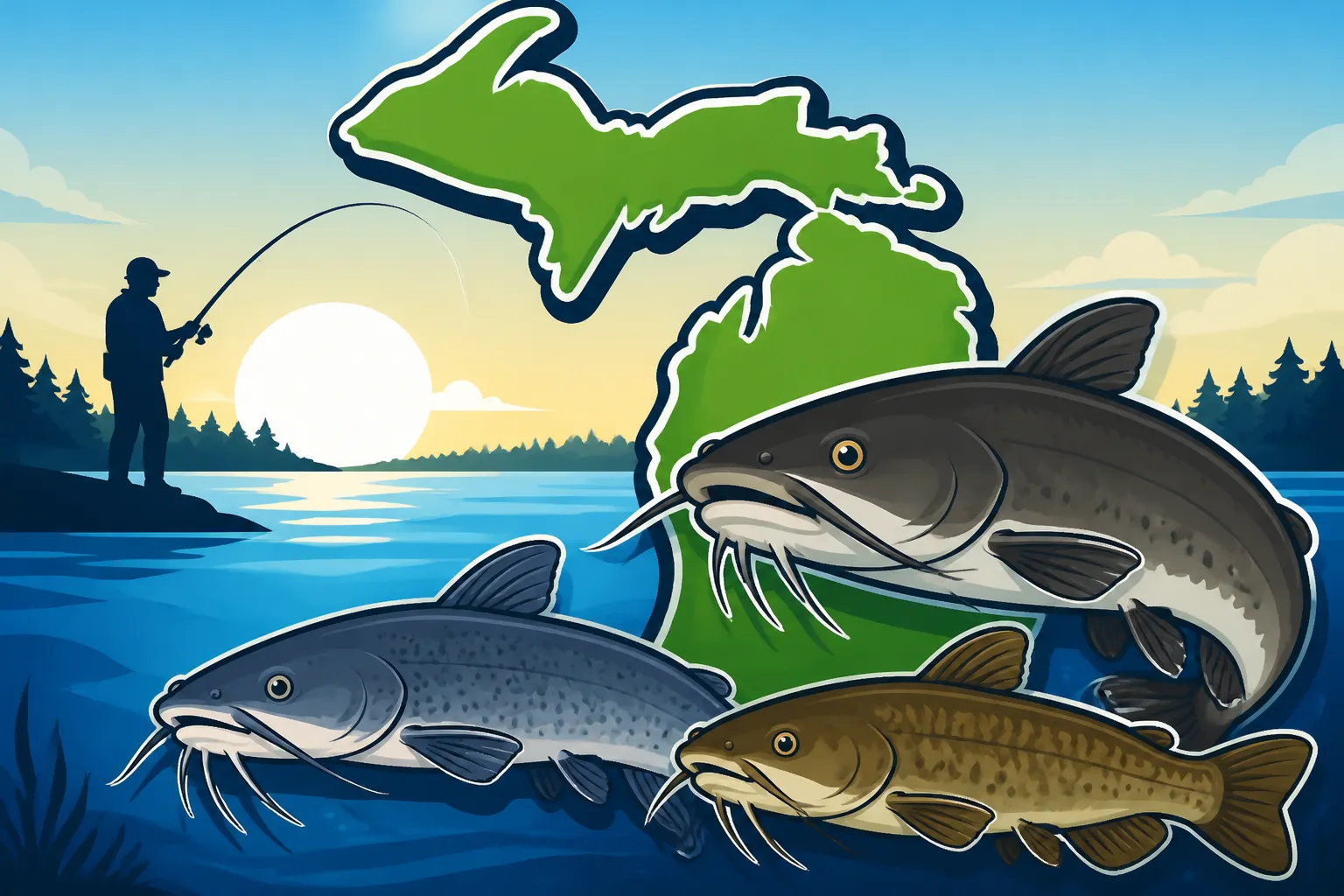
When you think of catfish in Michigan, a few key species come to mind. These fish are renowned for their strength, their often-impressive size, and their delicious table fare. Understanding which species inhabit which waters is the first step to successful catfish angling in our beautiful state.
Channel Catfish: The Widespread Favorite
The Channel Catfish is arguably the most recognized and sought-after catfish species in Michigan. They're a favorite for a reason – they put up a fantastic fight on the line, grow to a respectable size, and are incredibly adaptable, inhabiting a wide range of water bodies. You'll find them almost everywhere, from large rivers to inland lakes. They tend to prefer cleaner water than their bullhead cousins, but are still quite tolerant of varying conditions.
These fish are identifiable by their deeply forked tail, smooth, scaleless skin, and scattered dark spots along their sides when they are young. As they mature, these spots often fade, especially in larger males. Channel cats are opportunistic feeders, scavenging the bottom for anything from insects and crustaceans to smaller fish and decaying matter. Their presence indicates a healthy, diverse aquatic environment, and they're a true staple of Michigan's warmwater fishing scene.
Catching a solid Channel Catfish often involves a patient approach. They're not always the most aggressive biters, sometimes just mouthing the bait before committing. A good stout rod and reel combo, loaded with braided line, will serve you well when battling these powerful fish. Remember to check the Michigan Fishing Regulations Every Angler Should Know before heading out.
Flathead Catfish: The River Monster
If you're looking for a true heavyweight fight, the Flathead Catfish is Michigan's answer. These are the giants of our catfish population, known for their immense size and their preference for strong current and deep holes in large rivers. Unlike the Channel Catfish, Flatheads are predatory hunters, preferring live bait and often ambushing their prey. They are far less tolerant of poor water quality, making their presence a sign of healthy river systems.
Flatheads are easily distinguished by their flat, broad head (hence the name), lower jaw that protrudes past the upper, and a rounded or slightly notched tail, which contrasts sharply with the Channel Catfish's deeply forked tail. Their color typically ranges from mottled yellow to brown, providing excellent camouflage against rocky or muddy river bottoms. Finding a big Flathead is a real challenge, often requiring specialized gear and techniques, but the reward of landing one of these freshwater leviathans is unmatched.
Anglers targeting Flatheads need heavy-duty gear, strong lines, and robust hooks. Live bait, like suckers or bluegill, is often the most effective presentation, fished near submerged logs, rock piles, or deep scour holes. These fish are incredible fighters, testing both your tackle and your patience. Just make sure your tackle is up to the task; you can find robust options for rods and reels suitable for heavy fighting fish on sites like Amazon.
Bullheads: The Smaller, Hearty Cousins
Michigan is also home to several species of bullheads, which are smaller, stouter cousins of the Channel and Flathead catfish. The three main species you'll encounter are the Brown Bullhead, Black Bullhead, and Yellow Bullhead. While they don't reach the same trophy sizes, they are incredibly abundant, easy to catch, and provide excellent fishing, especially for younger anglers or those looking for consistent action.
Bullheads are chunky, dark-colored catfish with square or slightly rounded tails. They lack the spots of juvenile Channel Cats and the distinctly flat head of the Flathead. Identification between the different bullhead species can be tricky, often coming down to the color of their chin barbels and the serrations on their pectoral fin spines. Brown Bullheads are probably the most common, found in a wide variety of habitats, often thriving in waters that might be too warm or muddy for other game fish. Black Bullheads are often found in stagnant, muddy waters, while Yellow Bullheads prefer clearer, vegetated areas.
These hardy fish are perfect for a relaxed day of fishing from shore or a dock. They're not particularly picky eaters and will readily take common baits. Many people enjoy eating bullheads, finding their flesh sweet and flaky, though cleaning them can be a bit more involved due to their thick skin and bony structure. They're a fantastic entry point into the world of catfish angling in Michigan, and a great way to introduce kids to fishing.
Where to Find Michigan's Whiskered Wonders
Knowing what catfish species live in Michigan is one thing, but knowing where to wet your line for them is another entirely. Michigan's diverse aquatic landscapes, from its majestic Great Lakes to its winding rivers and countless inland lakes, offer a variety of habitats for these bottom-dwelling fish.
Major Rivers: Catfish Highways
Michigan's large river systems are undoubtedly prime territory for catfish, especially the larger Channel and Flathead species. Rivers like the Grand River, St. Joseph River, Kalamazoo River, and the Saginaw River system are renowned for their thriving catfish populations. These rivers offer the deep channels, strong currents, and abundant food sources that catfish crave.
Flathead catfish, in particular, are river dwellers. They'll often be found in the deepest holes, behind log jams, beneath cut banks, or near bridge pilings where they can ambush prey. Anglers targeting Flatheads will spend considerable time scouting these features, often using sonar to locate optimal spots. Channel catfish, while also present in these deeper sections, can be found in a wider range of riverine habitats, including slower pools, eddies, and even shallower flats, particularly during feeding periods. Some of the same river stretches famous for Best Rivers for Trout and Steelhead in Michigan can hold impressive catfish populations in their slower, deeper sections.
Many of these rivers also connect directly to the Great Lakes, providing migratory routes and additional habitat for catfish. Tributary mouths, especially during periods of higher flow, can be excellent spots as fish move in and out, or congregate to feed on washed-in nutrients and baitfish. Look for areas with current breaks and structure, which provide both cover and ambush points for hungry catfish.
Inland Lakes and Ponds: Hidden Gems
While rivers often get the most attention for big catfish, Michigan's vast network of inland lakes and ponds should not be overlooked. Many of these water bodies, especially larger, nutrient-rich ones, hold excellent populations of Channel Catfish and all three bullhead species. Lakes like Houghton Lake, Lake St. Clair (though technically a widening of the St. Clair River, it fishes like a large inland lake), and numerous others offer fantastic opportunities. Michigan Inland Lakes Worth Fishing provides a wealth of information on specific locations.
In these stillwater environments, catfish tend to gravitate towards areas with abundant submerged structure, weed lines, or transitions from shallow flats to deeper drop-offs. Channel catfish in lakes will often cruise the bottom, searching for food, making them susceptible to baits presented on the bottom. Bullheads, being more tolerant of less-than-pristine conditions, can be found in virtually any pond, small lake, or even backwater areas of larger lakes, especially those with muddy bottoms and plenty of aquatic vegetation.
Fishing these locations often involves anchoring up and presenting multiple lines with different baits. The key is patience, as catfish in lakes can sometimes take a while to find your offering. Local bait shops or online forums can often provide insights into which specific lakes in your area are known for good catfish action.
Great Lakes Tributaries: Seasonal Opportunities
The Great Lakes themselves, particularly the shallower bay areas and the lower stretches of major tributaries, also offer catfish opportunities, especially for Channel Catfish. Saginaw Bay on Lake Huron, parts of Lake Erie, and even certain harbors on Lake Michigan can yield good numbers of channel cats. While they might not be the primary target for most Great Lakes anglers, they are a welcome bonus catch.
The mouths of rivers emptying into the Great Lakes are particularly interesting, especially during warmer months. These areas often concentrate baitfish and nutrients, attracting catfish. Docks, piers, and breakwalls in these tributary areas are accessible spots for shore anglers to target them. Don't discount these locations, particularly if you're exploring Michigan's Great Lakes Fishing Guide for diverse fishing experiences beyond salmon and trout.
During spawning periods, channel catfish may move into shallower tributary streams, offering unique, albeit often brief, fishing windows. They are less common in the deep, cold waters of the open Great Lakes, preferring the warmer, shallower sections and tributary environments.
Identifying Michigan Catfish Catch
Being able to properly identify your catch is crucial, not just for bragging rights, but also for adhering to Michigan Fishing Regulations Every Angler Should Know, which can sometimes have species-specific rules. While the general "catfish" look is obvious, distinguishing between Michigan's distinct species is fairly straightforward once you know what to look for.
Distinguishing Features: A Quick Guide
Let's break down the key characteristics that set Michigan's catfish species apart:
-
Channel Catfish:
- Tail: Deeply forked, like a swallow's tail. This is the most defining feature.
- Body: Slender, often with scattered dark spots, especially when young. Spots fade as they mature.
- Head: Relatively small compared to their body.
- Chin Barbels: Usually dark (black or gray).
-
Flathead Catfish:
- Tail: Squared or only slightly notched, never deeply forked.
- Body: Chunky and robust, typically mottled yellow-brown to dark brown, no spots.
- Head: Very broad and flat, with small eyes set high on the head.
- Lower Jaw: Protrudes beyond the upper jaw, giving them a distinct "underbite."
- Chin Barbels: Usually light-colored (white or yellowish).
-
Brown Bullhead:
- Tail: Slightly notched, never deeply forked.
- Body: Brown to black on top, lighter on the belly. Smooth, scaleless.
- Chin Barbels: Dark (black or brown).
- Pectoral Fins: Strong, sharp spine with strong serrations (teeth) along the back edge.
-
Black Bullhead:
- Tail: Squared or slightly notched.
- Body: Dark olive to black, sometimes with a greenish tinge.
- Chin Barbels: Dark (black or brown).
- Pectoral Fins: Strong spine with weak or no serrations.
-
Yellow Bullhead:
- Tail: Rounded, not notched or forked.
- Body: Yellowish or golden-brown.
- Chin Barbels: Light-colored (white or yellow).
- Pectoral Fins: Strong spine with strong serrations.
| Feature | Channel Catfish | Flathead Catfish | Brown Bullhead | Black Bullhead | Yellow Bullhead |
|---|---|---|---|---|---|
| Tail Shape | Deeply Forked | Square / Slightly Notched | Slightly Notched | Square / Slightly Notched | Rounded |
| Body Color/Pattern | Silvery-gray, scattered spots (young), fades (adult) | Mottled Yellow-Brown to Dark Brown, no spots | Brown to Black | Dark Olive to Black | Yellowish / Golden-Brown |
| Head Shape | Relatively Small | Broad and Flat | Proportional | Proportional | Proportional |
| Jaw | Even | Lower jaw protrudes | Even | Even | Even |
| Chin Barbels | Dark (black/gray) | Light (white/yellow) | Dark (black/brown) | Dark (black/brown) | Light (white/yellow) |
| Pectoral Spine | Smooth | Smooth | Strong serrations | Weak/No serrations | Strong serrations |
Size and Weight Expectations
The size of catfish you can expect to catch in Michigan varies significantly by species and water body.
- Channel Catfish: These are typically caught in the 1 to 10-pound range, but fish exceeding 20 pounds are certainly possible in larger rivers and lakes. A trophy Channel Cat in Michigan might push 30 pounds, offering an incredible fight.
- Flathead Catfish: These are the true giants. Most Flatheads caught will be in the 10 to 40-pound range, but fish well over 50 pounds are a realistic goal for dedicated anglers, with Michigan's state record being considerably heavier. These are genuinely powerful fish that require proper handling and respect.
- Bullheads: Bullheads are much smaller, usually weighing less than 2 pounds. A bullhead approaching 3 pounds is considered a very large specimen. Despite their size, they're feisty fighters on light tackle and are perfect for a family fishing outing.
Always remember that fishing for larger, trophy-sized catfish often requires heavier gear and a more patient approach. Ensure you have a sturdy net or lip-grippers for safe landing, especially with the larger species, to avoid their sharp spines.
Tried-and-True Techniques for Michigan Catfish
Fishing for catfish in Michigan can be as simple or as specialized as you want it to be. Whether you're a beginner or a seasoned angler, there are effective strategies to help you land these fantastic fish.
Bait Choices for Hungry Catfish
Catfish are known for their opportunistic feeding habits, which means they'll often eat a wide variety of baits. However, some choices are consistently more effective than others.
- Stink Baits & Prepared Baits: These are classic catfish attractants, particularly for Channel Catfish and bullheads. Their strong odor draws fish from a distance. You can find many popular brands of prepared catfish baits on platforms like Amazon, often shaped into dough balls or used with special bait holders. While effective, they can be messy!
- Cut Bait: Chunks of oily fish like shad, suckers, or even store-bought smelt or chicken livers are incredibly effective, especially for Channel Catfish and often for Flatheads too. The scent trail they release in the water is irresistible. Freshwater drum (sheepshead) also make excellent cut bait if you can catch them.
- Live Bait: For Flathead Catfish, live bait is often the king. Small suckers, bluegill, or other legal baitfish presented alive are incredibly enticing to these predators. For Channel Catfish, live worms or minnows can also be very productive. Remember to check regulations on what fish can be used as live bait and if specific size limits apply.
- Worms: Good old nightcrawlers and red wigglers are universal fish catchers, and catfish are no exception. They're particularly effective for bullheads and smaller Channel Catfish, especially when fished near the bottom. They are widely available and simple to use.
- Shrimp: Raw shrimp, either whole or cut into pieces, can be surprisingly effective for Channel Catfish and bullheads. It's a readily available option from grocery stores and creates a good scent trail.
- Hot Dogs/Marshmallows: Believe it or not, these unconventional baits can sometimes entice bullheads and smaller channel cats, especially when marinated in garlic or other scents. They're cheap, easy to use, and a fun option for casual fishing.
Presenting your bait effectively is just as important as the bait itself. Often, a simple bottom rig is all you need, ensuring your bait stays put where the catfish are feeding.
Essential Gear and Rigging
You don't need highly specialized gear for most catfish fishing, but having the right setup can greatly improve your success and enjoyment. Best Rods and Reels for Michigan Fishing often includes options suitable for catfish.
- Rods and Reels:
- For Channel Catfish & Bullheads: A medium-heavy spinning or baitcasting rod, 6.5 to 7.5 feet long, paired with a reliable reel spooled with 10-20 lb monofilament or braided line is usually sufficient. This setup provides enough backbone to handle a decent fight but is sensitive enough for lighter bites.
- For Flathead Catfish: You'll need much heavier gear. A heavy or extra-heavy baitcasting rod, 7 to 9 feet long, paired with a robust baitcasting reel (often a conventional reel) spooled with 30-80 lb braided line is essential. These fish are incredibly powerful, and anything less risks a broken rod or snapped line.
- Terminal Tackle:
- Hooks: Circle hooks are highly recommended for catfish. They significantly reduce the chance of gut-hooking the fish, making catch-and-release much safer and easier. Sizes range from 1/0 to 8/0 depending on the target species (smaller for bullheads, larger for Flatheads).
- Weights: Slip sinkers (egg sinkers or flat, no-roll sinkers) in weights from 1/2 oz to 3 oz (or more in heavy current) are common. They allow the line to pass freely, letting the fish take the bait without feeling immediate resistance.
- Swivels: Heavy-duty barrel swivels or three-way swivels help prevent line twist and connect leaders.
- Leaders: A strong monofilament or fluorocarbon leader (20-50 lb test for Flatheads, 15-30 lb for Channel Cats) is often used, especially with braided main lines, to provide abrasion resistance.
- Rigging:
- Carolina Rig (Slip Sinker Rig): This is the most popular and versatile rig for bottom fishing catfish. Thread a slip sinker onto your main line, followed by a bead (to protect the knot), then tie on a swivel. To the other end of the swivel, tie a 12-24 inch leader with your hook.
- Three-Way Swivel Rig: Useful in current, this rig uses a three-way swivel with one eye tied to the main line, one to a short leader with a weight, and the third to a longer leader with a hook. This keeps the bait slightly off the bottom.
Having a good tackle box, perhaps one you picked up from Amazon, that’s organized with these essentials will make your catfish outings much smoother.
Best Times to Target Catfish
Timing plays a crucial role in catfish fishing success. While you can catch them throughout the warmer months, certain periods and conditions are more productive.
- Season: The late spring, summer, and early fall are generally the best seasons for catfish in Michigan. As water temperatures rise, catfish become more active and feed more aggressively. Michigan Spring Fishing Season Guide is a great time to start targeting them as the waters warm up.
- Time of Day: Catfish, especially larger Channel Cats and Flatheads, are primarily nocturnal feeders. The hours from dusk through dawn are often the most productive. This is when they move into shallower areas to hunt for food, making them more accessible to anglers. Night fishing can be incredibly rewarding, offering a peaceful and exciting experience. Check out Night Fishing Techniques for Walleye for some crossover strategies that can apply to catfish.
- Weather Conditions: Overcast days or periods leading up to a storm can also trigger increased feeding activity. While catfish are less affected by bright sun than some other species, low light conditions generally provide them with a sense of security and encourage movement.
- Moon Phase: Some anglers swear by certain moon phases, with full and new moons often cited as prime times due to increased tidal (or seiche in the Great Lakes) influence or ambient light, but consistent results vary. Focus more on time of day and water temperature.
Ultimately, patience is your best friend when fishing for catfish. Set up your baits, relax, and be prepared for a strong tug on the line when a Michigan whiskerfish decides to bite!
Disclaimer
This article is for general informational purposes only and does not constitute professional advice. Laws, prices and regulations vary by location and change over time. Consult a qualified professional for guidance on your specific situation.