What Are Common Panfish Species in Michigan
There's nothing quite like the simple pleasure of a day spent on a Michigan lake or river, rod in hand, waiting for that tell-tale tug. But for many, especially those new to angling or looking for a relaxing day with the family, the world of "panfish" can feel a little vague. You know they're out there, usually plentiful and eager to bite, but what exactly are they, and which ones are you most likely to encounter in our beautiful Michigan waters? This guide is here to demystify the common panfish species that call Michigan home, helping you identify them, understand their habits, and ultimately, catch more of these delicious, plate-sized fish.
What Exactly Are Panfish, Anyway?
Before we dive into specific species, let's talk about what "panfish" truly means in the angling world. It's not a scientific classification, but rather a descriptive term. When we talk about panfish, we're generally referring to smaller, freshwater fish that are (you guessed it!) perfectly sized to fit in a frying pan. They're typically quite tasty, relatively easy to catch, and abundant, making them fantastic targets for anglers of all ages and skill levels.
The beauty of panfish fishing lies in its accessibility. You don't need fancy, expensive gear or deep-sea knowledge. A simple rod and reel, some basic bait, and a bit of patience are usually all it takes to have a successful outing. They're often found close to shore, in weed beds, near docks, or around submerged structures, making them ideal for shore anglers, kayakers, or those fishing from small boats. For many Michiganders, catching bluegill or perch was their very first fishing memory, a tradition that continues to bring joy to countless families every year.
Beyond their convenient size and cooperative nature, panfish play a vital role in our aquatic ecosystems. They are a crucial food source for larger predatory fish like bass, pike, and even walleye. Their abundance ensures a healthy food web, and their quick growth rates mean that even with consistent angling pressure, their populations generally remain robust across much of the state. Understanding which species are most common helps you tailor your approach, ensuring you're using the right techniques to find and catch them while also being mindful of Michigan's Michigan Fishing Regulations Every Angler Should Know to ensure sustainable fishing for generations to come.
Michigan's Top Panfish Contenders: Bluegill, Crappie, and Perch
When you head out fishing in Michigan, there are three primary panfish species that you'll likely encounter more often than any others: bluegill, crappie (both black and white), and yellow perch. These species are widespread, popular, and offer fantastic fishing opportunities throughout the year.
The Mighty Bluegill
If there's one fish that embodies the spirit of Michigan panfishing, it's the bluegill. These little fighters are arguably the most common and beloved panfish in the state, known for their aggressive bites and spirited struggle on light tackle. Many anglers, myself included, cut their teeth catching bluegill from local ponds and lakes.
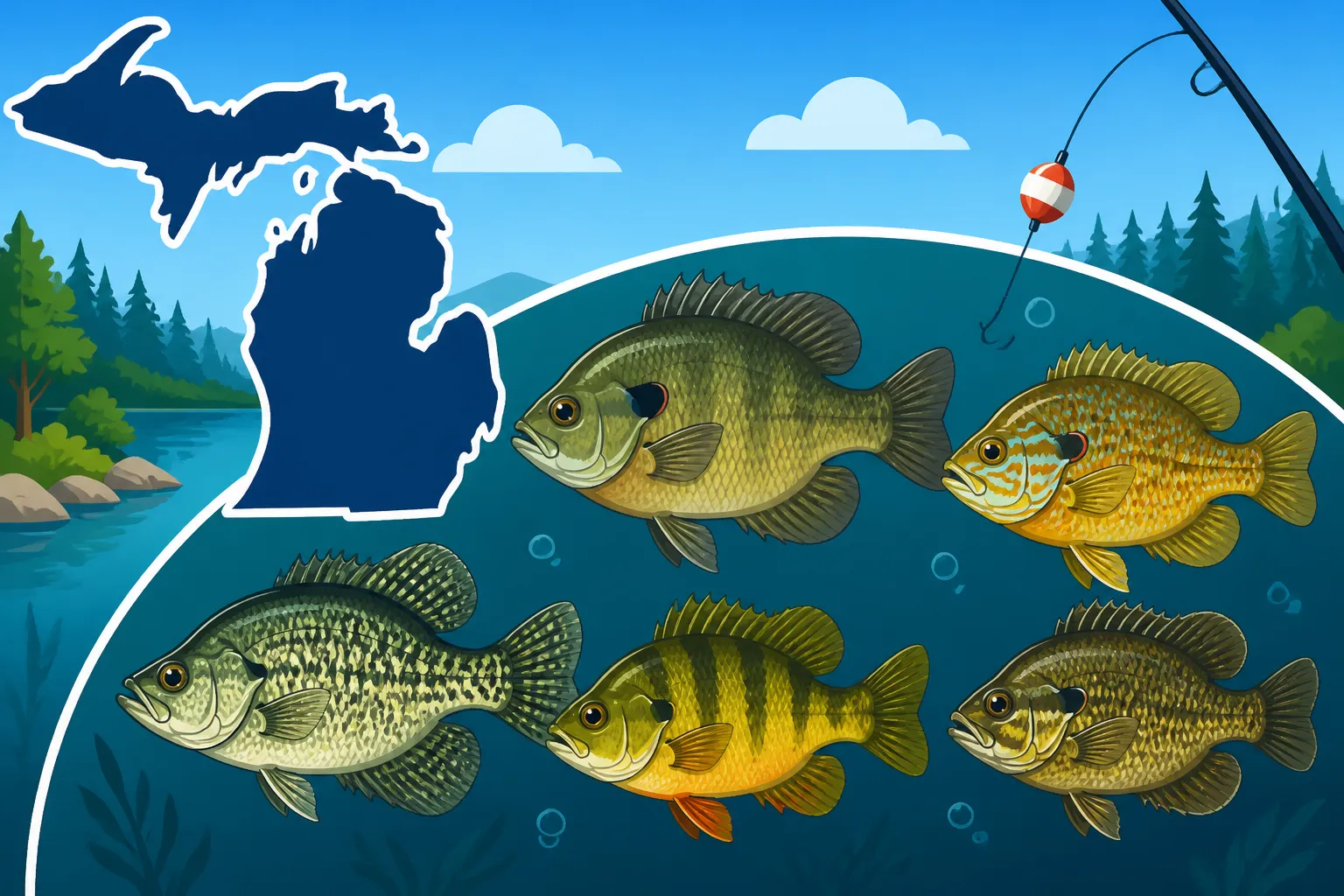
Identifying a bluegill is usually pretty straightforward. They have a deep, compressed body, almost disc-shaped, with a small mouth. Their most distinguishing feature is often the deep blue or black "ear flap" on the gill cover, which gives them their name. Body coloration can vary quite a bit depending on the water clarity and bottom composition, ranging from olive green to dark blue on the back, fading to lighter sides, and often sporting a yellowish or orange belly, especially in spawning males. Many will have several vertical bars or spots on their sides. You can find them in almost any lake or pond across Michigan, particularly favoring areas with plenty of submerged vegetation, fallen trees, and docks where they can hide from predators and ambush insects. When spawning, they create shallow, saucer-shaped nests in colonies, often visible in clear, shallow water, making them even easier to target.
Fishing for bluegill is simple and incredibly fun. A small hook (size 8 or 10 is usually perfect), a bobber, and some classic bait like worms, crickets, or even small pieces of bread can be incredibly effective. For those who prefer artificials, tiny jigs, spinners, or even small flies can tempt them. They're active throughout the warmer months, providing consistent action, and can still be caught through the ice during winter. If you're wondering How Big Do Bluegill Get in Michigan, they typically average 6-8 inches, but catching a "hand-sized" bluegill of 9-10 inches is a real trophy. You can find a lot of great options for specialized bluegill tackle and bait on retailers like Amazon, making it easy to get started. For more specific bait recommendations, check out our guide on Best Bait for Michigan Bluegill.
The Crappie Cousins: Black and White
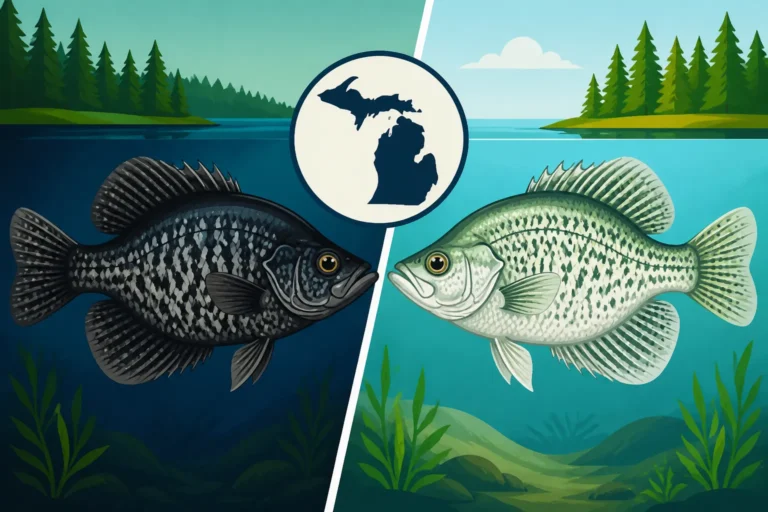
Michigan is fortunate to have both black crappie and white crappie, two species that are highly prized for their delicious, flaky white meat. While they share a similar name and many characteristics, there are a few key differences that help tell them apart, and understanding these can slightly influence where and how you target them.
Black crappie tend to have a more mottled, "speckled" appearance with irregular black spots scattered over a silver-green or gray background. The easiest way to distinguish them from their white cousins is by counting the dorsal fin spines: black crappie typically have 7 or 8. They prefer clearer water with abundant vegetation, submerged timber, and brush piles. White crappie, on the other hand, usually have a more uniform silvery body with distinct, often six or seven, dark vertical bars running down their sides. They have 5 or 6 dorsal fin spines. White crappie are generally more tolerant of turbid or murkier waters, often found in larger, slower rivers and impoundments. Both species are known to school up around structure, making them a fantastic target once you locate a productive spot.
Crappie are ambush predators, so they love to hang out near submerged cover. Small jigs, particularly those tipped with a minnow or a soft plastic grub, are incredibly effective. Trolling with small crankbaits or even slip bobber fishing with live minnows are popular methods. The best times to target crappie are often in the spring, during their spawn, when they move into shallower waters, or in the fall when they feed heavily before winter. During winter, they are a favorite target for ice anglers, often found suspended over deeper holes near structure. When thinking about How Big Do Crappie Get in Michigan, a crappie over 10 inches is considered a good catch, with slabs of 12-14 inches being truly impressive. You can explore more about targeting these species in our Bluegill and Crappie Fishing in Michigan guide, and for detailed bait tips, see Best Bait for Michigan Crappie. Amazon is a great place to stock up on various crappie jigs and soft plastics, especially for trying out different colors and sizes.
| Feature | Bluegill | Black Crappie | White Crappie | Yellow Perch |
|---|---|---|---|---|
| Typical Size | 6-8 inches | 8-12 inches | 8-12 inches | 7-10 inches |
| Body Shape | Deep, round, compressed | Deep, compressed, speckled | Deep, compressed, barred | Elongated, slender |
| Distinguishing Mark | Black "ear flap" spot, small mouth | Irregular black spots, 7-8 dorsal spines | 6-7 distinct vertical bars, 5-6 dorsal spines | 6-8 dark vertical bars on yellow sides |
| Preferred Habitat | Weeds, docks, shallow cover, clear water | Clear water, brush piles, submerged timber | Turbid water, larger rivers, impoundments | Sandy/gravel bottoms, weed edges, deeper breaks |
| Best Baits | Worms, crickets, small jigs, flies | Minnows, small jigs, soft plastics | Minnows, small jigs, soft plastics | Wigglers, minnows, small spoons, teardrop jigs |
| Flavor | Mild, flaky | Mild, flaky, white | Mild, flaky, white | Mild, flaky, sweet |
Golden Stripes: The Yellow Perch
Another cherished panfish in Michigan waters, the yellow perch, is instantly recognizable and delicious. They are a staple for many anglers, especially during the ice fishing season, but they offer fantastic action year-round.
Yellow perch have a distinct, elongated body with a prominent dorsal fin and a noticeable hump on their back. Their most striking feature, and where they get their name, is their vibrant yellow to brassy green body color, adorned with 6 to 8 dark, vertical bars or stripes that extend from their back down their sides. They also have two distinct dorsal fins, with the first being spiny. Their coloring can intensify in different seasons, becoming particularly striking during spawning. These fish are found in both inland lakes and Michigan's Great Lakes, especially Lake Michigan and Saginaw Bay on Lake Huron, making them an important target in both types of waters. They prefer cooler, clear water and often congregate near the bottom, over sandy or gravel substrates, or along the edges of weed beds and drop-offs.
When it comes to catching yellow perch, presentation is key. They typically feed on small insects, crustaceans, and baitfish. Popular baits include wigglers (larvae), small live minnows, wax worms, and pieces of nightcrawler. For artificials, tiny spoons, small jigs (especially those tipped with a bit of bait), and teardrop ice fishing jigs work wonders. Perch are schooling fish, so where you find one, you're likely to find many more. Move around until you locate a school, and then stick with them! They bite readily throughout the open water season, but they truly shine as an ice fishing target. Whole families bundle up and head out onto the frozen lakes, drilling holes and jigging for these tasty fish. If you're wondering How Big Do Yellow Perch Get in Michigan, a common size is 7-10 inches, but catching "jumbo" perch over 12 inches is a fantastic experience. You can learn more about fishing for this species in our dedicated Yellow Perch Fishing in Michigan guide, and for specific bait advice, explore Best Bait for Yellow Perch in Michigan. For those chilly winter outings, having the right gear from Amazon, like a portable ice fishing shelter and a good auger, can make all the difference.
Finding and Catching Michigan's Panfish
Understanding the species is one thing, but knowing where to cast your line and what tactics to employ will really help you fill your stringer. Panfish are generally quite cooperative, but a little strategic thinking goes a long way.
Where to Find Them
Panfish are incredibly versatile and adaptable, thriving in a wide range of Michigan waters. This is part of what makes them so accessible to anglers. You don't need to travel to remote wilderness to find them; often, good panfish fishing is just a short drive away.
Inland Lakes and Ponds: This is the bread and butter of panfish angling. Almost every inland lake in Michigan holds a healthy population of bluegill, crappie, or perch, often all three. Look for areas with dense aquatic vegetation (weed beds), fallen trees, brush piles, docks, and rocky shorelines. These structures provide cover from predators and ambush points for panfish to feed. In spring, especially for bluegill and crappie, target shallower bays and coves where water temperatures warm up quickly, prompting them to spawn. As summer progresses, they might move slightly deeper to avoid the warmest surface temperatures but will often remain associated with structure or the edges of weed lines. During winter, they often congregate in deeper basins or near submerged humps and points, making them prime targets for Michigan Ice Fishing Guide. Knowing the specific depth and structure can often be helped by a simple fish finder, which you can find a wide range of options for on Amazon.
Great Lakes and Connecting Waters: While often associated with trout and salmon, Michigan's Great Lakes also offer fantastic panfish opportunities, particularly for yellow perch. Saginaw Bay on Lake Huron and various harbors and nearshore areas of Lake Michigan are renowned for their perch fishing. These areas often have extensive shallow flats with sandy or gravel bottoms, or deep weed edges where perch thrive. The St. Clair River and Lake St. Clair are also legendary for their outstanding yellow perch fishing, as well as some incredible crappie action. When fishing these larger bodies of water, understanding currents, wind direction, and bottom contours becomes more critical. Trolling or drifting can be very effective in covering water to locate schools of perch. Check out our comprehensive Michigan's Great Lakes Fishing Guide for more information on how to tackle these expansive waters.
Gear and Techniques for Success
One of the most appealing aspects of panfish fishing is that you don't need a huge investment in gear. This makes it perfect for beginners and budget-conscious anglers, as well as a great way to introduce kids to the sport.
Basic Setup: A light or ultralight spinning rod and reel combo is ideal. This type of setup allows you to feel even the most subtle bites and provides a thrilling fight with smaller fish. Spool your reel with 4 to 6-pound test monofilament or fluorocarbon line. Monofilament is often preferred for its stretch and ease of tying knots, while fluorocarbon offers greater sensitivity and is nearly invisible underwater. A small bobber (slip bobbers are fantastic for controlling depth), a few split shots to get your bait down, and small hooks (size 6-10) are the main components of a basic panfish rig. For those just starting out, you can find complete, affordable spinning combos on Amazon that are perfect for panfishing.
Bait and Lures: Live bait is king for panfish. Worms (nightcrawlers, red wigglers), crickets, wax worms, and small minnows are consistently effective. Present them under a bobber near cover, or directly on the bottom with a small sinker. Artificial lures can also be incredibly productive. Tiny jigs (1/32 to 1/16 ounce) tipped with soft plastic grubs, tubes, or small marabou jigs are fantastic for crappie and perch. Micro spinners are great for bluegill and can cover a lot of water. Experiment with different colors and sizes until you find what the fish are biting on that day. For ice fishing, small vertical jigs, often called teardrop jigs, tipped with a wax worm or minnow, are deadly.
Techniques for Different Species:
- Bluegill: Often caught by simply casting a worm under a bobber near a weed line or dock. They're usually eager biters.
- Crappie: Vertical jigging small jigs or minnows around submerged timber or brush piles is a go-to. If fish are suspended, a slip bobber rig set to the correct depth can be incredibly effective.
- Yellow Perch: Drifting or slow trolling with live bait (wigglers or minnows) along drop-offs or over flats is common. For ice fishing, aggressive jigging with small spoons or teardrop jigs near the bottom is the standard. Remember, perch are schooling fish, so keep moving until you find them, and then prepare for continuous action!
Respecting the Resource: Limits and Conservation
Part of the joy of fishing is bringing home a fresh meal, and panfish are excellent table fare. However, it's crucial to always be mindful of Michigan's fishing regulations to ensure these abundant resources remain healthy for future generations.
Most panfish species in Michigan, including bluegill, sunfish, and crappie, have a generous daily possession limit. Yellow perch also have specific daily limits, which can sometimes vary by water body, especially in the Great Lakes. It’s always your responsibility as an angler to check the current Michigan Fishing Guide (available online through the DNR or at most license retailers) before you head out. These regulations are in place to prevent overfishing and protect fish populations. Familiarize yourself with the statewide limits and any special regulations that might apply to the specific lake or river you're fishing. Remember, you'll need a valid Michigan Fishing License Guide for Residents and Nonresidents before you even cast your first line.
Beyond just adhering to the legal limits, practicing good conservation habits ensures the longevity of Michigan's fisheries. If you're catching more fish than you intend to keep, consider practicing catch-and-release with fish you don't plan to eat. Handle fish gently, especially those you're releasing. Wet your hands before touching them to protect their protective slime coat, and try to minimize their time out of the water. Even with abundant panfish, taking only what you need and leaving plenty for others (and for the ecosystem) is a sign of a responsible and respectful angler. By doing so, we ensure that the simple, accessible, and delicious fun of panfish fishing continues to be a cherished tradition in Michigan.
Disclaimer
This article is for general informational purposes only and does not constitute professional advice. Laws, prices and regulations vary by location and change over time. Consult a qualified professional for guidance on your specific situation.