What Is the Michigan Record Chinook Salmon
Every angler who's ever cast a line into Michigan's waters has probably, at some point, dreamed of catching "the big one"—that fish of a lifetime that not only fills the cooler but earns a permanent spot in local lore. When it comes to the powerful, chrome-sided giants of the Great Lakes, the Chinook salmon, the pursuit of a record-breaker is an obsession for many. This guide dives deep into Michigan's legendary Chinook salmon record, celebrating the monumental catch and exploring what it truly takes to land such a magnificent fish in our beautiful state.
Delving into the Michigan Record Chinook Salmon
There’s a special kind of reverence reserved for state record fish, and Michigan’s Chinook salmon record is no exception. It represents the pinnacle of angling achievement for this species within our waters, a testament to skill, perseverance, and a little bit of luck. Anglers across the state have heard whispers and seen photos of this incredible fish, cementing its place in Michigan fishing history.
The Legendary Catch: Unpacking the Details
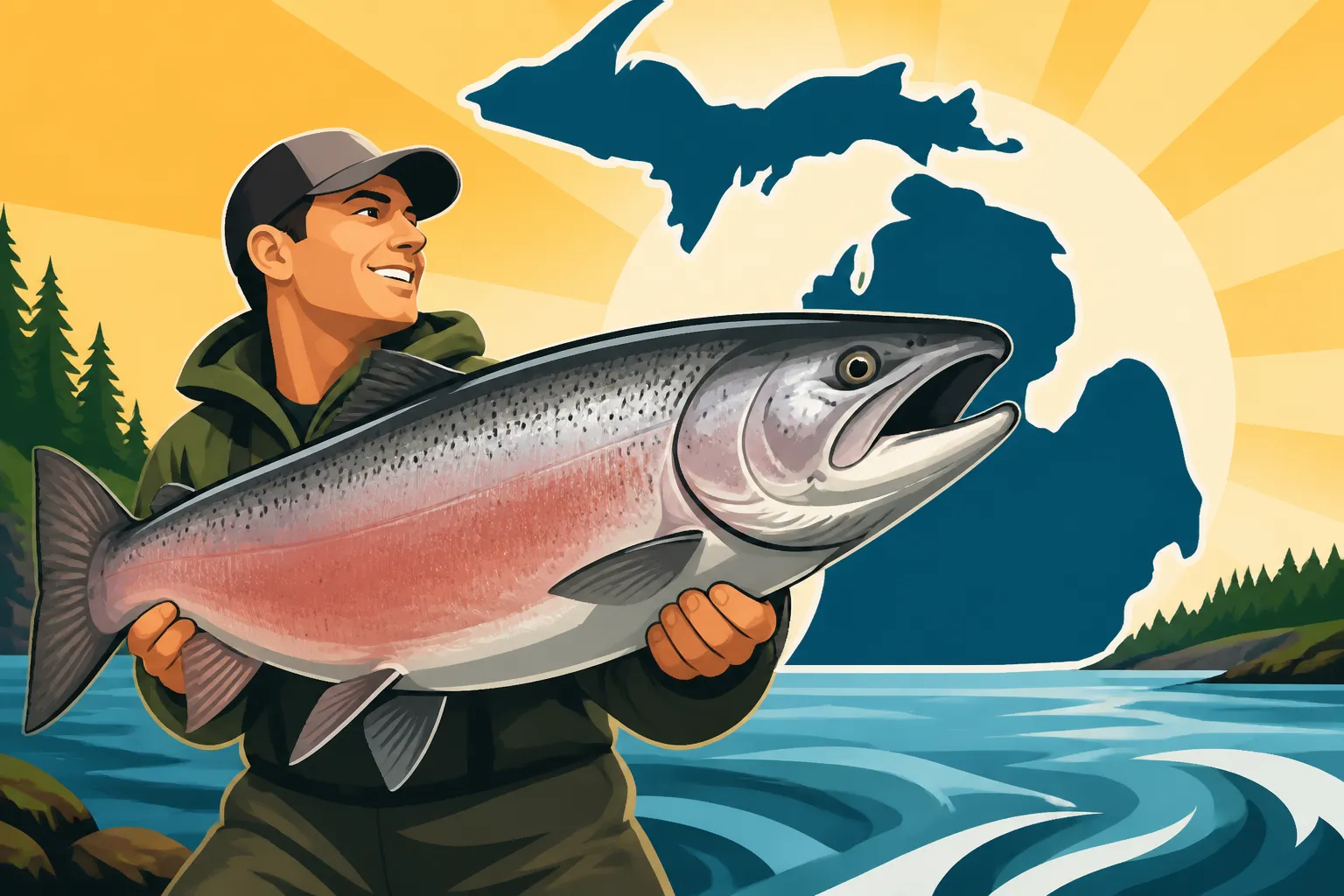
The current Michigan state record Chinook salmon is a beast that would make any angler's jaw drop. It was caught by Ray Hawn on August 12, 1978, in the waters of Lake Michigan, specifically near the St. Joseph River mouth. This incredible fish weighed in at an astounding 46 pounds, 1 ounce. Imagine battling a fish of that size—the screaming reel, the aching arms, the pure adrenaline! It was a catch that immediately entered the record books and has remained there ever since, standing as a benchmark for every salmon angler in Michigan.
Ray's catch wasn't just about sheer size; it symbolized the incredible potential of Lake Michigan's salmon fishery at the time. The 1970s were a golden era for salmon in the Great Lakes, as stocking efforts matured and the fish grew to immense sizes, finding abundant forage in the vast freshwater sea. Many anglers who fished back then tell tales of incredible catches, but Ray Hawn's 46-pound, 1-ounce Chinook truly stood head and shoulders above the rest, becoming the stuff of legend. The pursuit of What Is the Michigan State Fish is usually directed at the Brook Trout, but for many, the Chinook is the unofficial king of the Great Lakes.
Why This Record Stands Out
What makes a 46-pound, 1-ounce Chinook salmon so special, beyond its sheer weight? For starters, Chinook salmon, often called "Kings," are renowned for their incredible power and dogged fighting ability. A fish of that size would have stripped line, made incredible runs, and tested every ounce of the angler's resolve and gear. It wasn't just a big fish; it was a formidable adversary that gave an unforgettable fight. The record also stands as a testament to the health and vitality of Michigan's Great Lakes fishery. It proves what our waters are capable of producing when conditions are right. This fish wasn't an anomaly; it was a spectacular example of the robust Chinook Salmon in Michigan's Great Lakes population that flourished, showing us the true potential for size that these magnificent fish possess. While trophy sizes can vary, a 46-pounder is truly in a league of its own.
The Thrill of Chinook Fishing in Michigan
Chinook salmon are a favorite target for countless Michigan anglers, and for good reason. Their impressive size, powerful fights, and delicious table fare make them one of the most sought-after game fish in the Great Lakes. The dream of catching one even close to the state record keeps people coming back to the big water year after year.
The Allure of Michigan's "Kings"
Chinook salmon are truly magnificent creatures. Known for their silver flanks, spotted tails, and the distinct black gum line inside their mouths, they are unmistakable. But it's not just their appearance that captivates; it's their sheer power. When a big Chinook hits your line, there's no mistaking it. The rod doubles over, the drag screams, and you know you're in for a battle. They make blistering runs, often jumping clear of the water, and pull with incredible force. This raw power is why they're often referred to as "Kings."
The quest for a trophy Chinook involves dedication, the right equipment, and an understanding of their behavior. Many anglers spend countless hours on Lake Michigan and Lake Huron, trolling vast expanses of water in search of these giants. The thrill isn't just in the catch, but in the entire experience: the early morning boat rides, the camaraderie with fellow anglers, and the anticipation of that next strike. If you're looking for an unforgettable experience, understanding Michigan's Great Lakes Fishing Guide is key to finding where these Kings hide.
Where Do These Giants Roam?
Michigan's Great Lakes, especially Lake Michigan, are prime territory for Chinook salmon. They spend most of their lives in the open waters, feeding on baitfish like alewives, which contribute to their rapid growth and impressive size. As fall approaches, these salmon begin their migration towards their natal rivers to spawn. Key areas where anglers target them include the waters near the mouths of major rivers like the St. Joseph, Grand River, Manistee, and Pere Marquette.
During the summer months, Chinook are often found offshore in deeper, cooler waters, where they feed heavily. As the water temperatures begin to drop and their biological clock ticks, they move closer to shore and into the river systems. Understanding their migratory patterns and preferred depths is crucial for successful Chinook fishing. Knowing Best Months for Salmon Fishing in Michigan can significantly increase your chances of encountering these impressive fish, especially when they are staging for their spawning runs near river mouths.
Chasing Your Own Michigan Chinook Dream
While a 46-pound, 1-ounce Chinook is an extraordinary catch, there are still plenty of opportunities to land impressive King salmon in Michigan. With the right gear and techniques, you can significantly increase your chances of hooking into a trophy-sized fish.
Gearing Up for a Trophy Chinook
Catching a fish as powerful as a Chinook salmon requires specialized gear that can withstand the immense stress of the fight. Heavy-duty trolling rods, matched with robust reels spooled with strong braided line and fluorocarbon leaders, are standard. Downriggers are essential for getting your lures down to the precise depths where salmon are feeding, especially during the summer. Planer boards help spread your lines out, covering more water and preventing tangles.
When it comes to lures, spoons, plugs, and flasher/fly combinations are highly effective. Popular colors can vary by water clarity and conditions, but often include variations of greens, blues, silvers, and oranges. Many anglers experiment with different presentations until they find what the fish are keying in on. You can find a fantastic selection of these specialized items and more general Trolling Gear for Michigan's Great Lakes on reputable online retailers like Amazon, ensuring you're well-equipped for your next outing. Don't skimp on quality; a trophy Chinook will test every piece of your equipment.
| Gear Category | Essential Item | Key Considerations |
|---|---|---|
| Rods | Heavy-duty trolling rods (8-10 ft) | Durable, strong backbone for fighting powerful fish |
| Reels | Levelwind or conventional reels | High line capacity, smooth and powerful drag system |
| Line | Braided line (30-50 lb) with fluorocarbon leader | Strength, sensitivity, abrasion resistance |
| Depth Control | Downriggers, Dipsy Divers, Lead Core | Precisely present lures at desired depths |
| Lures | Large spoons, diving plugs, flasher/fly combos | Reflective finishes, bright colors, natural baitfish patterns |
| Electronics | Fish finder/sonar, GPS | Locate baitfish, identify structure, navigate effectively |
| Net | Large, sturdy landing net | Wide hoop, deep basket for secure landing of big fish |
| Safety | Life jackets, marine radio, first-aid kit | Always prioritize safety on the Great Lakes |
Strategic Spots and Techniques
Success in Chinook fishing often boils down to knowing where the fish are and how to present your lures effectively. During the peak summer months, Chinook are typically found in the deeper, cooler waters of the Great Lakes. Trolling is the most common and effective technique, allowing you to cover large areas and present multiple lures at varying depths. Understanding how to use your downriggers to target thermal breaks or specific depths where baitfish are concentrated is crucial.
As the late summer and fall approach, Chinook begin to stage near river mouths before their spawning runs. This is when shore anglers and smaller boaters can also get in on the action. Casting large spoons or crankbaits from piers or beaches can be productive, especially during low light conditions. In the rivers themselves, drifting spawn bags or skein, or casting large plugs, can tempt these pre-spawn giants. Always be sure to check Michigan Fishing Regulations Every Angler Should Know for specific rules on tackle and bait for the waters you intend to fish. Preparing your tackle box with a variety of proven lures, available from suppliers such as Amazon, will give you options for different conditions and fish preferences.
Understanding Michigan's Record Keeping
Catching a fish of a lifetime is one thing, but getting it officially recognized as a state record involves a specific process. The Michigan Department of Natural Resources (DNR) maintains these records, ensuring fair play and accurate documentation.
The Official Process for Record Fish
For a fish to be considered for a state record in Michigan, there's a protocol to follow. First and foremost, the fish must be caught legally according to all current Michigan Fishing Regulations Every Angler Should Know. It must be weighed on a certified scale, usually at a grocery store or bait shop that has scales regularly inspected and certified for trade. Two witnesses are typically required to verify the weighing. The species must be positively identified, which might sometimes require verification by a DNR fisheries biologist, especially for species that have similar looking cousins.
Photos of the fish, the angler, and the weighing process are also crucial. An application form, usually available on the Michigan DNR website, must be filled out with all the details of the catch, including date, location, gear used, and witness information. This meticulous process ensures that Michigan's state records are legitimate and truly represent the largest fish of their kind caught in our waters. It's an honor to hold one of these records, and the DNR takes the verification process seriously. You'll find all the relevant forms and details on the Michigan DNR site if you believe you've caught a contender.
Beyond the Record: Respecting the Resource
While the pursuit of a state record Chinook salmon is exciting and undeniably thrilling, it's also vital to remember our responsibility as anglers to conserve and respect the fishery. Many anglers practice catch-and-release, especially for certain species or when targeting fish outside of regulated harvest seasons. For a fish like the Chinook, which can grow to such immense sizes, responsible angling practices, including proper handling and release techniques, are paramount if you don't intend to keep it.
The health of Michigan's Great Lakes salmon populations depends on sustainable fishing practices, adherence to bag and size limits, and a general stewardship of our aquatic resources. Whether you're chasing a record or simply enjoying a day on the water, taking care of the fish and their habitat ensures that future generations of anglers will also have the opportunity to experience the incredible thrill of catching a Michigan King salmon. Remember, a new rod and reel combo, easily available on platforms like Amazon, is just one part of being a responsible angler; understanding and following the rules is equally important. How Big Do Chinook Salmon Get in the Great Lakes is a question many ask, and the answer is certainly impressive.
Disclaimer
This article is for general informational purposes only and does not constitute professional advice. Laws, prices and regulations vary by location and change over time. Consult a qualified professional for guidance on your specific situation.