Lake Michigan Harbor Fishing Spots in Michigan
Staring out at the vast expanse of Lake Michigan, it's easy to feel overwhelmed, especially if you don't own a massive charter boat equipped for the open water. Many aspiring anglers often wonder how they can tap into the incredible fishing opportunities without venturing miles offshore. The good news is, you don't have to! This comprehensive guide will illuminate the fantastic world of Lake Michigan harbor fishing, revealing accessible, productive spots where you can reel in impressive catches right from the shore or a short boat ride, no matter your experience level.
The Allure of Lake Michigan Harbor Fishing
Harbor fishing along Michigan's magnificent Lake Michigan coastline offers a unique blend of accessibility, protection, and consistent action that’s hard to beat. Unlike the often turbulent open waters, harbors provide calmer conditions, making them ideal for anglers of all ages and skill levels, particularly those who prefer shore fishing, pier fishing, or venturing out in smaller craft. The unique dynamics of these transitional zones – where rivers meet the vast lake – create incredible ecosystems that draw in a diverse array of fish species throughout the year.
Why Harbors Are Fish Magnets
Think of a harbor as a natural funnel and a buffet line all in one for fish. Fresh river water, often warmer or cooler than the main lake, mixes with the vast expanse of Lake Michigan. This confluence creates current breaks, temperature gradients, and nutrient-rich zones that attract baitfish, which in turn attract larger predatory species. Piers, breakwalls, and jetties within harbors offer structure, shade, and ambush points, giving fish a sense of security and a place to rest out of the main current. These structures also provide crucial pathways for migratory species like salmon and steelhead, which use river mouths as their highways to spawning grounds. You'll often find these fish staging in the deeper pockets and channels of harbors before making their final push upstream.
Accessibility and Diverse Opportunities
One of the biggest advantages of harbor fishing is simply how easy it is to get started. You don't need a heavy-duty offshore boat or specialized gear to enjoy success. Many harbors boast well-maintained piers, accessible shorelines, and convenient boat launches, often located within charming waterfront towns. This means you can often walk right up to a prime fishing spot, cast a line, and enjoy the scenery without much fuss. For those with smaller boats, kayaks, or canoes, the protected waters inside a harbor offer a safe environment to explore and find fish, especially on days when the big lake is too rough. This accessibility also lends itself to diverse fishing techniques, from casting spoons from a pier to jigging plastics from a small boat, or even fly-fishing near the river mouth depending on the season and species.
Top Productive Harbors on Michigan's Lake Michigan Coastline
Michigan is blessed with an abundance of beautiful and productive harbors along its Lake Michigan shore. While many offer fantastic fishing, a few stand out for their consistent action and diverse opportunities. These harbors serve as critical staging areas for migratory fish, especially salmon and steelhead, and also hold resident populations of perch, smallmouth bass, and even walleye.
Ludington Harbor: A Mecca for Migratory Fish
Ludington is undoubtedly one of Michigan's premier fishing destinations, and its harbor is a huge part of that reputation. Situated at the mouth of the Pere Marquette River, a nationally recognized blue-ribbon trout stream, Ludington Harbor attracts massive runs of Chinook (King) and Coho salmon, as well as steelhead. The harbor itself is defined by its substantial piers and the confluence with the river.
Anglers here often target the north and south piers, casting spoons like the popular Dreamweaver Super Slim or Little Cleo, or jigging with vertical spoons. During the peak of the salmon runs in late summer and fall, the harbor can be absolutely teeming with fish. Boat anglers will work the deeper channels and the immediate offshore areas, often using downriggers and planer boards to present baits at various depths. Even in winter, when ice fishing is possible in sheltered areas, you can find hardy anglers targeting perch. Ludington’s public access points make it a highly desirable location for both seasoned and novice anglers. If you're looking to learn more about Best Fishing Spots Near Ludington, Michigan, the harbor is definitely your starting point.
Manistee Harbor: Consistent Action and Diverse Species
Just north of Ludington, Manistee Harbor offers similarly excellent fishing, often with slightly less pressure. The Manistee River, another world-class fishery, empties into Lake Michigan here, bringing with it a strong draw for migrating fish. Manistee's north and south piers are popular spots for shore anglers, particularly during the spring and fall runs. These piers are often productive for casting spoons, stickbaits, and even spawn bags when the salmon and steelhead are staging.
The deep harbor channel itself holds fish, and many boat anglers will troll or cast within the harbor boundaries, particularly around the "hole" where the river meets the lake. Beyond salmon and steelhead, you'll find good numbers of brown trout, especially in the spring, and excellent yellow perch fishing in the calmer harbor waters. During the warmer months, smallmouth bass can also be found around rocky structures. Checking for a Manistee Lake Fishing Report can give you a real-time snapshot of what's biting in the broader Manistee area, including the harbor.
Grand Haven and Muskegon Harbors: Southern Lake Michigan Powerhouses
Further south, Grand Haven and Muskegon offer expansive harbors with incredible fishing opportunities, particularly for those looking for robust infrastructure and diverse catches.
-
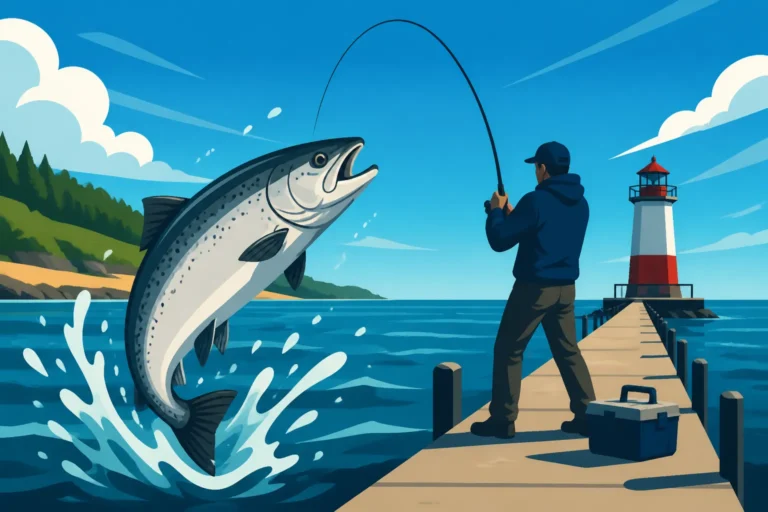
Grand Haven Harbor: This harbor is known for its long, iconic red lighthouse pier, which extends far into Lake Michigan. It's a prime location for casting for Chinook and Coho salmon in late summer and fall, as well as steelhead in spring and late fall. Perch fishing can also be excellent, especially in the calmer waters of the inner harbor. The Grand River, a large tributary, adds to the drawing power of this location, attracting a wide range of species. Many anglers choose to explore nearby Fishing Near Grand Rapids, Michigan and make the short drive to Grand Haven for its Lake Michigan access.
-
Muskegon Harbor: A few miles south, Muskegon Lake flows into Lake Michigan through a well-defined channel, creating Muskegon Harbor. This area is famous for its walleye and yellow perch fishing, particularly in the deeper parts of Muskegon Lake and the connecting channel. Steelhead and salmon runs are also strong, with anglers lining the piers during peak seasons. The deep water access and varied bottom structure make it a fantastic all-around spot. You might find some excellent Best Time to Fish Muskegon Lake for Walleye reports to help plan your trip, as the harbor plays a key role in their migratory patterns.
These harbors also offer excellent opportunities to book a guided trip. If you're new to the area or want to maximize your chances, looking for local guides through platforms like FishingBooker can provide invaluable insights and put you on the fish.
Essential Gear and Techniques for Harbor Anglers
Successful harbor fishing on Lake Michigan often hinges on having the right gear and employing appropriate techniques for the species you're targeting. The beauty is, you don't need a boatload of specialized equipment; a few versatile setups can get you started.
Rods, Reels, and Line for Versatility
For general harbor fishing from piers or shore, a medium-heavy spinning rod, around 8 to 10 feet long, paired with a reliable spinning reel (size 3000-4000) spooled with 10-15 lb test monofilament or fluorocarbon line is a fantastic all-around choice. This setup provides the casting distance needed to reach beyond the immediate shoreline and enough backbone to handle a hard-fighting salmon or steelhead. For species like perch or smaller trout, a lighter action rod (7-8 feet) with 6-8 lb test line might be more enjoyable. Consider exploring Best Rods and Reels for Michigan Fishing for more detailed recommendations tailored to various Michigan fisheries.
When fishing in harbors, especially those with rocky breakwalls, using a fluorocarbon leader (15-20 lb for salmon/steelhead, 6-10 lb for perch) is a smart move. It's less visible to fish and offers better abrasion resistance against sharp rocks and mussels.
Lures, Baits, and Tackle Box Essentials
Your tackle box for Lake Michigan harbor fishing should be stocked with a variety of options to match changing conditions and target species.
- Casting Spoons: Iconic for salmon and steelhead, spoons like Little Cleo (various sizes and colors like silver, blue/silver, orange/gold) or Dardevle spoons are highly effective. Cast them out and retrieve with a slow, erratic wobble.
- Stickbaits and Crankbaits: These are great for imitating baitfish. Rapala Husky Jerks, Storm ThunderSticks, or Bomber Long A's can be very productive, especially in low light conditions or for targeting trout and salmon.
- Soft Plastics and Jigs: For perch, smallmouth bass, or even walleye, small jigs tipped with minnows or soft plastics (like Berkley Gulp! Minnows or Z-Man Finesse ShadZ) can be deadly. Fish them with a slow lift-and-drop retrieve.
- Spawn Bags: During salmon and steelhead runs, fresh or cured salmon eggs tied into small mesh bags are incredibly effective. You can drift them under a bobber or fish them on the bottom with a small weight.
- Live Bait: Minnows are universally effective for perch, smallmouth, and even smaller trout. Nightcrawlers can also entice a variety of species. Ensure you know Best Bait for Michigan Walleye and other species you might encounter.
- Bottom Rigs: A simple dropper rig with a bell sinker at the bottom and two snelled hooks above can be excellent for perch and other bottom dwellers, baited with minnows or pieces of nightcrawler.
Always keep a pair of pliers for hook removal, a good quality net (especially for larger fish like salmon), and a stringer or cooler to keep your catch fresh. Remember, safety first, especially on slippery piers!
Navigating Seasons and Regulations for Successful Harbor Fishing
Understanding the annual cycles of fish migration and adhering to Michigan's fishing regulations are paramount to having a successful and legal harbor fishing experience on Lake Michigan. The seasons dictate which species are most active, and the rules ensure the sustainability of these precious fisheries.
Understanding Seasonal Runs and Fish Behavior
Lake Michigan harbors truly come alive during the various migratory runs.
- Spring (April-May): This is prime time for brown trout, often found near the surface in cooler harbor waters as alewives and other baitfish move in. Coho salmon also start making appearances, and the first wave of steelhead might be pushing into river mouths.
- Summer (June-August): While some salmon might be found deeper offshore, the harbors still offer good fishing for perch, smallmouth bass, and occasional resident walleye. As August approaches, the early runs of Chinook salmon begin to stage near the river mouths, preparing for their upstream migration. This is when the excitement really builds!
- Fall (September-November): This is arguably the most electrifying time for harbor fishing. Massive runs of Chinook and Coho salmon flood the river mouths and harbors. Following them closely are waves of steelhead, which come to feast on salmon eggs and parr. Lake trout can also be caught. This period offers some of the best pier fishing action of the year. You'll want to be familiar with Michigan Steelhead Run Timing to hit these windows just right.
- Winter (December-March): While ice fishing is common on inland lakes, some sheltered harbor areas, particularly those in bays or slow-moving river sections connected to the harbors, can freeze over safely. Perch and northern pike are common targets through the ice. Otherwise, open-water pier fishing can still yield a few winter steelhead if conditions allow.
Many anglers, whether they're fishing from shore or looking to book a guided trip through platforms like FishingBooker, closely monitor these seasonal movements to plan their outings.
Crucial Michigan Fishing Regulations
Before you even make your first cast, you need to ensure you have a valid Michigan fishing license. You can find all the necessary information, including various license types and costs, in our Michigan Fishing License Guide for Residents and Nonresidents. It's crucial to understand that regulations can vary not only by species but also by specific bodies of water and even within different sections of a river or harbor.
Here’s a quick overview of critical regulations to always double-check:
- Licensing: Anyone 17 years of age or older needs a valid license.
- Bag and Size Limits: Each species has specific daily bag limits (how many you can keep per day) and minimum size limits. These are designed to protect fish populations. Familiarize yourself with Michigan Daily Bag Limits by Species and Michigan Statewide Minimum Size Limits. For example, walleye often have a 15-inch minimum size and a specific possession limit, while salmon and trout have combined limits.
- Gear Restrictions: Certain waters or seasons might have restrictions on bait types (e.g., artificial lures only) or the number of lines you can fish.
- Muskellunge Harvest Reporting: If you're lucky enough to catch a muskellunge, there are strict reporting requirements. You must report your harvest within 24 hours to the Michigan DNR.
Always carry a current copy of the Michigan Fishing Guide (available digitally on the DNR website or as a physical copy at license retailers) or use the Michigan DNR Hunt Fish App. This is your bible for legal fishing in the state. Ignoring these rules can lead to significant fines and penalties.
Table of Prominent Lake Michigan Harbors for Anglers
To help you visualize your next fishing adventure, here's a quick look at some of the most productive harbors and what they offer:
| Harbor Name | Primary Target Species | Peak Fishing Seasons | Key Features & Access |
|---|---|---|---|
| Ludington | Chinook & Coho Salmon, Steelhead, Brown Trout, Yellow Perch | Fall (Salmon/Steelhead), Spring (Browns/Coho) | Long piers, Pere Marquette River mouth, boat launches |
| Manistee | Chinook & Coho Salmon, Steelhead, Brown Trout, Yellow Perch | Fall (Salmon/Steelhead), Spring (Browns/Coho) | North & South Piers, Manistee River mouth, boat launches |
| Grand Haven | Chinook & Coho Salmon, Steelhead, Yellow Perch, Smallmouth Bass | Fall (Salmon/Steelhead), Summer (Perch/Bass) | Iconic lighthouse pier, Grand River mouth, city access |
| Muskegon | Walleye, Yellow Perch, Chinook & Coho Salmon, Steelhead | Fall (Salmon/Steelhead), Spring/Summer (Walleye/Perch) | Deep channels, connecting Muskegon Lake, extensive piers |
| St. Joseph | Chinook & Coho Salmon, Steelhead, Brown Trout, Yellow Perch | Fall (Salmon/Steelhead), Spring (Browns) | North & South Piers, St. Joseph River, close to Indiana |
| Holland | Chinook & Coho Salmon, Steelhead, Yellow Perch, Smallmouth Bass | Fall (Salmon/Steelhead), Summer (Perch/Bass) | Scenic channel, Lake Macatawa connection, city access |
Exploring these fantastic Lake Michigan harbors offers a rewarding and often action-packed fishing experience, proving that you don't always need to go far offshore to find incredible fish.
Disclaimer
Fishing conditions and regulations are subject to change. Always consult the latest Michigan Department of Natural Resources (DNR) fishing guide and local advisories before heading out. This guide is for informational purposes only and does not constitute legal advice.